The Philosophical Anchor: Lighting as the Kitchen’s Circadian Heartbeat
The modern kitchen is not merely a workspace. Rather, it acts as the circadian heartbeat of your home. Choosing the right modern kitchen lighting goes far beyond basic visibility. In fact, it involves engineering a sophisticated environment to support your physiological well-being. Historically, kitchens were dark, hidden sculleries. Later, they became fluorescent-lit spaces focused purely on efficiency.
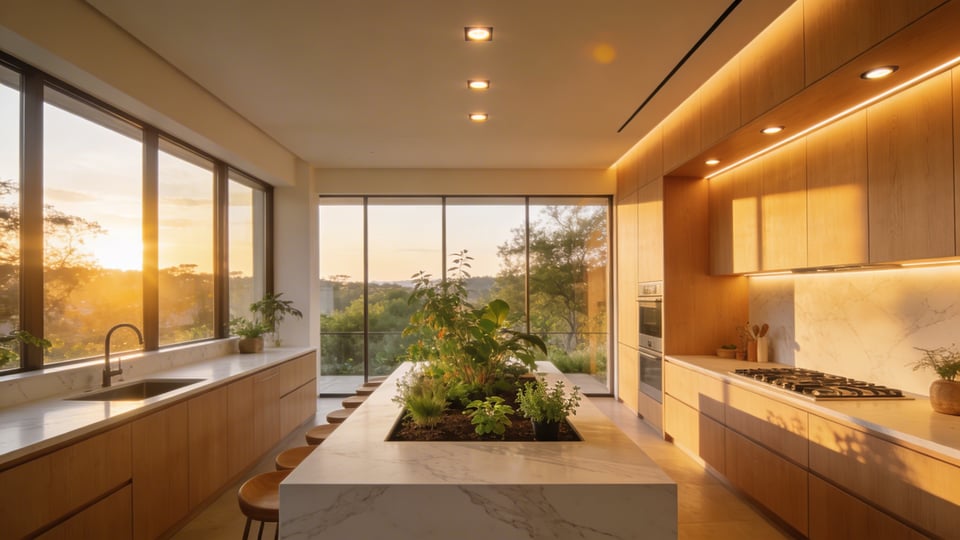
Today, wellness architects design these rooms as biophilic solar temples. Specifically, lighting now serves as a profound biological regulator. Your eyes contain non-visual cells known as ipRGCs. Indeed, these cells communicate directly with your brain’s master clock. For example, cool morning light triggers a vital cortisol response. This 5000K blue-rich light effectively kickstarts your daily metabolism.
Conversely, evening lighting must mimic a warm, setting sun. Therefore, dimming to an 1800K amber hue is absolutely crucial. In fact, this shift allows your body to produce sleep-inducing melatonin.
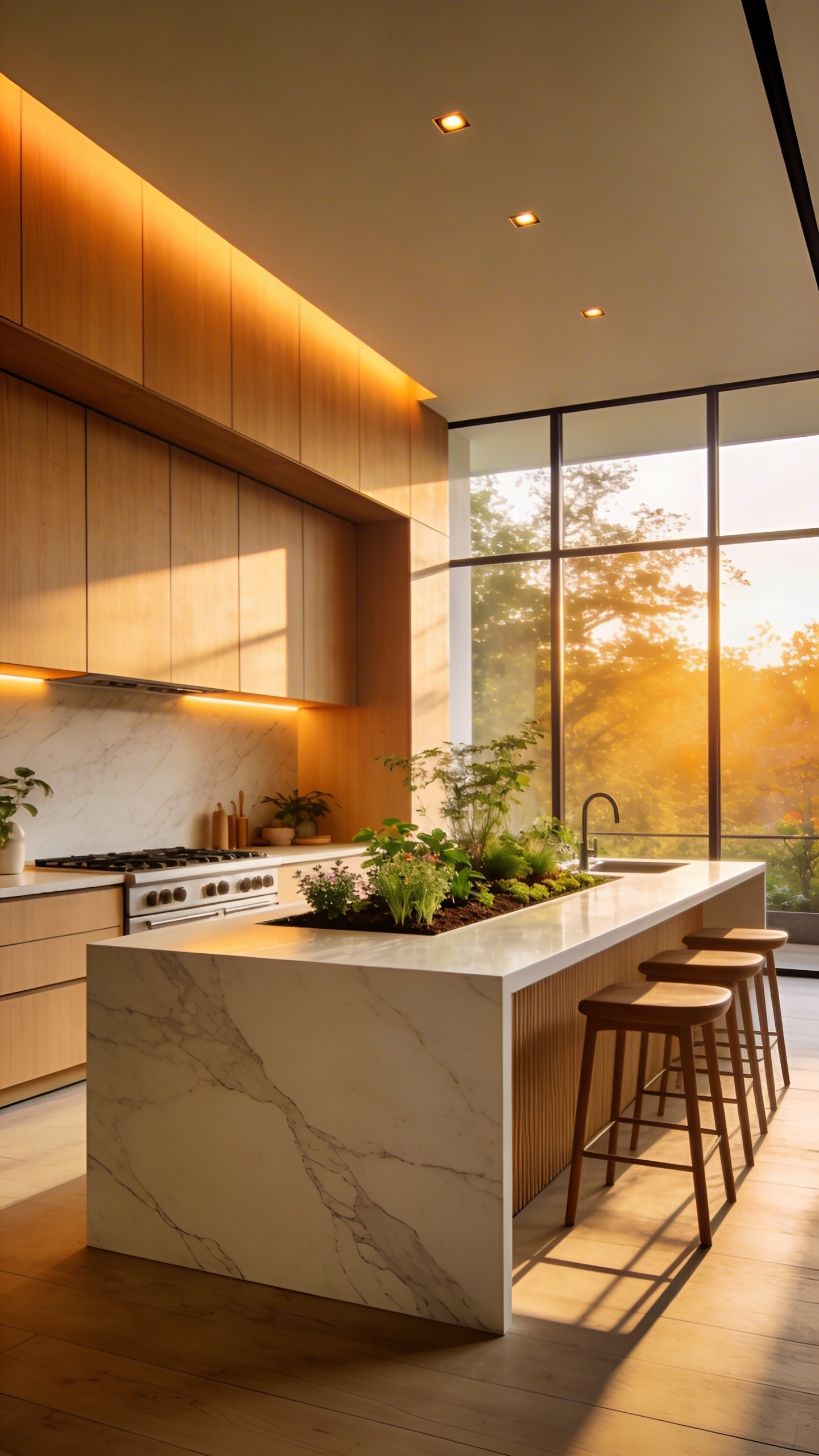
Indeed, the kitchen uniquely synchronizes our two primary time-givers. These powerful biological triggers are light and food. Specifically, meal timing regulates the peripheral clocks in your digestion. Harsh late-night lighting during meals causes severe circadian misalignment. Therefore, utilizing dim light during dinner perfectly aligns these systems.
In fact, this environmental anchor forms the true essence of chrono-nutrition. Next, designers measure this biological impact using Equivalent Melanopic Lux. Importantly, WELL standards require measuring this at a 55-inch eye level. Still, modern designs prioritize a Unified Glare Rating below 16. This low glare prevents unwanted physiological stress responses at night.
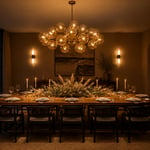
Specifically, warm under-cabinet LEDs provide a soothing evening glow. Therefore, this low-angle 2200K light creates a primal sense of safety. In fact, it mimics a comforting campfire by drawing your focus downward. This calming sanctuary helps process the day’s mental noise. Therefore, your mind is perfectly prepared for deep, restorative sleep.
1. Emulating the Sun: Aligning Modern Kitchen Illumination with Circadian Rhythms
Designers no longer view kitchen light merely as a utility for chopping vegetables. Instead, they treat modern illumination as a vital biological metronome. Historically, lighting focused on horizontal lux to illuminate countertops safely. When learning how to choose the right kitchen lighting, it becomes clear that our bodies respond primarily to vertical illuminance.
Specifically, this means light must enter the pupil directly at eye level. Therefore, modern wellness kitchens feature illuminated backsplashes rather than harsh ceiling cans. Indeed, this eye-level glow delivers the specific lux required to wake up. Naturally, this vertical exposure suppresses melatonin and boosts morning cortisol effectively. Because the kitchen is often our daily anchor, morning illumination feels cellularly awake.
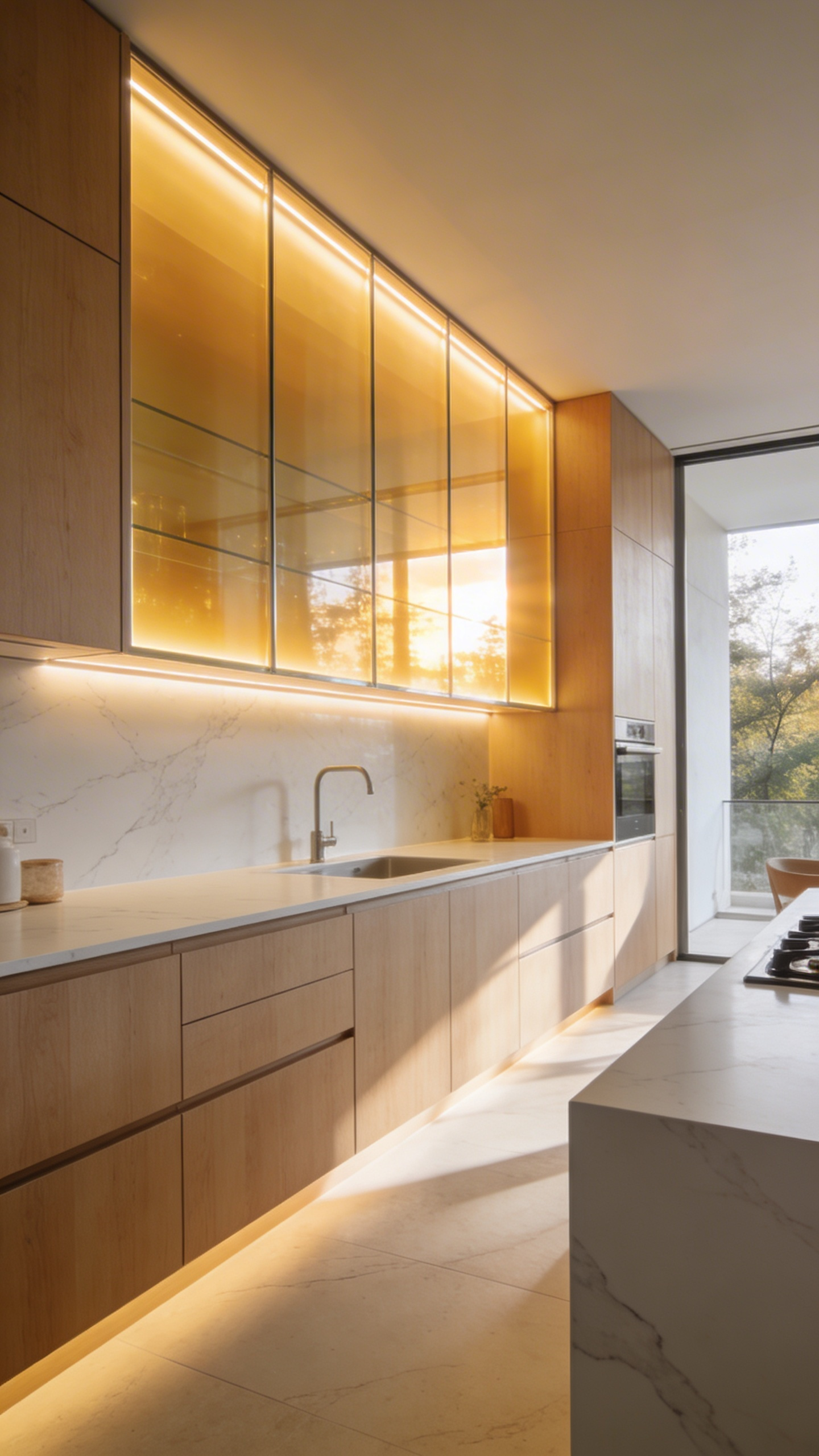
Yet, wellness architecture looks far beyond simple warm or cool light bulbs. Indeed, authoritative design targets the 480nm wavelength to stimulate non-visual eye receptors. Fortunately, tunable LED technology allows us to mimic the sun’s natural arc. Initially, crisp 6500K light provides a sharply high-energy environment during early hours.
Conversely, the system seamlessly shifts to a restorative 1800K glow by evening. Therefore, the light physically retreats to low-level indirect amber LEDs along toe-kicks. In fact, this intentional dimming prevents the unhealthy constant twilight of older static fixtures. Still, less than half a percent of market products automate this crucial shift. However, experts agree that artificial circadian lighting cannot simply replace actual sunshine. In practice, these advanced systems should beautifully augment your daily natural daylight exposure.
2. The Psychology of Color Temperature: From Morning Cortisol to Evening Melatonin
Kitchen lighting represents a vital wellness tool that synchronizes our internal biological clocks. Specifically, color temperature profoundly influences our daily hormone production and energy levels. Indeed, bright morning daylight temperatures serve as an essential biological trigger for activity.
Cool light around 5000 Kelvin stimulates specialized photosensitive cells inside our retinas. As a result, this exposure quickly suppresses melatonin. Meanwhile, it floods your system with active cortisol. This sharp hormonal rise provides a highly effective, non-pharmacological energy boost. Therefore, bright under-cabinet task lighting helps align your rhythm perfectly with the morning.
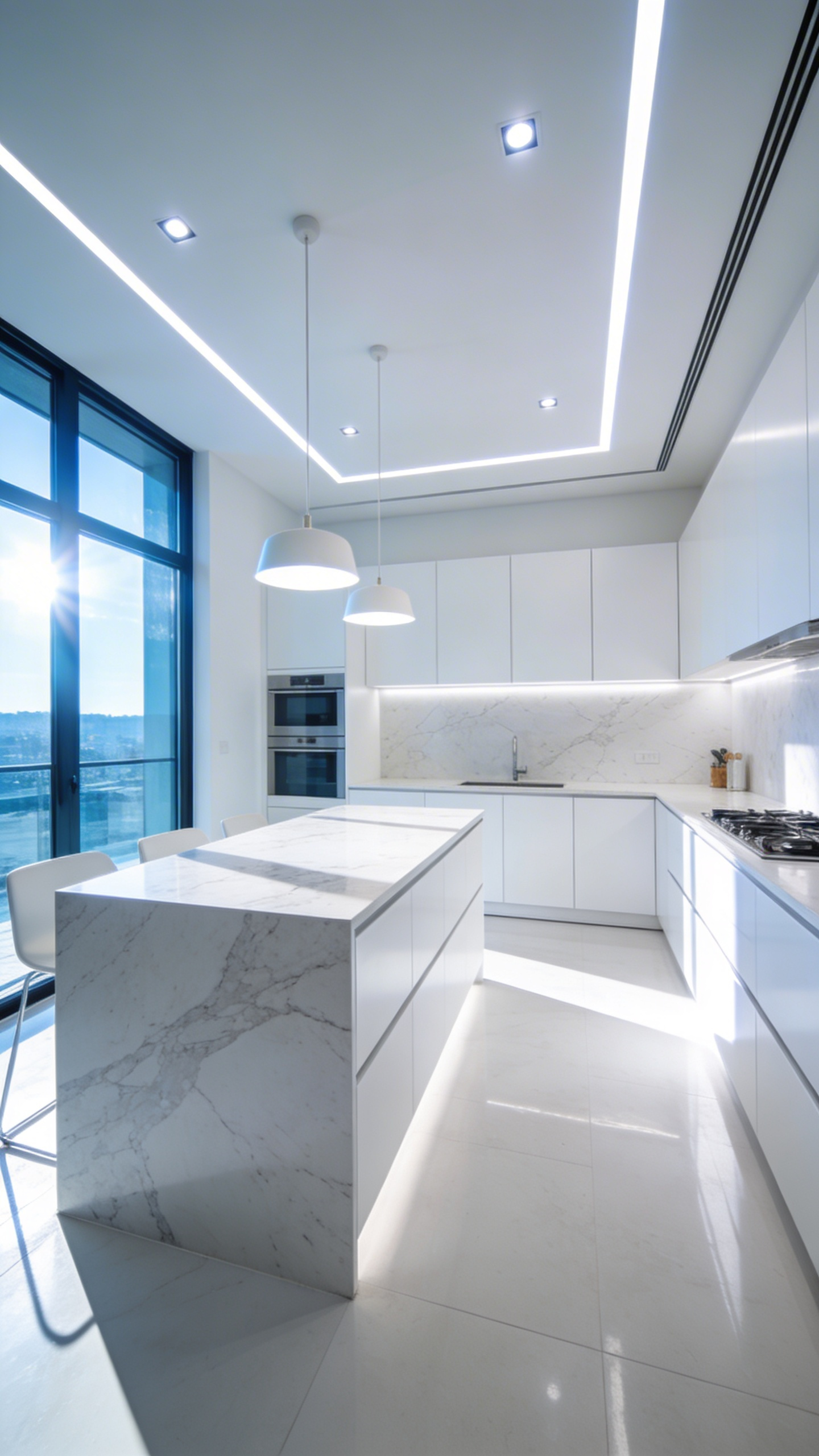
Specifically, kitchen color temperature physically alters our sensory perception of different meals. Warm golden light makes proteins and complex carbohydrates appear richer and incredibly appetizing. Conversely, cool white lighting beautifully highlights the vibrant freshness of crisp organic produce. In fact, research shows that ambient light color can even change the perceived taste of wine.
However, bright cool lighting becomes a significant evening wellness hazard. In fact, static harsh light creates an exhausting psychological state known as social jetlag. This completely suppresses crucial sleep hormones for extended periods of family time. To combat this, modern luxury kitchens utilize deeply restorative warm sunset lighting scenes. Indeed, dropping light temperatures below 2700 Kelvin mimics a gentle, soothing candlelight glow.
Removing these blue wavelengths allows your pineal gland to finally secrete natural melatonin. For instance, low amber toe-kick lighting provides functional safety without causing biological shock. Next, tunable smart lighting systems automate this entire daily wellness progression seamlessly. These layered architectures shift invisibly from sharp morning focus to soft evening relaxation. As a result, your modern kitchen functions as a living organism that breathes with the sun.
3. Banishing the ‘Operating Room’ Glare: Why Diffused Light Supports Nervous System Health
The modern kitchen often mimics a mid-century laboratory. Historically, this design prioritized clinical sterility over human comfort. However, high-intensity overhead glare acts as a severe biological stressor. Specifically, harsh light over-stimulates your retinal cells.
Indeed, these cells send alarm signals directly to the amygdala. Therefore, the body produces cortisol and maintains a stressful vigilance response.
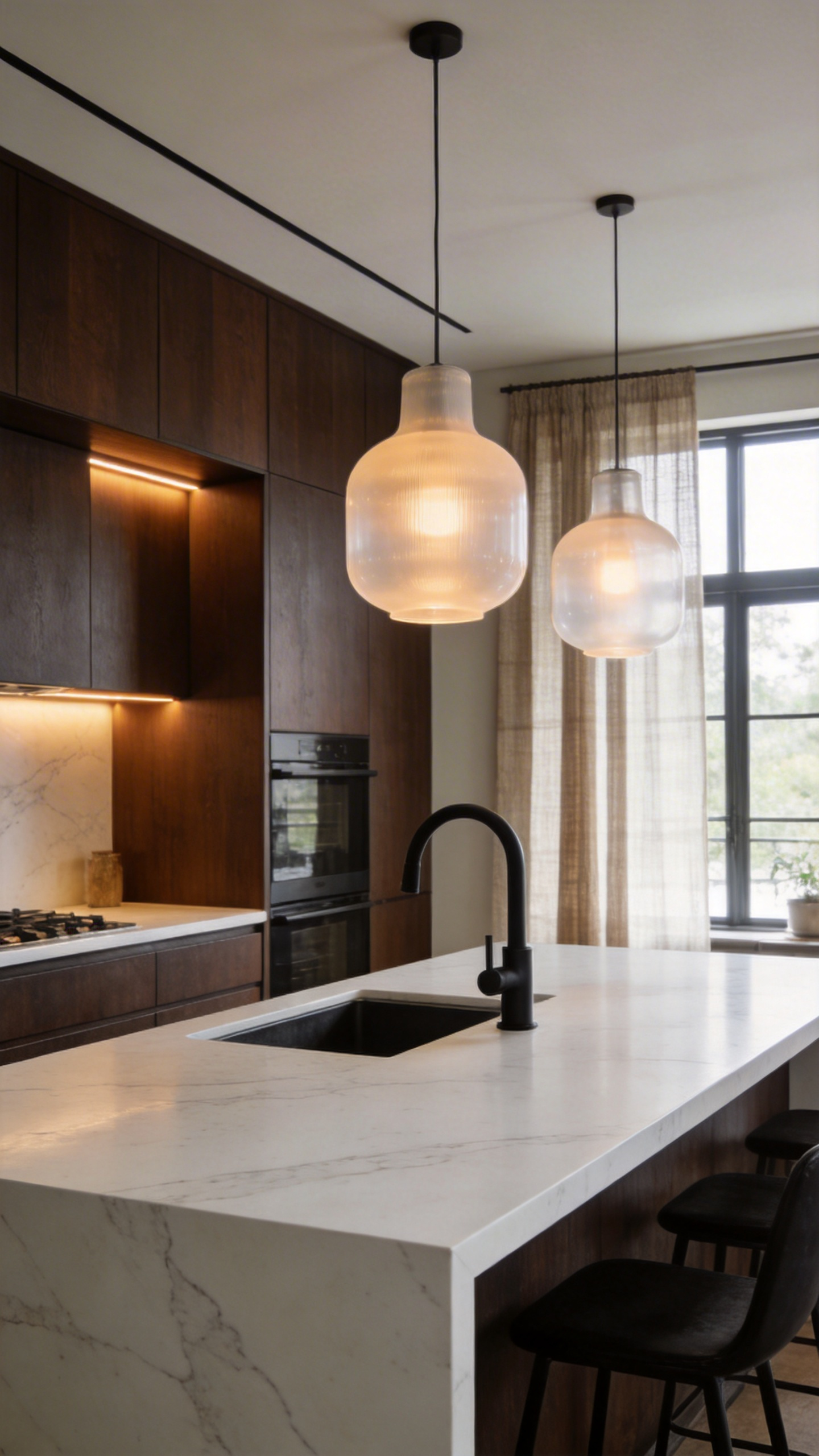
Conversely, diffused light signals deep psychological safety. Natural sunlight is gently softened by the atmosphere. Indeed, indoor diffusion mimics this calming twilight effect. Therefore, softening your kitchen lighting protects your circadian rhythm.
Direct, high-intensity light effectively suppresses sleep-inducing melatonin. Instead, bouncing light off surfaces allows your nervous system to rest. In fact, your brain no longer works tirelessly to filter harsh shadows. practically, wellness designers now rely on a layered approach.
Experts suggest dedicating seventy percent of kitchen light to ambient diffusion. For instance, replacing clear glass with frosted opal pendants helps immensely. Additionally, pointing LED strips toward a textured backsplash creates visual softness. The wall essentially becomes the gentle light source itself. Therefore, this technique eliminates piercing reflections on polished stainless steel. Specifically, low-level toe-kick lighting provides safe, grounding navigation at night. As a result, the space transforms from a sharp room into a velvety sanctuary.
4. Smart Control Systems: Programming Seamless Chronobiological Light Transitions
Historically, the kitchen functioned under glaring, static fluorescent lights. Consequently, this constant high-noon atmosphere disrupted our natural biological rhythms. Today, sophisticated smart control systems prioritize light as a vital daily nutrient. Specifically, platforms like DALI replace simple linear dimming with cosine-based algorithms.
These advanced systems recreate the sun’s natural acceleration and deceleration perfectly. To master the ambiance, many homeowners choose smart kitchen light fixtures to automate your lighting. These fixtures handle complex biological schedules effortlessly. Therefore, your kitchen completely avoids the sickly artificial hues of cheaper bulbs.
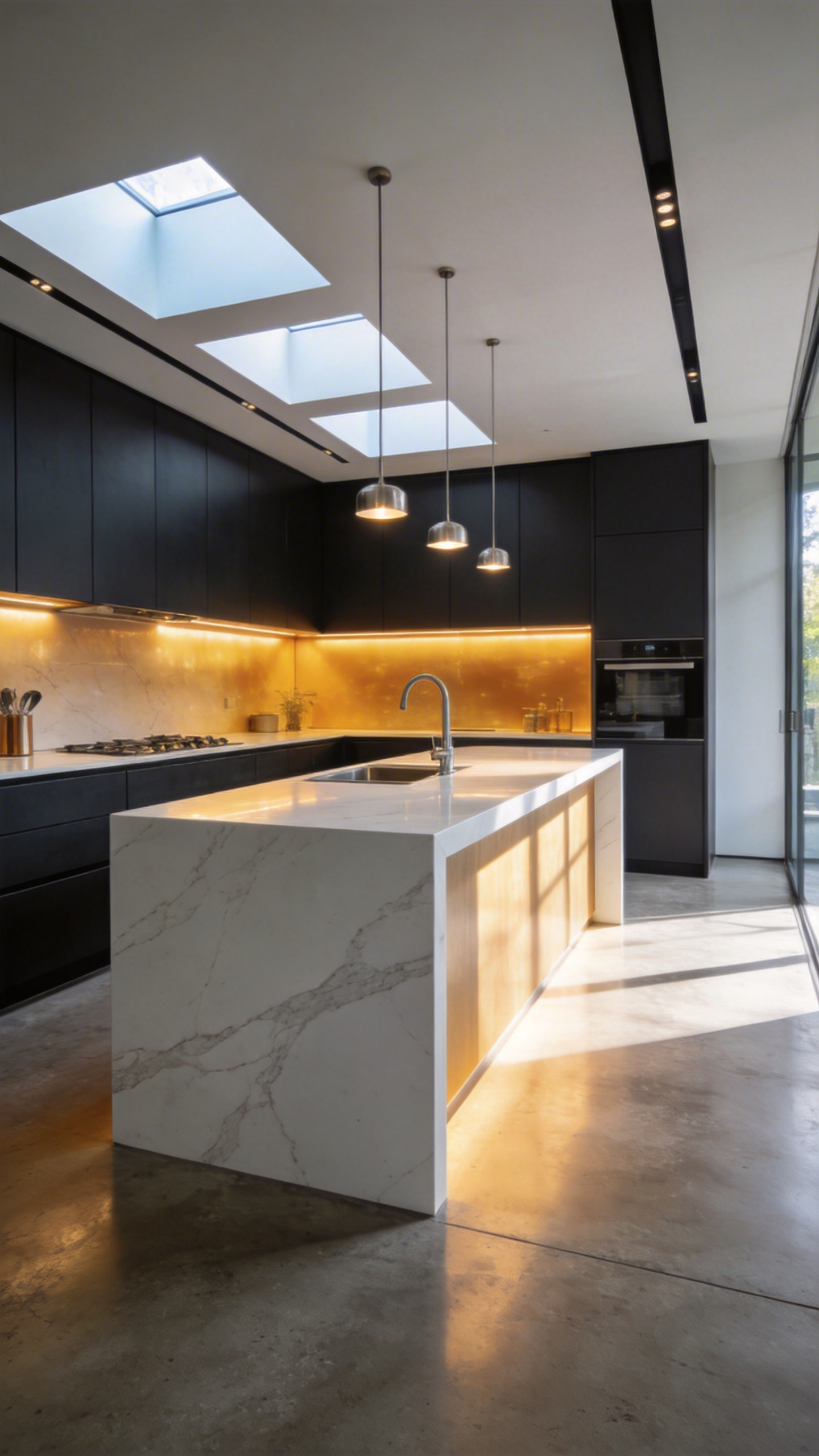
However, a modern wellness kitchen demands multiple layers of intelligent programming. Your hands require bright, cool task lighting to chop vegetables safely. Conversely, your brain needs warm, dim ambient light to prepare for rest. To solve this, advanced lighting systems utilize clever conditional logic overrides. For instance, under-cabinet lights brighten to a crisp neutral white when you approach the counter. Next, they smoothly snap back to a warm circadian curve once you step away.
Indeed, smart chronobiological programming actively protects your metabolic health after dark. Emerging research links late-evening blue light exposure to impaired glucose metabolism. Therefore, wellness-focused systems automatically deplete blue light spectrums three hours before bedtime.
Specifically, low-mounted amber toe-kick lighting gracefully illuminates your path for a midnight snack. In fact, this provides necessary visual safety without triggering a disruptive biological awakening. Next, extended forty-five-minute circadian ramps ensure your eyes never perceive the gentle shift. Indeed, this precise spectral tuning effortlessly transforms a high-energy workspace into a calming sanctuary.
Material Exploration: How Photons Interact with Healthy Home Elements
In modern kitchens, lighting goes beyond simple utility. Specifically, it acts as a biological engine. Therefore, the physics of wellness dictates how light particles interact with surfaces. For instance, natural minerals like marble facilitate subsurface scattering.
Instead of bouncing off flatly, photons penetrate the stone. Therefore, they bounce between internal crystals before exiting. This creates an organic depth mimicking human skin. Indeed, this inner glow triggers a subconscious sense of vitality.
Specifically, light can act as an invisible disinfectant. Namely, titanium dioxide coatings turn backsplashes into passive cleaning systems. When visible LED photons strike these surfaces, a reaction occurs. Indeed, this shreds the cell walls of airborne bacteria.
Similarly, natural wood interacts with light to promote mental wellbeing. Wood grain inherently acts as a natural fractal pattern. Consequently, it scatters photons in millions of different directions. This diffuse scattering effectively prevents harsh visual glare. In fact, neuroscience suggests these patterns actively lower cortisol levels. Therefore, wood serves as a light-tamer that quiets visual noise.
Next, warm metals like copper provide healthy optical filtering. Copper selectively absorbs harsh blue and green light wavelengths. Conversely, it reflects warm red and orange photon spectrums. Therefore, this warm reflection supports evening relaxation and eye comfort.
5. Illuminating Natural Stone: Enhancing Organic Veining Without Harsh Reflections
Natural stone brings grounding energy into your kitchen. However, improper lighting easily creates visual stress. Specifically, direct overhead lights cause blinding glare on polished surfaces. This harsh reflection obscures the beautiful, organic veining. Therefore, wellness-focused designers utilize indirect lighting strategies instead.
For instance, continuous LED strips with frosted diffusers eliminate painful hot spots. Conversely, matte or leathered finishes naturally soften and diffuse light. Thus, you can safely apply a grazing technique here. Indeed, placing narrow-beam fixtures nearby lets light skim the stone. Specifically, this steep angle creates micro-shadows that emphasize geological depth.
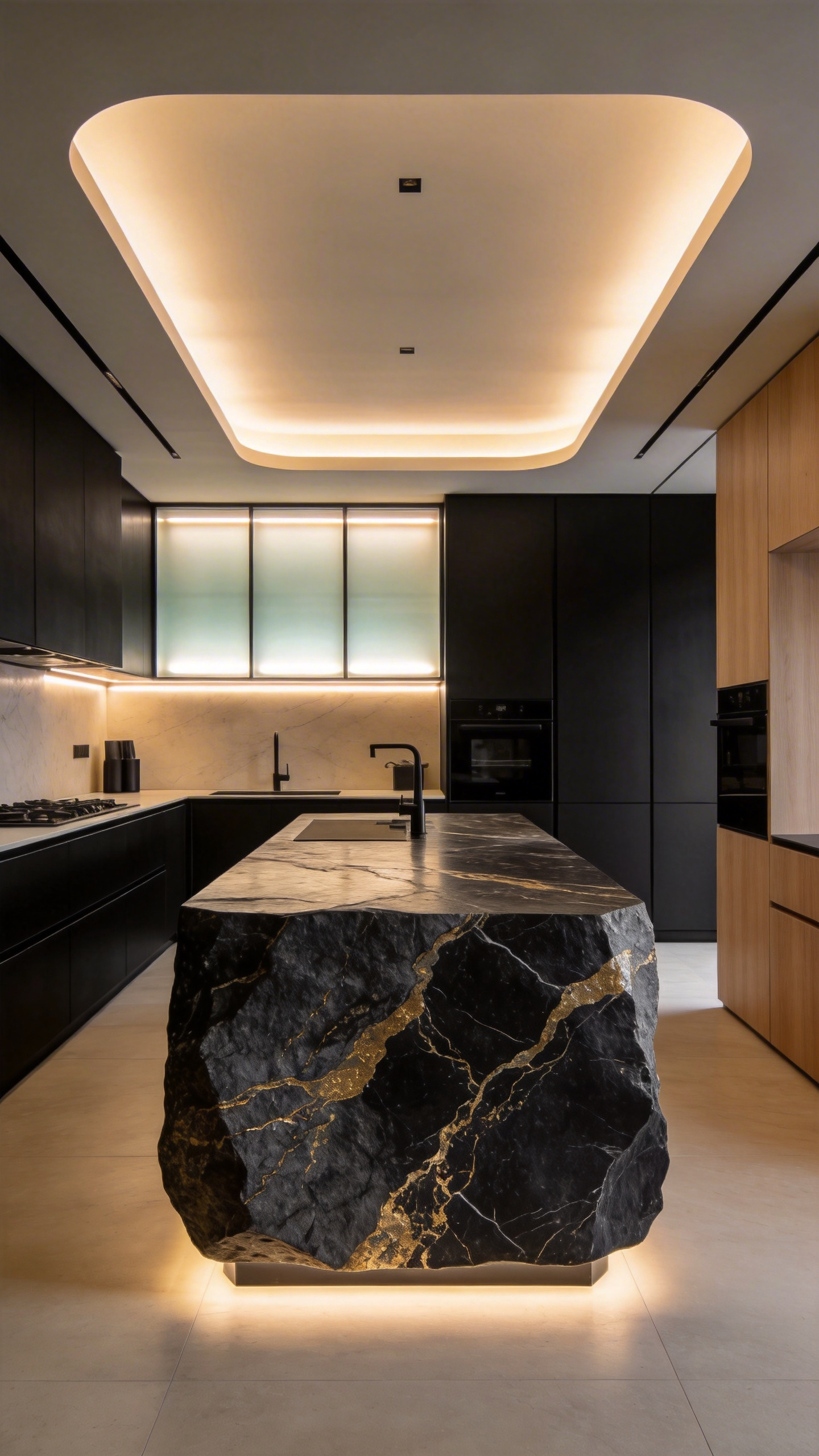
Next, you must carefully consider the color rendering index. Naturally, a CRI above 90 remains non-negotiable for true color accuracy. Indeed, cool white light keeps marble looking clean and crisp. Alternatively, warm white light deeply enriches earthy granite tones.
Meanwhile, translucent stones like quartzite offer unique opportunities for backlighting. Historically, hot halogen bulbs risked damaging these precious natural materials. Today, ultra-thin LED panels safely emit a calming, internal glow. Therefore, your kitchen island becomes a soothing, sculptural focal point.
6. Matte vs. Glossy Finishes: Positioning Fixtures to Minimize Visual Fatigue and Glare
Modern kitchens often trigger visual fatigue. Specifically, sharp reflections from glossy surfaces disrupt our visual balance. Consequently, our pupils must rapidly constrict and dilate. In fact, this constant adjustment strains our delicate eye muscles.
Conversely, matte finishes feature micro-textures that gently scatter light. Therefore, a matte surface provides a soft, uniform glow. As a result, our eyes remain relaxed, minimizing headaches.
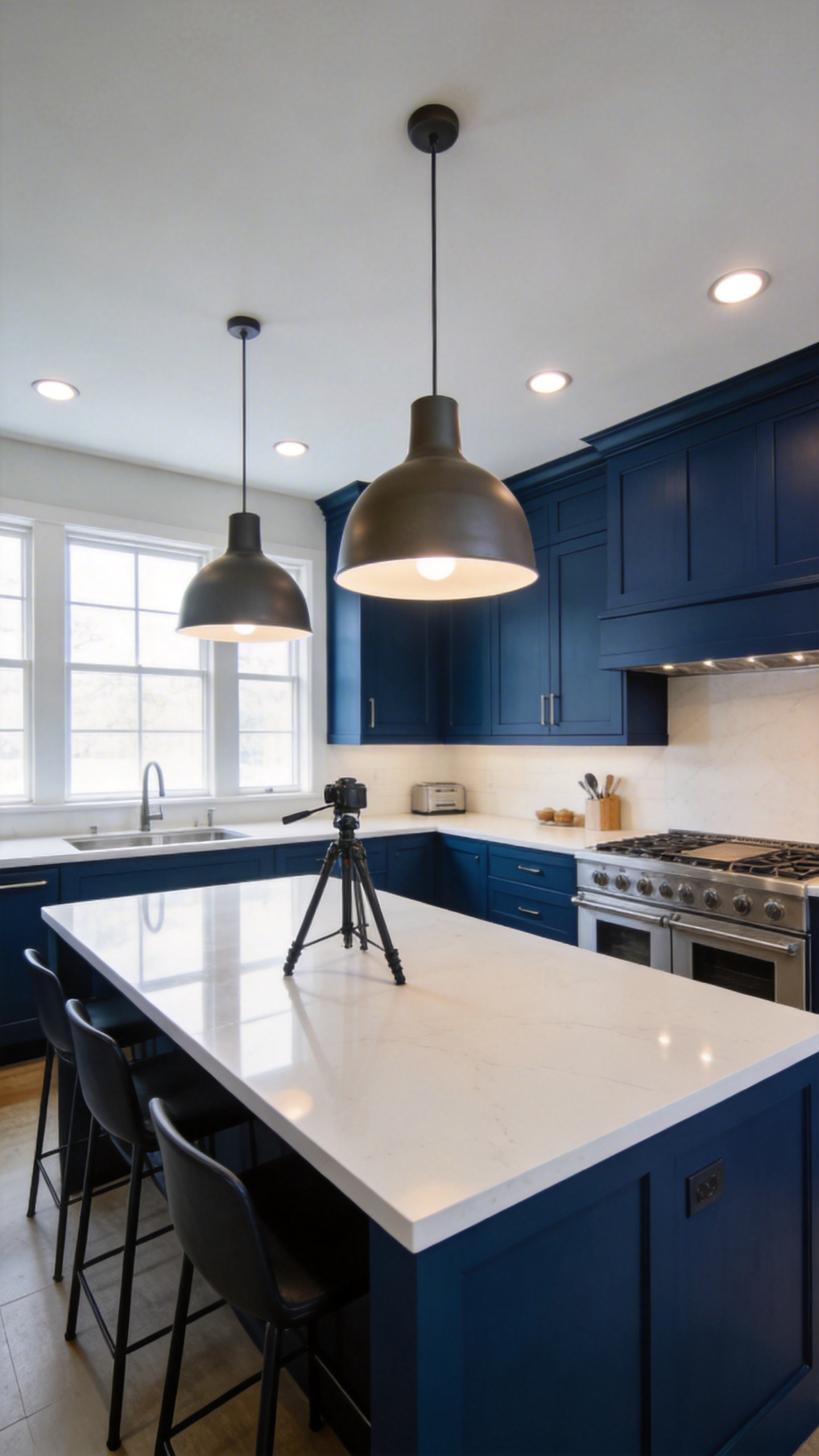
However, if you love high-gloss countertops, lighting placement is crucial. Traditionally, overhead fixtures beam directly onto reflective surfaces. Instead, wellness designers employ recessed apertures for a quieter ceiling.
Specifically, tucking angled lighting channels under cabinets directs illumination laterally. Therefore, the light sweeps across the workspace rather than bouncing upward. Indeed, mixing these finishes creates a balanced, soothing sanctuary. This fits a modern kitchen aesthetic perfectly. For instance, matte lower cabinets hide fingerprints and reduce glare.
Meanwhile, glossy upper cabinets gently bounce ambient light around. Naturally, the quality of your LED diffusers matters immensely here. Otherwise, reflective surfaces will mirror individual, harsh LED dots. In fact, specialized opal diffusers create a clean, solid glow. Next, dimming these fixtures transforms the room’s entire emotional mood. Therefore, warm light against matte textures feels deeply restful and enveloping.
7. Wood Tones and Warm Lumens: Fostering Biophilic Connections Through Light
Historically, kitchens felt like clinical laboratories. Today, we design them as domestic sanctuaries. Specifically, pairing warm light with organic wood promotes mental wellbeing. As a result, the space greets the body gently.
Finnish architect Alvar Aalto called this architectural softness a handshake. Naturally, we achieve this through diffused, indirect lighting. Indeed, this technique mimics sunlight filtering through a dense forest canopy.
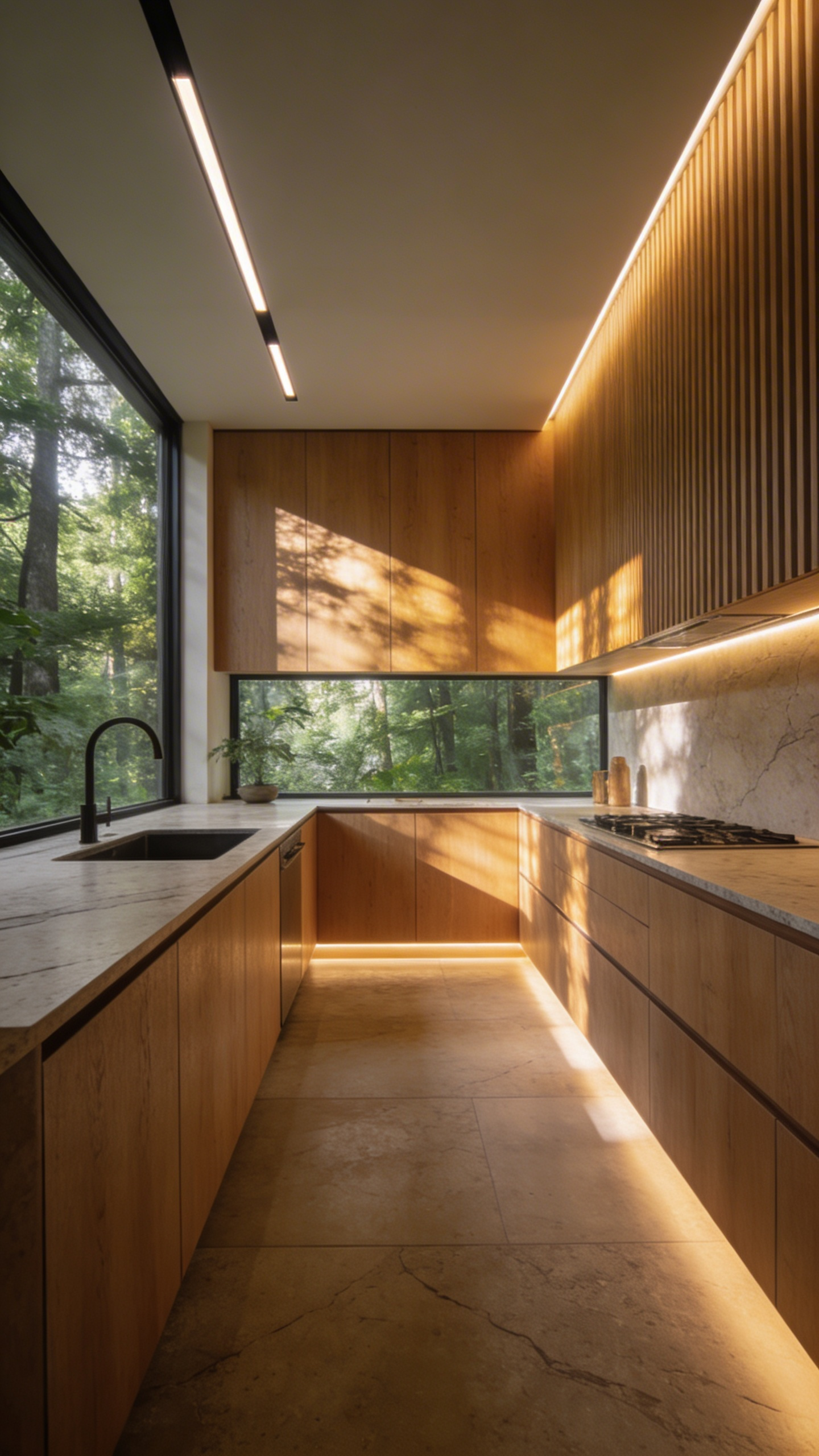
Next, designers use shallow light grazing on cabinet surfaces. Therefore, this highlights the statistical fractals within the wood grain. Interestingly, viewing these natural patterns can lower your heart rate. However, the color temperature of your bulbs matters immensely.
Typically, biophilic design relies on lower temperatures around 1900K. In fact, these sunset lumens signal the body to relax. Specifically, they encourage melatonin release for a healthier circadian rhythm. Still, high R9 values are crucial for rendering red tones. Otherwise, rich woods like cherry or walnut appear lifelessly gray.
In fact, proper lighting reveals vibrant sap and authentic textures. Ultimately, this approach addresses our deep psychological need for refuge. Warm light on timber recreates the safety of a campfire. Meanwhile, illuminated toe-kicks make heavy cabinetry feel weightless and airy. Therefore, the kitchen transforms into an emotionally anchored, stress-free environment.
8. Non-Toxic Fixture Materials: Choosing Brass, Glass, and Ceramic Over Off-Gassing Plastics
The modern kitchen operates as a thermal hot zone. Consequently, rising steam and stovetop heat create an intense micro-climate. Temperatures often reach up to 160 degrees near ceiling lighting. Unfortunately, this heat turns common plastic fixtures into hidden health hazards.
Specifically, synthetic polymers like PVC and acrylic begin to break down. As they warm, they passively release toxic VOCs into your air. Therefore, you might unknowingly inhale formaldehyde while preparing a meal. Conversely, natural materials like brass, glass, and ceramic remain chemically stable. In fact, the WELL Building Standard champions these exact materials. They help create a crucial zero-VOC environment for healthier homes.
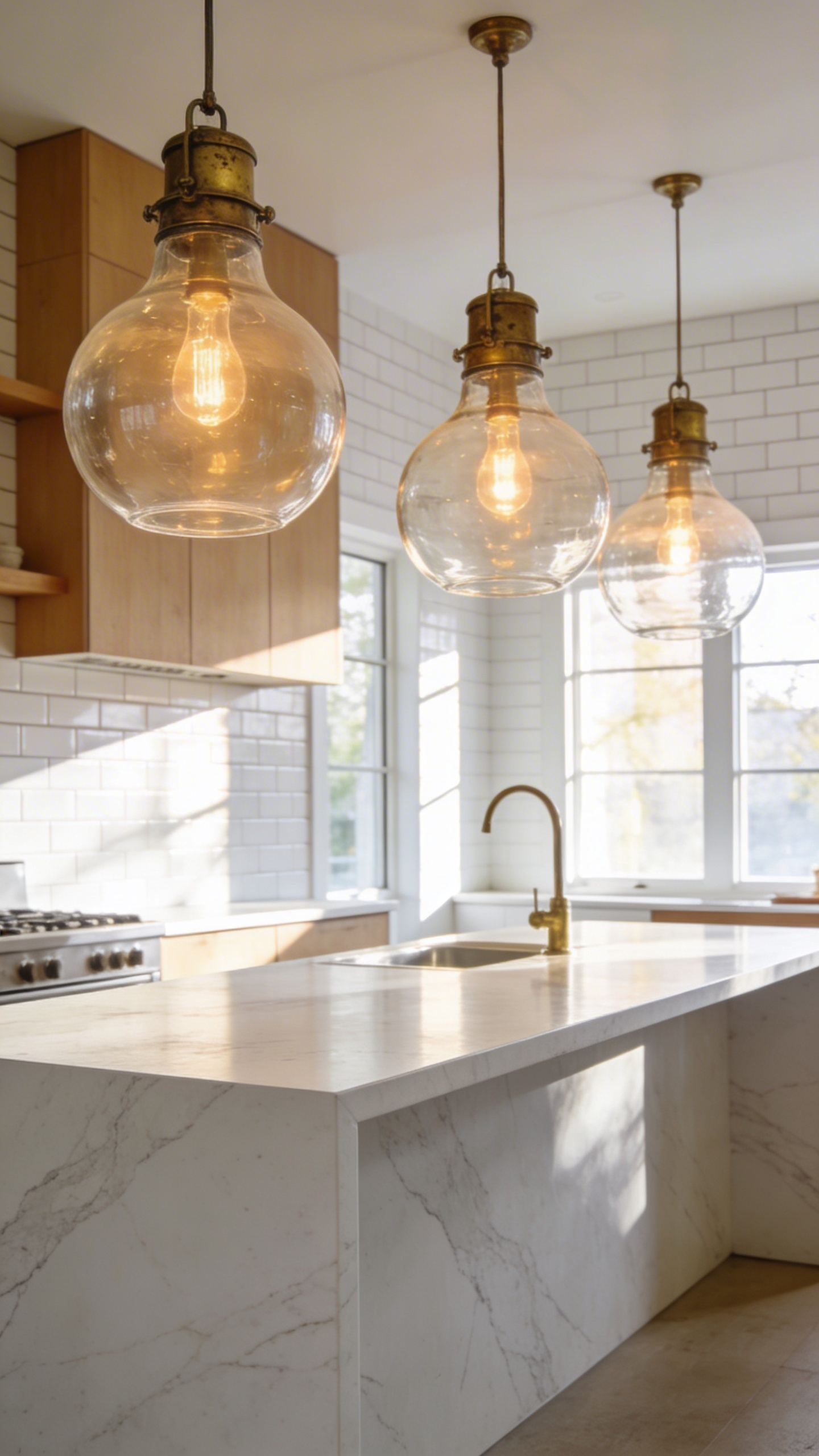
Next, solid brass serves as an incredibly functional engineering choice. Indeed, it acts as a natural heat sink to protect delicate LEDs. Additionally, copper-based alloys boast a natural self-sanitizing antimicrobial quality. Specifically, brass can kill surface bacteria rapidly in a messy kitchen. In fact, the metallic surface reflects a warm, buttery light spectrum. This golden glow actively reduces cortisol and promotes soothing serotonin.
Similarly, glass diffusers offer vital optical integrity over cheap plastics. Over time, heat and UV rays cause synthetic covers to yellow. As a result, this plastic degradation makes a space feel dingy. Alternatively, borosilicate glass remains brilliantly clear and entirely non-porous forever. Indeed, it refracts light crisply to highlight fresh food colors. Therefore, choosing these heirloom materials protects both your lungs and wellbeing.
Spatial Application: Mindful Layering for Task and Flow
Modern open-plan kitchens often lack physical walls. Consequently, mindful layering uses light as a spatial divider. Experts call these designated functional areas proxemic zones. Specifically, linear pendants over an island create a strong visual anchor.
This psychological frontier separates intense prep zones from social spaces. Indeed, flat lighting causes the brain frustrating cognitive friction. Therefore, cooks often feel exposed under uniform room illumination. Conversely, mindful layering leaves social edges in a soft, inviting shadow.
Strategic shadow-free zones further reduce daily mental fatigue. Naturally, a single overhead fixture casts shadows over your workspace. Instead, layering under-cabinet LEDs with ambient lighting entirely eliminates silhouettes. Specifically, this clear visual hierarchy allows easy culinary focus.
Next, mindful architecture integrates soft lighting along cabinet toe-kicks. These low-level guides smoothly support your quiet midnight flow. Therefore, you easily avoid the jarring shock of bright lights. Indeed, tunable white technology deeply supports our natural circadian rhythms. Crisp morning light suppresses melatonin to actively increase alertness.
Alternatively, warm sunset tones beautifully encourage deep evening relaxation. Proper color rendering also heavily alters our sensory dining perception. Specifically, high-CRI fixtures ensure deeply colored foods look truly vibrant. In fact, low-quality light makes fresh culinary dishes appear unappetizingly muddy. Next, warm accent lights highlight beautifully textured marble backsplashes. Therefore, careful lighting design turns your entire kitchen into a wellness retreat.
9. Precision Task Lighting: Shadow-Free Preparation Zones for Mindful Cooking
Task lighting is no longer just a basic kitchen utility. Instead, it represents a sophisticated intersection of design and psychological wellness. Specifically, modern kitchens rely on shadow-free zones to foster a mindful experience. Previously, older fixtures created harsh, uneven glares on glossy countertops.
Today, we utilize advanced Chip-on-Board LED technology. Therefore, this innovation creates a seamless, gentle plane of diffused light. Next, placing these fixtures at the cabinet’s front edge eliminates frustrating shadows. Therefore, the light falls perfectly over your hands and cutting board.
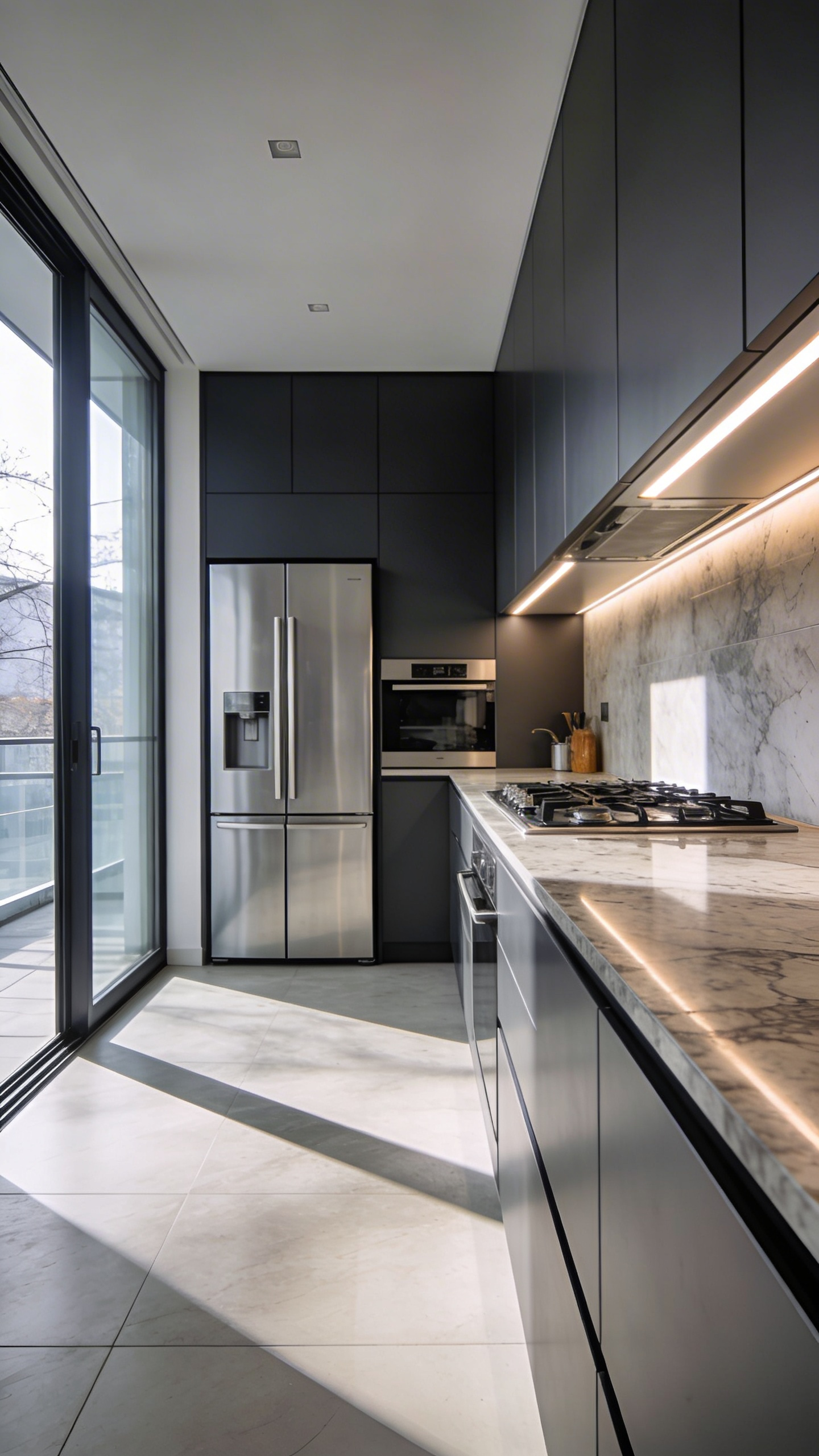
Naturally, mindful cooking requires a deep sensory connection to your ingredients. For instance, gauging the exact ripeness of a tomato relies on accurate color. Therefore, precision lighting uses a Color Rendering Index of 90 or higher. Indeed, this reveals the true, vibrant textures of your fresh food. As a result, cooks experience a stronger intuitive judgment of doneness.
Specifically, tunable white technology directly supports your natural circadian rhythm. Namely, cooler morning light boosts alertness during early preparation tasks. Conversely, warmer evening illumination signals your body to naturally relax. Most importantly, poor lighting forces your brain to constantly strain.
Therefore, eliminating visual fatigue significantly reduces your underlying cognitive load. Increasingly, modern cabinets feature hidden milled channels to house these integrated lights. In fact, this creates a beautifully warm, glowing cocoon of focus. Indeed, this architectural harmony transforms routine chopping into a calming, active meditation.
10. The Evolution of Island Pendants: Sculptural Forms That Double as Acoustic Dampeners
Historically, traditional kitchens were closed spaces filled with soft materials. Today, open-plan layouts dominate our modern homes. Consequently, these spaces feature hard surfaces like quartz countertops and polished concrete. These non-porous materials create an exhausting echo chamber effect.
Subconsciously, this acoustic bounce causes significant mental sound fatigue. Therefore, homeowners struggle to comfortably socialize in these live environments. Fortunately, wellness architecture offers a brilliant lighting solution.
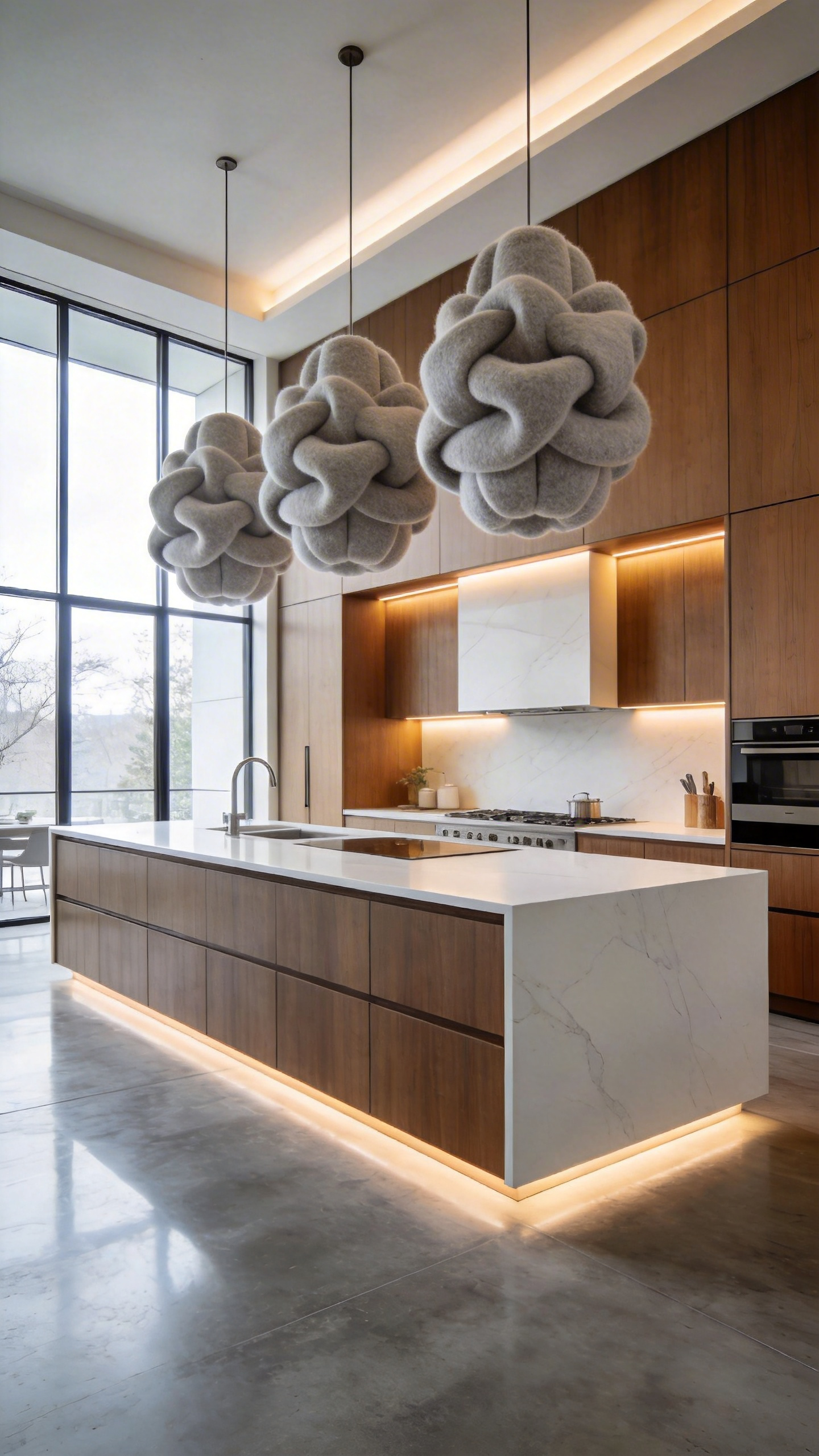
The modern island pendant now functions as a strategic acoustic interceptor. Specifically, these sculptural fixtures hang directly at ear level over social zones. As a result, they catch noise right where it starts. For example, brands like Lumenear engineer dome-shaped fixtures as acoustic parabolas.
In fact, their concave interiors trap sound waves rising from clattering dishes below. Alternatively, linear pendants use vertical baffles to disrupt horizontal noise paths. Beyond shape, materiality plays a crucial role in dampening sound. Trend-setters like Noz Nozawa utilize warm, honest textures over cold metals.
For instance, recycled PET felt provides a porous, lightweight barrier. Next, high-end designs feature natural wool felt for quiet luxury. These soft materials absorb up to 85 percent of ambient sound. In fact, a single acoustic fixture rivals the absorption of a medium area rug. Therefore, sculptural dampeners create a peaceful, life-enhancing sanctuary.
11. Invisible Under-Cabinet Illumination: The Secret to Eye-Level Ergonomic Comfort
Modern kitchen lighting transcends basic style. Specifically, invisible under-cabinet illumination serves as a meticulously engineered ergonomic solution. Historically, bulky fixtures created frustrating glare. Today, designers route half-inch channels directly into custom cabinet bottoms.
Therefore, aluminum housings act as cooling heat sinks to protect the diodes. Indeed, frosted diffusers create a seamless wash of ambient light. As a result, you easily avoid annoying reflective dots on glossy stone countertops.
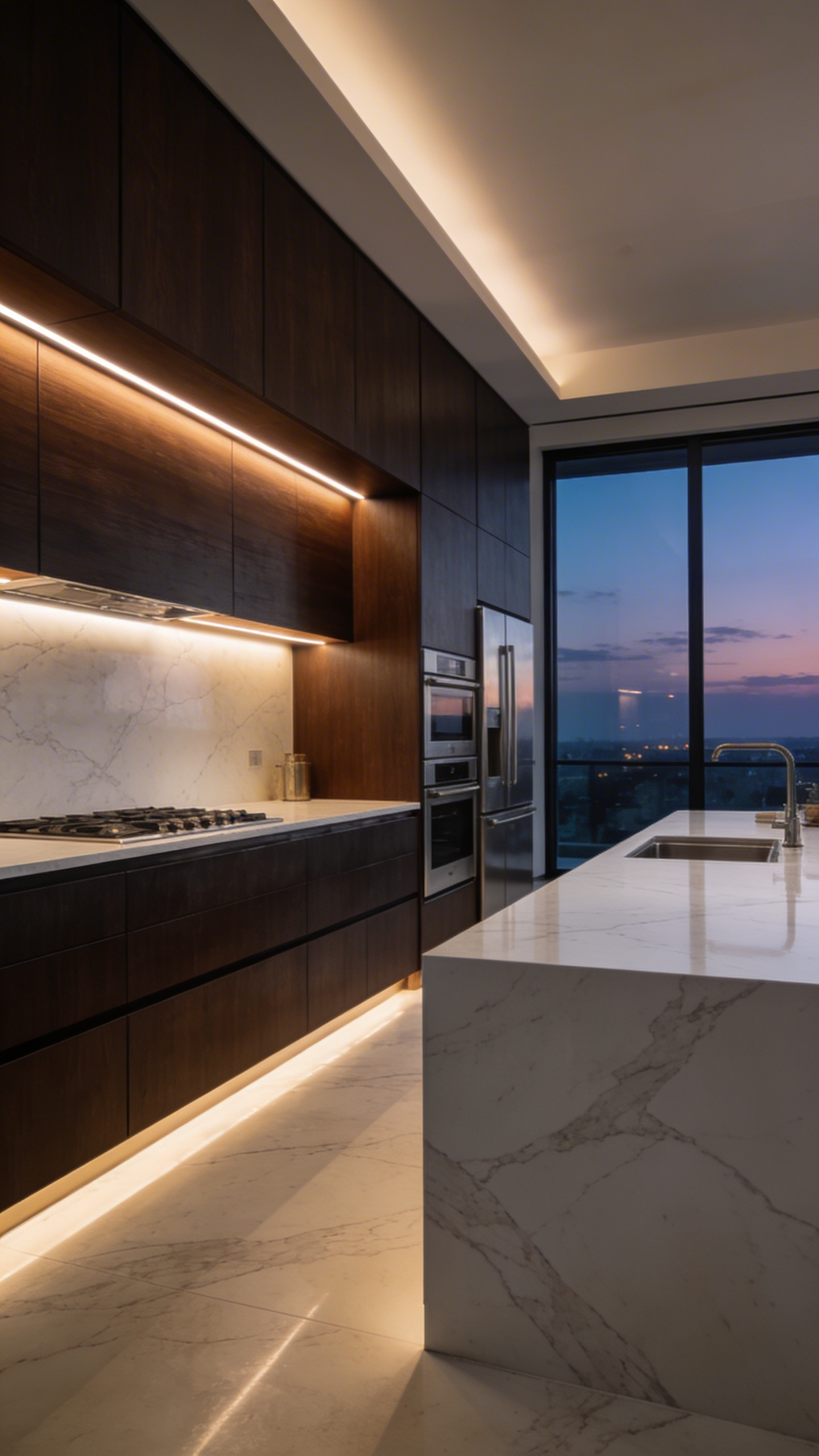
Proper fixture placement remains crucial for your physical comfort. Instead of hiding wires against the back wall, professionals now advocate for front-edge mounting. Specifically, this places the light directly between you and your hands. Therefore, shadows cast by your body disappear completely over the cutting board.
Next, tucking the fixture behind the cabinet frame safely breaks the direct sightline. In fact, you prevent exhausting glare-induced fatigue while preparing meals. Sensory ergonomics play a massive role in modern wellness architecture. For example, tunable white technology syncs perfectly with your natural circadian rhythm.
Initially, cool morning light boosts mental alertness for precise chopping tasks. Conversely, warming the color temperature at night shifts the kitchen into a relaxing social hub. Specifically, high-quality diodes with a 90-plus Color Rendering Index keep fresh food looking vibrant. Indeed, combining optimal brightness levels with these invisible fixtures greatly reduces daily visual strain. Therefore, your culinary workspace feels distinctly healthier and profoundly inviting.
12. Toe-Kick Nightlighting: Grounding the Space for Safe, Low-Stimulation Late-Night Navigation
Toe-kick nightlighting transforms late-night kitchen navigation into a calming experience. Specifically, this gentle lighting layer serves a vital biological purpose. Instead of guiding you, traditional overhead lights suppress healthy melatonin. Therefore, an amber glow between 2200K and 2700K protects sleep.
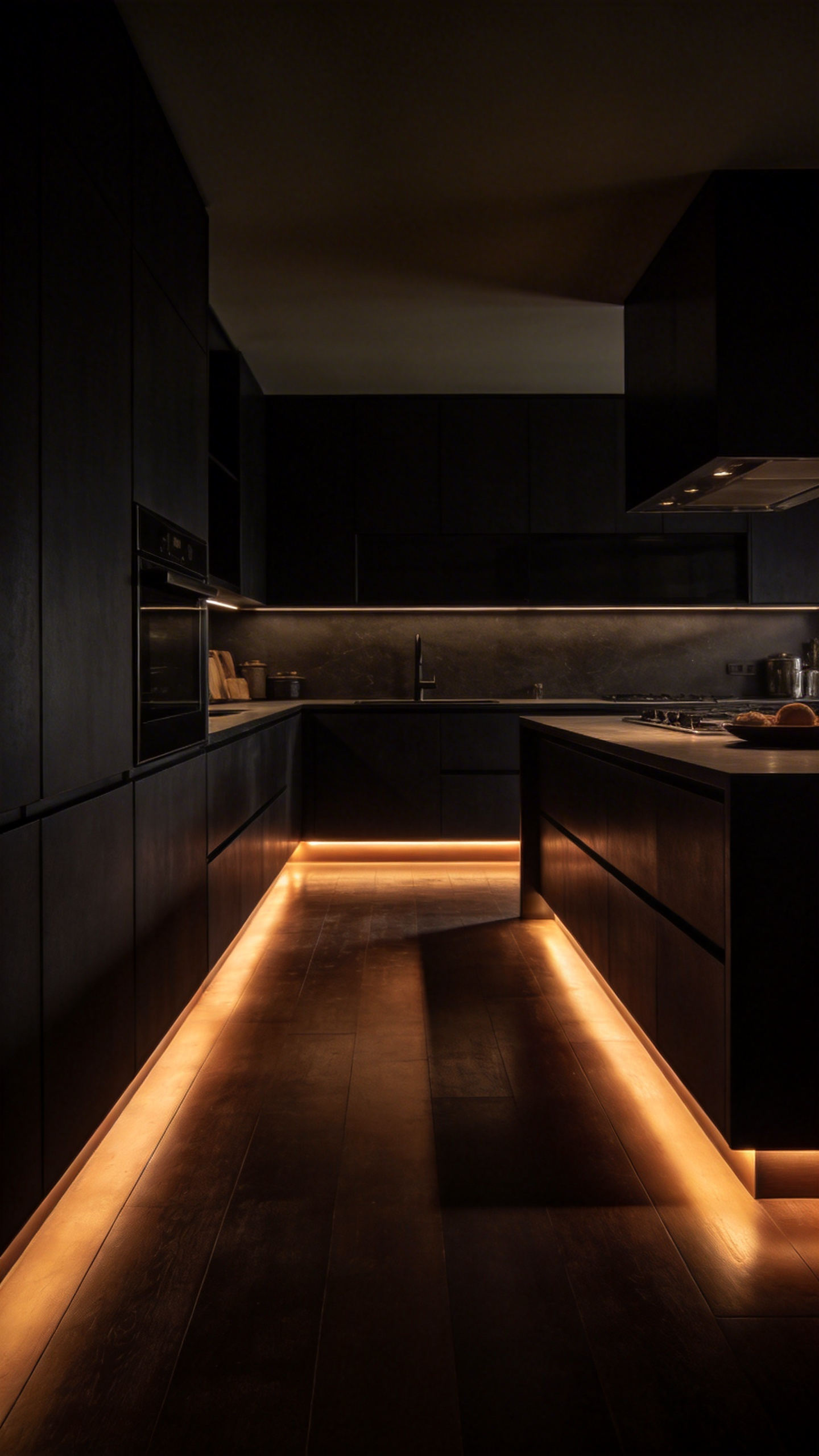
Indeed, low-level ground lighting significantly reduces your nighttime cognitive load. Therefore, a groggy brain maps boundaries without processing harsh glare. This indirect illumination is especially crucial for sensitive aging eyes. In fact, hidden passive infrared sensors can automatically guide your path. As a result, you never even have to touch a switch.
Beyond wellness, toe-kick lighting dramatically elevates the architectural room atmosphere. Historically, Bauhaus designers used similar techniques to dematerialize heavy furniture. Today, this gentle ground wash creates a beautiful floating illusion. However, you must select the correct technology for your flooring.
Glossy floors reflect traditional LED strips as harsh dotted lines. Specifically, design professionals prefer continuous Chip on Board technology here. In fact, this seamless beam eliminates hotspots and prevents visual overstimulation entirely. Ultimately, a high color rendering index beautifully enhances floor materials. For instance, warm light adds a hearth-like glow to wood. Conversely, it creates a soothing liquid effect on poured concrete.
13. Illuminated Pantries: Reducing Cognitive Load and Visual Strain During Organization
Historically, traditional pantries were dark spaces that created significant perceptual stress. Today, wellness architecture transforms these storage zones into luminous, highly curated environments. Specifically, modern pantry lighting serves as a sophisticated psychological tool. It actively manages your daily cognitive load and visual fatigue.
According to Cognitive Load Theory, our brains possess finite working memory. Therefore, searching through poorly lit shelves drains vital mental energy. Conversely, well-lit pantries reduce the friction of countless daily food decisions. This automated visibility preserves your mental energy for actual meal preparation.
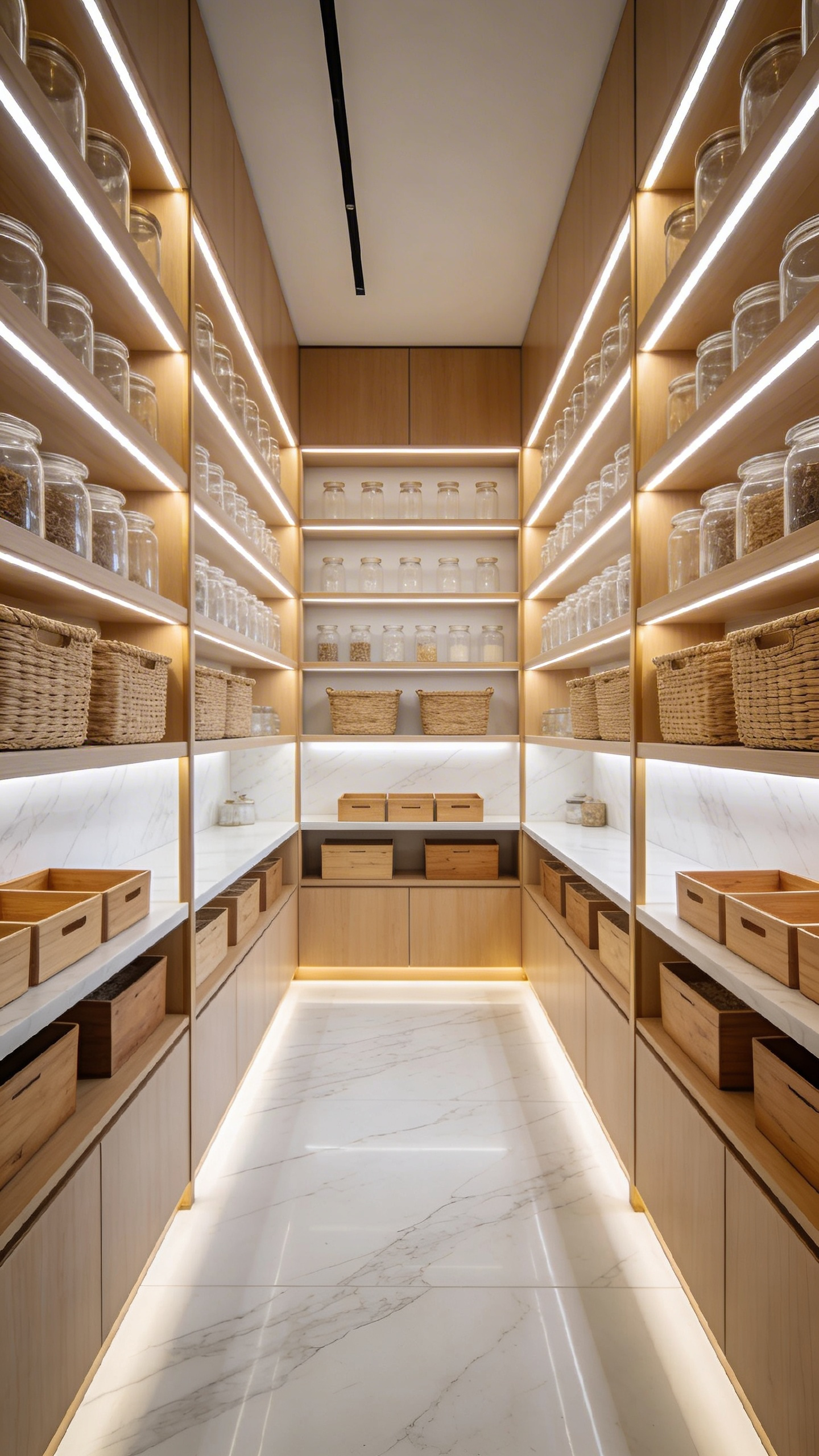
Indeed, light quality directly impacts your physical and mental comfort. Standard lighting often washes out colors and causes severe visual strain. Therefore, modern designers advocate for a Color Rendering Index above 90. This high CRI allows immediate visual confirmation of produce freshness.
Next, an optimal color temperature around 3500K creates a culinary sweet spot. This temperature provides crisp focus without feeling clinically harsh or unappetizing. Specifically, the sensory experience relies heavily on human-centric automation. In fact, motion-activated sensors support a seamless, hands-free kitchen flow.
Instead of a harsh glare, soft-start profiles fade on gradually. This gentle glow mimics natural light and prevents sudden eye strain. In fact, a layered lighting approach structures the entire organizational experience perfectly. Ambient ceiling lights reduce harsh contrast strain against dark floors. Meanwhile, task lighting on shelves directly illuminates individual food labels. Therefore, this deep micro-lighting keeps older items visible. This actively prevents food waste.
Lifestyle Integration: The Kitchen as a Multi-Sensory Sanctuary
Historically, kitchens were purely utilitarian food factories. However, modern architecture now views this space as a social-ritual sanctuary. Therefore, the traditional work triangle is quickly giving way to sensory zoning. Environmental lighting serves as the primary tool to define these distinct zones.
Specifically, human-centric lighting acts as a vital biological recalibration device. In fact, optimizing this space for neurological comfort can reduce cortisol by 37 percent. Therefore, wellness designers utilize tunable white technology to mirror natural solar progressions. For instance, bright, cool lighting suppresses melatonin to spark morning productivity. Conversely, low-intensity amber illumination triggers parasympathetic rest in the evening.
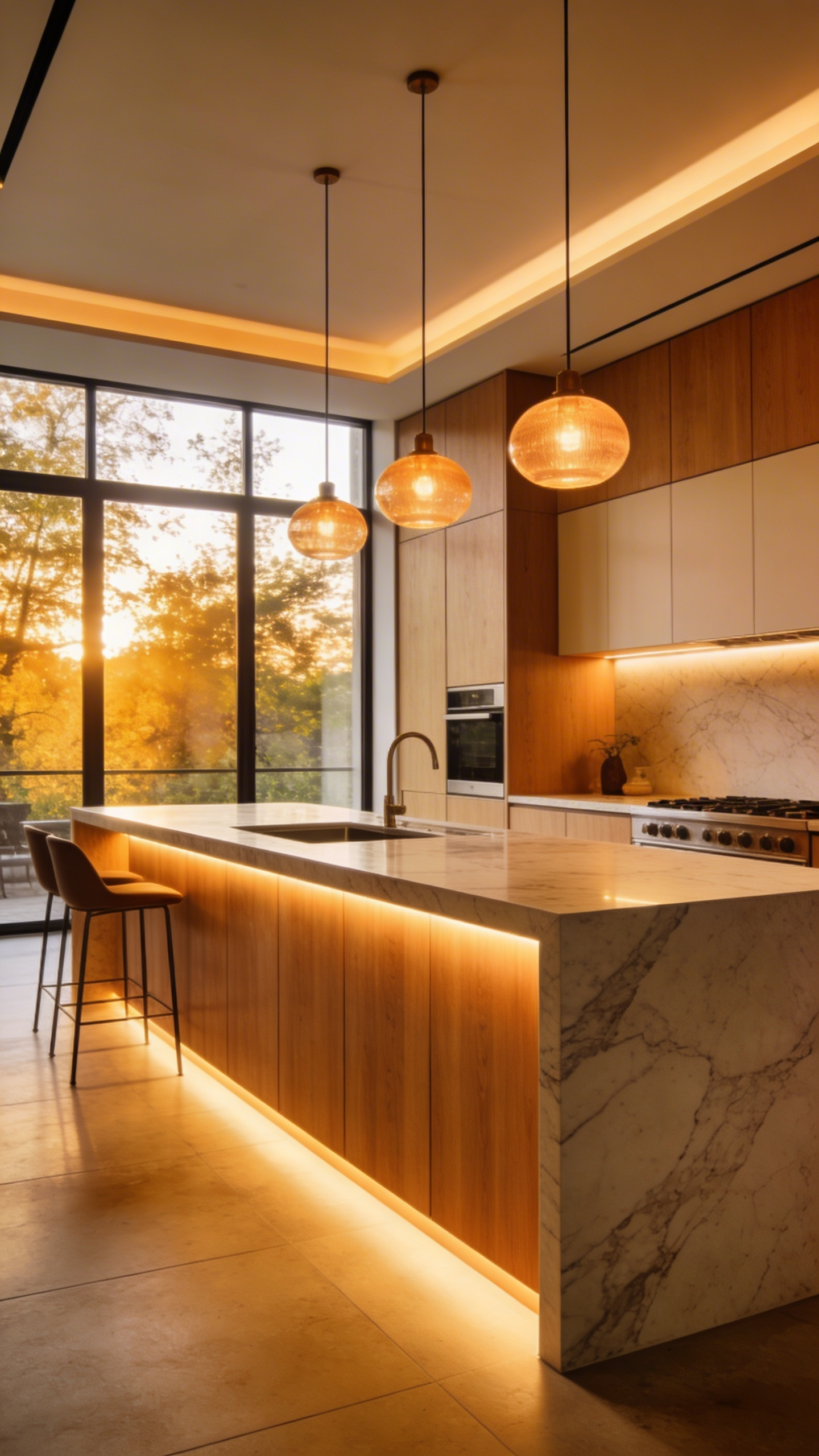
Indeed, a multi-sensory sanctuary deeply engages your sense of touch visually. Instead of flat overheads, grazing LEDs against textured travertine creates immediate haptic depth. Specifically, these microscopic shadows give the illumination a grounded, intimate weight. Next, modern kitchen layouts increasingly embrace a relaxed living room aesthetic.
Therefore, high-brightness architectural LEDs are tucked away invisibly under your counters. Meanwhile, beautifully curved, sculptural pendants act as soothing artistic statement pieces. Surprisingly, emerging gastrophysics research proves that lighting can actually alter flavor profiles. Indeed, using a color rendering index above 90 makes fresh food visually pop. In fact, dining in warm, dim light deepens our visceral enjoyment of comfort meals.
14. The Social Glow: Transitioning the Island from High-Focus Prep to Relaxed Gathering
Historically, the kitchen island was a hidden zone for heavy labor. Today, it serves as the ultimate social stage. Therefore, your lighting must adapt to this behavioral shift. Specifically, we must transition from high-focus prep to relaxed gathering. During meal prep, the island acts as a bright laboratory.
Therefore, you need crisp 4000K light for safety and alertness. This cool light actively suppresses melatonin to boost your focus.
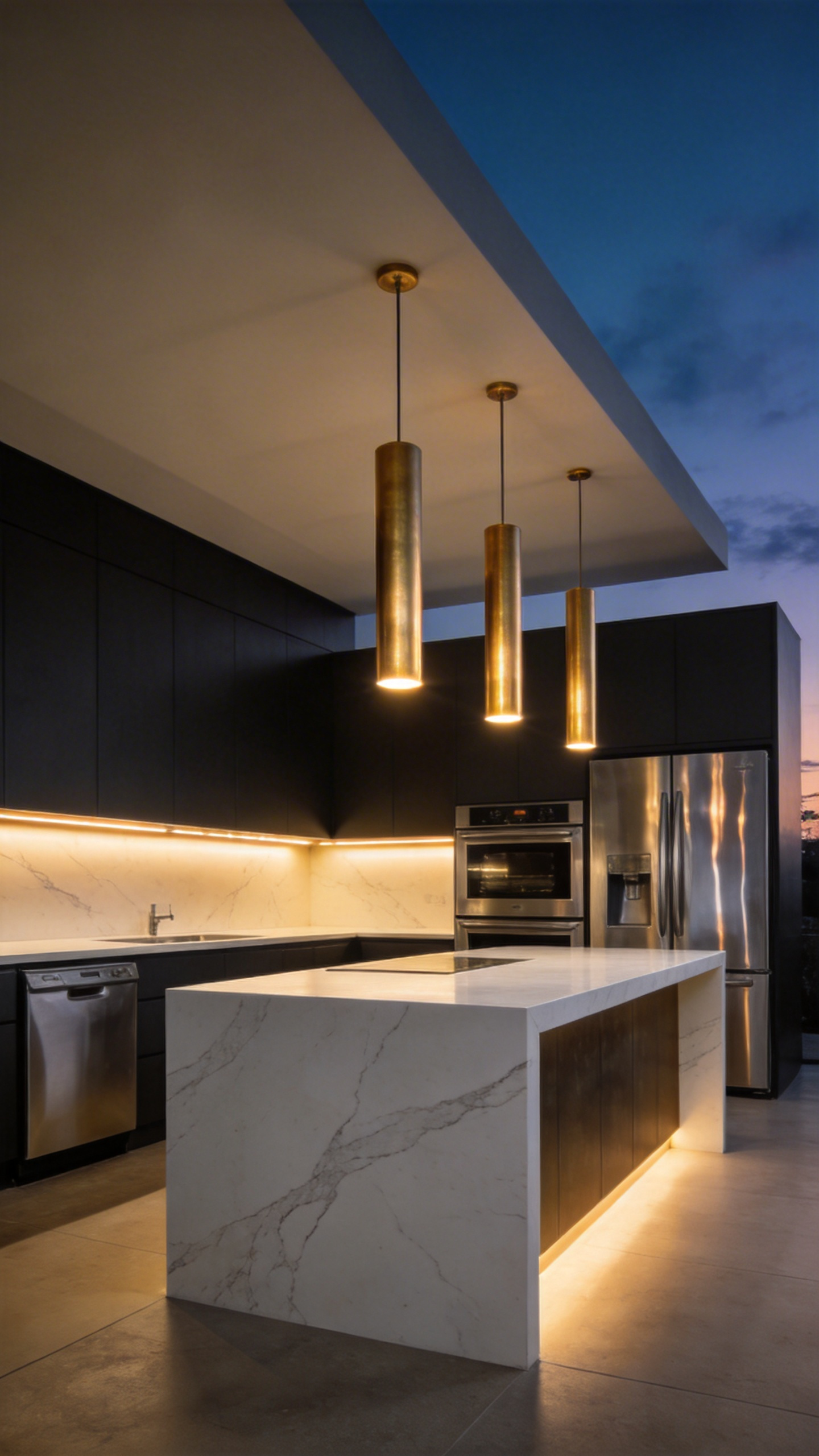
However, that bright glare feels exhausting during a dinner party. Instead, modern wellness architecture utilizes warm dimming technology. As you dim the lights, the color temperature naturally drops. Eventually, it mimics a honeyed 2200K incandescent glowing filament.
Biologically, this amber hue triggers relaxed social dwell time. In fact, this cue encourages guests to comfortably linger longer. Indeed, a successful social glow depends on your countertop materials. Overhead lighting on high-gloss marble causes harsh, stressful eye glare.
Therefore, we shift to layered accent lighting as evening falls. Particularly, pendant lights with metallic interiors work beautifully here. They cast a warm, flattering reflection onto your guests’ faces. Simultaneously, you should turn off recessed ceiling lights entirely. This creates soothing architectural shadows around the room’s perimeter.
Specifically, this contrast builds an intimate, campfire effect. Next, consider how you control this daily evening pivot. Some perfectionists prefer automated smart scenes for a consistent atmosphere. Conversely, traditionalists love the sensory ritual of tactile manual sliders. Physically lowering the lights signals your brain to unwind completely. Therefore, the host shifts gracefully from busy worker to relaxed entertainer.
15. Dining Nook Distinction: Using Low-Hanging Pendants to Carve Out Intimate Connection Zones
Modern open-plan kitchens often lack physical walls. Therefore, light must serve as the primary architect of intimacy. Specifically, low-hanging pendants create invisible boundaries. Lowering a fixture 30 inches above a table forms a light puddle.
Therefore, this pool acts as a psychological boundary. It signals to the brain that this space is protected. In fact, experts call this the campfire effect. Naturally, humans gather around this central glow for communal belonging.
Historically, Danish designer Poul Henningsen pioneered this glare-free approach. His goal involved shaping light to flatter skin tones. For instance, modern pendants often use clever tiered shades. These direct illumination downward while preventing visual strain.
Indeed, a narrow beam angle focuses attention perfectly. Particularly, a 15 to 30 degree spread illuminates the table surface. As a result, surrounding chairs fall into a soothing twilight. This contrast fosters deeper connection and mental relaxation.
Specifically, the material of your pendant dictates the exact mood. Opaque metal shades force light entirely downward. Therefore, they create a dramatic, intimate connection zone. Conversely, translucent glass shades provide a warm, all-encompassing halo.
To maximize wellness, consider warm-toned shade interiors like brass. Indeed, this metallic reflection mimics the warmth of a sunset. Physiologically, this 2700K amber glow triggers your parasympathetic nervous system. Therefore, your dining experience becomes a deeply restorative ritual.
16. Daylight Harvesting: Harmonizing Artificial LED Output with Shifting Solar Illumination
Daylight harvesting transforms the modern kitchen into a biologically supportive environment. Specifically, it shifts from static illumination to a dynamic dialogue with the solar cycle. Therefore, this technology does far more than simply save energy. Instead, it provides vital metabolic safety for our bodies.
Constant, high-blue glare from traditional LEDs can disrupt our circadian rhythms. Indeed, late-night exposure suppresses melatonin and impacts post-meal glucose metabolism. However, daylight harvesting systems naturally dim and warm artificial LEDs as evening approaches. Therefore, they align our digestive processes with our brain’s internal master clock.
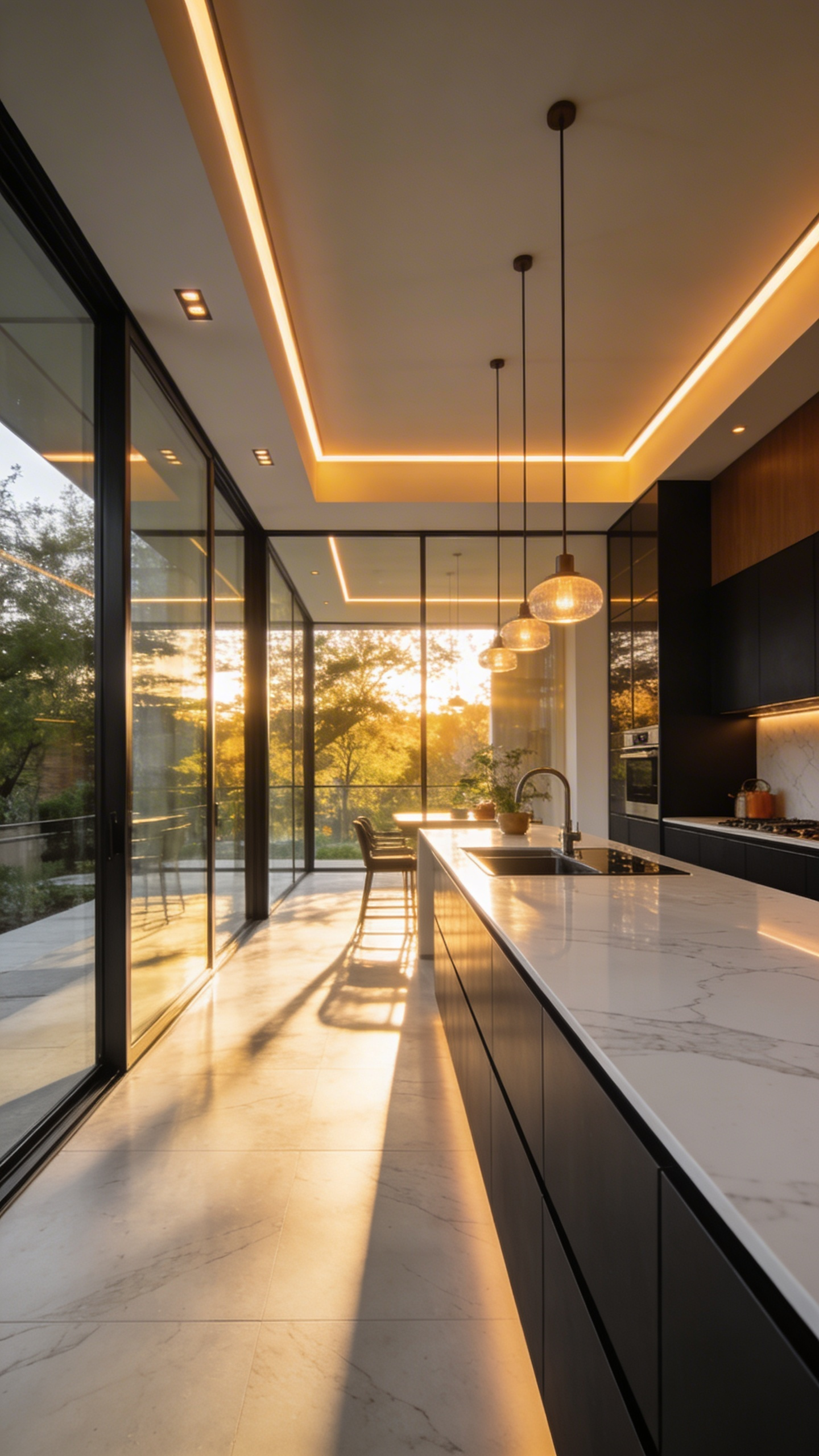
Modern living-kitchens frequently feature expansive glass walls and skylights. Naturally, managing the balance between harsh glare and soft glow becomes essential. Specifically, closed-loop photosensors measure total room light constantly. Interestingly, this includes the light bouncing off your specific countertops.
Material choices like white marble or matte black soapstone possess different light reflectance values. Therefore, the system calibrates its lighting output to match these distinct surface textures. When a passing cloud obscures the sun, the room’s response is instantaneous. Rather than a jarring pop, you experience a gentle velvet ramp.
Next, advanced smart systems also recalibrate the spectral power distribution throughout the day. For example, crisp midday white subtly fades into a rich, amber sunset hue. Indeed, task lighting over prep zones remains safely illuminated while the ambient light softens. In fact, your kitchen feels like a seamless extension of the shifting outdoor environment.
17. Minimalist Fixture Architecture: Reducing Visual Clutter for a Calmer Mind
Modern kitchens often generate overwhelming sensory input. Therefore, visual clutter acts as a subconscious cognitive tax. Specifically, a ceiling filled with bulky hardware induces unnecessary stress. Instead, minimalist fixture architecture systematically reduces this visual noise.
Therefore, trimless fixtures keep the ceiling an uninterrupted sky. Indeed, this clean visual plane signals your anxious brain to rest. This perfectly maintains the integrity of a modern kitchen design. Specifically, hidden high-CRI LEDs accurately replicate soothing natural sunlight. In fact, these hidden architectural lights help lower evening cortisol.
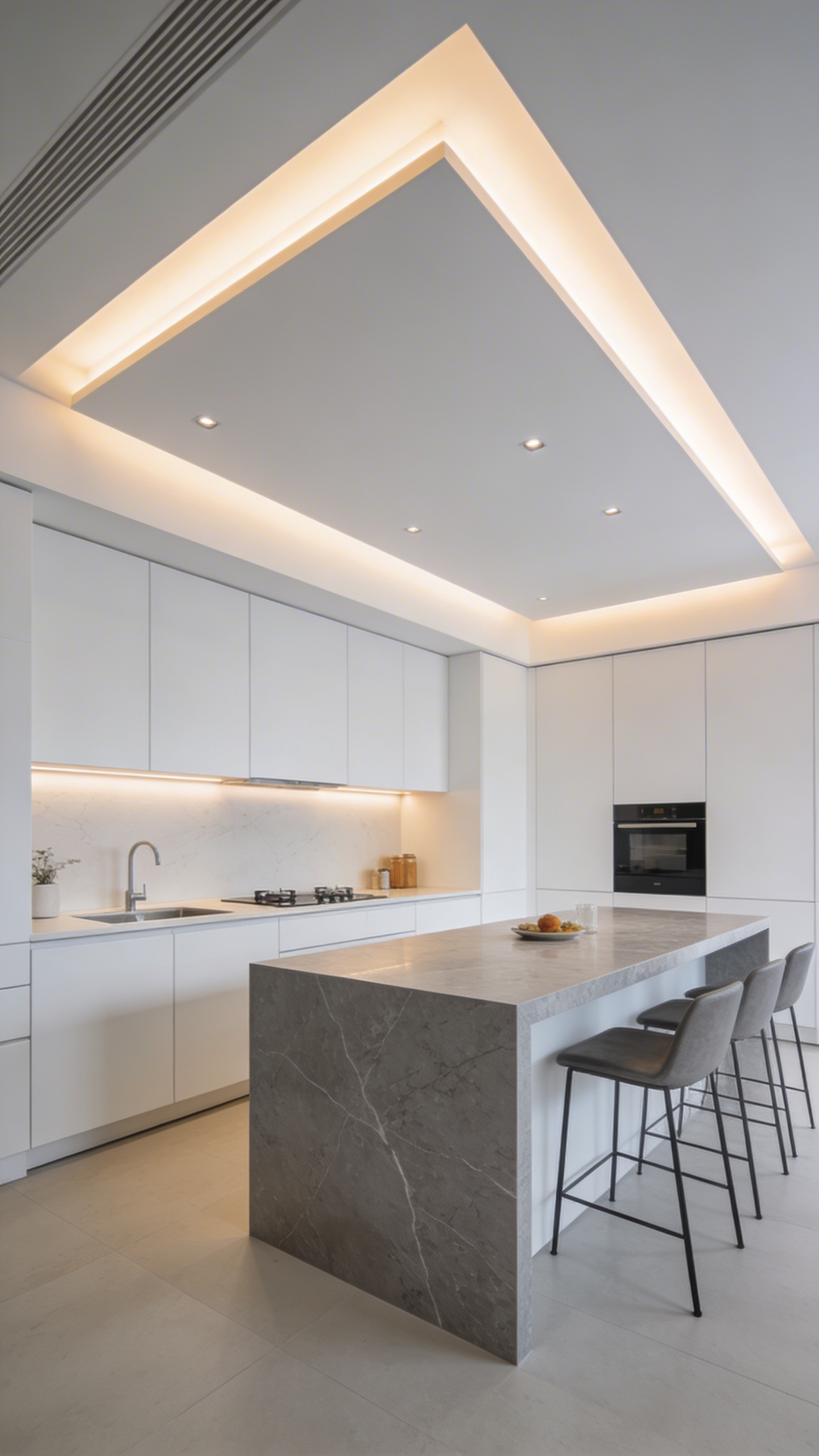
Historically, lighting design focused heavily on the decorative fixture itself. Today, innovators like Mario Nanni advocate designing the actual light. For instance, mud-in fixtures are plastered seamlessly directly into drywall. Therefore, they leave behind merely a precise, tiny aperture.
Similarly, micro-optic technology utilizes glare-free apertures as small as five millimeters. In fact, these tiny points deliver powerful illumination without visual distraction. Next, modern LEDs run cool enough to integrate seamlessly inside cabinetry. Therefore, routed linear profiles easily illuminate countertops without causing eye strain.
However, relying entirely on invisible lighting poses a slight aesthetic risk. Indeed, without any visual focal points, a kitchen space might feel flat. Therefore, authoritative designers strongly advocate for a nuanced layered reveal. Essentially, hidden architectural lighting confidently performs ninety percent of the ambient work. Specifically, a single sculptural pendant acts as a grounding visual anchor. In fact, this balanced architectural approach provides optimal mental clarity and functional beauty.
18. The ‘Wind-Down’ Setting: Using Amber Hues to Transition the Home from Active to Restful
Modern open-plan homes require a functional lighting shift at night. Specifically, amber hues transition the kitchen into a restful state. This creates a wellness concept known as biological darkness. Therefore, lighting between 1800K and 2200K gently signals your brain.
Your body begins melatonin secretion while you finish evening chores. Indeed, this warm glow effectively flushes away workday cortisol. You naturally prepare for sleep hours before hitting the pillow.
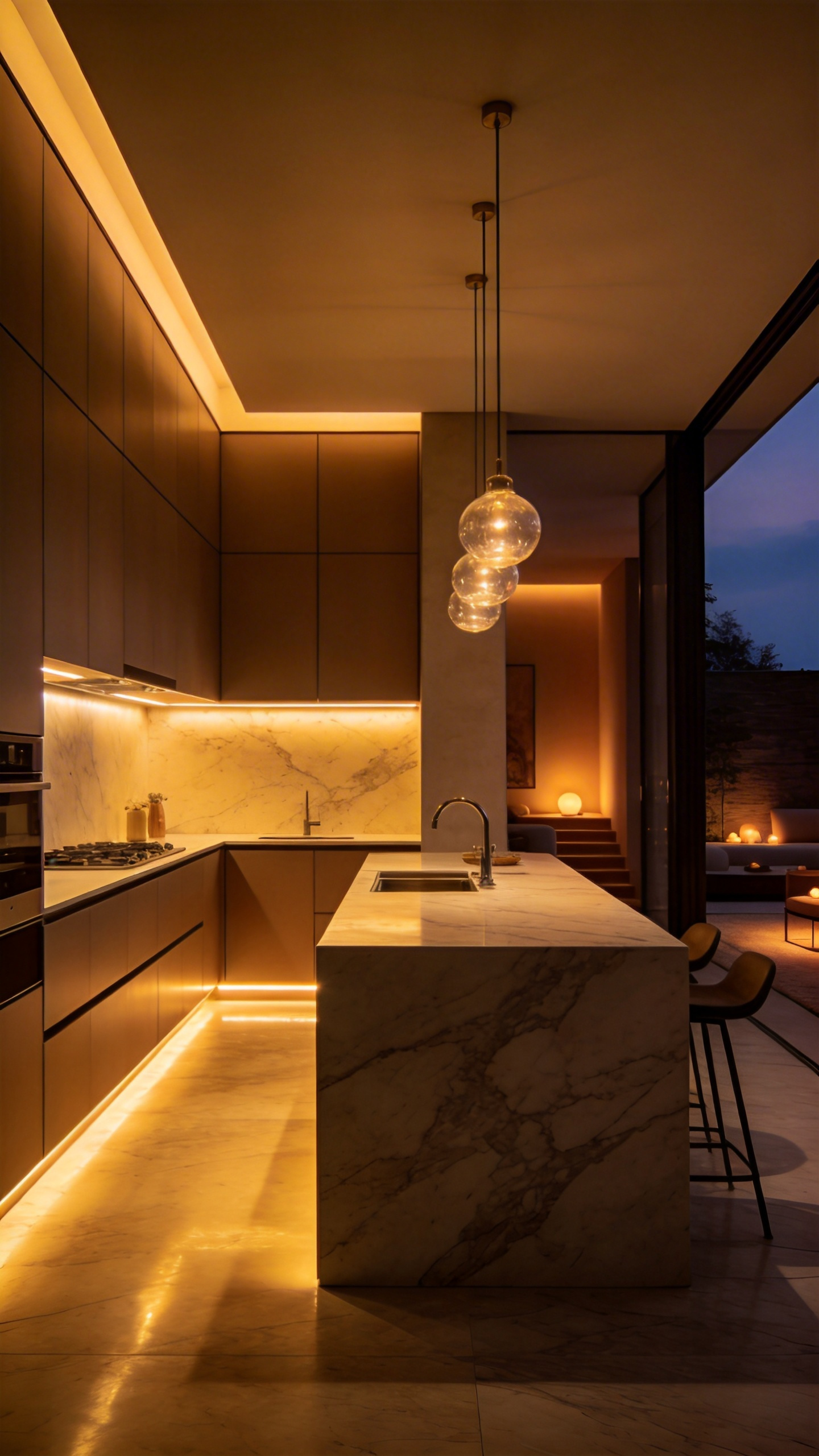
Specifically, high-end tunable white systems achieve this artful dimming. For instance, advanced LEDs emulate an incandescent black body curve. Therefore, crisp lighting gracefully shifts to a candle-like warmth. Aesthetically, this amber setting completely transforms your physical kitchen materials.
Instead of looking flat, walnut grains appear deeply toasted. Indeed, clinical white marble becomes a softly glowing architectural element. Next, brass and copper hardware amplify this light beautifully. In fact, small pools of golden warmth anchor the darkened room.
Indeed, this trend returns the modern kitchen to its ancestral hearth. You experience a primal sense of safety and calm. Practically, you must completely de-emphasize bright overhead recessed lighting. Instead, rely on warm under-cabinet strips and toe-kick illumination.
Therefore, lowering the primary light source closely mimics natural evening dusk. Specifically, an amber glass pendant serves as your modern fire. By integrating these advanced principles of modern kitchen lighting, you transform the heart of your home. It becomes a sophisticated sanctuary nurturing both body and spirit.
Frequently Asked Questions
What is the best color temperature for modern kitchen lighting?
The ideal color temperature depends on the time of day. For morning tasks, a cool 4000K to 5000K supports alertness and cortisol production. For evening social time or winding down, shifting to a warm 2200K to 2700K helps the body transition toward sleep.
How high should I hang modern pendant lights over a kitchen island?
Standard design protocol suggests hanging island pendants approximately 30 to 36 inches above the countertop surface. This height provides optimal task illumination while maintaining clear sightlines across the room.
Can smart lighting systems improve health in the kitchen?
Yes, smart lighting systems can automate the transition of color temperatures throughout the day. By mimicking the sun’s natural cycle (circadian rhythm), these systems help regulate sleep hormones and metabolic health.