A small bathroom is not a compromise. It is an act of intentionality made physical. Every object in the room matters because there is nowhere for it to hide. When you approach bathroom decoration in small spaces, you are not fighting limitations. You are working within them, which turns out to be a kind of clarity.
The smallness is the advantage. It forces you to choose. A small bathroom cannot absorb noise or clutter. It demands that each element earn its place. When each element earns its place, something shifts. The room stops feeling tight and starts feeling concentrated. Almost sacred.
This is where the real work begins. How you arrange bathroom decoration in a small space determines whether morning minutes feel rushed or ritualistic, whether evenings feel spa-like or sterile. The bathroom is where two transitions happen every single day: the move from sleep to action, and the move from action back to rest. The design of that room shapes how those transitions land in your nervous system.
The fifteen ideas ahead are not decorative flourishes. They are invitations to remake your small bathroom into something that serves you — something that opens, soothes, and supports the quiet ceremonies that hold your days together. Each one works independently. Start with the ones that speak to your space and your rhythm. You can also explore small bathroom inspiration ideas to see how others have approached this.
1. Floor-to-Ceiling Tiles That Draw the Eye Upward
The psychological weight of a small room lifts the moment the eye has somewhere to go. Vertical tile orientation does this work. Thin brick or tall subway tiles in a 10x30cm format, stacked in continuous runs, direct attention upward and create the perception of expanded height.
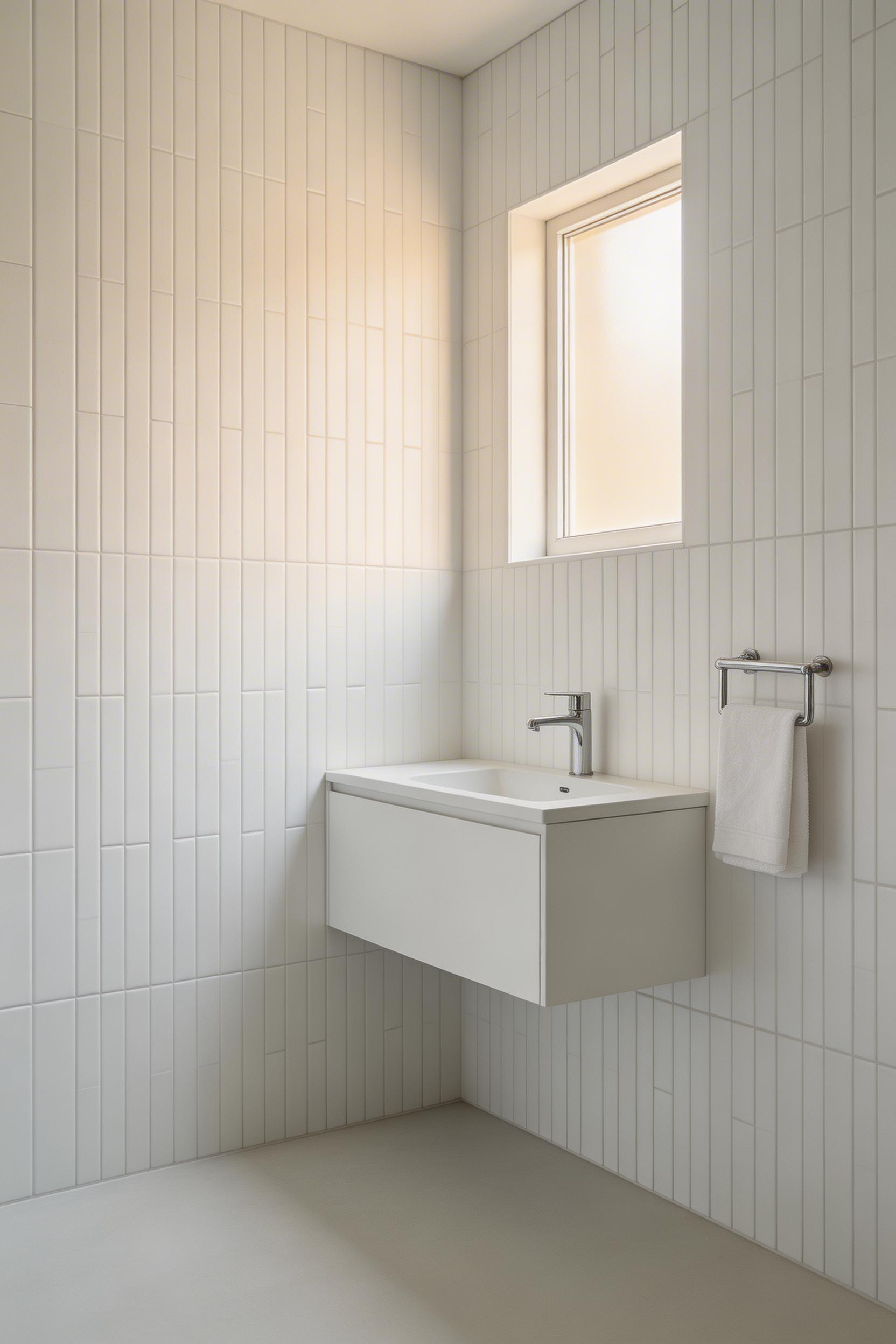
Light-coloured grout that matches the tile creates the most cohesive effect. Where tile colour and grout merge, the wall reads as continuous and unbroken. Vertical stacking — not staggered offset — produces the clearest upward visual movement. Avoid mosaic patterns in vertical runs; excessive grout lines create visual noise that defeats the purpose.
For ceilings below 2.4 metres, tile runs of 1.2 to 1.5 metres prove effective. In taller spaces (2.5m+), extend tiles all the way to the ceiling for maximum effect. Matte and textured finishes in vertical stacks offer more visual interest than gloss without adding visual chaos. A flat gloss surface in a tiny room can feel clinical; matte finishes absorb slightly and warm the atmosphere.
This arrangement works on a deeper level. The eye’s natural movement upward, toward light and open space, quiets the nervous system. It counteracts the claustrophobia that small rooms can trigger. Height creates psychological openness. As a foundational move in any bathroom decoration small strategy, vertical tiles cost no more than horizontal ones — they simply require intention.
When to Stop Short of the Ceiling
If your ceiling is heavily textured or poorly finished, tiling to the full height draws attention to it. In that case, tile to 2.1 metres and paint the remainder in a matching white. The upward movement still registers, and the ceiling defect disappears.
2. Large-Format Tiles to Reduce Visual Noise in Small Bathroom Decoration
Visual fragmentation creates subconscious stress. Every grout line is a visual interruption. In a small room, those interruptions accumulate quickly.
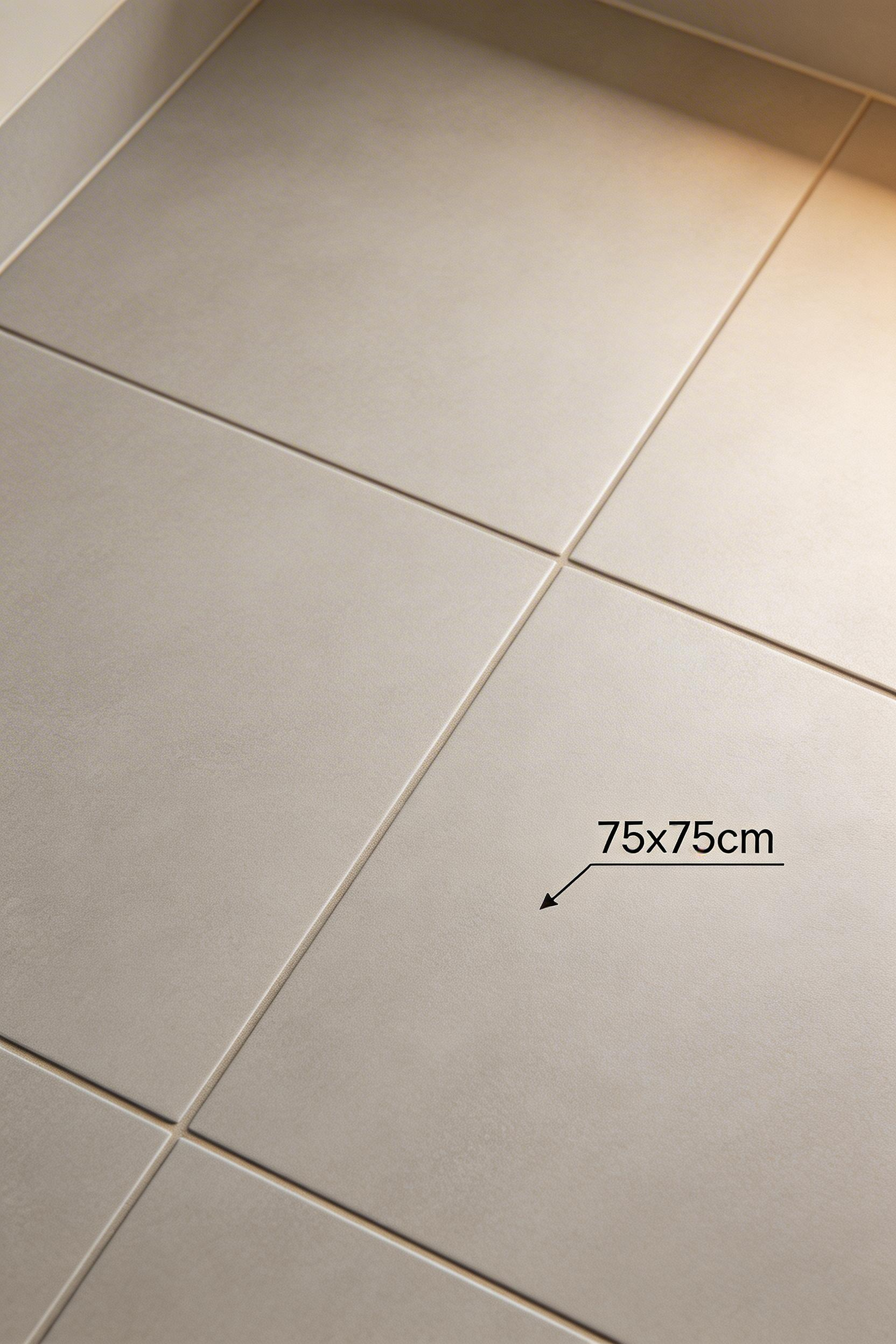
Large-format tiles — minimum 60x60cm, ideally 75x75cm or 80x40cm — reduce grout lines by 50 to 70 per cent compared to standard 20x20cm tiles. Porcelain outperforms stone in durability and moisture resistance for bathroom use. Brands like Porcelanosa XLIGHT reach up to 270x120cm in 6mm thickness. Topps Tiles and Johnson Tiles offer solid mid-market options for most budgets.
Installation requires levelling clips (QEP LASH or Raimondi RLS systems) to keep large formats perfectly flat. Without them, lippage creates shadows that betray every imperfect surface beneath. When you match grout colour closely to tile, the grout lines become nearly invisible. This merged appearance extends visual space and settles the room optically.
Floor-to-wall continuity amplifies the effect further. Use the same large tile from floor to shower wall. Both surfaces read as a single continuous plane rather than competing zones. This optical merging makes tight spaces feel unified.
Consider also the choice of bathroom flooring ideas for small bathrooms beyond standard tile — textured stone-effect porcelain, for instance, adds tactile interest without adding visual noise. The wellness benefit is tangible: reduced visual fragmentation creates the calm, uncluttered visual field that distinguishes a genuine spa from a functional room.
3. A Frameless Glass Shower Screen as Small Bathroom Decoration
Barriers divide. Frames interrupt. A frameless glass screen removes the visual boundary between shower zone and bathroom proper, keeping the entire room’s sense of spaciousness intact across its full width.
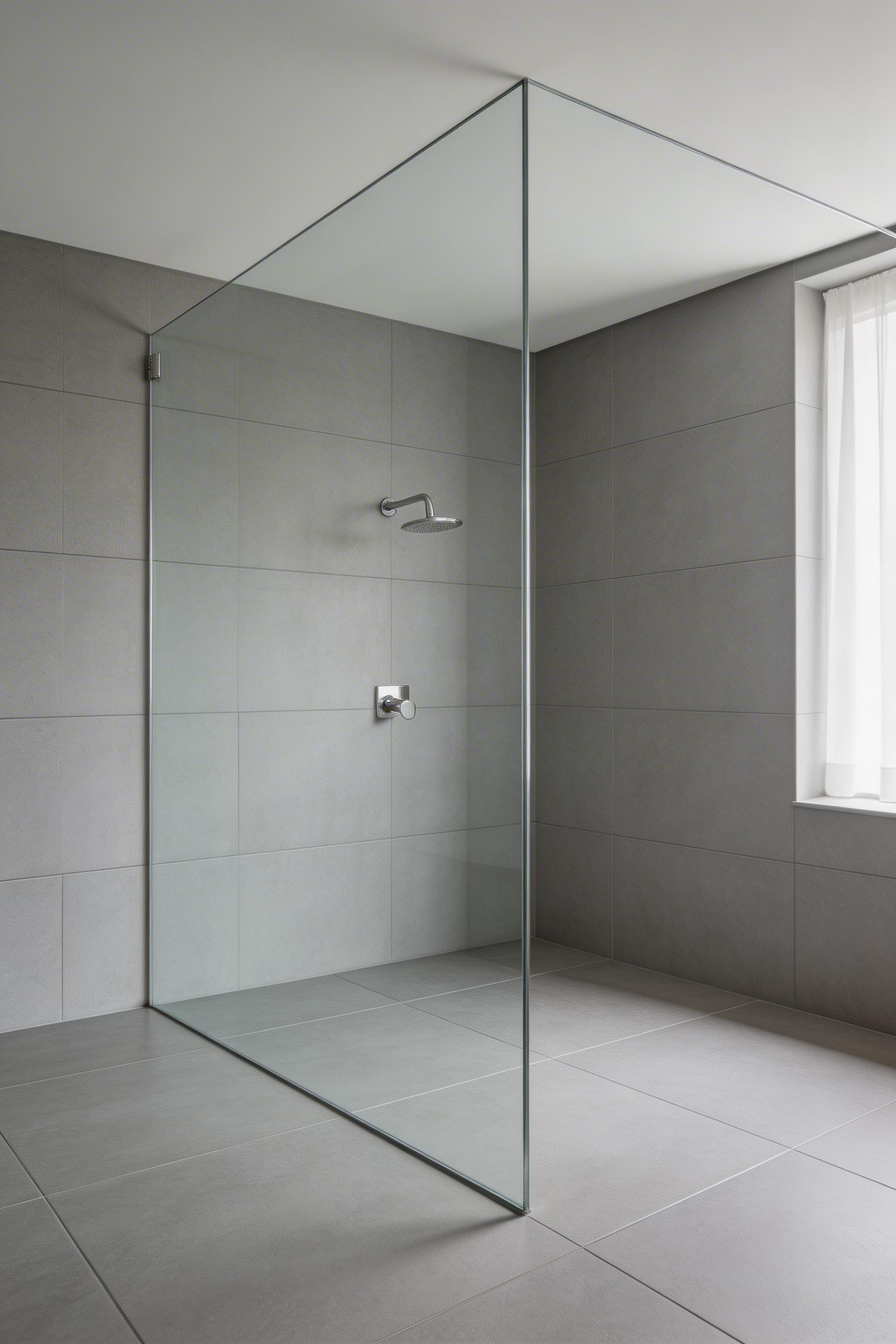
Eight-millimetre tempered glass is the standard choice (£250–350/m² installed). Ten-millimetre premium options (£350–500+/m²) add weight and a more substantial feel. Design options include pivot hinged (opens inward or outward), sliding bi-fold (folds against the wall — useful for tight floor plans), and fixed wetroom panels (requires sloped floor and drainage planning from the outset).
Clear glass maximises light transmission through the full room. Fluted or reeded glass offers privacy while maintaining spatial perception — far better than frosted glass, which deadens the sense of openness and light. Wetroom style (no tray, sloped floor, linear drain) suits minimalist bathroom decoration in small spaces beautifully. A tray-and-screen system is more practical for standard construction without a concrete subfloor.
The psychological benefit is real. The biophilic principle of unobstructed sightlines reduces the sense of isolation during showering. You remain connected to the rest of the room. The shower becomes part of the bathroom’s natural flow rather than a separate compartment — a distinction that registers, however subliminally, every time you step in. As a single change in bathroom decoration for small spaces, a frameless screen delivers the most immediate spatial shift per pound spent.
4. Light-Reflective Colour Palettes for Small Bathroom Decoration
Light reflects differently from different surfaces. The colour you choose determines how much light bounces back into the room and how that light feels against skin and surfaces at 6am.
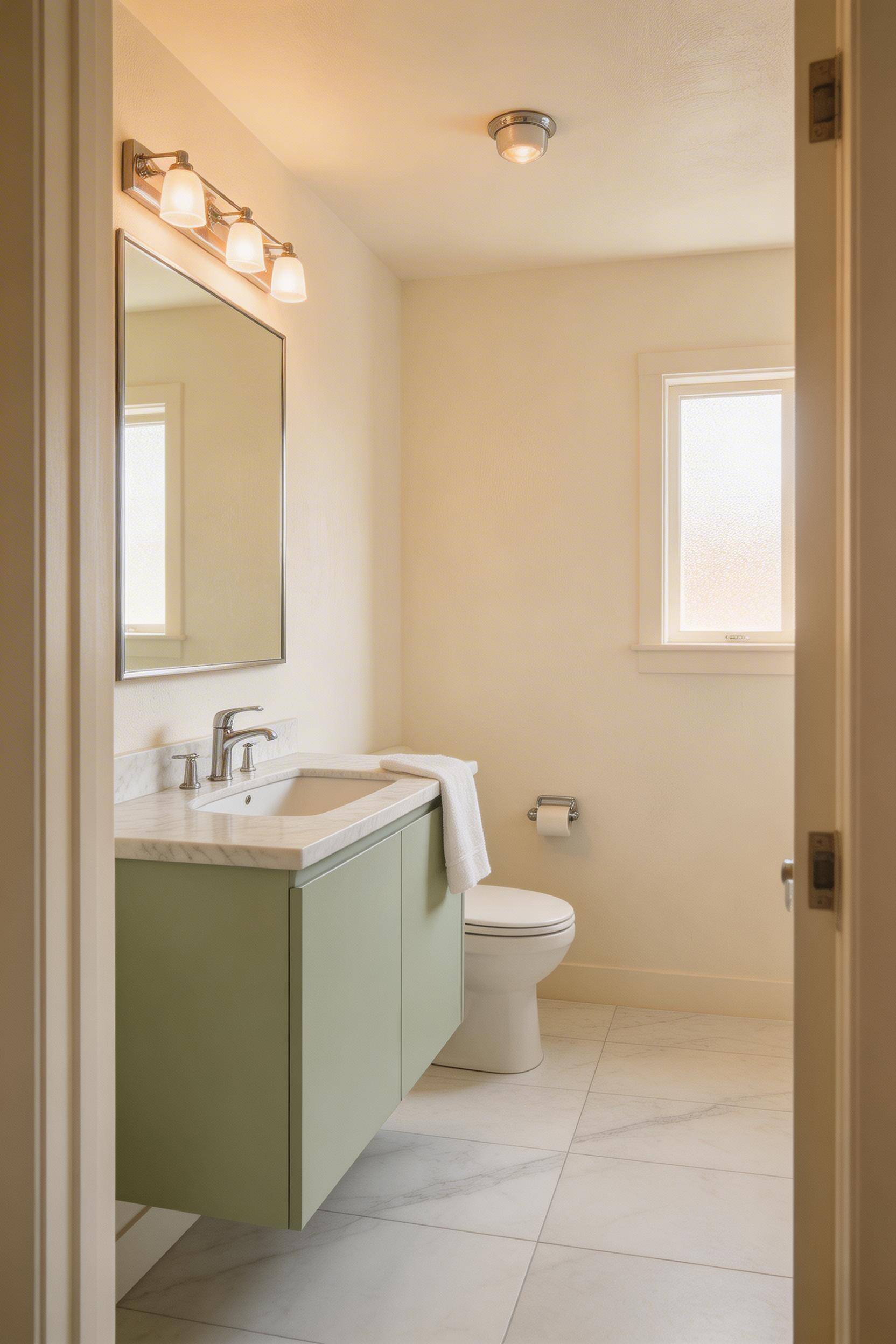
Light Reflectance Value (LRV) measures how much light a colour bounces back into a space. An LRV above 60 is the threshold for small spaces; 70 and above is optimal in artificial-light environments. Benjamin Moore’s Chantilly Lace (LRV 90.04) and White Dove (LRV 83.16) represent the brightest end of the white spectrum. Farrow & Ball’s All White and Shaded White No. 201 offer softer alternatives for those who find bright whites too sharp.
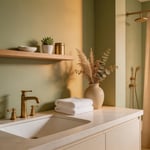
Pale sage (Little Greene Sage Green, Mylands Chester Square No. 199) typically sits at LRV 55–65 and pairs cleanly with crisp whites for visual balance. Soft stone tones such as Mylands Honest John No. 58 warm the space without adding the coldness of pure whites. Warm whites prove more forgiving in artificial light; cool whites with blue-grey undertones require 2700K–3000K bulbs to avoid a clinical effect.
The wellness layer is significant. High-LRV palettes support circadian alignment by maximising the light your body receives during morning routines. Pale sage creates biophilic calm — your nervous system recognises plant tones. Together, colour and light shape how your body transitions from sleep to wakefulness.
5. Strategic Mirror Placement to Multiply Natural Light
A mirror is not decoration. It is a tool for amplifying light and perceived space. Placement determines whether it works or simply reflects a wall.
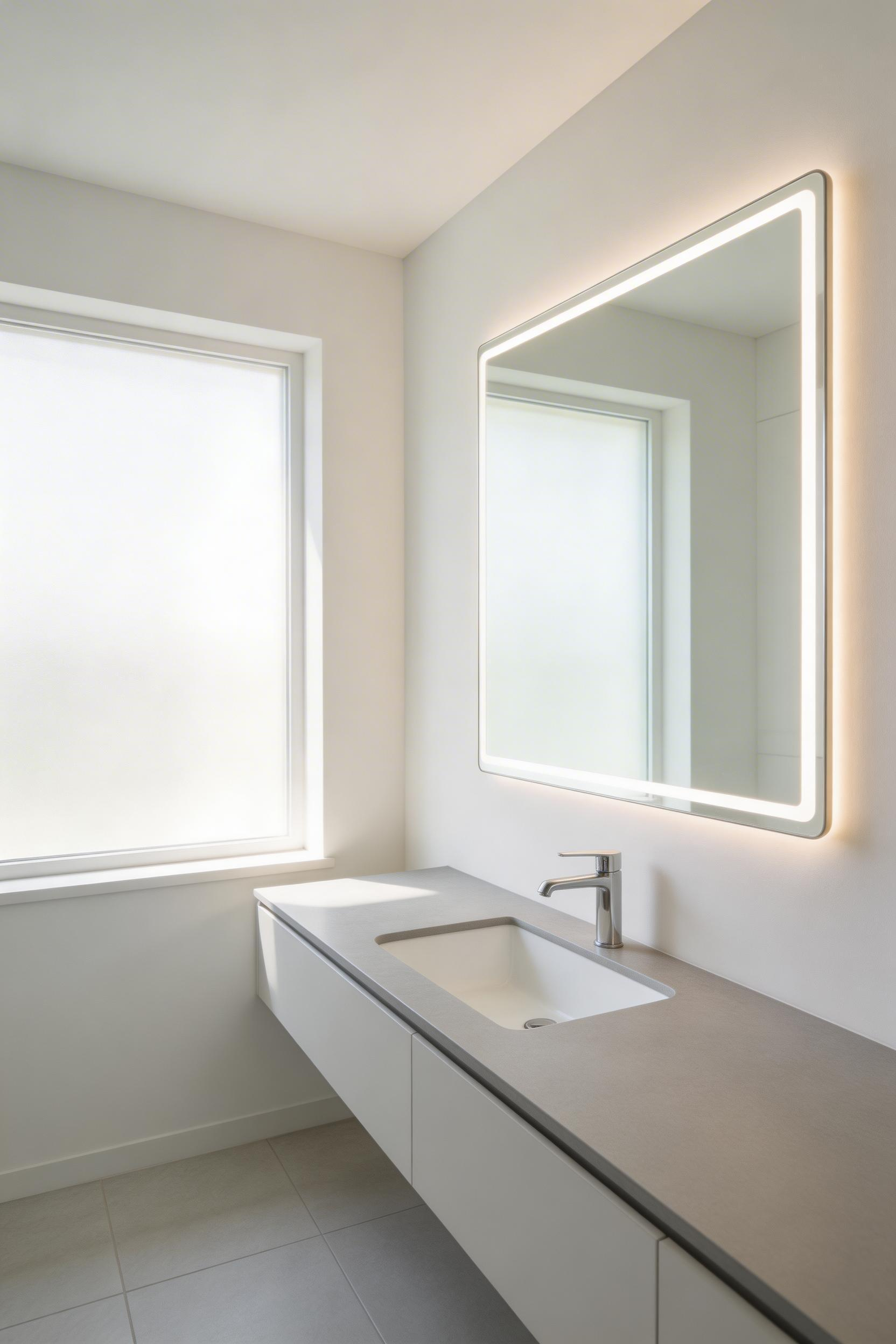
Full-width vanity mirrors (120cm+) expand perceived space more effectively than round statement mirrors. Install at 120–130cm from floor for both visual function and ergonomic balance. Round or oval mirrors (60–80cm diameter) create softer visual flow; positioning one 30cm to the side of a window bounces natural light two to three times deeper into the room.
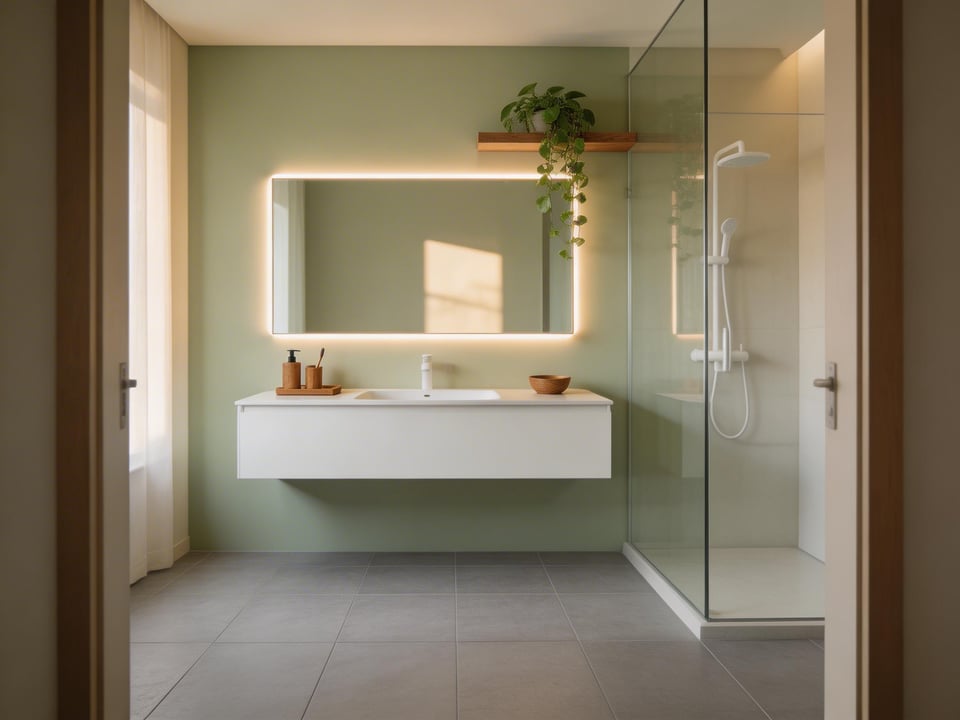
Backlit LED mirrors provide integrated task lighting and create a calm spa-halo effect without adding visible fixture clutter. Over-door mirrors (40–60cm, at 180–200cm height) offer secondary reflection without consuming prime wall space. Position large mirrors opposite doors to create maximum light bounce across the full room volume.
The mistake most people make: multiple small mirrors fragment visual attention and create competing reflections that confuse spatial perception. A single large mirror is consistently more effective. Browse bathroom mirror ideas based on your window orientation and dominant light source. Increased light via mirrors does real physiological work — it regulates circadian rhythms, improves mood, and softens the harshness of early mornings.
Backlit vs. Front-Lit Mirrors
Front-lit mirrors (with strip lights along the top) create harsh shadows below the nose and chin. Backlit mirrors and side-lit sconces eliminate this entirely. For accurate grooming light, side placement at face height beats overhead every time.
6. Maximising Natural Light in a Small Bathroom Decoration Plan
Daylight is the most powerful circadian synchroniser available. Even modest improvements in how much of it reaches your small bathroom reshape mornings and sleep quality over time.
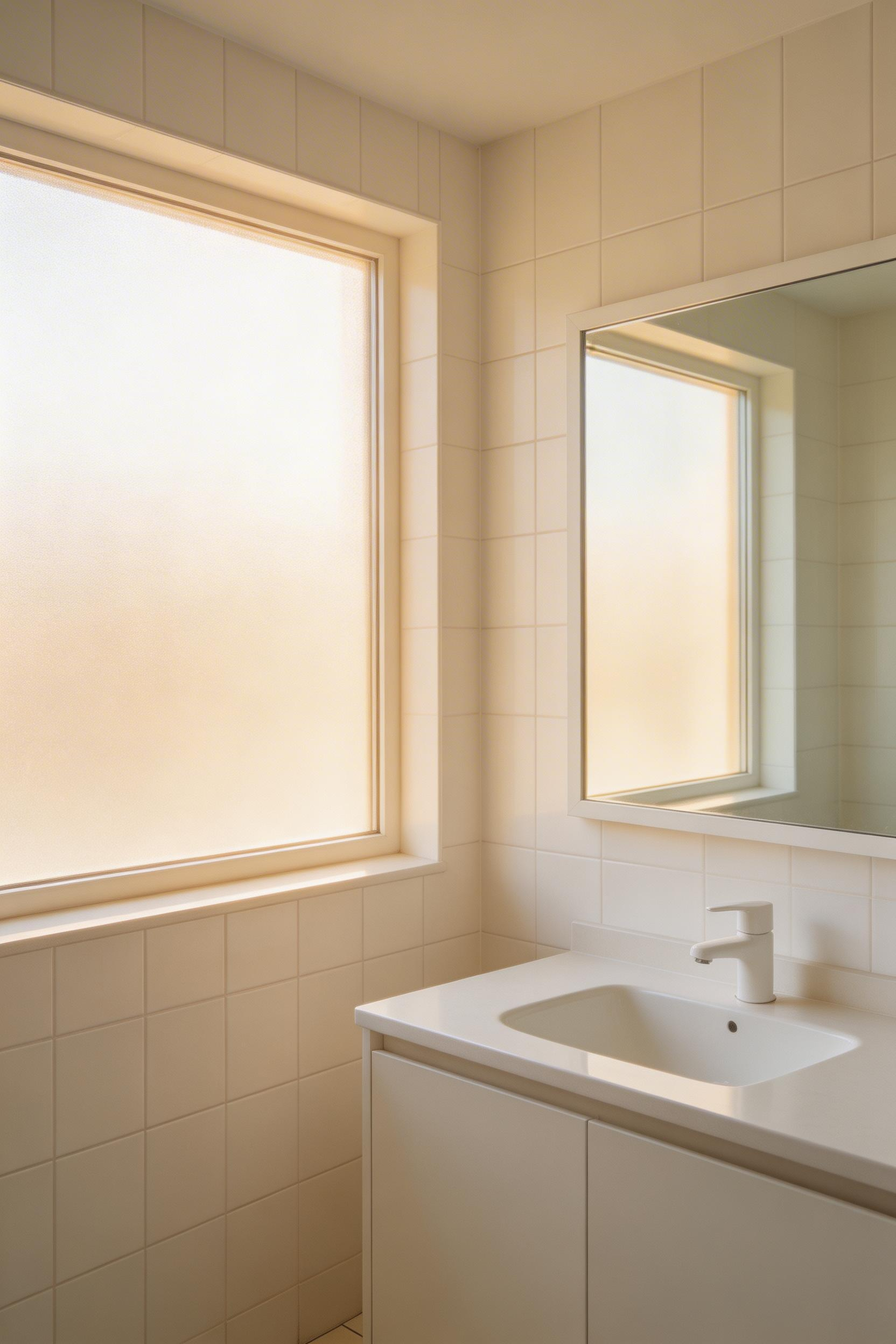
Frosted glass windows and privacy films transmit 60–70 per cent of available light while completely blocking sightlines. This is a significant improvement over net curtains, which block the majority of usable daylight. Borrowed light panels — glass blocks or internal glazed panels set into partition walls — pull daylight from adjacent rooms into windowless or north-facing bathrooms without raising privacy concerns.
Skylights suit ground-floor extensions and top-floor bathrooms. Solar tubes (Velux Sun Tunnel, Solatube) channel daylight through reflective internal tubes into bathrooms up to 10 metres from the roof. For basement bathrooms, a light well dug outside the external wall and lined with reflective white or mirrored finish dramatically increases available daylight where no window was previously possible.
The physiology here is non-negotiable. Natural light suppresses melatonin, supports healthy morning cortisol production, and measurably improves sleep quality. This is not an aesthetic preference. It is a daily intervention. Among all the approaches to bathroom decoration in small spaces, improving natural light delivers the broadest wellness return. Many people underestimate how much a solar tube or a privacy film change can shift the character of a dark bathroom — often more than a full aesthetic redesign.
7. Layered Artificial Lighting for Atmosphere and Function
A single overhead light is hostile to the bathroom’s dual purpose. Three layers of light — ambient, task, and accent — turn a small bathroom into a space that functions and feels right across different times of day.
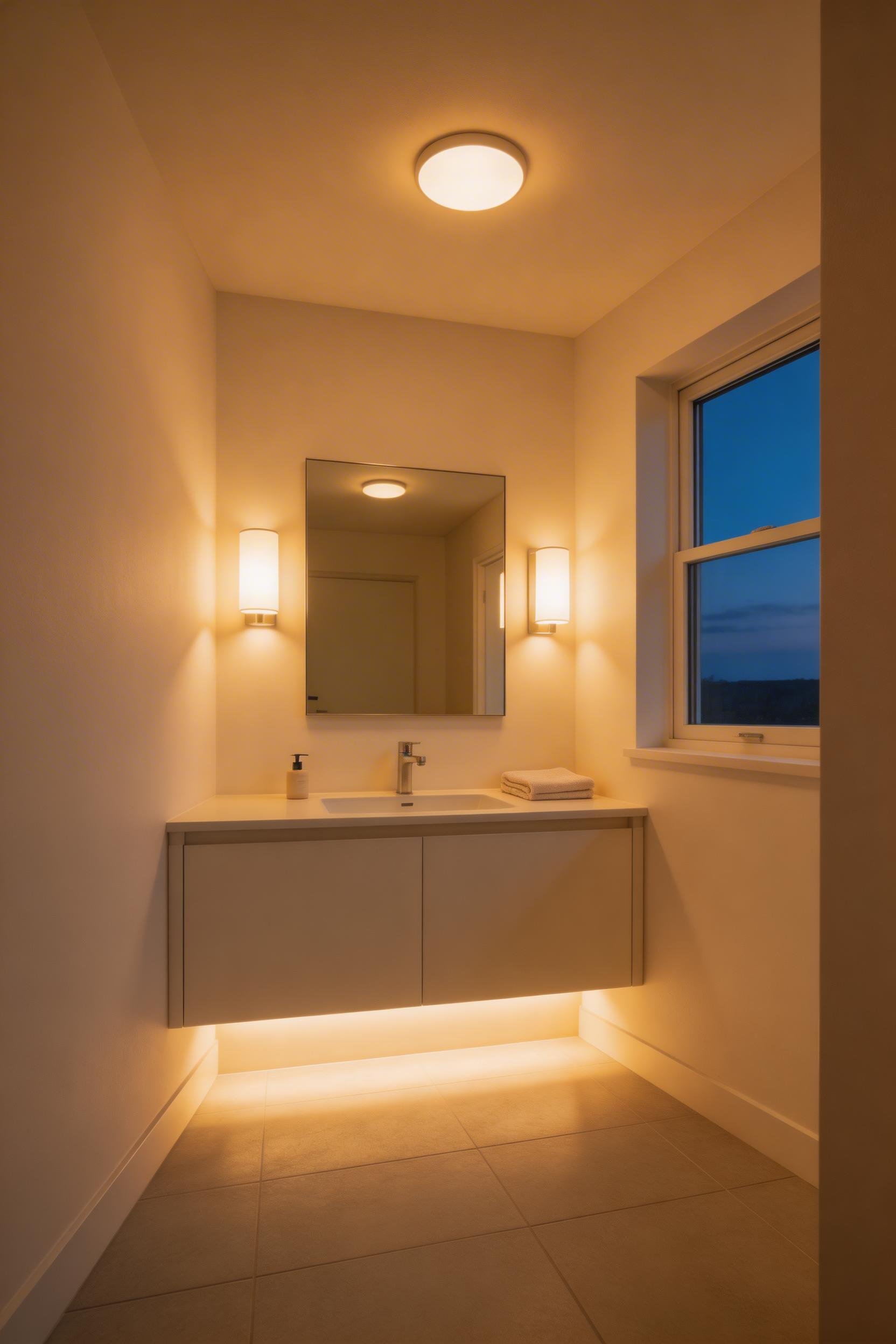
A single overhead downlight creates unflattering face shadows during grooming — every feature reads darker beneath the nose and chin. Vanity sconces or mirror-integrated LEDs mounted at 150–165cm from floor, spaced 90–100cm apart, eliminate these shadows and provide accurate task light for face-level work.
Warm colour temperature (2700K–3000K) suits evening bathing and relaxation. Cooler temperatures (3500–4500K) support morning grooming clarity. Dimmable circuits throughout are essential for this approach to work — they allow melatonin production to begin naturally during evening wind-down. LED strips under floating vanities, inside shower niches, and along ceiling perimeters add depth and architectural interest without adding fixture bulk.
Research your bathroom vanity lighting options before committing to any single fixture. Code compliance is not optional: IP65 minimum for Zone 1–2 fixtures (within 60cm of shower or bath); IP44 for Zone 2. Dimmable warm lighting activates the parasympathetic nervous system, signalling rest. This is lighting that works with your biology, not against it. In a bathroom decoration small-space strategy, layered lighting is the change most people notice immediately — the room feels completely different within one evening.
8. A Floating Vanity That Opens Up the Floor in Small Bathroom Decoration
The floor is the largest continuous surface in a small bathroom. When the vanity floats above it, the floor reads as uninterrupted. Uninterrupted floor reads as larger.
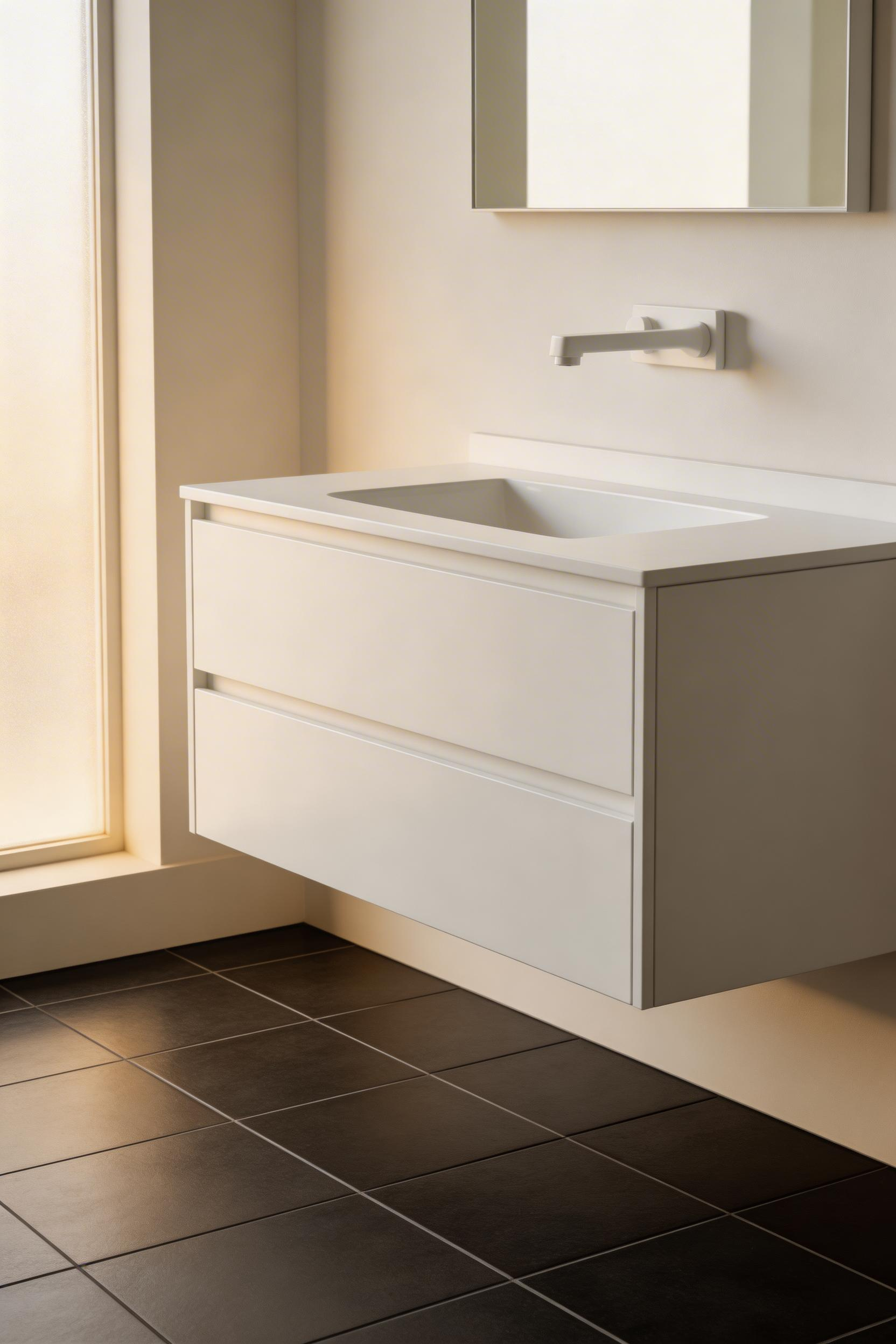
Visible floor continuity makes rooms read as larger than they are. Standard float height is 40–45cm from floor — low enough to feel grounded, high enough for cleaning access beneath. Drawers hide everyday clutter and maintain visual calm; open shelves require constant curation. Wall-mounted plumbing is essential — concealed in-wall waste and supply connections, or boxing-in along the wall. Plan this early in any renovation; retrofitting wall-mounted plumbing into an existing bathroom is significantly more complex.
Weight ratings vary between 150 and 400 lbs depending on fixing method and wall construction. Timber noggins or steel plates in stud walls provide the necessary support. Duravit, Crosswater, VitrA, and Ideal Standard offer mid-to-premium options; IKEA GODMORGON provides an accessible entry point with well-designed drawer interiors. Lacquered oak-effect, matt white, and slate grey finishes age well in humid environments. Avoid untreated MDF edges, which swell and delaminate within a few years.
Explore vanity ideas for tiny bathrooms to find the right scale before committing to purchase. In a small bathroom, what people do not see shapes how the space feels as much as what they do.
9. Recessed Shower Niches and Built-In Shelving
A recessed niche transforms your shower from a cluttered surface into an integrated system. When products sit inside the wall rather than on it, you gain something beyond practical shelf space — you gain visual calm during a moment meant for restoration.
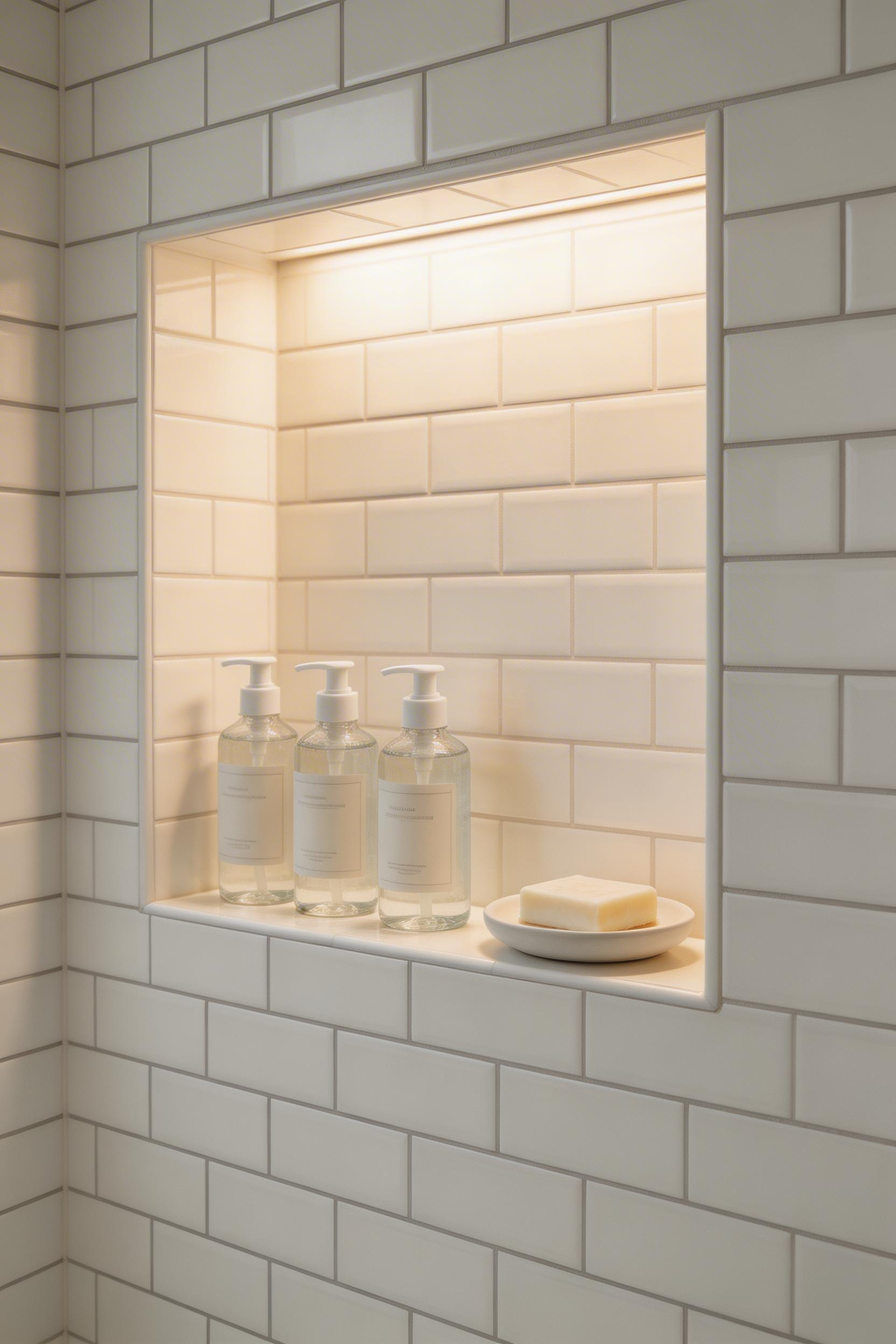
Standard niche depth of 10–12cm fits neatly between standard stud centres without structural disruption. Width should align with your tile module for clean, uncut edges. Position between 120–150cm from the shower base — shoulder height for most adults, comfortable to reach without stepping. Two people sharing a shower benefit from stacked niches at different heights.
Waterproofing is non-negotiable. Apply a minimum of two liquid tanking membrane layers inside the niche before tiling, or use a pre-formed waterproof insert such as Schluter KERDI-SHELF or Tile Redi Redi Niche. Slope the niche floor very slightly — about 1/8 inch — toward the shower to prevent water pooling. This single detail prevents the hidden mould that develops when moisture sits undisturbed inside the wall.
Tile choice sets the visual mood. The same tile as your surrounding wall creates a seamless disappearing effect. A contrasting tile or small mosaic insert creates a deliberate feature. A magnetic strip adhered to tile (Umbra Flex, Rawlings Magnaband) offers a no-cutting alternative for lightweight metal accessories.
When planning your shower design ideas for small bathrooms, treat the niche as part of a coordinated system. Zero-protrusion storage removes obstacles and sensory clutter from your shower zone — turning it into the restorative ritual a small bathroom can provide.
Niche Placement for Two People
A single niche at shoulder height for one person sits too high for another. Two stacked niches — one at 150cm, one at 120cm — solve this without argument or compromise. Both feel considered.
10. Vertical Storage Solutions for Small Bathroom Decoration
The most overlooked real estate in a small bathroom is height. You cannot expand the footprint. You can absolutely build upward — storing significantly more within the same floor area.
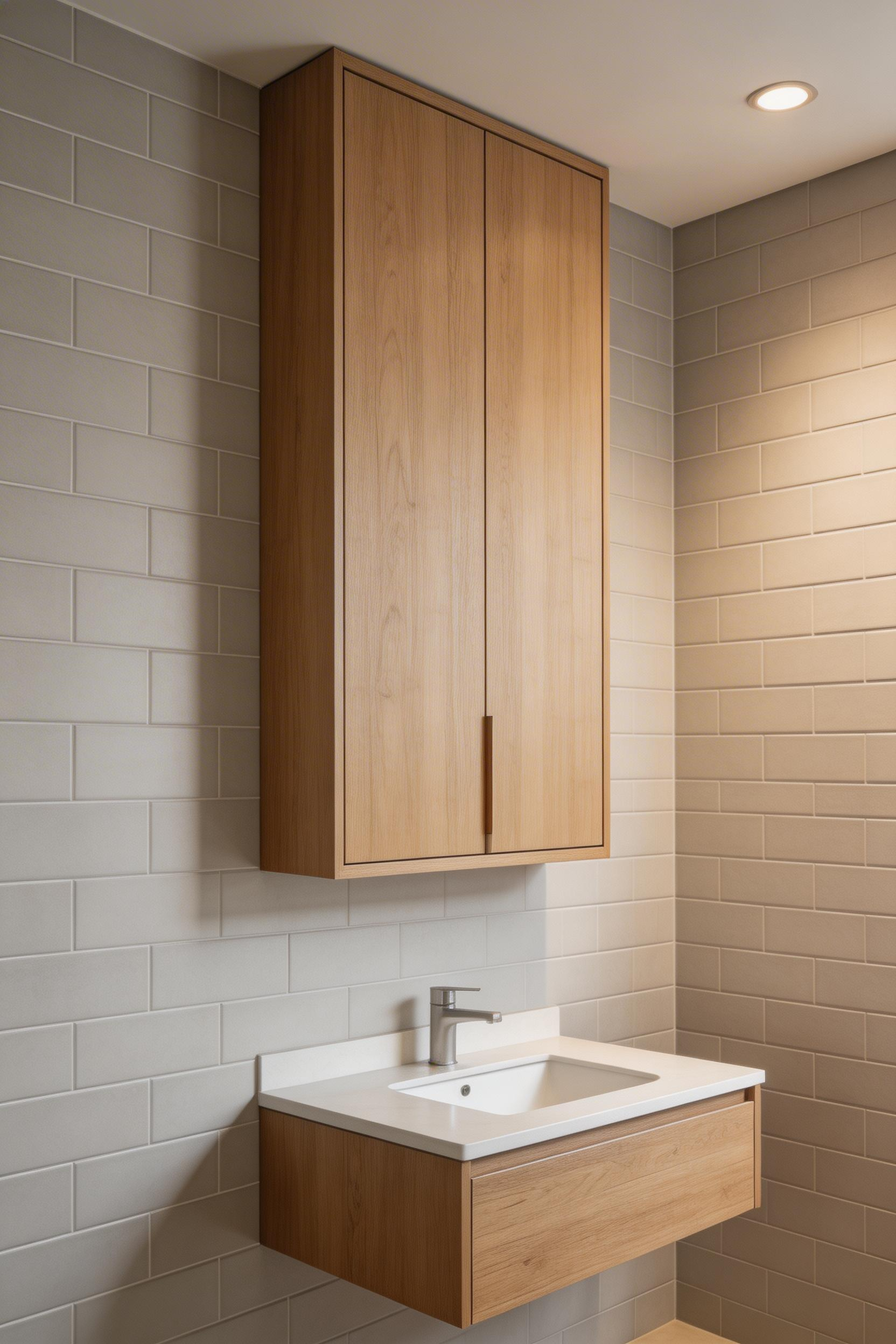
Tall narrow cabinets — typically 180–213cm in height and 25–40cm deep — deliver considerably more storage than low wide units while consuming far less floor area. Over-toilet units work efficiently: maintain at least 15cm clearance above the cistern lid, and select freestanding models with 200lb anchor ratings or floating wall-mounted versions properly fixed into structural elements.
Ladder shelves suit lighter items — folded towels, toiletries in small baskets, a plant pot. Each shelf typically holds 10–25 lbs. They integrate well into Scandinavian and natural material aesthetics. IKEA GODMORGON reaches 192cm with tempered glass shelves; the ENHET system offers modular configurations for custom heights.
Zone your vertical storage by access frequency. Daily items (face wash, current skincare routine, toothbrush) live between 60 and 160cm. Backup stock, travel accessories, and seasonal items go higher — above 160cm. Corner tall units use dead space efficiently without interrupting the main wall runs where your eye naturally travels.
The wellness benefit here is real but subtle. Using height rather than expanding horizontally preserves the open floor plane. A small bathroom with well-planned vertical storage feels markedly less cramped than one where clutter spreads across surfaces at eye level.
11. Decluttering the Countertop as a Wellness Decoration Practice
Research from UCLA reveals something measurable: high-density clutter in homes correlates with elevated cortisol throughout the day. Women in cluttered homes showed consistently higher stress-hormone levels than those in well-organised spaces. Your bathroom countertop is not a minor surface. It is the first thing you see each morning.
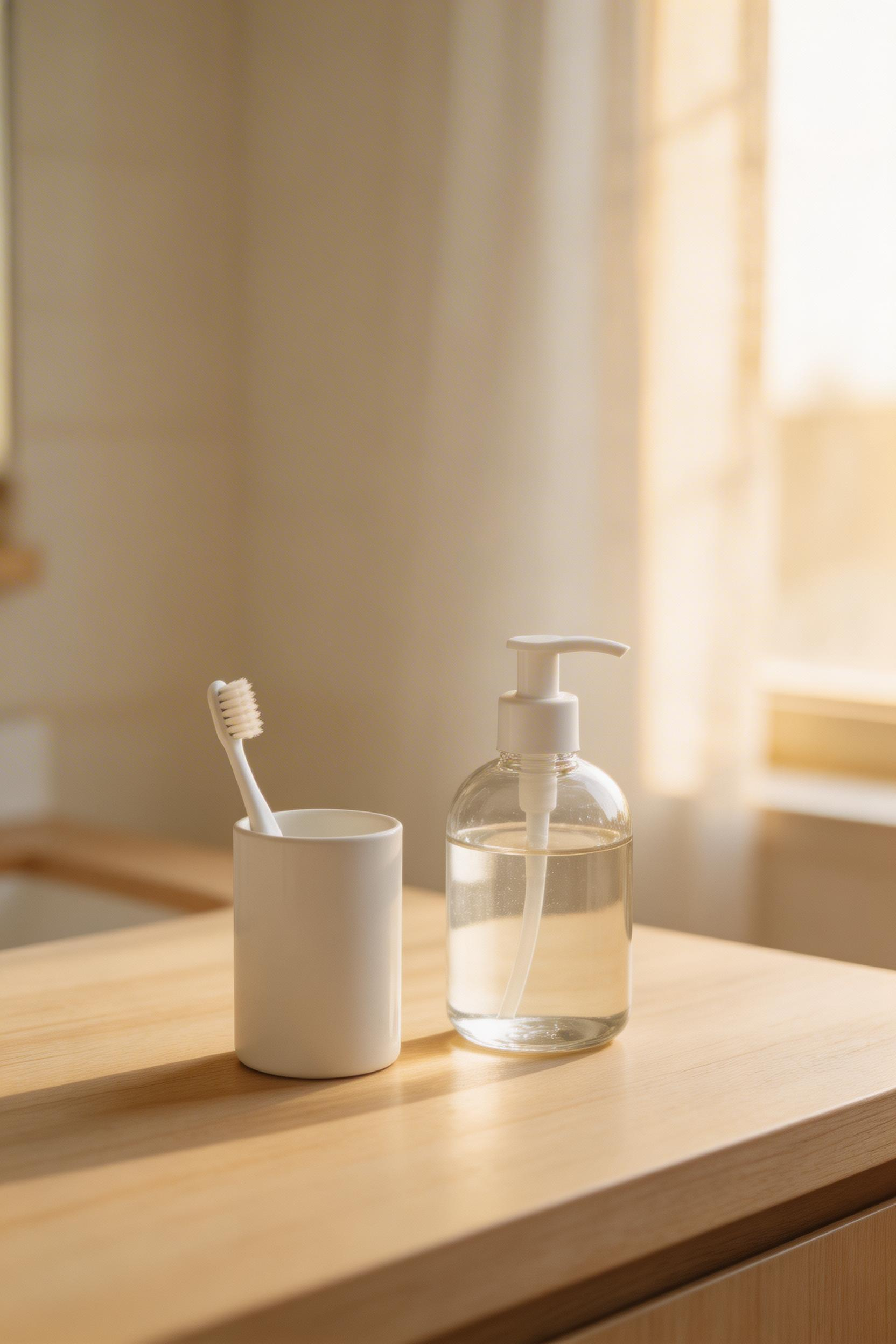
The one-surface rule: only items serving frequent, specific purpose remain visible. Daily essentials that earn countertop space include a toothbrush, face wash, one moisturiser, a hairbrush. Everything used two or three times per week moves to storage — not because it is unimportant, but because it does not need to be seen to be accessible.
Hidden storage solutions do the heavy lifting. Pull-out drawers under the sink navigate around plumbing; multi-tier options fit into the narrow 23cm gaps that pipe runs create. Tip-out trays hold razors and floss. Drawer dividers and expandable metal organisers stack efficiently. Mix opaque and decorative containers rather than using all-clear options — clear containers maintain visual information even when tidy, whereas opaque reduces stimulus without hiding function.
The Japanese concept of ma refers to negative space as intentional rather than empty. Your bathroom countertop demonstrates this principle physically. Empty surface reduces cognitive load. Your nervous system processes one clear vista rather than scanning fifteen items for what you need next.
Surface decluttering directly lowers cortisol. Your bathroom transitions from a functional pressure point into a low-stimulus, restorative retreat. You notice the difference in how you feel each morning — often before you understand why.
12. Humidity-Loving Plants That Bring Nature Into Small Bathroom Decoration
The bathroom offers one environment most of your home cannot match: consistent humidity. This is not a problem to manage — it is an invitation to introduce living plants that thrive precisely in these conditions.
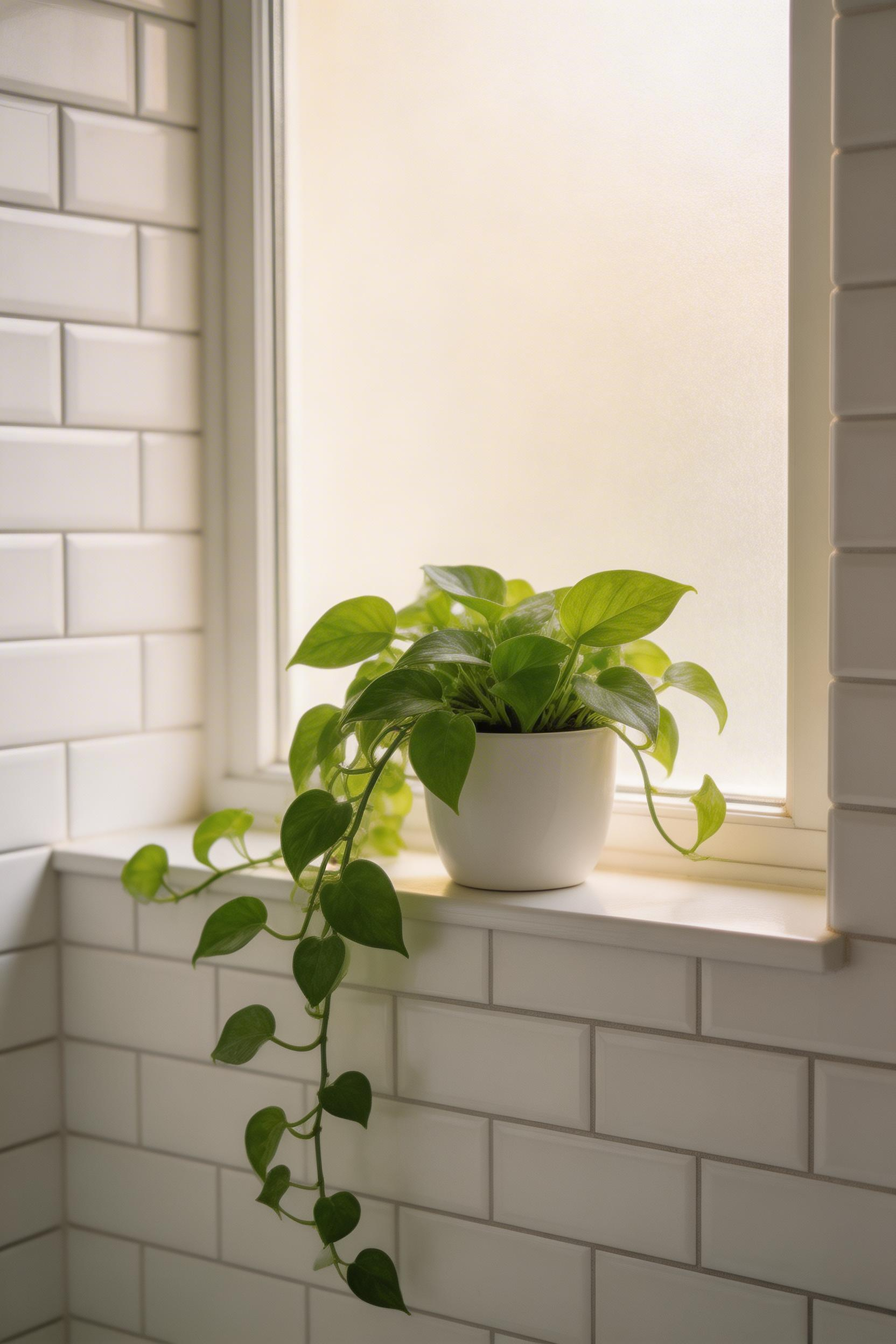
Pothos tolerates neglect and low filtered light — ideal for bathrooms without direct sun. Boston Fern transpires heavily, which actively reduces ambient humidity while its soft fronds create a gentle visual texture. Peace Lily thrives in indirect light and stays moist naturally. Spider Plant prevents leaf-tip drying through humidity and its cascading form suits hanging planters above the bath (away from direct hot spray). Philodendron heart-leaf works well in hanging planters that allow it to trail.
Placement matters as much as species selection. A windowsill provides some natural light. A shower ledge works if positioned well away from direct spray. Beside the sink creates daily visual contact. High shelves suit spider plants.
Biophilic research demonstrates the mechanism clearly: participants with indoor plants show lower salivary cortisol. The primary wellness effect arrives through daily visual contact with living growth — not through air purification, which remains modest in residential spaces regardless of plant species. You feel the difference not because the air is measurably cleaner, but because your nervous system registers the presence of life.
Care is uncomplicated: consistent watering without excess, protection from cold drafts, and keeping foliage away from direct hot shower spray. In a small bathroom, one well-placed plant can shift the entire character of the space.
13. Natural Materials — Bamboo, Teak, and Stone — for Small Bathroom Decoration
Your hands touch bathroom surfaces dozens of times daily. What those hands encounter shapes your sensory experience of the room — whether it reads as authentic and spa-like, or merely functional.
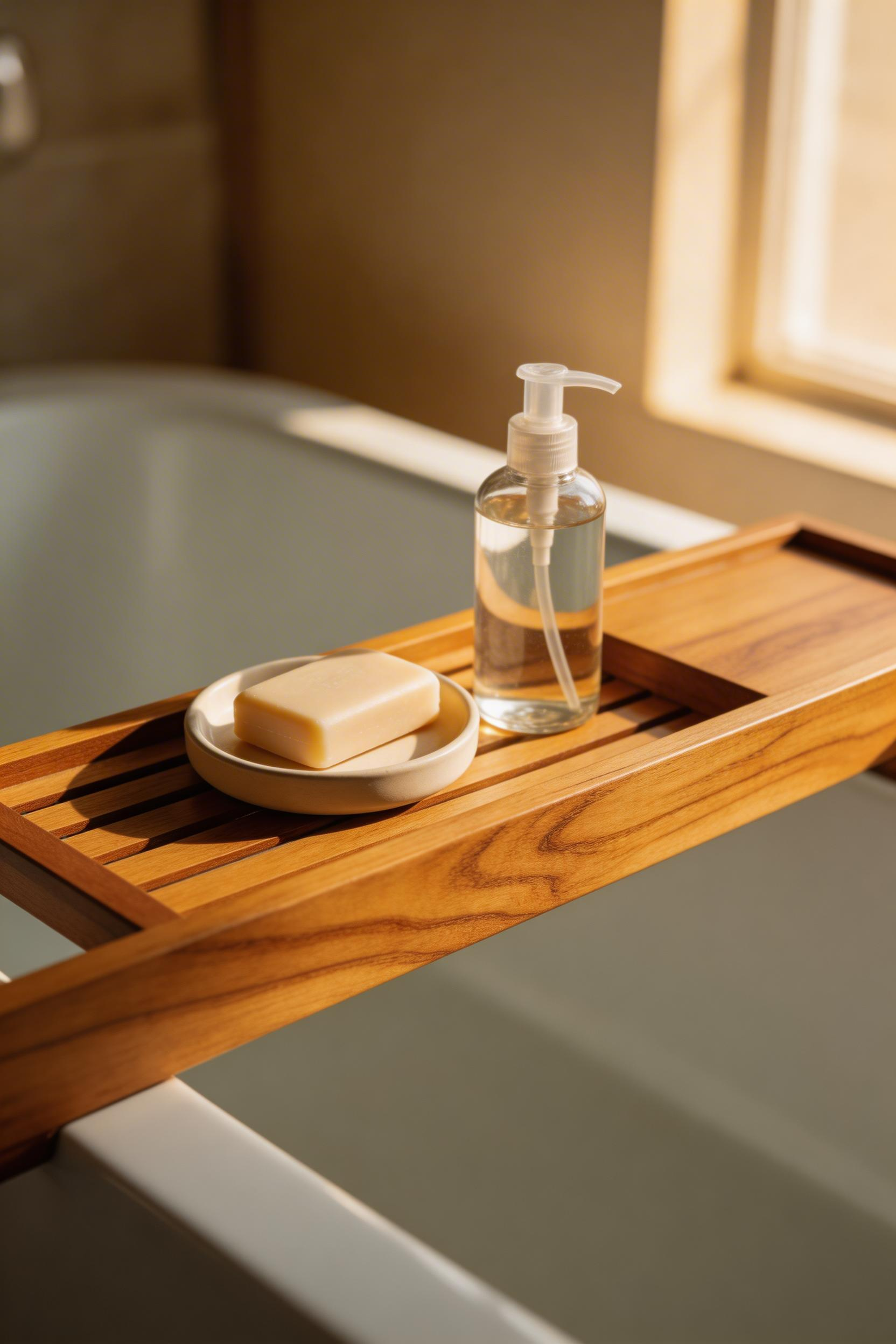
Teak’s naturally high oil content resists moisture, mould, and pests without requiring additional sealing. Run your hand across teak and you feel the warmth — a physical signal of quality that synthetic materials cannot replicate. Clean gently with a soft brush and dish soap every three months, then air-dry thoroughly. Teak oil every 6–12 months is optional; removing soap residue before it dulls the finish matters more.
Bamboo grows three feet per day and regenerates from its roots — genuinely renewable. It resists moisture naturally but requires proper sealing; untreated bamboo warps in humid environments. Brands including EKOBO, Full Circle Home, and iDesign Eco produce properly sealed bamboo pieces built for bathroom use. FSC certification matters for both bamboo and teak; it ensures responsible sourcing.
Stone soap dishes from Muji, Habitat, and The Conran Shop bring permanence. The White Company stocks luxury natural cotton and wood bath accessories that age rather than degrade. What unites these choices is sensory honesty — wood grain variation, natural colour shifts, tactile temperature different from plastic or ceramic.
This is not decoration applied to the surface of a room. Natural materials activate your parasympathetic nervous system through touch. Spa quality does not emerge from price — it emerges from material authenticity.
14. Scent and Sensory Layering as Bathroom Decoration
Olfactory environment is a direct pathway to nervous system response. In bathroom decoration for small spaces, scent becomes a daily tool for biological relaxation rather than an afterthought.
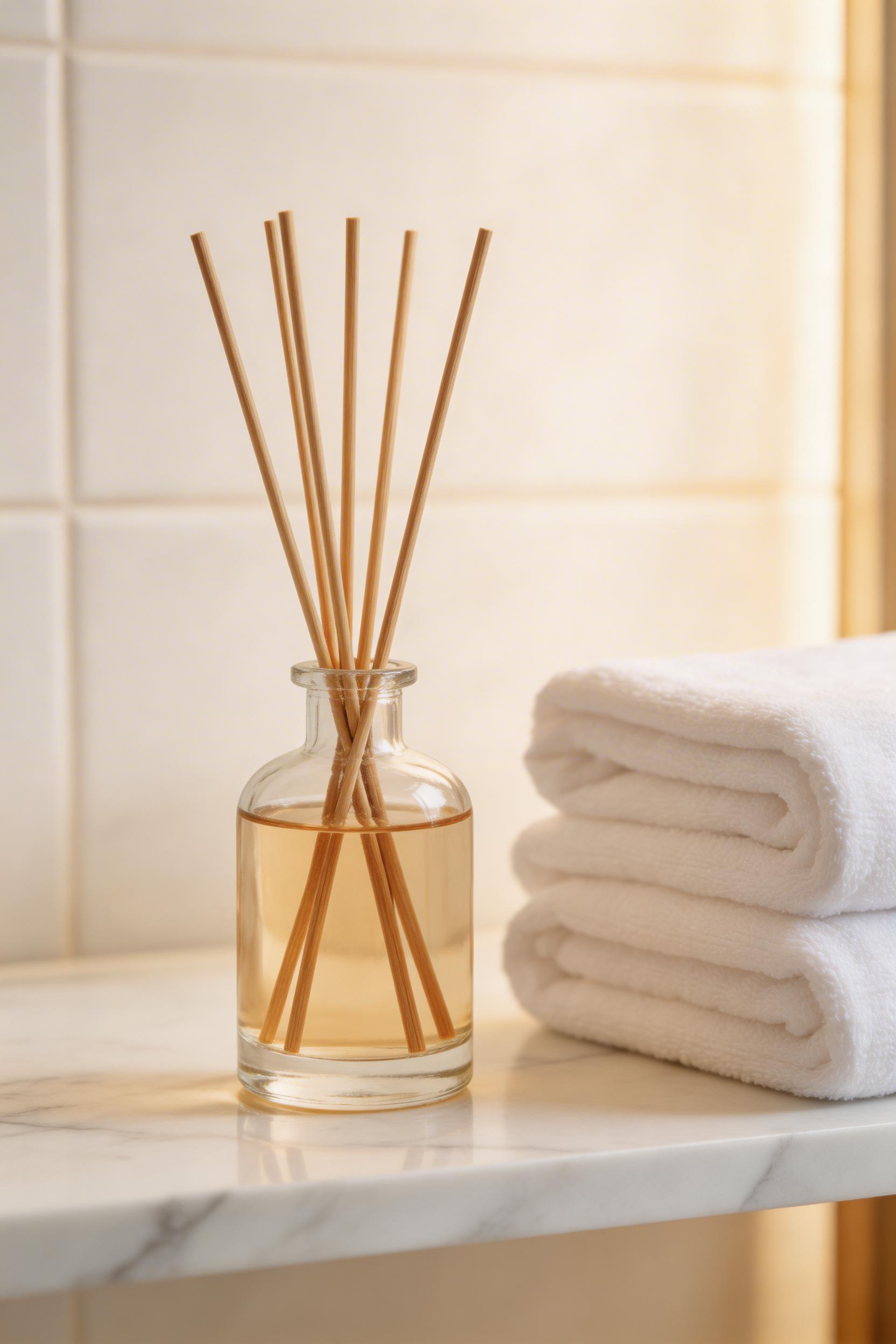
Reed diffusers work passively — no electricity, no noise, appropriate for small enclosed rooms. Replace reeds every 4–6 weeks and refresh oil every 2–3 months to maintain intensity without overwhelming a compact space. Ultrasonic diffusers disperse scent more quickly and add humidification, but require electricity; they suit larger bathrooms better.
Beeswax candles outperform paraffin in enclosed spaces. Paraffin releases benzene and toluene when burning; beeswax emits no toxic byproducts, burns smokeless and dripless. In a small bathroom, where ventilation is often limited, air quality genuinely matters.
Scent choice rests on neuroscience. Lavender lowers heart rate and blood pressure, improving relaxation through alpha brain wave activity. Eucalyptus increases alpha power, a measurable marker of relaxation. Peppermint supports focus and stability. Jasmine enhances mood and alertness. Choose based on whether your bathroom is primarily a morning space, an evening space, or both.
Layer strategically: lavender sachets tucked into folded towel storage create a secondary scent layer that releases on contact. Replace every 2–3 months. When you pair a consistent scent with your bathing ritual over time, your nervous system begins to relax the moment you detect that familiar smell — a Pavlovian response built intentionally.
15. Colour Psychology for Calm in Small Bathroom Decoration
Colour does not merely decorate — it neurologically activates your nervous system. In bathroom decoration for small spaces, your colour choice becomes either a daily tool for calm or a daily source of low-level stimulation. The choice is worth making consciously.
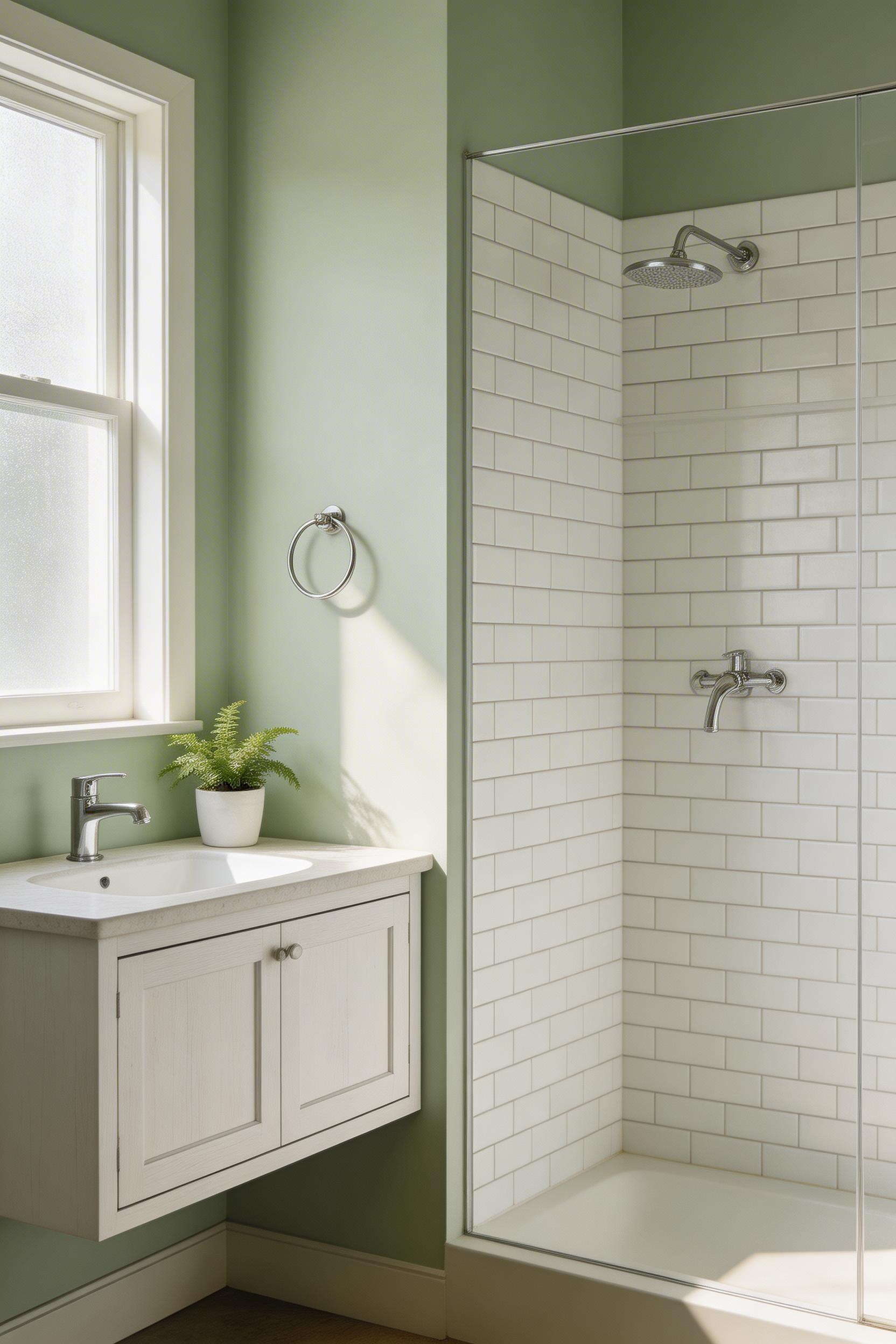
Sage green evokes nature and safety. Even brief exposure to green tones improves working memory and restores mental energy. Light greens make small spaces feel larger and airier. Blue activates the parasympathetic nervous system — lowering heart rate and blood pressure through visual association with sky and water. Terracotta provides grounding warmth; paired with navy blue across the colour wheel, it creates a jewel-box quality in small rooms, feeling rich rather than cramped.
If you use navy, use it as accent only: a single feature wall, coloured grout detail, or accessories. Navy provides visual anchor without overwhelming. Deep colour on one surface often makes the adjacent walls feel lighter by comparison.
Saturation matters more than hue. Muted and pastel versions of calming colours — sage, powder blue, dusty rose — work far better than their saturated equivalents. Saturated colours absorb light and overstimulate. Farrow & Ball’s Pigeon (No. 25, a cosy blue-grey), Mizzle (No. 266, a modest grey-green), and Elephant’s Breath (No. 229, a warm mid-grey) each include mould-preventative preservative in F&B Modern Emulsion — practical for humid bathroom environments.
Your bathroom walls are not neutral backdrop. They are a daily neurological intervention, and they can be arranged to support genuine calm.
The Small Bathroom as a Space Worth Getting Right
The small bathroom is not a problem. It is an invitation.
Fifteen ideas above — each independent, each orbiting the same centre: your bathroom as a personal wellness sanctuary. A recessed niche. Vertical storage. A clear countertop. Living plants. A teak soap dish. A reed diffuser. Walls in sage green.
None of these require you to change everything at once. Start with one or two. Intentionality is more powerful than completion. Choose the change that addresses your most acute friction — the countertop clutter, the cold synthetic materials, the stimulating colour, the dark corner with no natural light.
Every choice accumulates. Over weeks, you notice your nervous system’s response. The cortisol drop that comes with a clear surface. The quiet restoration of seeing something green and living. The warmth of teak. The familiar scent that signals rest before you have even turned on the shower.
The relationship between environment and daily wellbeing is not aspirational. It is measurable. Your bathroom decoration in this small, concentrated room ripples through every morning and every evening — through how you feel when you close that door, through whether the space restores you or subtly depletes you.
You have the knowledge now. The rest is permission. Your small bathroom is not a limitation — it is a laboratory. Begin there.