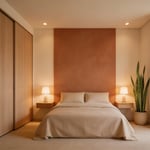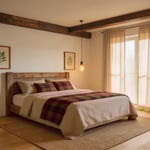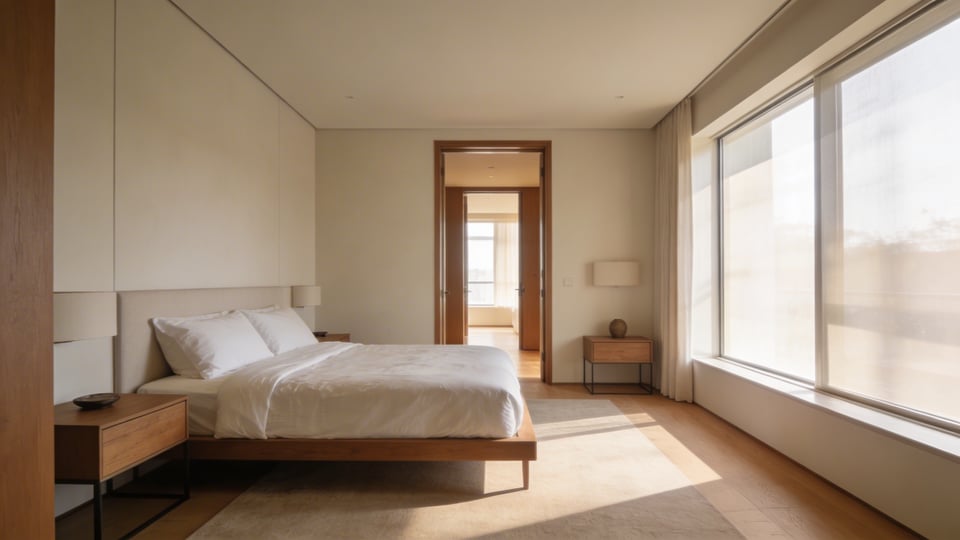
I genuinely believe that a true sanctuary balances aesthetic elegance with biological health. That exact balance defines modern bedroom inspirations master suites. Spatial psychology begins with the “Command Position” for your bed. Specifically, this layout places your mattress facing the door from a distance. This setup satisfies an evolutionary need for prospect and refuge. Therefore, your brain’s amygdala avoids low-level hyper-vigilance throughout the night. Your cortisol levels naturally drop when you feel secure. Ancient Vastu Shastra principles also reinforce this psychological grounding. This philosophy anchors the master bedroom in the southwest corner. It often incorporates specific bedroom furniture inspirations to ground the energy. Sleeping with your head facing south aligns your bio-magnetic field. Indeed, this alignment can improve overall sleep efficiency.
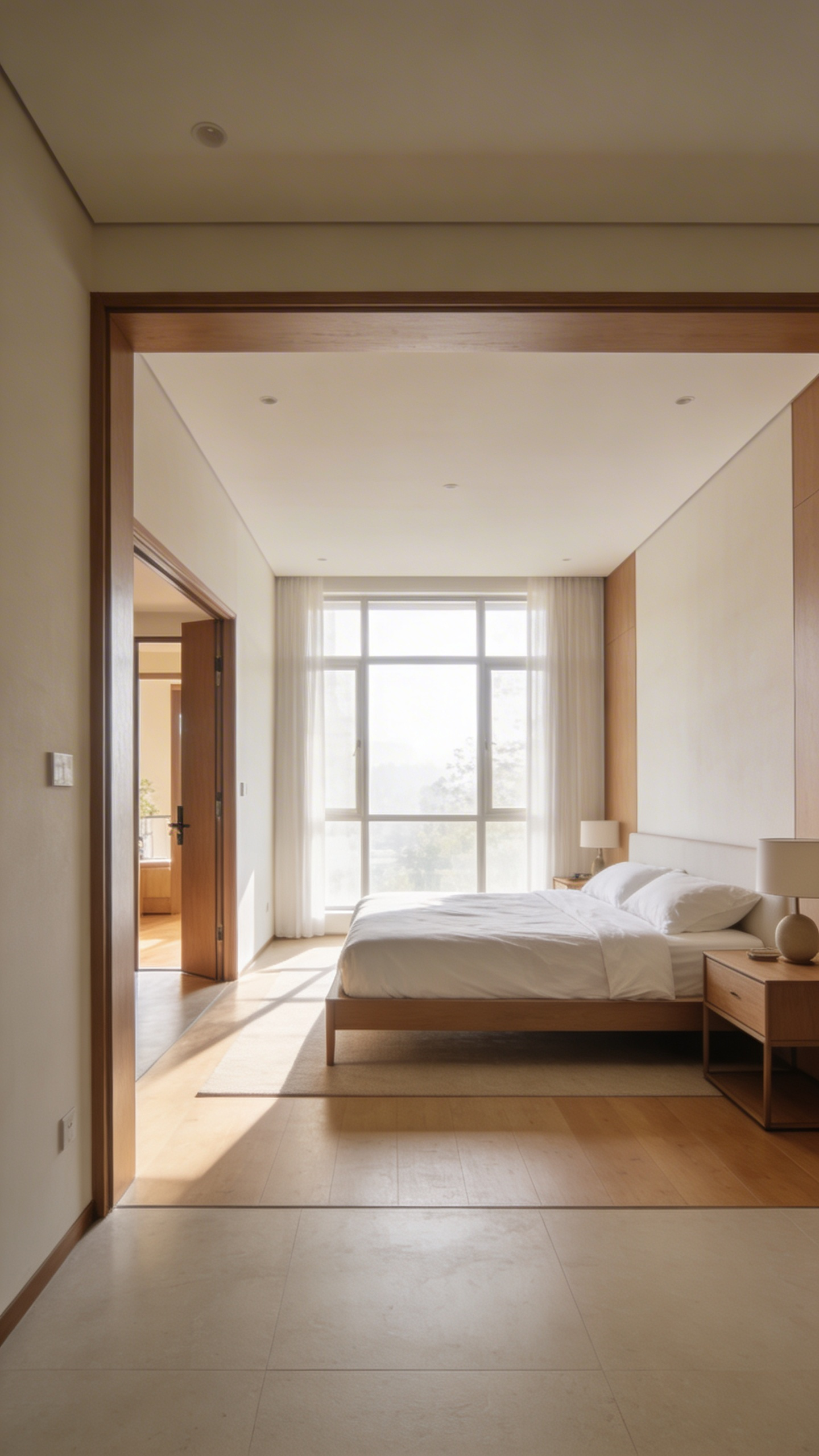
Next, consider the space surrounding your carefully placed bed. Western design usually views empty floor space as wasted area. The Japanese concept of “Ma,” however, embraces intentional emptiness. This makes it easier to select the best bedroom inspiration decor for a balanced space. Every object in a room demands constant visual processing. Thus, excess furniture increases cognitive load and prevents restorative rest. Neurological studies highlight the calming power of room symmetry. In fact, symmetrical arrangements reduce cognitive load by 45 percent. Because of this, symmetrical nightstands signal predictability and safety. The modern bedroom should echo the ancient Roman cubiculum. Historically, these private chambers acted as sensory-isolated cocoons. Removing technology transforms your room into a true wellness sanctuary.
1. The command position: Aligning your bed for subconscious security and rest
Aligning your bed acts as a spatial anchor for your subconscious. Environmental psychologists refer to this concept as Prospect-Refuge Theory. Humans instinctively prefer spaces where they can see potential threats. At the same time, we need to remain safely hidden from view. In a master suite, diagonal placement achieves this careful balance perfectly. Therefore, placing your bed diagonally from the door is ideal. Your brain can fully relax into deep REM sleep.
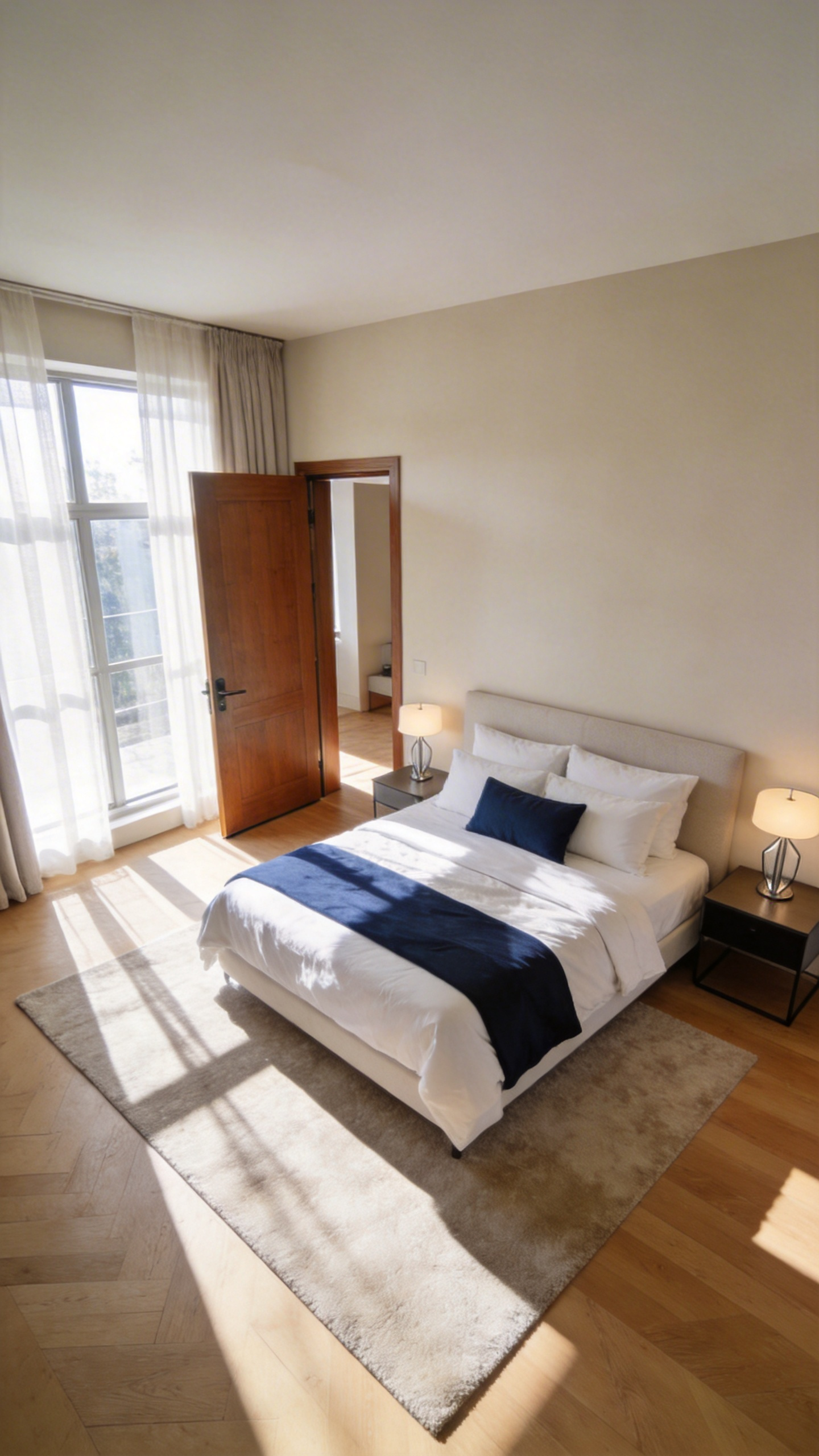
Classical Feng Shui reinforces this need for primal security. A solid wall behind your headboard represents a supportive mountain. Placing a bed under a leaky window drains your energy. However, you can use heavy velvet drapes to create a false wall. Experts warn against pointing your feet directly toward the door. Historically, this creates a rushing energy that leaves you completely drained.
Maintain visual symmetry with identical nightstands to prevent spatial anxiety. Both partners need equal power and support in the relationship. Finally, always leave at least eighteen inches of clear walking space. A cramped wall side triggers a subtle claustrophobic response. Ultimately, a clear escape path ensures a profound sense of daily safety.
2. Cognitive clarity: Implementing concealed architectural storage systems
I constantly remind clients that every object demands a micro-decision. Visual clutter acts as exhausting cognitive noise. This constant stimulation prevents your mind from entering a restorative parasympathetic state. In fact, environmental researchers link high visual density directly to elevated evening cortisol levels. Creating sensory quiet is absolutely vital for healthy circadian regulation. Specifically, we achieve this mental clarity through concealed architectural storage systems. By architecturally dissolving everyday items, we lower your cognitive load.
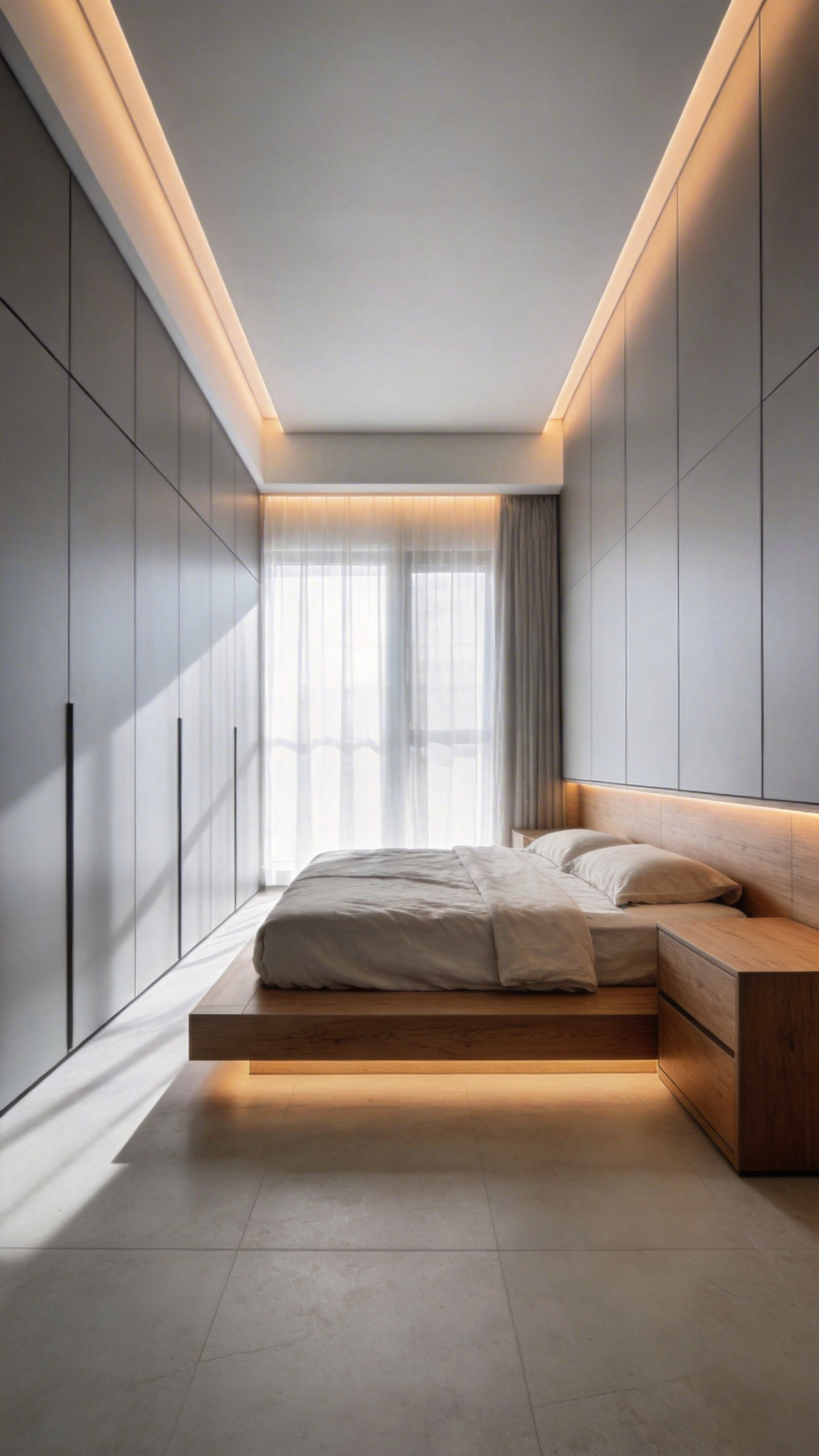
Modern millwork replaces bulky dressers with seamless structural planes. Frameless pivot doors blend beautifully into the surrounding walls. Continuous materials like matched-grain wood veneers trick the eye effortlessly. As a result, the cabinetry reads as the building’s peaceful shell. This approach mirrors 17th-century Japanese staircase chests. Elegant French boiserie often hid secret dressing rooms behind ornate paneling. Today, we apply these historic concepts to disguise modern electronic necessities.
Physical interaction with these spaces must also promote profound relaxation. High-end systems utilize silent, push-to-open mechanics devoid of distracting handles. Inside, warm integrated lighting gently illuminates only the chosen drawer. This precise illumination prevents bright blue light from disrupting melatonin production. Design experts advocate for an 80/20 storage ratio. Essentially, you conceal eighty percent of your functional belongings behind sleek panels. Then, you allow the beautifully curated remaining twenty percent room to breathe. Hiding the mundane frees your mind to experience a true sleep sanctuary.
3. Symmetrical grounding: Anchoring the space with balanced, purposeful nightstands
Symmetry acts as a brilliant shortcut for the human brain. Matching nightstands quickly lower a room’s cognitive load. Consequently, the brain stops scanning for asymmetrical clutter. The nervous system then shifts into a parasympathetic state. This “rest and digest” mode effectively reduces cortisol levels.
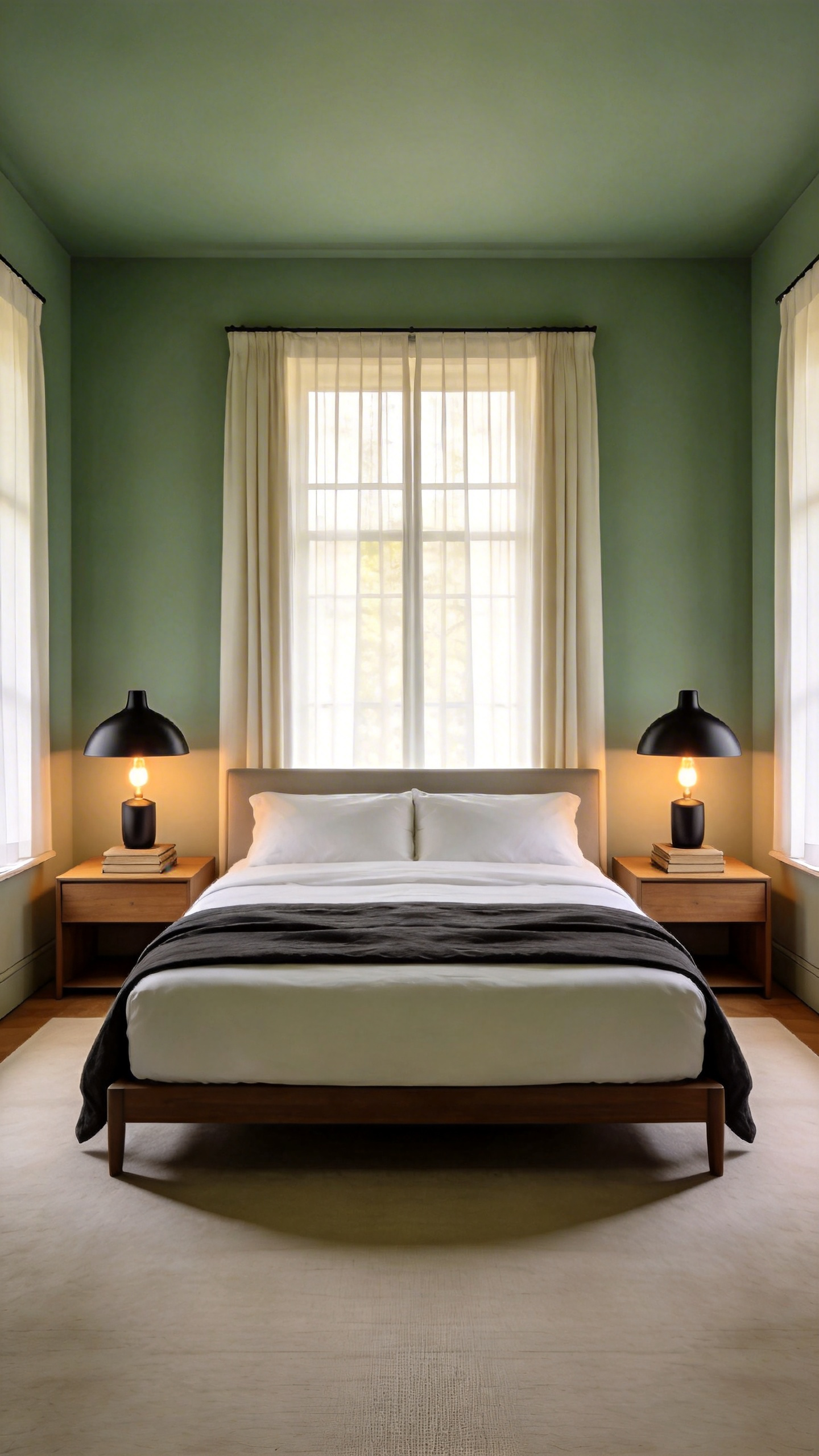
Bedside furniture began as hidden, utilitarian wooden commodes. The Victorian era, however, transformed them into visible status anchors. Wellness architecture relies heavily on this purposeful pairing. Feng Shui principles view pairs as vital for harmony. Indeed, identical nightstands symbolize equality and mutual relational support. Together, they create a protective boundary around the resting sleeper.
Purposeful grounding requires precise ergonomic and sensory specifications. The nightstand top should match the mattress plane. This specific alignment directly prevents wrist strain during the night. Designers maintain a balanced ratio of empty negative space. As a result, the furniture anchor never feels overwhelmingly heavy. Layered task lighting plays a crucial role in wellness. Specifically, warm bulbs between 2700K and 3000K protect melatonin production.
Intentional materiality dictates the sensory weight of the space. Master bedrooms usually feature incredibly soft linens and plush rugs. Therefore, nightstands must provide a strong, grounding haptic contrast. Cool marble or grained oak adds necessary firmness. Soft-close hardware and felt-lined drawers muffle any jarring sounds. These quiet touches preserve a sanctuary-like healing atmosphere.
4. The decompression zone: Carving out a dedicated transition seating area
A master bedroom seating area acts as a psychological airlock. The human brain struggles to transition instantly from waking to sleeping. Active problem-solving produces high-beta brain waves. Calming delta waves, however, are needed for deep sleep. Working in bed creates a severe place-congruence conflict. The brain associates the mattress with alertness rather than rest.
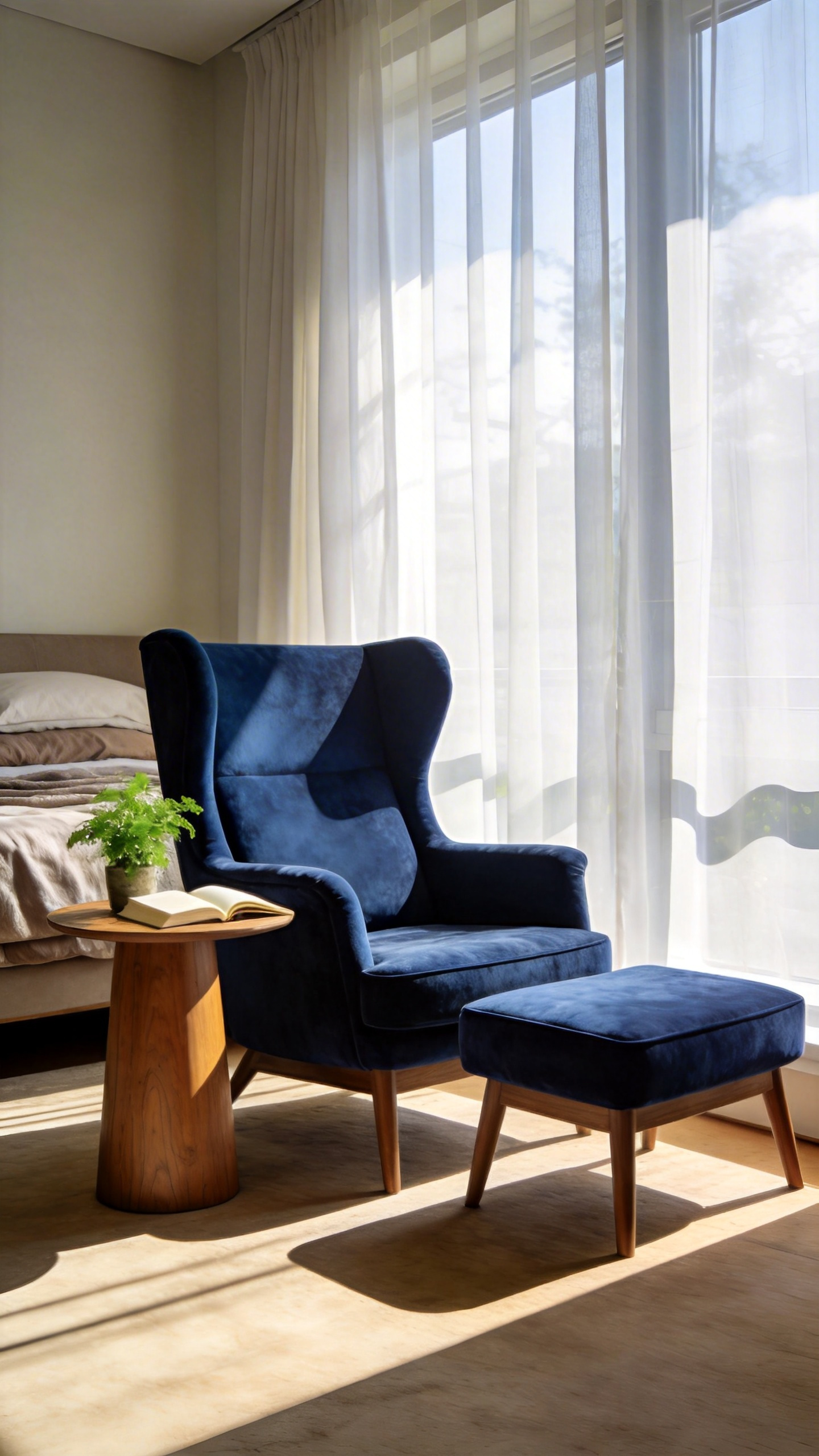
A dedicated decompression zone easily solves this modern issue. Sitting here for 15 minutes physically signals your nervous system. Melatonin production begins to rise naturally. This distinct space essentially manifests your nightly wind-down routine.
Carving out this zone requires intentional territorial definition. Designers recommend leaving at least 24 inches of clearance. This physical gap creates a highly breathable path. It visually distinguishes the two separate interior zones.
Furniture orientation also plays a remarkably crucial role. You should deliberately face your seating away from the bed. Looking toward a window creates an entirely different visual horizon. The mind subsequently compartmentalizes the active and resting spaces.
Tactile safety is similarly paramount for lowering heart rates. Crisp cotton is undeniably wonderful for actual sleeping. Decompression zones, conversely, thrive on grounding, heavier textiles. Bouclé or velvet provides a comforting, proprioceptive hugging sensation. Acoustic damping completes this restorative wellness sanctuary. High-pile rugs beautifully absorb echoes from the active house.
Phase 2: Circadian rhythm and atmospheric design
I have seen master bedroom design shift heavily toward biological synchronization. We must look beyond visuals to understand the neurobiology of sleep. The blue light paradox challenges traditional color psychology. Soft blue walls initially feel psychologically calming. However, these cool tones actually reflect melanopically active light at night. This bounce inadvertently signals alertness to your brain. Instead, I recommend immersive palettes like inky blues or warm clay. A dark, matte ceiling creates a protective atmospheric cocoon. This darkroom effect absorbs stray light and preserves natural melatonin release.
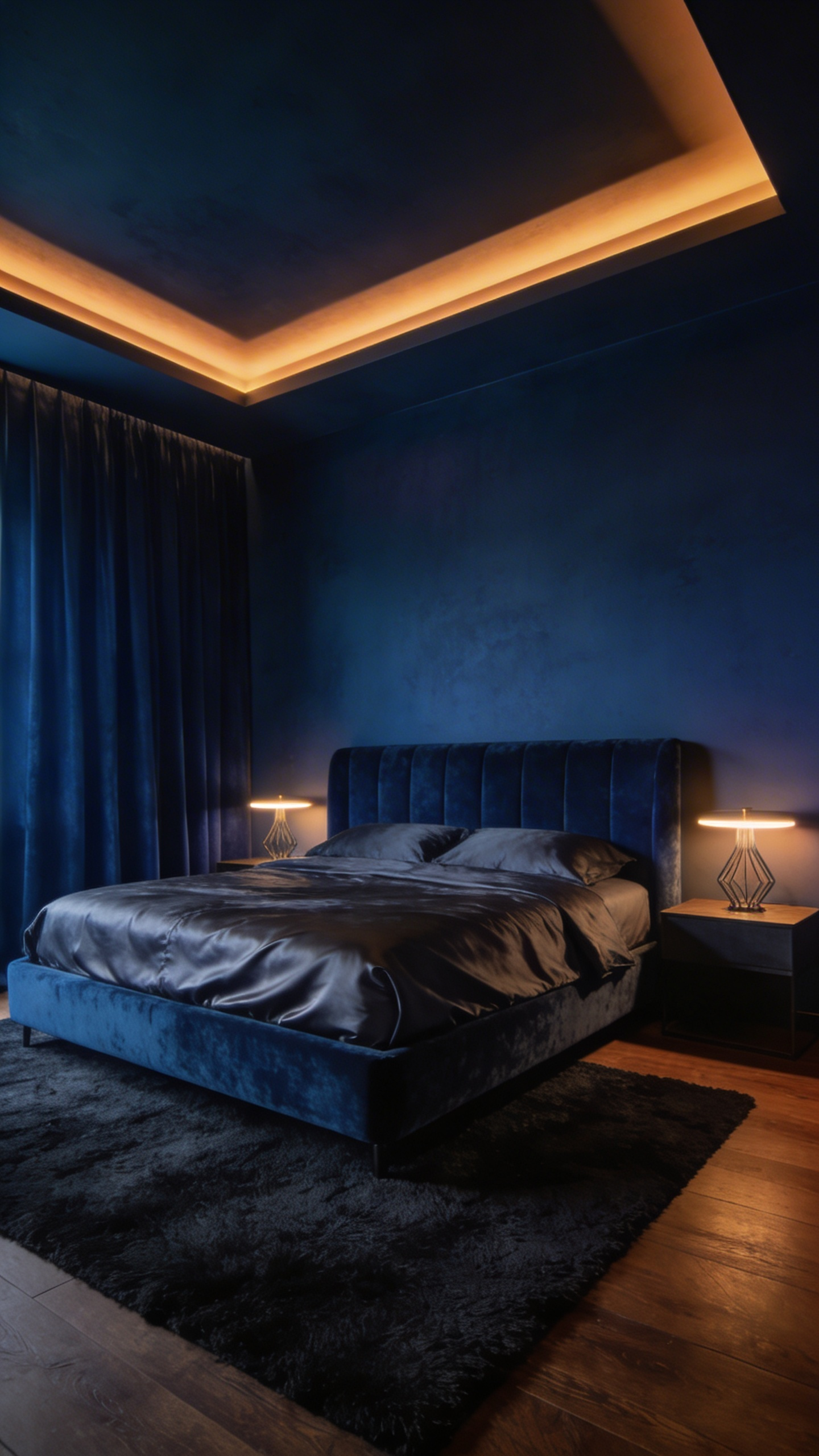
Biodynamic lighting acts as the quiet luxury of wellness architecture. Hidden LED systems effortlessly mimic the sun’s daily progression. Morning lights emit crisp, blue-enriched whites to wake the brain. Evening settings shift to warm, amber glows reminiscent of firelight. Temperature is another powerful cue for your biological clock. Deep sleep requires a core body temperature drop. Therefore, the ideal thermal sweet spot sits strictly between sixteen and nineteen degrees Celsius. Dedicated climate zoning allows the suite to manage this drop independently. Breathable linen duvets provide comforting tactile pressure without causing overheating.
Humans practiced segmented sleep before the widespread use of lightbulbs. Modern designs now include low-stimulation intermission zones. A cozy reading nook with amber lighting supports midnight wakefulness perfectly. Heavy velvet drapery absorbs disruptive low-level noise to protect deep sleep. Built-in diffusers release grounding cedarwood scents to trigger evening relaxation. Together, these layered sensory details transform your bedroom into a restorative sanctuary.
5. Circadian-mapped illumination: Layering warm-dim lighting for melatonin production
Lighting profoundly impacts our biological clocks. Standard cool LEDs heavily suppress melatonin. This disruption spikes daytime cortisol levels. Wellness-focused master bedrooms require circadian-mapped illumination. Instead of simply lowering brightness, warm-dim technology shifts the entire color spectrum. The light glides smoothly from crisp white down to deep amber. This faithfully replicates a natural biological sunset. Furthermore, this warm shift prevents your brain from staying artificially awake.
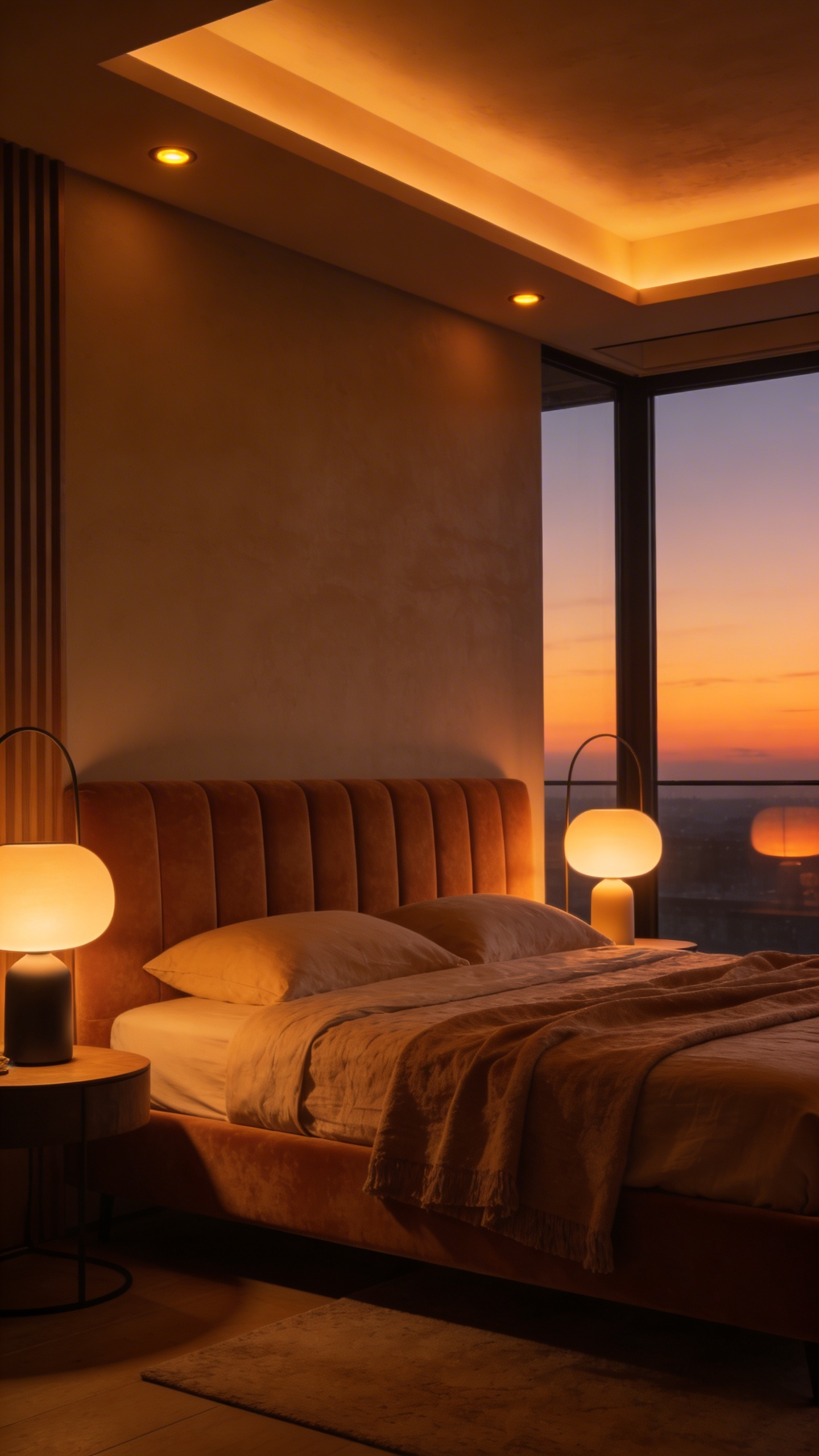
Designers employ a three-tiered layering system to achieve this. First, indirect cove lighting removes harsh overhead glare. The room beautifully loses its sharp edges. Next, bedside sconces provide task-oriented warmth for evening reading. These warm-dim fixtures bathe velvet headboards in heavy, golden hues. Finally, low-level under-bed lighting acts as a safe midnight path. This deep amber accent layer glows at barely two percent brightness. Thus, you can navigate safely without resetting your delicate sleep cycle.
Wealthy eighteenth-century boudoirs achieved this atmosphere using natural beeswax candles. Today, modern warm-dim LED systems recreate that exact intimate cocoon. Silk shades once softened harsh candlelight to protect weary eyes. Now, precision diffusers mimic that historic biological buffer. Replacing sterile white light with this pulsing warmth signals your body for rest.
6. Organic blackout integration: Designing layered window treatments for uninterrupted REM sleep
I always tell clients that deep sleep relies on absolute darkness. Exposure to faint light suppresses your natural melatonin production significantly. This intrusive light fractures and delays your restorative REM cycles. Therefore, we must design a reliable blackout fortress. A three-tier layered window architecture achieves this beautifully.
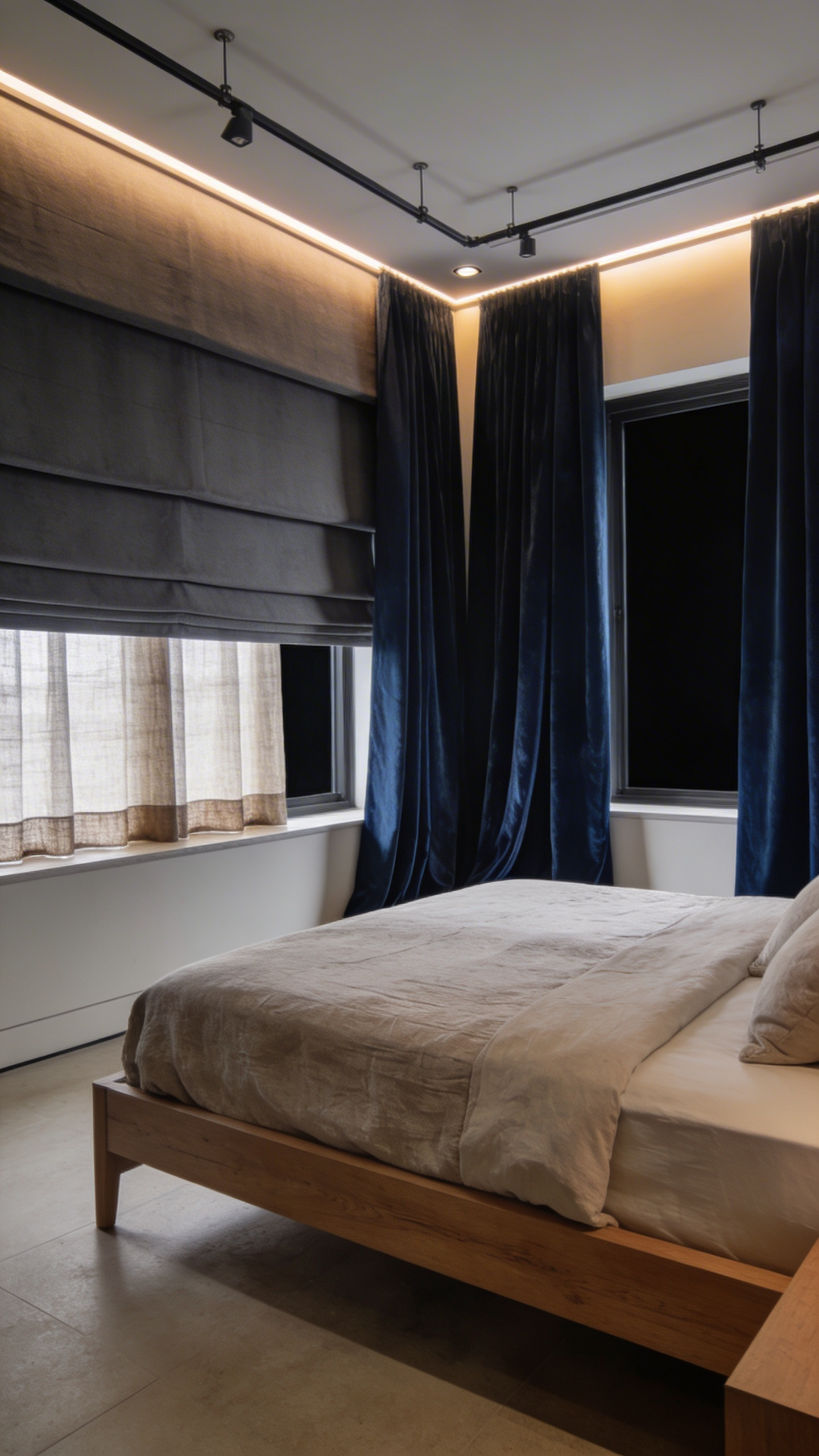
First, a sheer organic linen base filters soft morning daylight. This biophilic layer resets your circadian clock upon waking. It creates serene white bedroom ideas that breathe and glow. Next, the functional core blocks exterior light. This requires a natural shade with a certified organic cotton liner. Magnetic side channels firmly seal the edges to eliminate annoying light halos. Finally, the enveloping layer provides critical acoustic and thermal dampening. Heavy organic wool drapes frame the entire window. We often use a double-return rod for a tailored architectural appearance. The fabric wraps tightly against the wall and puddles beautifully onto the floor.
Organic wool completely avoids the toxic off-gassing of synthetic liners. Millions of microscopic air pockets inside the wool naturally regulate room temperature. These layered natural fibers allow the room to continuously breathe. Solid plastic blackout curtains trap stale air and spike indoor carbon dioxide. This poor ventilation drastically reduces your overall sleep efficiency. Breathable organic textiles maintain a vital fresh air exchange. This careful material selection blends heritage craftsmanship with sleep science.
7. Biophilic corners: Cultivating indoor micro-gardens with air-purifying botanicals
A restorative space requires managing nighttime oxygen levels. Traditional plants release heavy carbon dioxide in the dark. Certain botanicals, however, utilize a completely different biological process. Snake Plants keep their pores closed by day and open them at night. They release fresh oxygen while you sleep. These nocturnal plants prevent grogginess by keeping the air fresh. This creates a localized oxygen bubble around your resting body.
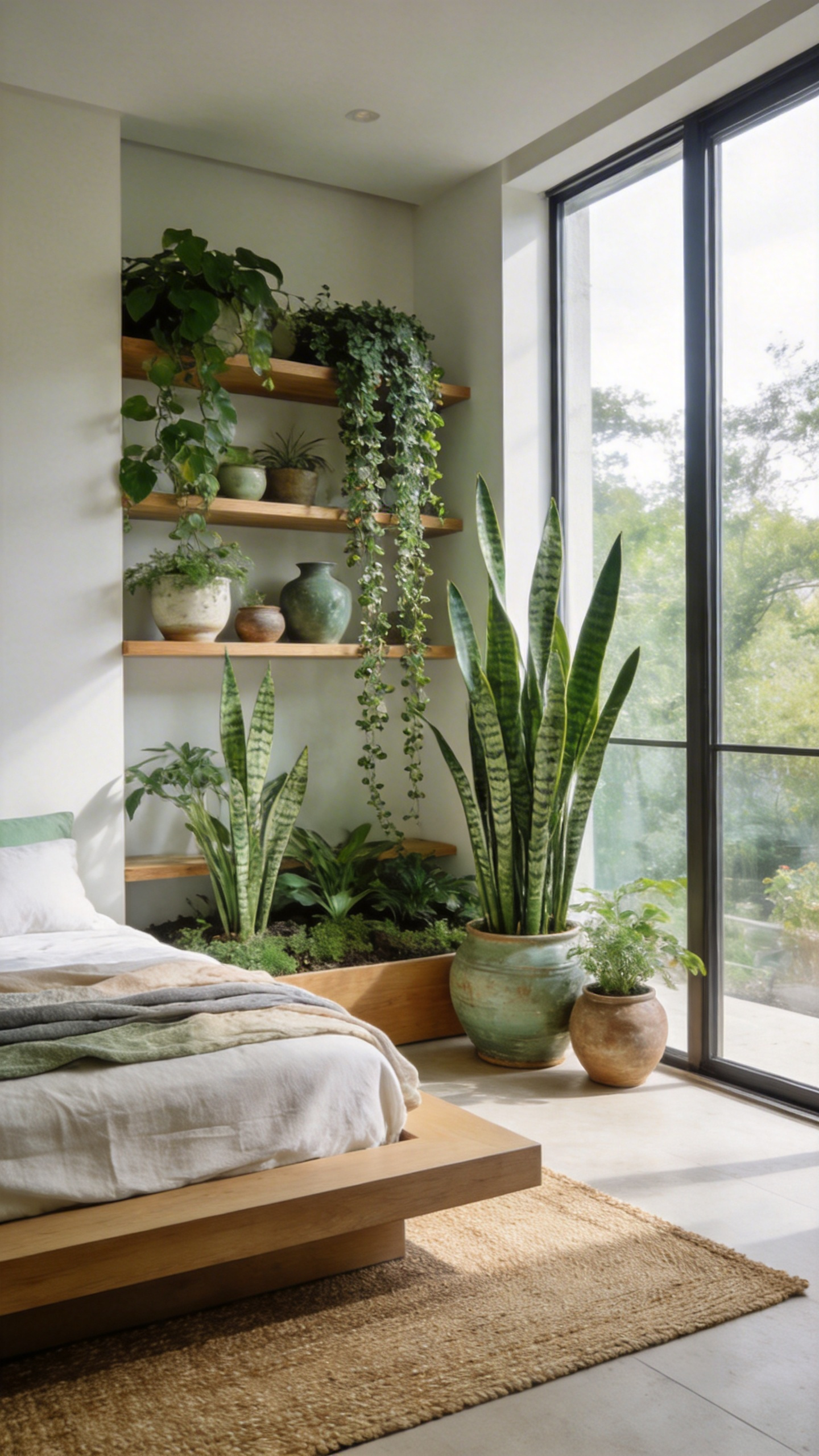
Positioning this micro-garden in your direct line of sight lowers mental stress. Lush ferns exhibit repeating natural patterns known as fractals. These intricate green textures trigger soft fascination in our brains. Quietly observing them lowers your heart rate before sleep. Grouping five to seven distinct plants together transforms the room’s localized climate. Broad-leafed species release intense moisture into the air through transpiration. This dense mounding technique creates a highly effective living humidifier. This clean vapor prevents dry skin and scratchy throats overnight.
A true biophilic corner acts as a living biological filter. Plant leaves only absorb a tiny fraction of indoor toxins. The microbes living deep in the root-soil zone actually do the heavy lifting. Using active potting soils infused with charcoal maximizes this air-purifying rhizosphere. A dense plant cluster provides unexpected auditory and sensory benefits. Thick waxy leaves naturally absorb echoing sound waves. Structural plants make the entire space feel acoustically quiet and peaceful.
8. Stress-reducing pigments: Applying chromatherapy through nature-inspired wall colors
Color serves as a profound neurological tool for your master bedroom. Choosing muted, nature-inspired colors creates a measurable physiological shift. These low-chroma hues actively stimulate your parasympathetic nervous system. This restful activation gently quiets the brain’s emotional center. Therefore, stress hormones drop naturally as you prepare for sleep. The physical structure of your chosen paint pigment matters deeply. Traditional mineral pigments differ wildly from modern synthetic dyes. Under a microscope, mineral pigments resemble tiny, irregular dusty boulders. Their jagged surfaces scatter light gently across the room. This creates a deep matte finish that feels wonderfully solid and protective.
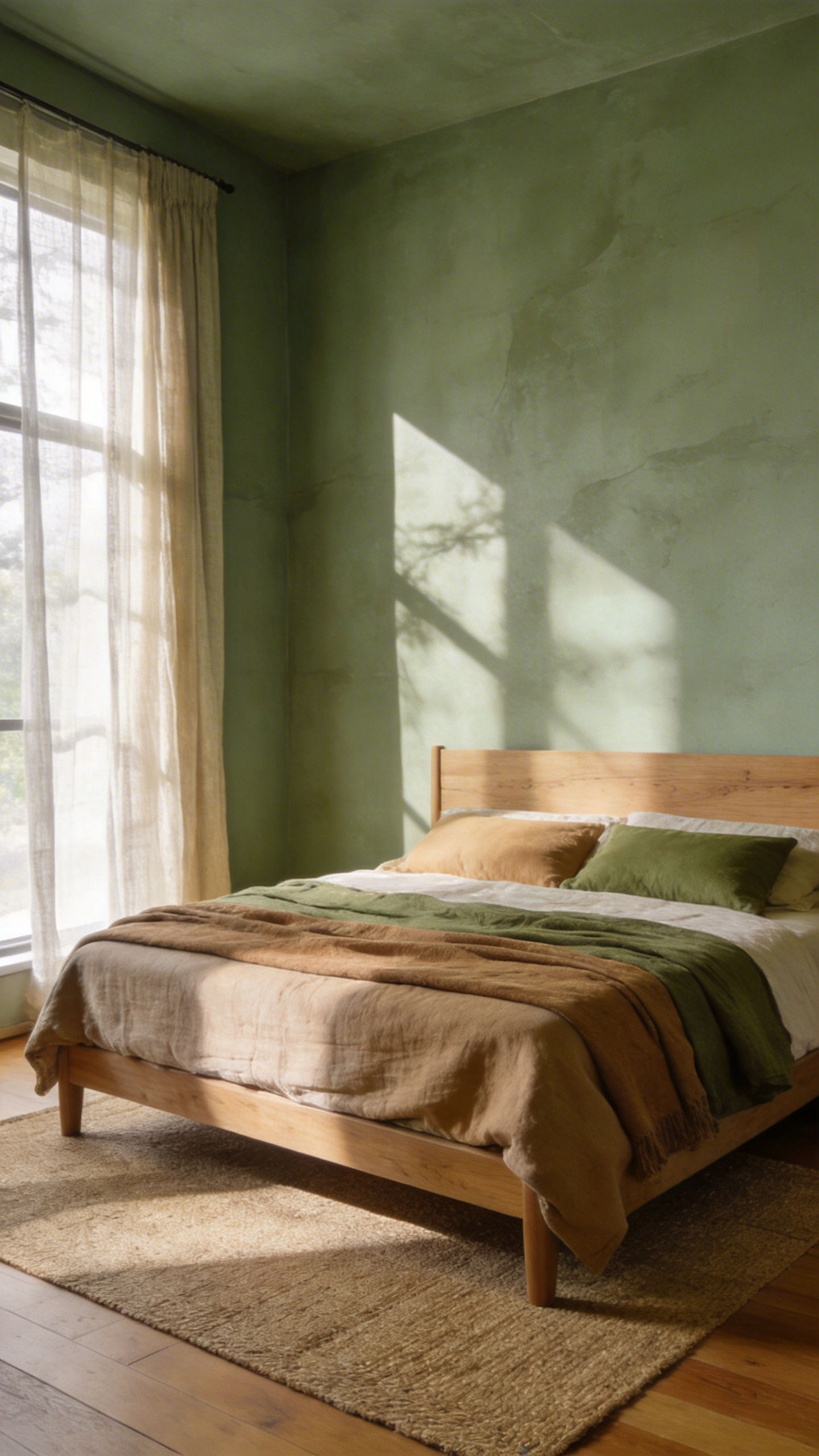
Ancient Egyptians understood this calming color effect perfectly. They painted healing halls with celestial Egyptian Blue to mimic the night sky. Using sky-inspired blues makes modern rooms feel infinitely expansive. True stress reduction must extend seamlessly into the ensuite. Wellness designers often employ an inverted color scheme. Pair deep green bedroom walls with a light, airy bathroom. Ideally, you should maintain the dark green as a subtle bathroom accent. This synchronized flow prevents visual shock between adjoining rooms. It maintains your delicate circadian rhythm throughout the entire suite.
Always avoid highly saturated colors like bright grass green. Select earth-led palettes like dusty terracotta or flint blue. These grounded shades provide profound calm without adding visual noise. Your bedroom becomes a true sensory blanket for restorative sleep.
Phase 3: Healthy materiality and tactile comfort
Your brain performs a rigorous haptic safety check before sleep. Environments feeling slick or synthetic keep the nervous system alert. Organic materials like stonewashed linen trigger healthy oxytocin release. This tactile feedback lowers cortisol and helps induce sleep. We should always design for the hand rather than the camera.
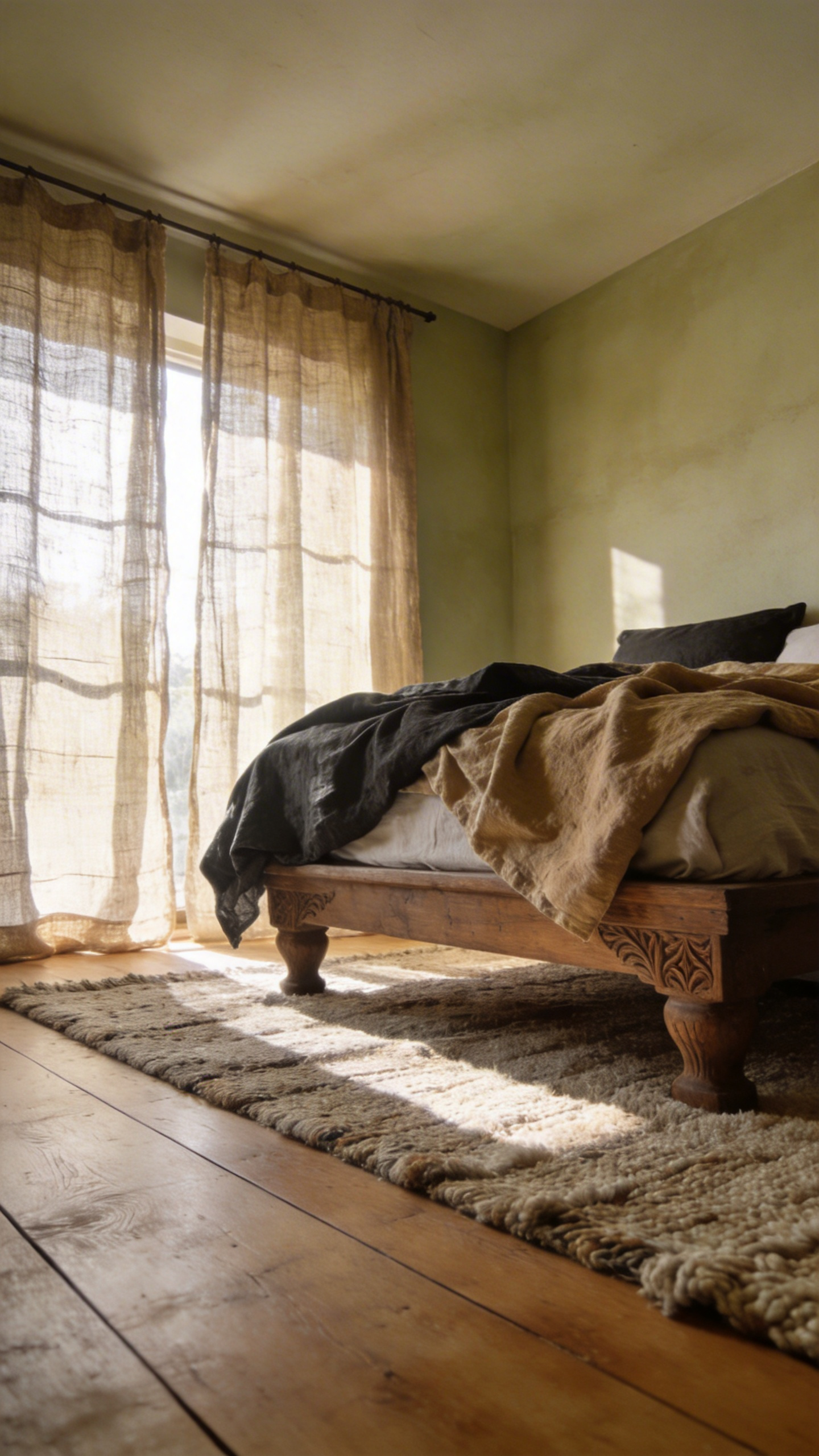
Healthy materiality impacts exactly what you breathe every night. Ancient limewash walls are naturally antimicrobial and hypoallergenic. Their high alkalinity actively cleans the air as it cures. Highly hygroscopic fabrics like hemp act as natural humidity regulators. They absorb excess moisture without ever feeling damp to the touch.
Cork has become a premium architectural tool for wellness. Its cellular honeycomb structure contains millions of sealed air cells. Acoustic cork floors never feel cold to bare feet. It acts as a natural sound barrier against modern echoes. This material creates a deeply soothing and private acoustic cocoon.
True tactile comfort requires careful thermal layering. Slow design embraces seasonal adaptability over a single heavy duvet. Pair cool honed marble nightstands with warm chunky wools. Layering a breathable bamboo base under a weighted cotton quilt provides deep pressure stimulation. This intentional approach allows micro-adjustments that prevent disruptive midnight overheating.
9. The toxin-free foundation: Sourcing organic, chemical-free mattress systems
Homeowners often worry about the “new mattress smell” when updating a suite. The narrative of a toxin-free foundation goes much deeper. Conventional mattresses often hide a toxic cocktail of volatile organic compounds. They frequently rely on harsh chemical flame retardants and formaldehyde-emitting glues. Wellness-focused designs replace these hazards with incredibly safe, natural materials. Natural wool safely self-extinguishes due to its inherent high moisture content. Luxury organic sleep systems eliminate toxic adhesives entirely. Craftsmen rely on centuries-old hand-tufting techniques to securely bind mattress layers together.
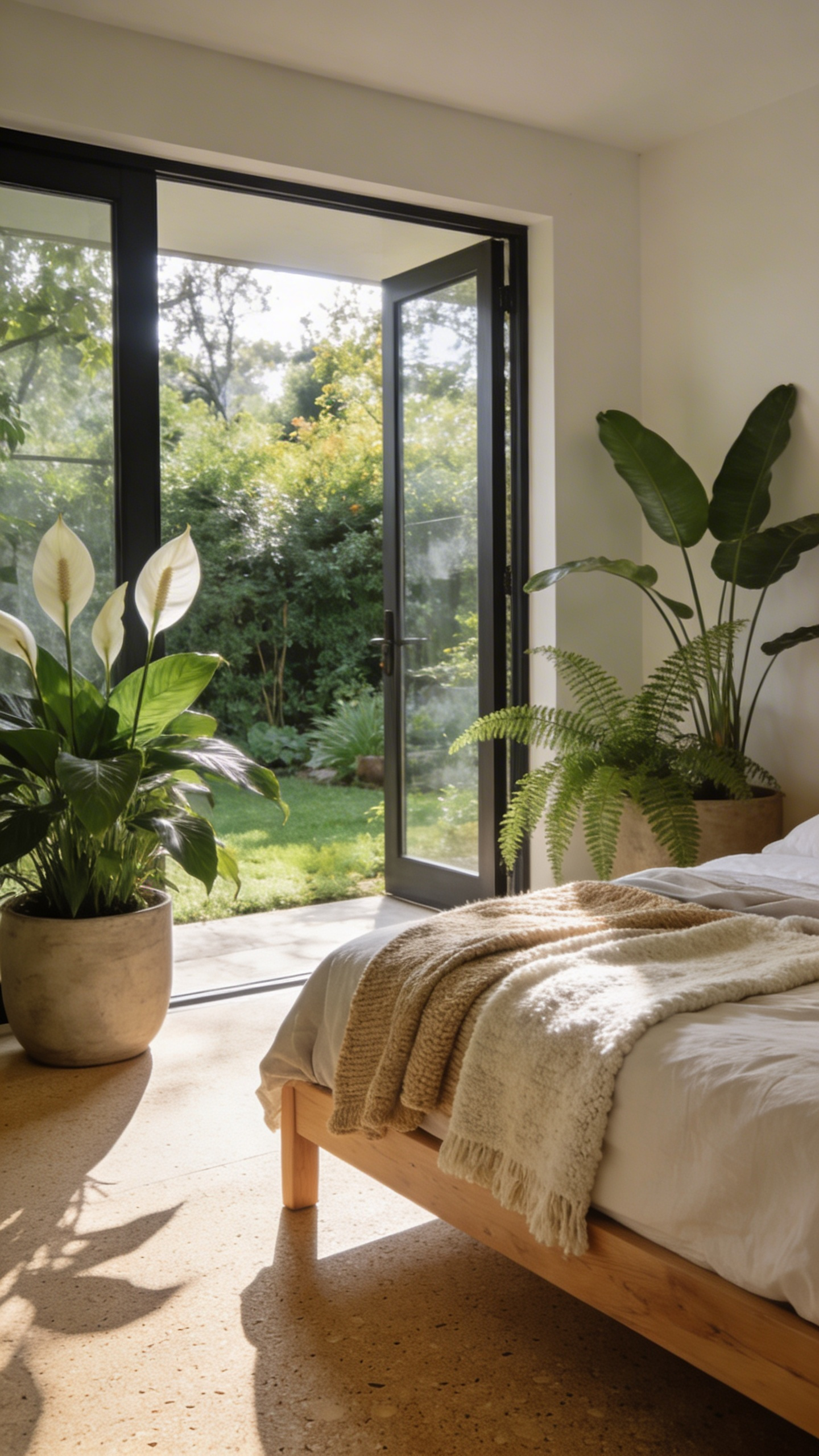
This healthy shift completely transforms your physical sensory experience. Synthetic memory foam traps heat and creates a restrictive sinking sensation. Organic latex sourced from rubber trees provides a resilient, buoyant lift. Your body avoids the clammy, sleep-disrupting heat associated with synthetics.
A chemical-free mattress is only as healthy as its supporting base. These organic materials actively breathe and absorb your nighttime moisture. Therefore, they constantly require adequate, unobstructed airflow from beneath the bed. Placing them on a solid platform directly risks toxic mold growth. Wellness architecture mandates using breathable slatted foundations made of sustainably sourced wood.
You must carefully verify your materials to avoid industry greenwashing. Always look for strict dual certifications when sourcing your sleep system. GOTS guarantees safe textiles, while GOLS ensures a truly organic latex core.
10. Breathable envelopes: Styling the bed with unbleached European linens and Tencel
Treating your bed as a breathable envelope revolutionizes sleep wellness. Borrowed from bioclimatic architecture, this structural concept creates a high-performance biological micro-climate. You achieve this by layering absorbent Tencel with unbleached European linen. First, Tencel sheets create a luxuriously silky base. This friction-free surface rapidly wicks moisture away from your resting body. Next, an unbleached linen duvet cover allows that trapped moisture to effortlessly evaporate. Together, these dynamic fabrics maintain a stable skin temperature around 91°F. This exact micro-climate threshold prevents clamminess and ensures uninterrupted REM sleep.
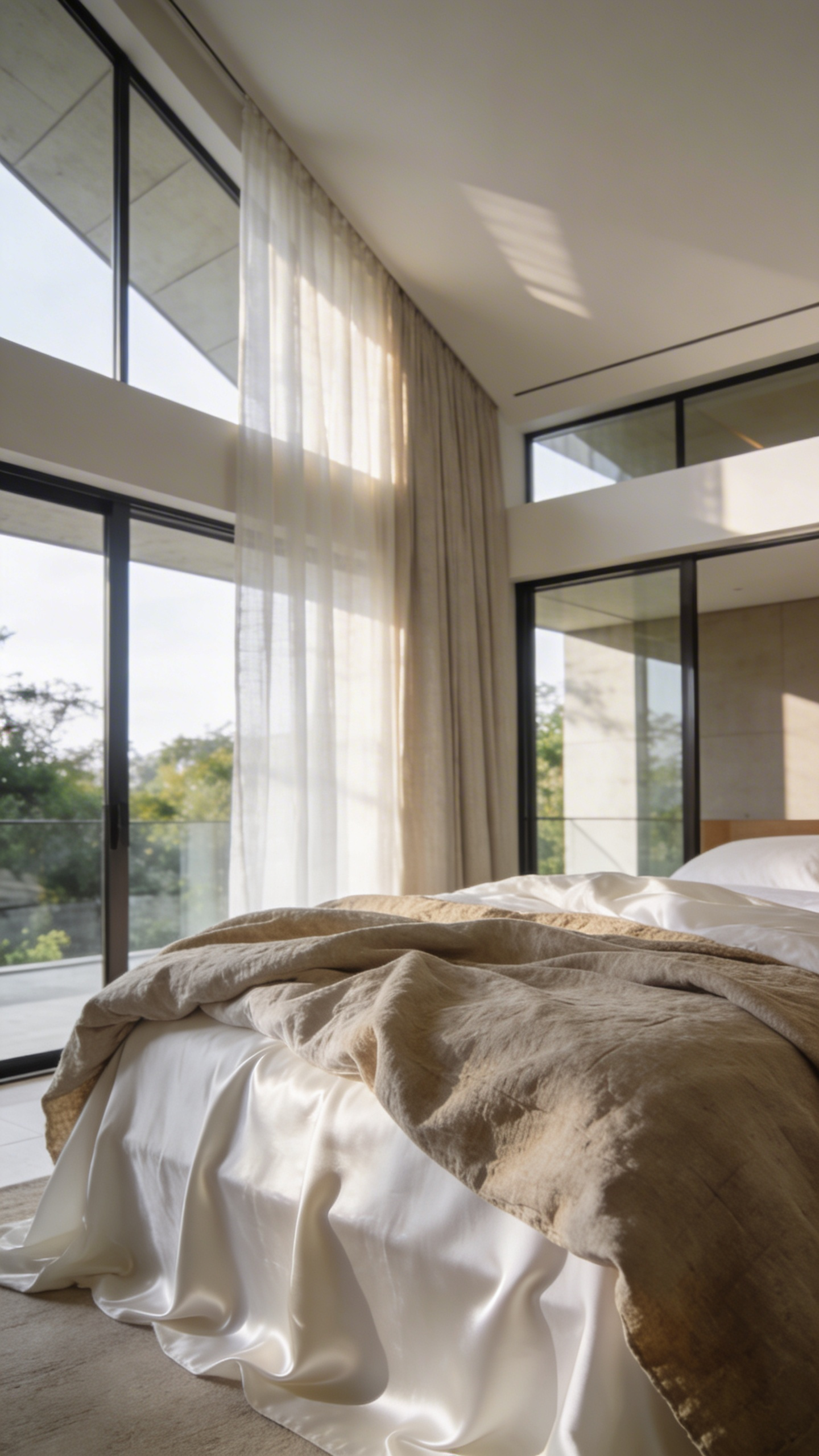
Unbleached linen retains the essential pectins and waxes of raw flax. Therefore, the textile stays remarkably supple. The fabric produces a grounding, earthy rustle known industrially as scroop. The inherent silica naturally resists bacteria without needing harsh chemical finishes. The undone, slightly wrinkled styling serves a highly intentional design purpose. These natural weave slubs create micro-pockets of air for calming, weighted insulation.
Dew-retted European flax continually emits a faint, hay-like scent. This subtle fragrance acts as soothing room aromatherapy. Blending ancient linen with modern Tencel creates a beautifully trans-historical wellness space.
11. Breathable walls: Utilizing low-VOC mineral-based paints and natural lime washes
Breathability is a functional mechanical process in the bedroom. The average adult exhales roughly 40 grams of water vapor hourly while sleeping. Standard acrylic paints trap this moisture. They act like a plastic bag on your walls. I suggest considering mineral-based paints and natural lime washes instead. These materials act as a living lung for your room. Their open-pored structure utilizes hygroscopic buffering to regulate humidity. This keeps the sleeping micro-climate in the ideal 40 to 60 percent range. As a result, you experience deeper REM sleep and better respiratory health.
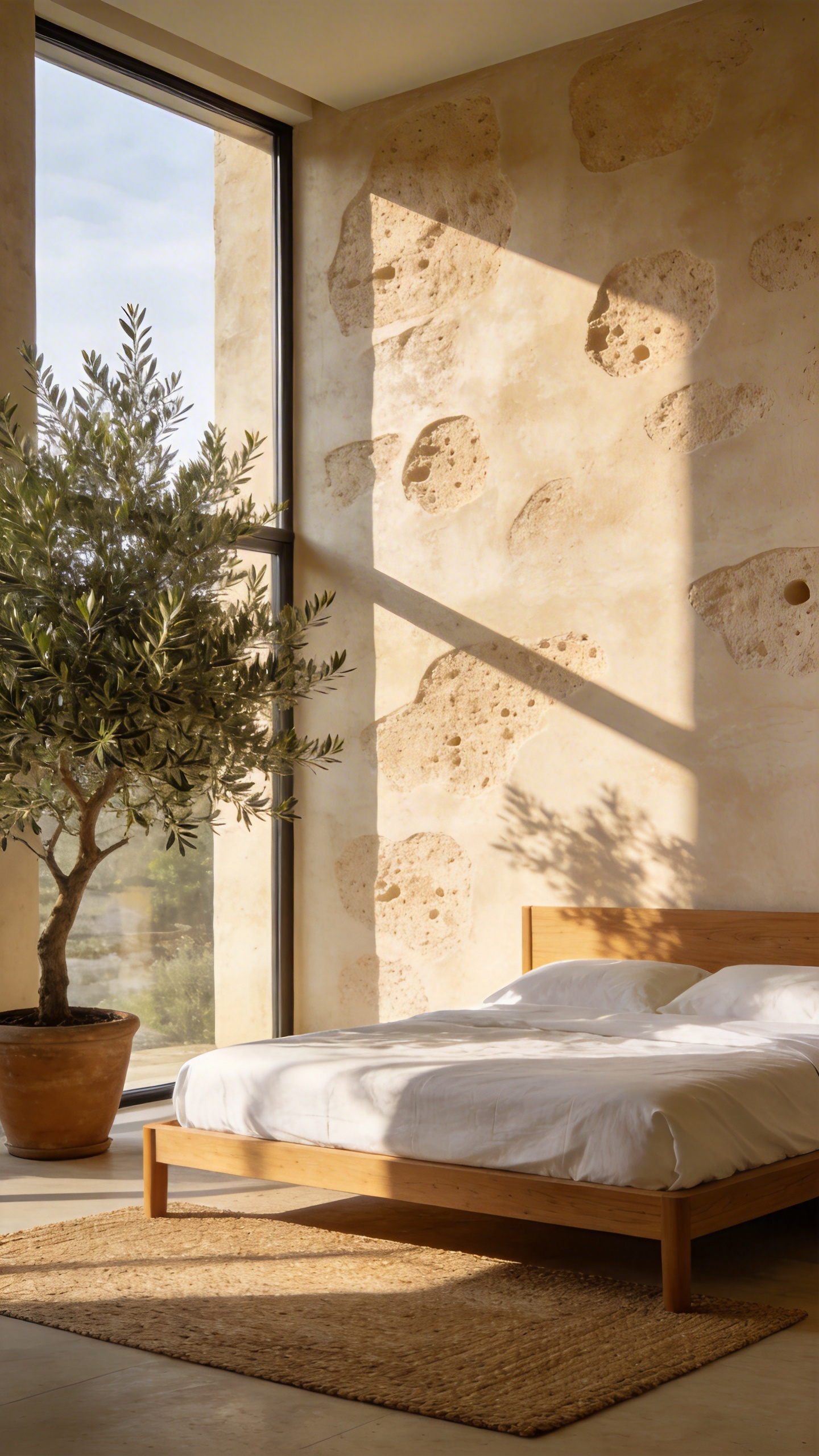
Beyond moisture control, these finishes offer incredible visual silence. Standard latex paints reflect light harshly. Mineral paints contain crystalline structures that softly refract sunlight. This creates a beautiful, velvet matte finish with luminous depth. Applying lime wash with a double-stroke cross-hatch technique adds ethereal movement. Using earth pigments like ochre ensures this soulful glow never fades.
These ancient materials provide a powerful alkaline shield. Natural lime boasts a high pH level around 12 or 13. Therefore, it acts as a passive defense system against hidden mold. It makes fungal growth chemically impossible without off-gassing synthetic fungicides. Silicate mineral paints form a permanent petrified bond with the wall. This bio-sanctuary approach replaces chemical coatings with the sophisticated simplicity of stone and air.
12. Acoustic softening: Dampening environmental noise with natural wool area rugs
Sound waves naturally bounce off hard surfaces like tile or hardwood. This creates harsh, disruptive echoes in your bedroom. Natural wool acts as an incredibly powerful sound trap. Wool fibers feature a complex crimped structure and overlapping scales. These microscopic air pockets easily capture bouncing sound waves. The kinetic energy of noise converts into harmless microscopic heat.
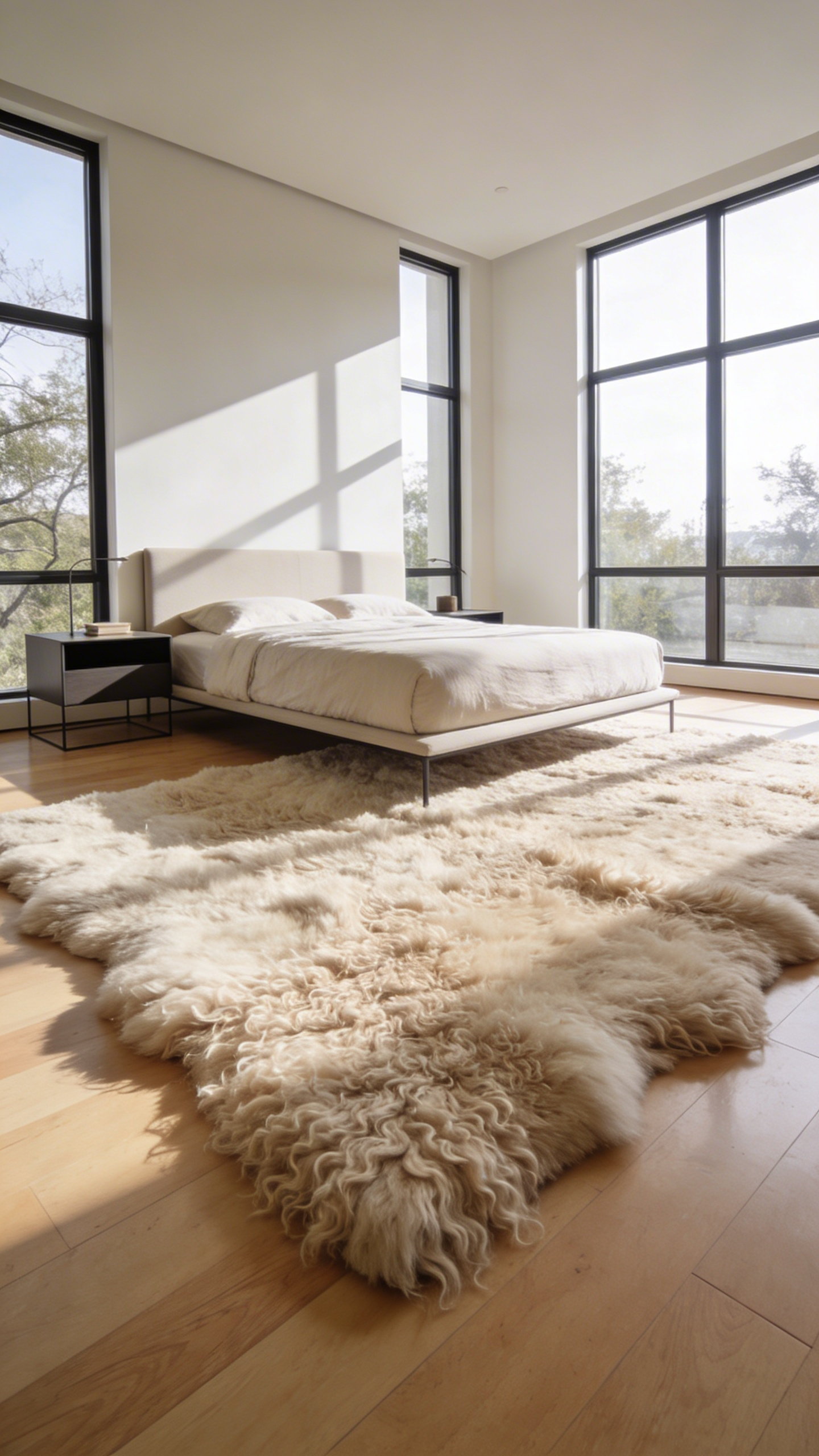
This natural material beautifully protects your shared sleep cycle. Impact noises frequently cause sleep-disrupting micro-awakenings. Fortunately, wool is remarkably viscoelastic. It absorbs physical shock and mechanically decouples the floor. Thus, a partner’s heavy footfall will not vibrate through your bedframe. Psychologically, this profound quietness creates a comforting sense of acoustic warmth. Softening room acoustics directly lowers your heart rate and cortisol levels before sleep.
Wool actively quiets your bedroom’s breathing air. The lanolin within wool fibers neutralizes harmful indoor volatile organic compounds. The textured surface traps dust and allergens safely away from your breathing zone. Rug construction truly matters to maximize these wellness benefits. Choose a high-pile tufted or knotted wool rug. Anchor it with a dense natural felt pad underneath. These varying material densities form an impenetrable sonic island. This layered approach transforms your master suite into a silent, healing cocoon.
Phase 4: Energetic integrity and restorative details
I believe the final stage of design moves beyond mere aesthetics. We must actively address the physiological health of your room. This phase transforms the master bedroom into a functional recovery vessel. We practice spatial acupuncture to naturally lower your cortisol levels. Placing the bed diagonally opposite the door provides primal security. We anchor the room with symmetrical nightstands to promote subconscious stability. Mirrors are strategically hidden to prevent an active, watchful energy.
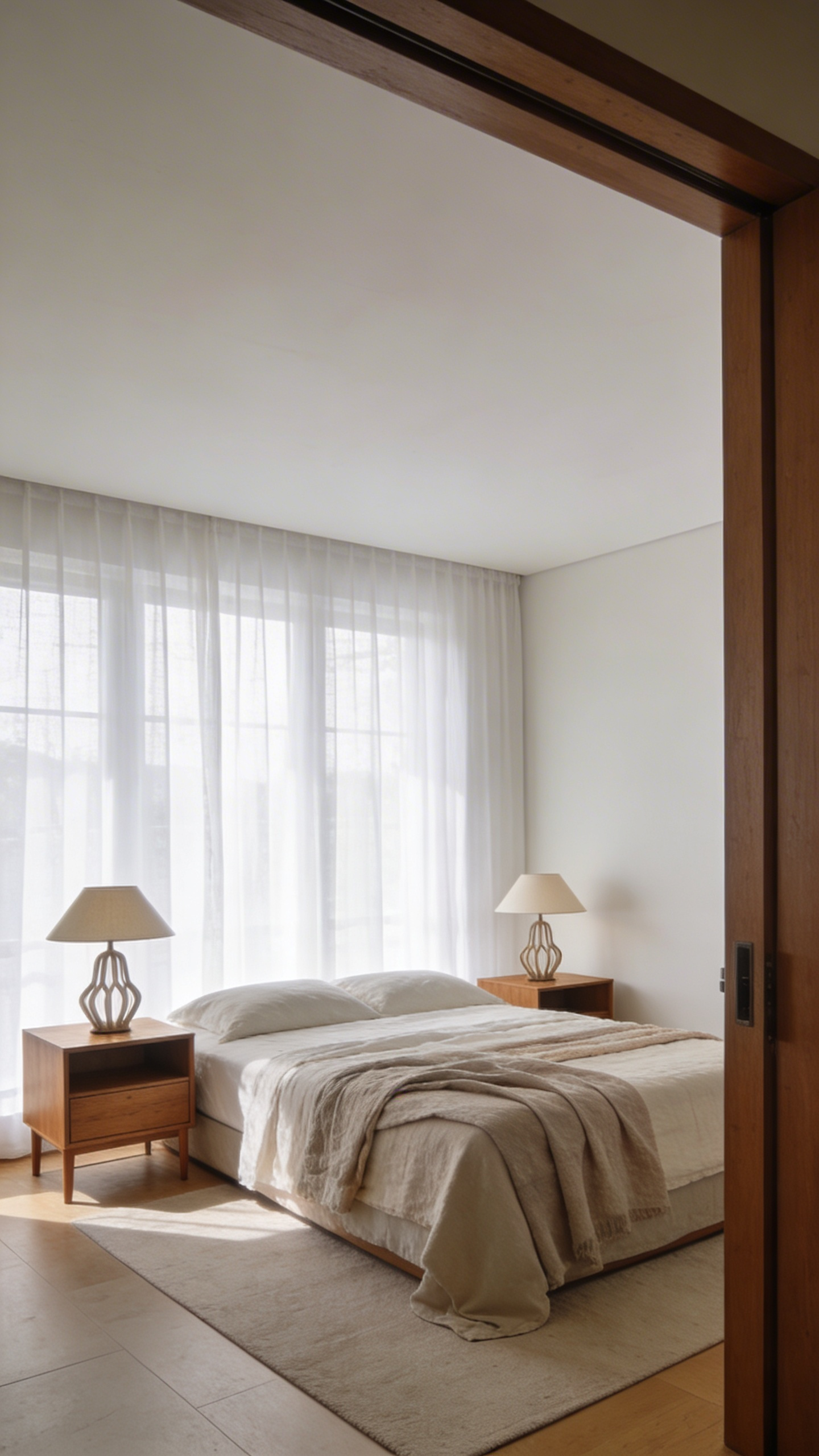
Biological materiality plays a crucial role in physical wellbeing. We utilize breathable, natural materials like layered horsehair and wool. These bio-active textures naturally regulate your thermal micro-climate while you sleep. Grounded elements like untreated wood help dissipate daily static charge. Every finish must be strictly low-VOC to ensure deep, restorative breathing. Circadian precision lighting completely replaces standard, harsh bedroom dimmers. Warm-dim technology gracefully shifts bright light to a warm, sunset-like glow. This specific melanopic shift triggers healthy melatonin production as evening progresses. Absolute darkness is treated as a highly premium design material. Motorized blackout tracks and the removal of phantom LEDs protect your rest.
Acoustic softening completely isolates you from the busy outside world. Velvet wall panels and deep-pile wool rugs act as sonic sponges. A cold-diffused cedarwood scent trains your brain to fully relax. Excluding all digital devices ensures your sanctuary remains completely free of interference.
13. EMF-conscious boundaries: Establishing a tech-free sleep sanctuary
Creating an EMF-conscious boundary treats your primary bedroom as a deeply restorative third skin. True sanctuary design moves beyond simply banishing smartphones. We must manage the hidden electrical wiring behind your walls. These hidden wires emit constant alternating current electric fields. Experts recommend maintaining a six-foot buffer from high-draw appliances. Practically, you can float your bed in the center of the room. Alternatively, a thick upholstered headboard creates a beautiful physical boundary.
Consider upgrading to a metal-free organic latex mattress. This choice eliminates the risk of conductive interference from floor wiring. Designers often integrate high-style shielding canopies for ultimate protection. Silver-infused textiles mimic the look of ethereal cotton voile. They effectively block ambient radio frequencies. This fabric drapes your bed in a stunning electromagnetic cocoon.
Replacing technology with analog rituals reclaims your natural sleep cycle. Swap digital alarms for silent sweep mechanical clocks. Embrace warm low-kelvin lighting or genuine beeswax candles before bed. Consider installing a remote cut-off switch in your electrical panel. This device kills power to the room when lights go out. As a result, users experience a profound sensory silence. Removing that persistent low-level electrical hum allows your nervous system to genuinely rest.
14. Somatic soothing: Incorporating heavy, grounding textures for nervous system regulation
Somatic therapy proves that heavy textures physically recalibrate the human nervous system. Weighted blankets and dense wool knits offer deep pressure stimulation. This tactile input triggers a calming parasympathetic shift in your body. Sustained physical pressure naturally increases serotonin and melatonin while decreasing cortisol. This grounding effect extends beyond the bed itself. An oversized, upholstered headboard serves as a psychological shield and acoustic dampener. Heavy velvet or boucle absorbs auditory clutter that triggers anxiety. Sensory layering on the floor regulates the nervous system from the ground up. Moving from cool wood to a thick sheepskin rug provides immediate tactile feedback. Therefore, this interoceptive awareness pulls your mind away from racing thoughts.
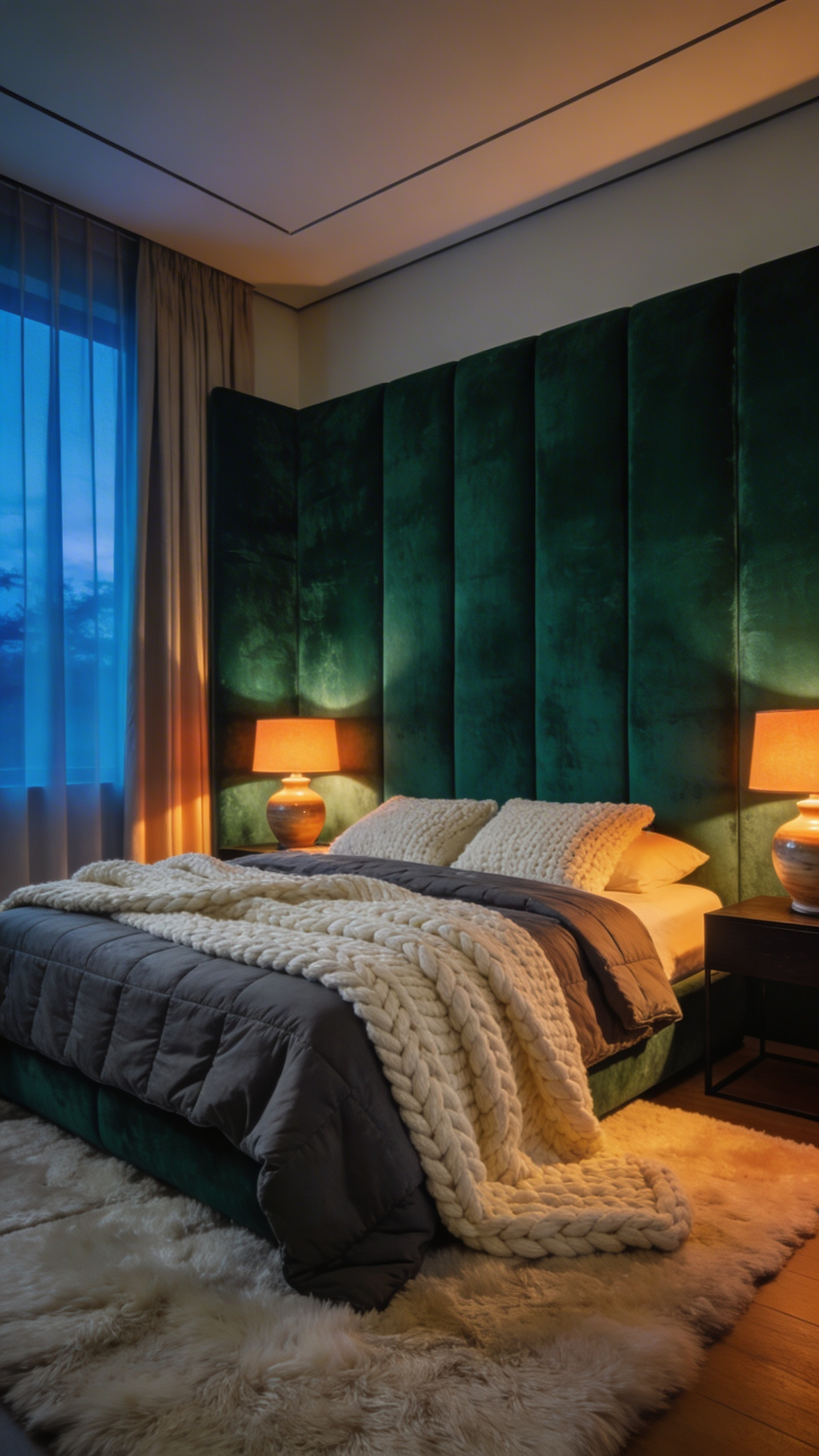
Introducing heavy materials often raises concerns about trapped heat. The solution lies in high-mass, low-heat textures like heavy-weight breathable linen. A honed marble nightstand provides a cooling, physical grounding touch. This thermal contrast stabilizes your senses without causing uncomfortable overheating. Visual weight also plays a crucial role in somatic soothing spaces. Instead of airy whites, choose deep terra cotta or muddy sage. These muted tones reduce visual noise and mimic natural environments. Textured limewash walls create subtle heavy shadows that encourage deep restoration.
15. Scent architecture: Integrating passive, non-toxic aromatherapy zones
I love when modern designers treat scent as invisible architecture. It shapes a room without physical walls. Scent directly impacts the brain’s limbic system. It triggers an immediate, involuntary physiological response. We must move beyond synthetic home fragrances. True wellness architecture utilizes non-toxic aromatherapy zones.
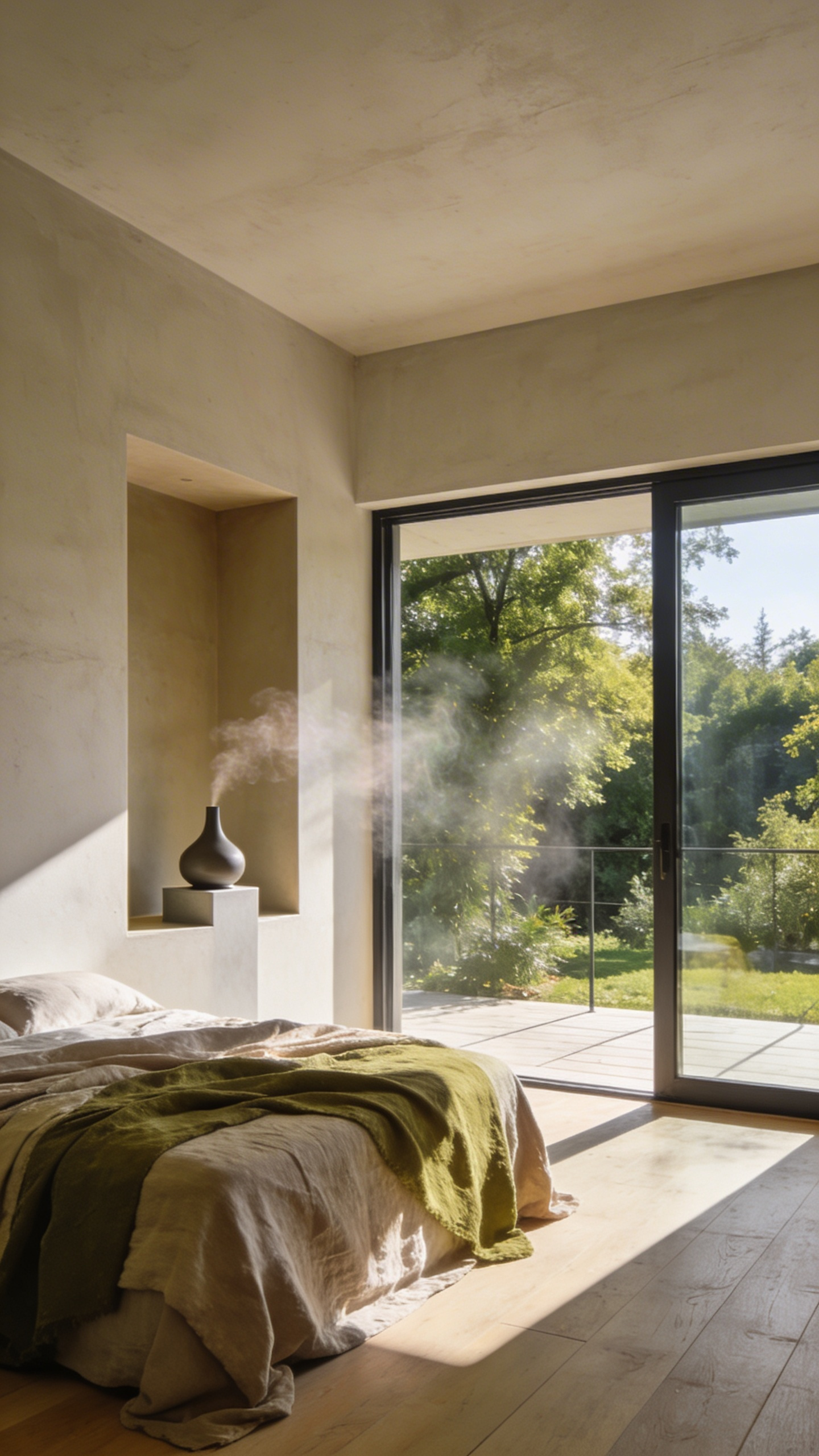
This spatial practice has deep historical roots. China’s Song Dynasty actually established an Incense Bureau. Scholars practiced “nasal meditation” to define boundaries. Today, we engineer similar sensory micro-climates in bedrooms. We often use bedroom interior design ideas that reflect your unique spirit.
Sustainable scent architecture relies on passive diffusion. It uses the capillary action of porous materials. Basalt lava rocks feature unique honeycomb structures. These natural stones trap pure essential oils beautifully. They release aromas slowly through gentle evaporation. Unglazed terra cotta acts as a permanent diffuser. Thus, you avoid the dampness of ultrasonic mist.
You should divide your bedroom into three zones. First, place refreshing white tea near the entryway threshold. This quickly cleanses your mental palate upon entering. Next, anchor a reading nook with grounding frankincense. Finally, keep lavender within a three-foot breathing radius. Place passive wooden beads near your pillows. Research shows this targeted lavender improves sleep latency significantly. Localized zoning prevents your brain from experiencing olfactory fatigue. This creates a subtle, layered atmospheric shift. Your environment actively promotes deep, restorative sleep.
16. Curated serenity: Selecting meaningful artwork scientifically proven to lower the heart rate
Artwork in your master bedroom serves as a powerful biological tool. The right pieces can physically lower your heart rate. Science shows that mathematical dimensions dictate our physiological response. Natural fractal patterns trigger immediate relaxation. These gentle patterns mirror clouds or soft-focus botanical prints. Your brain enters a calming state of effortless looking.
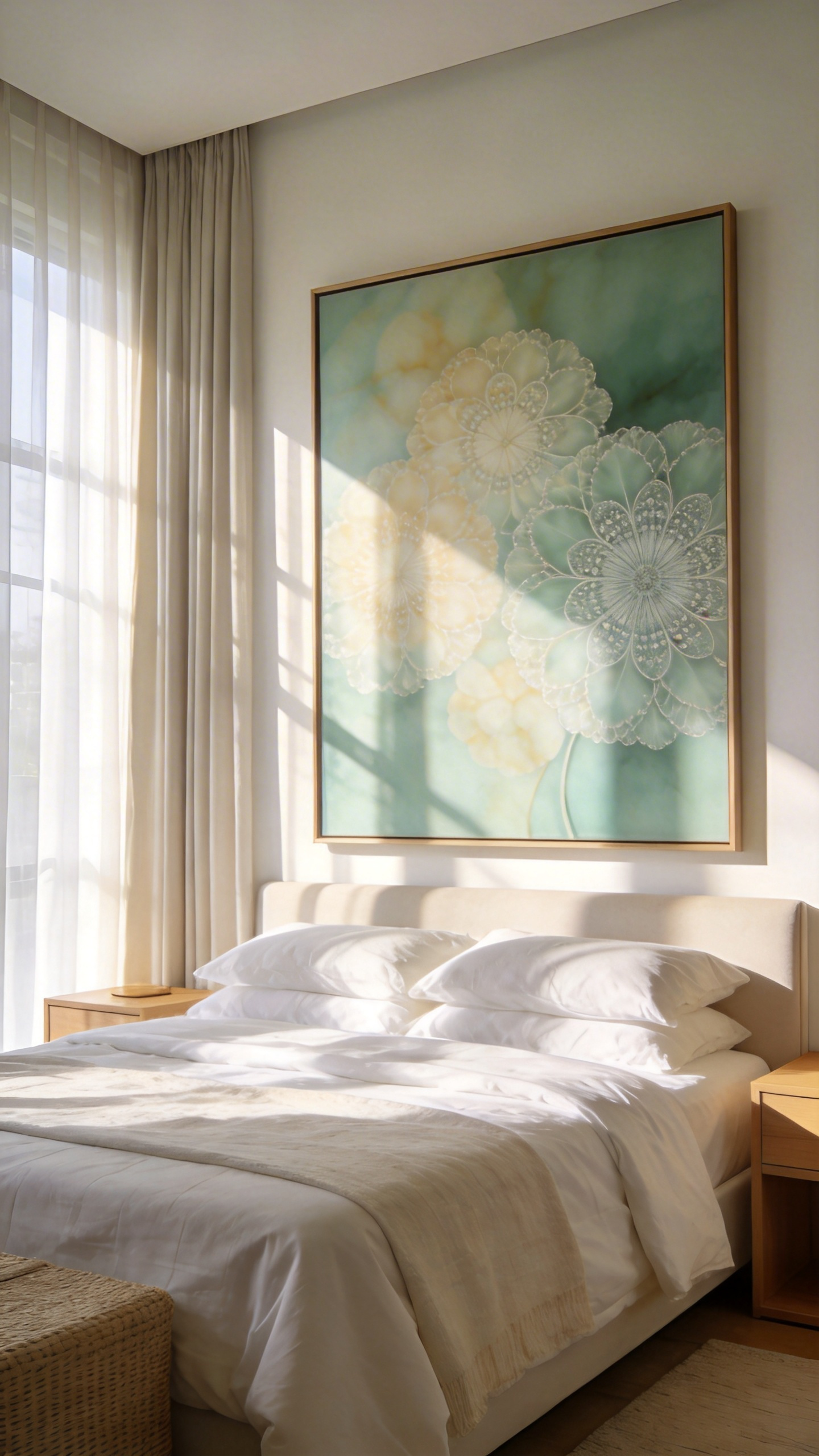
Evolutionary psychology plays a massive role here. Humans possess an innate preference for expansive, safe landscapes. Position art with low-contrast horizon lines opposite your bed. This visual expansiveness signals deep safety to your primitive brain. Color palette choices act as literal chemical triggers. Desaturated dark blues and teals effectively lower your blood pressure. Highly saturated electric colors stimulate the sympathetic nervous system.
True serenity requires deep personal resonance. Meaningful pieces instantly activate your brain’s default mode network. Your body releases calming dopamine and oxytocin. Generic hotel art simply fails to provide this soothing mental anchor.
Consider the physical placement of your chosen artwork. Avoid visually busy gallery walls in your intimate sleeping space. Select one large, minimalist piece to limit rapid eye movement. This quiet visual focus allows your pulse to slow down naturally. These bedroom inspirations master designs ensure your suite is a functional recovery vessel for the modern soul.
Frequently asked questions
What is the command position in a master bedroom?
The command position means placing your bed where you have a clear view of the door from a distance. Usually, this means setting it diagonally across the room. This layout provides a psychological sense of security, reduces stress, and satisfies an evolutionary need for prospect and refuge.
How does lighting affect sleep in a master suite?
Standard cool-toned lighting suppresses melatonin production and disrupts your circadian rhythm. High-end master suites utilize warm-dim technology or amber-toned bulbs (2700K-3000K). This mimics the natural setting of the sun and signals your body to prepare for deep sleep.
Why is organic bedding better for a healthy bedroom?
Organic materials like linen, Tencel, and wool are highly breathable and free from volatile organic compounds (VOCs). These fabrics regulate skin temperature and prevent the inhalation of toxic off-gassing. They create a cleaner, more restorative sleep micro-climate.