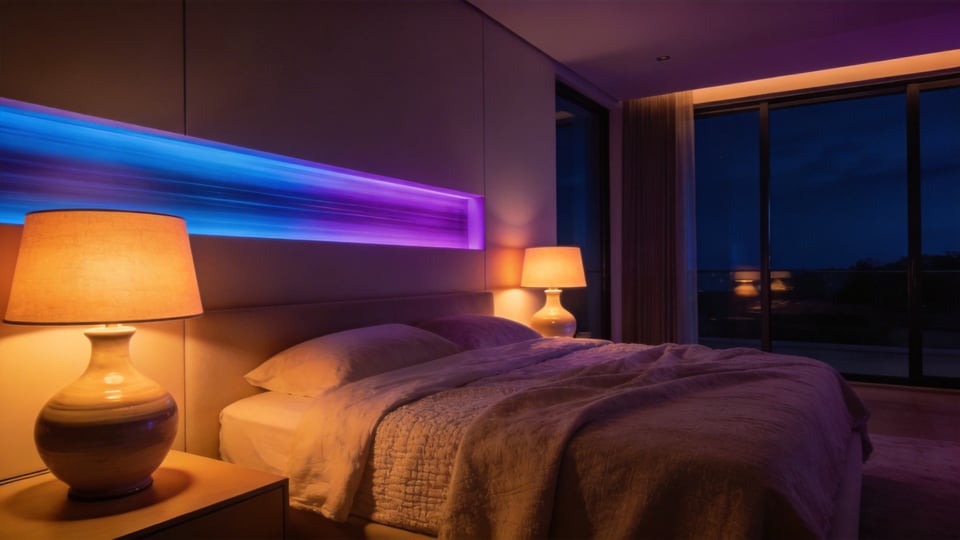
Many homeowners believe that restorative sleep depends entirely on high thread counts. In fact, they invest heavily in plush textiles to create a comfortable sanctuary. However, this common belief ignores a fundamental biological reality. Your body does not enter deep rest simply because you are physically comfortable. Instead, it requires the right bedroom light ideas to signal the brain that the day has finally ended.
The true architect of your sleep cycle is actually light, not fabric. Specifically, invisible sensors in your eyes called ipRGCs continuously monitor your bedroom. When these sensors detect the “sky blue” spectrum hidden in modern white LEDs, they react instantly. Effectively, they signal the brain to suppress melatonin. This treats 10:00 PM like a cloudy afternoon. Thus, even a dimmed overhead light often acts as a potent biological stimulant. Therefore, it keeps cortisol levels unnaturally high.
To reclaim your rest, look beyond traditional interior design aesthetics. This guide reveals how to transform your bedroom lighting ideas into a precise metabolic signaling system. We examine the ancestral benefits of sub-2,000 Kelvin lighting. Next, we analyze the spatial strategy of “floor-washing.” Indeed, we explore why avoiding “spectral gaps” reduces psychological fatigue. Ultimately, you will learn to curate an environment that aligns with your biology for truly regenerative sleep.
The Philosophy of Photons: Understanding how light spectrums dictate your body’s melatonin production.
To master bedroom design, we must view light as a biological messenger. Indeed, photons do more than provide visibility; they dictate your internal rhythm. For decades, science focused solely on conscious vision. However, we now know about specific receptors called ipRGCs. These cells communicate directly with the brain’s master clock. Consequently, they are highly sensitive to blue light, particularly in the 480nm range.
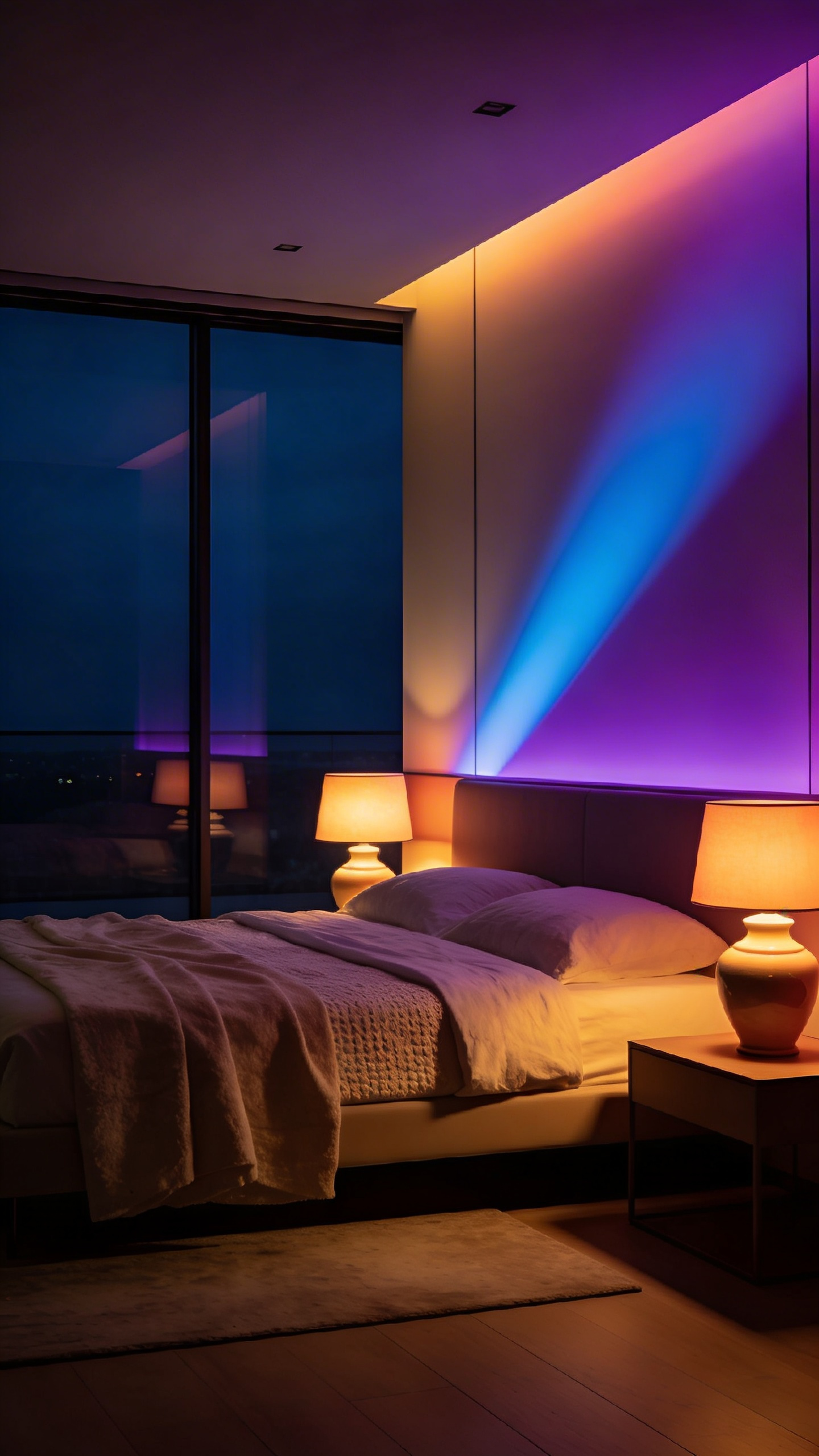
When this specific spectrum hits your retina, it signals the pineal gland to stop producing melatonin. Therefore, your body perceives high noon, even if it is midnight. Historically, our ancestors relied on firelight to end their day. This light source naturally burns at a warm 1,800K. Crucially, fire lacks the alerting blue spectrum found in modern LEDs. Unfortunately, standard bulbs today often utilize a hidden “blue pump” that mimics daylight.
In fact, the physical angle of light matters immensely. Biologically, light coming from above hits the lower retina. This signals alertness. Conversely, low-level lighting impacts the upper retina, mimicking the grounding nature of a campfire. Thus, effective wellness design prioritizes “spectral tapering” and positioning. By utilizing floor lamps with amber tones, you actively protect your chemical ability to sleep. Ultimately, you transform your bedroom from a space of confusion into a sanctuary for rest.
The 2700K Rule: Why color temperature is the single most critical metric for a bedroom sanctuary.
Understanding why 2700K is critical requires looking beyond the “warm white” label. Historically, this temperature mimics the stable brightness of a tungsten filament. In fact, it replicates the “Golden Hour.” This signals to the primitive brain that the day is over. Unlike the static white of office bulbs, 2700K creates a “living” atmosphere. Consequently, it bridges the gap between ancestral hearths and modern interiors.
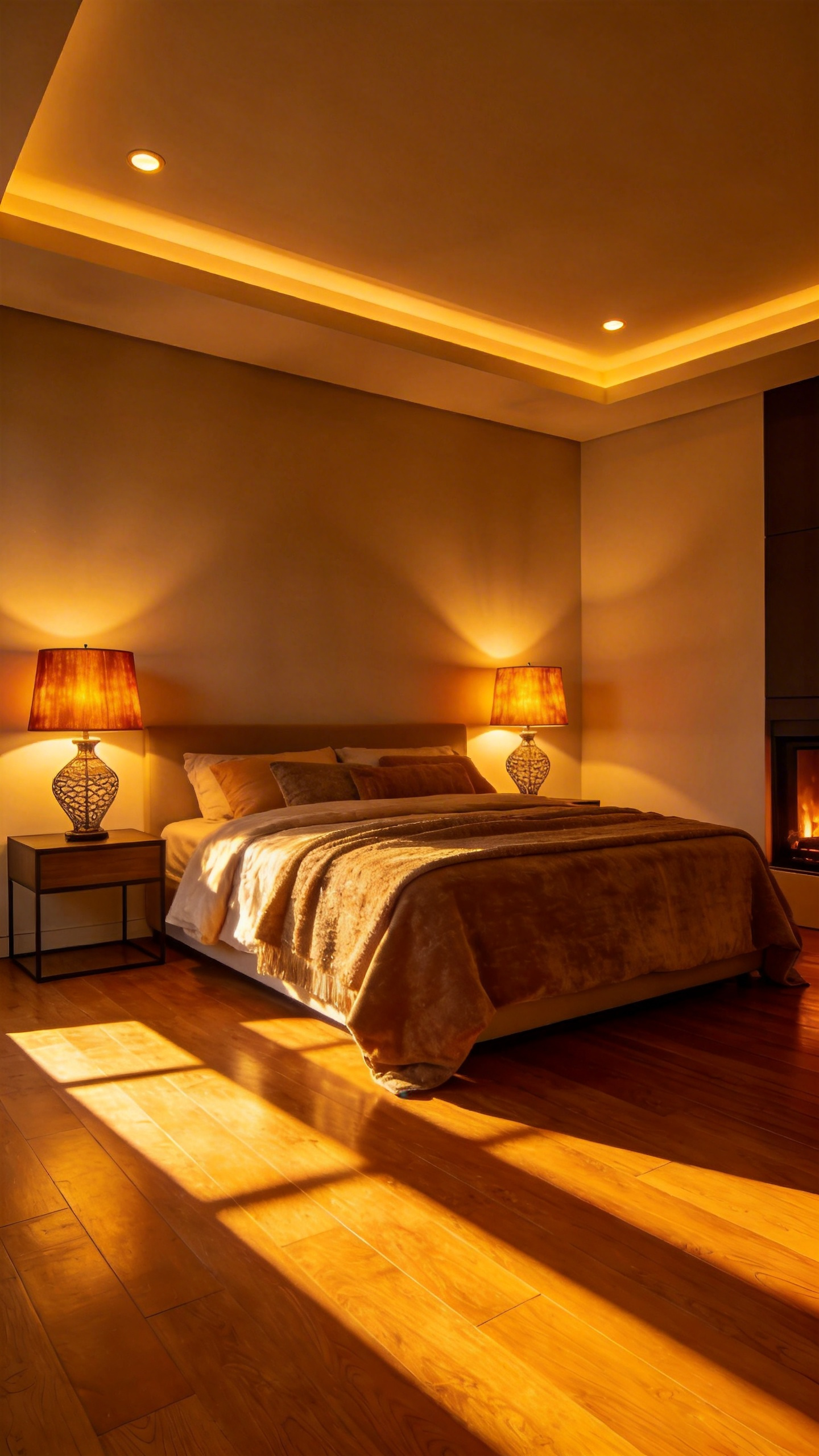
Biologically, your bedroom serves as a site of chemical transition. Specifically, the Suprachiasmatic Nucleus (SCN) acts as your body’s master clock. It is hyper-sensitive to blue wavelengths that suppress melatonin. Although 3000K is marketed as warm, it contains a significant spike in blue spectrum light. Therefore, the 2700K rule represents a vital tipping point. At this temperature, light transitions from inhibiting sleep to permitting it. Effectively, this creates a “sensory cocoon” that lowers cognitive arousal, a cornerstone of sophisticated modern bedroom decor.
From a design perspective, this metric is also the most forgiving. Because 2700K is rich in red wavelengths, it enhances natural skin tones. Conversely, cooler lights often make faces appear tired. Additionally, this warmth highlights the tactile luxury of velvet or high-thread-count linens. While some modernists argue that 3000K makes sheets look “crisper,” a sanctuary requires a different approach. Ultimately, biological comfort must supersede “gallery” aesthetics in a space designed for rest.
Layering for Wellness: Moving beyond the ‘big light’ to create a constellation of calm.
Relying on a single overhead fixture feels inherently jarring in a bedroom. Biologically, this “big light” strikes the eye from an angle mimicking the high-noon sun. Specifically, this triggers cortisol production. It creates a state of unwanted alertness. To counter this, we must embrace the concept of “biological darkness.” For millennia, humans found safety around low-level light sources like campfires. Therefore, your lighting design should resemble a constellation of embers. Mastering this balance is one of the most effective bedroom interior design tips for deep sleep.
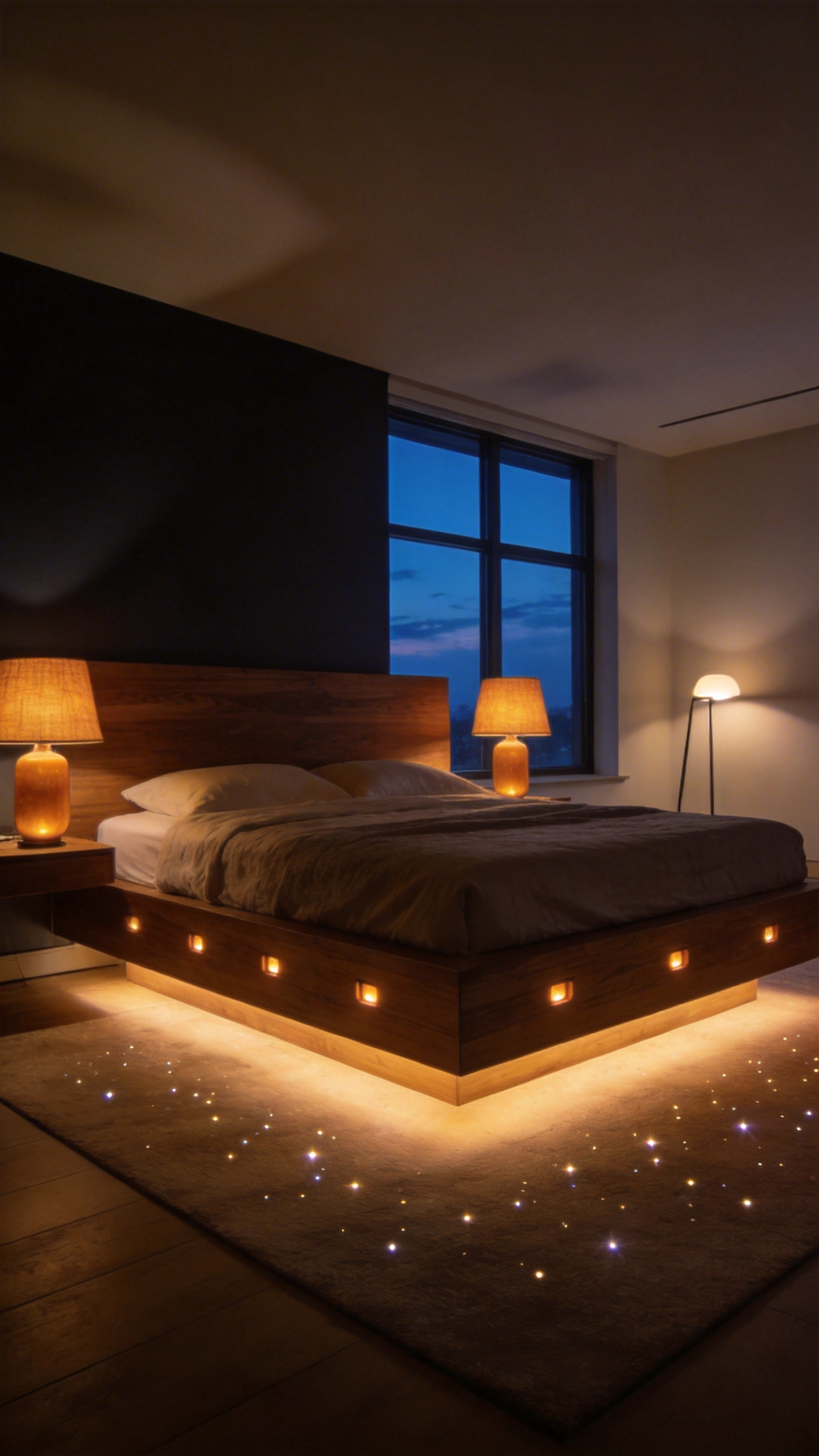
In practice, this requires layering light sources at various heights below eye level. For example, utilize bedside sconces or low-slung pendants to create a peripheral glow. Furthermore, the texture of the light matters just as much as placement. Materials like rice paper create “dappled light.” Indeed, this soothes the brain through soft fascination.
Additionally, focus on the quality of the shadows, known as *chiaroscuro*. By leaving the bed in a soft pool of shadow, you create a sense of enclosure. Moreover, ensure your bulbs utilize “dim-to-warm” technology. This mimics a sunset’s natural redshift. As the light dims, the color temperature should drop to a candle-like 1800K. Ultimately, by curating these shadows, you stop fighting the night and invite deep rest.
Material Connection: Rattan and Woven Pendants for varied, biophilic texture shadows.
In wellness architecture, lighting serves a greater purpose than simple illumination. Specifically, it orchestrates a restorative atmosphere. Rattan pendants are powerful tools because they recreate *Komorebi*. This is the Japanese concept of sunlight filtering through leaves. Consequently, this effect triggers “soft fascination” in the brain. Research suggests this state helps us recover from cognitive fatigue. Therefore, woven shadows are functional wellness elements.
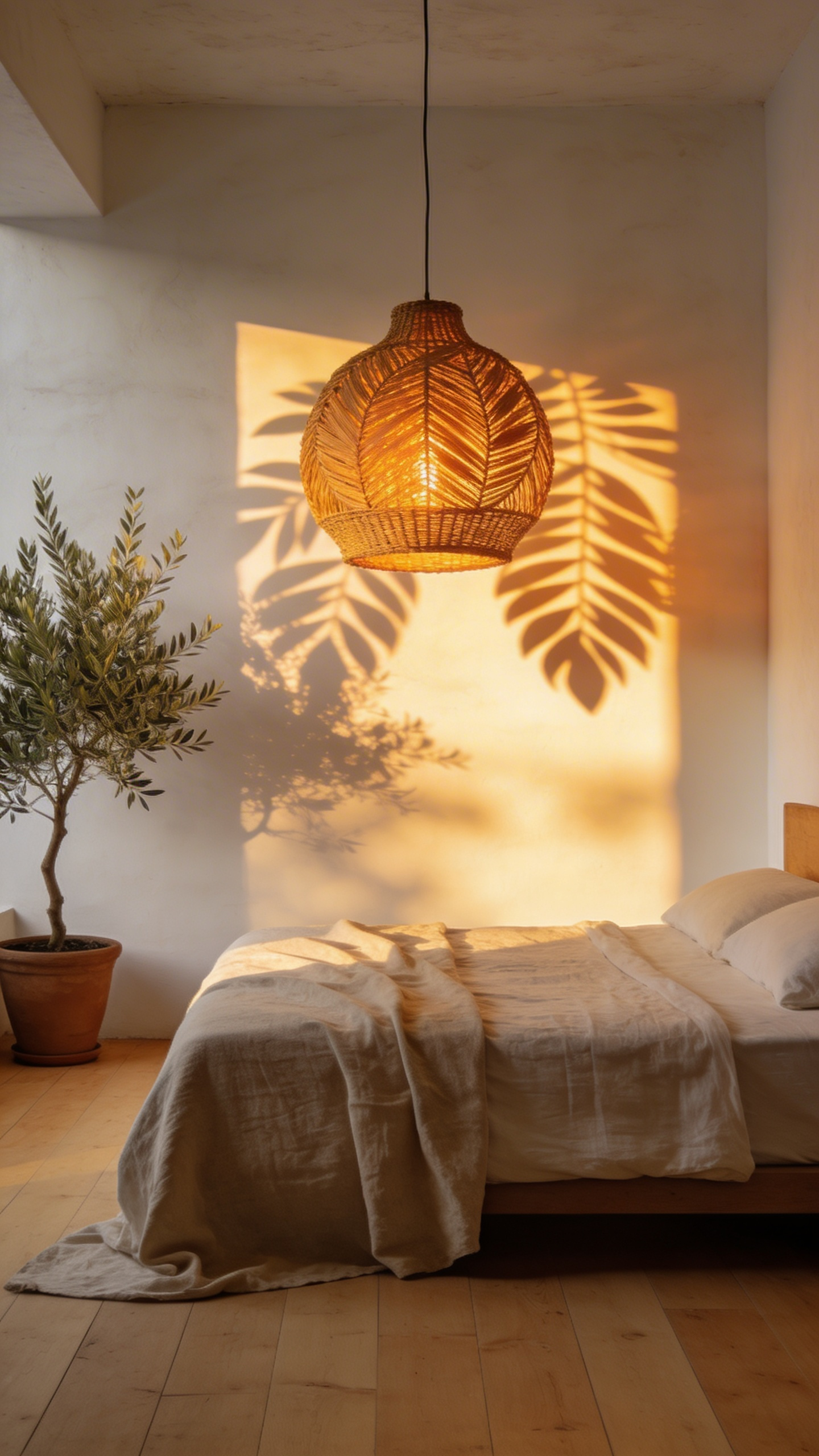
Furthermore, the specific weave pattern dictates the shadow’s geometry. For instance, open hexagonal weaves produce orderly grids. In contrast, random weaves mimic the organic patterns of a forest floor. Thus, the light becomes “visual texture.” It adds sensory richness to an otherwise static room. However, the bulb choice acts as the projector lens for this effect.
Notably, clear filament bulbs cast sharp shadows that emphasize every fiber. Alternatively, frosted bulbs diffuse the light. This creates a soft, “dream-like” penumbra. Ultimately, this choice allows you to control the intensity of the visual experience. To maximize this impact, designers recommend placing fixtures near plain walls. As a result, the wall becomes a dynamic canvas.
The Diffused Glow: Alabaster and Onyx lamps that mimic the soothing frequency of candlelight.
Lighting in a restorative bedroom requires more than simple dimmers. Specifically, we must consider the biological impact of the glow itself. Alabaster and onyx lamps function as “geological filters.” Consequently, they transform harsh electricity into the primordial warmth of a campfire. This occurs through a phenomenon known as subsurface scattering. Unlike glass, these translucent stones allow light photons to bounce internally. Therefore, the result is a soft, volumetric glow that eliminates harsh “hot spots.”
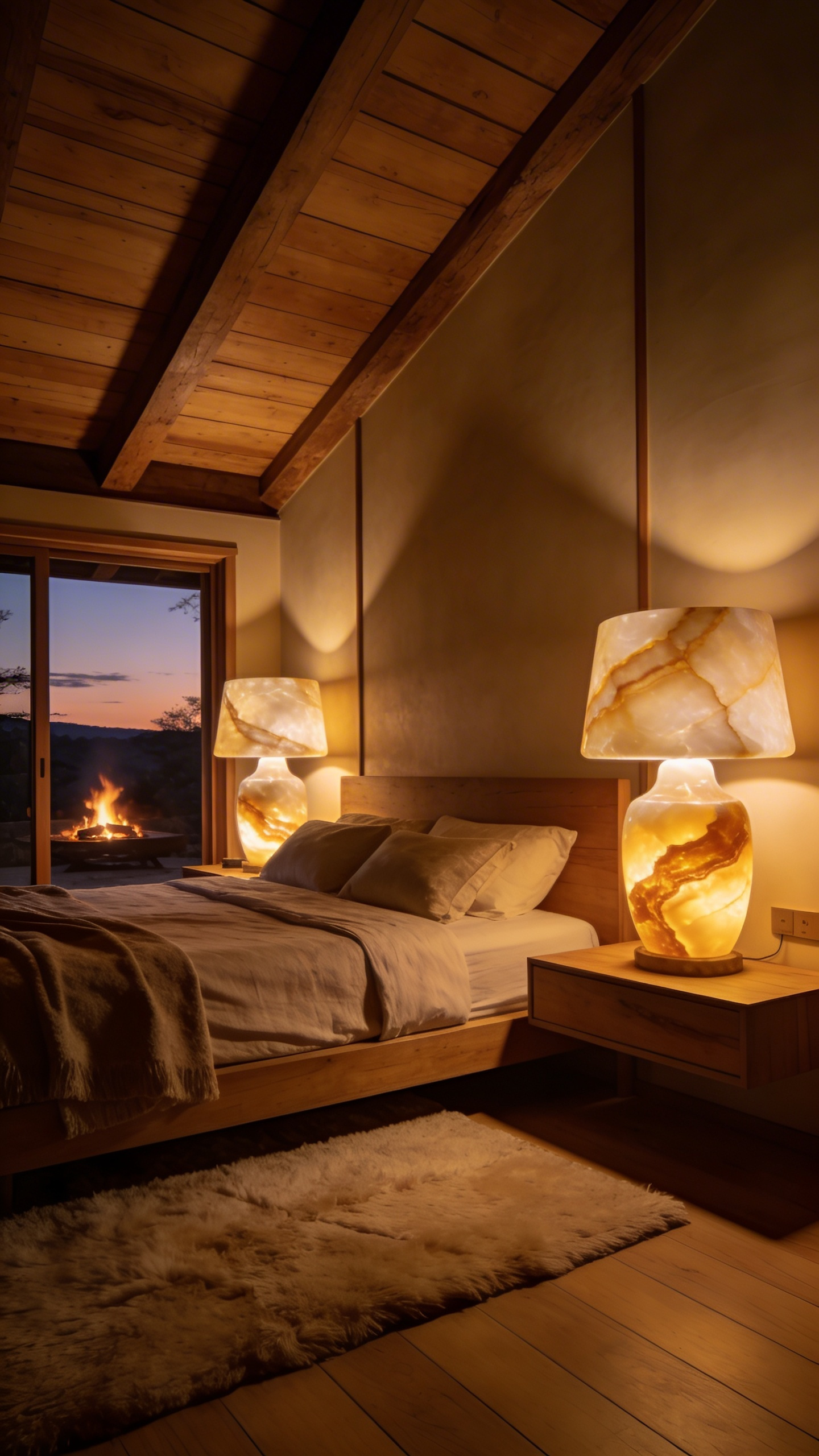
Furthermore, this diffusion creates a bridge to biological darkness. Standard LEDs often emit blue-spectrum energy that suppresses melatonin. However, the mineral density of alabaster acts as a natural low-pass filter. Similarly, onyx contains iron oxide veins. These shift light toward a soothing amber hue. Thus, these materials naturally mimic the 1,000 to 1,900 Kelvin range of candlelight. This specific frequency signals to the brain that the day is over.
Beyond biology, these materials offer a grounding sensory experience. Visually, the unique veining provides “soft fascination.” This helps the mind recover from fatigue. Yet, the stone remains naturally cool to the touch. This creates a calming thermal contrast known as thermal inertia. Ultimately, whether you choose monastic alabaster or earthy onyx, the effect is profound. You effectively anchor your sanctuary in geological time.
Grounding Illumination: Low-set wall sconces that light the floor, not the eyes.
“Grounding Illumination” represents a significant architectural shift. Specifically, this philosophy moves lighting from eye level to the floor. Consequently, it creates a space that feels anchored rather than weightless. Drawing from Jun’ichirō Tanizaki’s *In Praise of Shadows*, this approach emphasizes the beauty of darkness. Thus, low-set sconces provide “visual gravity.” This makes the room feel like a solid, protective sanctuary.
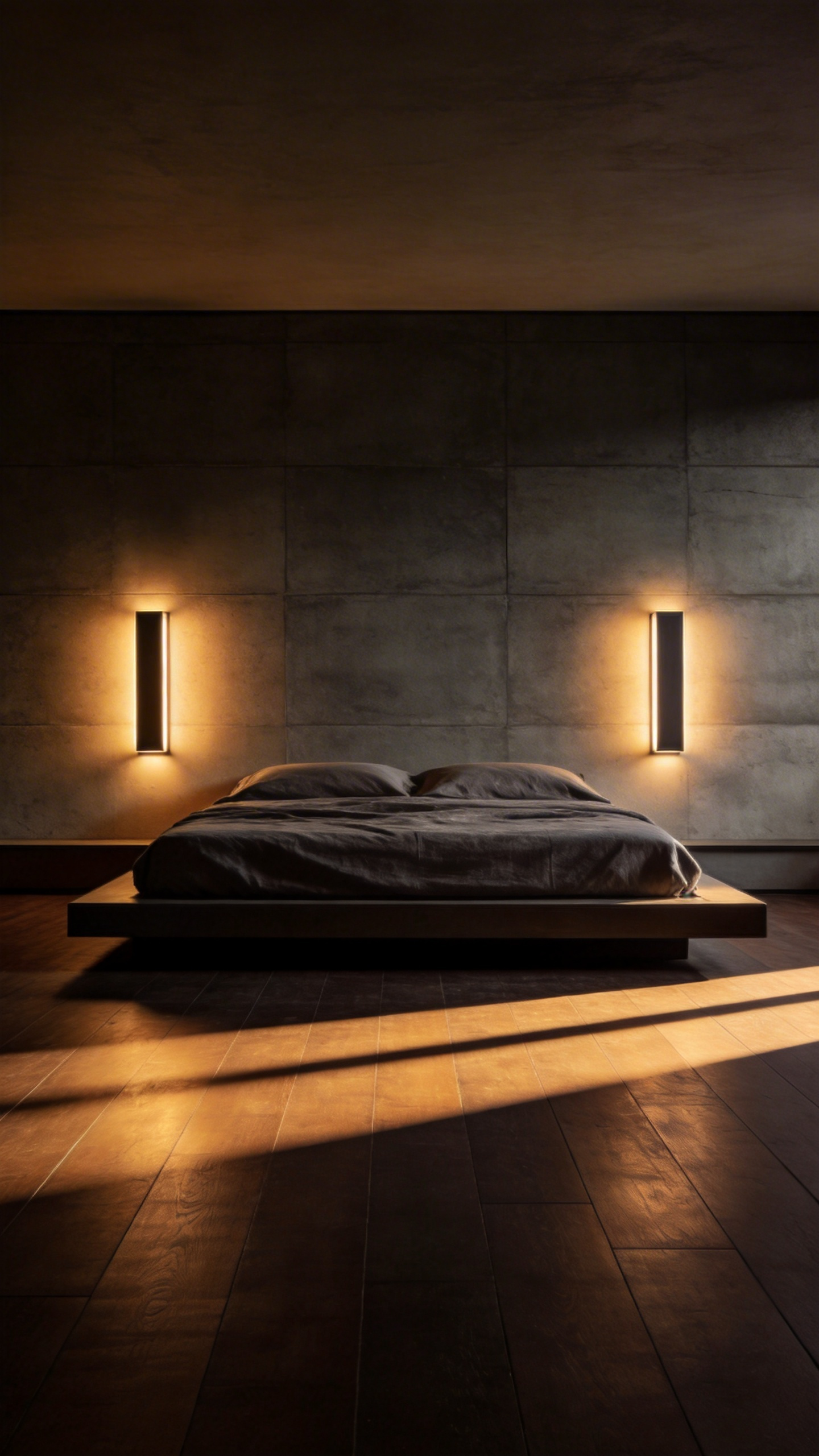
Technically, these fixtures utilize a method known as “Wall Grazing.” By mounting sconces low, the light skims the floor surface. As a result, this reveals the minute textures of silk rugs. Conversely, overhead lighting often flattens these rich details. Furthermore, high-end designs use asymmetrical beam angles. This keeps the light source hidden. Effectively, this lights the path without shining directly into your eyes.
Biologically, this placement supports natural sleep cycles. Research indicates that light entering from below disrupts melatonin less than overhead light. Therefore, low-set sconces operate in the eye’s “biological dead zone.” To achieve this, designers recommend mounting fixtures 12 to 18 inches from the floor. Additionally, selecting a warm color temperature between 2200K and 2400K is crucial. Ultimately, this amber glow mimics the primitive cue of a dying fire.
The Articulated Task Light: Precision reading arms that protect eye health without flooding the room.
Consider the articulated task light a precision instrument. Historically, these fixtures descended from industrial engineering. However, in a wellness context, they serve a distinct biological purpose. Specifically, they master the “transitional hour” between wakefulness and sleep. Unlike standard table lamps that flood a room, articulated arms utilize the Inverse Square Law of Light. Because you pull the source closer, you require less bulb intensity. Therefore, you achieve a high-contrast “focal glow” that reduces eye strain.
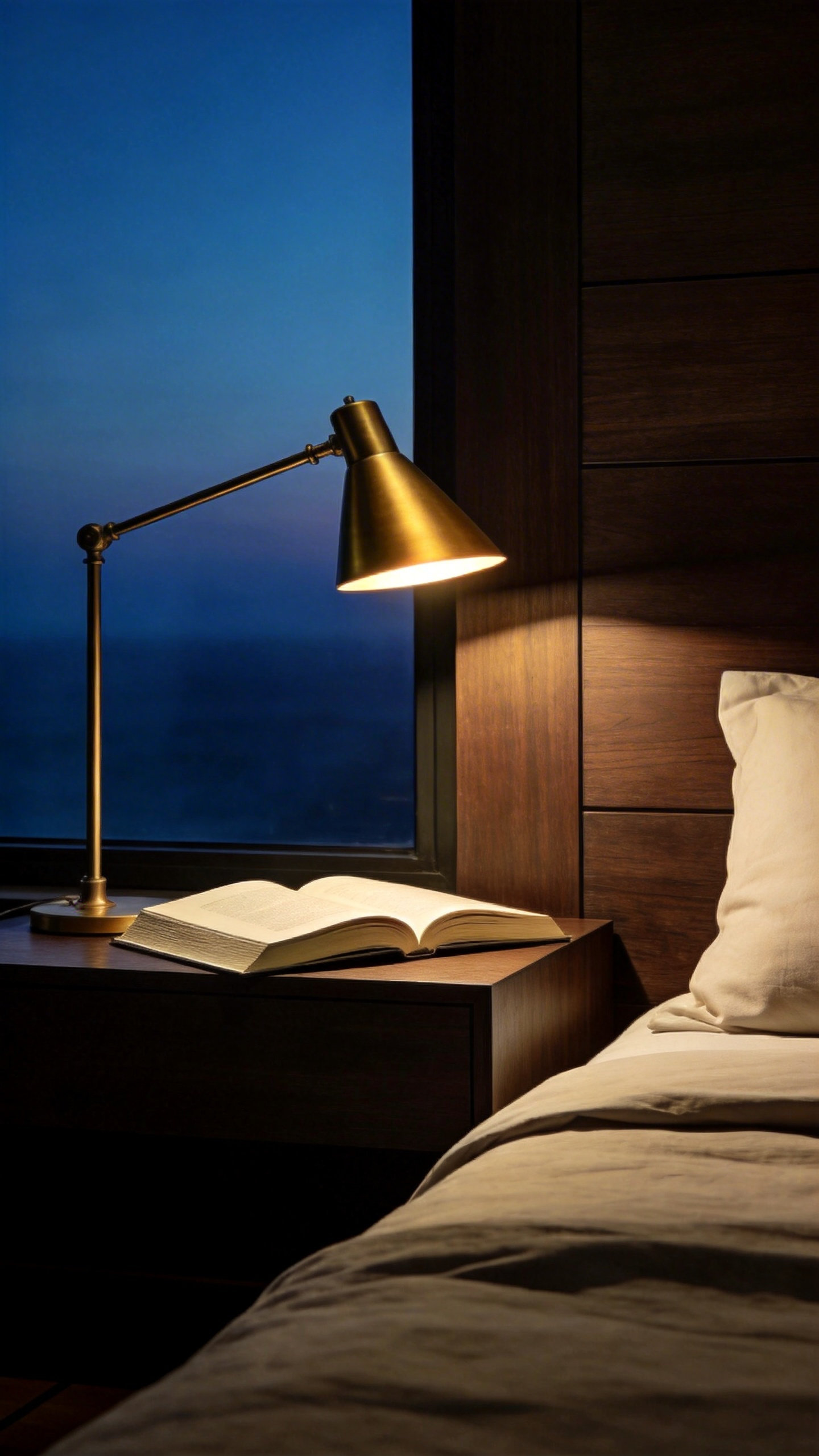
Simultaneously, this directional control protects your circadian rhythm. By positioning the arm below eye level, you avoid stimulating the upper retina. Consequently, your brain continues producing melatonin. This mimics the low-angle light of a sunset. Furthermore, these lights offer an optical “cone of silence” for shared spaces. High-end designs often feature deep-set reflectors to prevent lateral light spill. As a result, one partner reads comfortably while the other rests. Finally, prioritize designs with “cool-to-the-touch” handles. Ultimately, this turns bedside lighting into a tactile ritual.
Architectural Softness: Hidden cove lighting to simulate a sunset effect on the ceiling.
True architectural softness dissolves the hard lines of a room. Indeed, lighting pioneer Richard Kelly defined this effect as “ambient luminescence.” Consequently, hidden cove lighting creates a shadowless wash that feels immediately soothing. Unlike a harsh central pendant, this approach turns the ceiling into a glowing canvas. Thus, the light seems to come from everywhere and nowhere simultaneously.
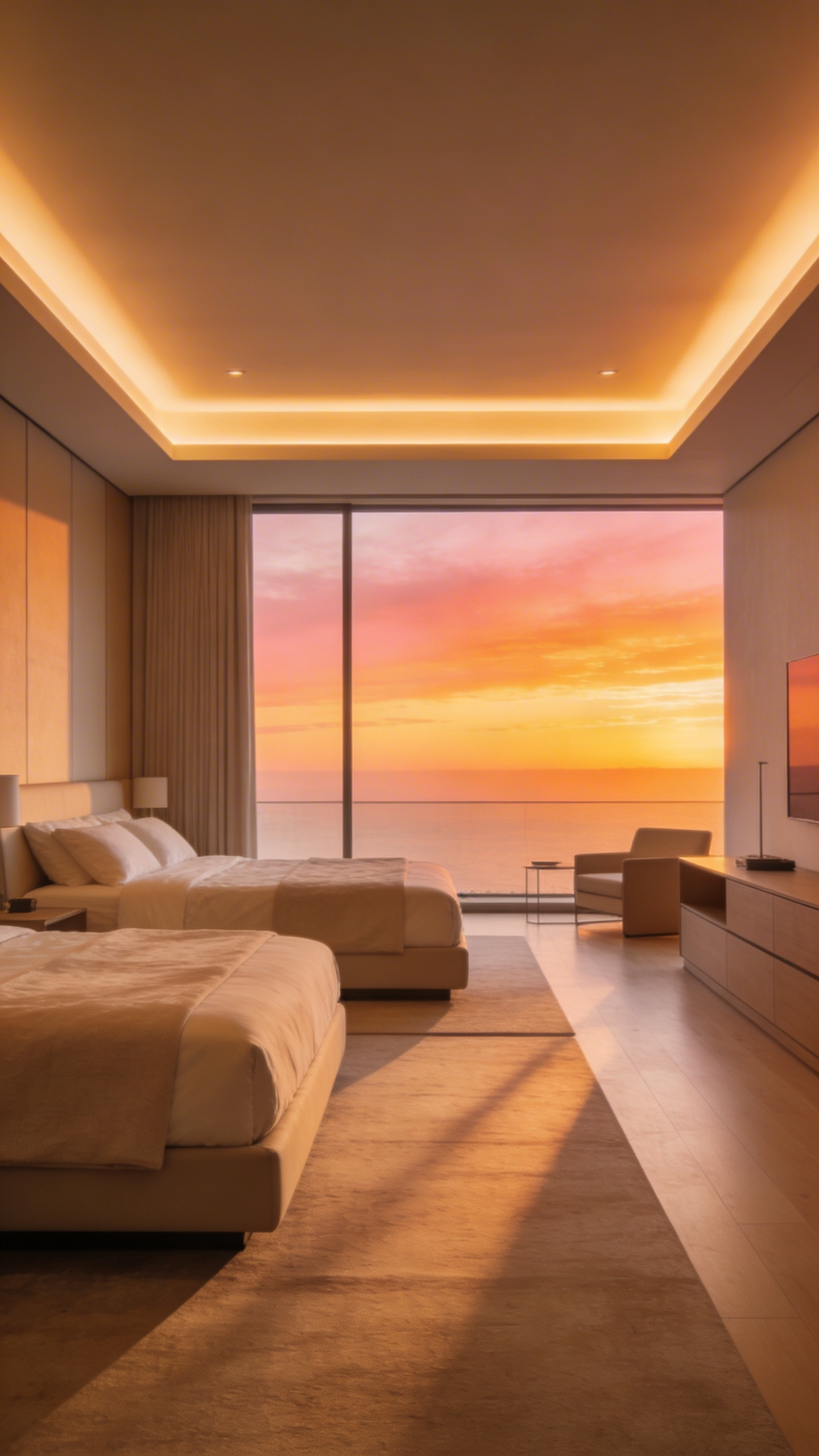
However, achieving this requires specific structural decisions. Specifically, professional designers reference the technical “150mm rule.” Therefore, the cove should sit six inches below the ceiling to let the beam spread. Additionally, using a “double-recessed” design mimics artist James Turrell’s work. This technique hides the light source completely. Furthermore, the ceiling needs a flat matte finish. Otherwise, a glossy surface acts like a mirror, destroying the illusion.
Beyond aesthetics, this setup serves a vital biological purpose. In fact, tunable LEDs can replicate a natural sunset. They transition from warm white to deep amber. This mimics the sun’s atmospheric “redshift.” Consequently, this signals the brain to produce melatonin. Moreover, this “edge dissolving” effect makes the room feel infinite. By illuminating the perimeter, heavy corners disappear. Ultimately, the ceiling feels like a weightless, protective veil.
Asymmetry for Interest: Balancing a heavy table lamp with a visual-light pendant to reduce visual stagnation.
Often, perfect symmetry makes a bedroom feel static. Consequently, the brain solves the visual puzzle too quickly, leading to boredom. To combat this, utilize the physics of visual weight. Specifically, this involves balancing a heavy table lamp with a visually light pendant. Ideally, the table lamp acts as a grounding anchor. With a solid ceramic base, it provides a sense of permanence.
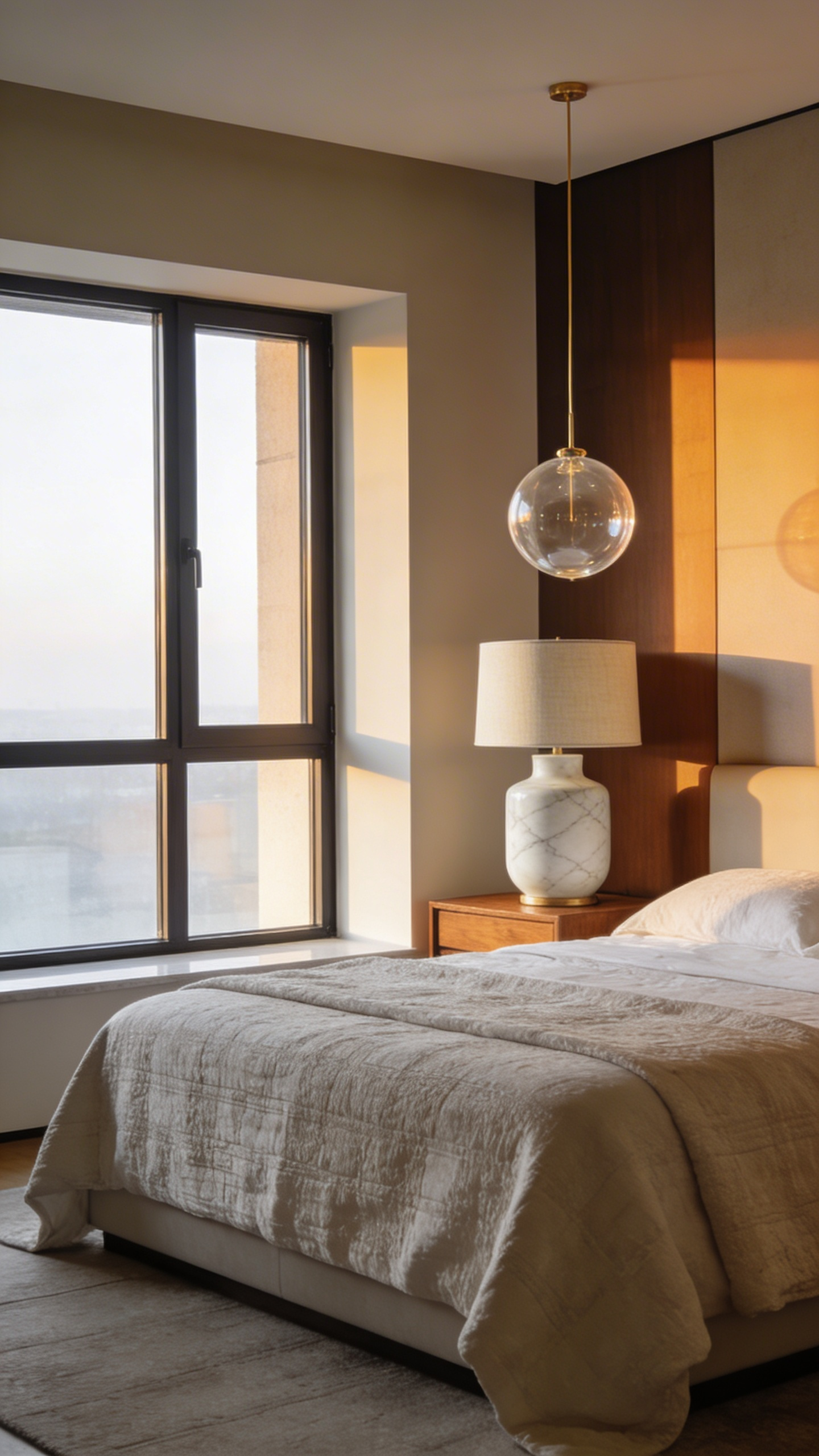
Conversely, the pendant acts as an atmospheric counterweight. For instance, a fixture made of wire mesh possesses a “levitational” quality. Because you can see through it, the wall remains visible. Thus, the room feels larger and more open. Ultimately, this creates a dynamic equilibrium rather than a static image.
However, effective asymmetry requires precise technical execution. To ensure the look feels intentional, avoid aligning the light sources horizontally. Instead, allow the pendant to hang significantly lower or higher. Furthermore, lighting consistency is non-negotiable. Therefore, you must use 2700K Warm White bulbs in both fixtures. If the color temperatures clash, the room will feel physically split. By mastering these ratios, you transform a static space into a curated sanctuary.
The Tech-Free Bedside: Ceramic lamps with tactile switches to encourage disconnecting from screens.
In a world dominated by glass screens, physical interaction is rare. Consequently, a heavy brass toggle switch offers necessary “haptic finality.” This refers to the psychological satisfaction of a definitive end-point. Specifically, the mechanical resistance signals to the brain that the day is over. Therefore, using a tactile switch effectively breaks the dopamine loop of checking notifications. Instead of an infinite scroll, you experience a predictable conclusion.
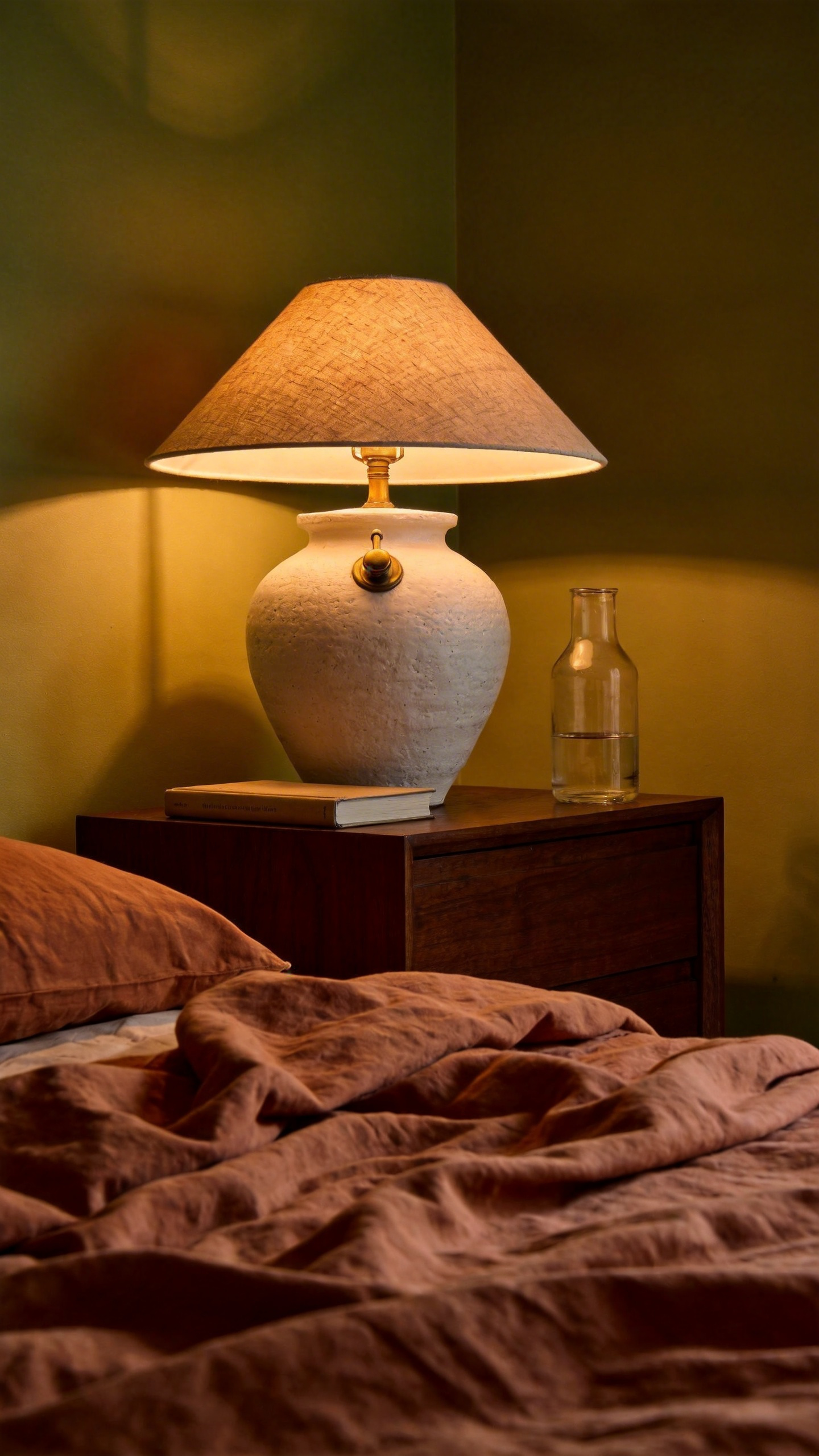
Moreover, the lamp’s material plays a crucial role in relaxation. Unlike cold plastics, ceramics act as a “visual anchor.” In fact, the weight and texture of stoneware feel grounded. Additionally, the microscopic irregularities of a glaze scatter light softly. This effect creates a “soft focus” glow that mimics ancient firelight. Thus, the visual environment shifts from clinical to restorative.
Ultimately, this setup combats “cognitive bleed” in the bedroom. Currently, smartphones often merge work and rest into one interface. However, a dedicated ceramic lamp re-establishes a task-specific environment. By engaging with an analog object, you create a meditative closing ceremony. Ideally, the switch should emit a low-frequency sound. As a result, this sensory ritual effectively transitions the mind into deep sleep.
Sculptural Floor Lamps: Using height to create cozy reading zones separate from the sleep area.
Height functions as a primary tool for zoning without physical partitions. Specifically, a tall, sculptural floor lamp creates a “Luminous Volume.” This vertical axis anchors your lounge chair. Effectively, it builds a distinct “room within a room.” Consequently, the structure acts as a visual “stop sign.” By stepping into this pool of light, you physically separate yourself from the bed’s associations with sleep.
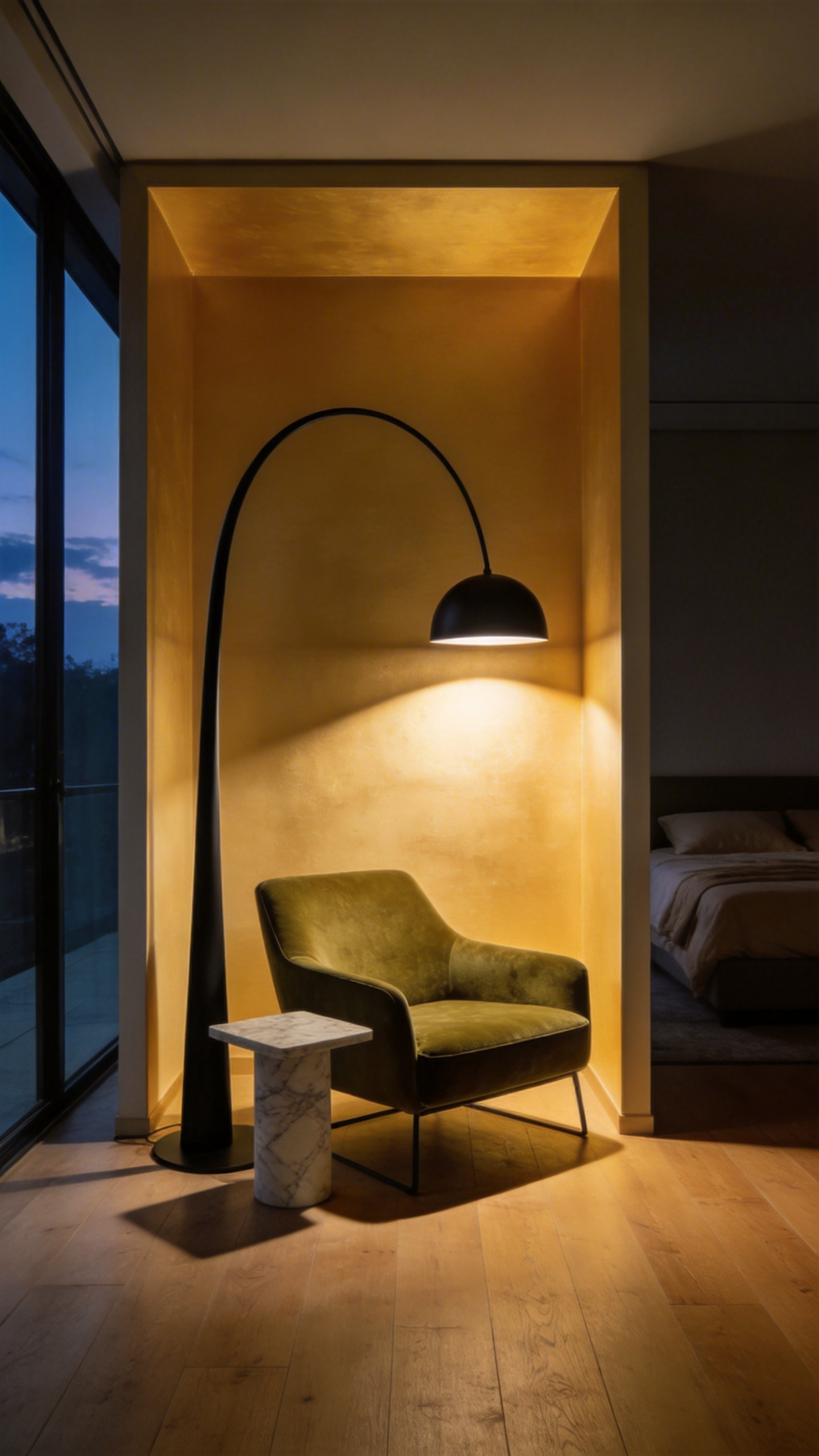
Furthermore, this arrangement supports better light hygiene. Unlike bedside lamps that spill light outward, a well-designed reading lamp utilizes a “cut-off angle.” Therefore, illumination remains focused on your book. A partner stays in a “darkness pocket.” Additionally, this downward direction mimics the setting sun. This signals the pineal gland to produce melatonin.
Moreover, these “silent companions” contribute to the room’s emotional temperature. For example, a pleated paper column suggests a soft, hushed atmosphere. Conversely, a metallic cantilever offers a sharper presence. Ultimately, using verticality transforms a simple corner into a sanctuary. It separates conscious relaxation from unconscious rest.
Smart Integration: Programming ‘Wind Down’ scenes that gradually dim and warm as evening progresses.
True wellness architecture requires understanding how light communicates with biology. In fact, our eyes contain specialized sensors regulating internal master clocks. Therefore, simply turning down a dimmer switch is insufficient. Instead, we must utilize smart integration. This creates a “chemical bridge” toward sleep.
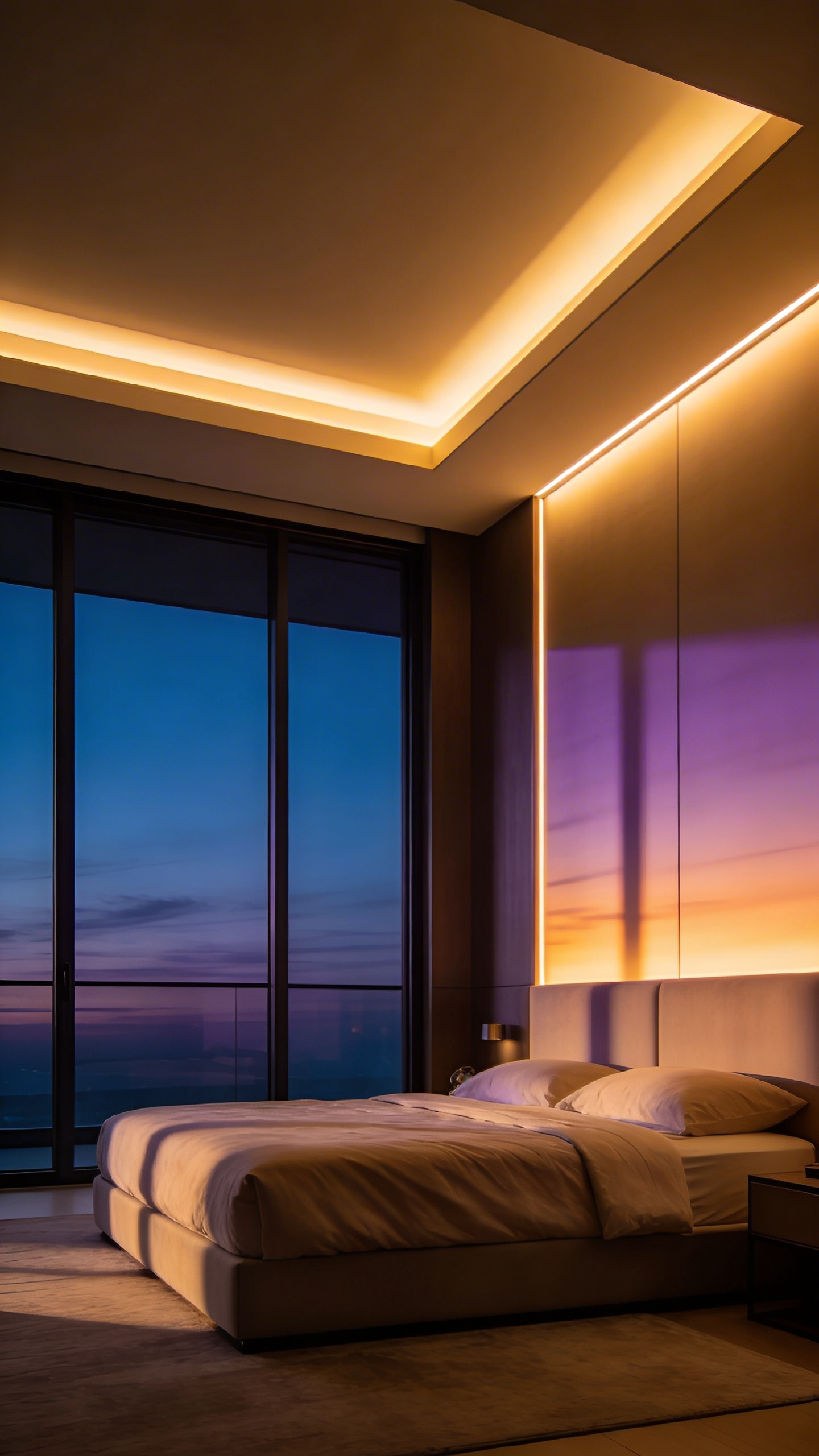
Ideally, this involves programming a “Long Fade.” This mimics the physics of a natural sunset. The transition should span roughly 30 to 60 minutes. Consequently, the shift becomes imperceptible to the conscious eye. However, it is registered by the nervous system. The light does not merely darken; it must also warm significantly. Shifting the spectrum to a “candlelight” amber creates the necessary signals for melatonin production.
Beyond color temperature, consider the room’s “Visual Center of Gravity.” As the fade progresses, overhead ceiling fixtures should extinguish first. Next, task lighting should gently recede. Eventually, only low-level accents, like under-bed LEDs, should remain. Ultimately, this lowers the room’s visual energy. It physically grounds the body to prepare for deep rest.
Textile Shades: Using linen and silk to filter harshness and add acoustic softness.
Selecting the right lampshade material fundamentally alters a room’s experience. Specifically, linen and silk act as sophisticated filters for harsh energy. Linen features natural irregularities known as “slubs.” Consequently, light scatters unevenly through the weave. This creates a “dappled” effect. It resembles sunlight filtering through a forest canopy. Alternatively, silk fibers function like triangular prisms. Therefore, they reflect light to create a “lustrous” internal glow.
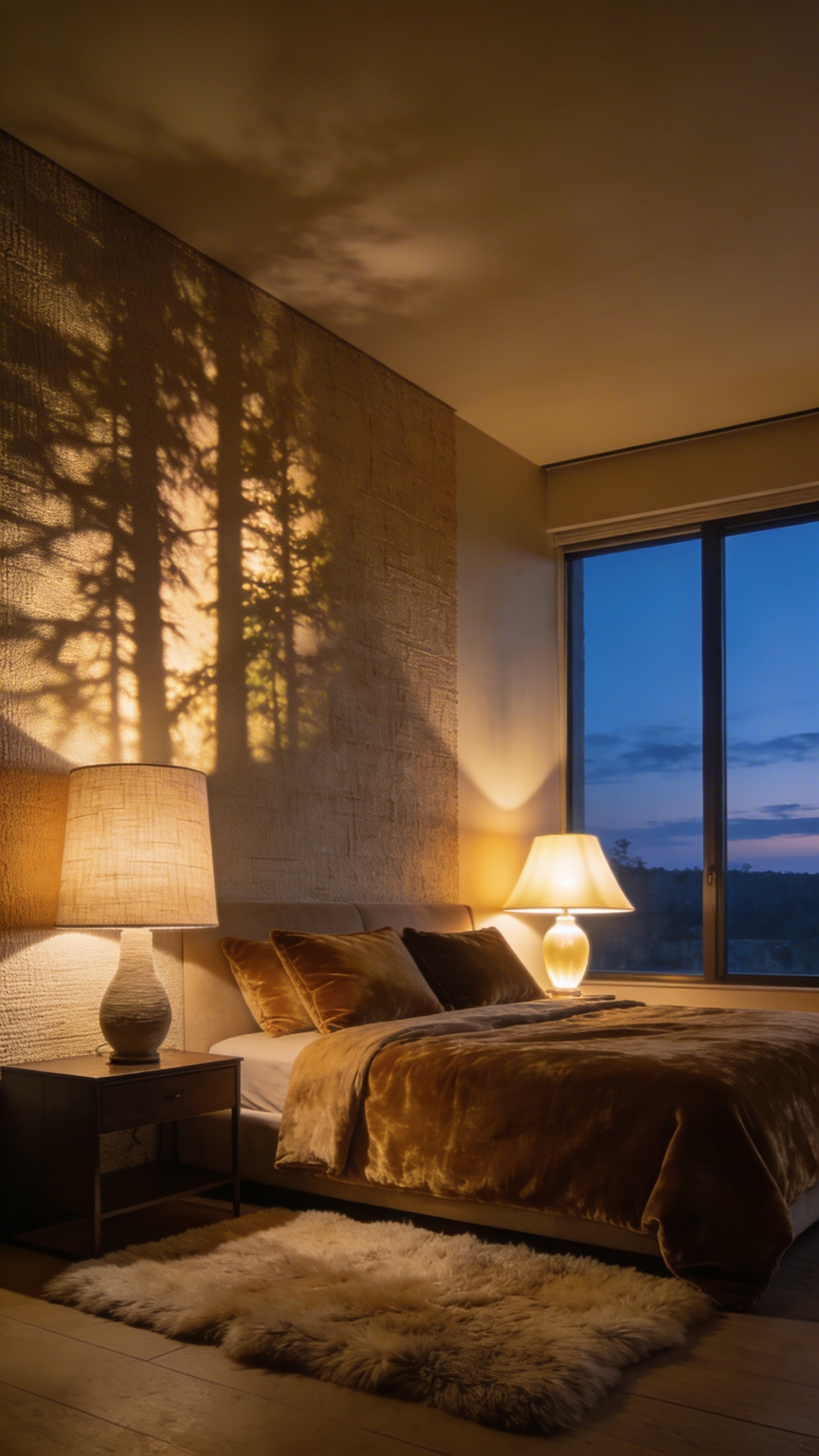
Beyond aesthetics, these materials actively support sleep hygiene. Crucially, cream textiles shift cool electric light toward a warmer spectrum. This mimics the “golden hour.” As a result, your brain receives a natural signal to produce melatonin. Furthermore, this visual softness translates to a sense of safety.
In addition to light control, textiles introduce acoustic calmness. Sound waves typically reflect harshly off hard surfaces. However, porous fabrics allow sound to dissipate as heat energy. Technically, this is airflow resistance. Moreover, choosing pleated shades effectively triples the fabric’s surface area. These folds act as “sound traps.” Finally, always pair these natural fabrics with cool-touch LED bulbs. This prevents fiber degradation while maintaining a hushed atmosphere.
Under-Bed Ambience: Motion-activated, warm-glow strips for safe navigation without waking the brain.
Turning on a main light at 3:00 AM acts like a biological alarm clock. Consequently, your brain registers a “sunrise event.” This immediately suppresses melatonin production. To preserve your sleep inertia, under-bed lighting offers a scientifically grounded solution. Specifically, these systems utilize a “horizon-line” strategy. By keeping light below eye level, you avoid stimulating the retina. Therefore, you navigate safely while your brain remains resting.
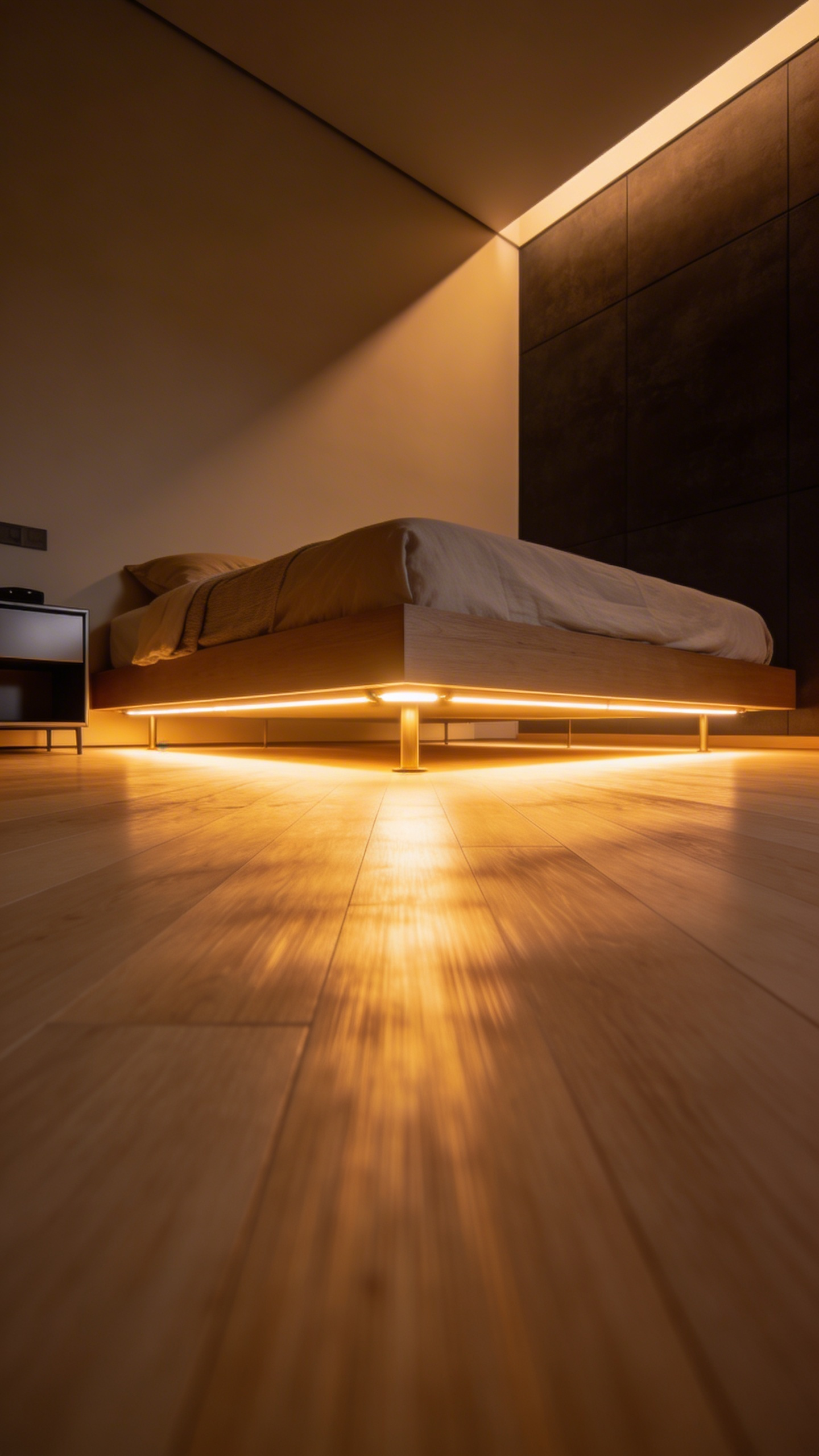
Beyond biology, this feature creates a sophisticated “floating bed” aesthetic. Visually, the illumination removes dark shadows. This significantly reduces visual clutter. Furthermore, soft light eliminates the primal anxiety often associated with dark corners. Thus, the floor acts as a reflective surface. It diffuses a gentle glow throughout the space.
Technically, successful installation relies on precise PIR (Passive Infrared) sensors. Unlike standard detectors, these detect the heat signature of feet. Crucially, you must select warm-glow strips between 2200K and 2700K. This spectrum mimics embers rather than harsh daylight. Additionally, premium systems feature a fade-in effect. Ultimately, this creates “circadian-friendly navigation.” Consequently, you return to sleep easily.
The focal Point: A statement chandelier (strictly on a dimmer) as a centering meditative element.
A bedroom needs a sense of hierarchy to feel grounded. Specifically, a statement chandelier acts as a visual anchor. Often, it functions as the room’s *axis mundi*. Without this vertical element, a space dominated by a low bed can feel unsettling. However, the fixture’s meditative power relies entirely on one tool: the dimmer switch.
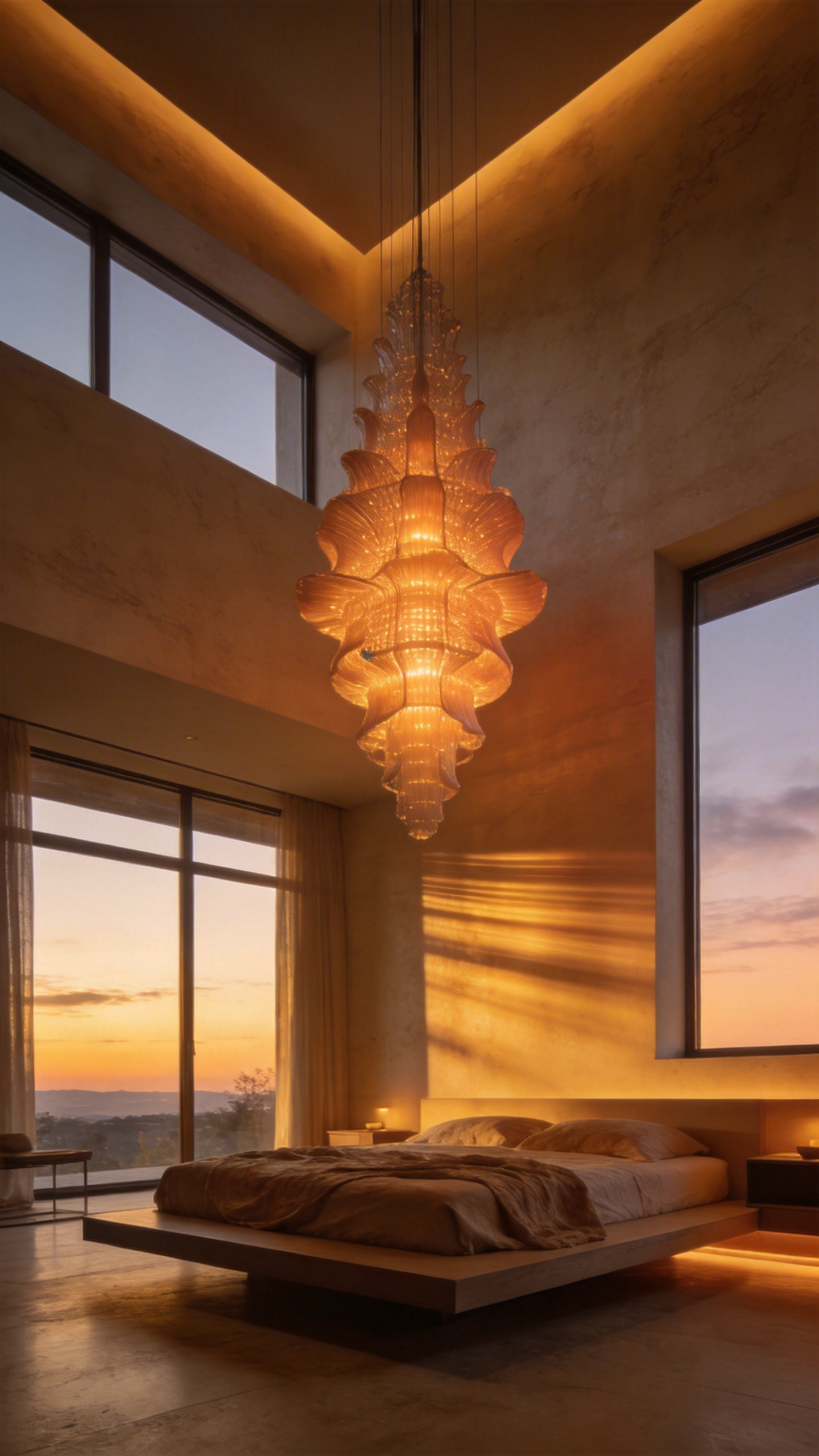
Ideally, you should utilize “Warm-to-Dim” technology. Unlike standard LEDs, these bulbs shift from crisp daylight to a golden glow as intensity decreases. Consequently, lowering the lights becomes a sensory ritual. This physical action signals your brain to transition. You move from a “solar” state of activity to a “lunar” state of rest.
Beyond function, the material quality of the light dictates the emotional atmosphere. For instance, alabaster creates a phenomenon known as subsurface scattering. This produces an internal glow softer than exposed bulbs. Alternatively, open-work designs in rattan introduce *Komorebi*. This refers to the calming interplay of dappled light. Ultimately, watching these soft patterns helps the mind disengage.
Visual Quiet: Cord management solutions to reduce subconscious stress and visual clutter.
Exposed cords function less like simple clutter and more like “visual tinnitus.” Effectively, they create a constant, low-level disruption the brain cannot tune out. Consequently, these jagged lines trigger the Zeigarnik Effect. This is where the mind naturally fixates on unfinished tasks. Therefore, a tangle of wires subconsciously signals disorder. This prevents deep, restorative relaxation.
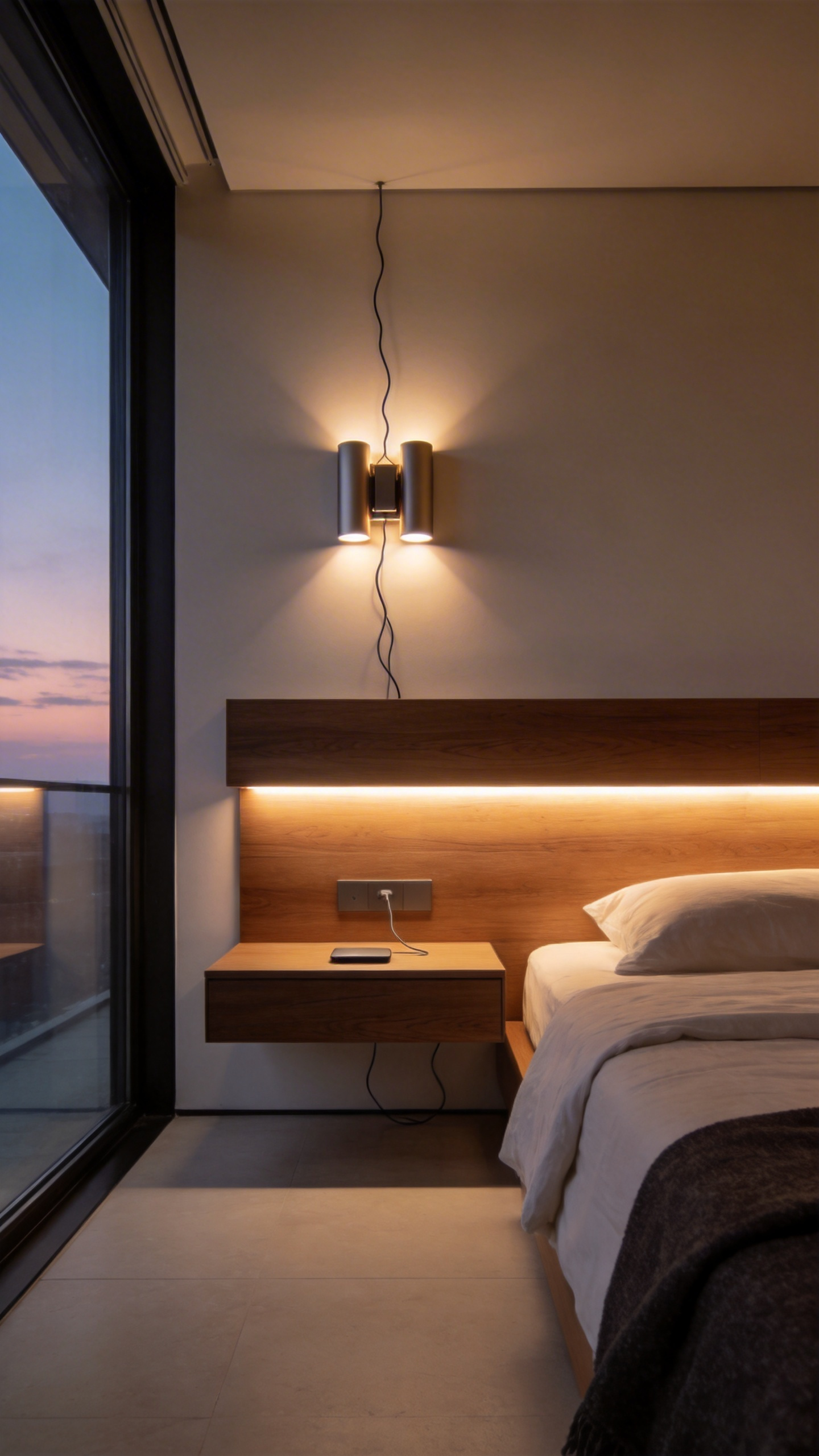
To reclaim the bedroom, we must pursue “visual quiet.” Specifically, this involves eliminating the aggressive footprint of power delivery. Ideally, you might utilize the “Ghost Line” technique. This uses flat, paintable adhesive cables. By painting them the exact value of your wall, the infrastructure disappears. Alternatively, consider the tactile experience of visible cords.
Standard PVC cables often reflect light harshly. In contrast, upgrading to silk-braided cords adds sensory softness. Furthermore, these organic materials absorb light rather than reflecting it. This reduces visual sharpness. Additionally, utilizing weighted anchors turns chaotic cabling into deliberate design. Ultimately, by managing this “digital umbilical cord,” you remove reminders of the waking world. Thus, the brain can transition to soft fascination.
Frequently Asked Questions
What is the best lighting for a luxury bedroom?
The best lighting for a luxury bedroom involves a layered approach. This combines architectural lighting with high-end materials. Designers recommend a mix of ambient luminescence (like hidden cove lighting), task lighting, and accent lighting. Using natural materials like alabaster or woven rattan adds a biophilic element.
How can bedroom lighting improve sleep quality?
Bedroom lighting improves sleep quality by respecting the body’s circadian rhythm. By using bulbs that lack the alerting blue spectrum and positioning fixtures below eye level, you avoid suppressing melatonin. Implementing “dim-to-warm” technology and smart wind-down scenes helps transition the brain.
What color temperature is best for bedrooms?
The gold standard for bedroom sanctuaries is 2700K (Warm White) or lower. For evening wind-down routines, temperatures between 1800K and 2400K are ideal. They mimic the warm frequency of candlelight. These warmer tones signal the pineal gland to begin melatonin production, facilitating deeper sleep.
Conclusion: Transforming your bedroom from a room for sleeping into a sanctuary for healing.
Transforming your bedroom requires viewing light as biology rather than utility. In fact, true restoration occurs only when we respect our complex circadian rhythms. Therefore, we must move beyond mere visibility to prioritize “biological darkness.” By carefully controlling the spectrum and implementing these sophisticated bedroom light ideas, you shift your environment. Consequently, this balance allows your body to engage in deep, cellular repair.
Furthermore, your home should serve as an active participant in your health. By embracing technologies like tunable white light, you align your lifestyle with natural cycles. Thus, you effectively merge historical healing wisdom with modern physiological needs. Eventually, this intentional design pays dividends in mental clarity. Begin by auditing your current lighting fixtures to ensure your retreat remains a true bastion of health.