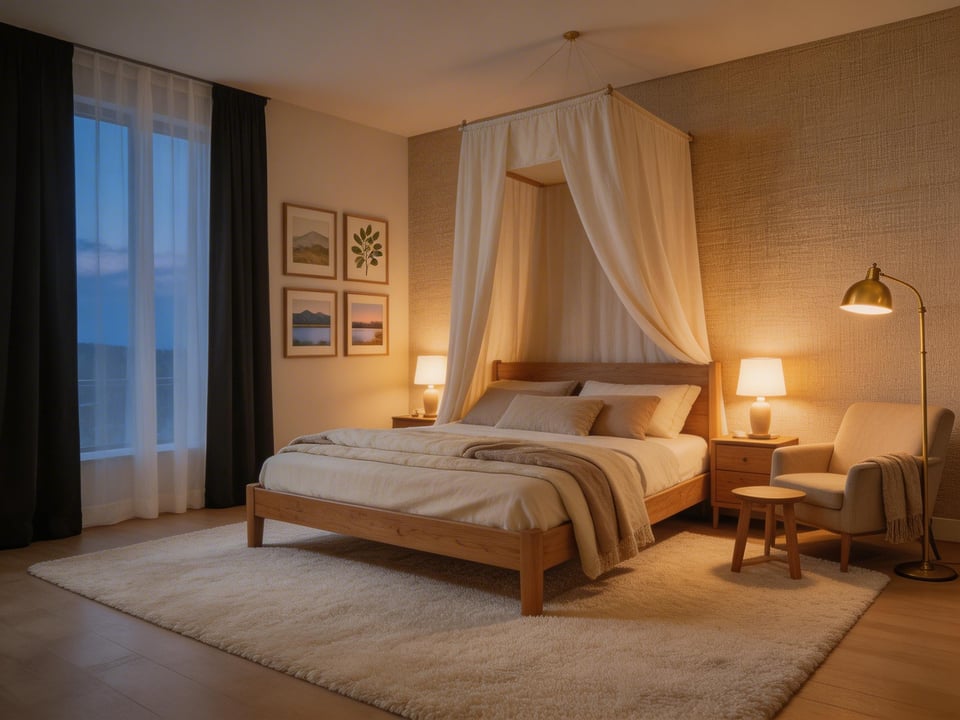
There’s a moment, just before sleep, when you notice the weight of your body sinking into the mattress, the warmth of layered bedding settling around you, the soft amber glow dimming to near-darkness. Your nervous system exhales. The room isn’t just comfortable—it feels like a refuge that knows you. That sensation isn’t luck or aesthetics—it’s how cozy bedroom ideas, when rooted in wellness physiology rather than trends, create spaces that genuinely support rest. It’s design in service of your body’s deepest needs.
The bedroom that photographs well and the bedroom that *feels* good are often two different spaces. A designer’s cozy bedroom might have the right color palette and on-trend wallpaper, but if the air carries chemical off-gassing, the light stays bright blue, and the textures feel synthetic, your nervous system stays half-awake. True coziness is rooted in biology—in the sensory signals that tell your parasympathetic nervous system it’s safe to rest.
I work with this intersection daily: how to design spaces that support sleep not as decoration, but as physiology. The ideas I’m sharing aren’t trends. They’re layered interventions, each one adding a signal to your nervous system. Start with the foundational changes—light control, natural materials, thermal comfort—and build from there. Your bedroom will transform not because it looks different, but because your body finally believes it’s safe to stop.
1. Layered Bedding With Organic Cotton and Soft Wool Throws
The texture under your skin at 2 a.m. matters more than you might think. When you pull organic cotton sheets across your body, you’re not just experiencing softness—you’re in contact with fibers grown without pesticides, synthetic fertilizers, or GMO engineering. GOTS-certified organic cotton ensures 95% of raw materials meet rigorous organic standards, and the remaining 5% is processed through facilities that prohibit harsh chemicals.
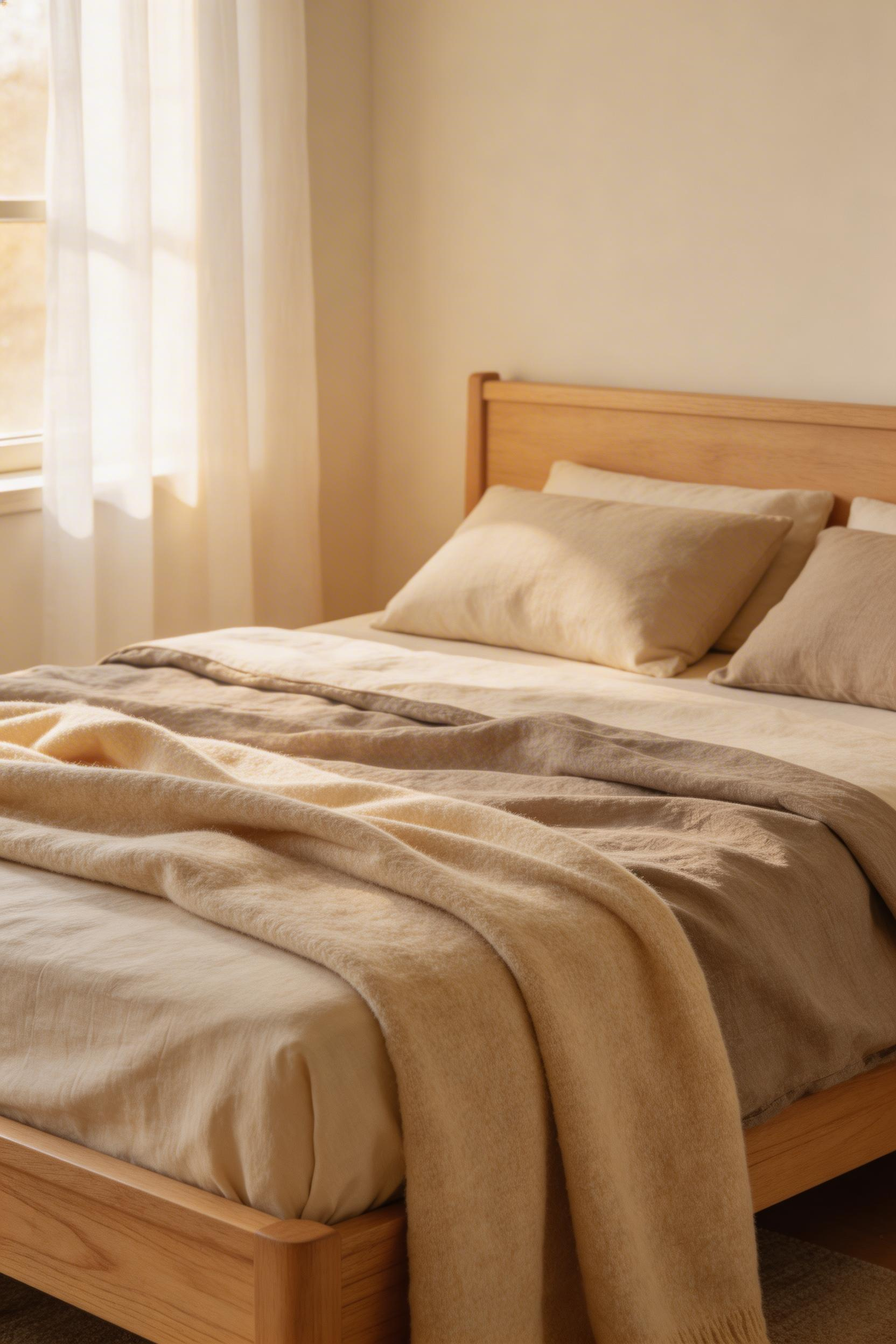
Why thermal comfort is foundational to cozy bedroom design
This matters because your skin is permeable, especially when you’re warm and slightly damp from sleep. Polyester sheets trap heat and off-gas formaldehyde throughout the night. Organic cotton wicks moisture while maintaining breathability, keeping your body in the thermal sweet spot where sleep deepens. The fibers absorb your body heat without trapping it, creating temperature regulation that prevents the 3 a.m. toss-off of covers.
Wool throws complete the system. A quality wool throw regulates temperature through your sleep cycles and naturally resists dust mites and moisture—no chemical treatments needed. Drape it across the foot of the bed in summer and pull it up in winter. The weight and texture create “deep pressure stimulation,” a sensory input that calms your nervous system.
Build your cozy bedroom layering this way: breathable base sheet (organic cotton sateen, 300-350 thread count), lightweight quilt, wool throw for flexibility. GOTS-certified bedding runs $200–400, supporting better sleep with fewer micro-arousals and deeper restorative cycles.
2. Cozy Bedroom Ideas Begin With Warm, Dimmer-Controlled Lighting
Your bedroom’s light is a conversation with your circadian rhythm. From sunset onward, your eyes scan the light spectrum for cues about sleep or alertness. Blue light (5000K and above) suppresses melatonin and signals daytime. Warm light (2700-3000K) allows melatonin to rise.
Research shows light at 3000K suppresses melatonin far less than light at 6500K. Blue light blocks melatonin twice as long as green light, which is why scrolling your phone before bed delays sleep onset 1-2 hours.
Creating the light descent that supports nervous system rest
Dimmers ($30-50) let you modulate evening light from task brightness (300-500 lux) toward rest signals (10-20 lux by bedtime). Pair dimmers with 2700K warm bulbs mimicking candlelight. Install three layers: ambient (dimmable ceiling), task (bedside lamp), and accent (wall sconce for ritual). This layered approach synchronizes your circadian rhythm to evening descent, beginning melatonin production on schedule—the foundation of any cozy bedroom design.
3. A Plush Area Rug to Define and Warm the Cozy Bedroom Space
The moment your bare feet touch a cold floor, your nervous system triggers a sympathetic response—a micro-jolt of alertness that disrupts sleep-built calm. An area rug, especially high-pile wool, solves this at the sensory level while anchoring your cozy bedroom space.
Material science: why wool transforms bedroom warmth
Wool outperforms synthetics entirely. A quality wool rug naturally resists dust mites and moisture without chemicals, doesn’t off-gas VOCs that synthetic rugs emit for weeks, and lasts significantly longer. Synthetic rugs release VOCs strongest during the first days, continuing for 2-3 months, especially if treated with stain-resistant chemicals. If budget requires synthetics, air them outdoors 24-48 hours before bringing them inside.
Size matters: extend your rug 18-24 inches beyond bed sides. For a queen, aim for 8×10; for a king, 9×12. This creates visual continuity and ensures barefoot comfort. High-pile rugs (0.5-1 inch) offer dense insulation and sound absorption, reducing noise that disrupts sleep. In cozy bedroom design, this sensory warmth underfoot activates parasympathetic response and supports the nervous system state required for deep rest.
4. Earthy, Muted Color Palettes That Ease the Mind Into Rest
The brain doesn’t experience color neutrally. Warm earth tones—sage, clay, terracotta, warm white—activate the parasympathetic nervous system and signal safety. Research shows these muted palettes reduce cortisol, the stress hormone, creating measurable nervous system shifts.
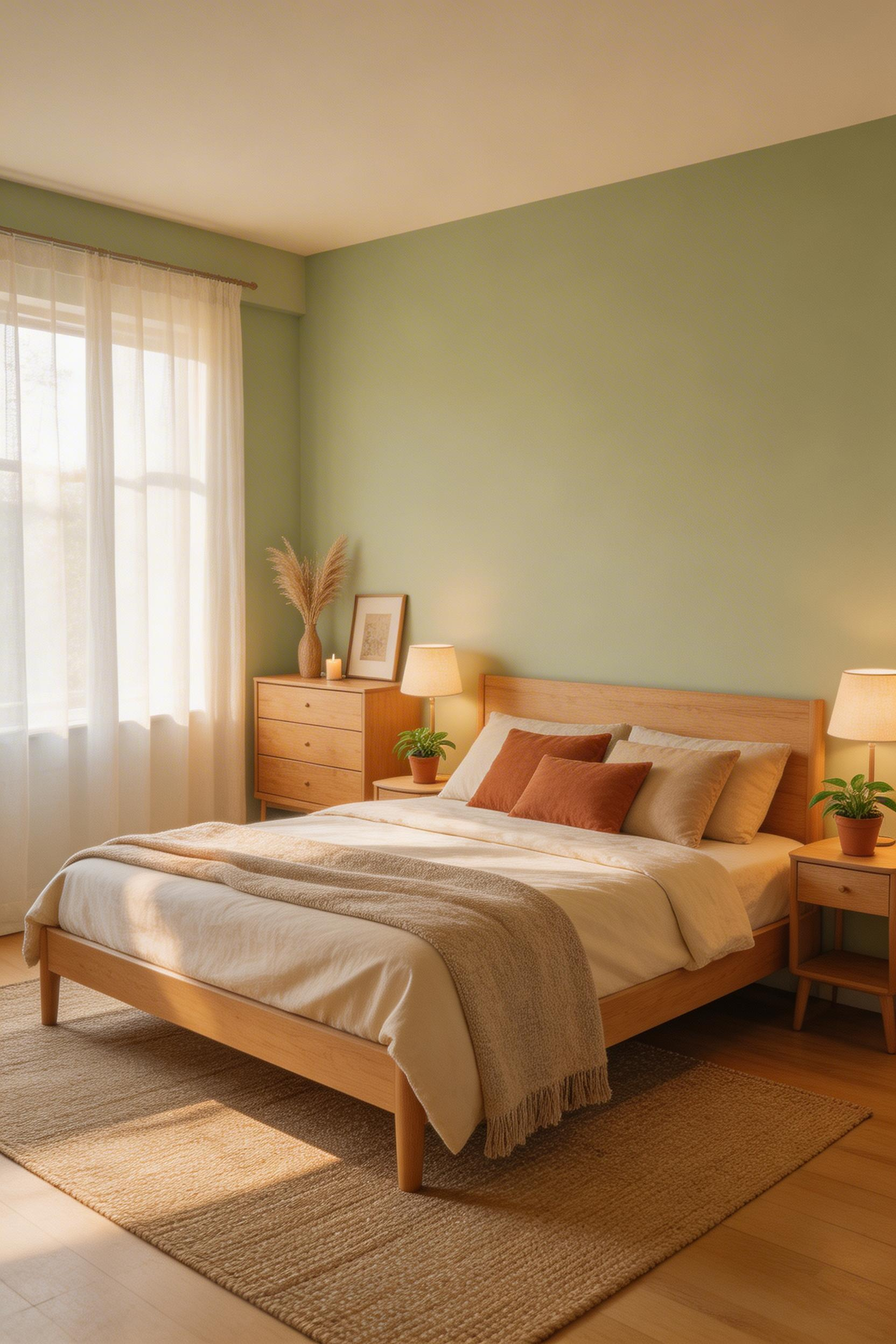
How sage and clay support the nervous system
Sage green is particularly effective, mimicking natural foliage—a brain cue for calm and grounding. Studies link sage-colored rooms to lowered cortisol. Pale terracotta, golden straw, and muted ochre offer warmth without boldness. Warm neutrals—ivory, sand, oatmeal, taupe—create an easygoing canvas that doesn’t demand attention in your cozy bedroom ideas space.
Avoid cool grays (sterile, distancing) and high-chroma earth tones (overstimulating). Test paint colors in your specific light. Morning and afternoon light reveal different undertones, and showroom lighting bears no resemblance to 10 p.m. lighting. Paint large swatches, observe them throughout the day and evening, and choose the color that feels calm at 9 p.m. This thoughtful approach is fundamental to cozy bedroom design.
5. Linen Curtains That Soften Natural Light Without Blocking It
During waking hours, your circadian rhythm needs connection to natural light. Blackout curtains are essential for sleep but should be reserved for nighttime. Daytime light exposure—ideally 300-500 lux of bright light in the morning—anchors your circadian cycle, telling your body it’s time to be alert and awake. This is why bedrooms that stay dark all day can actually impair sleep quality: your circadian rhythm becomes unmoored, disconnected from the light-dark cycle that regulates melatonin and cortisol.
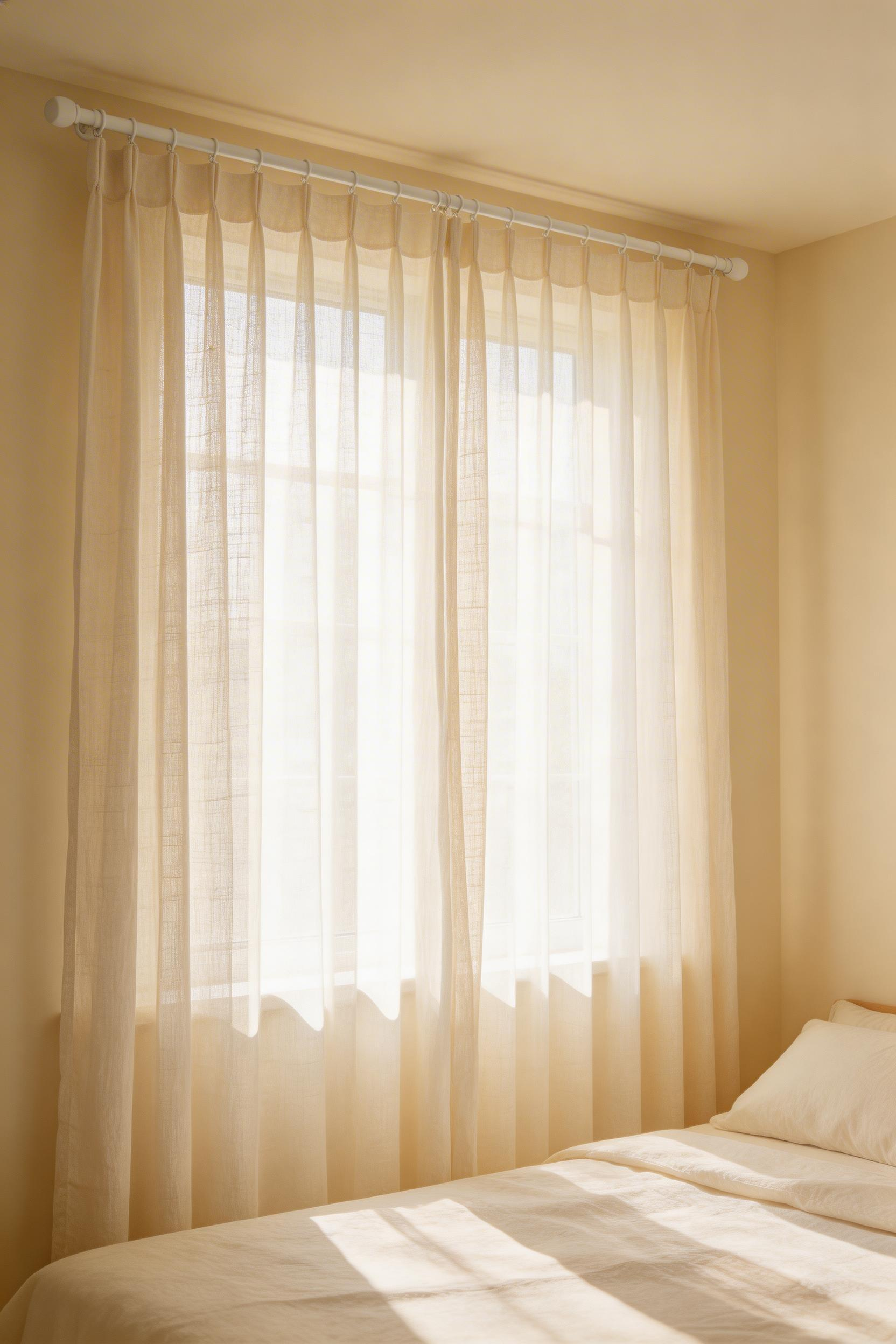
Linen curtains solve this elegantly. The natural weave diffuses harsh direct light while preserving the light’s circadian benefit. You get softened brightness without glare, and the fabric’s breathability creates a living, airy quality that polyester cannot match. Light-filtering linen allows you to see outside—the visual connection to trees, sky, and weather maintains biophilic grounding. This connection to natural environment is particularly important for those spending long hours indoors.
Crucially, choose 100% linen certified by OEKO-TEX, which means it’s free from harmful chemical finishes, flame retardants, and harsh dyes that off-gas into your bedroom air. Linen-look polyester alternatives cost $20–50 per panel but off-gas chemicals and stiffen over time. Real linen ($60–150 per panel) becomes softer with each wash and develops a beautiful lived-in texture, becoming more beautiful with age rather than deteriorating.
For installation, hang your curtain rod close to the ceiling and use 2x fullness (if your rod is 48 inches wide, you’ll need 96 inches of fabric per panel). This creates soft folds that diffuse light evenly throughout the room. Linen’s natural drape means the fabric falls in graceful waves that catch and soften light rather than blocking it, perfect for supporting cozy bedroom design during daytime hours.
6. A Reading Nook Corner With a Slipper Chair and Vintage Floor Lamp
A bedroom serving only sleep becomes performance space rather than sanctuary. Adding a reading nook—chair, lamp, small table—expands your cozy bedroom purpose to include the other side of rest: gentle activity before sleep.
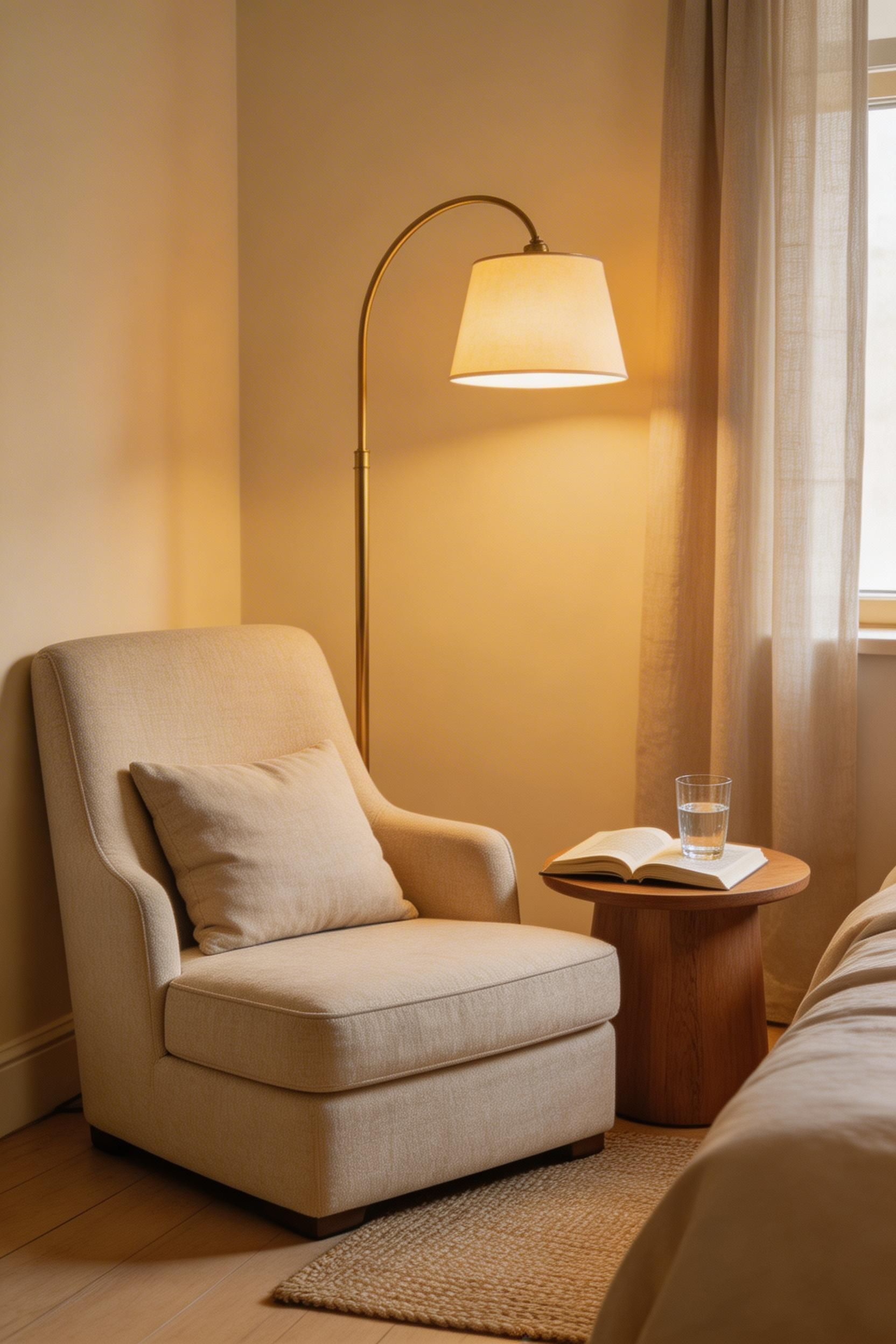
Setting up a slipper chair reading space that supports rest
A slipper chair works perfectly here. Armless or low-armed, it fits snugly into corners and encourages reclined reading without formality. Look for lumbar support and 18-22 inch seat depth so legs extend comfortably. Natural fibers (linen, cotton, wool) allow breathing; synthetics trap heat.
Position your reading lamp at shoulder height—a 4.5-5.5 foot floor lamp beside the chair, angled slightly downward over your book. Aim for 450-800 lumens: 470 (40-watt) for daily reading, 800 (60-watt) for extended sessions. Choose warm white bulbs at 2700-3000K; cool tones increase visual fatigue. A vintage floor lamp with fabric shade diffuses light evenly, more soothing than clinical task lighting. Your reading nook becomes a micro-sanctuary within your cozy bedroom space, where transition to sleep feels intentional.
7. Natural Wood Furniture That Brings Warmth and Organic Texture
Every piece of furniture in your bedroom is either off-gassing or settling. This is the reality of indoor air quality. Composite furniture—MDF (medium-density fiberboard), particle board, and veneered pieces—uses urea-formaldehyde glues that are carcinogenic airway irritants. These glues emit formaldehyde continuously, strongest in the first weeks but ongoing for months or years.
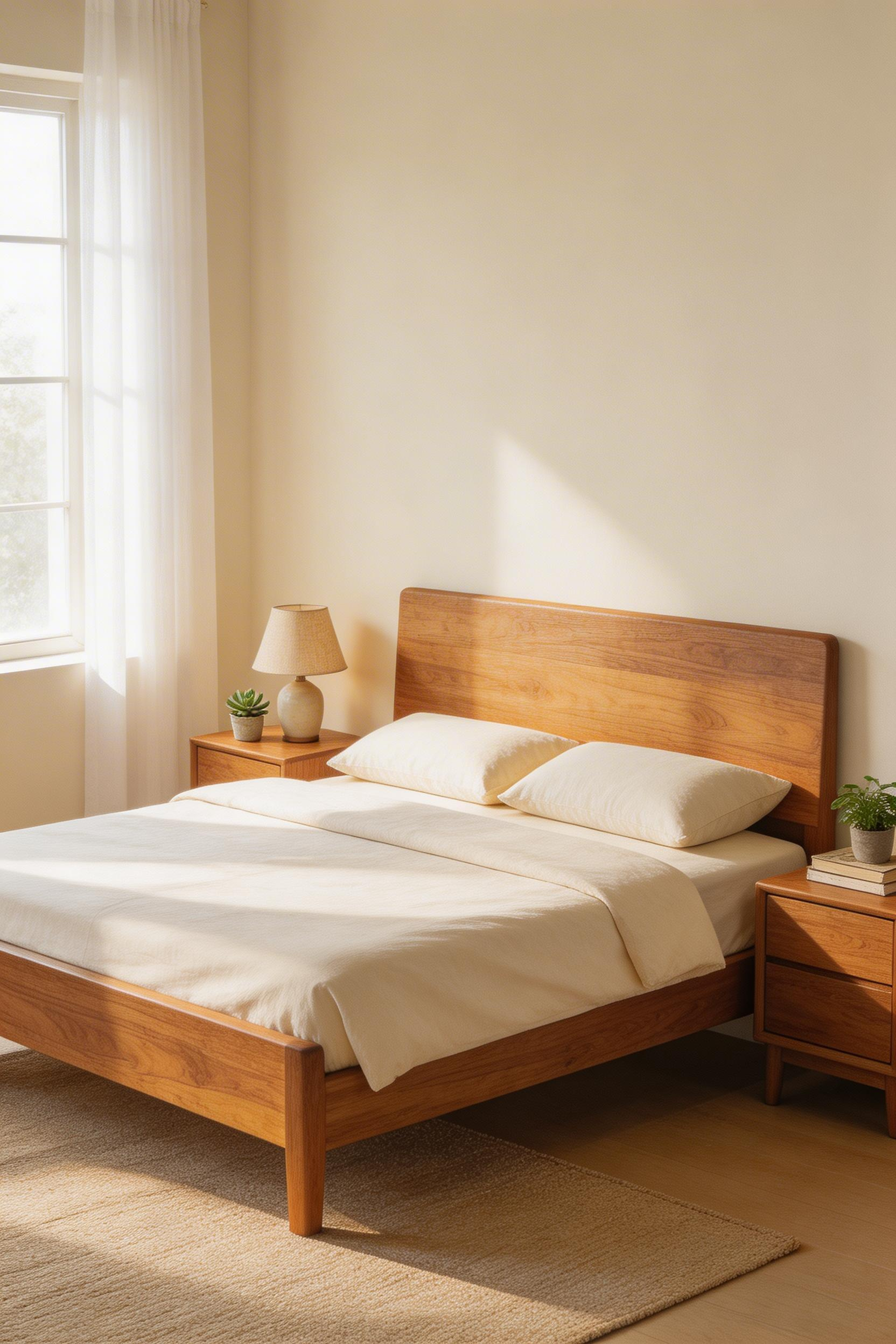
Solid wood furniture eliminates this risk entirely. Cherry, walnut, oak, and maple contain no added chemicals emitting VOCs, and they stabilize over time rather than break down. The catch: not all solid wood is equal. Oak and ash emit higher VOC levels than pine or birch, though pine ironically has the highest formaldehyde potential among solid woods (28-82 micrograms per cubic meter). Walnut offers rich chocolate-brown warmth with naturally lower emissions.
What protects you is the finish. Oil-based finishes release more VOCs than water-based finishes. The best option? Natural oil finishes, which produce negligible emissions once cured. When shopping, ask about finish type—request water-based or natural oil finishes, and avoid anything described simply as “varnished” or “lacquered.”
Solid wood furniture also warms a room psychologically. The organic grain, the slight imperfections, the way light moves across a natural surface—these are biophilic cues that say “this is alive, not manufactured.” Your nervous system responds to this authenticity.
8. Cozy Bedroom Decor With Candles, Diffusers, and Gentle Scent
Scent travels directly to your limbic system—the emotional brain—bypassing rational processing entirely. A familiar, calming scent triggers an immediate parasympathetic response, lowering cortisol and activating relaxation. This is why aromatherapy works not as psychology but as neurology: olfactory receptors connect to your amygdala and hippocampus, regions governing emotion and memory, meaning a scent can unlock relaxation patterns your body recognizes.
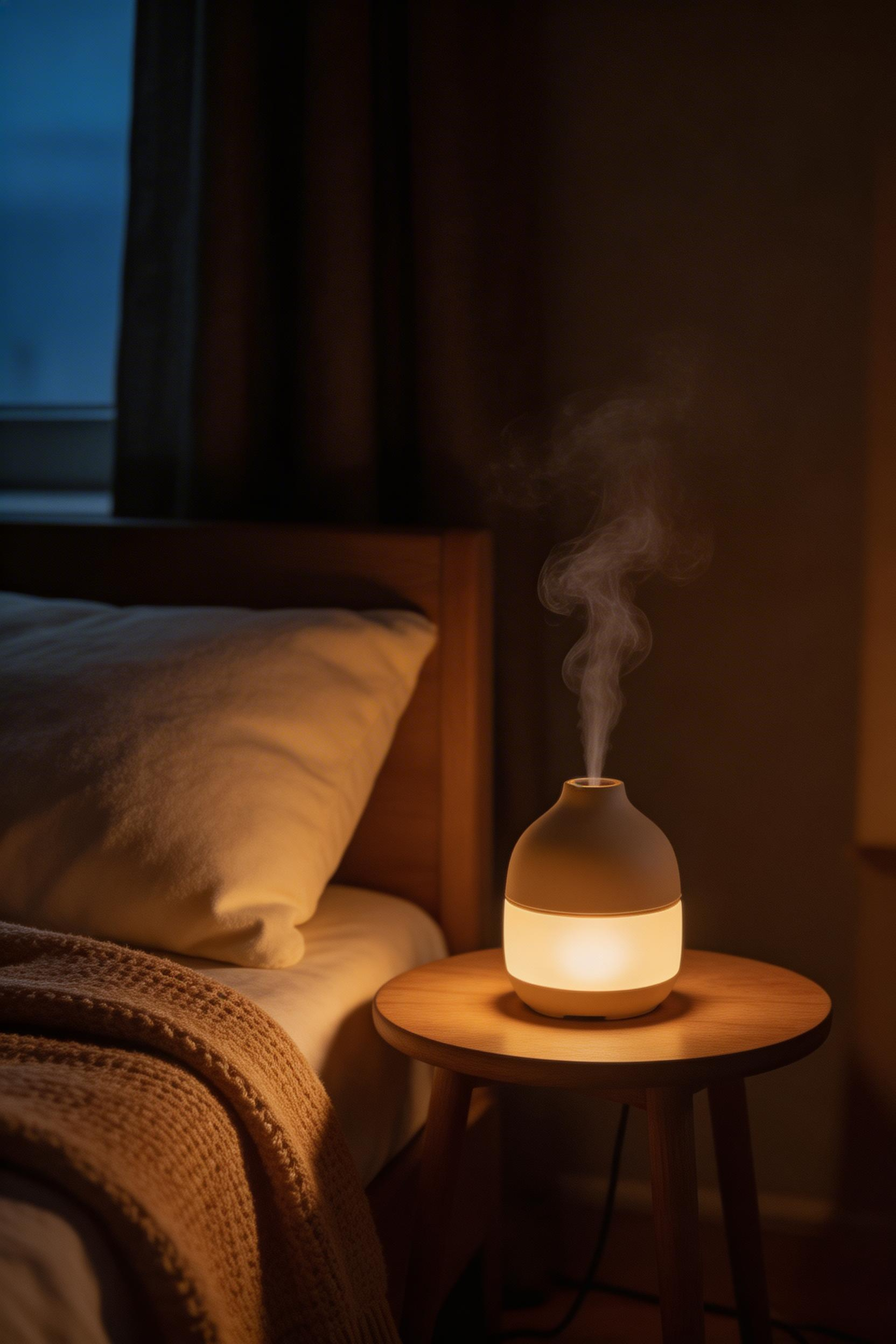
Paraffin candles are derived from oil and release toxic carcinogens when burned. Soy wax is renewable and biodegradable, offering a cleaner burn. Beeswax is superior: it burns cleanest, lasts twice as long as paraffin, and releases negative ions that attract and remove air pollutants as it burns. The tradeoff is cost—beeswax candles run $20–40 each—but the air quality benefit is measurable.
A caveat: all candles emit volatile organic compounds and particulate matter when burned. Unscented candles emit fewer compounds than scented ones. If you’re sensitive to air quality, diffusing pure essential oils avoids combustion entirely, though it still releases VOCs (just without the soot). Ultrasonic diffusers using water and essential oils offer the lowest-impact option for consistent scent in your cozy bedroom space.
For sleep support, three essential oils stand out. Lavender is clinically documented for anxiety reduction and sleep promotion—studies show it reduces cortisol within 15 minutes of exposure. Cedarwood offers grounding, warm scent supporting deep relaxation and emotional regulation. Vetiver, earthy and complex, soothes tension throughout the nervous system. A blend combining lavender with cedarwood and vetiver creates multi-layered scent—bright floral top notes giving way to grounding woody base.
Introduce scent 30 minutes before sleep. Consistency matters—your brain associates the scent with sleep onset, creating a Pavlovian cue deepening relaxation. Over time, scent alone triggers your sleep ritual, making the transition from wakefulness effortless.
9. Layered Throw Pillows Chosen for Texture, Not Just Color
Pillow layering gets discussed as if it’s about visual composition. Actually, it’s about sensory engagement. Your hands and face spend hours in contact with pillow textures—this tactile input directly influences your nervous system’s state. A careful mix of textures creates depth that engages your sensory processing.

Start with natural fill materials. Kapok mimics down without ethical concerns—it’s hypoallergenic, mold-resistant, and harvested from kapok trees without irrigation or pesticides. Buckwheat hulls conform to your neck and head, offering excellent air circulation, though debates exist about dust mite accumulation in buckwheat pillows. For sleeping pillows, organic cotton (GOTS-certified) is hypoallergenic and antimicrobial—perfect for sensitive sleepers. Hemp shares breathability with cotton while requiring less water and fewer pesticides.
For throw pillow arrangement, prioritize texture over color. Pair smooth linen with nubby wool, matte cotton with subtle sheen. Vary sizes: one large rectangular pillow as an anchor, two medium square pillows, one or two smaller accent pillows. Arrange them in a slight pyramid, larger pieces toward the back.
A formula for queen beds: two sleeping pillows (organic cotton or kapok), one textured linen pillow, one wool or textured cotton throw, one smaller accent pillow in contrasting texture. For king beds, add another textured piece. The variety keeps your tactile sense engaged without visual chaos.
10. A Thoughtfully Styled Bedside Table for Calm and Accessibility
Your bedside table is the last visual field your brain processes before sleep. Clutter on this surface creates cognitive overload—your prefrontal cortex is still cataloging, assessing, creating mental to-do lists. An intentional, minimal bedside supports the mental quiet that sleep requires.
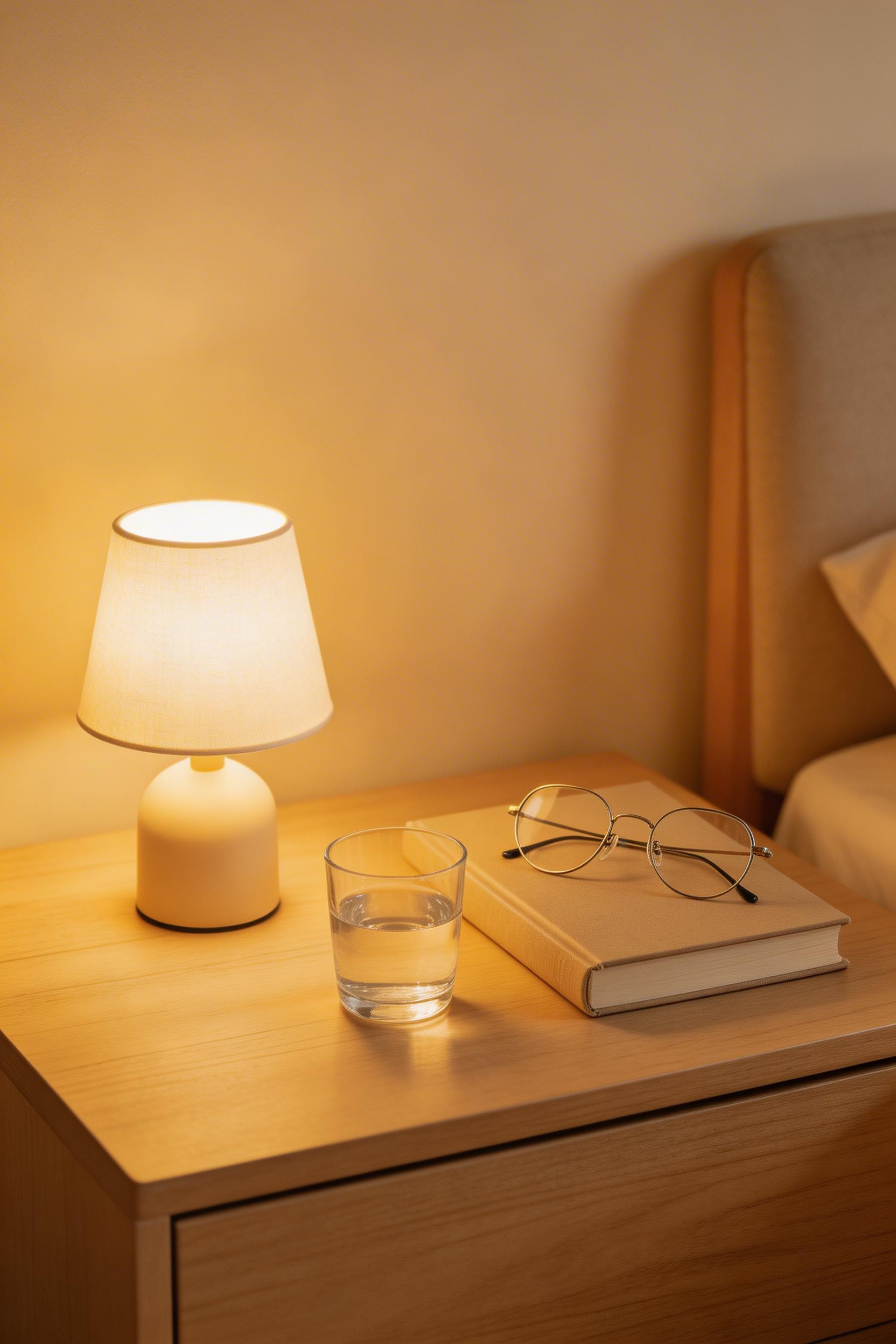
Keep only essentials: an alarm clock (ideally non-glowing or with a night mode), a water glass, a sleep-supportive book, reading glasses. Everything else goes into a drawer. Most critically: remove your phone. The blue light from screens suppresses melatonin for 2+ hours after exposure, and the presence of your phone creates psychological activation—your brain knows notifications could arrive.
If you prefer a phone nearby for emergencies, use a drawer with a charging cable threaded through a drilled hole in the back. This creates a power station where cords stay hidden and your phone stays out of sight. The tactile and visual minimalism signals safety and control to your nervous system. It says, “There are no decisions to make. Nothing needs attention. Rest is the only task.”
Height and depth matter functionally: aim for 16-18 inches tall (roughly knee height when seated on the bed) and 12-14 inches deep (shallow enough that you don’t have to lean to reach items). A single drawer or shelf below the surface provides hidden storage without visual clutter.
11. Indoor Plants That Improve Air Quality and Add Living Energy
NASA’s clean air study from 1989 identified snake plant, pothos, and peace lily as formaldehyde absorbers. The research was conducted in sealed chambers—a controlled environment nothing like your actual bedroom. To replicate the study’s results in a real room with normal air exchange, you’d need 100+ plants. So: manage expectations. Plants won’t purify your air like an HVAC system.
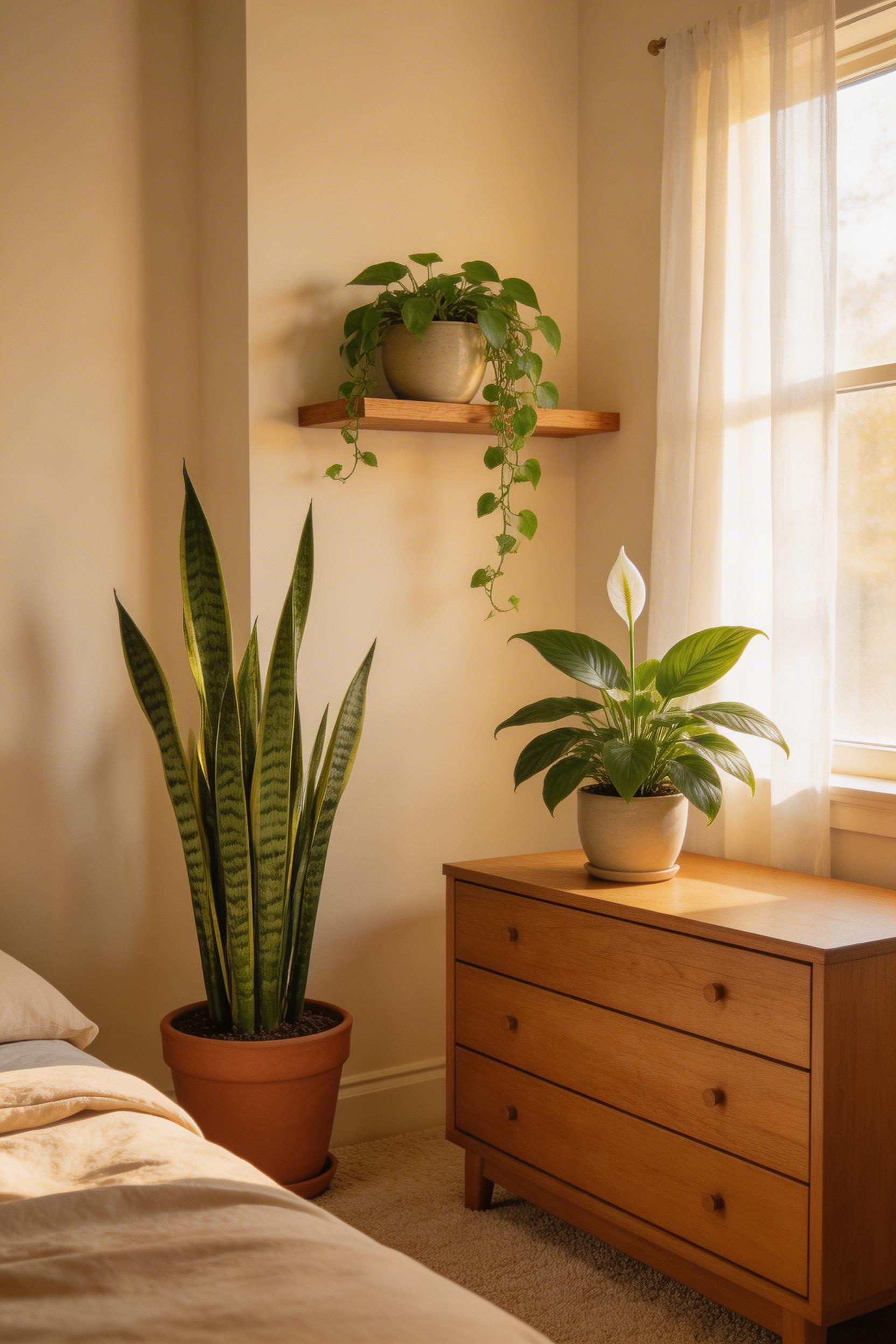
But they offer real value nonetheless. Living plants increase oxygen and humidity, supporting respiratory health. Their biophilic presence—the visual cue that life is thriving—activates a subtle parasympathetic response. And placing 5-10 strategically chosen plants *does* provide modest, meaningful air quality improvement alongside these psychological benefits.
For low-light bedrooms, choose species that actually tolerate dim conditions. Snake plant is nearly indestructible—it absorbs formaldehyde and benzene, tolerates bright indirect light but also survives in corners, and needs water only occasionally. Pothos trails beautifully from a shelf, grows quickly even in low light, and handles neglect gracefully. Peace lily signals water need by drooping, keeping you from over-watering, adds humidity to dry air, and works across multiple VOC types.
All three are non-toxic if you have curious pets or children. Place them at varying heights—a trailing pothos on a high shelf, a snake plant in a corner, a peace lily on a dresser—to create visual interest and distributed air circulation benefit.
12. Blackout Curtains and Sleep Hygiene for True, Deep Rest
Complete darkness is non-negotiable for melatonin production. Light leaks—even the small gaps where curtains meet the wall—suppress melatonin by 50% or more. Your goal is true darkness: 0 lux at sleep time.
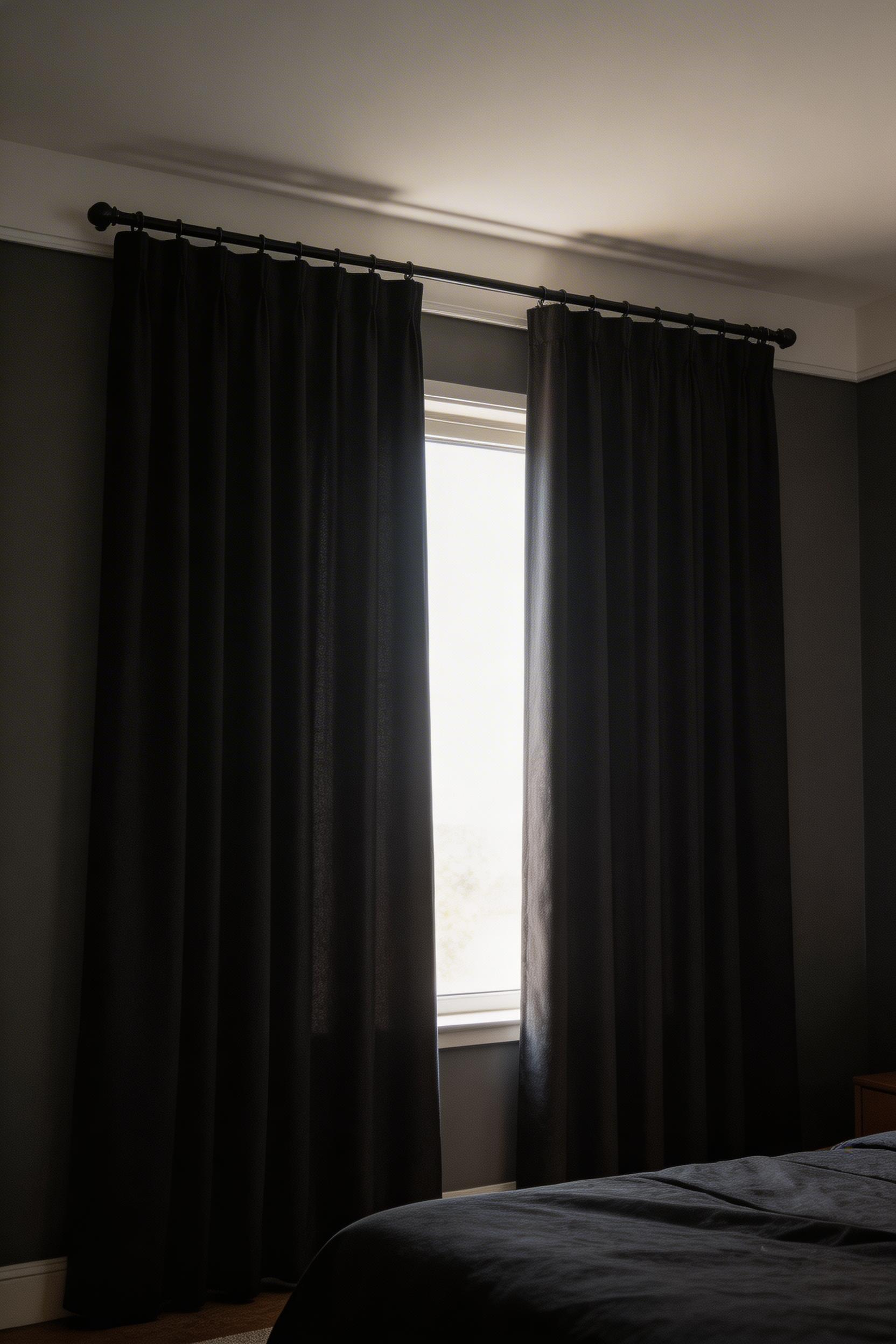
This requires precision in installation. Mount your curtain rod 6-8 inches beyond the window frame on each side to prevent side light leaks, and mount it as close to the ceiling as possible. Better yet, use ceiling-mounted blackout tracks that eliminate the gap entirely. Use weighted curtain clips or magnetic strips along the sides to seal gaps where light sneaks through. For maximum blackout, sew or glue blackout fabric strips to the sides and bottom of your curtains for a snug fit against the walls.
Look for triple-weave blackout fabric or high-quality foam-backed lining—these block 99-100% of external light. The best systems pair lightweight sheer linen panels (for daytime light filtering and circadian connection) with heavy-duty blackout curtains on a separate rod or hook system. This gives you flexibility: open sheers during the day, close blackouts by 8 p.m.
The investment ($100–300 for quality blackout curtains plus installation labor) pays dividends in sleep quality. When your bedroom achieves true darkness, melatonin production responds within 15-30 minutes, and your deep sleep architecture—the slow-wave sleep where memory consolidation and physical recovery happen—increases measurably.
13. Cozy Bedroom Design With a Fabric Canopy or Bed Draping
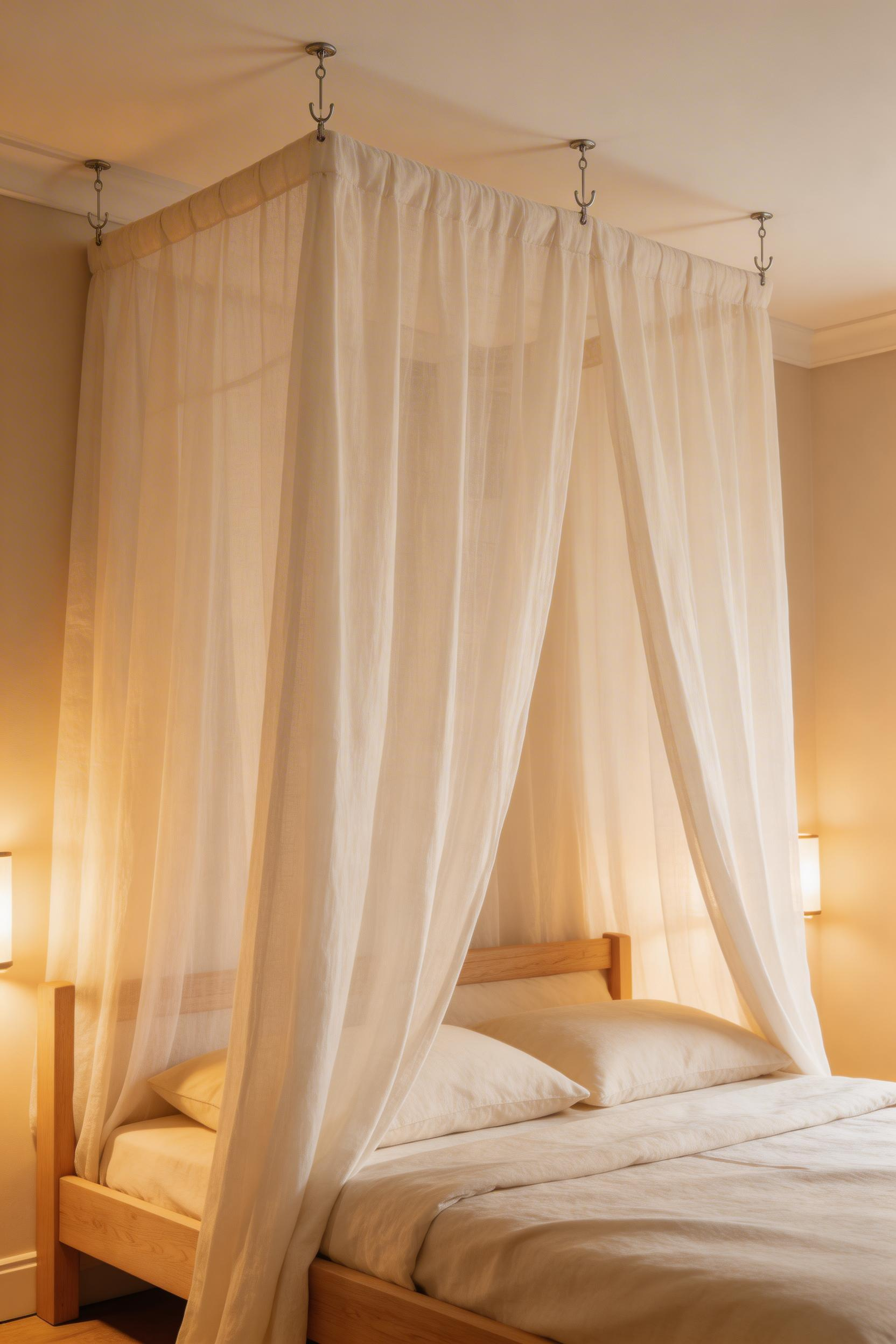
A fabric canopy transforms your bed from furniture into sanctuary. Suspended fabric creates psychological enclosure—an instinctive “refuge” response that calms the nervous system, triggering the prospect-and-refuge principle of safety.
How canopies activate nervous system refuge response
Soft, suspended fabrications reduce stress and increase grounding. Psychological enclosure signals safety at a primitive brain level—essential for cozy bedroom design. The simplest DIY approach uses ceiling hooks and lightweight fabric. Mount sturdy hooks into studs at each bed corner, then drape muslin (opaque, allows light filtration), linen (textured, finished), or voile (transparent, boundary without blocking light).
Fabric weight matters: aim for lightweight (3-5 oz per yard). Heavy fabric creates visual heaviness and reduces airflow. Install at least 6-8 inches above your head to avoid claustrophobia. Use tension rods between bedposts or curtain rods suspended from ceiling brackets. Four-poster beds with built-in hardware simplify installation. Looking up at suspended fabric triggers sensory shift toward rest—the visual equivalent of weighted blanket calm through psychological enclosure.
14. A Gallery Wall of Calming Art and Personal Photographs
Art isn’t decorative in a wellness bedroom—it’s functional. Your visual field in the hour before sleep influences the state of your nervous system. Soft blues and greens activate parasympathetic response and lower blood pressure. Busy, high-detail compositions increase visual processing and arousal. The art you hang actually determines whether your brain can disengage.
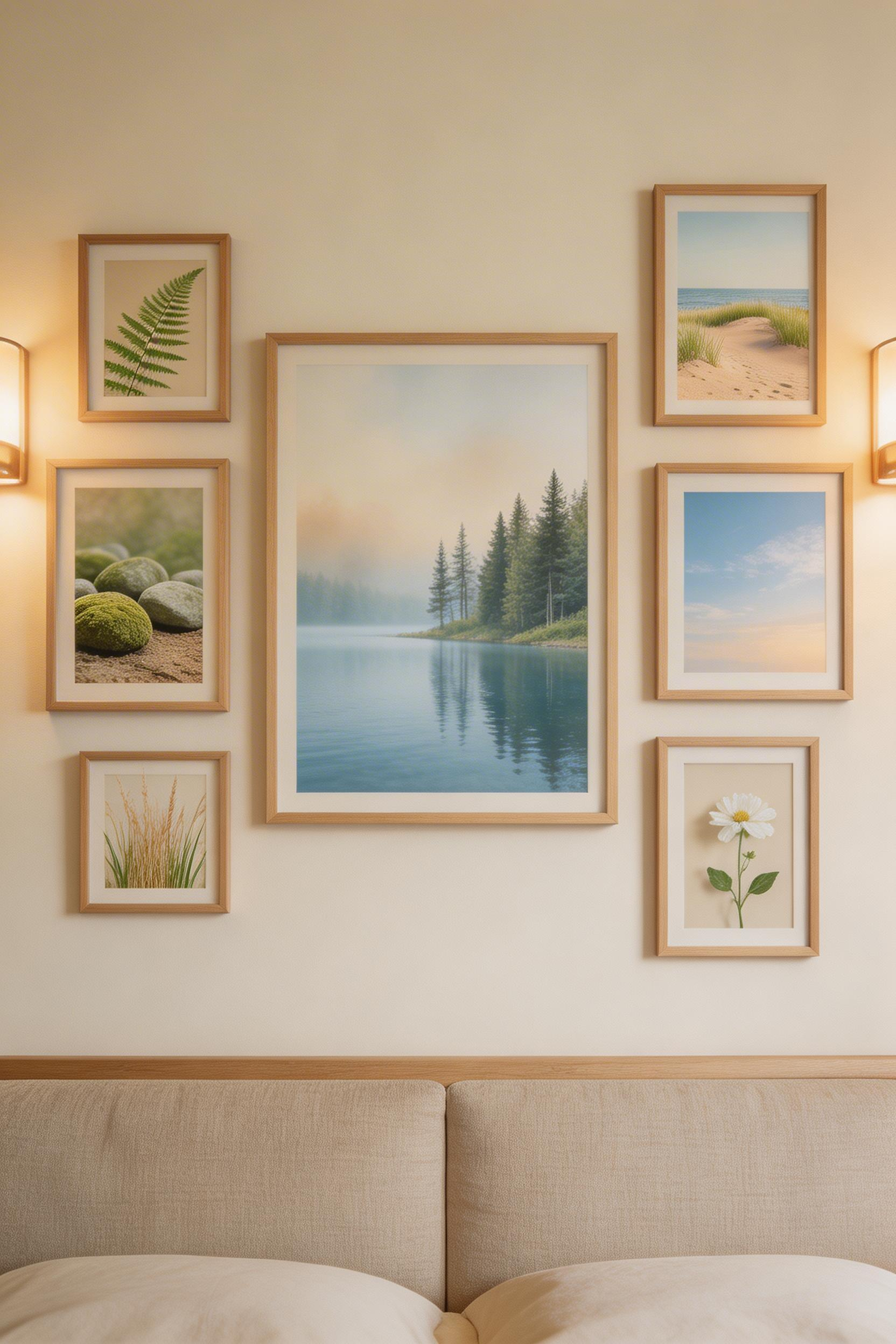
Nature imagery scores consistently higher on happiness and relaxation ratings than abstract or urban scenes. Gentle horizontals (landscapes, horizon lines) are calming; sharp diagonals and busy compositions increase visual tension. Low spatial frequency images—those with reduced detail, soft focus, and muted palettes—support sleep better than complex, high-contrast art.
Curate intentionally. Choose work with cool blues, soft greens, and warm neutrals. Avoid bright reds and intense yellows, which trigger alertness. Include personal photographs—travel shots, family moments, nature scenes from places that matter to you. These carry emotional resonance that calms you more effectively than generic art.
For layout, create a varied gallery with sizes ranging from 8×10 to 24×36 inches. Position one larger anchor piece opposite the bed (so it’s your last sightline before sleep), then arrange supporting pieces asymmetrically around it. The ledge-display method (using floating shelves and leaning frames) avoids wall damage and allows flexibility.
The goal is calm visual interest—enough to engage your eye without demanding attention. Your brain should be able to look at the gallery wall and feel soothed rather than stimulated.
15. Cozy Sleep Space: Texture-Rich Wallpaper or a Limewash Accent Wall
Flat paint is honest but limited. A textured wall adds visual depth and warmth that color alone cannot achieve. The shadows created by texture make a room feel larger while simultaneously creating a sense of enclosure—both working in your favor.
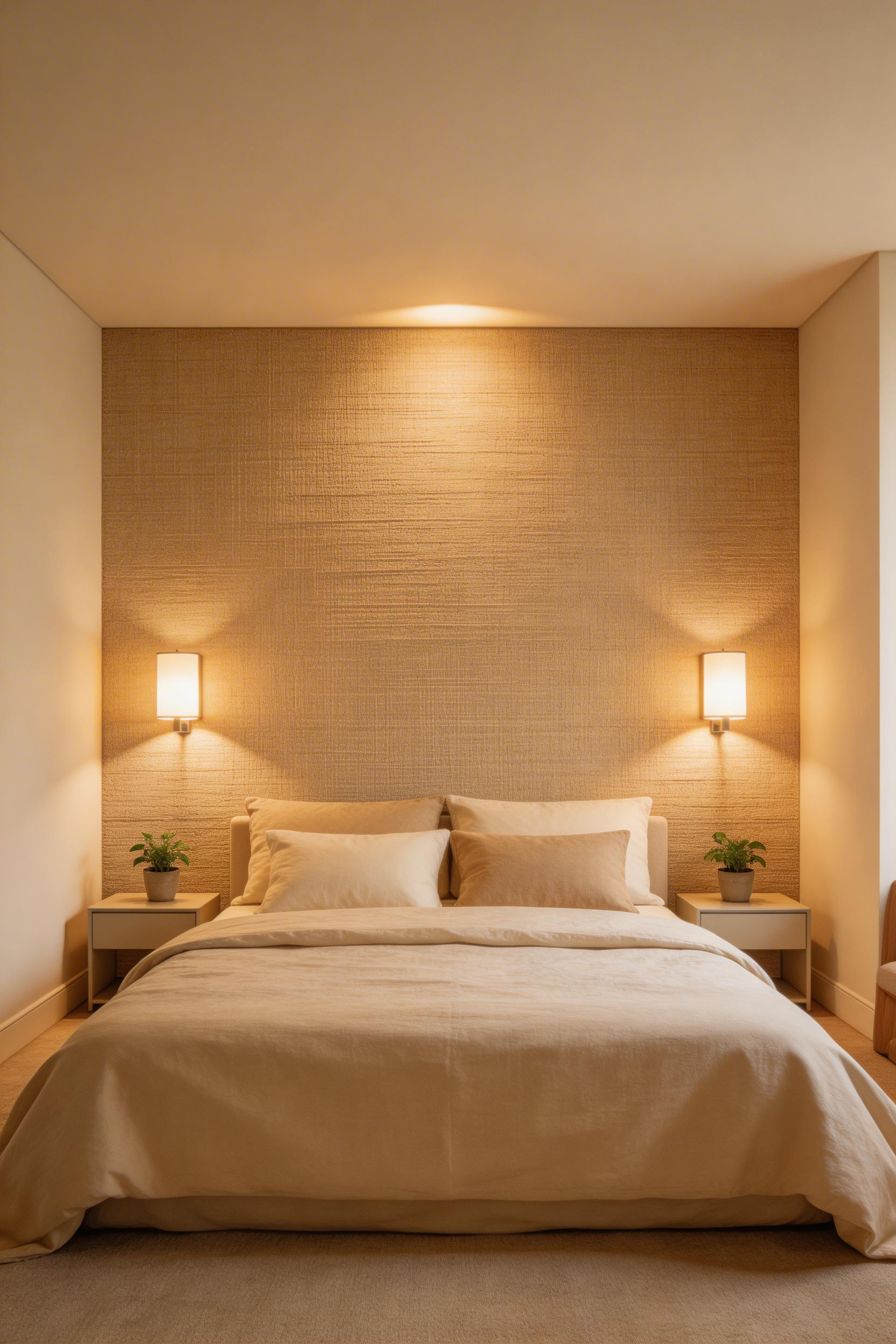
Limewash wallpaper captures the aesthetic of traditional lime-washed finishes with soft, muted tones and subtle texture creating serene ambiance. The finish works across rustic to contemporary styles. Cost runs $30–60 per roll compared to $2–5 for standard paint, but the visual reward is substantial. Peel-and-stick versions reduce installation complexity if you’re renting or want flexibility.
Grasscloth wallpaper is another excellent option. Natural fibers hand-woven into sheets create organic texture that commands attention without aggressive pattern. Grasscloth naturally coordinates with bedroom textiles—you can match the wallpaper tone to your bedding color and create visual coherence. Dark chocolate grasscloth wraps a master bedroom in richness and romance. Pale natural grasscloth offers subtlety and warmth.
The key is restraint: apply textured wallpaper to one accent wall (typically behind the bed) rather than the entire room. Full coverage becomes overwhelming; a single textured wall creates a focal point and sense of enclosure without visual busy-ness. Cost ranges $40–100 per roll plus professional installation ($500–1,500 per wall), but the transformation justifies the investment.
16. Sound and Scent: The Final Layers of a Cozy Bedroom Aesthetic
White noise drowns out disruptive sounds but offers little independent sleep benefit—it’s masking, not cure. Pink noise increases slow-wave sleep in some studies but recent research shows at 50 decibels it reduces REM sleep by ~19 minutes.
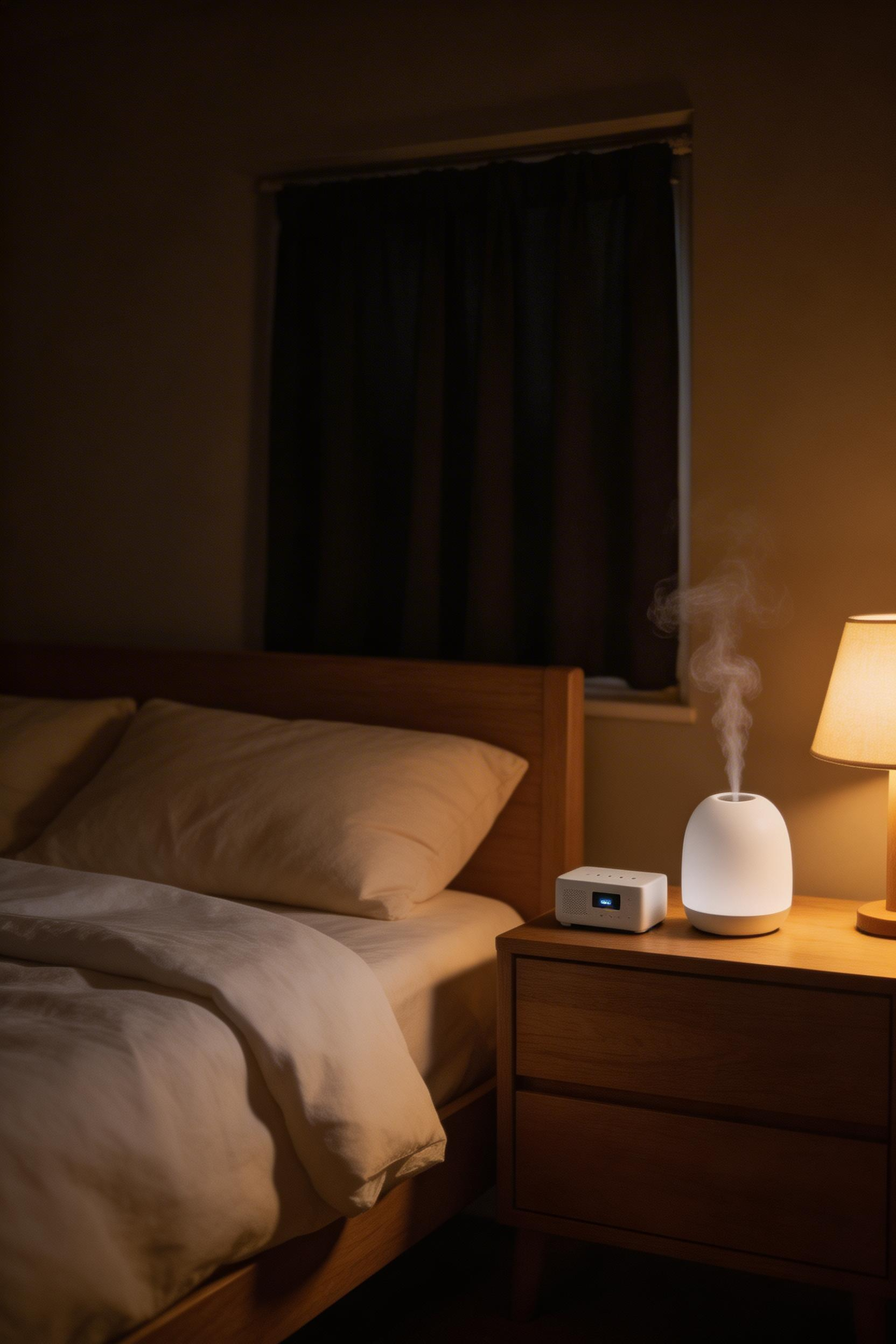
Building sensory ritual that anchors circadian rhythm
Real power lies in consistency. A sleep ritual—light descent, scent, sound—anchors your circadian rhythm. Your brain recognizes the pattern and prepares for sleep. If using white noise, keep volume at conversation level (excessive disrupts), and try timers that shut it off after sleep onset rather than running continuously.
Build your cozy bedroom ritual: one hour before bed, dim lights to warm 2700K. Thirty minutes before sleep, diffuse essential oil (lavender, cedarwood, vetiver). At sleep time, start white noise at low volume, set timer, close blackout curtains. Lie down with sensory cues aligning—light gone, scent present, sound masking—and your nervous system recognizes the familiar pattern. Sleep becomes something your body knows how to do, not something you force. These final layers complete the sensory system transforming your cozy bedroom ideas space into a genuine rest sanctuary.
Building Your Most Cozy Bedroom, One Layer at a Time
You don’t need to implement all 16 cozy bedroom ideas simultaneously. Layering works because each element compounds—your nervous system accumulates safety signals, and benefits deepen over time.
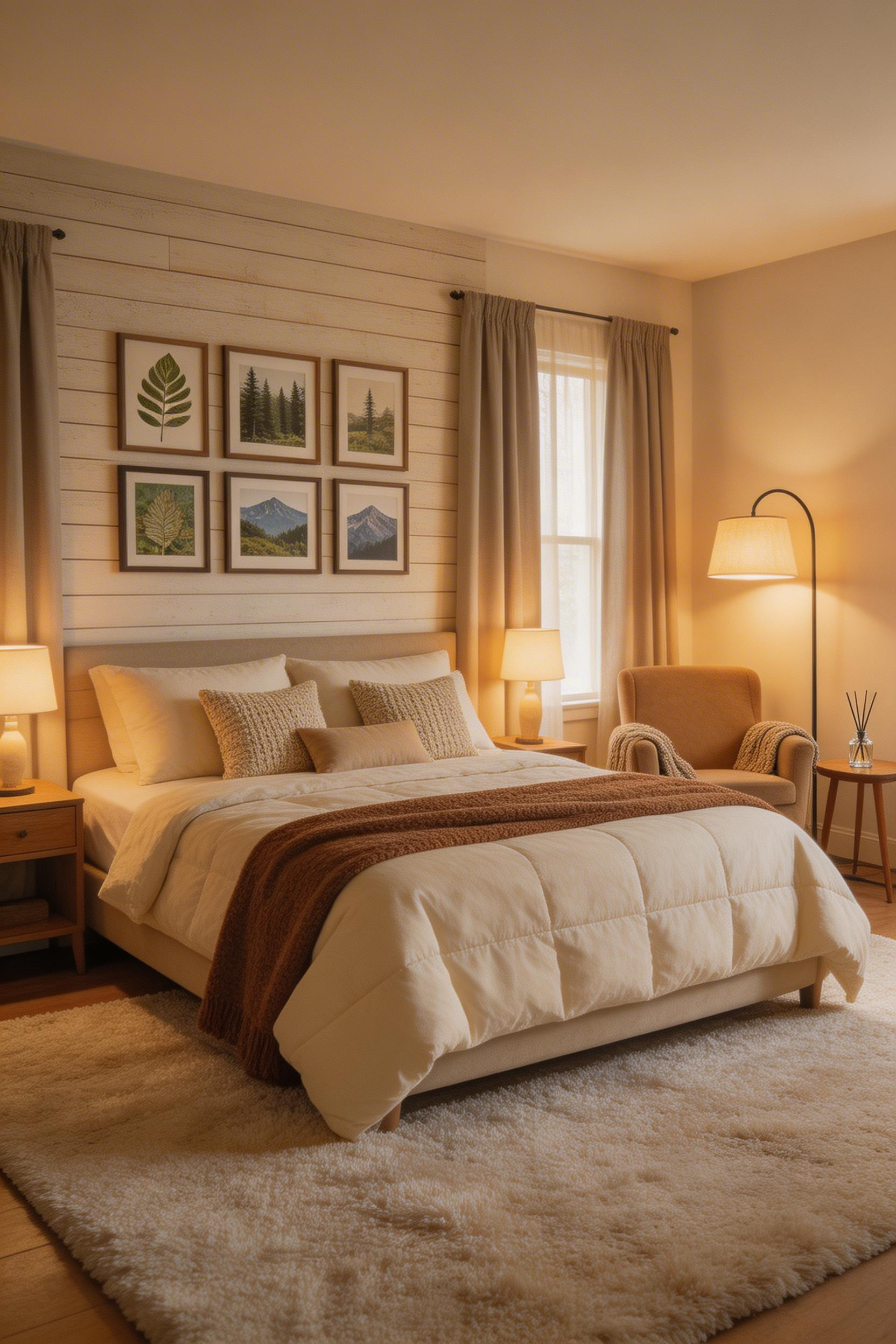
Start with foundational interventions offering highest impact per dollar: dimmer-compatible warm lighting ($50–150), blackout curtains ($100–300), and organic bedding ($200–400). These address core circadian and thermal needs. Month one: install dimmers, swap to warm bulbs, hang blackout curtains. Month two: upgrade bedding to organic cotton and add quality area rug. Month three: paint your accent wall with limewash or grasscloth, introduce linen daytime curtains. Month four and beyond: add reading nook, fabric canopy, gallery wall with calm art, bedroom plants, and scent/sound rituals.
Each layer reinforces a single message: this room exists to support your rest, your safety, your recovery. When you’ve layered all these cozy bedroom ideas—organic materials, warm light control, natural wood furniture, textured walls, calm imagery, and sensory rituals—you’ve created something functioning as both sanctuary and rest system. You’re designing the physiological conditions for deep, restorative sleep.