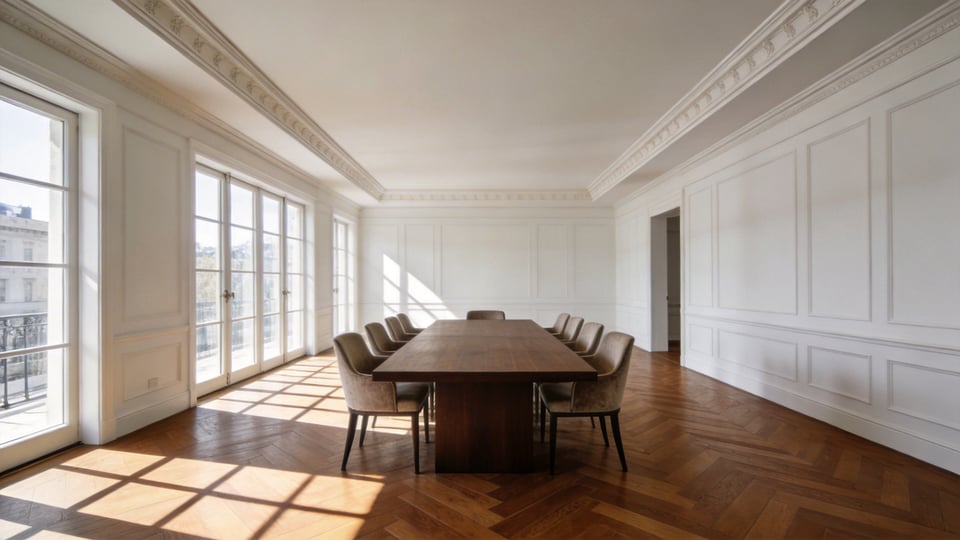
Many homeowners assume hosting requires days of frantic planning. As a result, dining rooms often sit empty as formal museums or become cluttered drop zones. These spaces feel disconnected from daily life. However, exploring professional dining room decor ideas through the “Intimate Authority Framework” offers a sustainable middle ground. This design philosophy shifts the focus from “hosting a party” to maintaining a constant “state of grace” and elevated aesthetics.
The concept relies heavily on the “Unexpected Guest” Epiphany. Specifically, it prioritizes a host’s psychological command over their environment. Historically, this mirrors the Polish tradition of Wigilia, where an empty seat always awaits a visitor. Therefore, a well-designed room intuitively organizes essentials to prevent any scrambling. For example, a sideboard becomes a tactical station rather than just a display. Thus, a spontaneous visitor causes no stress but simply joins the existing flow. Ultimately, the host maintains authority by finding exactly what they need instantly.
This guide reveals practical strategies to create that adaptable sanctuary. First, we define “Anticipatory Command,” ensuring linens are reachable within seconds. Next, we explore the “Lighting Pivot” to shift a room from functional workspace to intimate gathering. Additionally, we analyze the “Round Table Rule” for seamless social integration without hierarchy. Finally, we discuss reducing visual noise to make room for emotional signals. By applying these steps, your home becomes a place of open connection.
Phase 1: The Fundamental Anchors (Establishing the Canvas)
Before placing a single vase, you must establish the room’s architectural canvas. High-end design begins not with furniture, but with the void surrounding it. Specifically, adherence to the technical “36-inch rule” is non-negotiable for comfort. While these principles apply to grand estates, they are even more critical when looking for smaller dining room ideas where every inch counts toward psychological ease. Guests feel at peace because they can push back their chairs without obstruction.
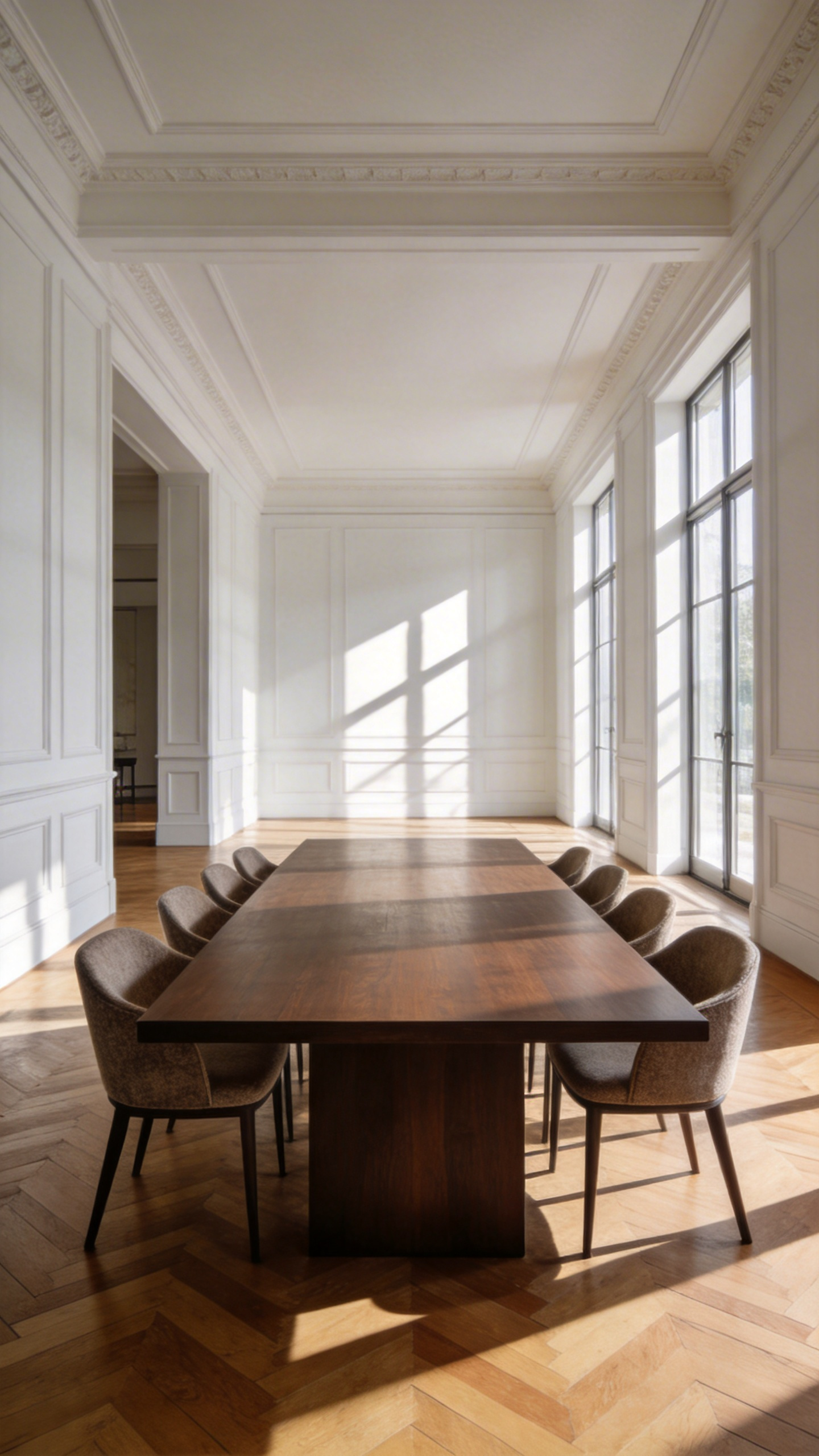
Next, lighting serves as a structural anchor rather than mere decoration. Ideally, a fixture should hang 30 to 34 inches above the surface to create a “Cone of Intimacy.” This specific height drops the visual ceiling, effectively encompassing guests in a warm, private tent. Furthermore, selecting bulbs with a Color Rendering Index (CRI) above 90 is critical. In fact, this ensures culinary colors appear vivid rather than muddy.
Simultaneously, your choice of table shape dictates the room’s power dynamic. Rectangular tables establish hierarchy, while round options create a democratic, centralized focus. Regardless of shape, the floor must visually weigh down these elements. Therefore, deep-toned woods or heavy-pile rugs act as a necessary ballast. However, if utilizing a rug, it must extend at least 24 inches beyond the table edge. Ultimately, these anchors carve out a sanctuary where the outside world disappears.
1. The Golden Ratio of Rug Sizing: Anchoring without crowding
Rug sizing is a precise exercise in proportional anchoring. It uses mathematical harmony to define a space without making it feel claustrophobic. High-end designers often apply the Golden Ratio or the 60/40 Rule. Consequently, the rug should occupy roughly 60% of the immediate visual space. If the rug is too small, the table appears to drift aimlessly. This “Floating Island” effect creates a subconscious sense of visual instability for your guests.
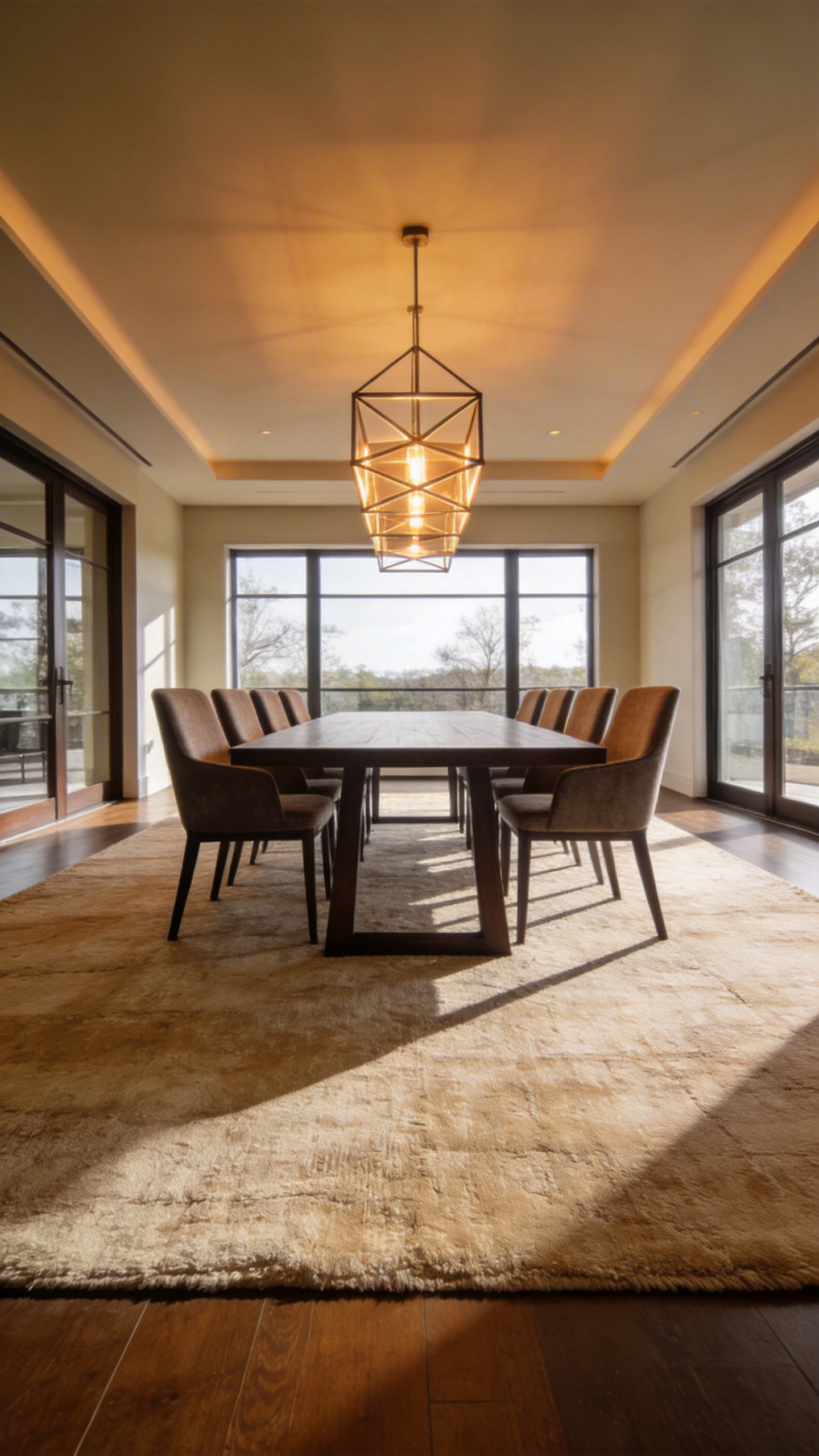
Therefore, proper sizing ensures the furniture feels securely moored. Ideally, allow for 24 to 30 inches of rug extending beyond the table edge. This prevents the jarring physical “clunk” of chair legs dropping off the rug when guests sit. Furthermore, this ample surface area serves as a necessary acoustic anchor. It absorbs the high-frequency clatter of silverware, effectively preventing your dining room from becoming an echo chamber.
However, size should never come at the cost of visual flow. Expert consensus suggests leaving a strict border of 12 to 18 inches of bare floor around the perimeter. This intentional negative space acts as a frame, significantly reducing cognitive load. Thus, the brain categorizes the dining area as a distinct, organized zone. Ultimately, the perfect rug provides a “visual deep breath,” making the room feel expansive rather than cluttered.
2. Table Shape Psychology: Choosing round vs. rectangular for conversation flow
Choosing a dining table involves more than just measuring your room. The shape dictates the social rhythm of your gatherings. Rectangular tables reflect the hierarchy found in traditional banquet halls. If you prefer a contemporary look that maintains this structure, these modern dining room ideas can help you define a sleek, minimalist aesthetic. Conversely, round tables draw inspiration from democratic ideals.
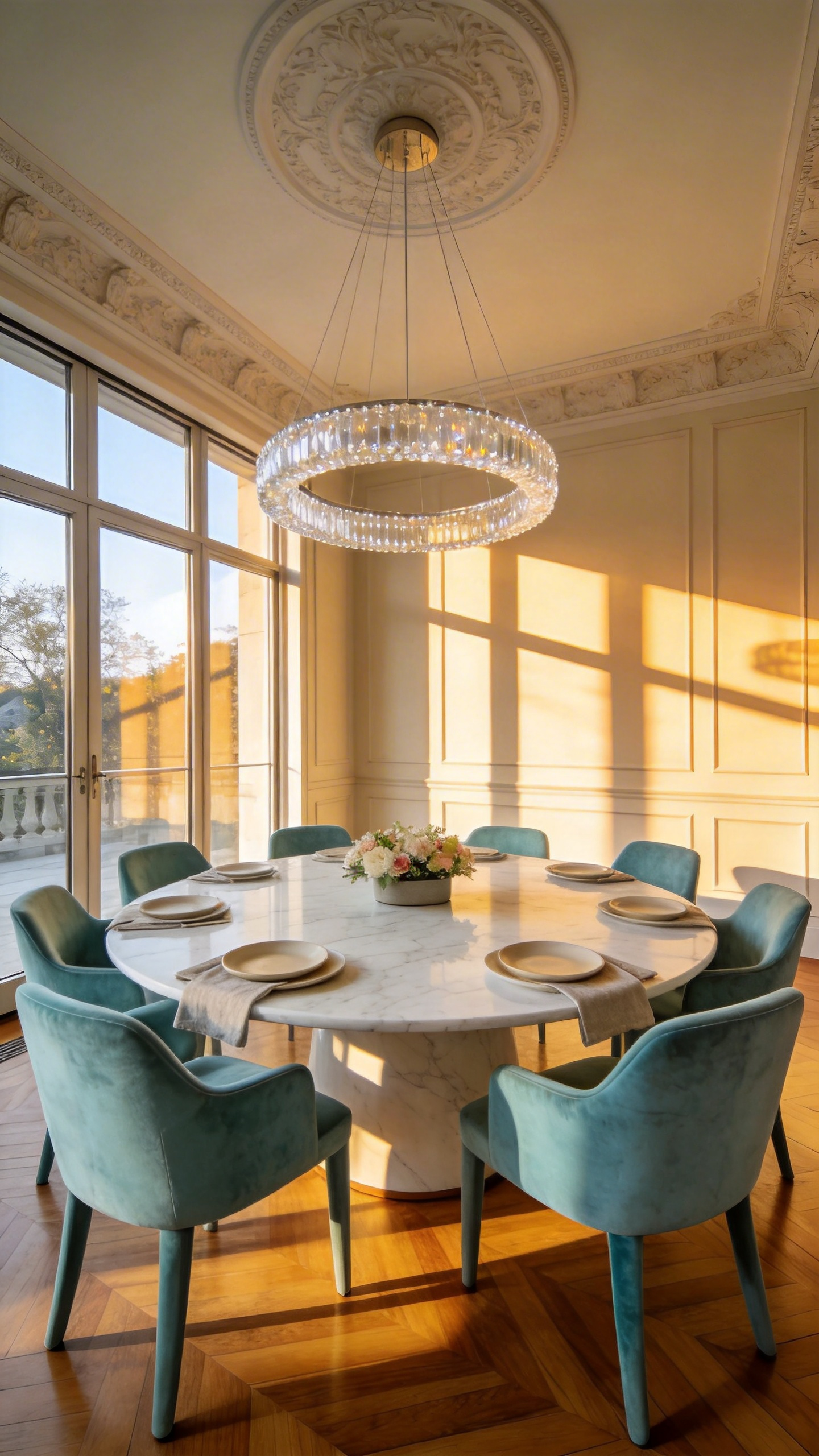
Psychologically, this circular configuration fosters a sense of inclusivity. The shape physically alters the flow of conversation. Specifically, rectangular tables often force guests into isolated “triangles” of discussion. If the table exceeds six feet, guests at opposite ends become socially distant. However, circular tables enable constant, equal eye contact. Therefore, you can catch subtle facial cues from anyone without straining. This setup effectively prevents the “split-conversation” effect common at long, narrow dinners.
Beyond conversation mechanics, your brain processes these shapes through different emotional lenses. Sharp corners can subconsciously trigger a “guard up” mentality due to the amygdala’s response to angles. In contrast, rounded edges tap into biophilic design principles. These organic curves mimic nature, eliciting feelings of peace and hope. Additionally, the material itself impacts the acoustic atmosphere. Solid wood acts as a natural sound diffuser, absorbing noise to keep the space intimate.
3. Seating Mixology: The art of blending captains chairs with side seating
True seating mixology moves beyond the “showroom set” to create a curated aesthetic. The “Captain’s chair” historically symbolized authority, offering stability for ship commanders navigating rough seas. Today, this concept provides a sophisticated design strategy for modern homes. Specifically, the head of the table features a “host” chair designed for comfort. Meanwhile, side chairs act as agile “workhorses” that maximize capacity along the table’s length.
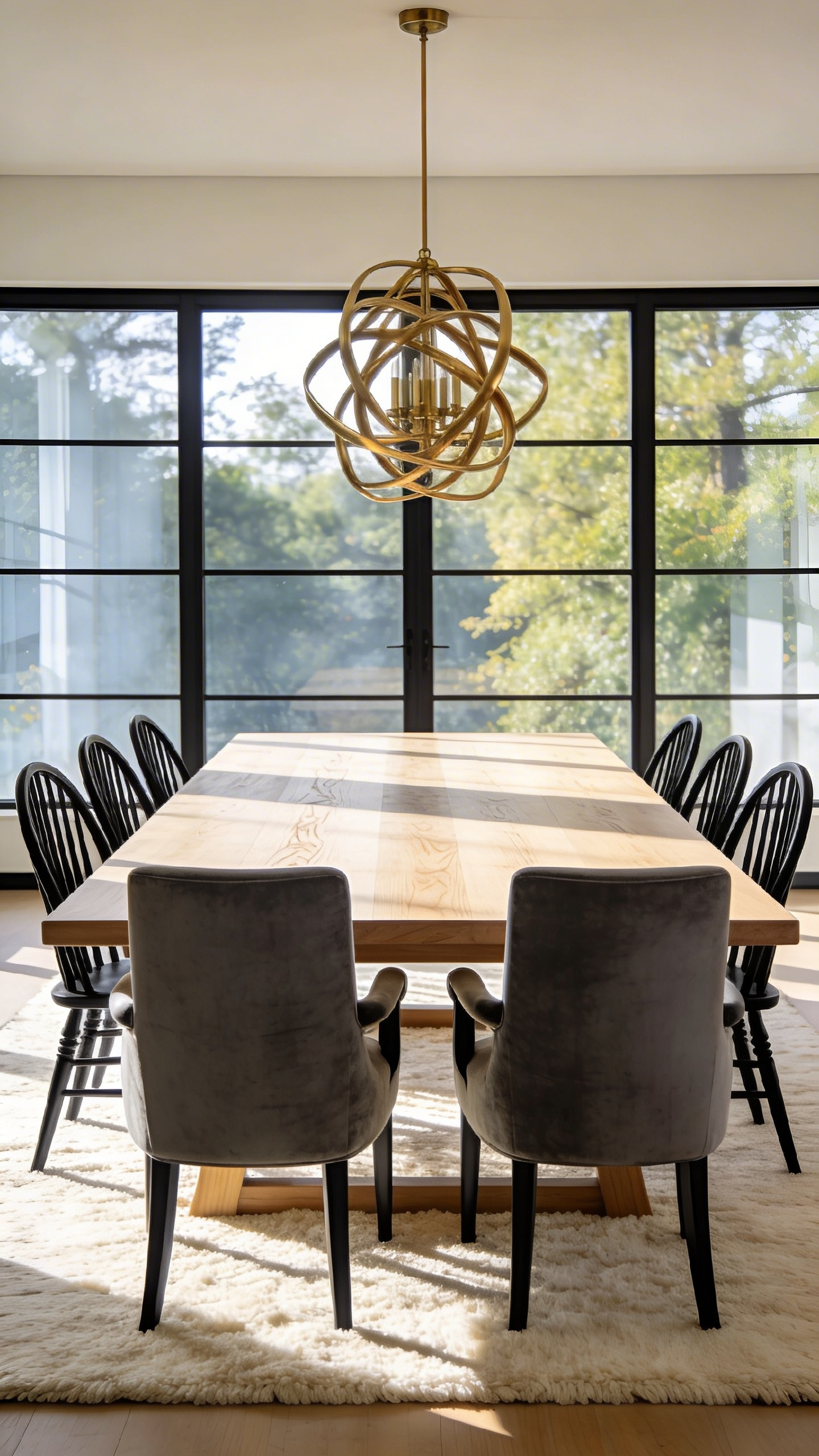
However, achieving this balance requires strict attention to visual weight. If your side chairs are “leggy” and light, your host chairs should feel “grounded.” Therefore, choosing a skirted or upholstered piece for the ends anchors the room effectively. Crucially, you must also respect the physics of eye contact. To prevent guests from feeling socially inferior, seat heights must align within two centimeters of each other. A drastic height difference creates an unintentional hierarchy that disrupts conversation.
Beyond aesthetics, this mix actually scripts the dining experience. For instance, pairing hard side chairs with plush host chairs dictates the meal’s rhythm. The softer end chairs encourage post-meal conversation, often enticing guests to linger over coffee. Additionally, these upholstered pieces act as acoustic buffers in echo-prone rooms. To unify these disparate styles, designers rely on a “common thread.” Ensure all chairs share an identical leg finish or silhouette curve. Ultimately, this approach satisfies the eye’s desire for variety while maintaining a sense of order.
4. The 30-Inch Rule: Perfecting chandelier height and scale
The “30-Inch Rule” acts as a critical anchor in dining room design. This standard balances mathematical proportions with human interaction. By hanging a fixture 30 to 36 inches above the table, you create a specialized “visual halo.” Consequently, this lighting zone fosters intimacy. It lowers the perceived ceiling height and draws focus inward toward the meal. Furthermore, this specific height protects essential sightlines. Guests can converse easily across the table without dodging a low-hanging obstacle.
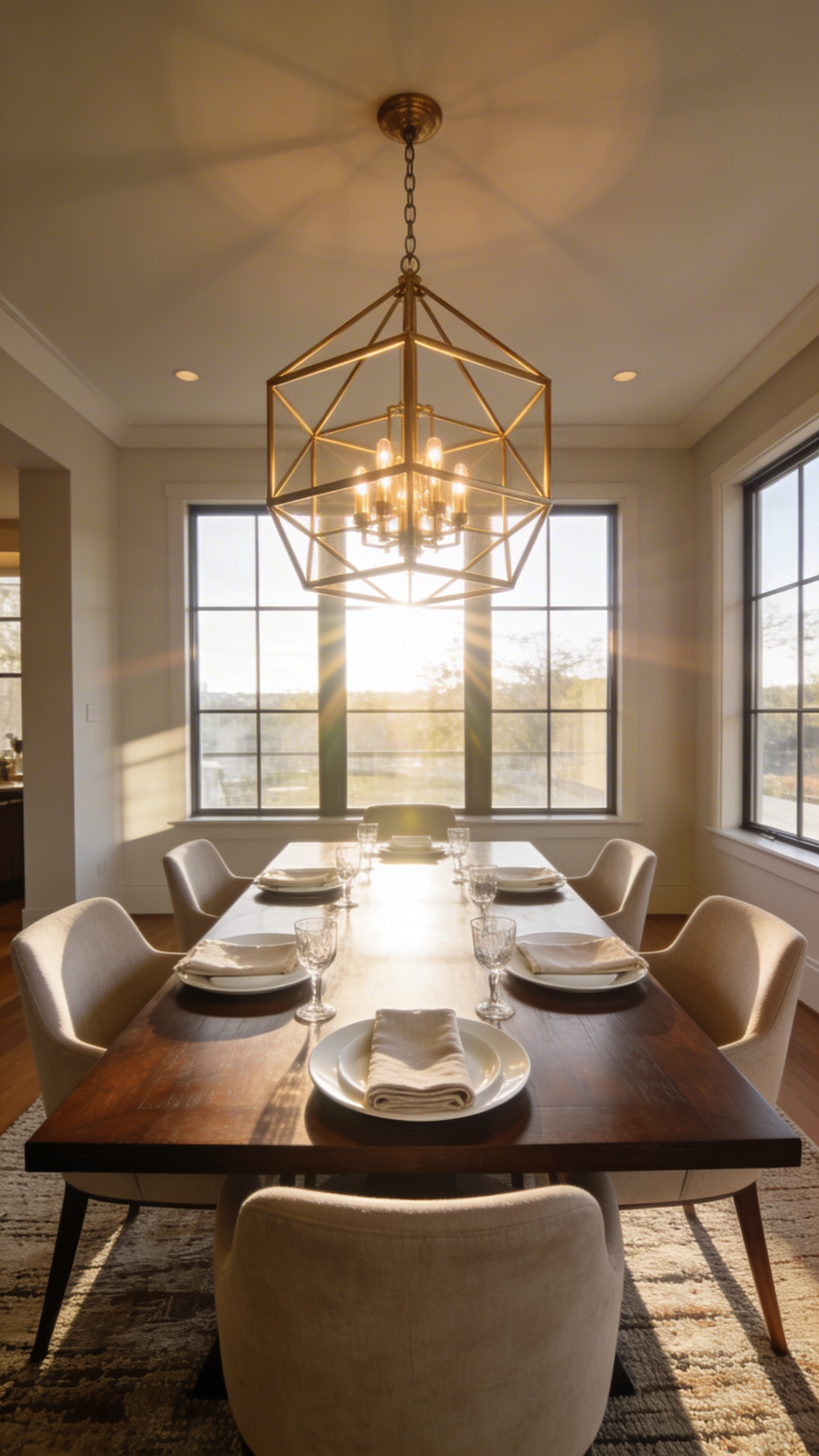
However, this measurement assumes a standard eight-foot ceiling. Modern architecture often features significantly more vertical volume. Therefore, you must scale the height to maintain a connection between the light and the table. Specifically, for every additional foot of ceiling height, raise the fixture by three inches. For instance, a 10-foot ceiling requires a hanging height of 36 to 42 inches. This simple adjustment prevents the chandelier from looking disconnected from the dining space.
Beyond height, you must also consider the fixture’s “visual weight.” Dense, solid-bottomed fixtures can cast a “shadow donut” if hung too low. Thus, these often require a few extra inches to let the light spread effectively. In contrast, airy or glass designs can sit lower without overwhelming the table. Finally, verify the fixture’s linear scale. Ideally, your chandelier should measure one-half to two-thirds of the table’s width.
Phase 2: Architectural Mood Setters (Intermediate Elevation)
The intermediate elevation acts as the room’s critical “middle layer.” This zone spans 32 to 48 inches from the floor. While floors define boundaries, this elevation meets the human scale. Furthermore, selecting the right colors—perhaps by choosing the perfect dining room paint—can dramatically shift the room’s perceived temperature and depth in this specific layer.
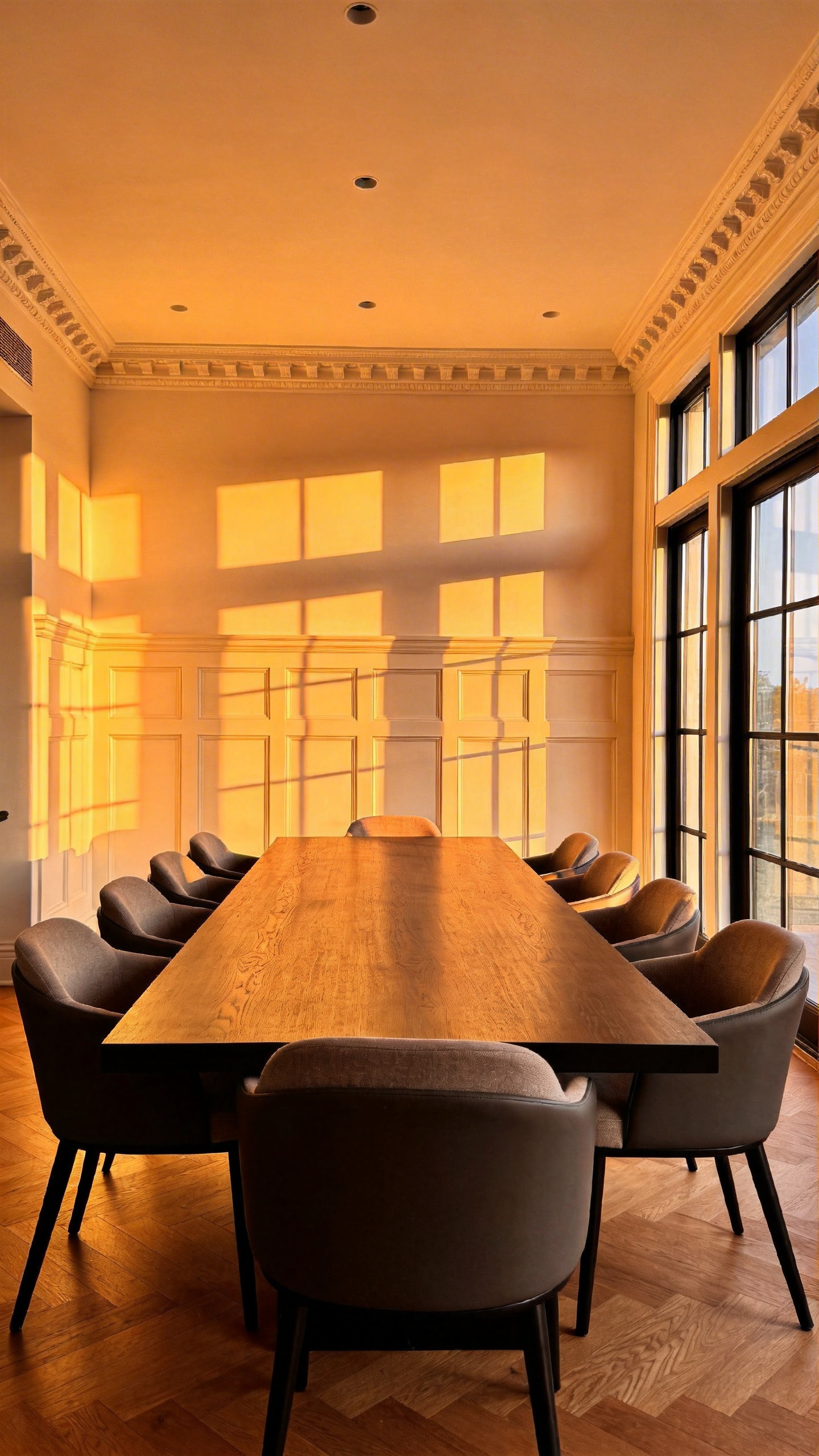
First, consider the “1/5th Rule.” Architectural rails typically sit at one-fifth of the total ceiling height. Therefore, a lower rail creates a spacious, “long-waisted” appearance. Conversely, a higher placement suggests the weighted permanence of a historic English manor. This layer creates a sense of “Proxemic Enclosure” through refined palettes. When guests sit, their eye level drops naturally. Thus, a textural change at this height offers a “visual hug.” This nesting effect encourages diners to linger longer.
Moreover, materials used here serve a functional purpose. Hard surfaces often create chaotic echoes in dining spaces. However, installing fluted wood or fabric-wrapped panels diffuses sound waves. As a result, conversations remain intimate rather than noisy. Finally, modern design utilizes “Color Drenching” in this zone. By using one color with varying sheens, you create depth. For instance, pair matte wainscoting with high-gloss upper walls to catch the light.
5. The ‘Fifth Wall’: Using wallpaper or color on the ceiling for intimacy
Often overlooked, the ceiling serves as a powerful tool for creating intimacy. Professionals refer to this surface as the “Fifth Wall.” High ceilings can initially feel cavernous or untethered. Therefore, applying dark colors or patterned wallpaper creates a necessary “cocoon effect.” This technique effectively lowers the room’s perceived height. Consequently, the visual focus shifts downward to the guests and the dining table.
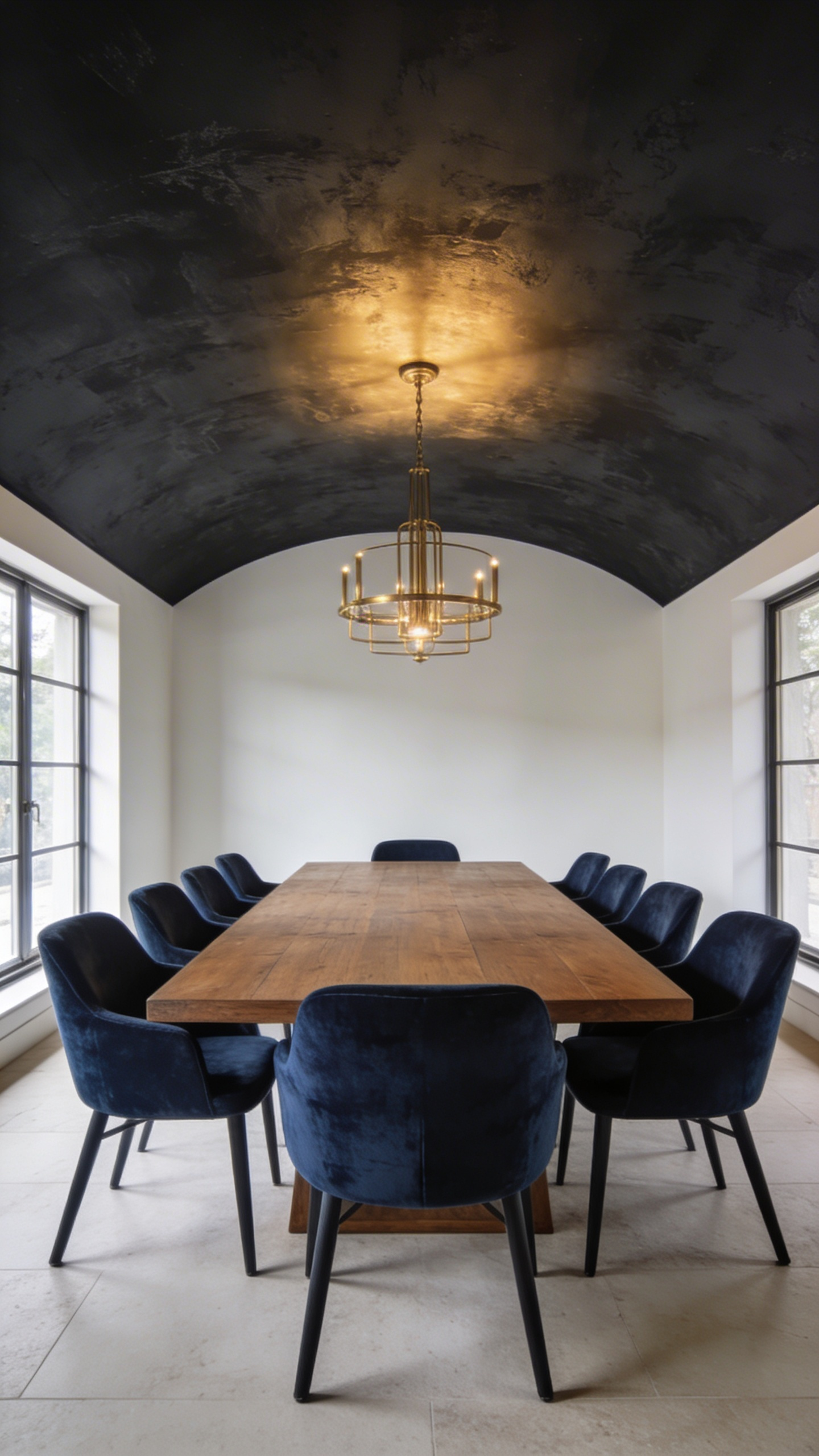
Historically, this surface signaled prestige. Victorian dining rooms utilized fruit motifs to symbolize abundance. Today, however, we often channel an Art Deco “speakeasy” aesthetic. Specifically, deep hues like navy or charcoal absorb light to reduce visual noise. Alternatively, high-gloss lacquers reflect candlelight downward, making the glassware sparkle.
Furthermore, painting the ceiling and walls the same color blurs architectural boundaries. This “infinity” technique successfully masks awkward slopes or bulkheads. Beyond aesthetics, material choice improves the sensory experience. Dining rooms typically contain hard, echoing surfaces like glass and wood. Thus, a textured wallpaper acts as an acoustic panel to soften conversation. Ultimately, treating the ceiling transforms the room from a functional space into a sensory sanctuary.
6. Eye-Level Ambience: Strategic placement of sconces and buffet lamps
Creating a truly inviting dining room requires shifting focus from overhead fixtures to “human-scale” lighting. This involves mastering two distinct eye levels. First, consider the “standing horizon” for wall sconces. Typically, these should be mounted 60 to 66 inches from the floor to avoid a dark, cave-like effect. Conversely, buffet lamps serve the “seated horizon.” Ideally, the bottom of the shade must align with a seated guest’s eye level. Therefore, the bulb remains hidden, preventing glare while casting an intimate glow on the sideboard.
Beyond simple illumination, this layering technique creates meaningful “environmental privacy.” By dimming the chandelier and relying on eye-level sources, you effectively mimic a sunset’s color temperature. This signals the brain to relax. In fact, psychologists note that this “sunset effect” naturally slows the dining tempo. Thus, a quick meal transforms into a lingering, two-hour experience. Additionally, the warm light creates a protected “island” at the table, encouraging guests to lean in closer.
Finally, consider the “visual rhythm” provided by symmetrical placement. For instance, a pair of tall, thin candlestick lamps acts as a vertical anchor for the room. Furthermore, focusing on texture over brightness adds sensory depth. Silk or linen shades filter light to create a “soft-focus” effect. As a result, the light rakes across wall textures, highlighting wallpaper or plaster in ways overhead lights cannot.
7. The Dimmer Switch Non-Negotiable: Controlling the evening’s rhythm
The dimmer switch serves as the conductor of your dining room. It allows a host to choreograph the evening’s energy. Beyond aesthetics, low light acts as a biological “social shield.” In fact, warmer lighting lowers cortisol levels and reduces inhibitions. Therefore, guests feel less exposed, leading to longer and deeper conversations.
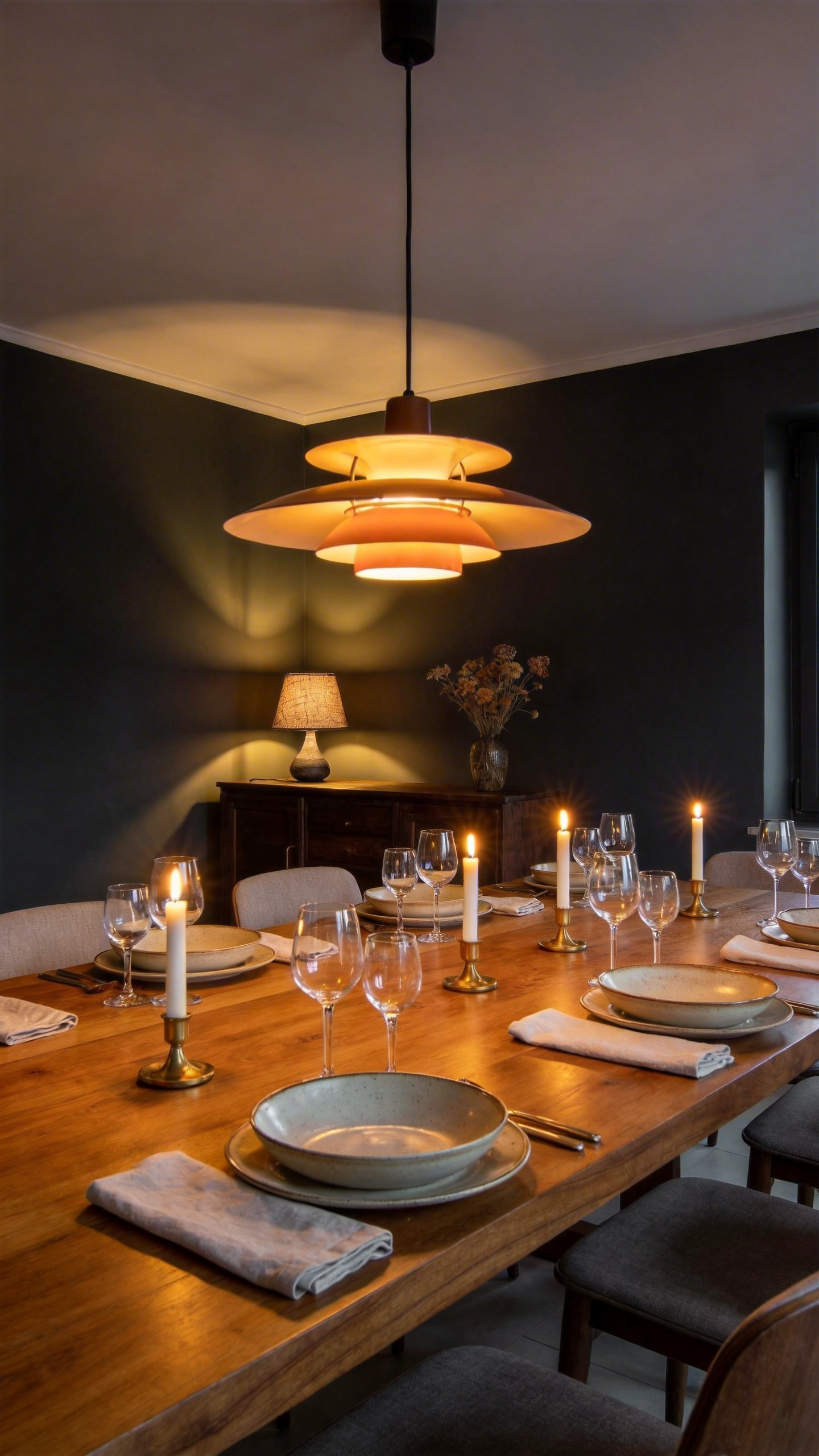
To maximize this effect, treat light as a moving part of the menu. Initially, keep brightness between 60% and 80% for high-energy arrivals. Then, perform an unobtrusive fade as the main course begins. Specifically, dropping to roughly 30% encourages a mindful eating pace. Finally, dial the light down to a “smoldering glow” for post-dinner drinks. This shift signals that the formal portion of the night has concluded.
However, modern technology often traps hosts with a “cold glow.” Therefore, the non-negotiable standard is Warm-Dim LED technology. Unlike cheap bulbs, these shift from crisp white to deep amber as they dim. Furthermore, you must verify the Color Rendering Index (CRI) is 90+. This ensures ingredients look vibrant rather than muddy. Ultimately, the right light makes even simple dishes feel luxurious.
8. Mirror Placement: The ‘Candlelight Amplification’ technique
Mirror placement is more than just a decorative choice. Historically, it was a vital lighting necessity. Designers used mirrors to conquer darkness, utilizing “girandoles” fitted with candle holders. By placing a flame directly before the glass, the mirror effectively doubled the candlelight. This technique transformed dim dining halls into luminous spaces.
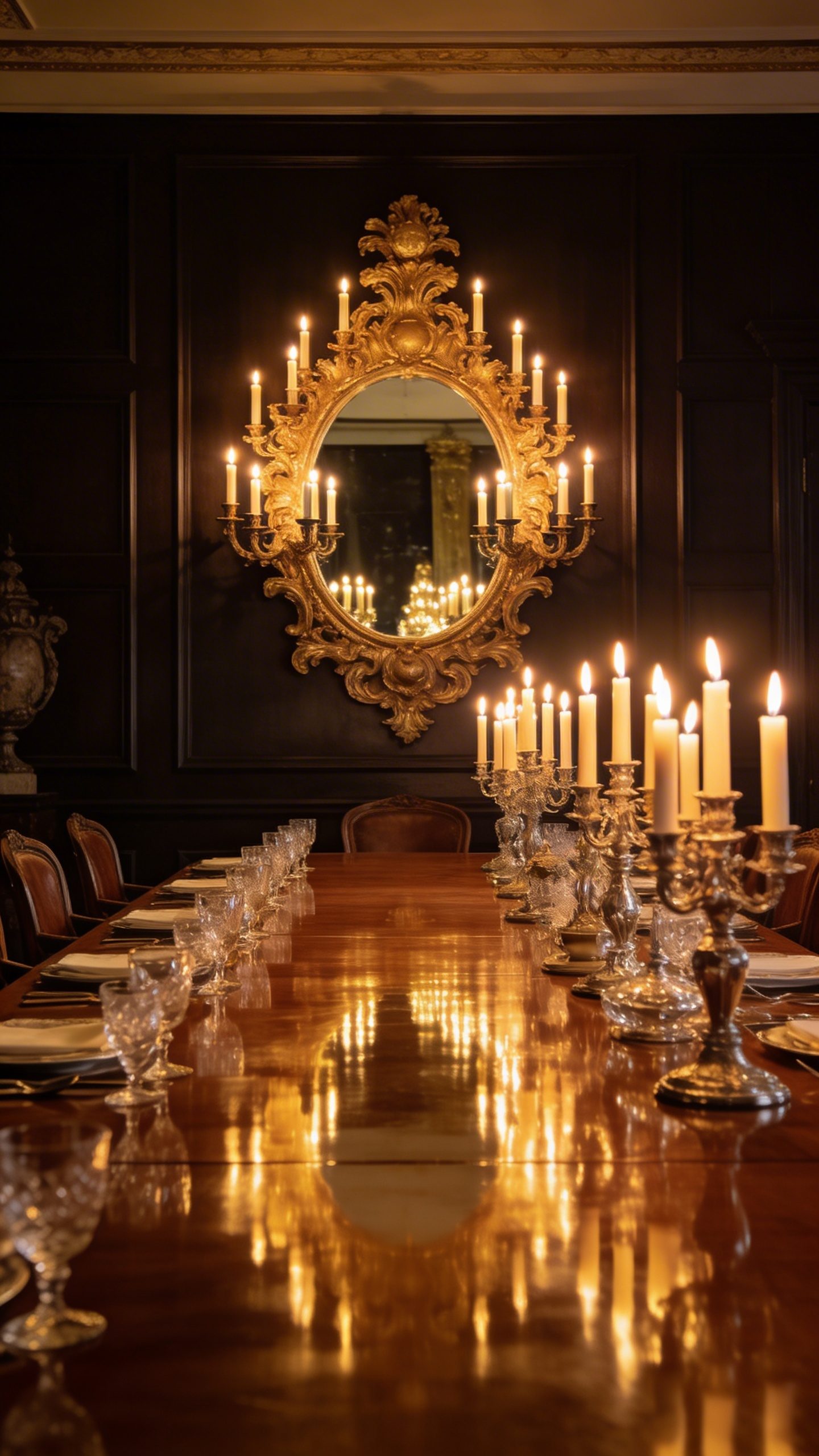
Today, the material you choose matters significantly. Modern silvered glass reflects nearly 95% of visible light. Unfortunately, this clinical clarity can sometimes make candlelight feel sharp or busy. Conversely, antique or “distressed” mirrors offer a softer alternative. Their natural imperfections diffuse the flicker, creating a warm, ethereal hum rather than a glare. Therefore, opting for “antiqued” finishes creates a cozier atmosphere.
However, strategic placement is equally crucial for success. You should generally hang dining room mirrors at standing eye level. If placed lower, guests might watch themselves eat, which inevitably stifles conversation. Instead, anchor the mirror above a sideboard or buffet. Then, place a row of taper candles in front of it. This creates a “light wall” that draws focus to the food.
9. Wainscoting and Moldings: Adding historical weight to modern rooms
Wainscoting serves as a powerful architectural anchor. Originally, builders used these heavy panels as “wall armor” against cold and dampness. Today, this feature transforms a room from a simple container into a curated sanctuary. Consequently, adding molding gives flat drywall a sense of structural significance and historical weight.
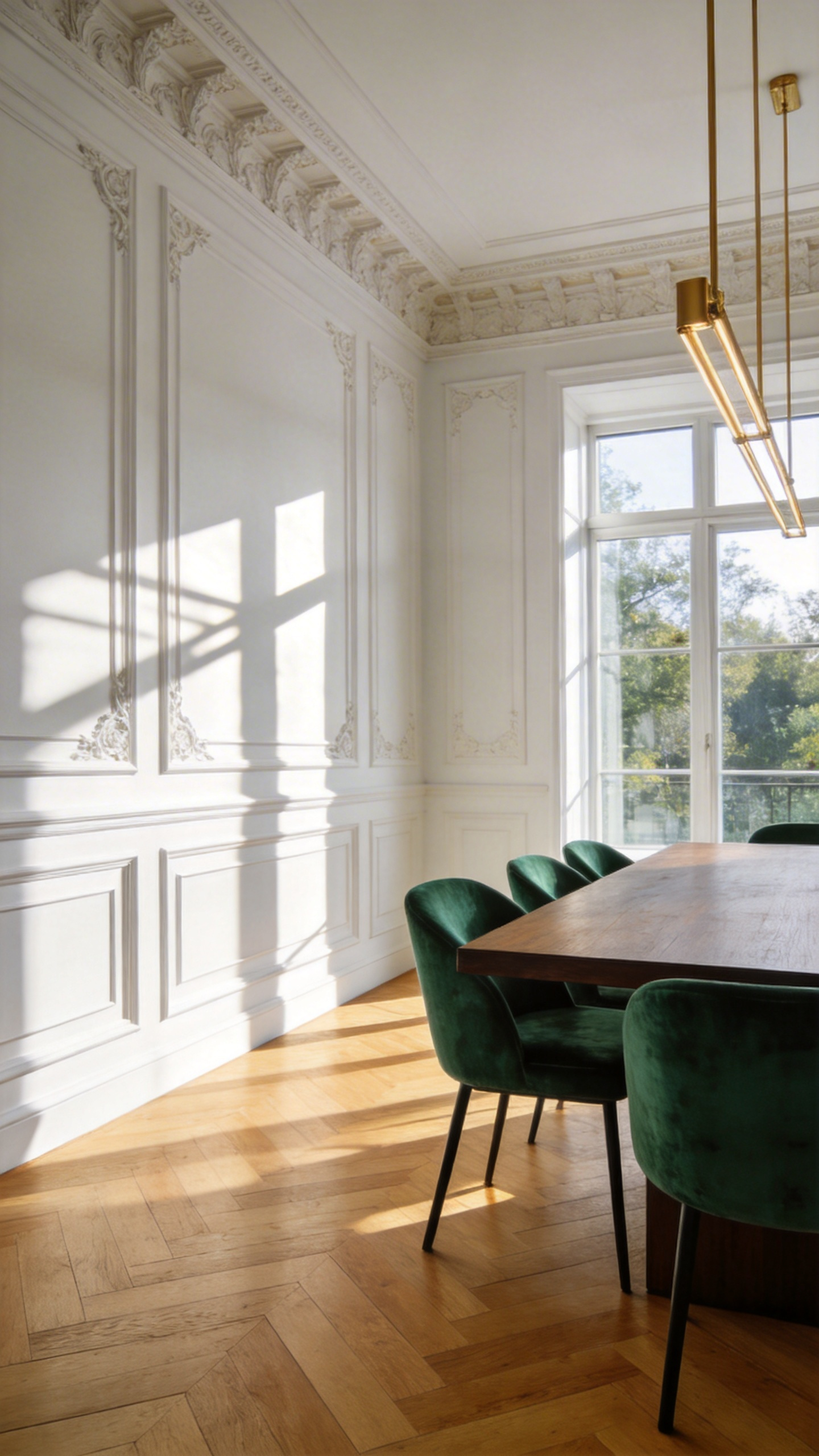
The height of these elements dramatically alters the space’s perception. Classical design theory suggests wainscoting should cover only the bottom third of the wall. Yet, contemporary designers often ignore this rule to create “Edwardian drama.” Specifically, extending panels two-thirds up the wall makes the room feel intimate and wrapped. This approach shifts the visual focus upward toward the ceiling and lighting fixtures.
In addition to aesthetics, wood paneling significantly improves acoustics. Modern dining spaces often suffer from “flutter echo” due to hard glass and tile surfaces. Therefore, the density of wood or MDF helps absorb and diffuse distinct sound waves. As a result, the room gains a hushed, expensive quality that supports conversation.
Finally, selecting the right profile allows you to control the narrative. Flat Shaker-style panels offer a clean, minimalist look. Conversely, raised panels create shadow play that feels strictly formal. Regardless of the style, successful installation requires technical nuance. Because floors are rarely perfectly flat, experts suggest following the room’s natural lines rather than a spirit level.
Phase 3: The Curated Layers (Textiles & Accessories)
Phase 3 represents the vital shift from a merely furnished room to a personalized environment. This phase introduces the “soul” of the dining space through textiles and accessories. Beyond visual warmth, these curated layers provide a critical “acoustic hug.” In fact, hard surfaces often cause the “Lombard Effect,” forcing guests to shout over echoing chatter. Therefore, designers utilize sound baffles like heavy velvet drapes or high-pile wool rugs. Ideally, rugs should follow the “800mm Rule,” extending past the table to silence moving chairs.
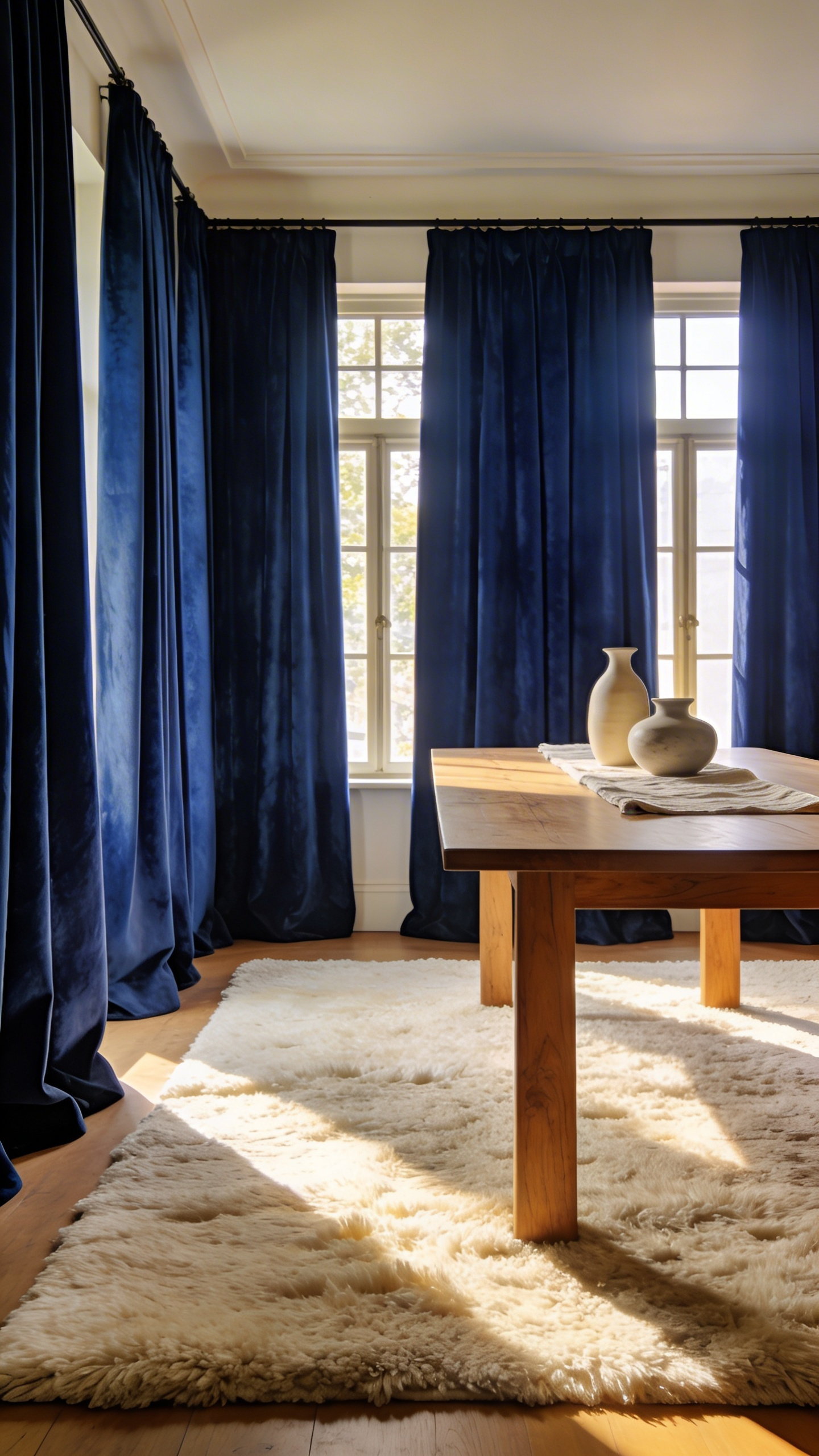
Subsequently, we move to the tabletop narrative. Historically, damask tablecloths hid the wood entirely, yet today’s “Layered Casualist” embraces material tension. For instance, layering an organic linen runner over industrial sintered stone accents the surface rather than hiding it. To style these surfaces, professionals often employ the “Rule of Threes.” Grouping items of varying heights—tall, medium, and short—creates a satisfying visual rhythm that feels intentional.
Finally, successful design balances durability with sensory pleasure. Currently, the industry consensus favors “Performance Luxury,” using stain-repellent fabrics on chairs for daily longevity. However, designers pair these synthetics with natural linen napkins to ensure a tactile, honest “hand-feel.” Ultimately, these thoughtful details ensure the room appeals to every sense.
10. The ‘Quiet’ Curtain: Window treatments that frame rather than distract
The “Quiet” Curtain represents a significant shift in dining room philosophy. It treats the window as an architectural aperture rather than a decorative focal point. Modernist architects viewed windows as “walls of light” instead of status symbols. Consequently, this design approach prioritizes the view outside over heavy, internal ornamentation.
To achieve this look, designers often employ a “ton-sur-ton” technique. Simply put, the fabric matches the wall paint exactly. Therefore, visual boundaries vanish, making the dining space feel significantly larger and more serene. However, simplicity does not mean a lack of texture. Natural linen features intentional irregularities known as “slubs.” When sunlight hits these weaves, they create a dappled, soft-focus effect similar to light filtering through trees.
Furthermore, this softness serves a practical purpose during meals. Heavy, neutral fabrics act as acoustic baffles that dampen the noise of silverware and conversation. Ultimately, by quieting the room’s perimeter, you ensure the focus remains on the food and your guests.
11. Acoustic Softening: Hidden tricks to dampen noise for better acoustics
True luxury dining appeals to the ear as much as the eye. Unfortunately, hard surfaces like marble often create a chaotic “vocal feedback loop” known as the Lombard Effect. Guests reflexively speak louder to be heard over the rising din. Furthermore, research indicates that excessive noise actually suppresses our ability to taste sweetness and saltiness. Therefore, acoustic softening is essential for preserving the flavor of your meal.
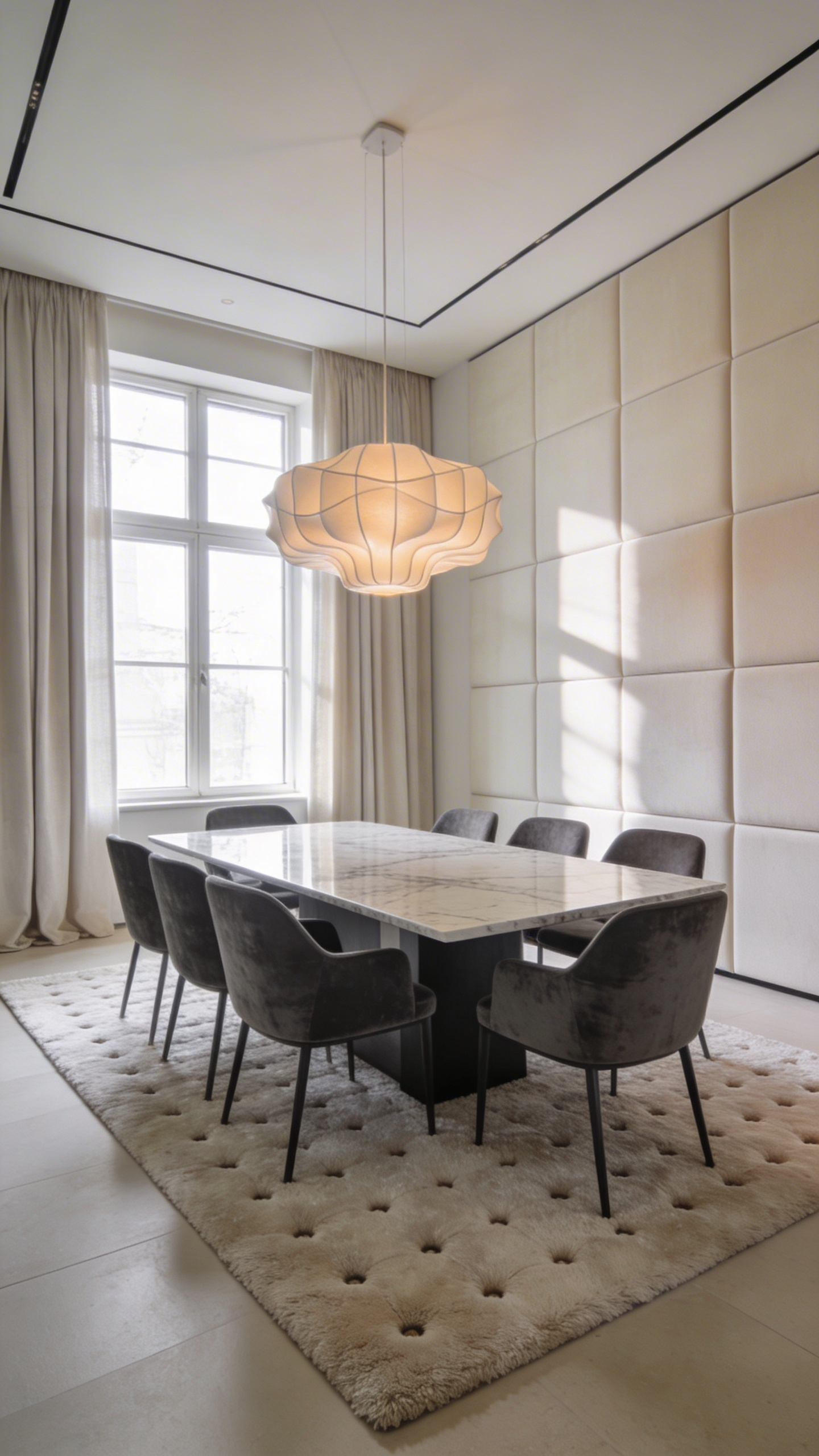
Effective sound management often starts with invisible treatments. Specifically, attach acoustic felt panels to the underside of your dining table. This hidden layer absorbs the initial clatter of silverware immediately. Similarly, apply dampening foam beneath chair seats to trap sound reflections bouncing off the floor.
Next, address the room’s architecture through “material camouflage.” For example, micro-perforated wood paneling appears solid yet allows sound to pass through to an absorbent core. Alternatively, utilize acoustic plaster that mimics the look of smooth, matte drywall.
Soft furnishings also require strategic installation to work effectively. However, heavy drapes need a two-inch air gap from the glass to maximize absorption. Additionally, always place a thick felt pad under rugs to decouple heavy footsteps from hardwood floors. Finally, introduce large plants like a Fiddle Leaf Fig. Their irregular leaves naturally diffuse sound waves, preventing harsh echoes in rectangular rooms.
12. The Narrative Gallery Wall: Art selection as a conversation starter
A narrative gallery wall serves as a sophisticated social tool. It acts as a “silent host” when conversation lulls. This concept mirrors the historic French Salon, where hosts mixed art styles to encourage lively debate. Today, we utilize the psychological theory of the “Third Object.” Essentially, the art provides a shared focal point to ease social tension. However, a dining room requires unique technical considerations. Unlike standing galleries, you must design for a “seated perspective.” Therefore, center the arrangement lower to align with seated guests.
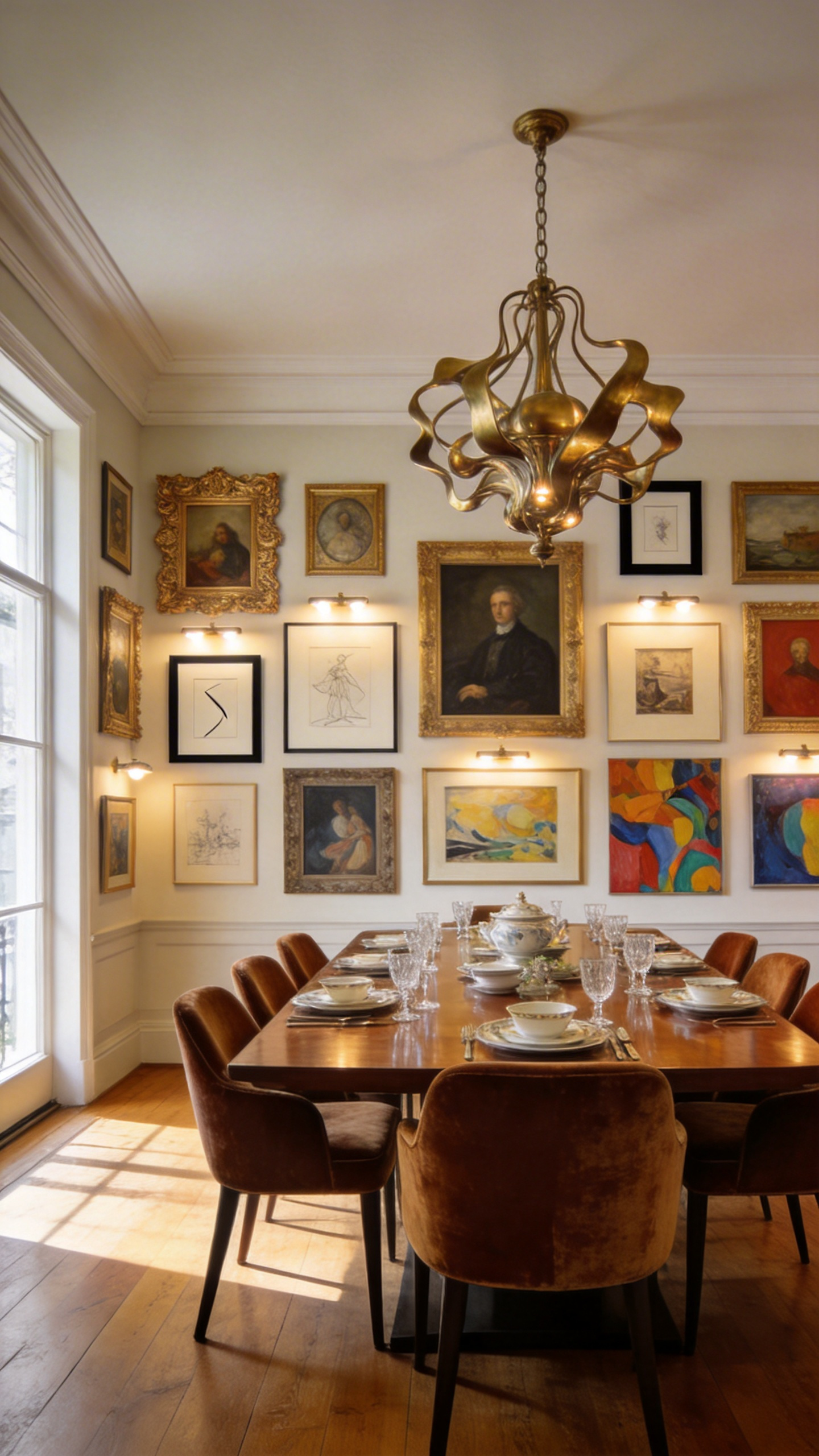
For the actual layout, aim for the “80/20 rule.” Specifically, maintain 80 percent aesthetic harmony and 20 percent “disruptors.” A disruptor might be a vintage menu or a 3D object. Consequently, these unexpected items prompt questions like, “What is the story there?” Furthermore, this visual tension creates a compelling “sensory narrative.” Ideally, you should mix textures like raw wood with sleek glass. Ultimately, this approach practices “Intellectual Hospitality” by engaging the mind.
13. The Sideboard Vignette: Balancing storage functionality with display
The sideboard serves as the dining room’s heavy-duty workhorse. However, its surface acts as a theatrical stage for your personal style. We trust this piece to conceal visual clutter behind closed doors while presenting a bespoke feeling through curated items. Therefore, the vignette must carefully balance hidden utility with high-end aesthetics.
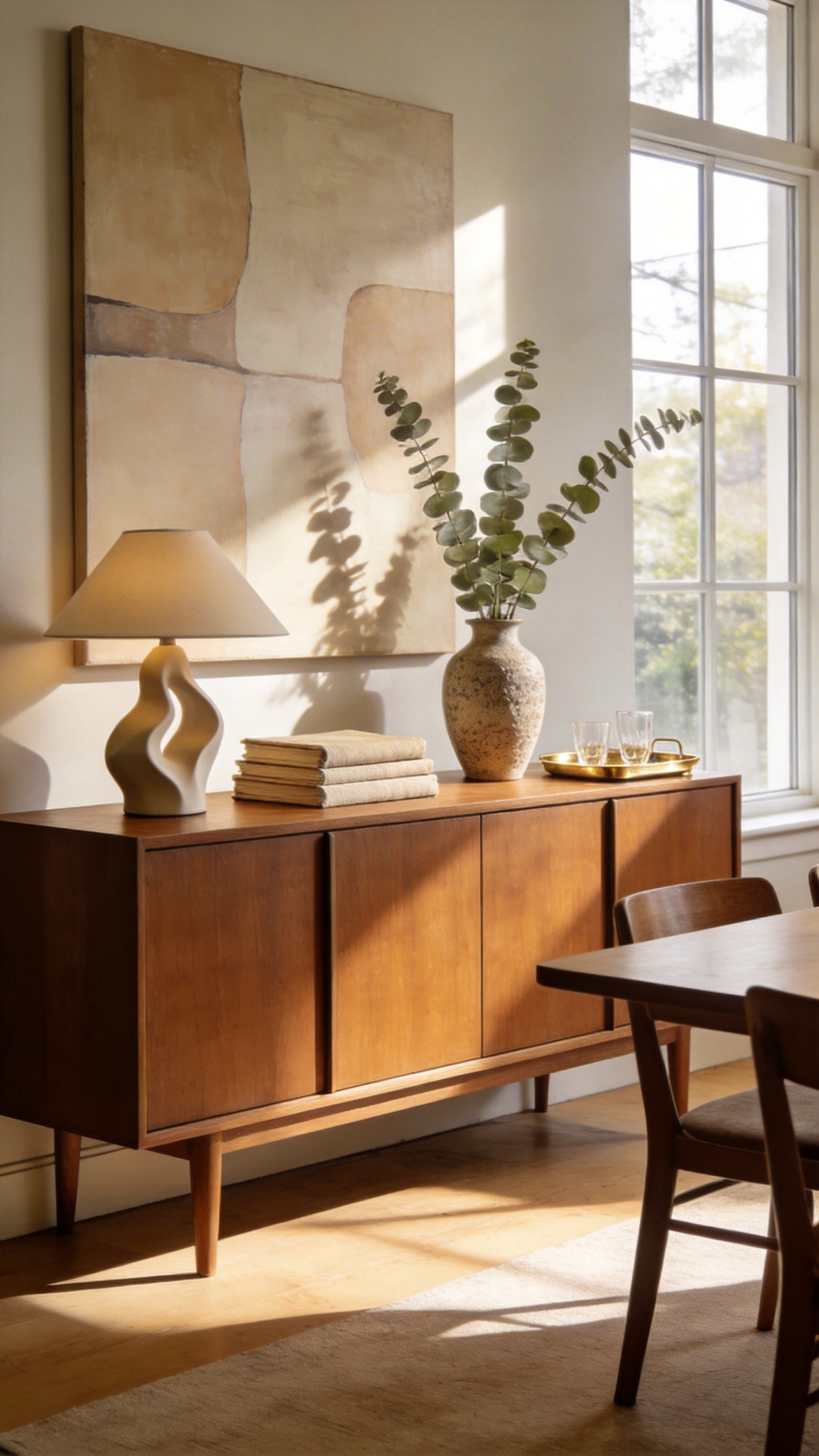
To achieve this balance, professional stylists utilize “Triangular Composition.” Placing tall elements like lamps on opposite ends creates a visual tent. This verticality effectively lifts the heavy, low profile of the storage unit. Furthermore, you must leave an intentional “landing zone” of negative space. Consequently, the piece remains functional for serving rather than becoming a static museum display.
Next, consider the sensory experience of the room. Dining areas often feature hard surfaces like wood tables and glass cabinets. Thus, you should introduce softness through a “Texture Triple-Threat.” For instance, combine reflective silver with organic branches and matte linens. This dialogue between materials prevents the space from feeling cold or unapproachable.
Finally, embrace “Action Objects” to merge storage with display. A vintage wooden salad bowl, for example, is beautiful enough to be heralded rather than hidden. Moreover, highlight these items with specific ambient lighting. Eye-level lamps create a “Halo Effect” that adds necessary depth to the arrangement.
Phase 4: Seasonal Fluidity (Carley’s Advanced Styling Secrets)
True seasonal fluidity shifts from merely decorating for holidays to styling for atmosphere. This advanced approach treats the dining room as a living, multi-sensory environment. First, focus on the “Sensory Pivot” regarding tactile weight. During summer, prioritize “aerated” textures like open-weave linens and unglazed ceramics. However, as the season cools, weight the space with heavier elements. Specifically, drape velvet chair pads or shearling throws over the head chairs. Furthermore, address the room’s olfactory architecture through “living scents.” Replace generic candles with fresh-cut herbs like mint in spring.
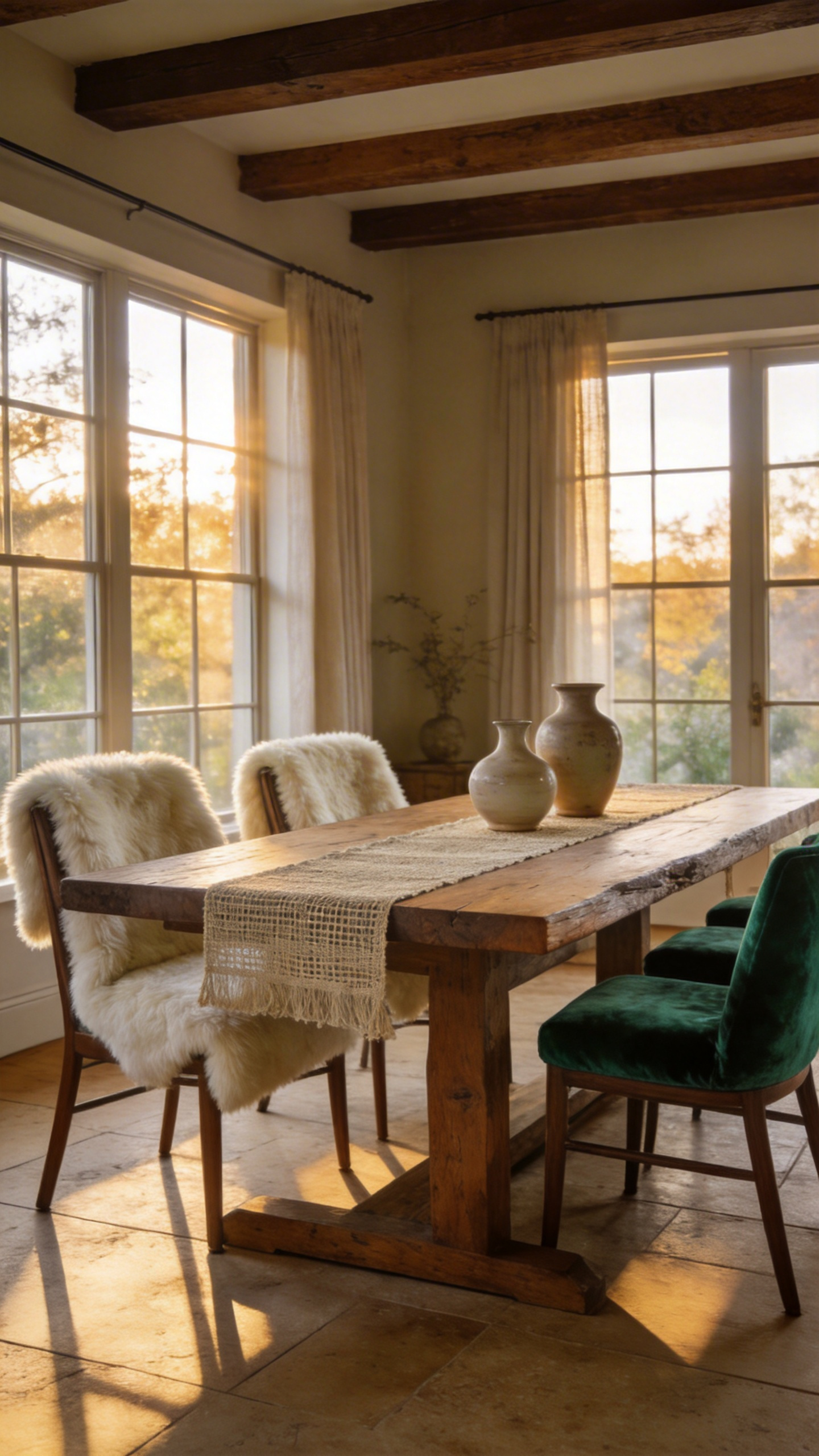
In addition to texture, manipulate the room’s foundation using the “Layered Rug” strategy. Start with a durable seagrass base that remains year-round. Then, introduce a vintage Persian rug as a fluid top layer during colder months. Similarly, adjust your lighting to match the sun’s seasonal arc. For example, switch to 3000K bulbs for summer brightness. In contrast, drop to 2200K in winter to mimic candlelight warmth. Finally, avoid “start-stop” decorating by “running the scales” of a single color. If your base is indigo, simply pivot to pale sky-blue glassware for spring.
14. The ‘Always-Ready’ Centerpiece: Sculptural elements that work year-round
Historically, dining centerpieces were fleeting displays meant for a single banquet. Today, we embrace the concept of the “spatial anchor.” This design philosophy transforms the dining table into a permanent art installation. Specifically, we prioritize sculptural elements that remain on display regardless of the season. Consequently, the room feels curated and “always ready” for hospitality, even when not in use.
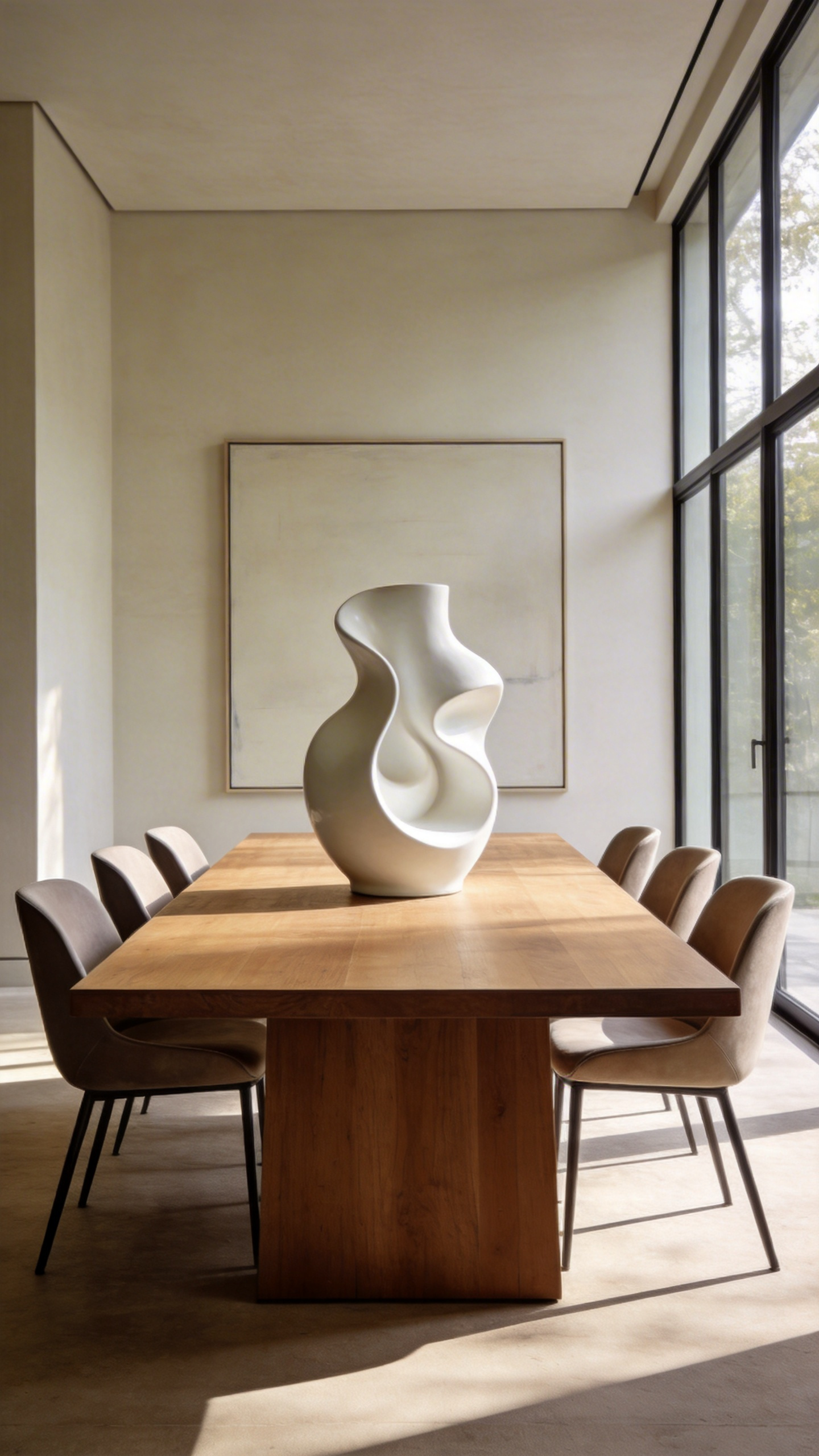
The secret to this enduring appeal lies in “material poetry.” Unlike mass-produced glass, materials like oxidized bronze or raw timber evolve over time. They develop a “living patina” that quietly records the home’s history. Furthermore, textured surfaces create dynamic shadow play throughout the day. As the sun moves, the sculpture’s appearance shifts, adding drama that flat floral arrangements lack.
Functionally, a year-round centerpiece requires strict adherence to dimensions. Experts often recommend the “14-inch rule.” Keeping sculptures below this height ensures guests can maintain eye contact easily without leaning. Additionally, incorporating negative space prevents the table from feeling crowded. Open apertures within a ceramic form allow visual flow, keeping the vibe airy for daily use.
Finally, this approach offers distinct psychological benefits. A permanently set table encourages a slower, more mindful dining pace. Moreover, selecting durable materials like honed marble ensures resistance to heat and spills. Ultimately, choosing a stable, bottom-heavy sculpture reduces maintenance significantly.
15. Transitional Textiles: The 5-minute slipcover and cushion swap
Slipcovers are often viewed merely as protective gear for aging furniture. However, this perspective overlooks their true potential as a sophisticated design tool known as the “curated layer.” Grand estates utilized “case covers” to seasonally shift a room from heavy velvets to breathable linens. Modern homeowners can replicate this “seasonal choreography” to instantly alter a space’s architectural identity. For instance, swapping dark textures for stone-washed linen transforms a cozy winter cocoon into an airy spring breezeway.
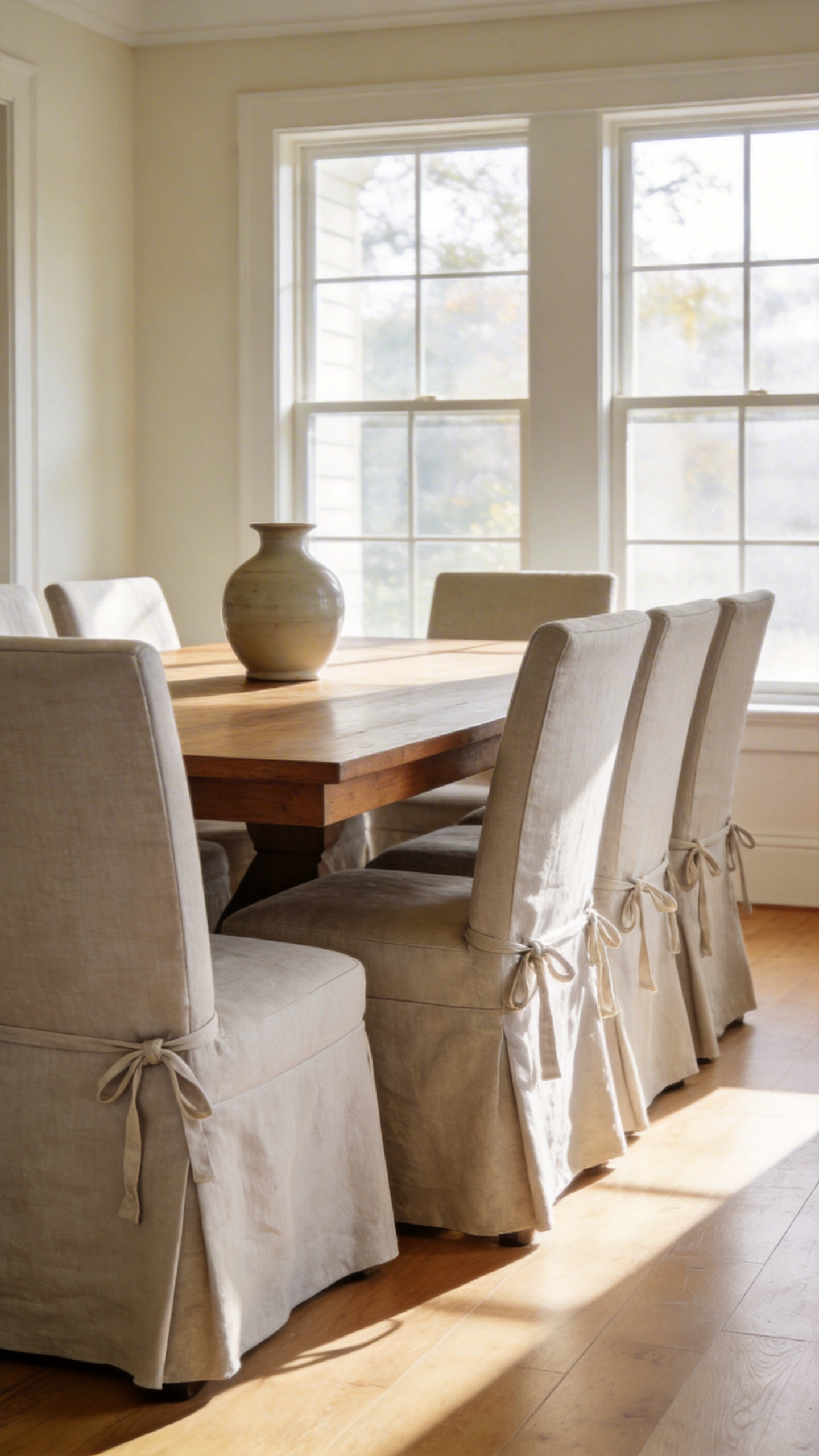
This simple change significantly impacts the room’s acoustics. A bare chair often reflects sound, creating a noisy environment. Conversely, adding a tailored slipcover introduces “soft architecture,” effectively turning the clatter of a dinner party into a gentle murmur. Therefore, the result is a space that feels intentionally designed to lower social anxiety. To achieve this look, the fit must be precise.
Technically, the success of this “5-minute swap” relies heavily on fabric engineering. Specifically, experts recommend materials with a weight between 250 and 400 GSM to ensure the cover holds its shape. Moreover, look for options with a brushed underside to create friction and prevent sliding. Additionally, modern performance textiles now offer hydrophobic properties similar to an invisible shield. As a result, dining chairs become immune to spills, allowing you to remove this “armor” for easy washing.
16. The Mobile Bar Cart: creating dynamic zones for entertaining
The mobile bar cart acts as a sophisticated “spatial choreographer” for your dining area. It serves a critical function by redefining room boundaries without permanent walls. Specifically, interior designers use these carts to manage social flow.
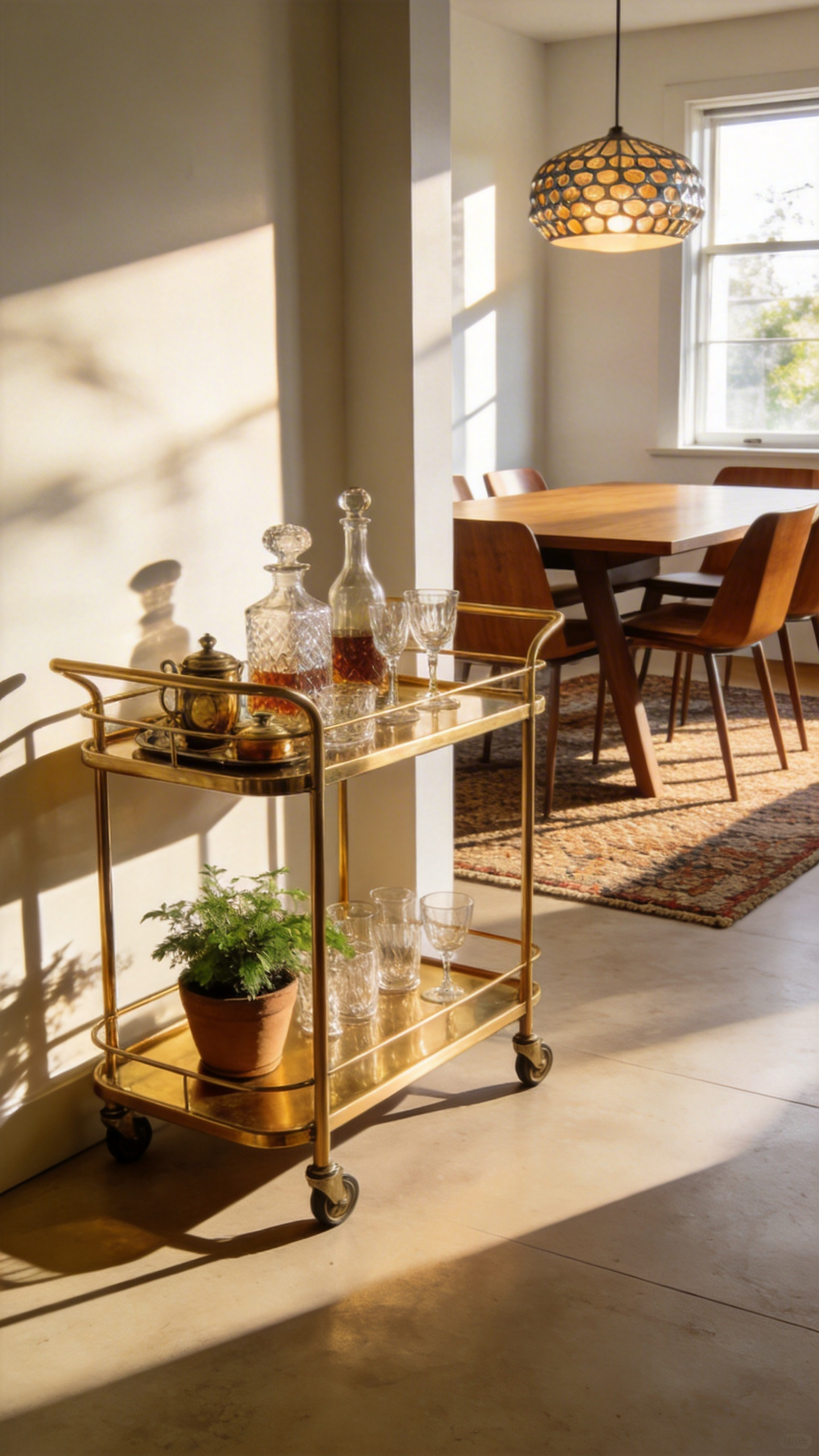
For instance, the kitchen often becomes a crowded bottleneck during events. By positioning a bar cart in an underutilized corner, you effectively shift the party’s center of gravity. Consequently, this relieves congestion in prep zones while activating quiet spaces. Furthermore, a self-service setup reduces social friction for your visitors. It allows guests to customize their drinks, fostering a sense of ownership over their experience. Even shy guests benefit, as the cart provides a low-stakes activity during social lulls.
Aesthetically, the cart requires thoughtful styling to serve as a true focal point. Apply the “High-Low” rule to create necessary visual depth. Place tall bottles at the rear and arrange smaller glassware in the front. Additionally, include living elements like fresh herbs or citrus to add organic texture. Finally, consider lighting carefully. A small, battery-operated lamp can define the cart as a separate “hospitality island.”
17. Scentscaping the Dining Room: avoiding fragrance conflicts with food
Scentscaping a dining room poses a unique high-stakes design challenge. Unlike static spaces, this environment relies heavily on the “retronasal” connection between smell and taste. The brain struggles to process competing signals, such as heavy florals mixing with savory aromas. Consequently, an incongruent fragrance can actually suppress the subtle umami notes of a meal. Therefore, you must approach this space with strategic restraint to ensure the atmosphere supports the menu.
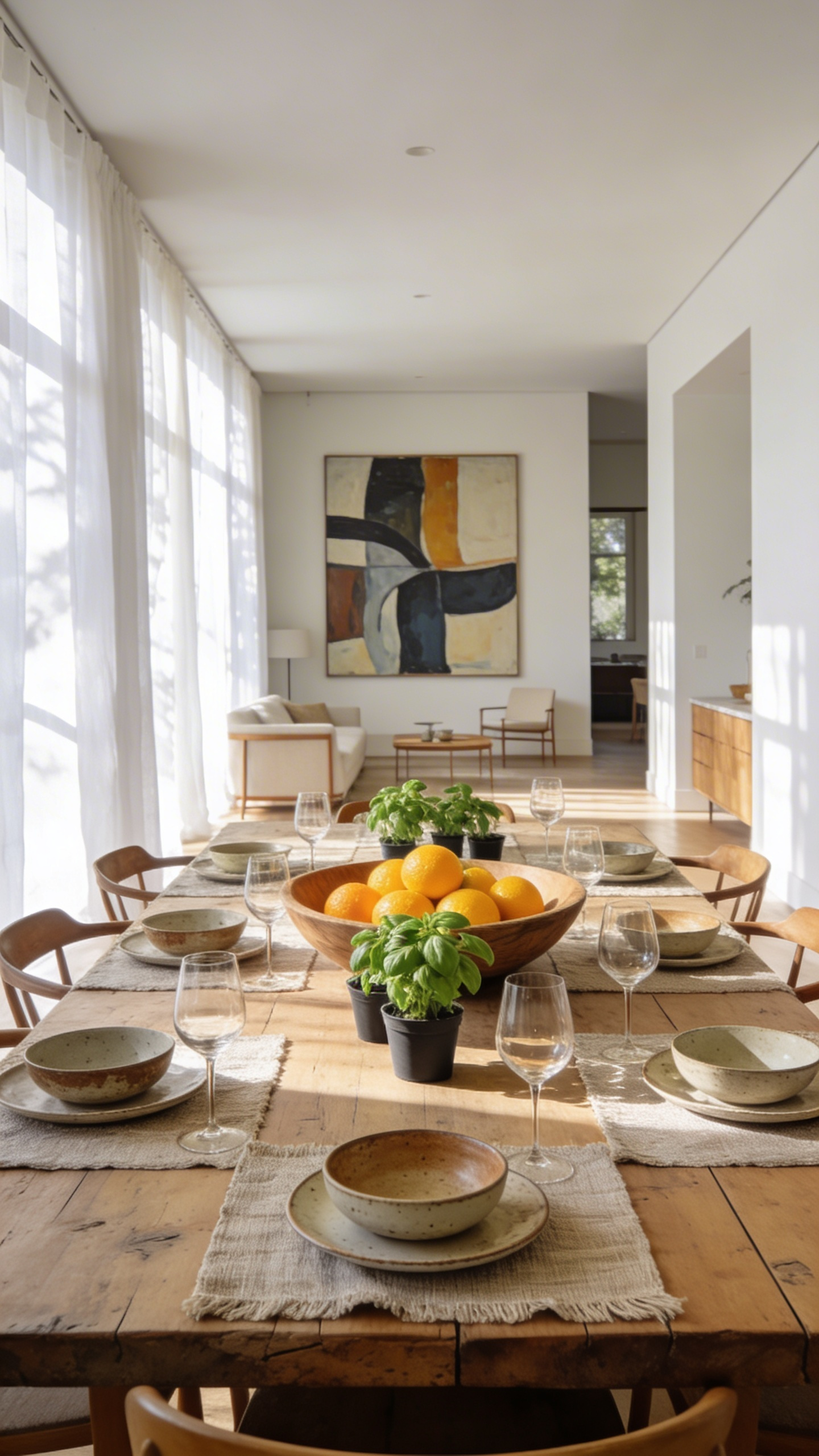
To avoid interference, view fragrance as a prelude rather than a partner. In fact, experts suggest extinguishing candles and diffusers at least thirty minutes before serving. This timing prevents “Sensory-Specific Satiety,” where sweet scents like vanilla trick the brain into feeling full prematurely. Instead, allow the top notes to dissipate, leaving a clean sensory canvas for the food.
Furthermore, effective styling divides the room into two distinct zones. Use the room’s perimeter for an “olfactory handshake,” employing sophisticated notes like cedarwood or neroli to welcome guests. Conversely, keep the table core scent-neutral. For the centerpiece, opt for unscented beeswax tapers. Alternatively, incorporate “living” aromatics like fresh mint or lemon. Ultimately, these natural elements harmonize with the ingredients on the plate without overpowering the palate.
Frequently Asked Questions
What is the most popular style for luxury dining rooms?
The current trend in high-end design favors a “Soft Minimalist” or “Modern Organic” approach. This style prioritizes high-quality natural materials—like honed marble and rift-sawn oak—over excessive ornamentation. It focuses on architectural lines and layered lighting to create a sense of quiet luxury.
How do I make my dining room look expensive on a budget?
The most effective way to elevate a space affordably is through lighting and scale. Replace a generic light fixture with a large-scale statement piece, and ensure your rug is large enough to anchor the entire seating area. Additionally, adding architectural elements like DIY box molding or wainscoting can provide the “historical weight” typically found in luxury homes.
What are the essential elements of a high-end dining space?
A luxury dining room is defined by sensory comfort. This includes professional-grade lighting on dimmers, acoustic softening through heavy textiles or upholstered seating, and a layout that allows for easy movement (the 36-inch rule). Finally, a curated centerpiece or narrative gallery wall provides the personal touch that transforms a room from a showroom into a home.
Conclusion: From Showroom to Sanctuary – Hosting with Confidence
Transforming a dining room creates more than just a visual statement. It shifts the focus from rigid performance to genuine human connection. Historically, we prioritized status, but today’s sanctuary values psychological safety above all. Consequently, layered lighting and soft acoustics replace the need for flawless, showroom-style perfection. Even the geometry of the room now serves a vital social purpose. Specifically, curves and zoned layouts encourage every guest to drop their guard. Ultimately, confidence comes from knowing your dining room decor ideas have created a curated sanctuary that fosters intimacy rather than judgment.
Embracing this mindset prepares your home for a more authentic future. Upcoming trends favor moody palettes and materials that age gracefully. Therefore, a scratch becomes a cherished memory rather than a design failure. This perspective allows you to host with ease and intentionality. To begin, audit your space for sensory comfort rather than just visual appeal. For instance, evaluate your current lighting dimmers or acoustic textures this week. Finally, let your dining room evolve into a true backdrop for life.