When curating the most elegant firepit ideas backyard enthusiasts often move beyond simple utility. Many people think a backyard is just a grassy utility space. They see the fire pit as a temporary campfire. However, high-end designers completely reject this outdated view. A modern design philosophy shifts the focus toward sophisticated outdoor living. We call this the Curatorial Confidence Approach. It treats the yard as a curated gallery. Therefore, the fire pit becomes the primary masterwork. We ask, instead, what story this flame actually tells. This conceptual shift creates a stylish outdoor room. Indeed, it becomes a true architectural focal point.
Ancient fire pits were central to social architecture. Unfortunately, the twentieth century exiled hearths to the yard’s perimeter. Modern trends, however, represent a return to the center. Top designers view fire as a powerful organizing principle for any backyard landscaping project. It provides the social gravity needed to draw people together. Next, consider how a modern pit uses precise materials like poured concrete. It reclaims the center as a luxury focal point. Thus, it creates a brilliant connection to indoor living spaces.
We will explore how materials craft a living narrative. We will also look at which fireside essentials bridge the gap between interior comfort and the wild. For instance, weathering steel reflects the changing seasons beautifully. Natural stone creates a sense of timeless permanence. Placement strategies are also vital. Specifically, they ensure the fire remains an art piece when viewed from indoors. Sizing rules dictate the pit’s ideal square footage. Meanwhile, the sunken versus raised debate adds real visual drama. Ultimately, this guide reveals how to achieve true outdoor sophistication.
Phase I: Topography and Spatial Integration (The Foundation)
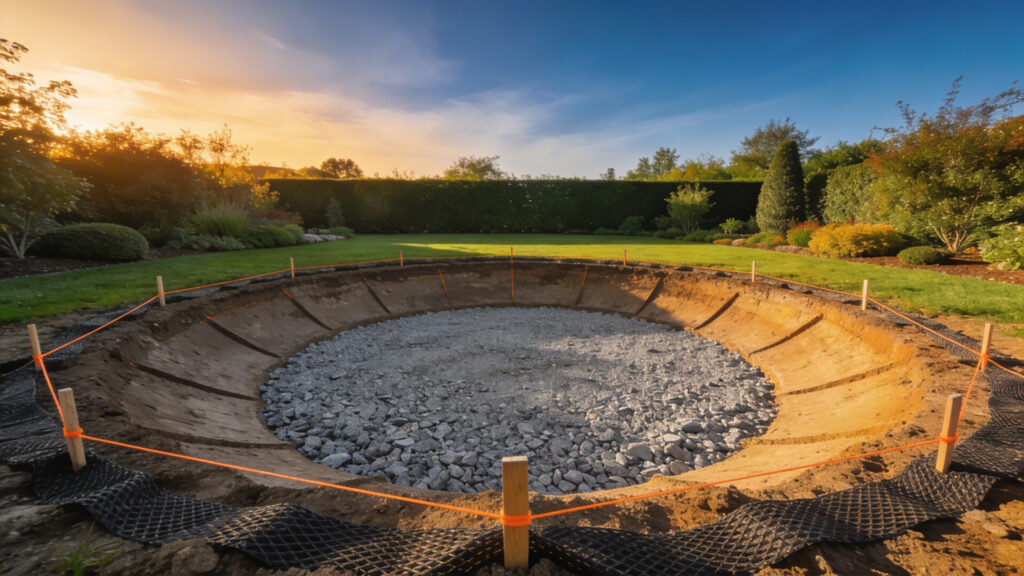
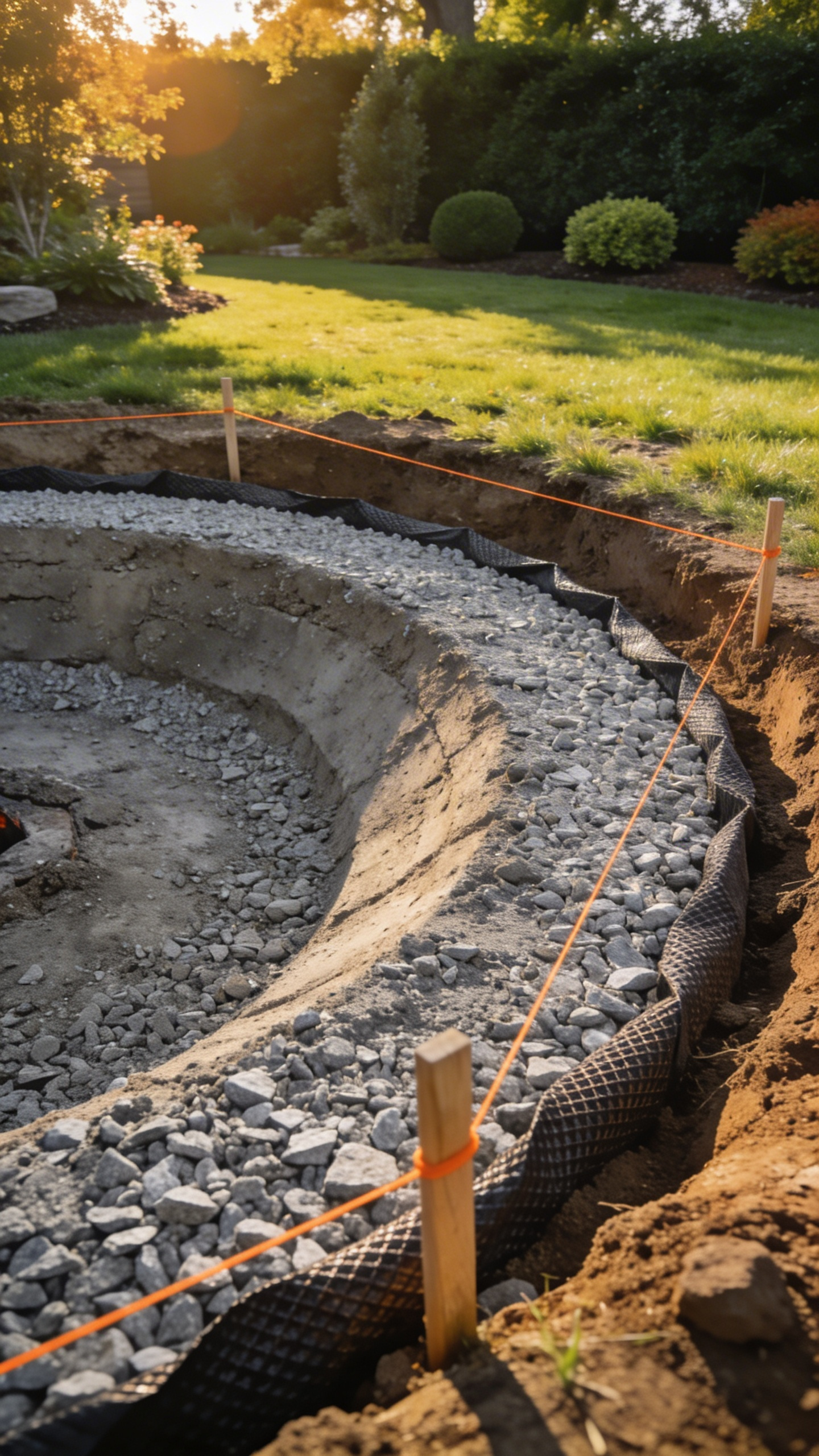
Building an outdoor living room begins beneath the soil. Reading the topography ensures your fire pit actually survives. In fact, hydrostatic pressure and soil heave will destroy poorly planned foundations. Therefore, expert designers never build on perfectly flat surfaces. We grade a subtle slope away from the structure instead. This prevents water from pooling in your seating area. Also, clay-heavy soils require a compacted, crushed rock foundation. A woven geotextile fabric keeps this heavy gravel from sinking. As a result, your masonry breathes with the earth’s seasonal movements.
Spatial integration also dictates how humans feel in the space. We often use Prospect-Refuge Theory to position the fire. Humans feel vulnerable with their backs to a dark yard. Thus, anchoring the pit against a low wall creates security. You can then enjoy a wide view of the garden. Mathematically, the fire feature needs proportional space to feel balanced. Otherwise, it loses its gravitational pull as a focal point. Indeed, a standard pit requires a fifteen-foot circle of hardscape. This creates a comfortable heat zone and proper circulation space.
Finally, you must conduct a micro-climate audit before digging. Placing a pit between structures can create a wind tunnel. Conversely, building near a stone wall adds a thermal mass. The wall soaks up heat and radiates it back warmly. Ultimately, these hidden elements transform a simple pit into an outdoor room.
1. The Sunken Conversation Pit: Blurring the Lines Between Landscape Architecture and Earth
The sunken conversation pit is not just a fleeting trend. It actually represents a mid-century architectural revolution. Eero Saarinen pioneered this interior concept at the 1957 Miller House. Now, modern landscape designers are pulling this idea outdoors. By sinking the seating, we successfully remove visual clutter. The firepit becomes an integrated earthwork rather than a bulky object. This design also maintains a perfectly unbroken horizon line. This carefully preserves sweeping views of your surrounding garden.
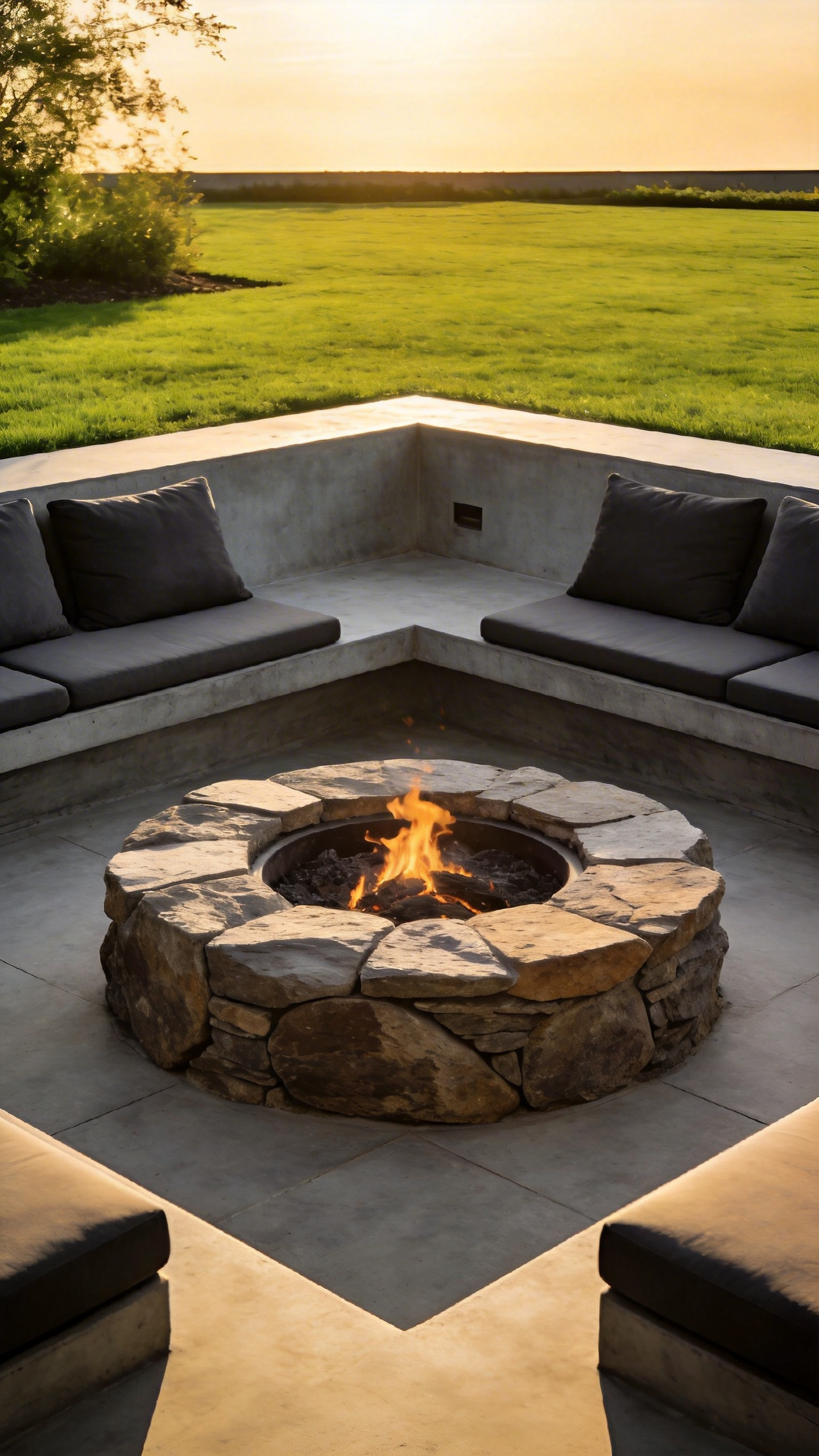
Psychologically, this layout leverages evolutionary theory. Sitting inside the earth provides a deep sense of enclosure. Meanwhile, your eye level meets the nearby plant roots. This creates incredible sensory intimacy with the landscape. The surrounding earth also dampens harsh wind noise. Similarly, masonry walls trap the fire’s thermal energy. Therefore, you create a cozy micro-climate for crisp winter nights. Materials like poured concrete or basalt maximize this warming effect. Specifically, they absorb infrared heat and radiate it back. Planting trailing mosses beautifully blurs the built and grown elements.
However, you must engineer these sunken spaces very carefully. Without proper drainage, a recessed pit quickly becomes a pond. Expert designs require gravity-fed drains or hidden sump pumps. Outer walls must also resist intense hydrostatic pressure from saturated soil. Finally, sunken gas firepits require discrete floor vents. This prevents dangerous gas pooling. Ultimately, technical precision ensures this outdoor sanctuary remains completely safe.
2. The Terraced Retaining Wall Fire Feature: Utilizing Sloped Backyard Topography for Natural Seating
Sloped backyards present a unique design opportunity rather than a grading problem. Cutting a fire feature into a hillside creates a private amphitheater. This layout naturally triggers a psychological sense of prospect and refuge. Humans feel relaxed with a clear view and a protected back. In fact, the retaining wall acts as a powerful thermal battery. During the day, the stone structure absorbs solar energy. Then, it captures radiant heat from the flames at night. The wall releases stored warmth long after the fire fades. The up-slope also serves as a natural windbreak. This prevents the dreaded smoke-chase effect across the patio.
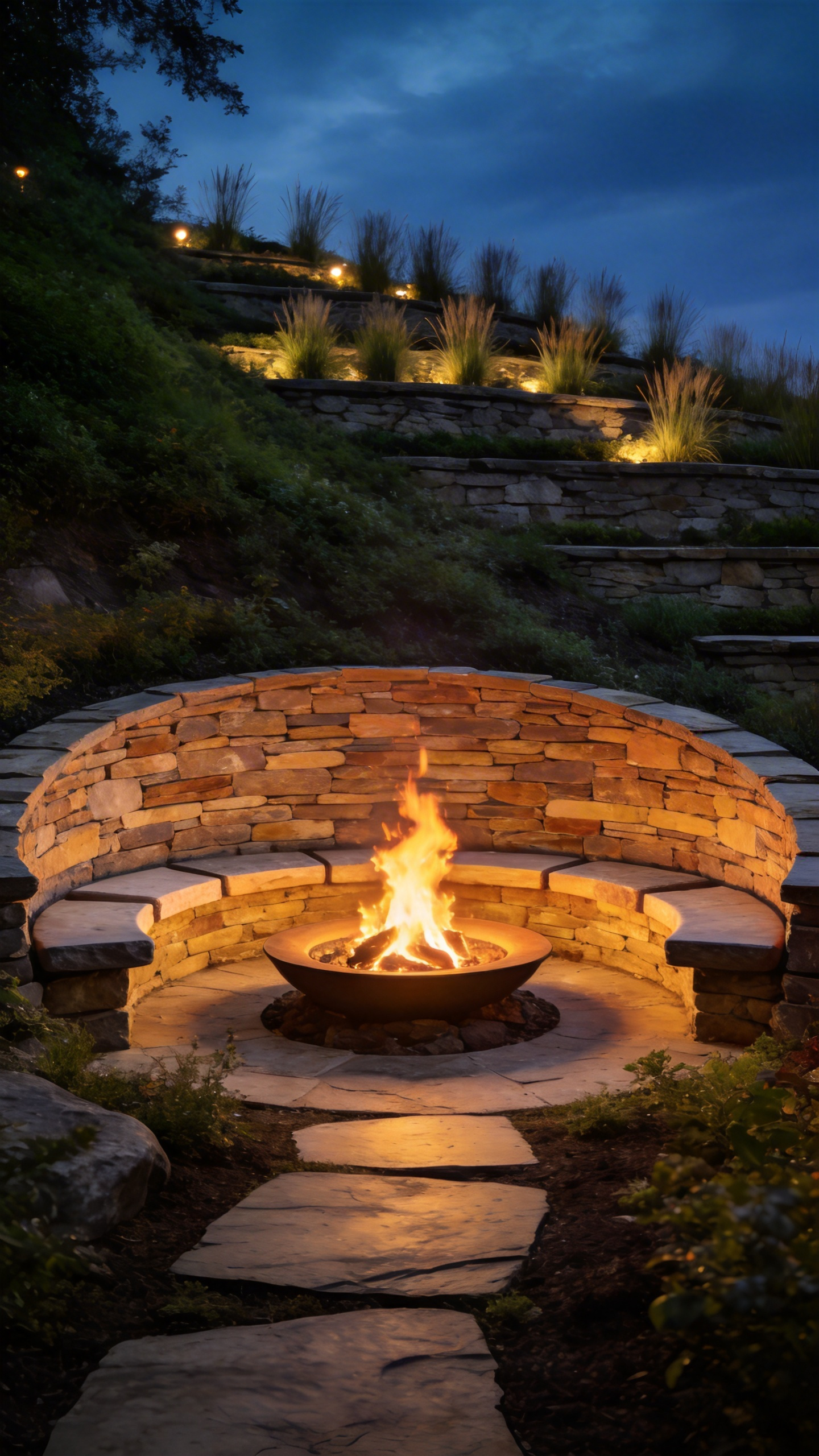
The wall must also function as a comfortable ergonomic seat. Landscape engineering dictates an eighteen-inch height for resting feet flat. The capstone should be at least twelve inches deep. Adding a two-inch overhang protects the wall and human heels. However, building fire into a slope requires strict technical planning. Water naturally flows down toward the fire basin. Designers must install a sump or French drain behind the wall. Otherwise, the sunken terrace easily floods.
Porous stones can also explode if trapped moisture turns to steam. Therefore, high-end builds utilize fire-rated brick liners for safety. Gas inserts are often recommended to maintain clean air quality. Finally, the curved stone reflects sound back to the center. This creates an intimate acoustic bowl for quiet conversation. Ultimately, this transforms an open yard into a jeweled private world.
3. The Seamless Patio Extension: Integrating Fire Areas with Existing Hardscaping and Flow
Historically, the Roman “focus” served as the central hearth of the home. Today, successful outdoor rooms echo this ancient architectural anchor. Modern designers use architectural stitching to blend new elements. They extend invisible regulating lines from the home’s doors outward. Consequently, the fire area feels naturally connected to the house. Authoritative landscaping avoids the isolated island effect entirely. Designers blend new and old materials together. For instance, interlacing existing patio pavers with new stones softens the edge. Shifting to a circular fan pattern signals a distinct destination.
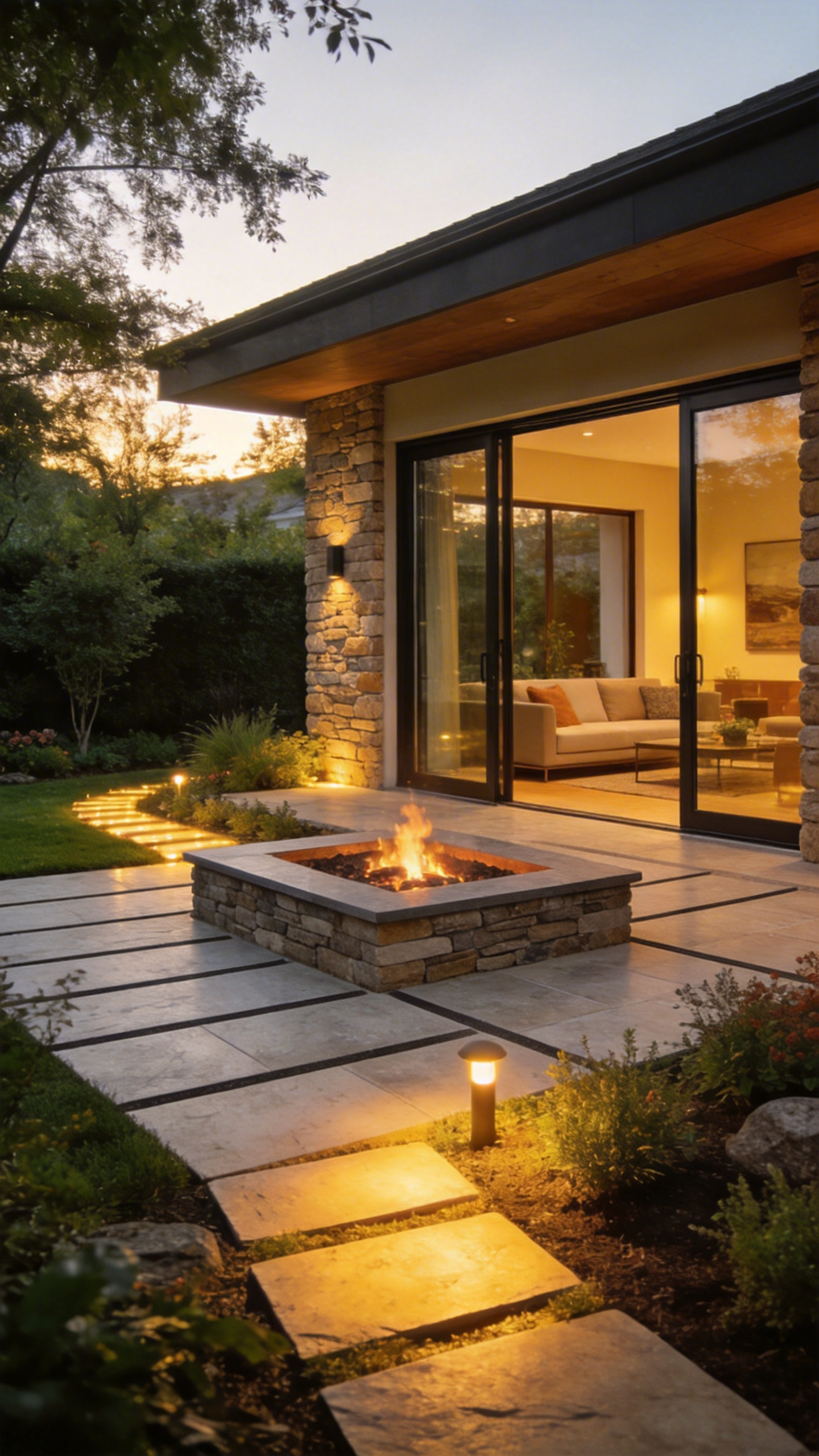
Next, consider the psychology of your outdoor flow. Building a low, 18-inch stone wall establishes an active boundary. This height provides extra seating and defines the room. However, it still maintains uninterrupted sightlines from your interior windows. Lowering the fire pit area slightly creates a comforting refuge.
Naturally, invisible engineering must support these beautiful transitions. Poor water management can easily flood a new sunken retreat. Thus, hidden trench drains effectively flush away heavy rainwater. Professional installers always use fire-rated liners and refractory mortar. This crucial thermal break prevents existing patio pavers from cracking.
Finally, a beautiful extension engages all the senses. The Campfire Principle places the fire at a walkway’s end. Walking there feels like a purposeful escape. Surrounding the area with rustling grasses creates sonic layering. Ultimately, this masks neighborhood noise and solidifies your relaxing outdoor sanctuary.
4. The Destination Fire Lounge: Creating a Hidden ‘Garden Room’ Retreat Away from the Main House
A destination fire lounge transcends the typical backyard firepit. Instead, it functions as an independent outdoor garden room. This sanctuary feels miles away from the main residence. The psychological transition begins with the journey itself. Therefore, designers often use meandering pathways to hide the destination. Shifting underfoot materials provides an immediate tactile cue. Moving from smooth concrete to crunchy pea gravel shifts the mood entirely. Incorporating a physical threshold also acts as a mental reset. Passing through a simple timber arbor leaves household stressors behind.
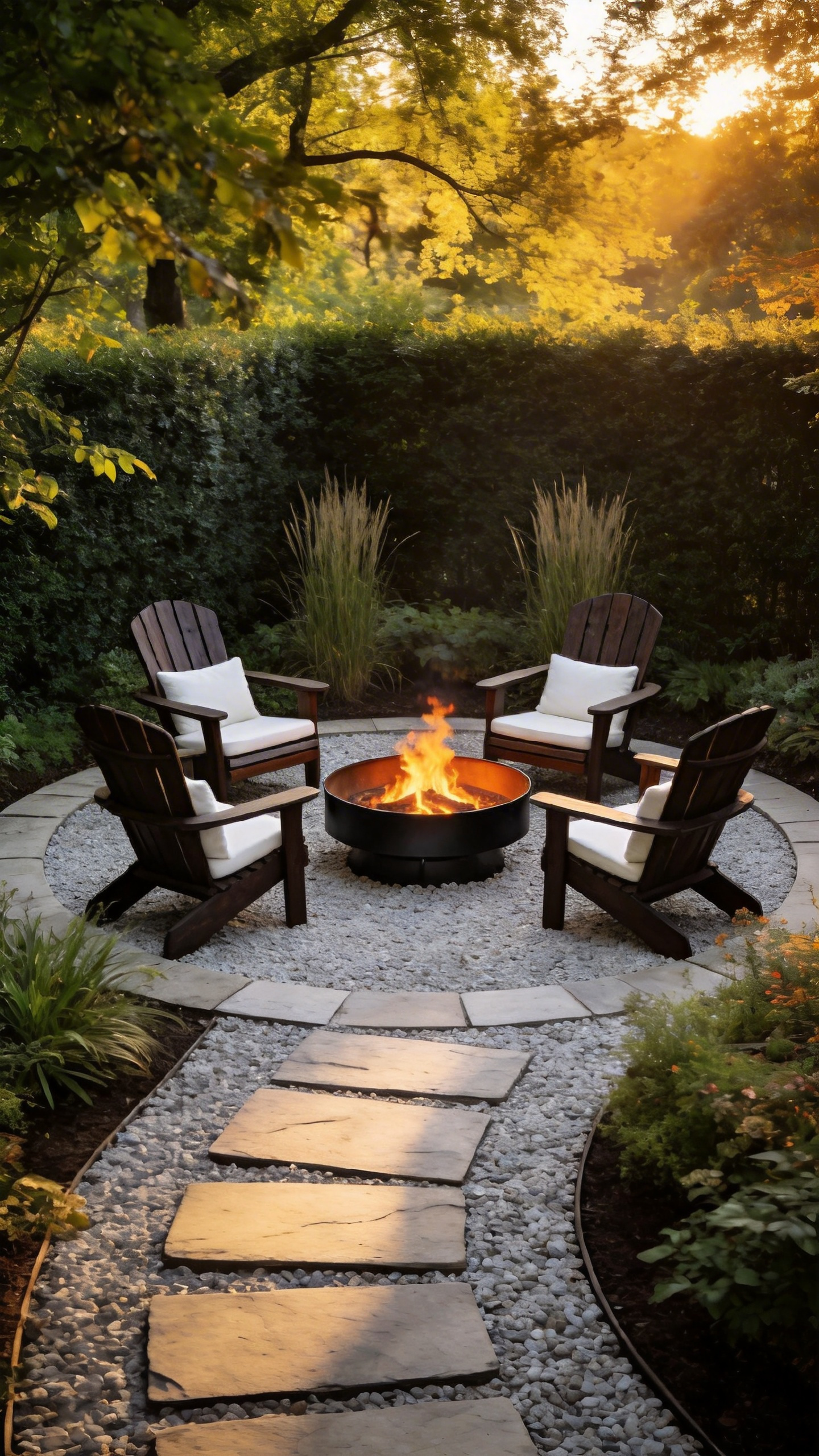
Historically, the Arts and Crafts movement championed dividing landscapes into rooms. Your fire lounge needs distinct vertical boundaries for enclosure. Living walls of clumping bamboo create an organic, sound-dampening barrier. Alternatively, changing the elevation offers an authoritative way to hide. A sunken firepit naturally obscures the seating area from house windows. Thus, it creates an intimate hideaway sheltered from the wind.
Placing a retreat far from the house introduces technical challenges. To maximize isolation, experts push this distance to fifty feet. A hidden retreat requires subtle, layered wayfinding lighting. Low-voltage LED moonlighting guides guests without ruining the dark sky. A tabletop water feature provides sound masking against neighborhood noise. True comfort relies on curating scent and warmth. Planting perimeter lavender fills the cooling air with calming fragrances. Using natural fieldstone for the pit provides thermal mass. This material absorbs heat and radiates it late into the night.
Phase II: Materiality and Elementals (Material Exploration)
Moving beyond simple function requires deliberate architectural choices. Selecting living metals dictates how your outdoor room ages. Corten steel develops a stable, protective oxide layer over time. Consequently, the surface slowly shifts from raw blue-grey to deep plum. Copper offers unmatched thermal conductivity and historic elegance. Eventually, the metal builds a distinctive green patina in humid backyards. Cast iron provides a heavy, resonant auditory experience when tending flames.
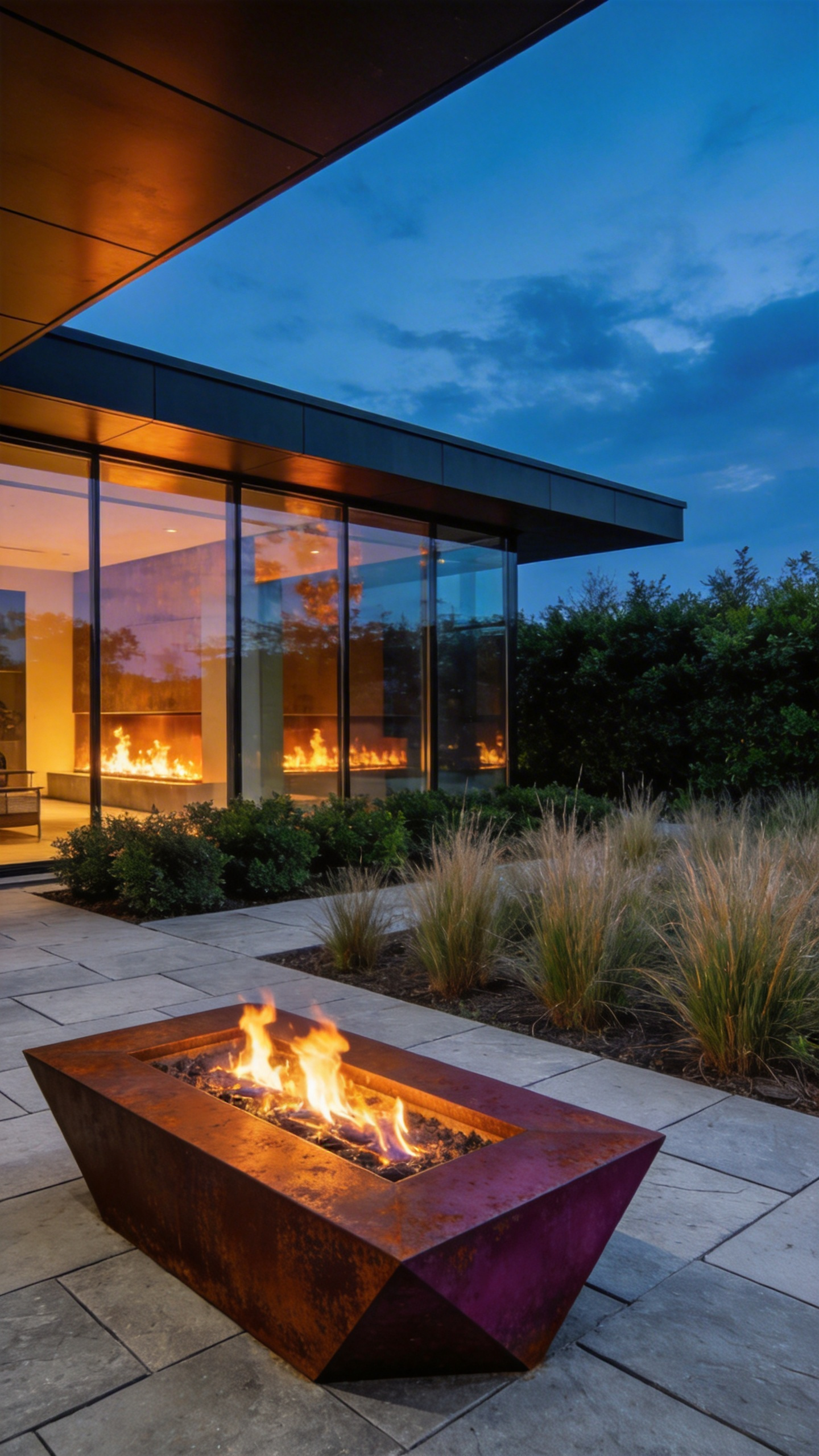
Selecting natural stone requires understanding basic thermal physics. Porous river rocks often contain trapped pockets of microscopic moisture. Therefore, rapid heating can cause violent, explosive stone spalling. Landscape experts recommend dense, non-porous basalt to prevent catastrophic cracking.
Modern outdoor spaces effortlessly balance intense heat with cool water. For example, nearby bubbling water features soften erratic fire sounds. Visually, dark reflecting pools double the glowing elemental impact at night.
Historically, nomadic tribes dug sunken earth pits for protective warmth. Today, modern sunken designs still offer that comforting primal safety. The interior fire media entirely transforms your sensory narrative. Tempered fire glass creates a surreal, icy visual illusion. Heavy steel logs maximize heat radiation to warm larger gathering spaces. Ultimately, these tactile material choices perfectly connect your indoor and outdoor living spaces.
5. Raw Corten Steel Vessels: Cultivating Weathered Patinas That Evolve with the Seasons
Corten steel transforms a basic fire pit into a living architectural feature. This alloy engages in a multi-year dialogue with your backyard environment. Corten develops a self-protecting patina instead of simply rusting away. Naturally, the metal arrives as a cold, industrial silver-gray. Exposure to the elements soon turns it a vibrant, neon orange. Eventually, this surface settles into a rich, velvety dark chocolate hue.
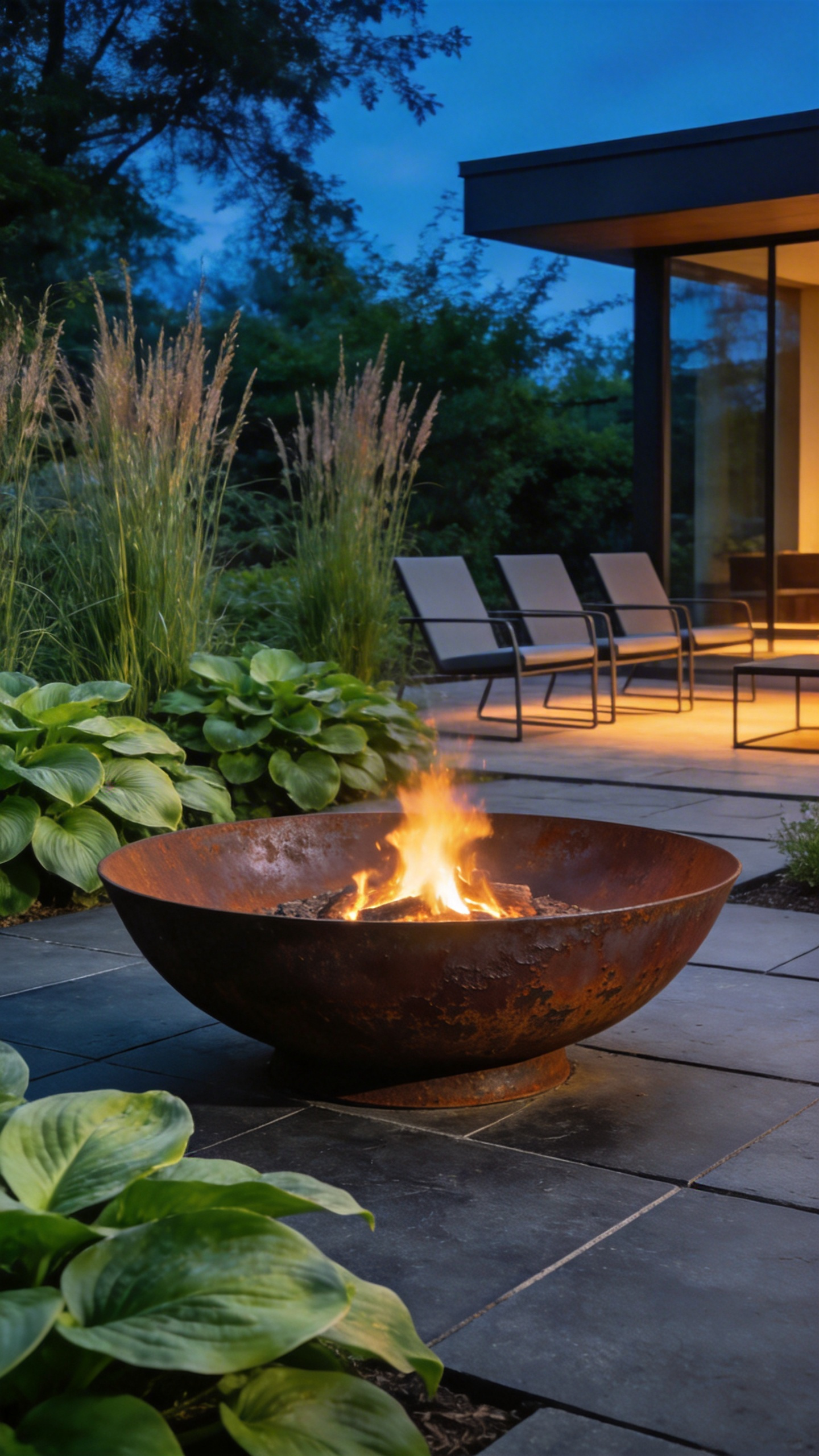
Interestingly, this aesthetic journey requires a strict wet-dry cycle. Constant humidity without a drying phase will actually harm the metal. Intense heat from wood fires dramatically accelerates this chemical transformation. Consequently, the vessel acts as a sculptural anchor across all four seasons. Its warm, russet tones strike a brilliant contrast against winter snow. The textured, matte finish blends seamlessly with falling autumn leaves.
However, you must carefully manage the initial weathering phase. The steel sheds iron oxide tears during the first few months. Placing the vessel on a dark gravel bed prevents permanent stone stains. Proper drainage holes are critical to stop stagnant water from pooling. Ultimately, this zero-maintenance, highly recyclable material becomes a permanent backyard legacy.
6. Board-Formed Concrete Bowls: Brutalist Elegance for Modern Outdoor Landscapes
The term “Brutalist” often sounds incredibly harsh. It actually derives from the French phrase for raw concrete. Originally, this board-formed texture was just an accidental byproduct of cheap molds. Now, it represents high-end custom craftsmanship in outdoor design. A board-formed fire bowl intentionally celebrates imperfection.
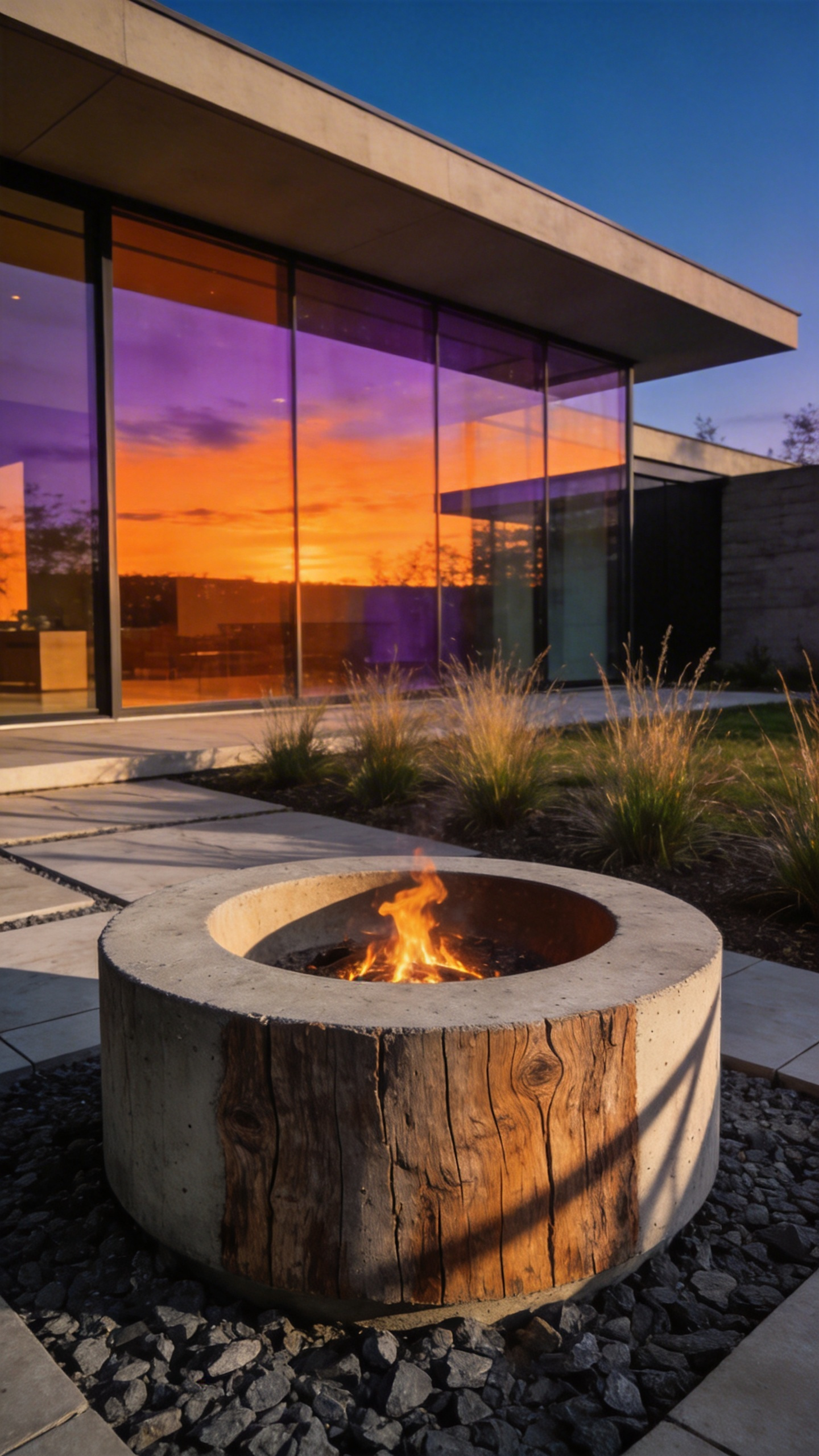
Architects use the wood mold as a negative-space sculpture. Rough-cut Douglas fir creates deep, craggy ridges. Conversely, sanded pine leaves a soft, ghost-like imprint. These textures interact beautifully with the fire. Flickering flames cast dancing shadows across the horizontal ridges. Therefore, the concrete appears to move throughout the night.
These bowls also offer incredible physical warmth. Concrete acts as an exceptional thermal mass. It radiates gentle heat long after the flames die.
Historically, massive concrete features required heavy cranes for installation. Today, designers frequently use Glass Fiber Reinforced Concrete instead. This high-strength mix allows for thin, lightweight walls. You can place a monolithic bowl directly on a wooden deck.
A modern backyard bowl is designed to age naturally. This embraces the Japanese concept of Wabi-Sabi. Gradually, soot and rain catch in the textured ridges. This creates a beautifully weathered patina over time. Ultimately, this raw material grounds the piece elegantly into your outdoor room.
7. Natural Fieldstone Hearths: Anchoring the Backyard Space in Local Geology
Natural fieldstone hearths anchor modern living spaces to their surrounding landscapes. These stones carry regional personalities based on their unique geological history. Northeastern glacial till resists harsh freeze-thaw cycles perfectly. Western volcanic basalt handles intense direct flame without spalling. River-worn fieldstone naturally reflects the hydrological history of your local watershed.
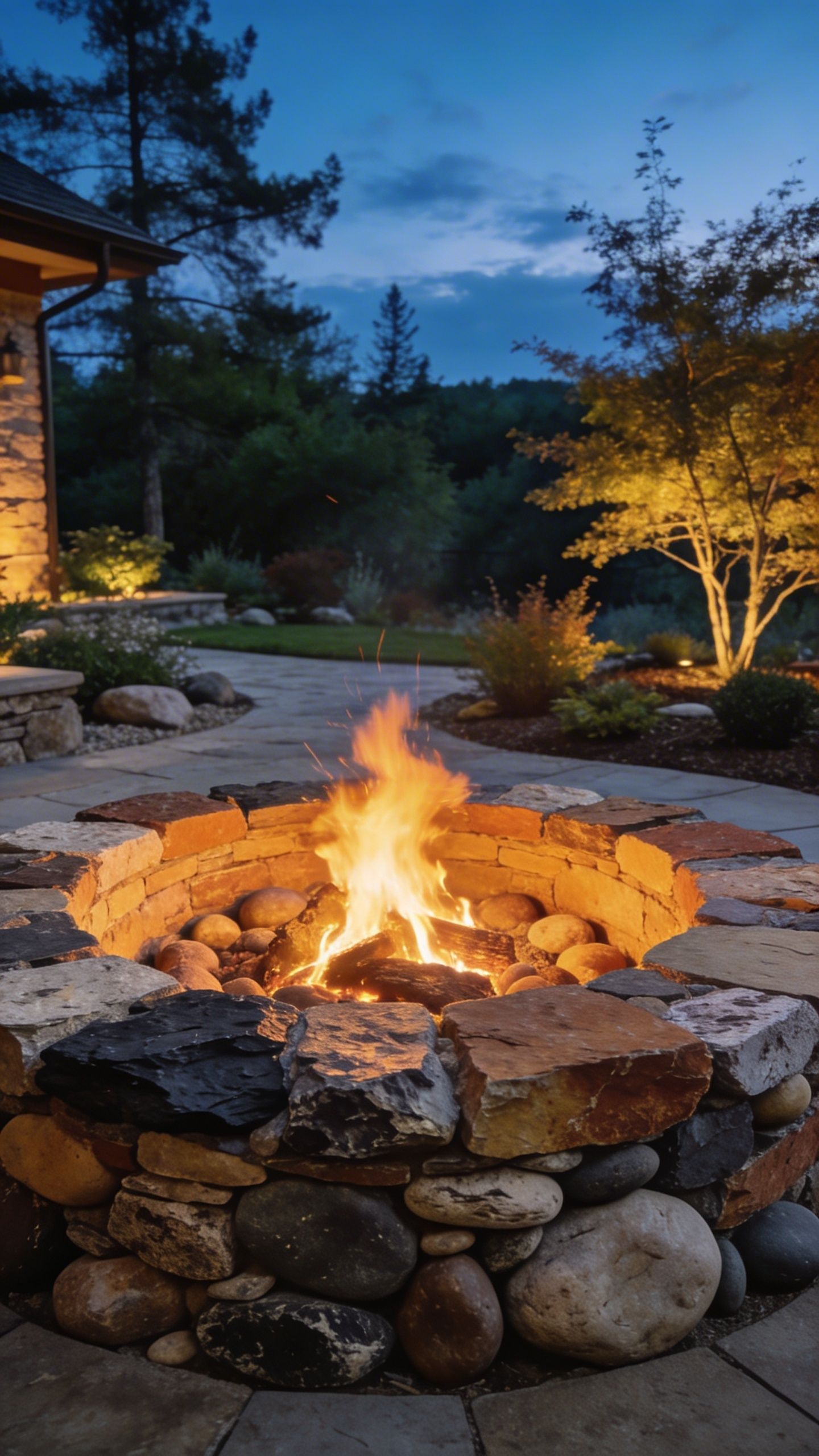
Impressively, a fieldstone hearth also operates as a powerful thermal battery. Highly dense stones absorb immense heat energy from the flames. The hearth radiates comforting warmth long after the fire fades. This radiant lag easily extends outdoor usability deep into autumn nights. Architecturally, massive stone hearths provide a crucial psychological anchor. They satisfy our evolutionary desire for prospect and refuge. The rugged texture establishes a clear boundary of safety. Guests feel deeply grounded while looking outward toward open views.
The chosen masonry technique tells a compelling historical narrative. Traditionally, dry-stacking creates a flexible structure that shifts safely during winter frosts. Deep-struck mortar provides dramatic shadows for an elegant, Old World aesthetic. Utilizing oversized local stone honors the 1920s American Rustic style. Historically, this National Park lodge movement brilliantly harmonized outdoor rooms with nature. In the end, your modern fire pit feels organically grown directly from the local bedrock.
8. High-Tech Smokeless Inserts: Marrying Combustion Efficiency with Custom Masonry Surrounds
Integrating high-tech smokeless inserts into custom masonry fundamentally transforms backyard design. These double-walled steel inserts rely on secondary combustion. Air is drawn into the base and superheated inside the walls. Then, it shoots out through precision-drilled rim holes. This creates a mesmerizing halo of fire. This superheated oxygen ignites escaping wood gases. Essentially, it burns off the smoke before it ever reaches you. Therefore, the classic game of firepit musical chairs is eliminated. Guests can finally relax without dodging irritating smoke plumes. Instead, they enjoy the steady purr of rushing air.
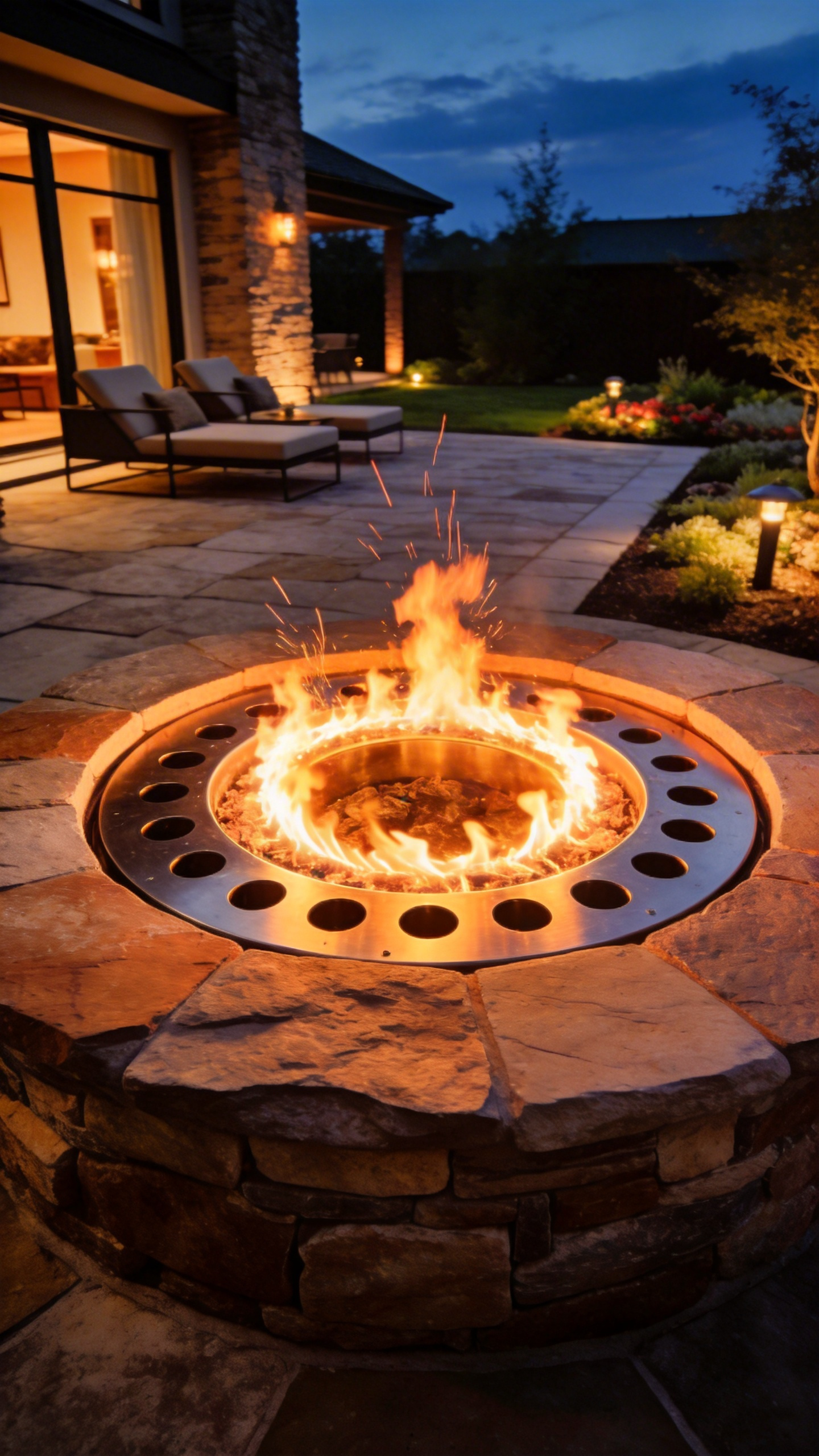
However, marrying metal inserts with stone requires precise engineering. Stainless steel expands significantly under extreme heat. Masons must leave a half-inch expansion gap. Otherwise, the expanding metal will easily crack the stone veneer. Proper base ventilation is absolutely vital for performance. Without hidden base vents, the secondary combustion will starve. The fire then behaves exactly like a traditional, smoky pit.
The surrounding masonry acts as a powerful thermal battery. The stone absorbs radiant heat from the insert. Then, it gently re-radiates that soaking warmth outward. Granted, no wood-burning system is perfectly smokeless instantly. You will see smoke during the brief startup phase. Kiln-dried hardwood is strictly required to achieve this efficiency. Finally, integrating discreet ash-access doors guarantees effortless, long-term maintenance.
9. Crushed Granite and River Rock Beds: Designing Textural, Fire-Safe Underfoot Foundations
When designing an outdoor room, foundation materials dictate both safety and atmosphere. Many homeowners choose smooth river rock for their fire pit surrounds. However, this organic stone carries a hidden thermal danger. Because water erosion forms them, porous river rocks retain internal moisture. High heat rapidly converts this trapped water into steam. The dense rock traps pressure until the stone dangerously shatters.
Crushed granite offers a heat-impervious alternative born from volcanic heat. Landscape experts strongly recommend a zoned texture strategy for fire areas. Use compacted crushed granite for a three-foot radius around the fire. Then, reserve river rock for the cooler outer perimeter.
Crushed stone provides distinct auditory and tactile benefits. The satisfying crunch of granite creates a clear sensory transition. It signals your arrival from the soft lawn into a structured social room. Unlike rounded river rocks that shift like ball bearings, granite has angularity. These sharp edges lock together when compacted. They create a firm surface that prevents patio furniture from wobbling.
Historically, designers used gravel to separate elaborate planting beds in French parterres. Today, this non-combustible foundation serves as a modern defensible space. It replaces flammable mulch and prevents stray embers from igniting the landscape. The irregular patterns of stone offer soothing visual fascination. Granite also acts as a natural thermal conductor. It absorbs sunlight during the day and gently releases radiant heat at night.
Achieving a designer-grade look requires careful textural layering. Start with a solid base of permeable decomposed granite. Next, apply a thin topcoat of sharp crushed granite for the walking zone. Finally, frame the outer seating circle with large river rocks. This textural contrast adds visual weight and beautifully connects the space.
Phase III: The Architecture of Seating (Spatial Application)
Designing a backyard fire feature goes beyond merely selecting a decorative bowl. It requires orchestrating human connection through careful spatial geometry. Seating architecture dictates whether an outdoor room feels truly magnetic. First, consider the ideal physical distance for fireside conversation. Maintain an active zone of 18 to 24 inches. This vital measurement sits between the pit edge and guests’ knees. Consequently, people can enjoy radiant heat without risking a tumble. Communication suffers if guests sit over six feet apart. Large circular arrangements often create dead zones of cold air. Thus, linear or semicircular seating works beautifully for larger gatherings.
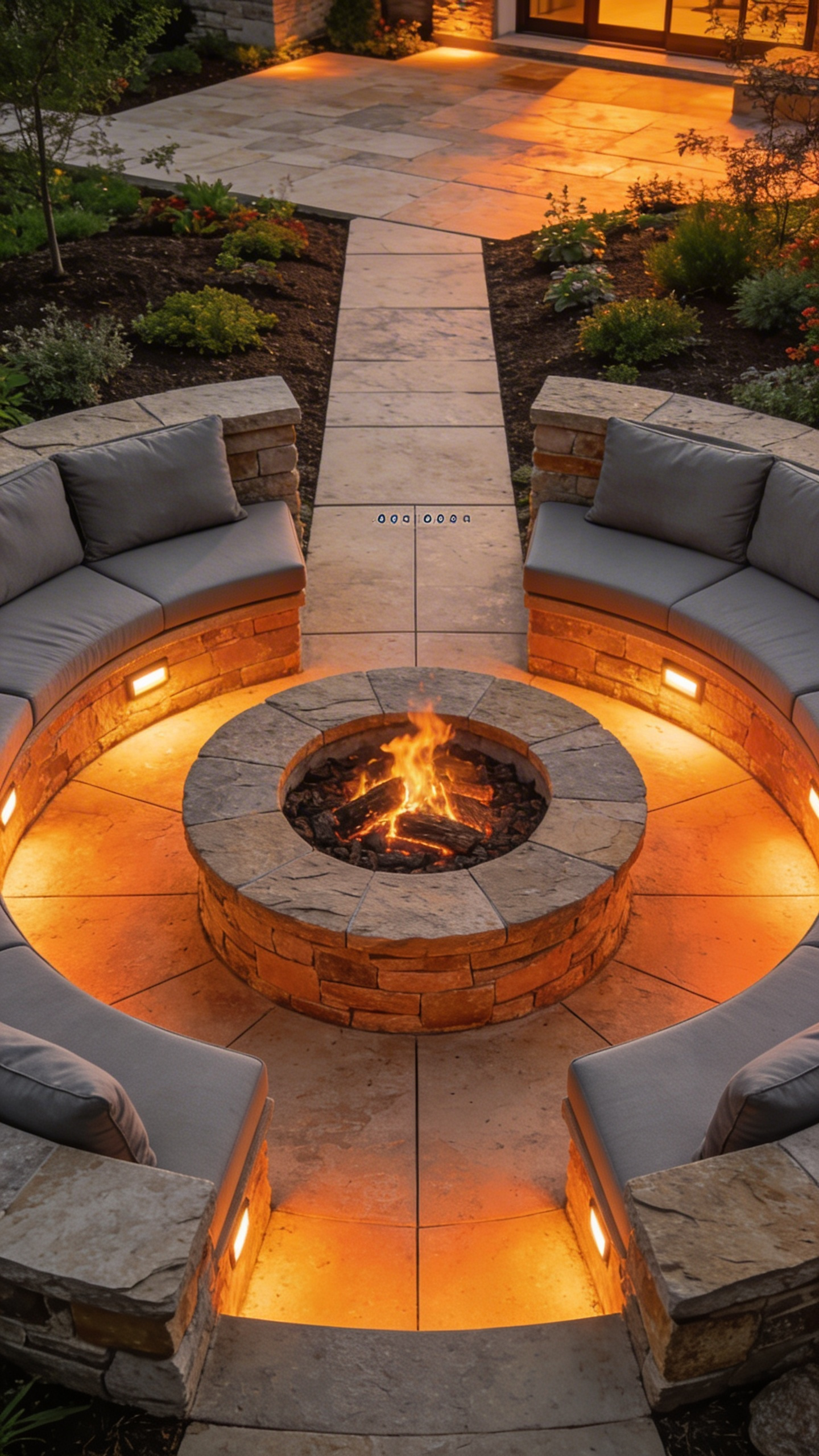
Human psychology demands a profound sense of physical security. People feel deeply vulnerable sitting in an open lawn. Accordingly, position your seating against retaining walls or dense shrubs. Sunken conversation pits take this protective concept a step further. Lowering the floor creates physical refuge and visual intimacy. Material selection heavily influences the thermal comfort of your space. Thick flagstone or concrete walls act as thermal batteries. Ultimately, these heavy materials radiate warmth long after the flames fade.
Professional landscape architects always plan for proper spatial flow. Always build a movement ring behind the primary seating. Otherwise, walking guests will squeeze dangerously close to the open fire. Leave at least one 36-inch gap in the seating circle. This clear path invites effortless movement and social connection.
10. Built-In Semicircular Masonry Benches: Maximizing Radiant Heat Retention and Guest Capacity
Built-in semicircular masonry benches transform a standard fire pit into a sustained radiant environment. They act as architectural thermal batteries. Dense materials like fire-rated brick and granite act as massive heat sinks. They absorb infrared radiation deep into their molecular structure. Eventually, the bench slowly releases this stored warmth long after the flames die down.
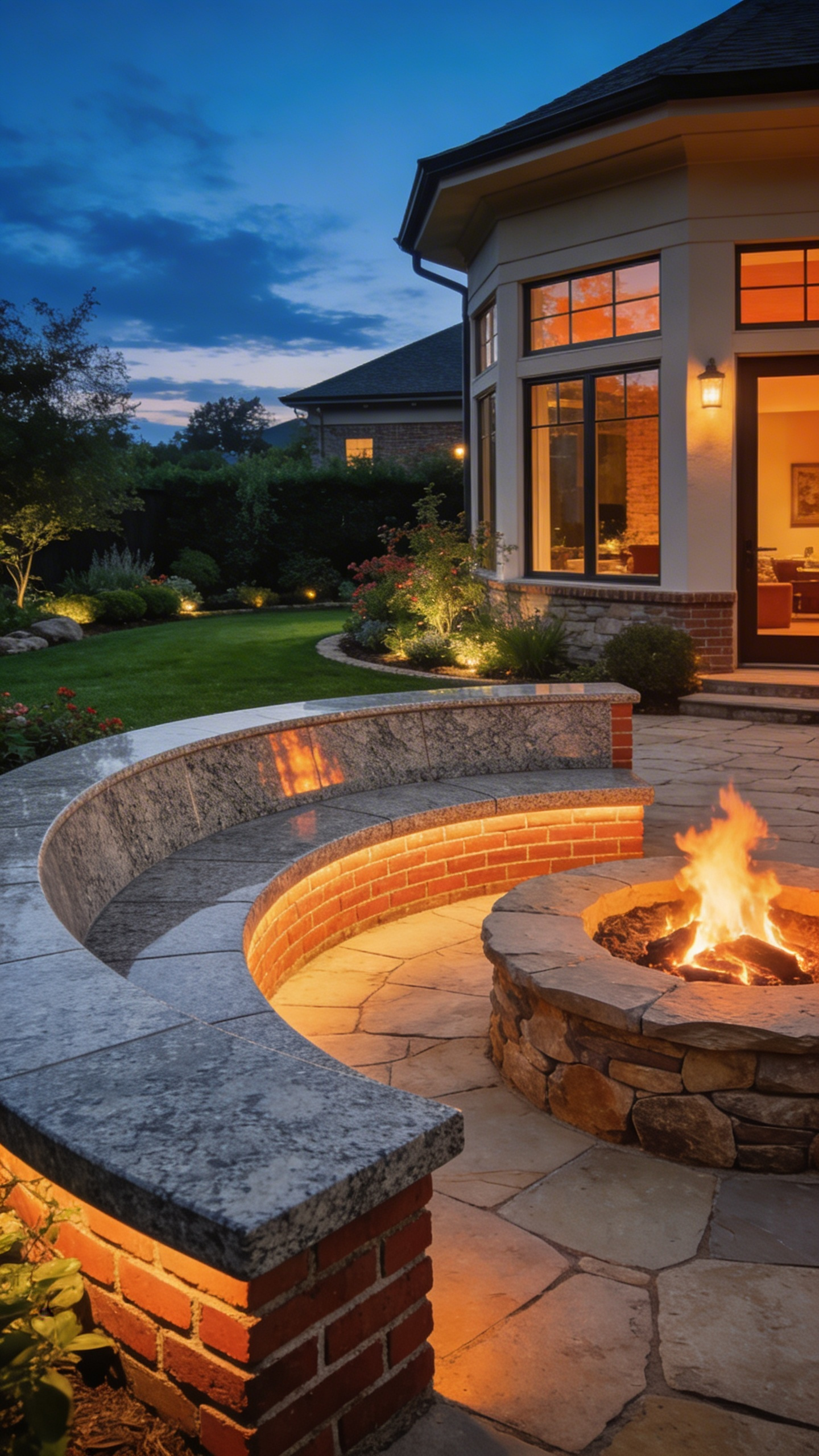
The semicircular shape functions as a parabolic reflector. A continuous curve with a high backrest traps the heat perfectly. This geometry prevents cross-breezes from stripping away the warm air. This curved design naturally focuses vocal frequencies back toward the center. Guests experience an acoustic intimacy that straight benches simply cannot provide.
Naturally, the semicircular layout maximizes your overall seating capacity. An eight-foot arc accommodates nearly thirty percent more guests than individual chairs. You should position the bench exactly thirty-six inches from the fire pit edge. This precise distance provides radiant heat without exposing legs to stray sparks. Meanwhile, build the seat eighteen inches high and twenty-four inches deep. A subtle five-degree rearward slope ensures that rainwater drains away effectively. This slight angle prevents winter ice damage while cradling seated guests.
Historically, this concept mirrors ancient Roman hypocaust heating systems. Today, advanced designs can even channel exhaust flues directly inside the masonry base. Ultimately, these features create functional outdoor rooms that rival indoor comforts.
11. Low-Profile Teak Lounge Groupings: Introducing Weather-Resistant Scandinavian Influence
Authentic Scandinavian design effortlessly connects indoor comfort with outdoor durability. Low-profile lounge groupings bring elegant mid-century silhouettes into your backyard. These designs rely heavily on premium Grade A teak heartwood. This wood contains a high concentration of oils and silica. Therefore, the timber essentially petrifies from the inside out. It becomes virtually impervious to water, rot, and fungal decay. Teak resists warping when exposed to alternating fire heat and cool breezes. Untreated teak gradually develops a striking silvery-gray patina. This oxidized layer further shields the wood from extreme temperature fluctuations.
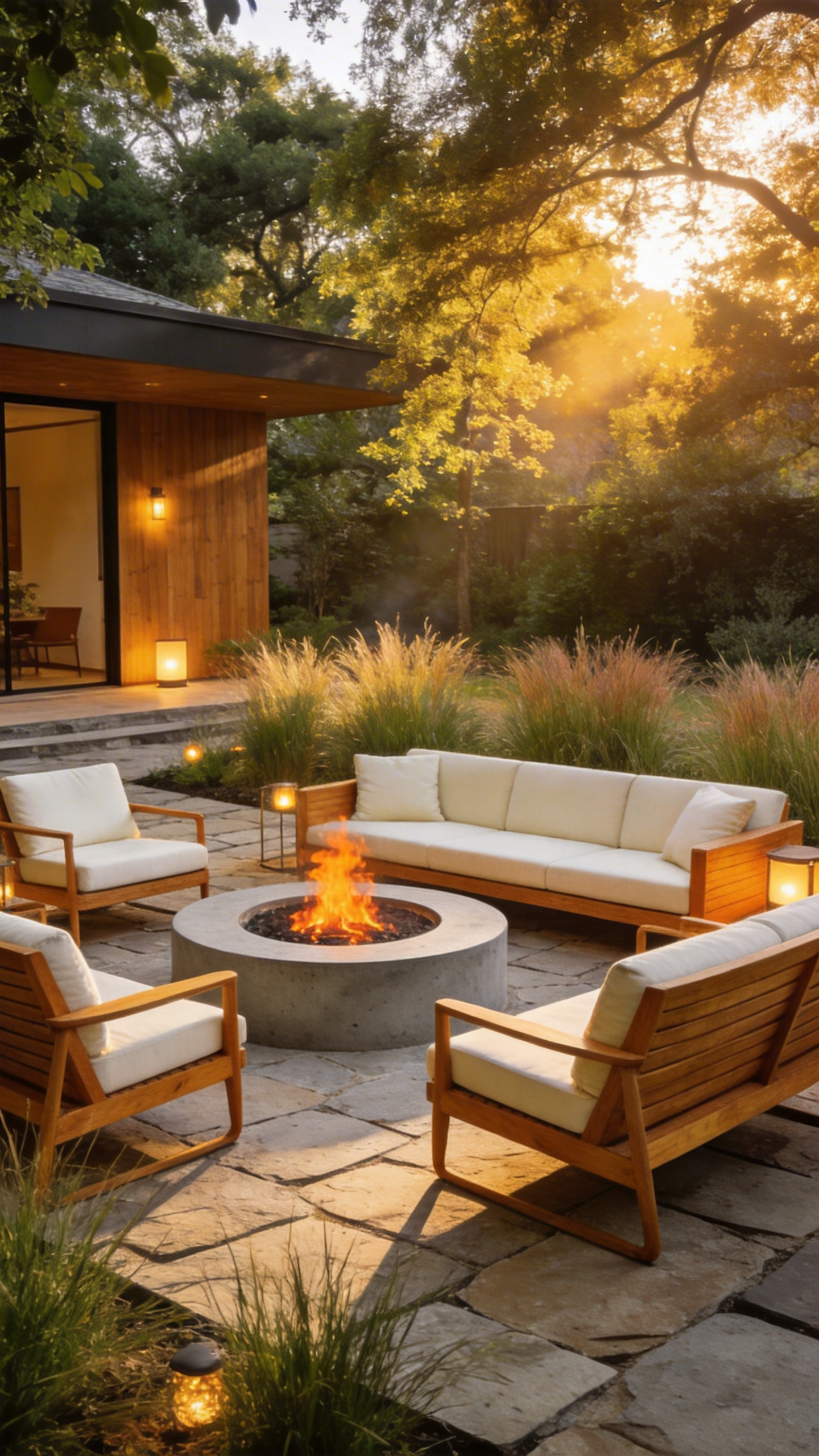
Beyond durability, the low-profile design serves a crucial functional purpose. These lounge seats usually sit just 12 to 15 inches off the ground. Because heat rises, traditional chairs often leave your legs in a cold zone. Low seating brings your body directly into the fire’s warm radiant envelope. This exact height preserves uninterrupted sightlines across your entire landscape. The low furniture keeps the fire pit as the undisputed focal point. Sitting closer to the earth also fosters a deep sense of communal intimacy.
This grounded feeling perfectly captures the cozy Danish concept of hygge. Unlike cold metal, teak features extremely low thermal conductivity. The wood feels comfortable and welcoming to the touch immediately. Authentic Scandinavian minimalism emphasizes highly integrated architectural functionality. Wide teak armrests easily double as convenient side tables for drinks. Visually, the honey tones of fresh teak beautifully complement the warm glow of firelight. These groupings transform a sprawling backyard into an intentionally anchored outdoor room.
12. The Modern Adirondack Application: Updating the Classic Campfire Posture for Contemporary Patios
The classic Adirondack chair originally served as a medical tool. Its deep recline and wide armrests opened the chest cavity. This precise posture helped early twentieth-century tuberculosis patients breathe easier. Currently, contemporary designers leverage this exact geometry for mental health. The physical act of sinking back forces bodily disengagement. You naturally transition away from the rigid posture of desk work.
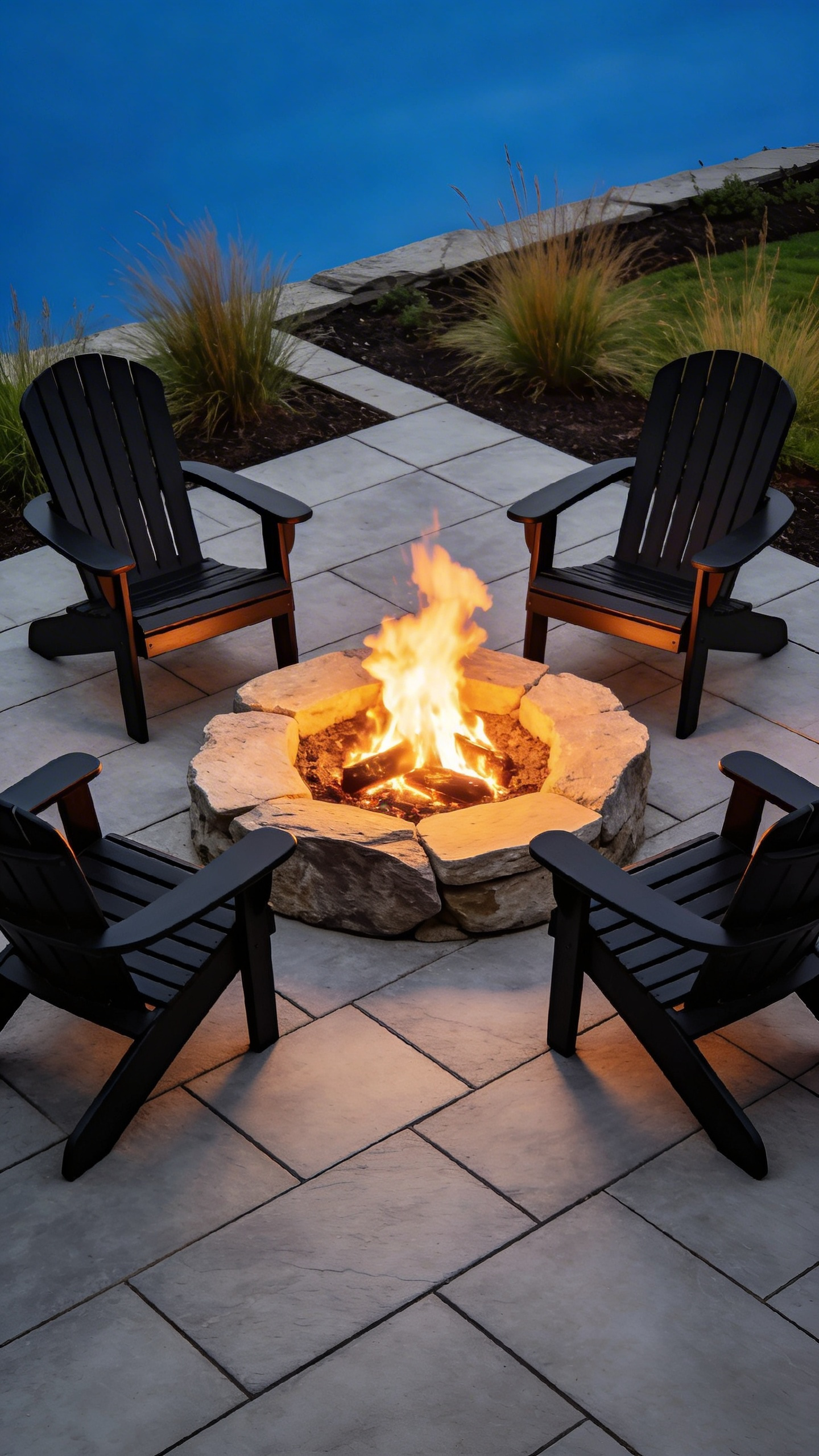
Modern styling has stripped away the rustic, bulky baggage. Traditional fan-backs are now replaced with sleek, horizontal top rails. These sculptural chairs integrate beautifully into minimalist patio architecture. They seamlessly maintain clear sightlines across your outdoor living space. Manufacturers have introduced a rolled waterfall edge to the seat. This prevents circulation loss behind the knees during long fireside chats. Many contemporary versions also feature a slightly raised, flattened seat pan. Ultimately, this makes standing up significantly easier for your guests.
Luxury high-density polyethylene has revolutionized the modern campfire experience. These heavy chairs resist high winds and remain completely splinter-free. Landscape architects recommend placing these chairs with careful spatial planning. You should leave forty to fifty inches of clearance behind each seat. This generous spacing accommodates the deep recline without feeling cramped. The iconic wide armrests now perfectly function as tapered cocktail ledges. You can rest high-end glassware without needing an extra side table. Sophisticated charcoal and slate tones complete this quiet luxury aesthetic. The furniture practically disappears into your beautiful bluestone hardscape.
13. Organic Boulder Seating Installations: Designing Harmonious Arrangements for Wooded Backyards
Creating a wooded fire pit requires a delicate touch to integrate smoothly with the natural environment. The outdoor space should feel discovered naturally rather than looking like a rigidly constructed patio. Therefore, we draw direct inspiration from the historical Wild Garden movement. We aim to mimic natural forest outcroppings. Modern organic design borrows heavily from Japanese Zen principles to embrace the beauty of negative space. A harmonious arrangement utilizes odd-numbered stone clusters that allow the forest floor to breathe.
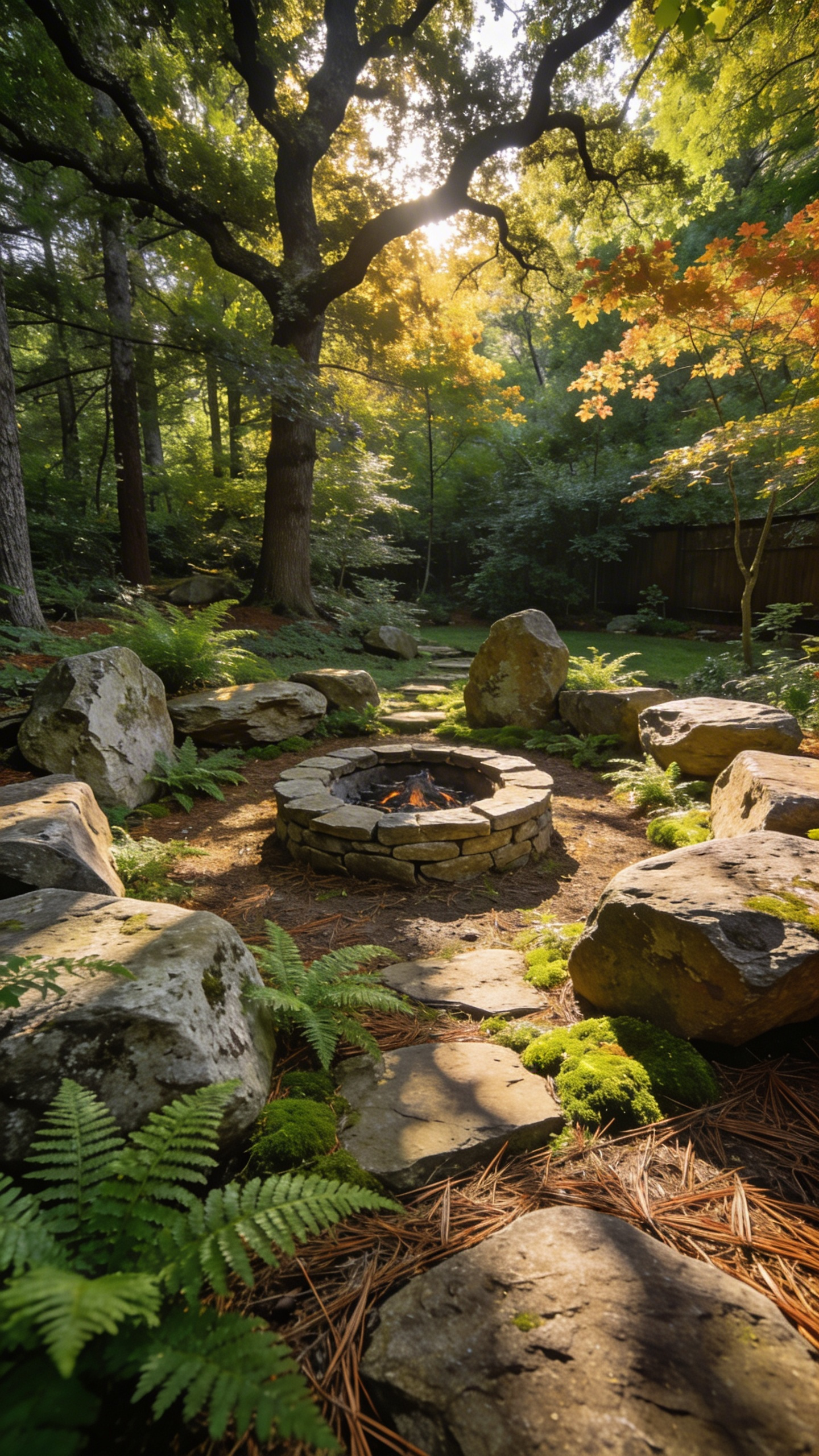
Proper placement requires burying roughly one-third of the mass underground. This prevents the awkward garden gnome effect. This strategic burial mimics deep bedrock and provides structural stability for seating. While the ideal human seating height is eighteen inches, varying heights creates a rhythmic silhouette. Ergonomic flat edges and smooth stone caps ensure these organic forms remain comfortable.
Functionally, these natural boulders serve as radiant heat batteries. Dense, non-porous stones like granite absorb infrared radiation and reflect warmth back toward the center. Applying a buttermilk moss slurry accelerates the visual aging process. It bridges the gap to the wild woods seamlessly. Ultimately, surrounding these heavy stones with native ferns extends your indoor living space out into nature.
Phase IV: Ambient Environment and Lifestyle Integration (Lifestyle Integration)
Phase IV transforms a physical fire pit into a lived experience. It moves beyond construction to layer sensory atmosphere. Ultimately, this phase acts as a social ecotone. In biology, an ecotone is a transition zone. Here, it dissolves the boundary between interior spaces and exterior environments. The fire pit becomes a true outdoor room. For example, we use material continuity to naturally connect spaces. If your living room features white oak, we echo that exact texture outside. Consequently, you simply walk into the space without feeling disconnected.
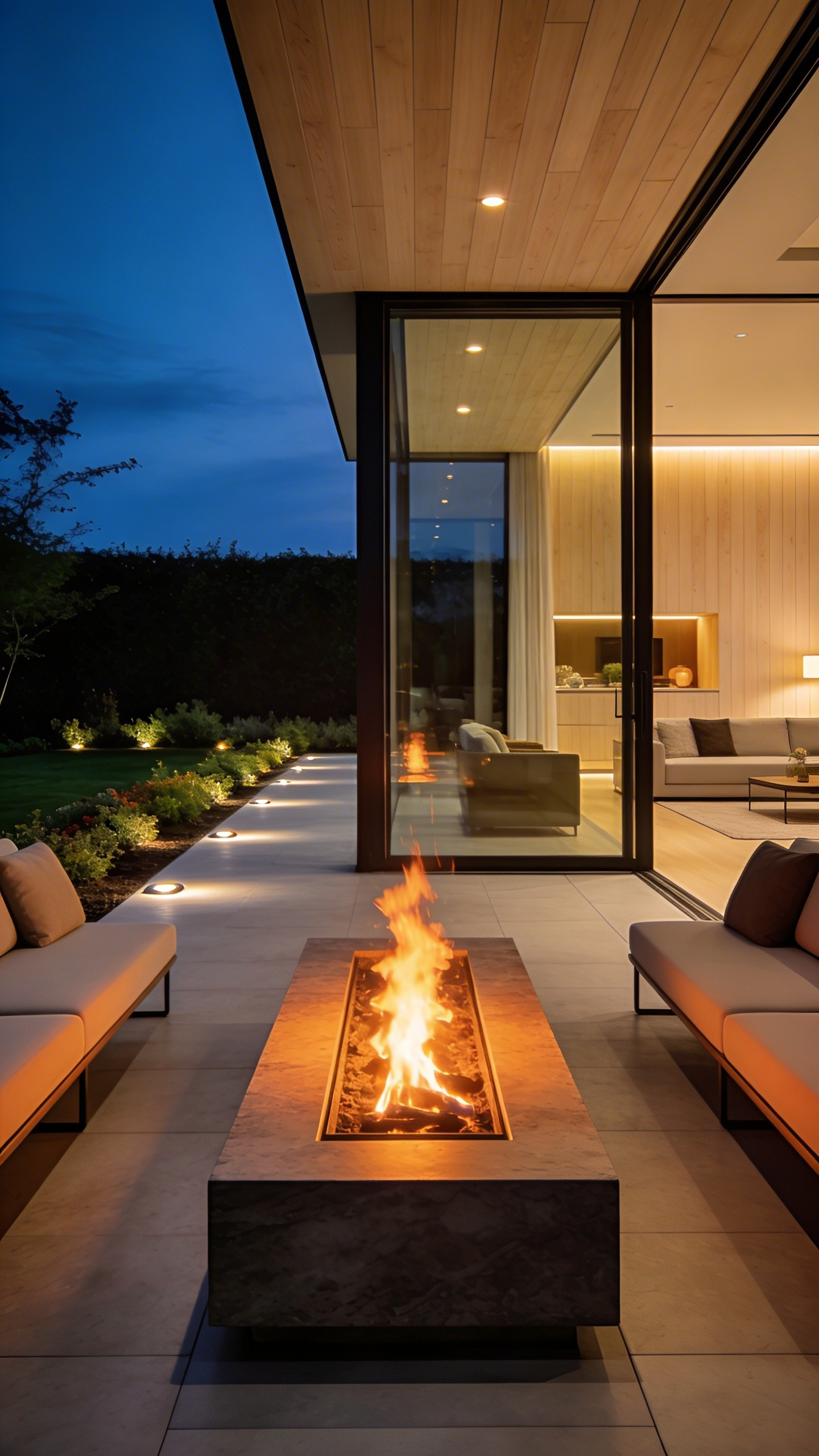
We prioritize egalitarian seating around the flames. Curved seat walls remove formal hierarchies and easily encourage eye contact. The fire itself provides crucial non-rhythmic sensory stimuli. Flickering flames create unpredictable movement, sound, and light. Our brains enter a soothing state of soft fascination as a result.
Modern lifestyle integration relies heavily on invisible automation. If a fire pit takes twenty minutes to start, it sits unused. A system igniting via smartphone becomes a daily habit. Smart technology blends fire, dimmed lighting, and soft music effortlessly. Thus, the hearth reclaims its ancient Roman role as the home’s core. Visually, it anchors the terminal axis of your main hallway.
We layer native, night-blooming jasmine near the seating area. This adds a subtle olfactory dimension to the ambient warmth. Ultimately, these sensory layers combine to create a deeply comforting sanctuary.
14. The Hybrid Fire Pit and Culinary Grill: Bringing Elevated Al Fresco Dining to the Open Flame
The hybrid fire pit represents the ultimate evolution of the modern backyard space. It transforms a passive heat source into a functional, gourmet centerpiece. These unique designs utilize open-flame thermodynamics instead of enclosed heat. Thick carbon-steel ring griddles create a brilliant multi-zone cooking environment. The inner edge reaches searing temperatures near 1000 degrees for perfect steaks. The cooler outer rim gently roasts vegetables at 300 degrees.
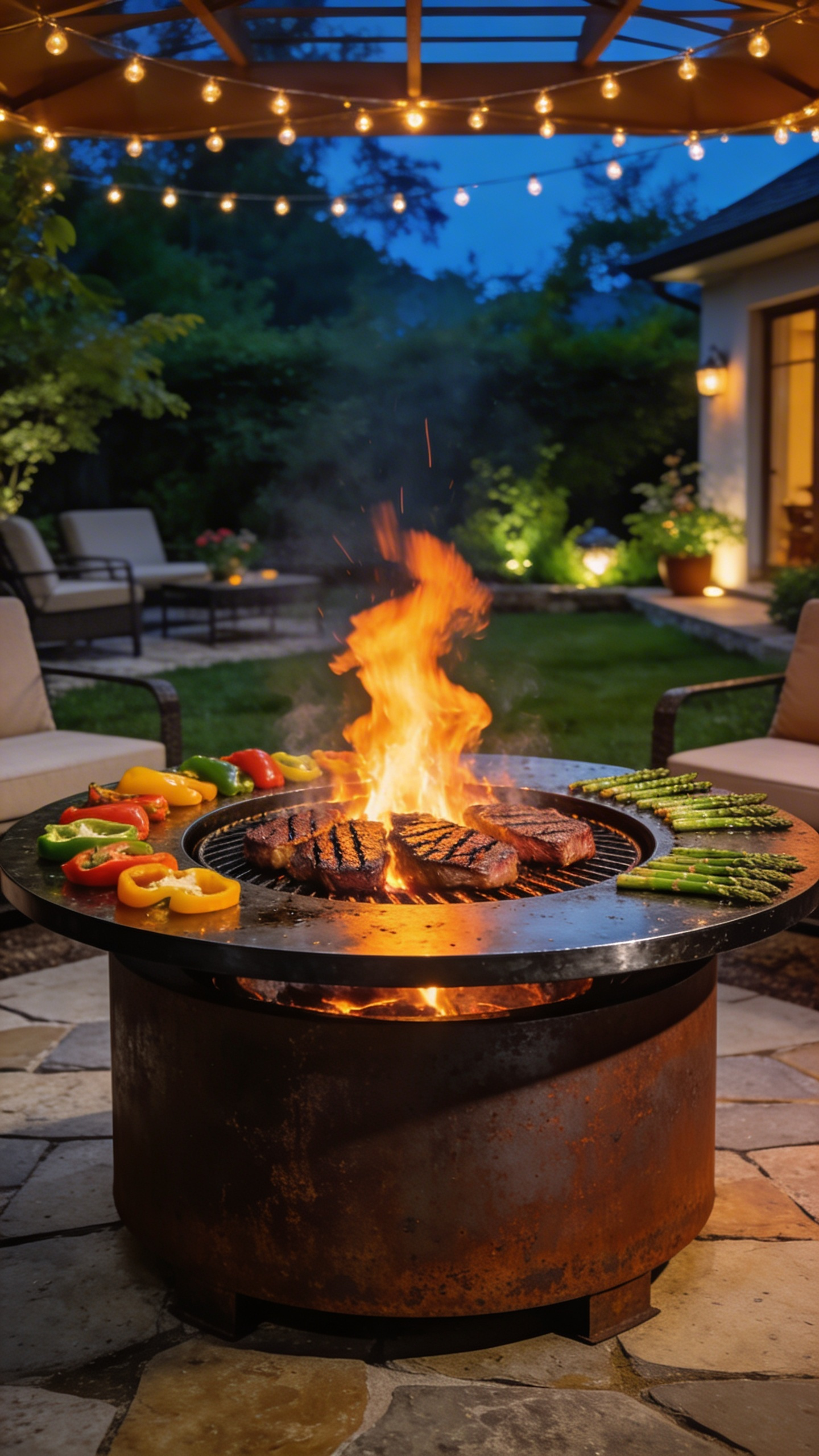
Crucially, this 360-degree layout completely breaks the traditional cook-guest barrier. The chef remains part of the social circle during meal preparation. Guests can actively participate by flipping skewers or enjoying the radiant warmth. Modern smokeless technology utilizes double-walled construction to burn off soot. This ensures your dining experience stays perfectly clear of stinging smoke.
Many designs borrow inspiration from the traditional Argentinian Asado. Crank-operated grates and pivoting arms allow incredible control over the live fire. Weathering Corten steel offers a stunning aesthetic for your outdoor room. Gradually, the raw steel evolves from blue-grey to a rich burnt orange. The cooking surfaces require a traditional seasoning ritual with cooking oil.
Premium units now feature gas ignition to light hardwood instantly. Thus, you get rich wood-smoke flavors without the frustrating long startup wait.
15. Hidden Gas Line Linear Trenches: Seamless, On-Demand Warmth for Urban Patios
Traditional fire pits dominate limited outdoor spaces. Conversely, hidden gas line trenches offer seamless urban integration. These recessed systems sit completely flush with your patio floor. Consequently, you reclaim valuable square footage for socializing. Removable stone plates hide the burner perfectly during the day. This zero-clearance illusion allows for flexible, unobstructed furniture layouts.
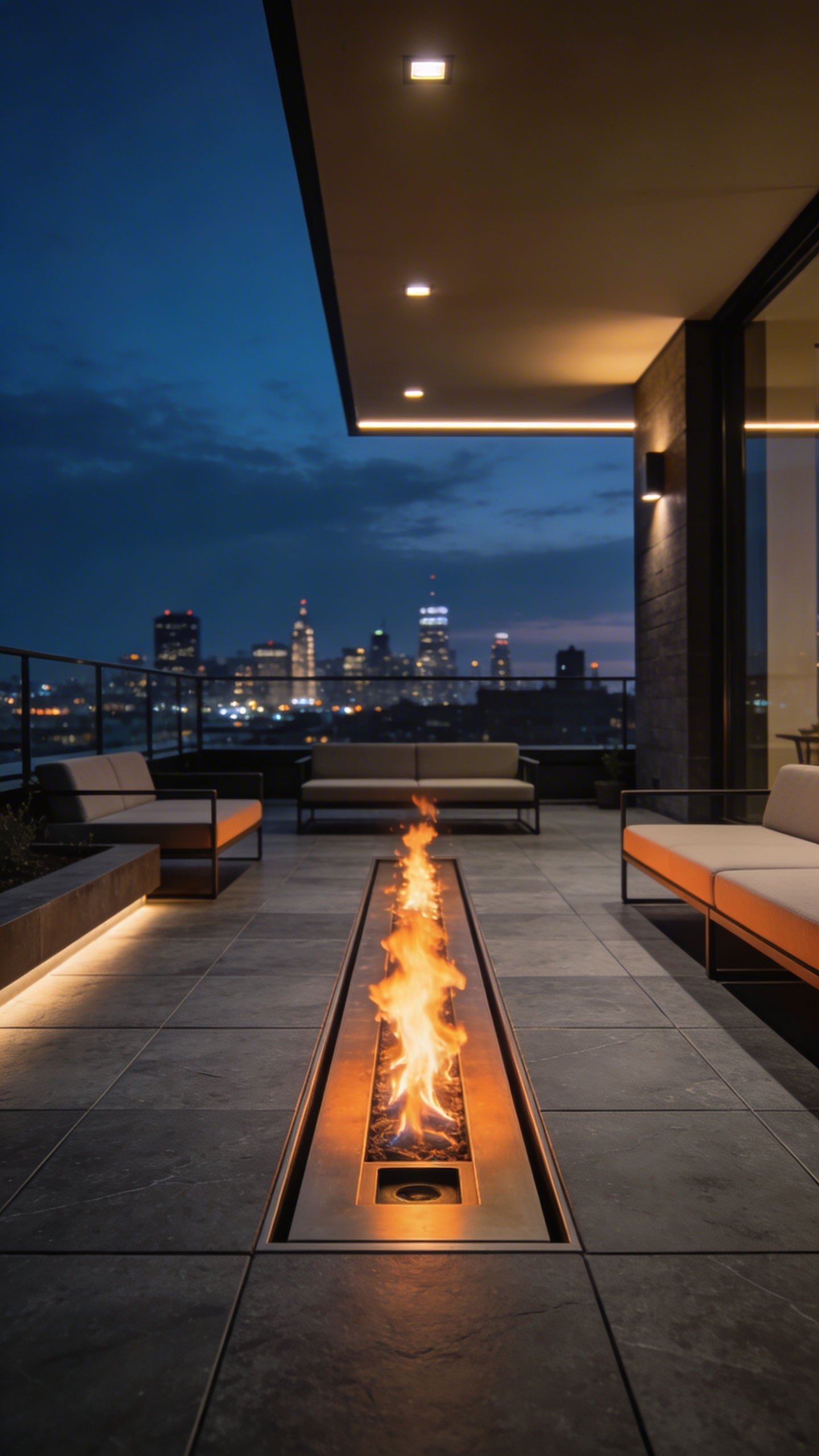
Linear trenches completely redefine outdoor social architecture. Round pits always force a traditional, centralized campfire circle. A linear ribbon of fire acts as a cinematic backdrop instead. It divides dining and lounging zones with clean horizontal lines. A long trench provides uniform warmth along a seating wall.
Tight urban environments require strict safety management. These specialized systems typically output 30,000 to 50,000 BTUs. This prevents overwhelming small, enclosed city spaces with trapped heat. Smart electronic ignition includes wind-sensing safety shutoffs. You can even pre-heat the patio from an indoor app. Proper pea gravel drainage prevents destructive water pooling. Hidden cross-ventilation stops dangerous natural gas pockets from forming.
Aesthetically, matching fire glass makes flames erupt directly from the earth. This elegant elemental contrast beautifully extends your indoor living space. The low hiss of gas masks chaotic city noise. Your narrow urban patio instantly becomes a relaxing, on-demand destination.
16. Integrated Landscape Lighting: Balancing the Fire’s Natural Glow with Subtle Ambient Illumination
A natural wood fire produces a deep amber glow around 1,800 Kelvins. However, standard outdoor LEDs burn at a clinical 3,000 Kelvins. This creates a jarring color clash in your backyard. Experts recommend ultra-warm LEDs between 2,000 and 2,200 Kelvins instead. Matching these temperatures makes the lighting an extension of the flame.
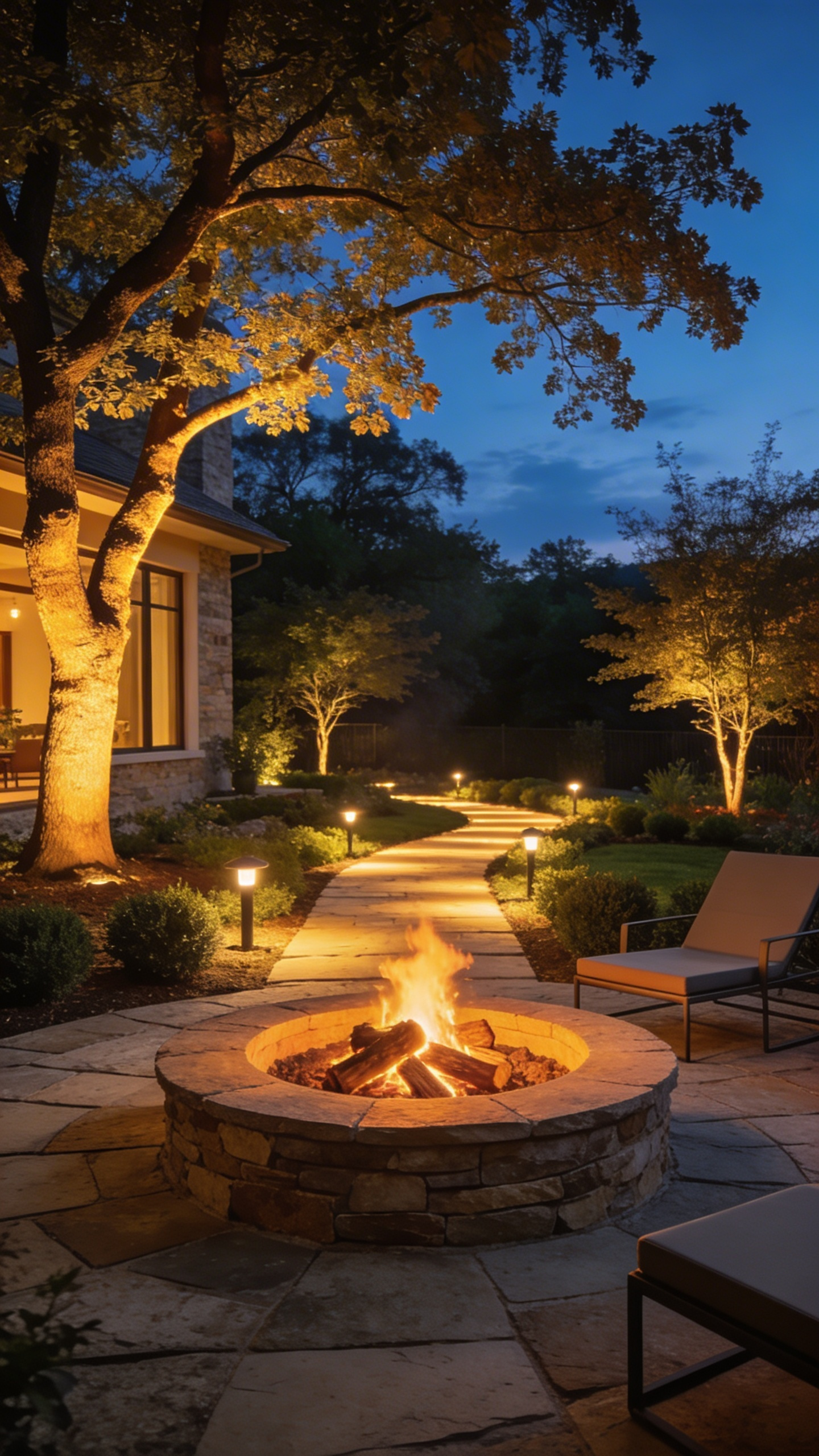
A bright fire surrounded by pitch darkness creates an unsettling cave effect. You can establish visual boundaries using subtle perimeter grazing. Softly illuminating a distant fence line expands the perceived outdoor room. This low-lumen output prevents the claustrophobic feeling of staring into a black hole.
Fire naturally creates dancing shadows that static lighting can easily ruin. You should avoid harsh downlighting directly over the seating area. Tuck in-grade lights behind architectural grasses to create a layered silhouette effect. Hardscape under-glow beneath stone benches provides essential safety minimalism. Linear tape lighting illuminates trip hazards without casting glare into your eyes. Ultimately, this preserves the dark sky for comfortable stargazing around the hearth.
Sophisticated systems utilize dim-to-warm control logic to mimic the fire’s lifecycle. As the flames peak, you can dim ambient lights to a matching 1,800-Kelvin glow. As the embers die, slightly raising the brightness ensures a safe transition indoors.
17. Native Plant Windbreaks: Cultivating Natural Screening for Draft Control and Privacy
Wind is essential for combustion. However, it remains a primary source of frustration. Solid privacy walls create low-pressure vacuums. This vacuum pulls smoke downward into your seating area. A successful windbreak requires 40 to 60 percent optical porosity. Planting staggered rows of native shrubs creates a permeable filter. This slows wind velocity without creating turbulent smoke eddies.
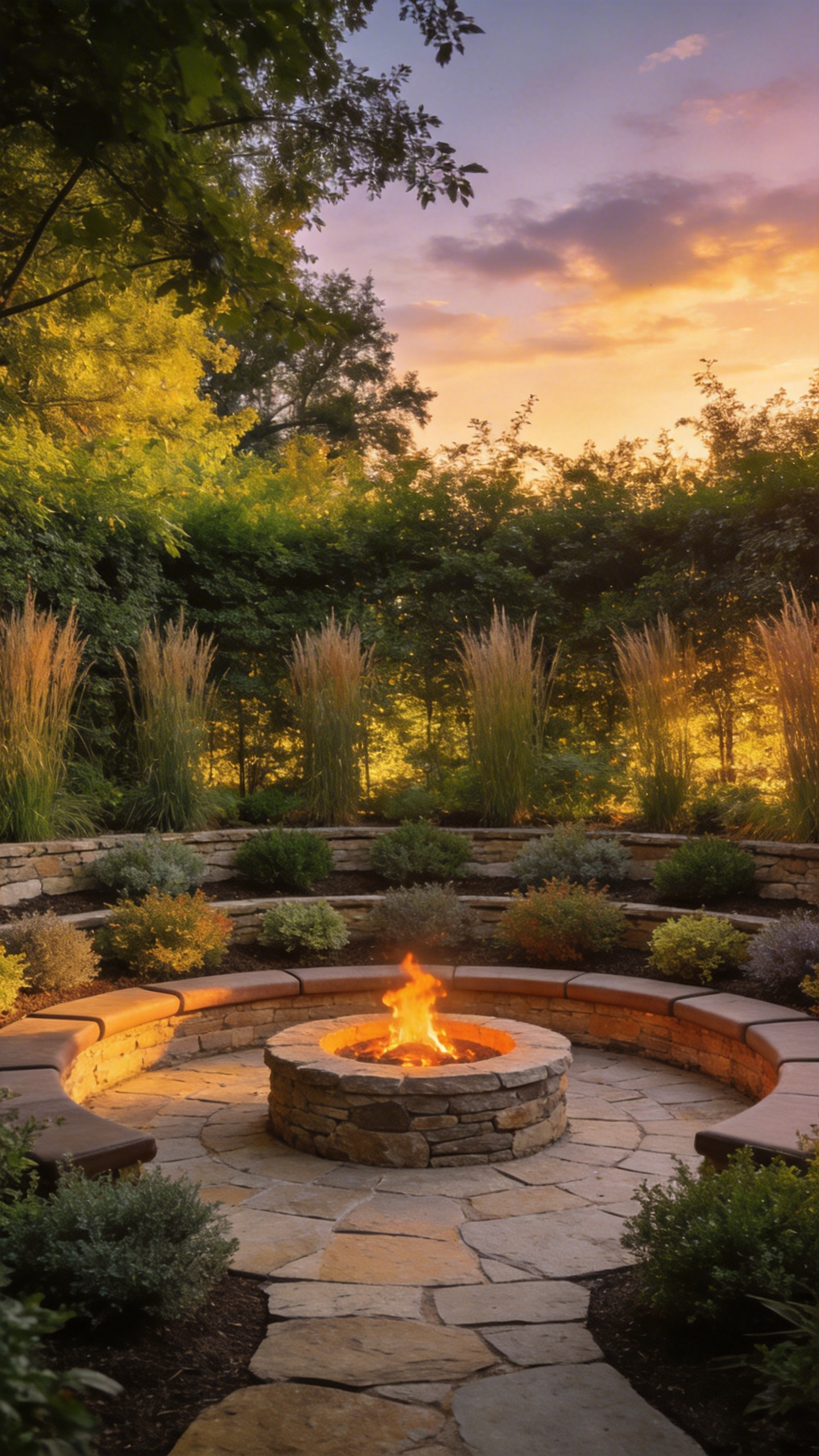
The distance between your plants and firepit matters immensely. Agricultural science uses the height factor for placement. Position your firepit two to five times the plant height away. Placing it too close creates heavy turbulence. Flames flicker violently and burn unevenly as a result. Chemical composition dictates safety near a firepit. Deciduous natives like serviceberry act as natural fire retardants. Keep flammable, resinous evergreens far away from stray sparks.
A native windbreak beautifully curates your outdoor soundscape. Wind passing through conifer needles creates a romantic whistle. Quaking aspens rustle much like a crackling fire. Incorporating tall native grasses prevents cold ankle drafts. You create a cohesive auditory and tactile experience. Modern windbreaks act as vibrant biodiversity corridors. Your firepit becomes an integrated part of the local ecosystem.
18. The Four-Season Fire Pavilion: Strategic Overhead Structures for Year-Round Fireside Living
The modern fire pavilion transforms a backyard firepit into a permanent, weather-defying architectural anchor. Historically, this concept traces back to the indigenous Scandinavian Grillkota. These Arctic survival hubs utilized steep roofs to safely funnel smoke outward. Designers now engineer sophisticated overhead structures for year-round fireside living. A motorized louvered roof serves as the technological core of these spaces. High-end louvers can rotate up to 150 degrees to block heavy winds. Simultaneously, the system leaves a slight upper gap for convective heat and smoke. Passing wind creates a low-pressure venturi effect right outside this gap. This actively pulls smoke out without blinding your seated guests.
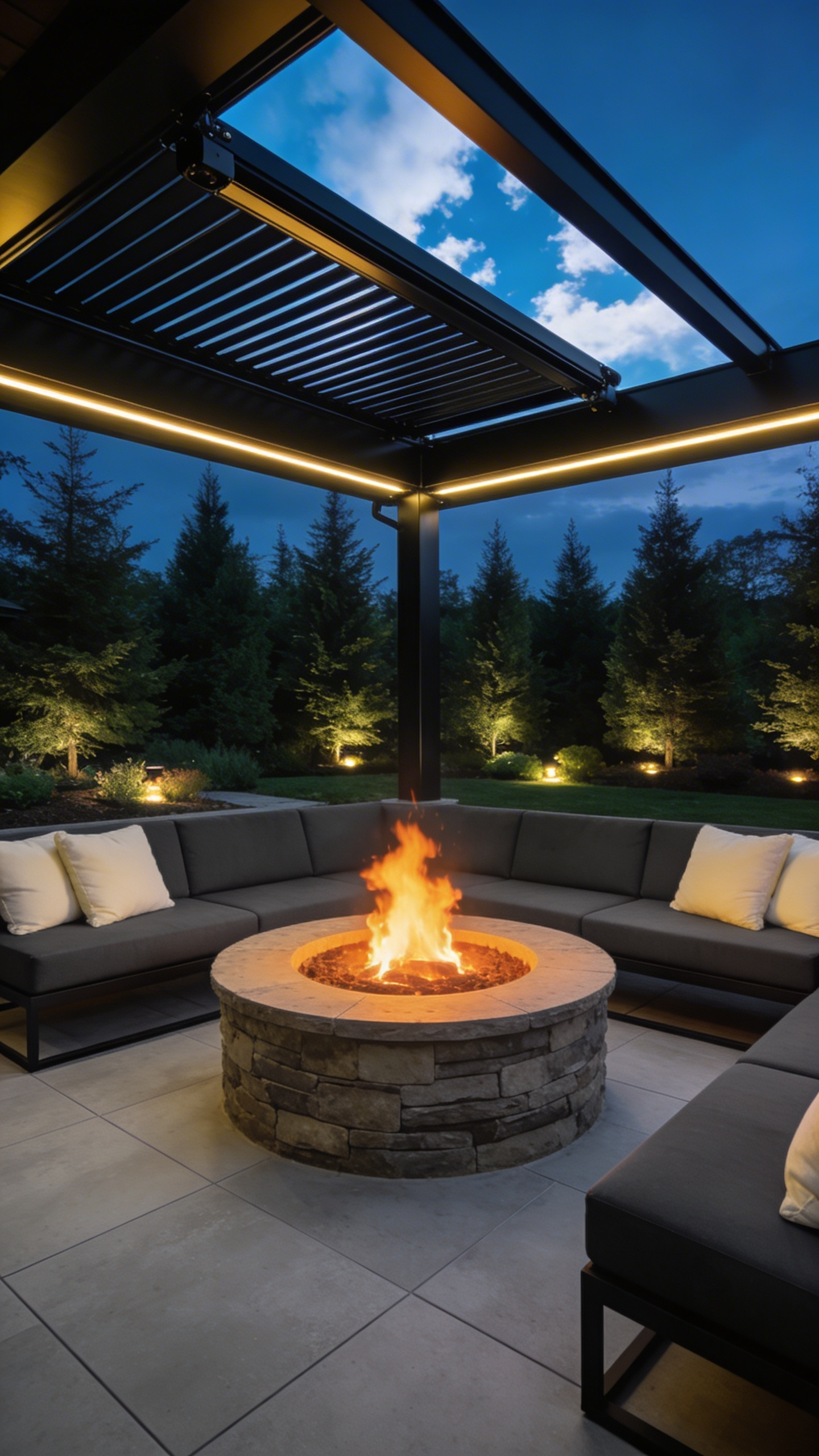
However, the ambient air remains difficult to warm using only a central firepit. Radiant heat from the flames primarily warms objects in a direct visual line. Professional designers integrate short-wave infrared heaters into the perimeter overhead beams. This dual approach creates a comfortable thermal sandwich for all occupants. You feel pleasant warmth on your front and soothing heat on your back. Strict safety regulations dictate building clearances under these solid overhead roofs. Gas fire features generally require an 84-inch clearance to the lowest combustible point. Builders often use non-combustible cement-fiber substrates to prevent dangerous heat staining.
An enclosed pavilion changes the fundamental sensory psychology of your outdoor space. The structured roof reflects the soothing crackle of wood back down to you. This acoustic cocoon effectively masks disruptive neighborhood noises like heavy street traffic. You sit deeply protected from harsh elements while still enjoying the wild landscape. In summary, these firepit ideas backyard concepts ensure your home remains a curated gallery of comfort and style.
Frequently Asked Questions
What is the best material for a long-lasting backyard fire pit?
For discerning homeowners, high-density basalt or board-formed concrete are superior choices. These materials offer exceptional thermal mass. They absorb and radiate heat efficiently while resisting the cracking associated with porous stones like river rock. If you prefer a living finish, Grade A Corten steel is highly recommended for its self-protecting patina.
How far should a fire pit be from the house for safety?
Standard architectural safety guidelines suggest a minimum of 10 to 15 feet from any combustible structure. This includes your home, wooden decks, or overhanging trees. For a luxury integrated look, always consult local building codes. Gas-powered fire features often have different clearance requirements than traditional wood-burning pits.
Do smokeless fire pits actually work?
Yes, high-tech smokeless inserts utilize secondary combustion to burn off wood gases before they become smoke. They draw air through a double-walled chamber and superheat it. These pits create a cleaner, more efficient flame. For the best results, it is critical to use kiln-dried hardwoods and maintain proper base ventilation in your masonry surround.