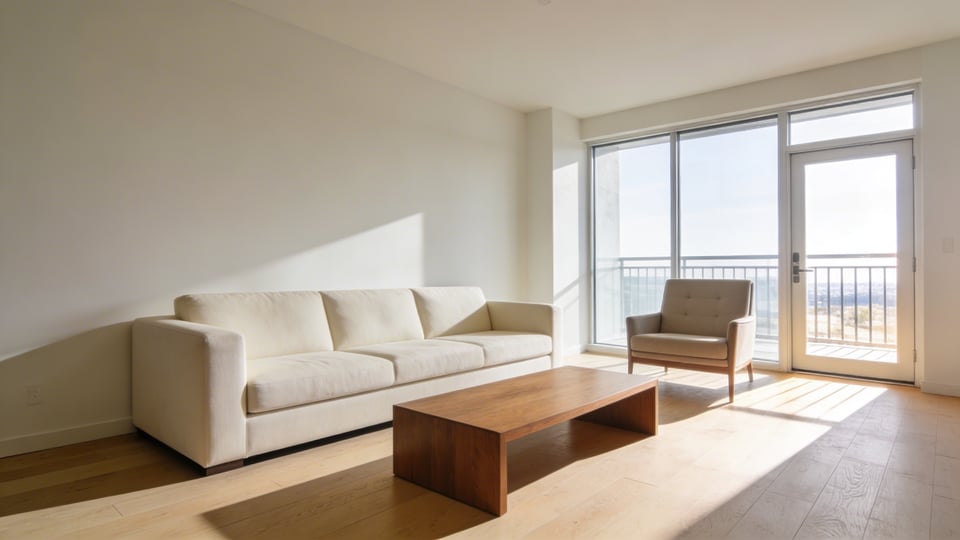
Most homeowners follow a common design belief. They assume pushing furniture against walls maximizes floor space. Therefore, sofas often retreat to the perimeter to “open up” the room for guests. However, this well-intentioned impulse frequently backfires. Instead of creating freedom, an inefficient living room layout induces a subtle, persistent anxiety. Environmental psychology calls this “sociofugal” space, and it drives people apart. The room feels stiff, resembling a cold airport lounge. Indeed, physical distance between guests often prevents natural connection. When considering how to decorate your living room, prioritize spatial harmony over square footage.
This “wall-hugging” habit triggers deep evolutionary alarm bells. Leaving a vast “dead zone” in the center inadvertently raises cortisol levels. Research indicates the brain perceives unanchored areas as navigational threats. Therefore, inhabitants feel exposed rather than protected. Historically, this design shift prioritized television viewing over face-to-face connection. Our homes became passive viewing galleries rather than communal hubs. Sadly, this leaves us feeling socially isolated. It highlights the need for bespoke interiors that cater to interaction.
Fortunately, reclaiming your psychological sanctuary requires a simple perspective shift. This guide reveals the hidden impact of spatial layout on mental health. It also offers a comprehensive look at choosing the right living room decor for a high-end feel. We will examine the biology behind “sociopetal” spaces and analyze how traffic flow reduces stress. In fact, we will uncover how “floating” furniture eliminates the “cave effect.” Creating a true home means designing for connection, not just clearance.
The Physiology of Flow: Defining the 36-Inch Clearance Rule for Stress Reduction
The 36-inch clearance rule acts as a vital physiological threshold. In neuroarchitecture, this measurement determines if a room fosters flow or induces micro-stress. Fundamentally, the rule accommodates the natural stride of the 95th percentile. Without this specific width, your body must perform an awkward “lateral shimmy” to pass. Consequently, your brain switches from relaxed auto-pilot to active, effortful navigation.
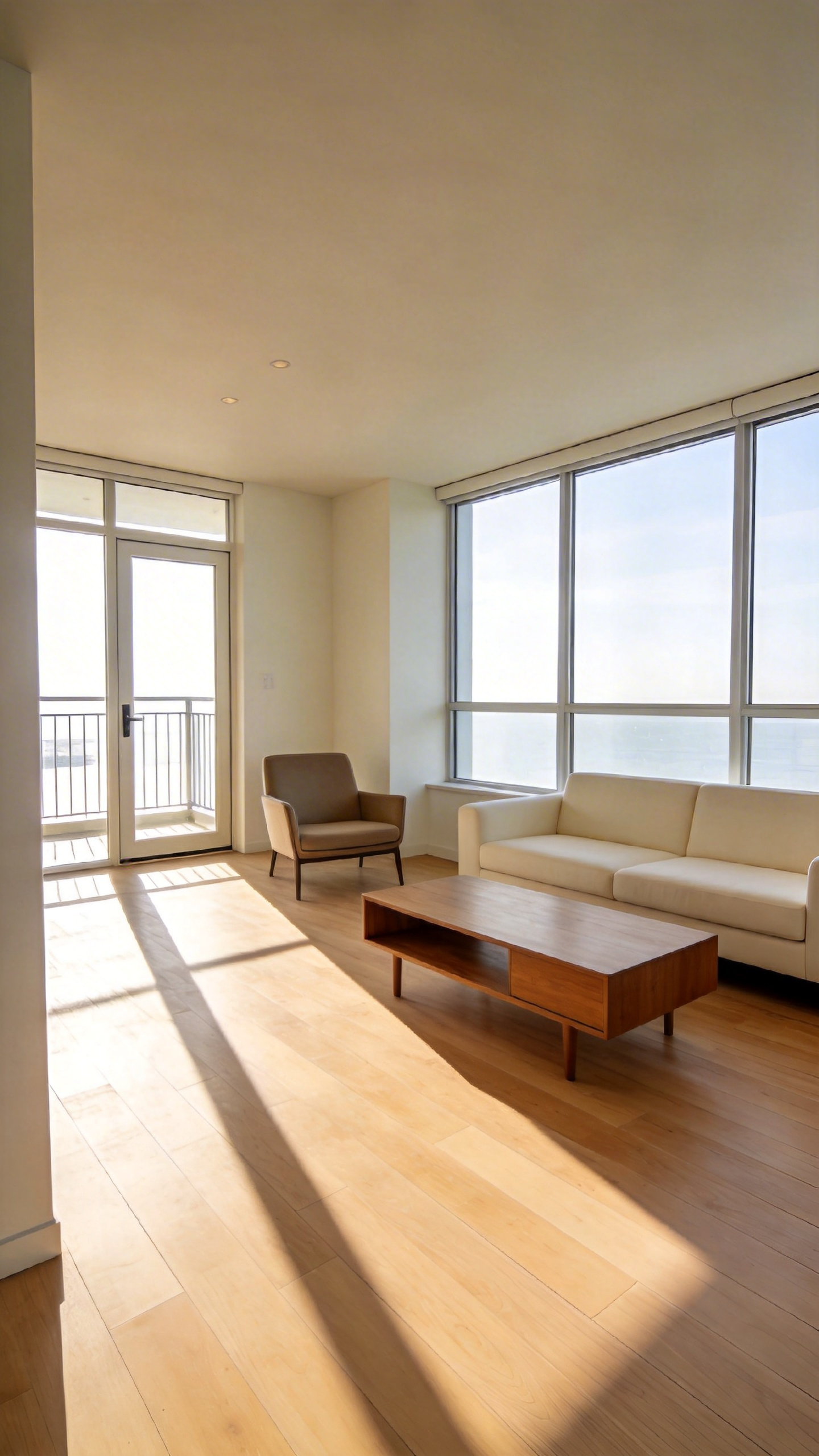
This interruption creates “spatial friction.” It forces the brain to process rapid collision-avoidance calculations. Therefore, maintaining a 36-inch buffer reduces this cognitive load. It allows the prefrontal cortex to rest. Wide pathways also soothe evolutionary survival instincts. Specifically, cramped spaces feel like traps, while clear paths signal safety.
This dimension respects “proxemics,” the invisible bubble of personal space. If walkways are too narrow, movement infringes on the intimate zones of seated guests. Adequate clearance ensures traffic remains in the social zone. However, designers may reduce gaps to 18 inches for a “cozy nesting” effect in static areas. Conversely, a 48-inch promenade works best for high-traffic zones. Ultimately, these invisible measurements define the home’s architectural flow.
Command Position Dynamics: Placing the Sofa for Deep Psychological Security
To understand living room layout, look beyond aesthetics to the “architecture of survival.” This concept relies on Prospect-Refuge Theory. Humans possess an innate need for protected spaces that offer clear outward views. Evolutionarily, our ancestors survived by guarding their backs while scanning for predators. Today, this instinct dictates optimal sofa placement.
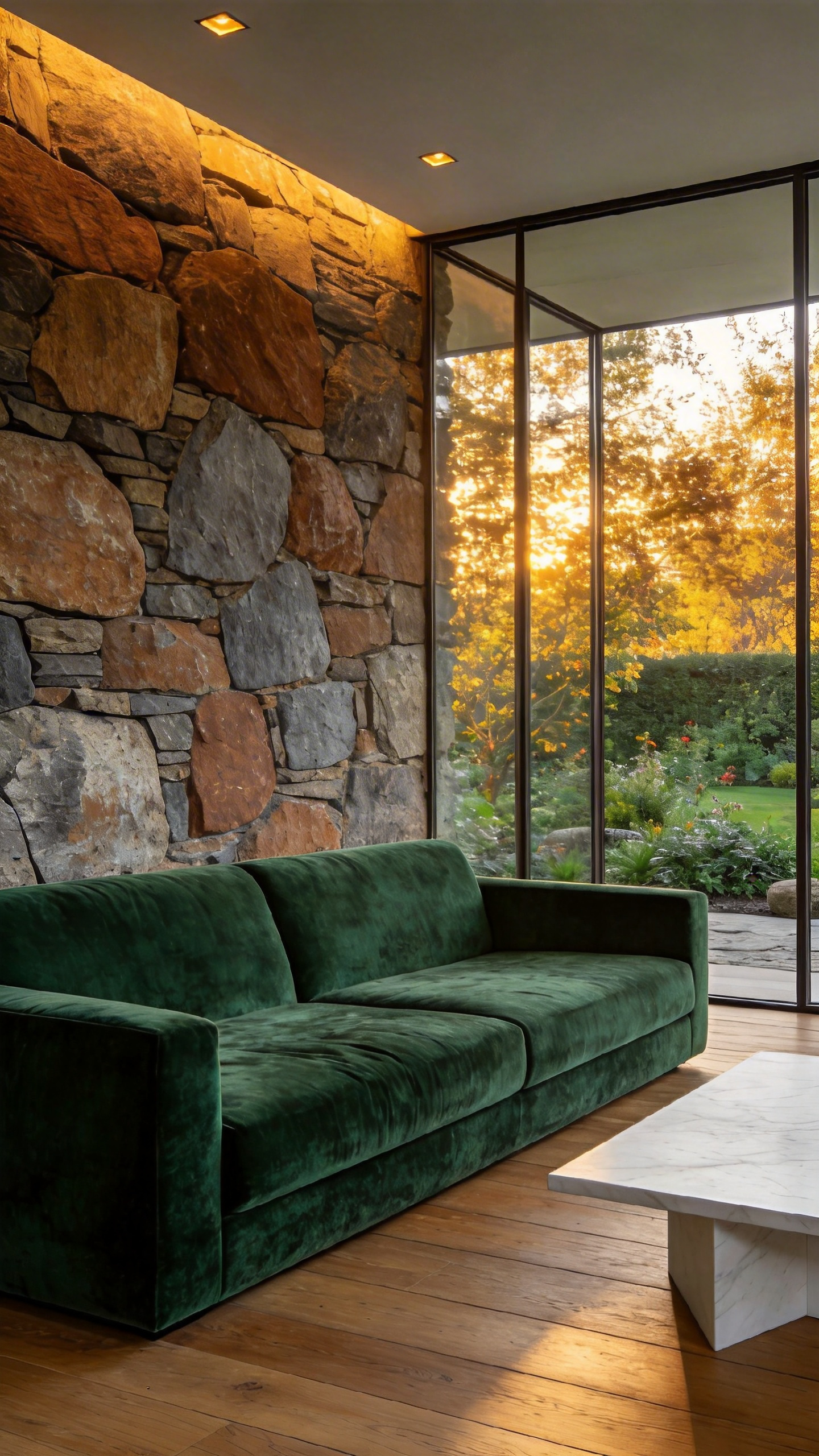
Problems arise when a sofa acts as a “floating” island with its back to an entrance. Consequently, the brain remains in a state of hyper-vigilance. The amygdala cannot fully relax. This blocks the body’s ability to reach deep rest. Therefore, the “Command Position” is essential. Ideally, position the sofa diagonally across from the main door to maximize sightlines.
Historically, this mimics the “throne room” dynamic used by emperors for visual dominance. A solid wall behind the furniture creates a psychological anchor. However, modern open-concept homes often lack these protective walls. Thus, designers must implement specific “cures.” Placing a console table behind a floating sofa creates a “proxy refuge.” Similarly, a mirror reflecting the entry acts as a rear-view monitor. Proper placement transforms a room from a stressor into a sanctuary.
The Sociopetal Arrangement: Structuring Furniture to Foster Connection
Derived from Latin words meaning “companion” and “to seek,” a sociopetal layout acts as social gravity. Specifically, it uses inward-facing patterns to encourage eye contact. Sociofugal arrangements, like airport lounges, push people apart. Unfortunately, many modern living rooms fall into “sociofugal traps.” They align all furniture toward a single wall. By orienting chairs toward a television, we create private viewing galleries instead of communal hubs.
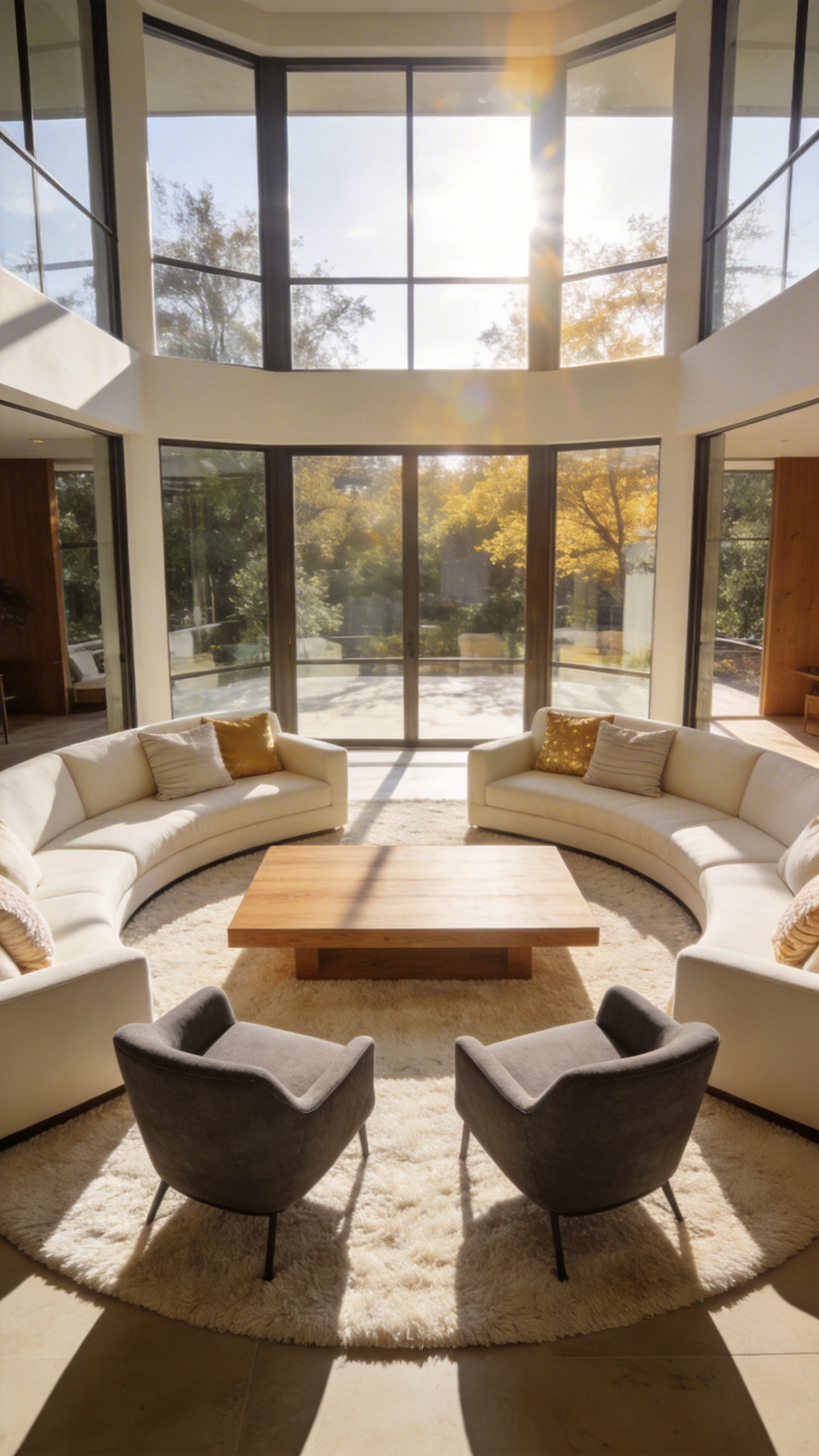
To correct this, apply specific proxemic geometry. Research identifies a “golden distance” for connection. Ideally, the space between seated heads should remain between four and eight feet. Beyond this range, facial cues fade. Voices must rise. Consequently, natural intimacy is lost. Implementing cozy seating ideas within this radius ensures the space remains inviting. A central coffee table anchors this arrangement. Placed roughly 18 inches from seating, it acts as a bridge for shared items.
True wellness architecture requires nuance regarding focal points. While fireplaces draw us into a circle, televisions force parallel isolation. Therefore, consider placing screens on a secondary axis. This prioritizes face-to-face interaction. Additionally, recognize that constant connection can be exhausting. A well-designed room should include a “psychological safety valve.” A solitary reading chair near a window offers a necessary retreat. This balance supports both community and individual well-being.
Biophilic Orientation: Aligning Primary Seating with Natural Light Sources
Humans naturally exhibit “positive phototaxis,” an instinct to move toward light. Consequently, placing primary seating near windows is a biological necessity. Exposure to morning light suppresses melatonin and triggers serotonin. This anchors your circadian rhythm for better sleep cycles.
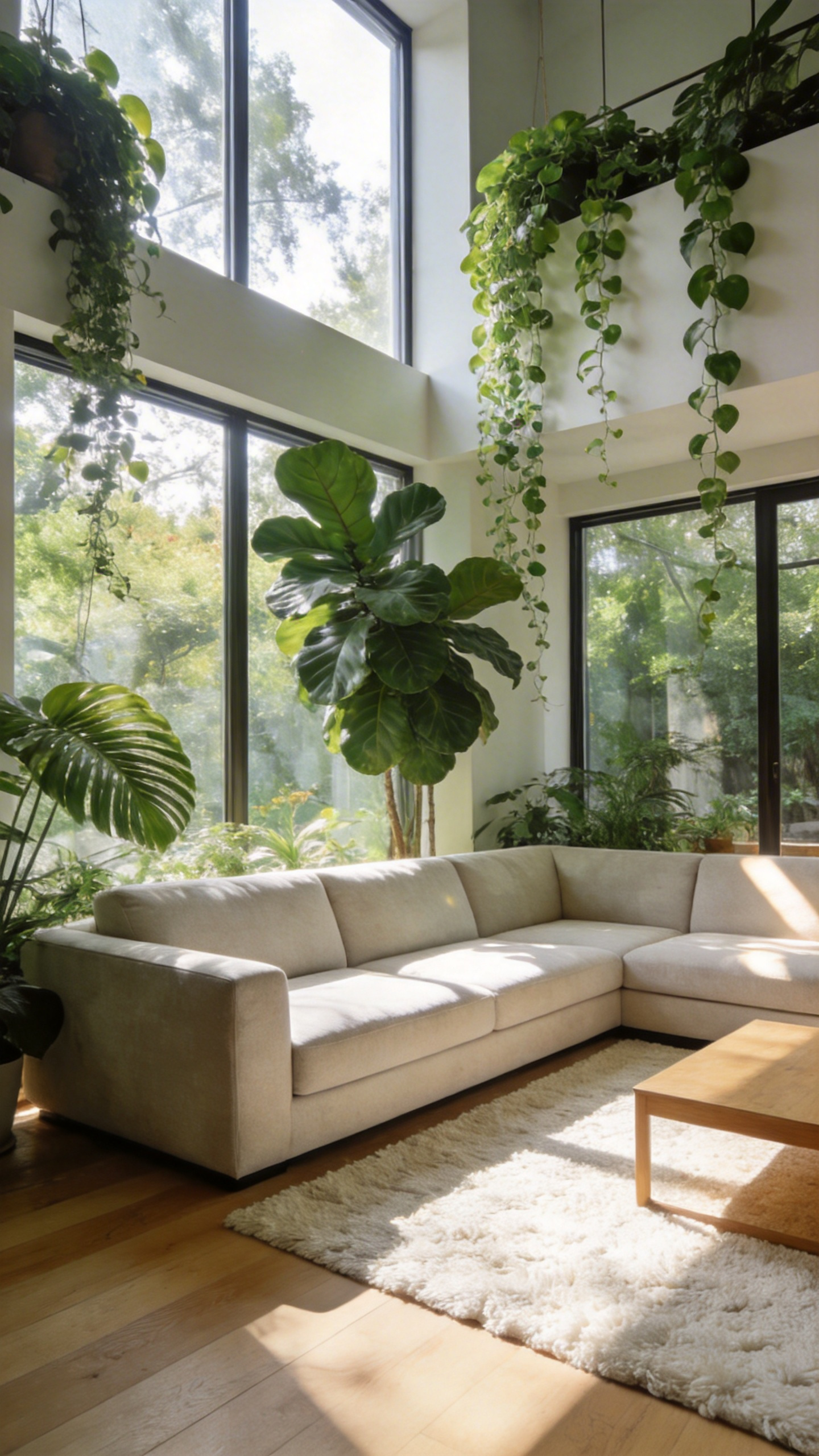
However, the angle of orientation matters. Direct face-on alignment causes “veiling glare” on screens or books. This leads to ocular fatigue. Therefore, position furniture perpendicular or at a 45-degree angle to windows. This arrangement facilitates the “20-20-20 rule.” It enables you to look comfortably into the distance to reduce eye strain.
This specific layout also mimics the evolutionary “edge effect.” You enjoy a clear view of the outdoors (Prospect) while retaining a solid wall behind you (Refuge). Additionally, sidelighting creates modeling shadows. This adds texture that helps the brain process space with less effort. Ideally, pair this orientation with matte-finish materials. These surfaces diffuse strong beams, mimicking the dappled light of a tree canopy. By treating your window as “living artwork,” the room becomes a restorative “light-well.”
Anchoring and Grounding: Using Rug Dimensions to Define Energetic Zones
Anchoring a living room demands an understanding of environmental psychology. Specifically, a rug functions as a “proxemic marker.” It defines the energetic boundaries of social interaction. Anthropologist Edward T. Hall described this area as the “Social-Consultative” zone. When a rug is too small, furniture floats. This triggers a subtle sense of instability. Therefore, select dimensions that extend 18–24 inches beyond the furniture frame. This maps out a territory where conversation flourishes.
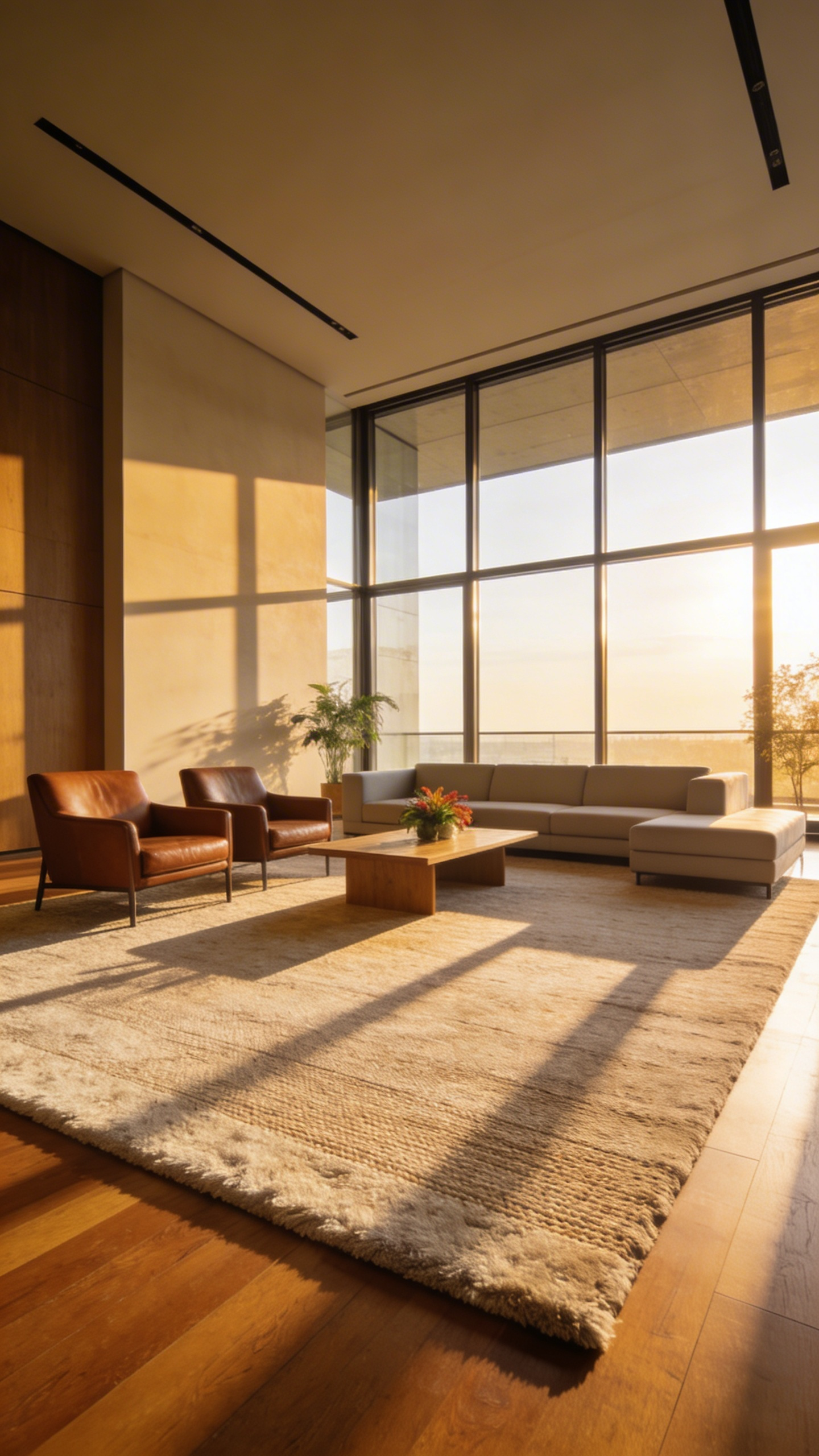
“Grounding” is also supported by physical science, particularly acoustics. Hard surfaces reflect sound, creating echoes that unconsciously spike stress. In contrast, a high-quality wool rug acts like an acoustic panel. Stepping onto a rug creates an immediate “hush.” It absorbs high-frequency clutter. Consequently, this sensory shift lowers cortisol, allowing the room to function as a sanctuary.
To maintain cohesive energy, consider the placement of furniture legs. Ideally, placing all legs on the rug creates a “closed system.” This signals a unified destination. Conversely, “floating” furniture creates scattered energy. It makes a space feel staged rather than lived-in. Finally, prioritize natural materials like wool or jute. The texture underfoot signals a transition from transit to stasis, inviting the body to rest.
The ‘Visual Silence’ Sightline: Layouts that Minimize Cognitive Load Upon Entry
“Visual Silence” isn’t just about looks. Actually, it is a neuro-architectural intervention designed to recalibrate your nervous system. Specifically, this concept prioritizes reducing “cognitive load” immediately upon entry. Neuroscience reveals that the brain categorizes a room’s safety within 150 milliseconds. A cluttered entry forces the visual cortex to work harder. This exertion triggers a measurable spike in cortisol. To avoid these pitfalls, many homeowners consider hiring a living room designer. They ensure the initial impression is one of tranquility.
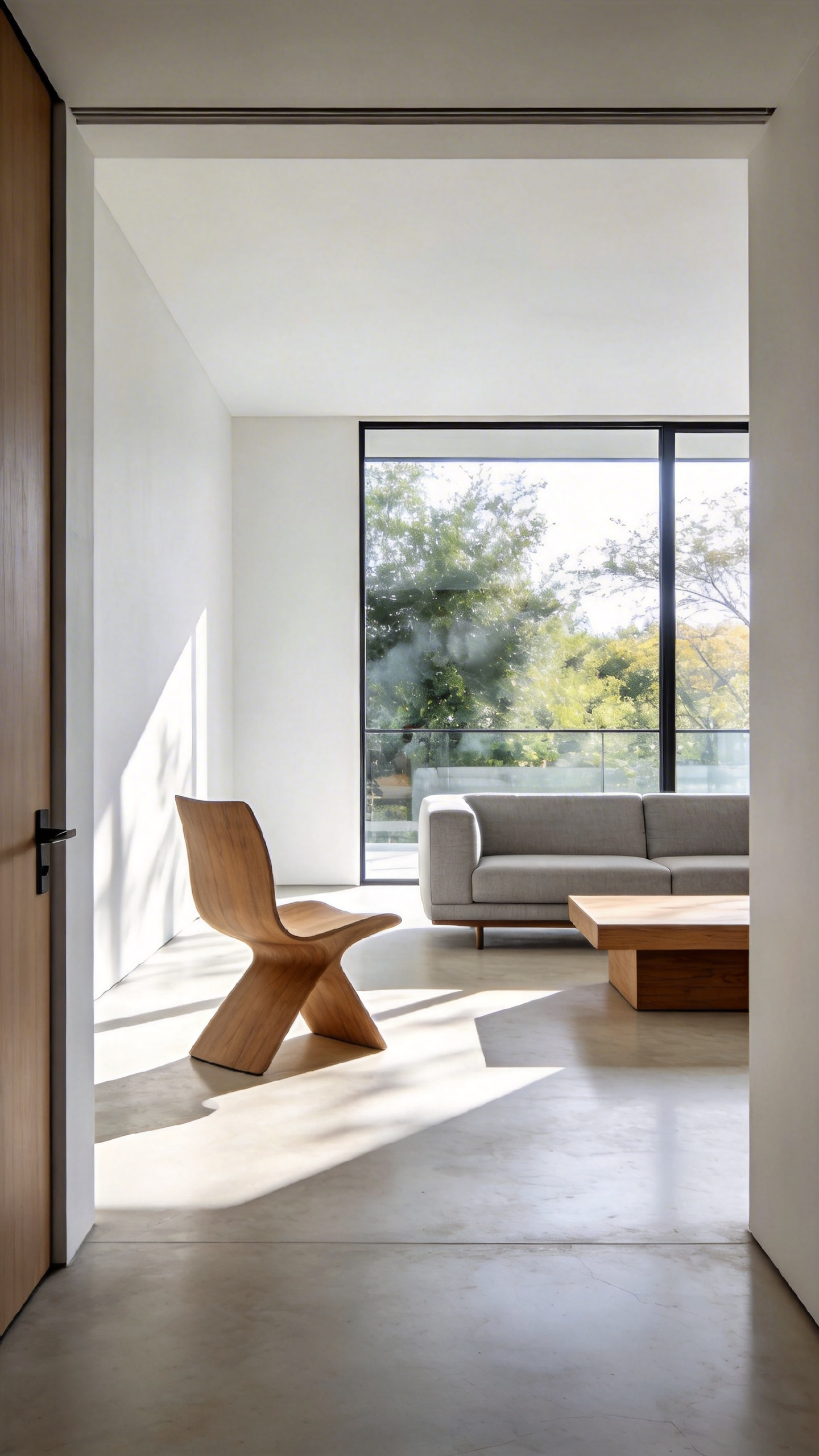
We must engineer the layout for “predictive coding.” The brain should predict the room’s path without effort. Historically, this mirrors the Japanese philosophy of *Ma*, or “the space between.” Ensure the first eight feet remain clear of visual “speed bumps.” Furthermore, avoid placing high-backed sofas directly facing the entry. Instead, utilize “floating” arrangements to maintain clear sightlines.
Material selection plays a crucial role in lowering mental effort. “Chromatic silence” utilizes earthy neutrals to soothe the limbic system. However, the space shouldn’t feel sterile. Layer textures—like rough oak against smooth linen—to provide sensory richness. Limiting materials to three core finishes creates a subconscious rhythm. Ultimately, a successful layout allows the home to “exhale” the moment you walk in.
Zoning for Circadian Rhythms: Creating Distinct AM and PM Activity Areas
Your body’s master clock, the Suprachiasmatic Nucleus (SCN), governs your energy. However, modern open-plan living often confuses this internal rhythm. Therefore, effective wellness architecture divides the living room into distinct temporal zones. Historically, homes featured bright “Morning Rooms” and separate “Withdrawing Rooms.” Today, we can replicate this logic through strategic layouts.
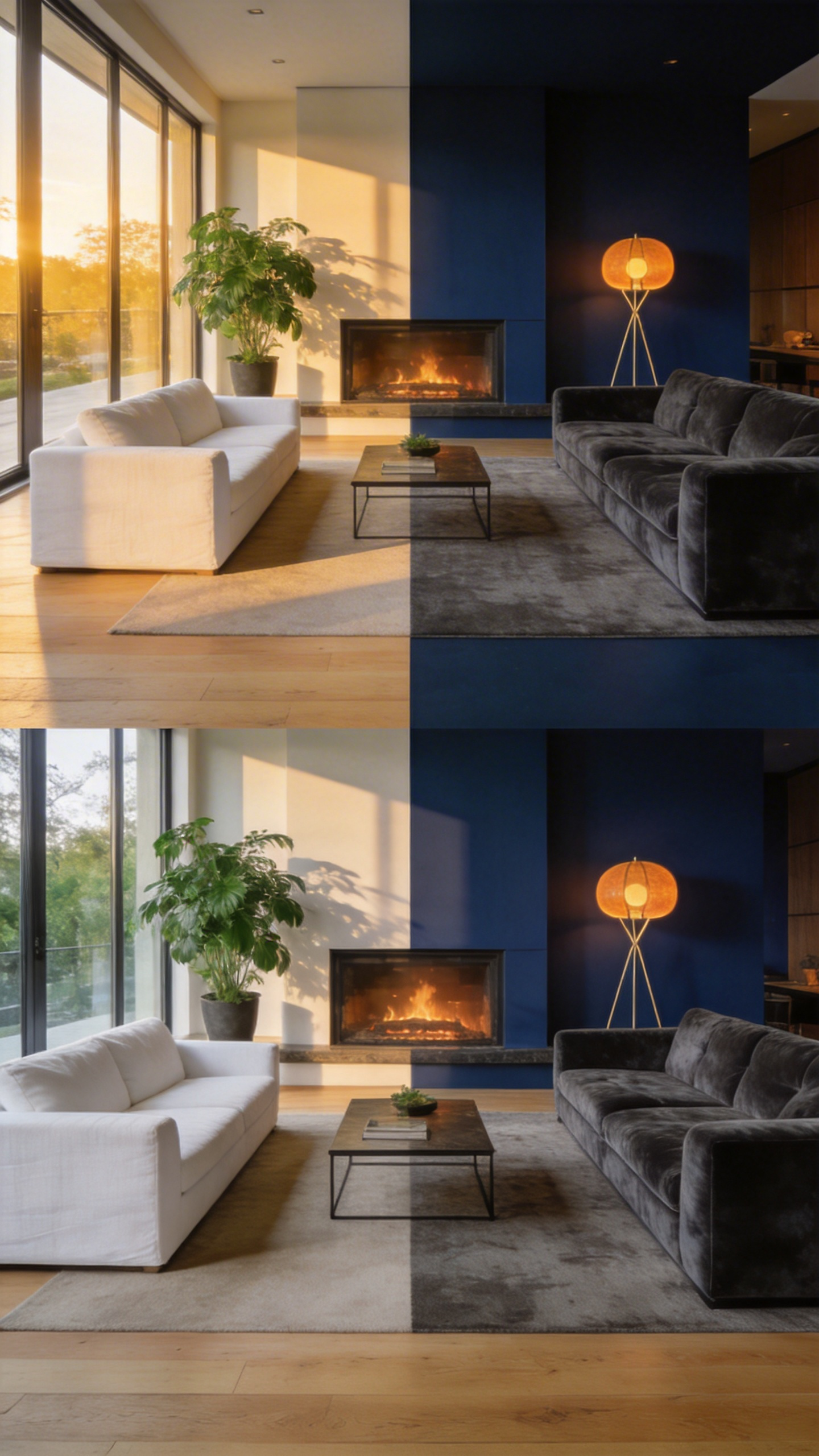
Establish an AM activity zone facing East to capture natural light. Think of this as an “Indoor Sky.” Use matte white finishes to diffuse stimulating blue light. Furthermore, incorporate “cool” tactile elements like stone tables. These hard surfaces reflect sound, creating a bright acoustic environment that triggers alertness.
Conversely, the PM relaxation zone should facilitate “blue-depletion.” Ideally, position this “Snug” in a western corner away from windows. Here, select absorbent materials like unbleached linen or heavy velvet. In fact, these textures filter out high-frequency light and dampen noise. Switching from cold surfaces to warm walnut wood provides a haptic signal to relax. Moving across these physical thresholds acts as a “neurological handshake,” helping your body unwind.
Conversation Radius: The 8-Foot Limit for Acoustic Intimacy
The “8-foot limit” is not merely a design suggestion. It represents a hard-coded human boundary. Anthropologist Edward Hall identified this range as the tipping point for sensory connection. Inside this radius, we perceive subtle vocal inflections. However, once we cross the eight-foot mark, intimate cues vanish. Consequently, the interaction shifts from a personal conversation to a public performance.
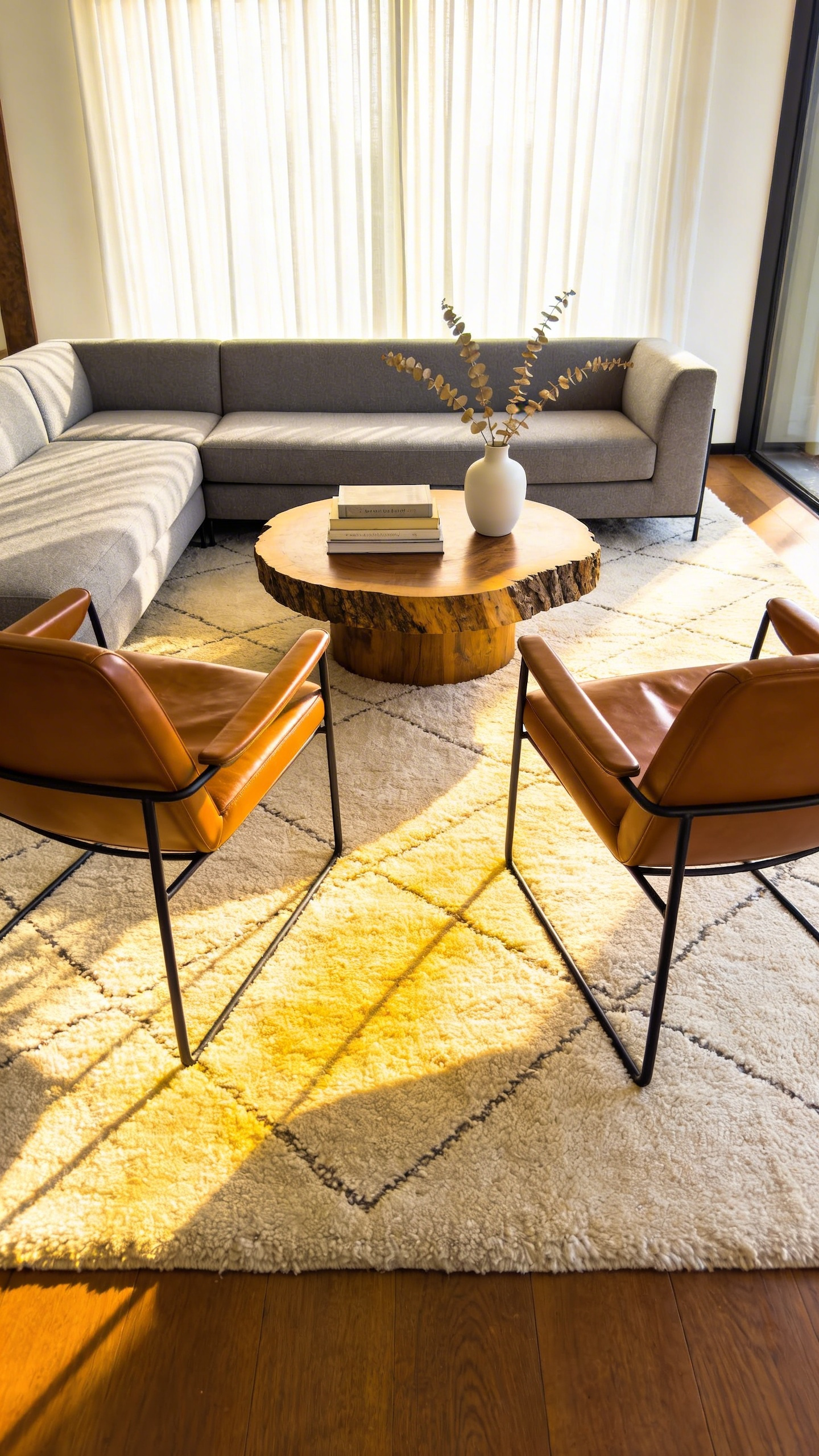
The physics of sound reinforces this barrier. Eight feet is often the “Critical Distance” in a standard living room. At this point, direct voice sound equals reverberant room noise. Therefore, furniture placed beyond this limit forces speakers to compete with background hums. We subconsciously raise our voices, leading to “vocal fatigue.”
To combat this, successful layouts must act as “spatial hugs.” Designers historically used sunken conversation pits to enforce this proximity. Today, we rely on large area rugs as acoustic anchors. A thick wool rug acts as an acoustic sink. It absorbs distracting background noise. Ultimately, pulling furniture within this eight-foot “event horizon” protects the safety required for deep connection.
Eliminating ‘Poison Arrows’: Softening Sharp Furniture Angles in High-Traffic Zones
Where neuroarchitecture meets Feng Shui, sharp corners are known as “poison arrows” or *Sha Qi*. Specifically, rigid, 90-degree angles trigger a biological alarm. Neuroscience research shows that sharp contours activate the amygdala, the brain’s fear center. Consequently, your brain perceives a jagged coffee table as a physical threat, similar to a sharp rock.
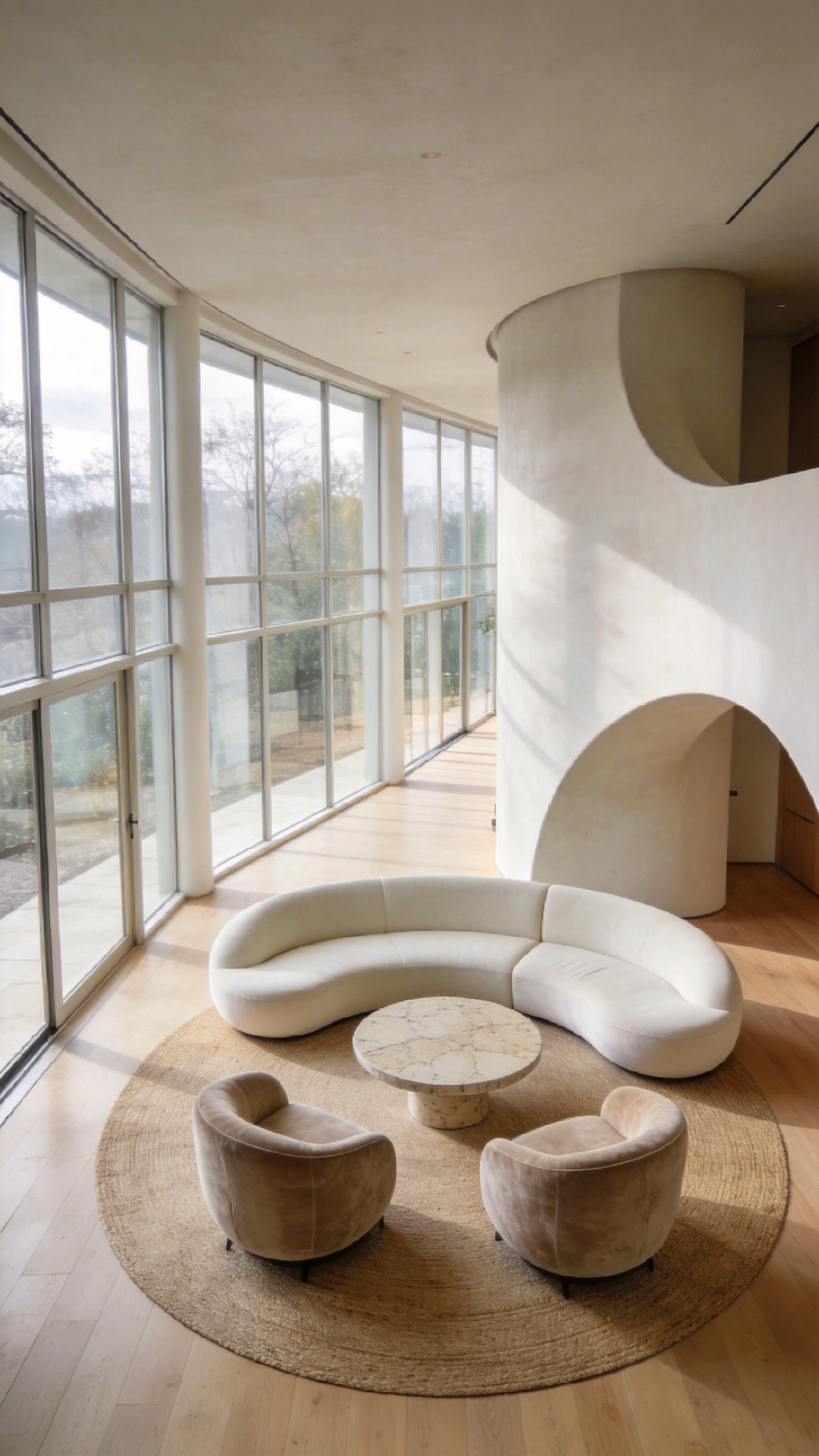
This biological reaction is amplified in high-traffic zones. A sharp corner protruding into a main walkway creates a psychological “choke point.” The body tenses up to navigate the hazard. This causes minor spikes in cortisol. Therefore, softening these silhouettes is essential for a stress-free environment.
Eliminating these “arrows” does not always require new furniture. You can “break the line” by placing a leafy plant near sharp edges. This organic “biophilic buffer” effectively scatters the visual energy. Alternatively, draping a heavy throw over a square sofa arm softens the impact. For primary pathways, swapping a square table for an oval ottoman allows for “blind navigation.” As a result, the room shifts from a space of friction to one of fluid safety.
The Tech-Free Sanctuary: Layout Configurations that De-emphasize the Television
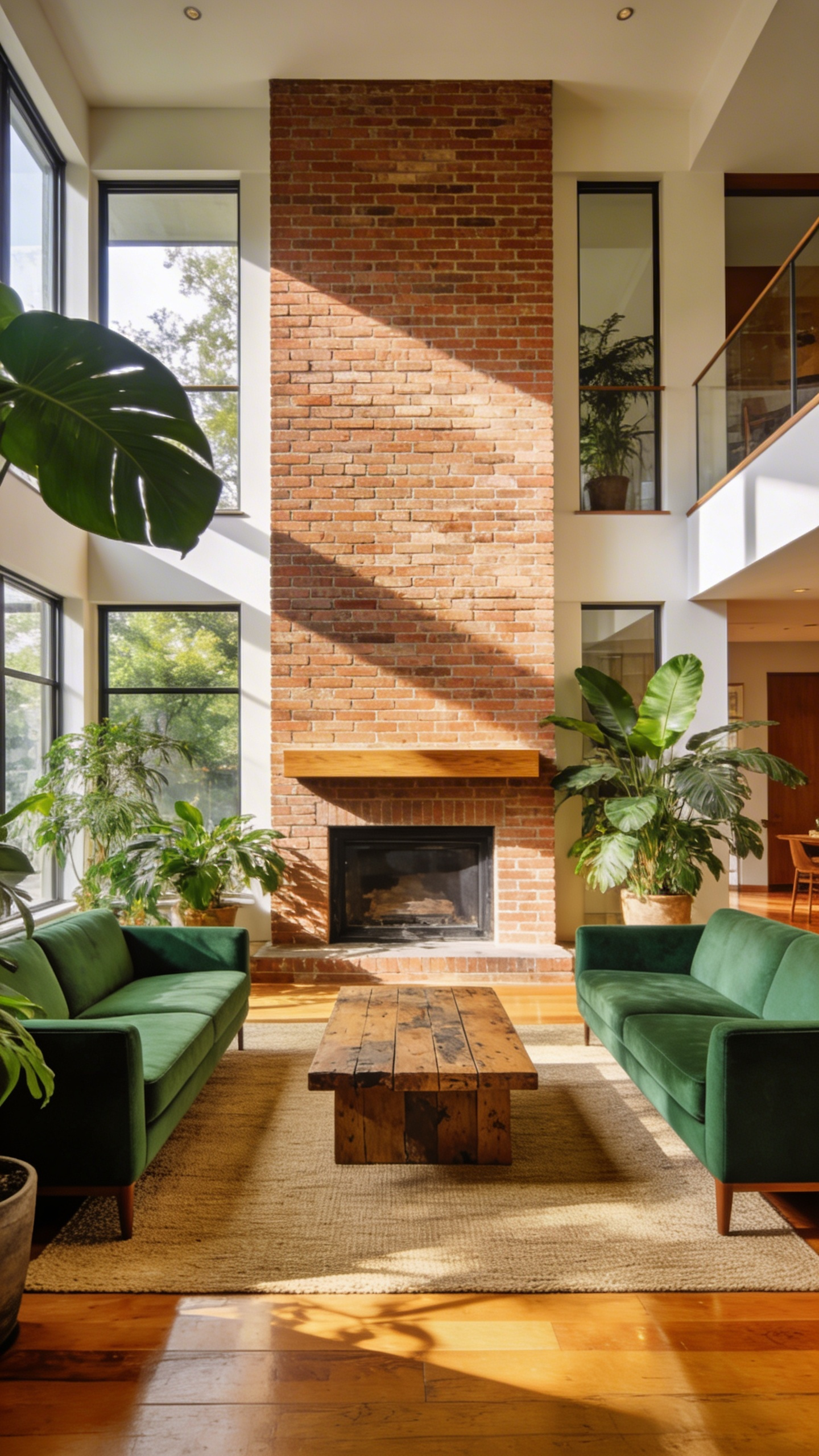
Living rooms used to center around the hearth, fostering warmth. Mid-century trends shifted this focus, creating an “amphitheater” layout orbiting a single glowing box. To reclaim connection, we must revive the bi-lateral layout. Placing sofas perpendicular to a fireplace forces occupants to face one another. Consequently, conversation becomes the default activity.
A dormant screen acts as a “black hole” of distraction. Therefore, utilize “tactile camouflage” to minimize this void. Surrounding the device with a gallery wall of tapestries draws the eye toward texture. This encourages art appreciation rather than screen passivity.
Alternatively, “Schrödinger’s Screen” solutions use kinetic architecture to hide technology. Motorized panels can conceal the television. Extreme de-emphasis involves short-throw projectors that leave zero visual footprint when unused. Ultimately, replacing the blue-light glow with warm lighting creates a sanctuary. This prioritizes mental wellbeing over digital consumption.
Vertical Equilibrium: Balancing Heavy Furniture with Negative Space for Mental Clarity
Vertical Equilibrium treats furniture as a system of mass and void. Specifically, this concept balances visual weight. A room filled with heavy, low-profile pieces creates downward force. Without vertical counter-balance, the space feels “bottom-heavy.” This leads to a sensation of being trapped. Therefore, we must introduce vertical voids to lift the eye.
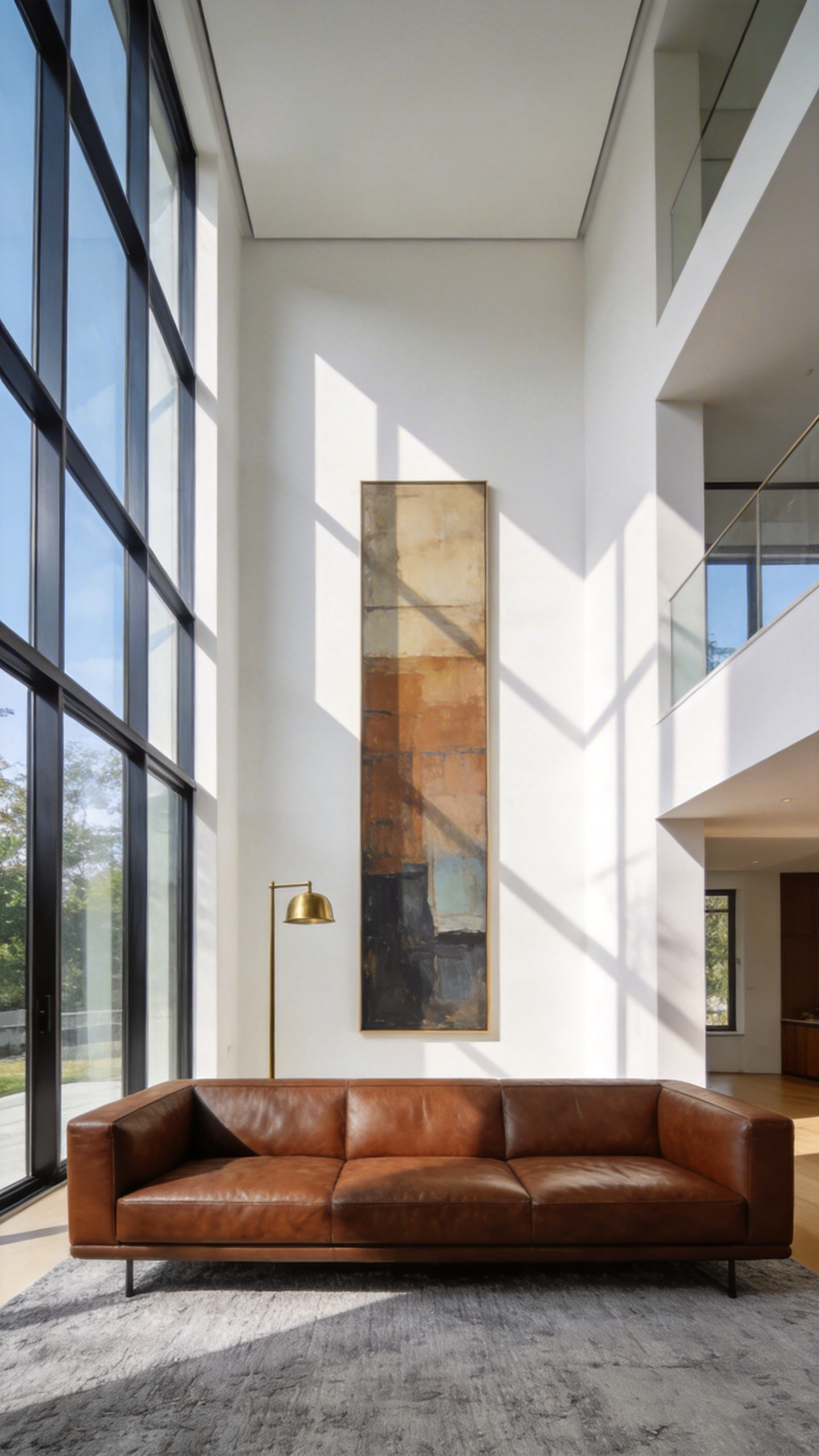
We look to the Japanese concept of *Ma* for guidance. *Ma* views empty space as an active entity. Just as silence between notes defines music, negative space defines furniture. By floating a heavy sofa away from the wall, you create a visual buffer. The brain processes the room as understandable modules rather than chaotic noise.
This balance is rooted in neuro-architecture. Humans crave both protection and a clear view. Heavy furniture provides the “Refuge.” However, dense placement blocks “Prospect,” increasing cognitive load. Balancing heavy pieces with open paths lowers cortisol. Finally, consider the “Levitating Mass” technique. Choose cabinets with recessed plinths to create a shadow gap. Consequently, negative space flows *under* the mass, making the room feel mentally expansive.
Corner Activation: Using Lighting and Greenery to Prevent Stagnant Energy (Chi)
Corners often feel like dead zones in a living room layout. However, this sensation is actually a rooted survival response called neurosception. Specifically, our brains scan dark corners for threats, creating a subconscious state of hypervigilance. Consequently, “activating” these spaces requires soothing this tension through strategic lighting. For instance, uplighting breaks heavy shadows, transforming a perceived trap into an open prospect. Furthermore, distinct lighting choices change the room’s emotional temperature. Ideally, use warm 2700K bulbs to mimic the “golden hour,” creating a safe, restorative atmosphere.
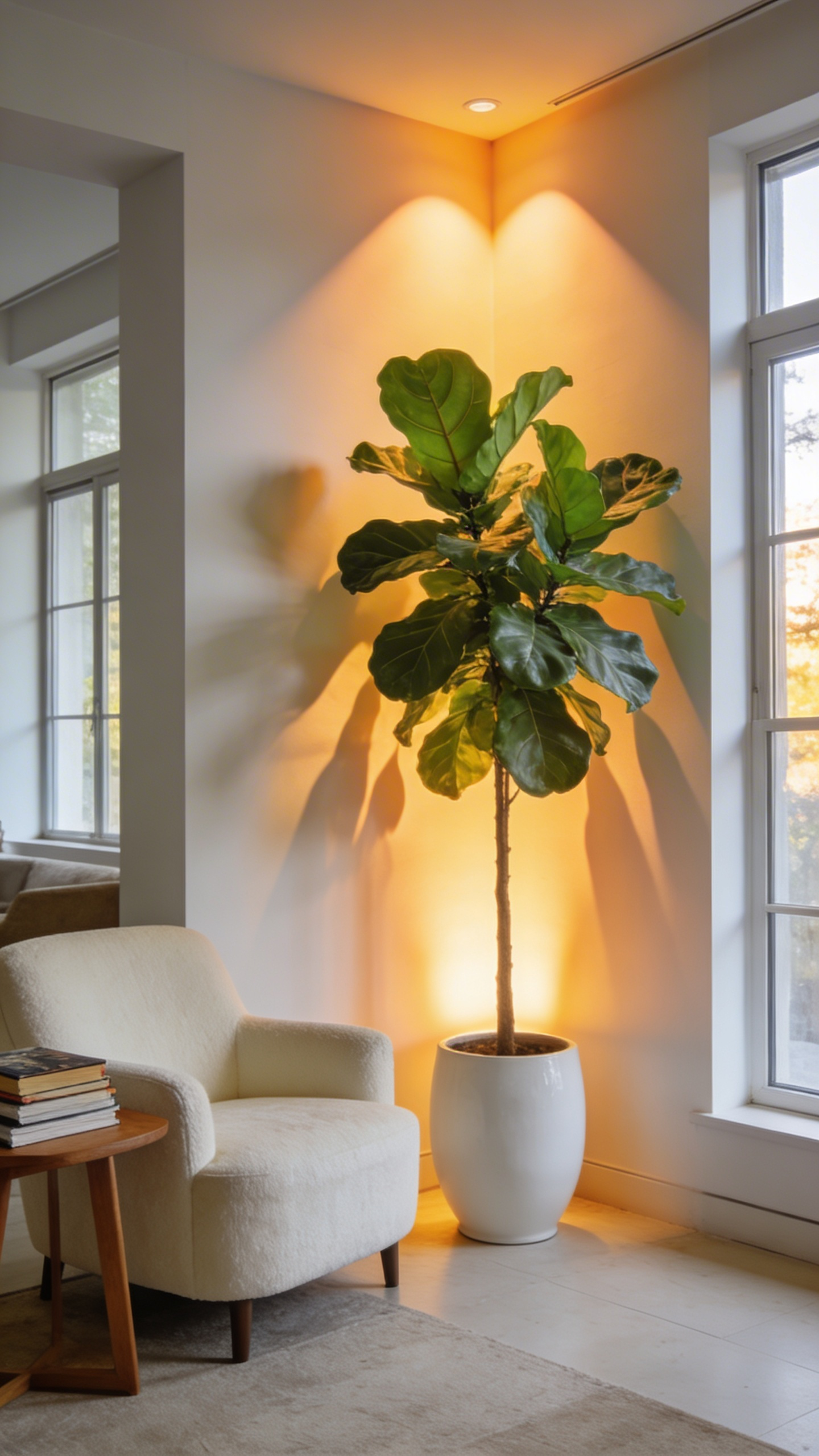
Beyond lighting, greenery serves as a vital energy anchor for these spaces. Yet, the choice between real and artificial plants triggers significant debate. In fact, a wilting live plant emits decaying energy, which is far worse than a fake one. Therefore, if natural light is scarce, opt for high-quality faux botanicals to maintain visual vitality. Conversely, when using live plants, consider hiding a small fan behind the pot. This simple addition simulates wind, preventing gas-exchange stagnation around the leaves.
Finally, consider the specific geometry of your foliage. Notably, soft, rounded forms like the *Monstera* act as gentle energy collectors. In contrast, sharp plants can create anxiety in high-traffic areas. Ultimately, filling these voids supports our ancestral need for structural safety and relaxation.
Flow-Through vs. Dead-End Layouts: Enhancing Air Quality and Physical Movement
The difference between flow-through and dead-end layouts dictates how a home “breathes.” Specifically, dead-end rooms often suffer from single-sided ventilation. “Dead zones” form where carbon dioxide accumulates. Research links these stagnant pockets to brain fog. In contrast, a flow-through layout treats the living room as a dynamic conduit. By utilizing cross-ventilation through opposite openings, the space acts as a natural vacuum. Thus, fresh air sweeps across the floor, improving Air Change Effectiveness.
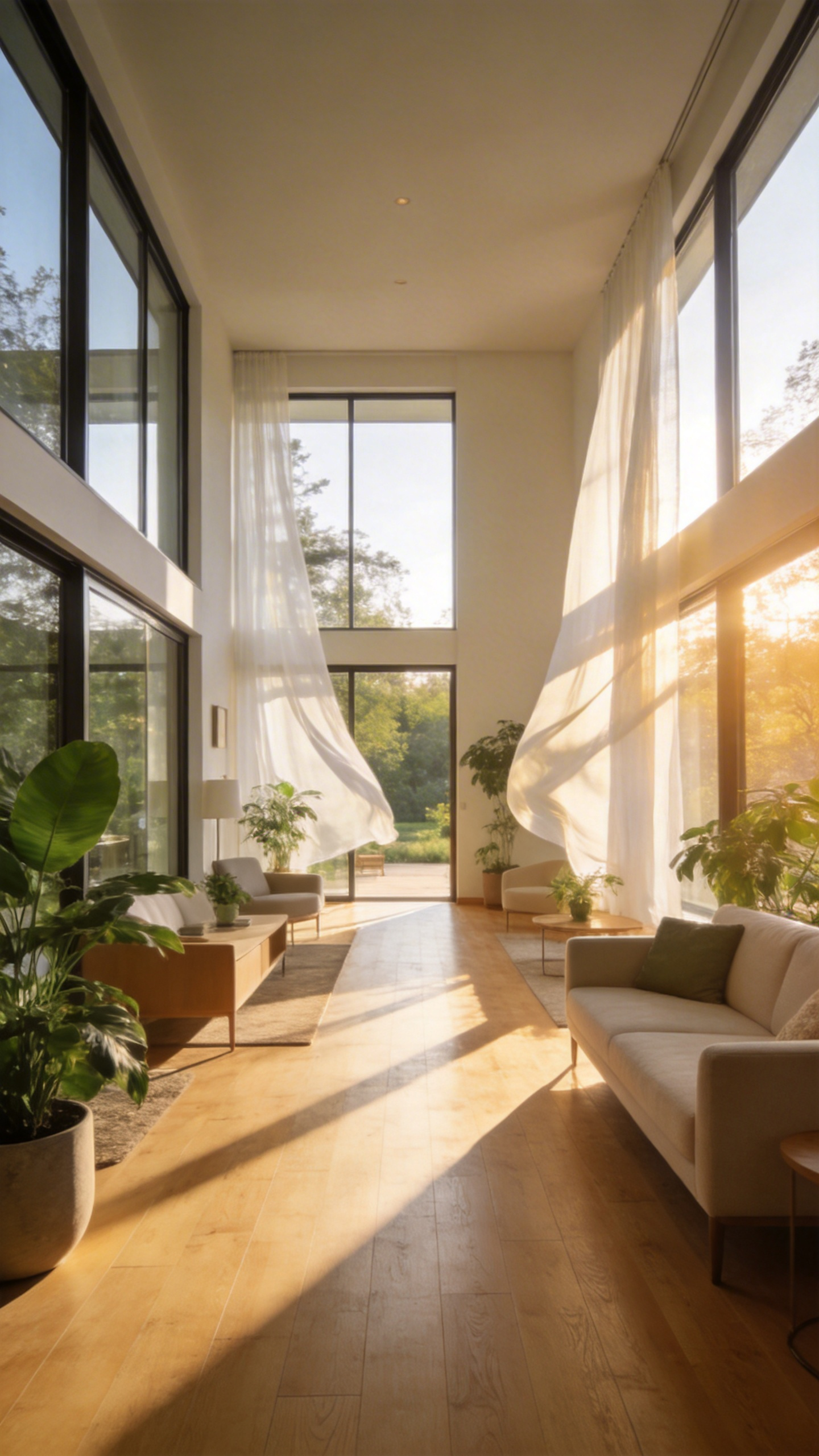
These architectural choices impact your mental energy. Dead-end arrangements frequently interrupt movement. Every time you dodge a table, your brain expends energy on problem-solving. This creates unnecessary cognitive load. Therefore, wellness architects prioritize “Desire Lines,” or the shortest natural paths. Ideally, these paths remain clear. As a result, movement becomes intuitive.
Finally, flow alters the experience of thermal comfort. Stagnant air feels heavy. However, a flow-through design encourages velocity. Even a gentle breeze makes a room feel cooler. This sensation triggers the parasympathetic nervous system, promoting relaxation. Indeed, creating a “health-first” zone requires keeping the air—and the inhabitants—in motion.
The Asymmetrical Balance: Creating Dynamic Tension for Visual Interest
Asymmetrical balance transforms a static room into a living environment. Fundamentally, this approach is not about chaos, but rather the management of “visual weight.” Unlike symmetry, which relies on mirroring, asymmetry utilizes dynamic tension. Consequently, this creates a state of controlled conflict that actively guides the eye.
Biologically, our brains find safety in symmetry. However, asymmetry introduces a beneficial cognitive load. Specifically, the brain must work to find the room’s center of gravity. As a result, this visual puzzle releases dopamine. It creates a sense of “potential energy.”
To achieve this, balance interest instead of just mass. For example, a small, vibrant vase can visually counterweight a large, muted sofa. Furthermore, texture acts as a lever. Rough surfaces appear heavier than smooth glass. Placing art high leverages the “gravity” of the viewer’s gaze. This technique encourages a zig-zag visual path. Therefore, the eye wanders discoveringly. The room feels alive, promoting a genuine sense of vitality.
Transitional Thresholds: Using Console Tables to Buffer Energy Between Zones
The console table used to serve as a static stage for decor. However, modern open-concept living has liberated this piece. Specifically, it now acts as a “Low-Horizon Wall.” When a sofa floats in the center, the exposed back creates a vulnerable “dead zone.” Therefore, placing a console against the sofa establishes a tiered transition. This softens the energy between a busy walkway and the relaxation zone.
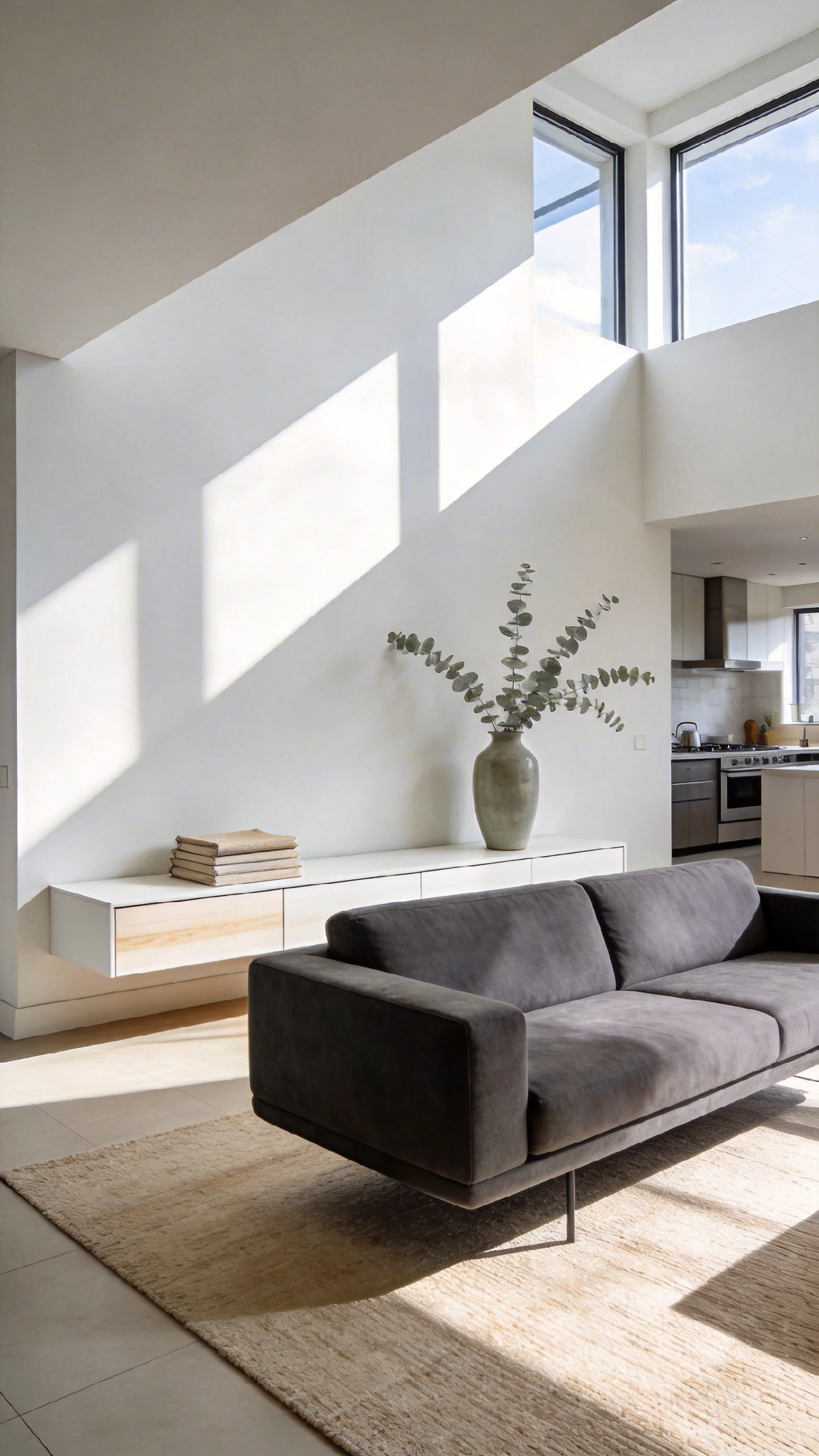
Beyond aesthetics, this placement impacts your nervous system. According to Proxemics, we feel a “social chill” when our backs face open walkways. Consequently, a console serves as a “Synthetic Wall.” It offers a buffer without the confinement of drywall. In fact, styling with tall lamps creates a “curtain of light.” This makes the seating area feel like an intimate room within a room.
Moreover, these tables manage circulation through the “Chicane” effect. Instead of a direct line to the sofa, the console forces a slight detour. Thus, visitors physically downshift their pace before entering the social circle. Additionally, baskets underneath create a functional acoustic buffer. Ultimately, this “thickened threshold” signals the brain to switch from active transit to restful connection.
Frequently Asked Questions
How do I choose the best living room layout for a small space?
To optimize a small space, focus on “visual lightness” by choosing furniture with raised legs and glass surfaces. Utilize a sociopetal arrangement to keep the center open while maintaining intimacy, and always ensure a 36-inch clear pathway for movement.
Where should a sofa be placed in a living room for the best flow?
The ideal placement is the “Command Position,” where the sofa is backed by a solid wall and offers a clear view of the entrance and windows. If the room is open-concept, place a console table behind a floating sofa to create a psychological anchor.
What is the 8-foot rule in living room design?
The 8-foot rule states that the primary seating in a conversation area should be placed within an eight-foot radius. This distance is the maximum range for comfortable acoustic intimacy and the perception of subtle social cues.
Conclusion: Moving From Floor Plan to Wellness Plan
Transitioning to a wellness plan redefines the true purpose of our interior spaces. We stop seeing rooms as static boxes. Instead, we view them as living ecosystems. Therefore, the focus shifts from simple furniture arrangement to active nervous system regulation. Consequently, design choices become health choices. We prioritize curvilinear forms and biological resonance over trends. In fact, this approach ensures your home serves your biology, not just your living room layout. Thus, true luxury becomes the absence of stress rather than the presence of clutter.
Looking forward, this mindset creates a sustainable foundation for well-being. Furthermore, it empowers you to curate environments that actively lower cortisol. To start, do not rush to purchase new furniture. Instead, begin by auditing your current lighting. Check its effect on your evening energy levels. Then, simply adjust one element to better mimic the sun’s natural cycles. Finally, allow your home to evolve into a sanctuary that truly heals.