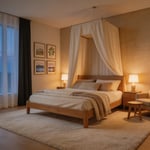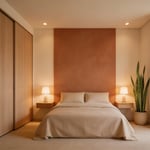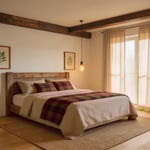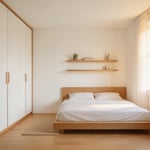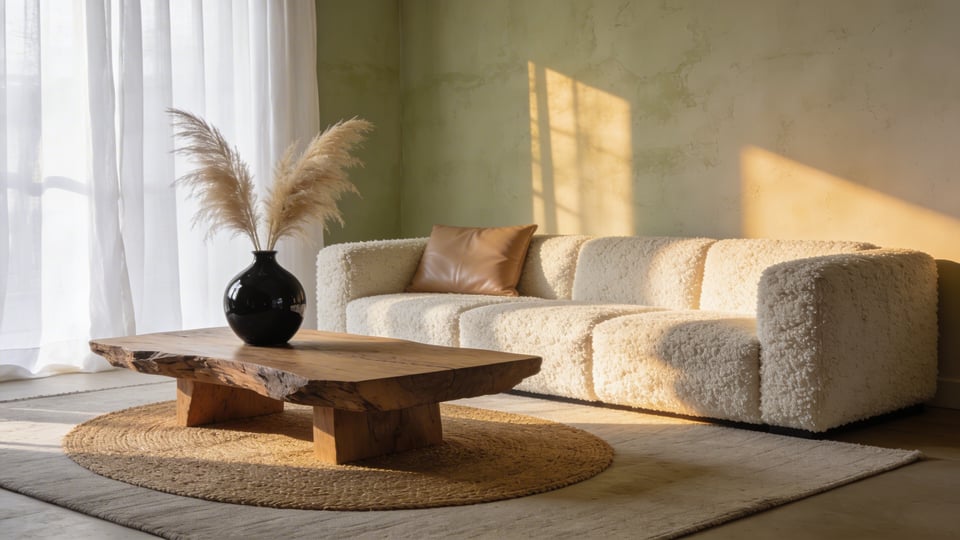
We often praise a home for having “good bones.” Indeed, architectural features like tall ceilings or fireplaces provide a desirable foundation. However, even expensive furniture arrangements can lack a unified, welcoming soul. If your space feels like a disconnected showroom rather than a functional home, you need advanced living room styling ideas. The missing element is not better architecture. It is the room’s internal heartbeat. Designers define this vital pulse as “rhythm.” It functions like frozen music. Specifically, it creates a subliminal harmony for the viewer. Rhythm guides the eye intuitively from one anchor point to the next. Therefore, it prevents the gaze from getting stuck on abrupt stops. The space feels fluid, energetic, and calm simultaneously. This flow turns a static collection of objects into a narrated experience.
Fortunately, achieving rhythm is a calculated process. It is not a mystical art. It relies on three technical principles: repetition, progression, and contrast. Repetition creates a steady beat by reusing shapes or materials. Next, progression guides the eye through a visual sequence of graduating sizes. Finally, contrast acts as a vibrant accent beat to spark interest. We will explore how to orchestrate these elements to give your living room lasting rhythm.
The Revelation: Why ‘finished’ rooms feel stagnant and how ‘evolving’ spaces feel alive
A perfectly “finished” room often feels stagnant. Psychologically, this occurs because our brains crave novelty. Consequently, an unchanging environment creates “visual fatigue.” It makes a space feel dull. However, an evolving space thrives on visual tension. Specifically, placing smooth textures next to rough ones keeps the eye engaged.
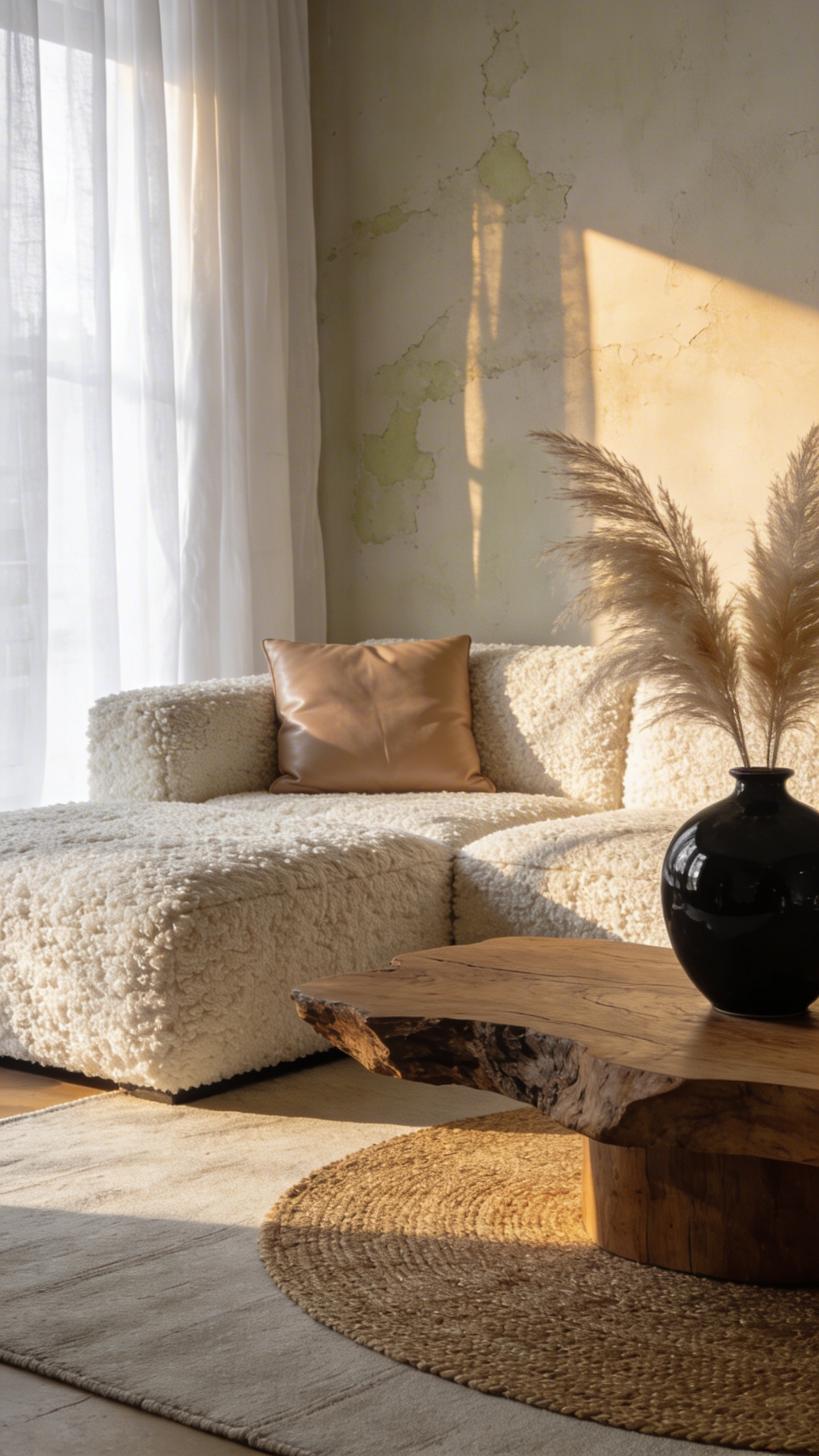
The “museum home” ideal often strips away comfort. In reality, these spaces lack identity. Conversely, a living room should tell your unique story. Displaying collected travel mementos creates an emotional connection. Generic living room decor simply cannot match that impact. Ultimately, this approach makes a home feel authentically lived-in.
Practically, flexibility is the secret to longevity. Lifestyles change. Therefore, your design must be dynamic. Rearranging modular furniture instantly resets the room’s energy. Similarly, layering light sources allows you to shift the atmosphere effortlessly. Additionally, maintaining negative space is vital. In fact, leaving empty areas on shelves offers “breathing room” for growth. By embracing adaptable elements, you prevent the space from ever feeling flat.
Phase 1: The Instant Refresh (Accessible Textile Swaps)
An instant refresh goes beyond aesthetics. It relies on psychological cues triggered by texture and color. Swapping materials drastically alters a room’s perceived temperature. Consequently, crisp linen signals a breezy summer vibe. Conversely, plush velvet immediately creates a cozy atmosphere. This tactile anchoring prevents a space from feeling flat. Furthermore, heavy textiles serve a functional role. They reduce sound reflection. This makes modern rooms feel significantly more serene.
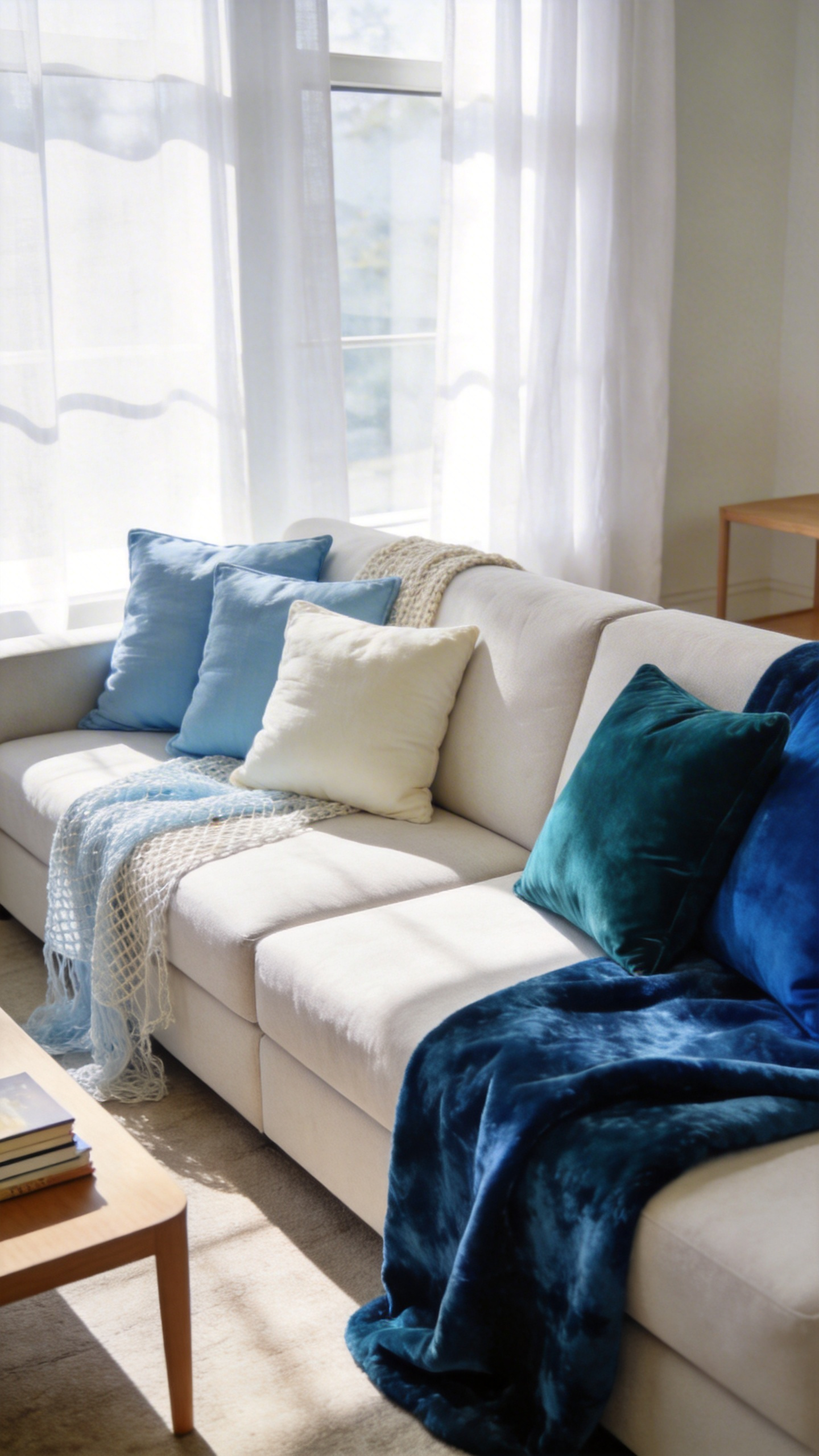
Textiles offer the highest impact for the lowest cost. Therefore, they allow for low-risk experimentation. You might hesitate to commit to a bright orange sofa. However, testing that color with a pillow cover is safe. In fact, swapping covers simplifies seasonal transitions. It minimizes storage needs while providing instant gratification. Ultimately, this preserves the longevity of larger investment pieces.
Finally, larger textile swaps restructure the room’s visuals. For example, hanging curtains high and wide tricks the eye. This simple adjustment elongates walls. It creates an illusion of height. Similarly, a properly sized rug anchors the furniture. It defines the seating area. To avoid a one-dimensional look, layer different textures together. Mixing smooth cottons with chunky knits adds necessary depth. Thus, you achieve a curated design through accessible choices.
1. The Pillow Equation: Mastering the mix of scale, pattern, and texture without clashing
Historically, pillows served as symbols of status. Today, they are tools for injecting personality. Specifically, the modern “throw” pillow implies a casual atmosphere. It rejects stiff formality. Consequently, mastering the “pillow equation” requires balance. You must weigh visual interest against genuine comfort.
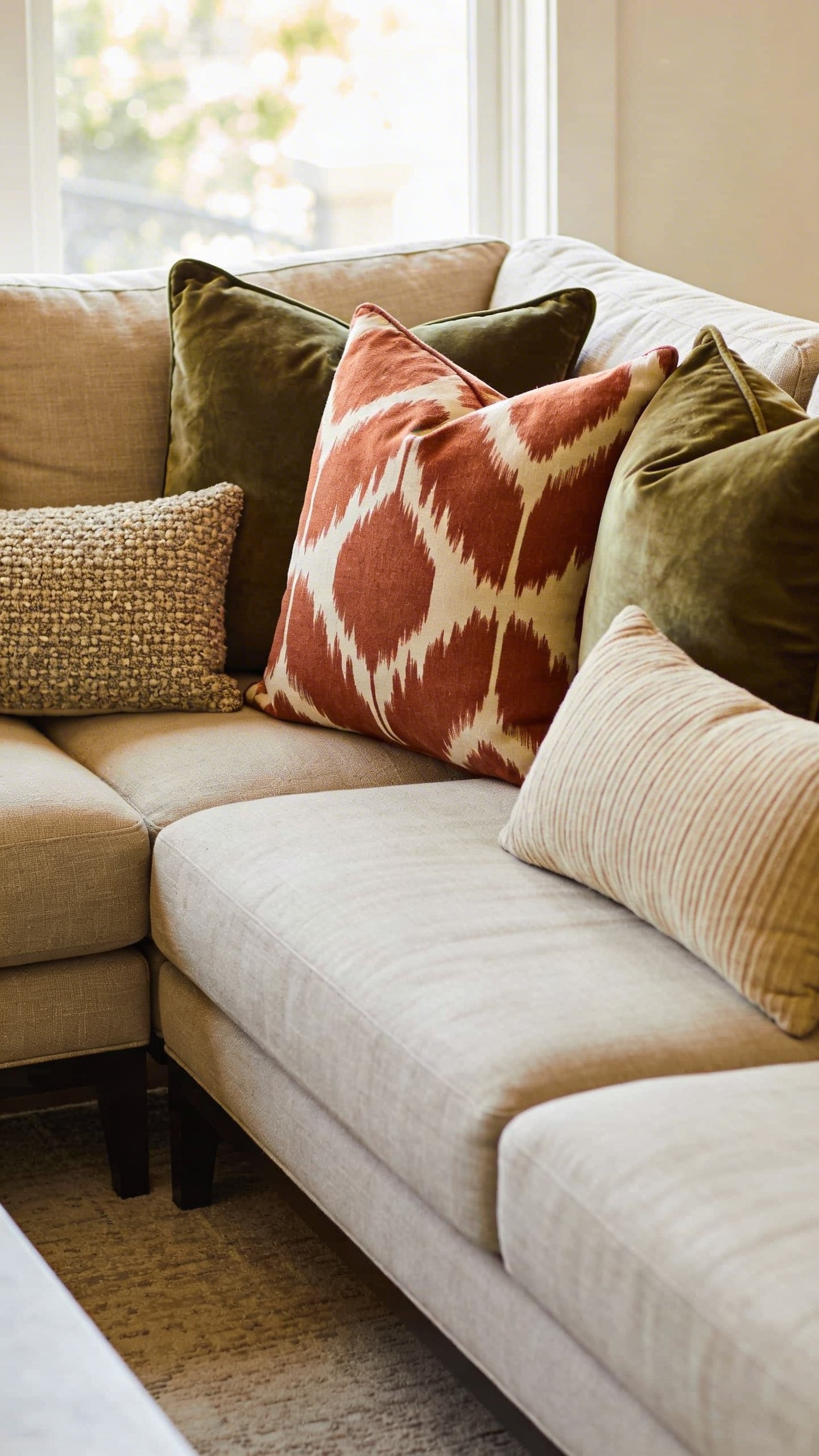
Designers often rely on a three-tiered hierarchy. First, select a dominant, large-scale print to establish the color story. Next, introduce a secondary, medium-scale pattern. A stripe or check works well here. Finally, ground the arrangement with a solid color.
In fact, texture functions as a crucial “silent pattern.” Smooth textiles like velvet evoke sophisticated calm. Conversely, rougher materials like jute add organic energy. Mixing these tactile elements creates depth. It prevents visual chaos. Nevertheless, rigid formulas are not the only path. Many modern designers prefer using even numbers to create serenity. Ultimately, effective styling requires editing. Let high-quality materials breathe.
2. Seasonal Rug Layering: How to ground your space with an ‘anchor’ piece relative to the weather
To successfully adapt your living room, establish a permanent foundation. Specifically, this “anchor” rug remains consistent regardless of the season. Ideally, select a large, durable material. Jute, sisal, or a neutral flat-weave wool work best. Functionally, this base layer grounds your furniture. It prevents pieces from feeling disconnected. Consequently, this backdrop allows you to strategically swap a smaller top layer.
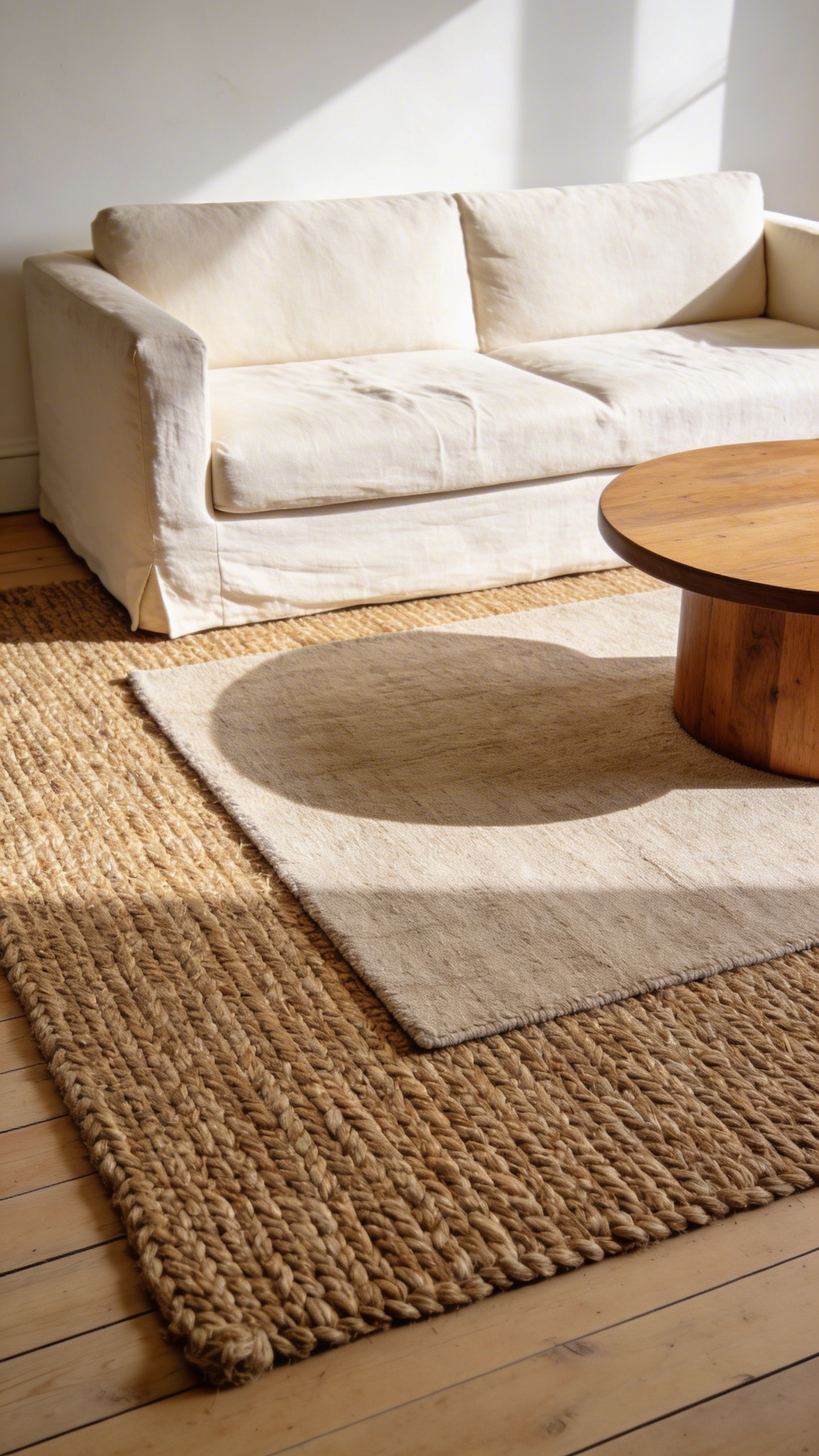
During colder months, prioritize insulation. Therefore, layer a medium-to-high pile rug over your base. Plush wool or faux fur are excellent choices. This addition physically traps air. It acts as an insulator against cold floors. Visually, rich earth tones like rust add a cozy touch.
In contrast, summer calls for breathability. Simply swap the heavy topper for a lightweight cotton flat-weave. These materials feel significantly cooler underfoot. Furthermore, lighter colors like ivory reflect light. This effectively cools the room’s atmosphere. Ultimately, this approach creates sensory shifts. It does not require a major furniture overhaul.
3. The Art of the Draped Throw: Casual styling techniques that invite relaxation
A casual throw is more than a blanket. In fact, it acts as a tactile sculpture. This styling choice shifts a space from formal to inviting. Consequently, a neatly folded textile suggests a rigid atmosphere. Conversely, the “invitational drape” signals that a space is lived-in. Psychologically, this softness activates the brain’s relaxation response. It creates an immediate emotional anchor of safety.
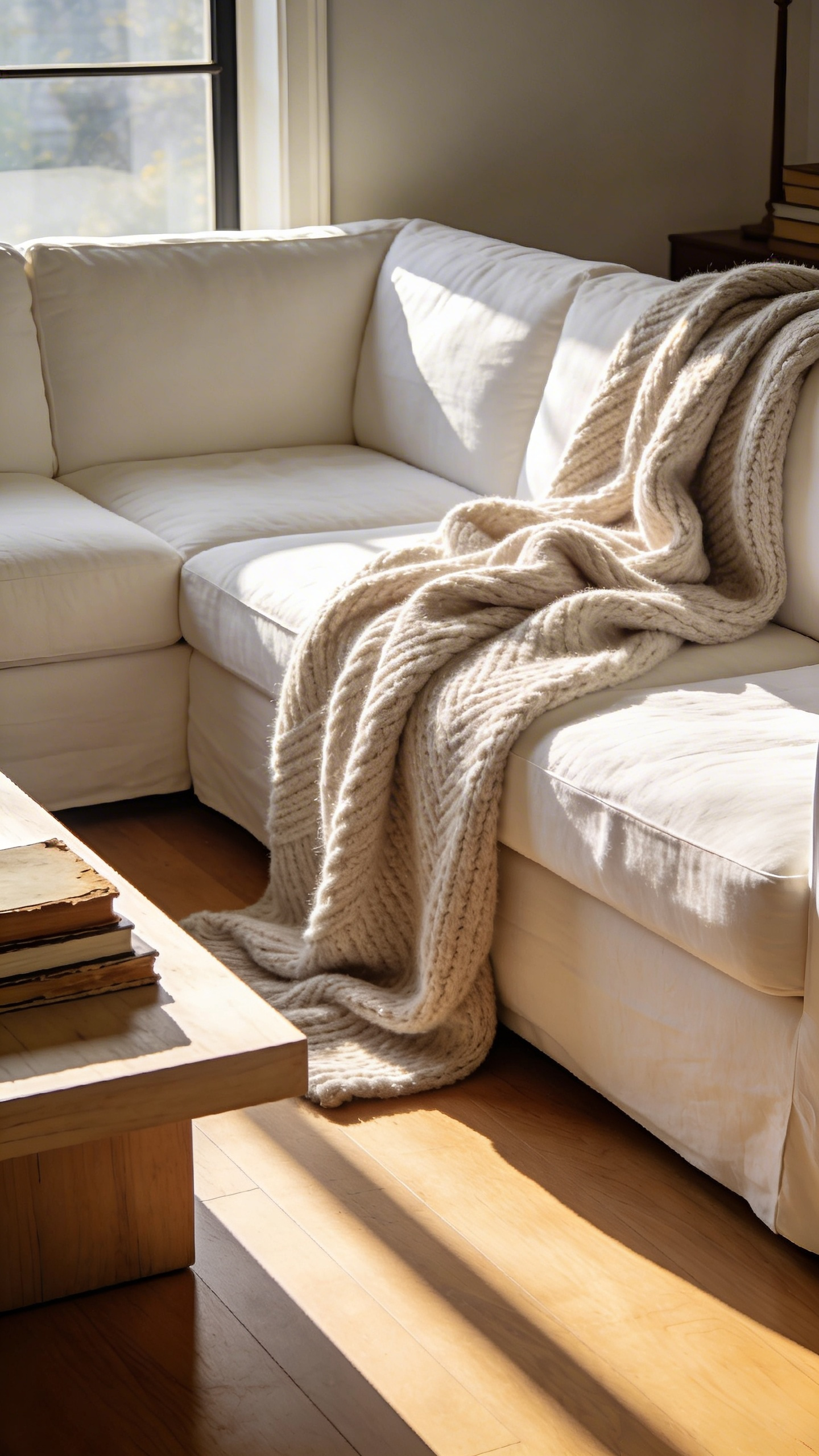
To achieve this aesthetic, specific techniques are required. For instance, use the “pinch-and-drag” method. Simply pinch the throw’s center, then drag it over a back corner. As a result, the fabric bunches artfully. It spills forward onto the seat cushion. Alternatively, use the “corner-to-floor cascade.” Place one corner over the armrest. Allow the rest to trail downward. Notably, off-center placement increases spontaneity.
Furthermore, material choice is critical. Chunky wools offer warmth. Linen provides an airy quality. Ultimately, the fabric’s weight dictates the drape. Heavier textiles suit dramatic cascades. Lightweight options suit a simple sling. By layering these textures, you reduce visual tension. Thus, the room becomes a fluid space for relaxation.
4. Curtains as Canvases: Switching window treatments to control seasonal light quality
Treat curtains as a primary filter for your home’s atmosphere. Specifically, they are a psychological tool. They adjust the room’s perceived temperature. During winter, mimic the warmth of firelight. Therefore, heavy fabrics like velvet become essential. In fact, these dense materials absorb the season’s cool light. Consequently, deep hues like burgundy create a protective sanctuary.

Conversely, summer requires managing harsh solar energy. Ideally, swap to airy materials. Crisp linen or cotton voile work perfectly. By doing so, you reflect bright sunlight. As a result, the room feels expansive. Furthermore, the fabric’s texture sculpts the light quality. Linen’s loose weave scatters rays to reduce glare.
Ultimately, the best design standard relies on layering. Keep a consistent sheer inner layer. This allows for easy updates. Thus, you change the outer “canvas” to transform the mood. This method offers versatility. It does not require changing hardware entirely.
Phase 2: Spatial & Surface Curating (Intermediate Arrangement)
Foundational furniture establishes the layout. Now, the process shifts to spatial sculpting. Specifically, this phase addresses social psychology. Avoid pushing furniture flush against walls. Instead, pull seating three to five inches away. Create “breathing room.” Furthermore, adhere to the “Proximity Principle.” Ideally, maintain three to ten feet between seats. Consequently, guests converse comfortably. In open concepts, utilize console tables as dividers. Thus, you define zones without blocking energy.
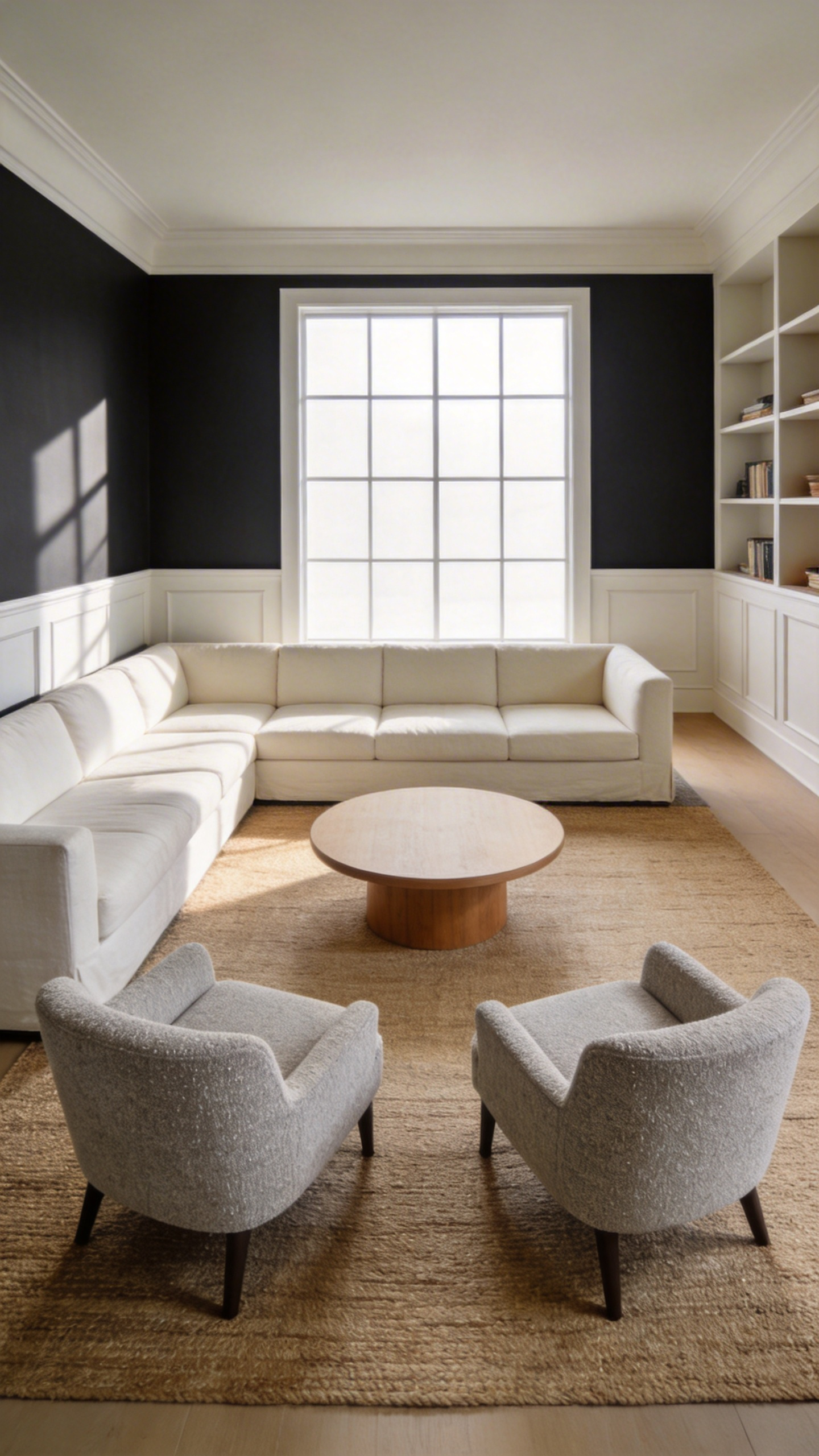
Next, address verticality. Rooms with only low furniture feel “bottom-heavy.” To combat this, introduce vertical players. Position dramatic floor lamps to draw the eye upward. Additionally, layer your lighting. Rather than relying on harsh overheads, place lamps at eye level. This strategy creates a cocooned atmosphere.
Finally, begin surface curating. Build intentional “vignettes” on tables. Prioritize scale over quantity to avoid clutter. Notably, one large statement piece offers more impact. Moreover, apply the “Rule of Odds.” Group objects in threes to generate visual tension. Simultaneously, mix contrasting textures. Pair smooth brass with rough woven baskets. Ultimately, this juxtaposition prevents flatness.
5. The Coffee Table Vignette: Applying the ‘Rule of Three’ to trays, books, and objects
The coffee table acts as the living room’s centerpiece. Consequently, styling it requires balance. Specifically, the “Rule of Three” offers a reliable framework. Psychologically, our eyes prefer odd-numbered groupings. Even numbers often feel static. In contrast, groups of three compel the eye to move. This movement creates an organic flow.
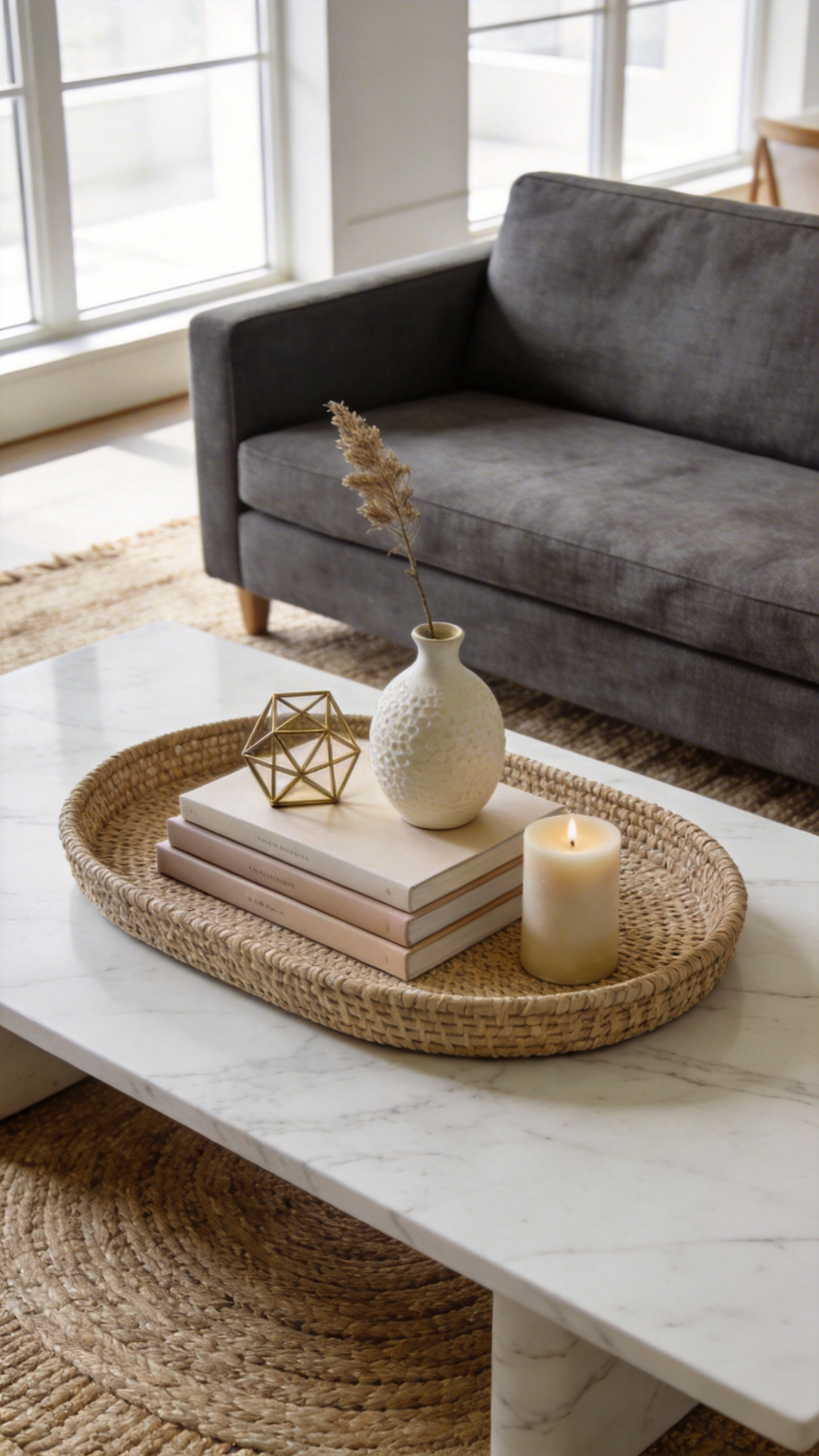
Think in terms of distinct “footprints.” For example, a stack of books acts as one unit. Next, add a vertical element. A sculptural vase works perfectly here. Finally, introduce a smaller, textured element. A scented candle is ideal. These three units should represent high, medium, and low heights.
To ground this vignette, utilize a tray. It defines boundaries. This prevents the arrangement from looking like clutter. Additionally, a tray introduces a new material. Woven rattan adds depth through contrast. Ultimately, it allows you to move the display easily when entertaining.
6. Shelf Styling Balance: Managing negative space to let your collections breathe
Truly curated shelves rely on absence. Specifically, this mirrors the philosophy of *Ma*, or the intentional “pause.” Here, negative space is an active element. It lets a story breathe. Consequently, this “interval” allows your collections to stand out.
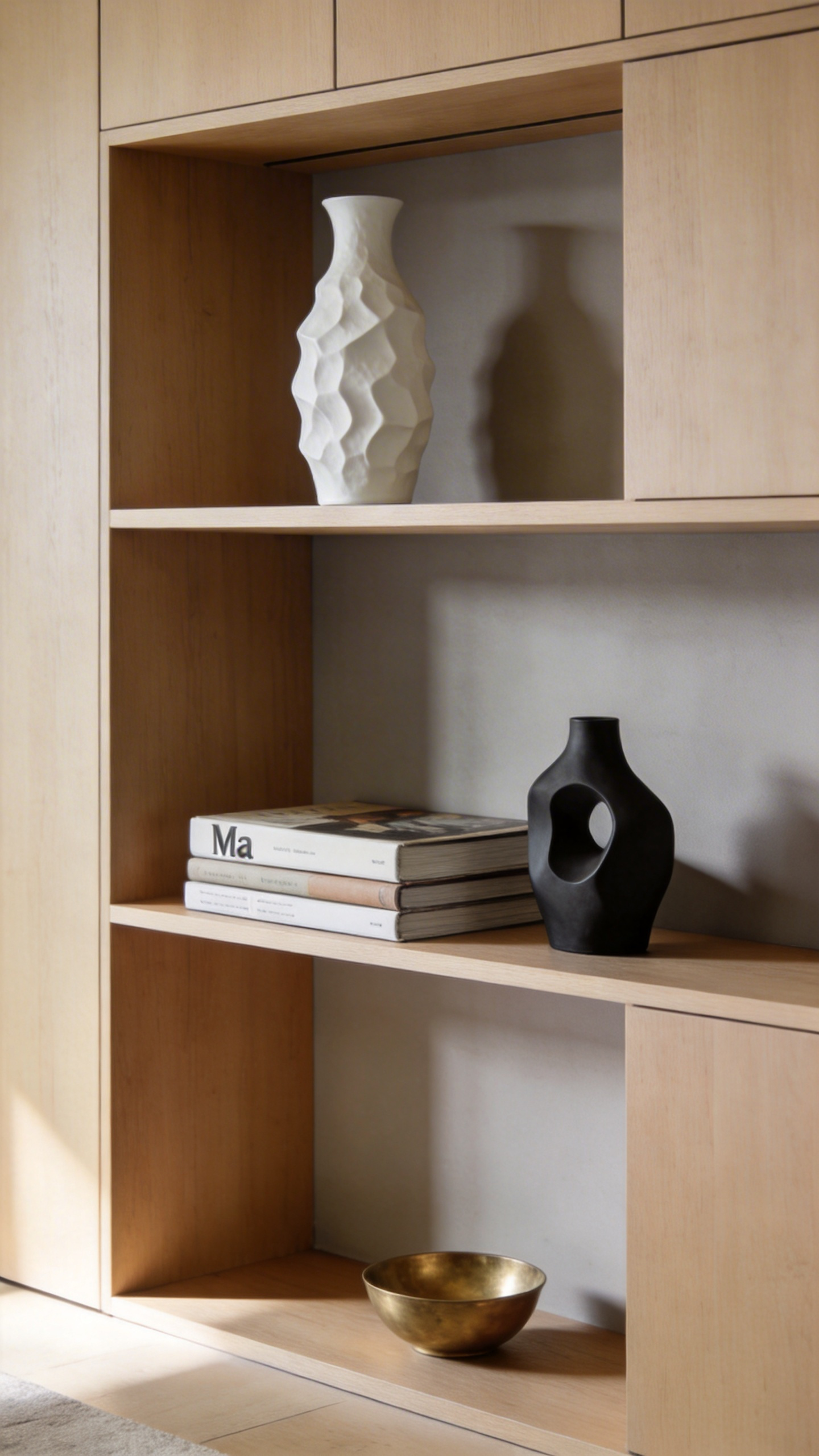
Avoid the temptation to fill every inch. Instead, keep 30 to 40 percent of each shelf empty. Furthermore, distribute this space unevenly. This creates a relaxed visual rhythm. It prevents the display from looking rigid.
Beyond spacing, manage “visual weight.” Employ a vertical tapering strategy. Place heavier elements like chunky pottery on bottom shelves. Conversely, reserve upper levels for lighter objects. Ultimately, these open pockets act as resting spots for the eye. Thus, the room feels sophisticated and peaceful.
7. The Floating Layout: Pulling furniture off the walls to create intimate conversation zones
Many homeowners push furniture against walls to maximize space. However, this creates disjointed environments. Conversation feels distant. Instead, utilize the “floating layout.” Specifically, pull major seating pieces inward. This forms a dedicated “conversation circle.” Consequently, occupants face one another. Interactions become significantly more intimate.
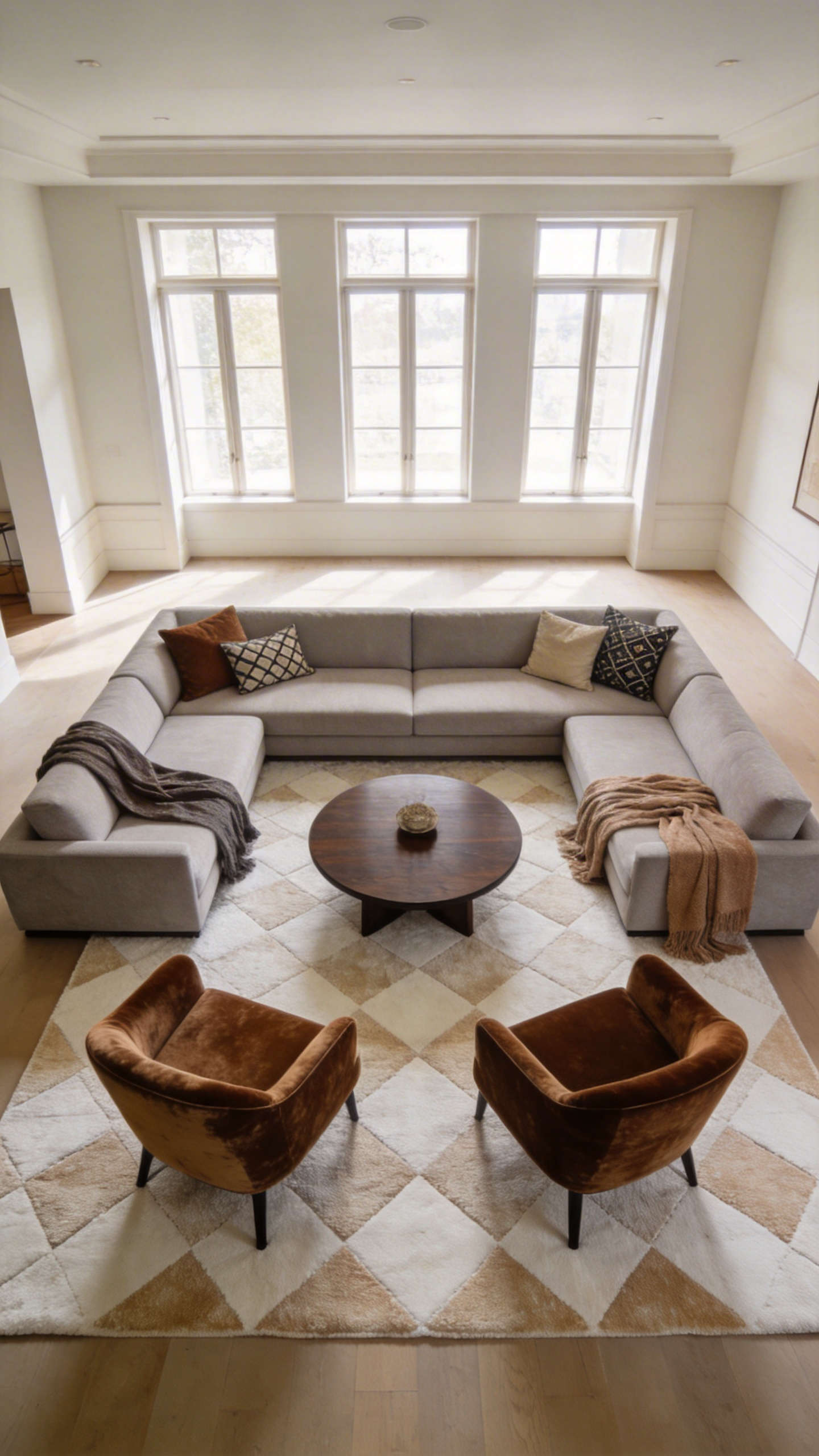
Surprisingly, this layout creates an illusion of volume. When furniture sits flush against the perimeter, the room feels flat. Conversely, floating your sofa introduces negative space behind it. In fact, pulling furniture just six inches away adds depth. Therefore, the room feels airier. The eye travels past the furniture boundaries.
To execute this, proper anchoring is essential. Use a large area rug to contain the “island.” Additionally, place a console table behind a floating sofa. This defines the zone further. Ultimately, ensure you maintain 18 to 24 inches of clearance for movement.
8. Transitional Art Ledges: Setting up a gallery system that allows for zero-damage rotation
Transitional design seeks harmony between elegance and simplicity. Consequently, the art ledge is a perfect bridge. It reimagines the classic picture rail. When finished to match your wall, the ledge recedes visually. This allows artwork to appear as if it is floating. Therefore, the focus remains on your collection.
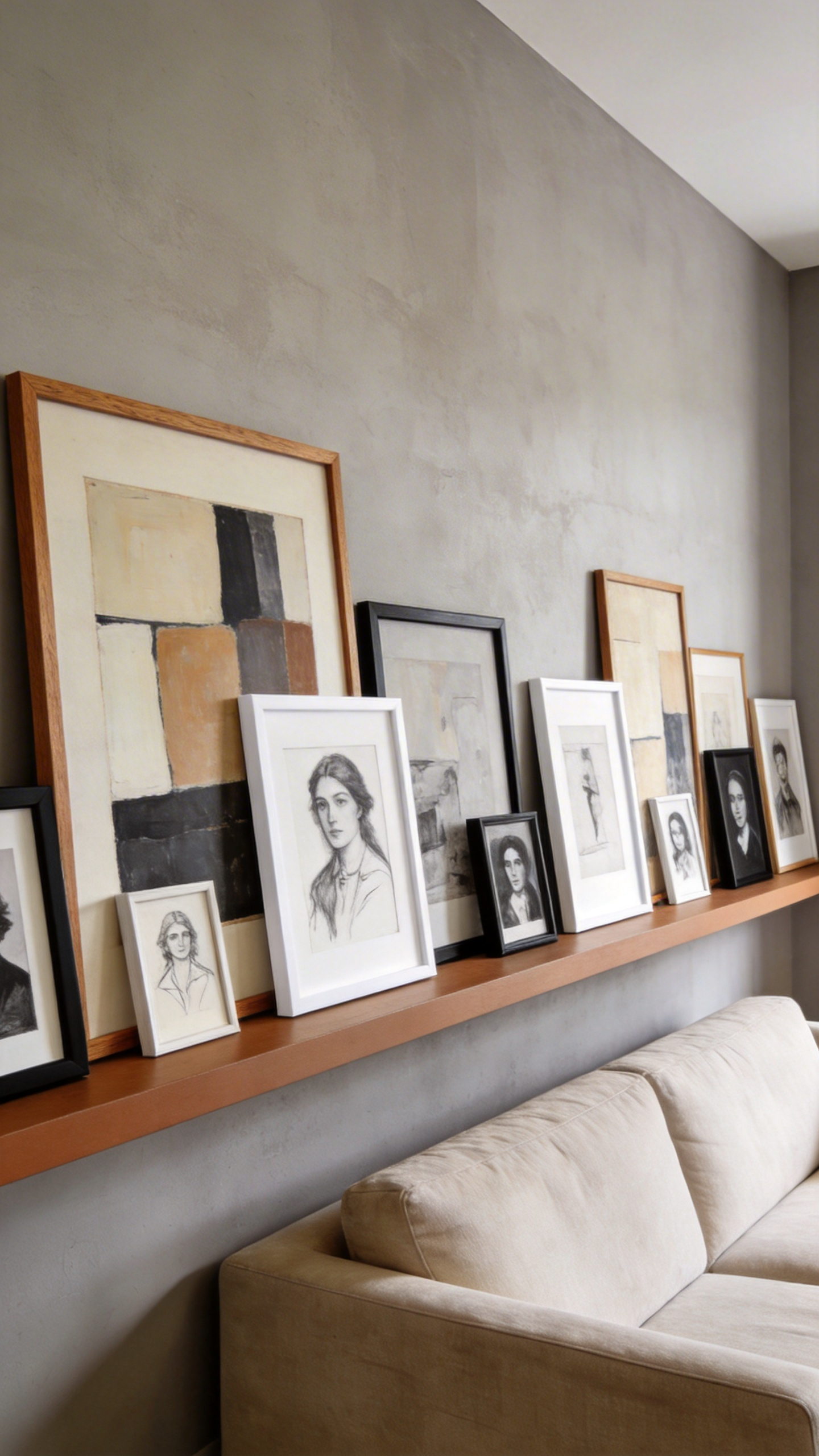
The primary advantage is shifting from hanging to leaning. Traditional gallery walls require anchors. This results in holes. Conversely, art ledges utilize gravity. Thus, rotation becomes tool-free. You can effortlessly update your living room for new seasons.
Furthermore, this system encourages curatorial freedom. Do not limit the display to prints. Instead, mix two-dimensional art with sculptural objects. Overlap frame edges slightly. This technique builds a rich vignette. Finally, establish a large anchor piece first. Then, arrange smaller items around it.
9. Biophilic Placement: Selecting statement greenery that thrives in your specific light pockets
True biophilic design begins with identifying “light pockets.” Specifically, distinguish where a plant survives versus where it thrives. Snake Plants tolerate dim corners. However, they rarely grow vibrantly there. Instead, position commanding species like Fiddle Leaf Figs in bright, indirect light.
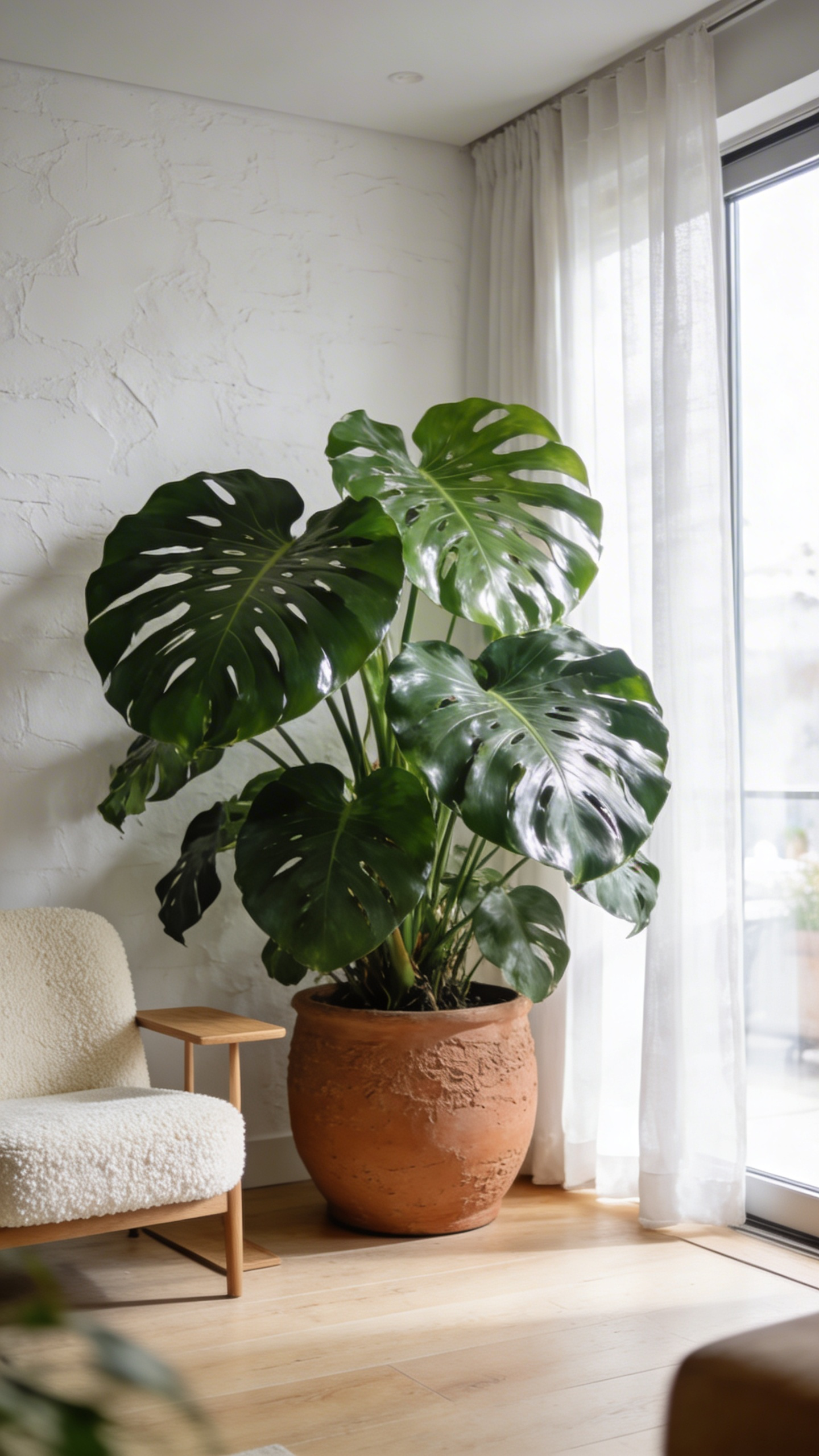
Ideally, tropical natives require 500–1,000 foot-candles. This mimics diffused sunlight under a jungle canopy. However, be cautious of direct rays. In fact, intense afternoon sun can scorch leaves. Therefore, use sheer curtains to filter the light.
Beyond health, strategic placement creates a sensory anchor. Large organic shapes soften rigid architectural lines. Furthermore, this contrast stimulates “soft fascination.” It restores cognitive focus. To maximize this, position a single large specimen alone.
Additionally, consider shadow play. As the sun moves, a plant casts dynamic shadows. Ultimately, this transforms greenery into time-based art. It grounds the entire space.
10. The Mantle (or Faux-Mantle) Focus: Asymmetrical styling for a modern, relaxed look
Historically, mantels relied on symmetry. However, modern design embraces a different approach. Specifically, asymmetrical styling offers a relaxed vibe. This aesthetic is often called “curated nonchalance.” It rejects mirror-image arrangements. Instead, it creates a visual rhythm that encourages the eye to move organically.
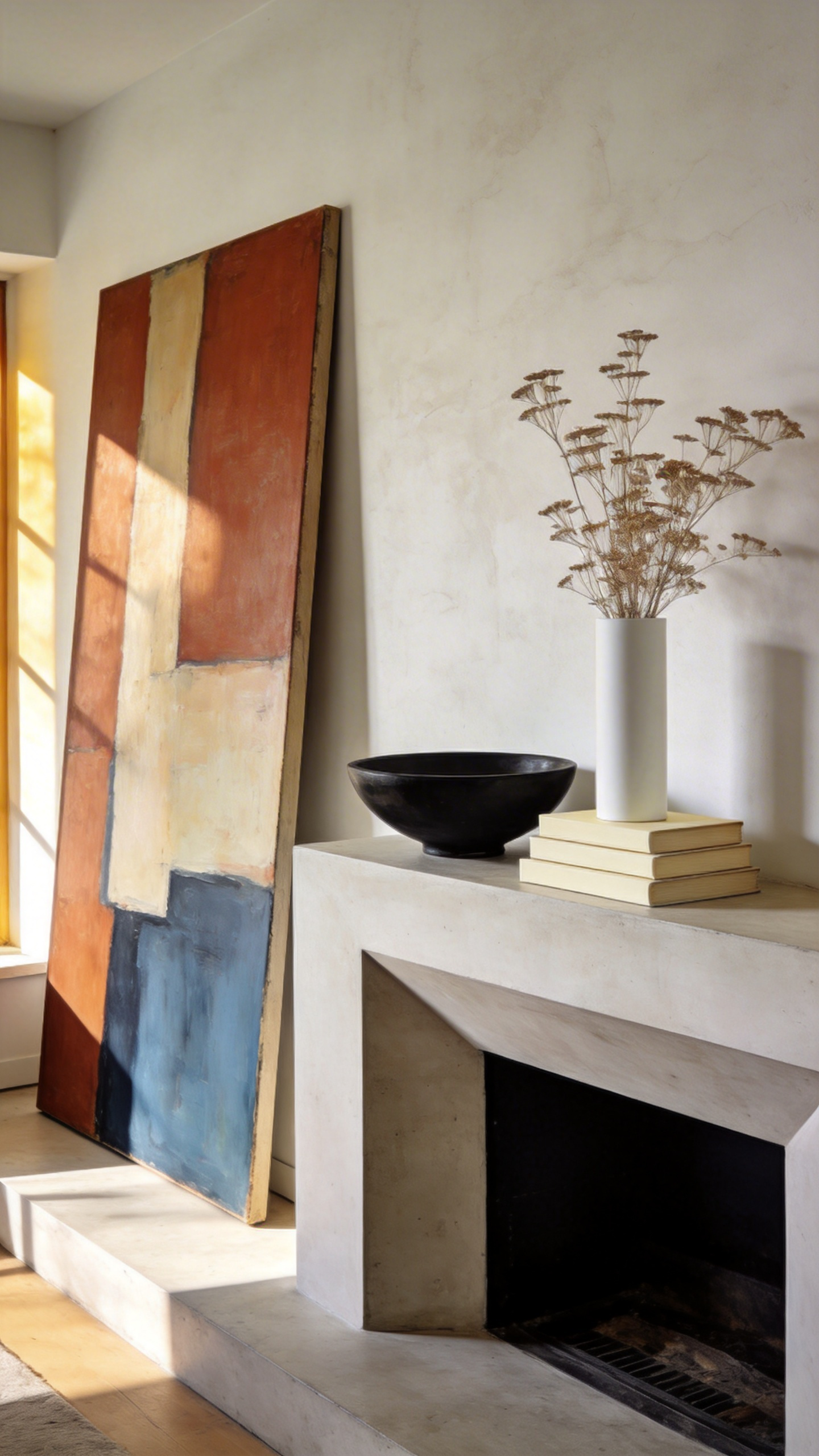
Achieving this look requires “balanced asymmetry.” Start with a large anchor piece. Place it intentionally off-center. Furthermore, balance this visual weight with smaller objects opposite it. For example, group stacked books with a sculpture. Consequently, this maintains equilibrium without duplication. Additionally, incorporate height variation. Layer smooth ceramics against rustic wood.
Crucially, remember negative space. Leave breathing room between items. If your room lacks architecture, a faux-mantle is an excellent solution. In fact, these additions create a focal point. Moreover, they eliminate heat constraints. You can display delicate materials without worry.
Phase 3: Atmospheric Mastery (Advanced Layering)
Atmospheric mastery moves beyond decoration. It choreographs emotion. Fundamentally, this phase relies on multi-sensory layering. First, consider tactile weight. Specifically, pair opposing materials to create balance. Place a heavy velvet sofa next to sleek metal tables. Furthermore, textural contrasts influence acoustic comfort. Soft materials absorb sound. This significantly reduces stress.
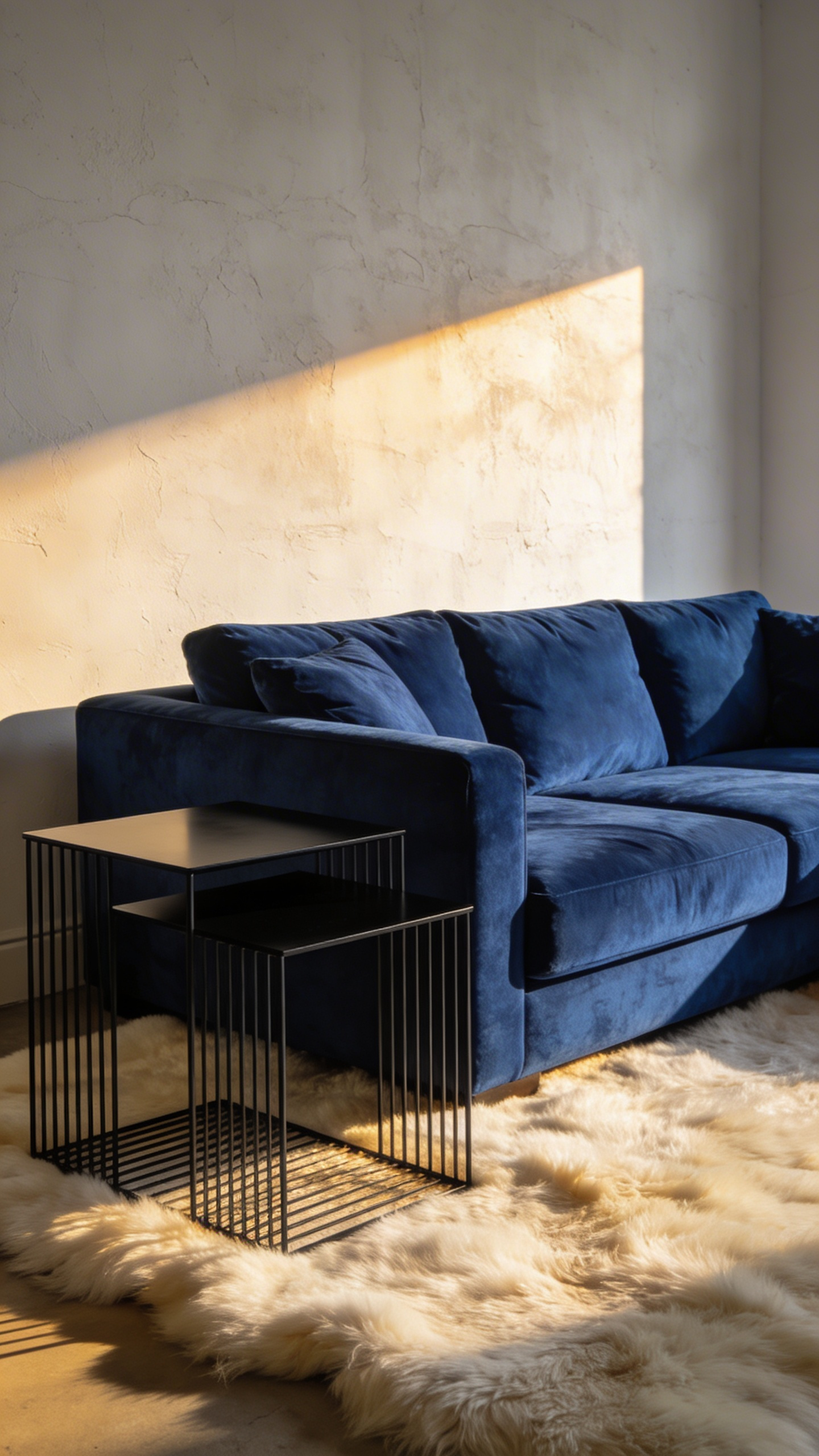
Next, treat lighting as emotional architecture. A single overhead light creates a harsh environment. Therefore, layer ambient and task lighting to sculpt depth. This allows the atmosphere to shift seamlessly. Additionally, maintain visual order through tonal complexity. Layer various shades of the same color. This achieves “quiet richness.”
Finally, anchor the space with a narrative layer. Curate objects that hold meaning. In fact, juxtaposing different eras builds character. Place an antique vessel on a contemporary shelf. Ultimately, these pieces provide the emotional weight that creates a home.
11. Lighting Temperatures: Mixing floor lamps and task lighting to alter room mood by hour
Lighting adapts a living room to the sun’s cycle. Specifically, leverage Human-Centric Lighting principles. For daytime productivity, prioritize task lighting in the 3500K to 4500K range. Consequently, this cool light boosts concentration. It mimics the clarity of midday sun.
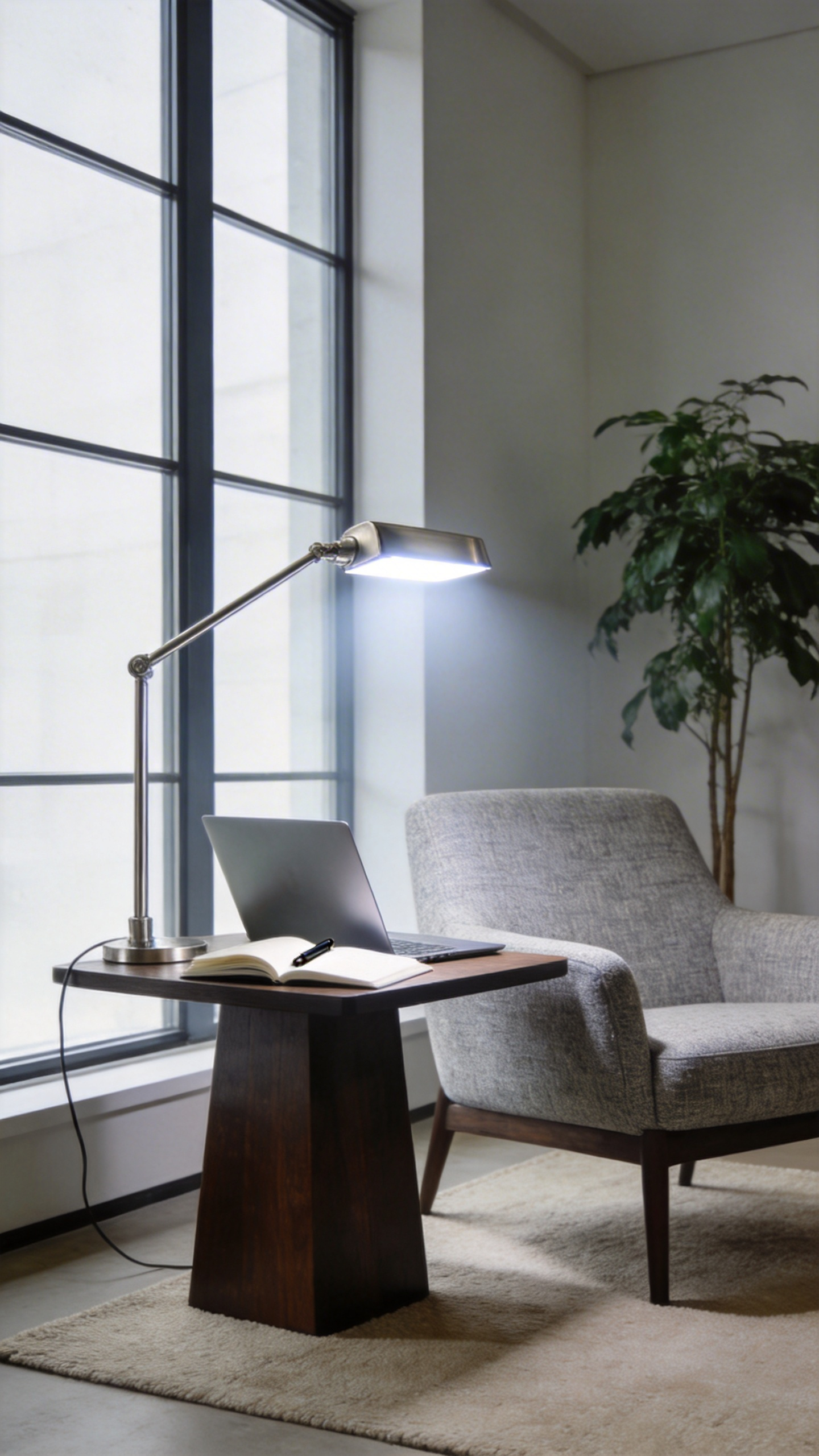
Conversely, evening requires a shift toward warmth. As the sun sets, switch off cool lights. Favor dimmable ambient sources. Ideally, these should emit a glow between 2700K and 3000K. In fact, this warmth acts as a signal for relaxation. Furthermore, designers call this the “Golden Hour” effect. It flatters skin tones. Rich wood grains gain visual weight under this hue.
Ultimately, versatility lies in layering. You can mix temperatures if you maintain separation. Therefore, keep cool light focused on a workspace. Let warm light frame the room. This establishes distinct zones.
12. Mirror Geography: Strategic placement to bounce natural light into dark corners
“Mirror Geography” relies on reflection physics. Rather than creating new light, mirrors redistribute it. Consequently, this trick doubles the room’s perceived boundaries. Beyond aesthetics, maximizing natural exposure improves mood.
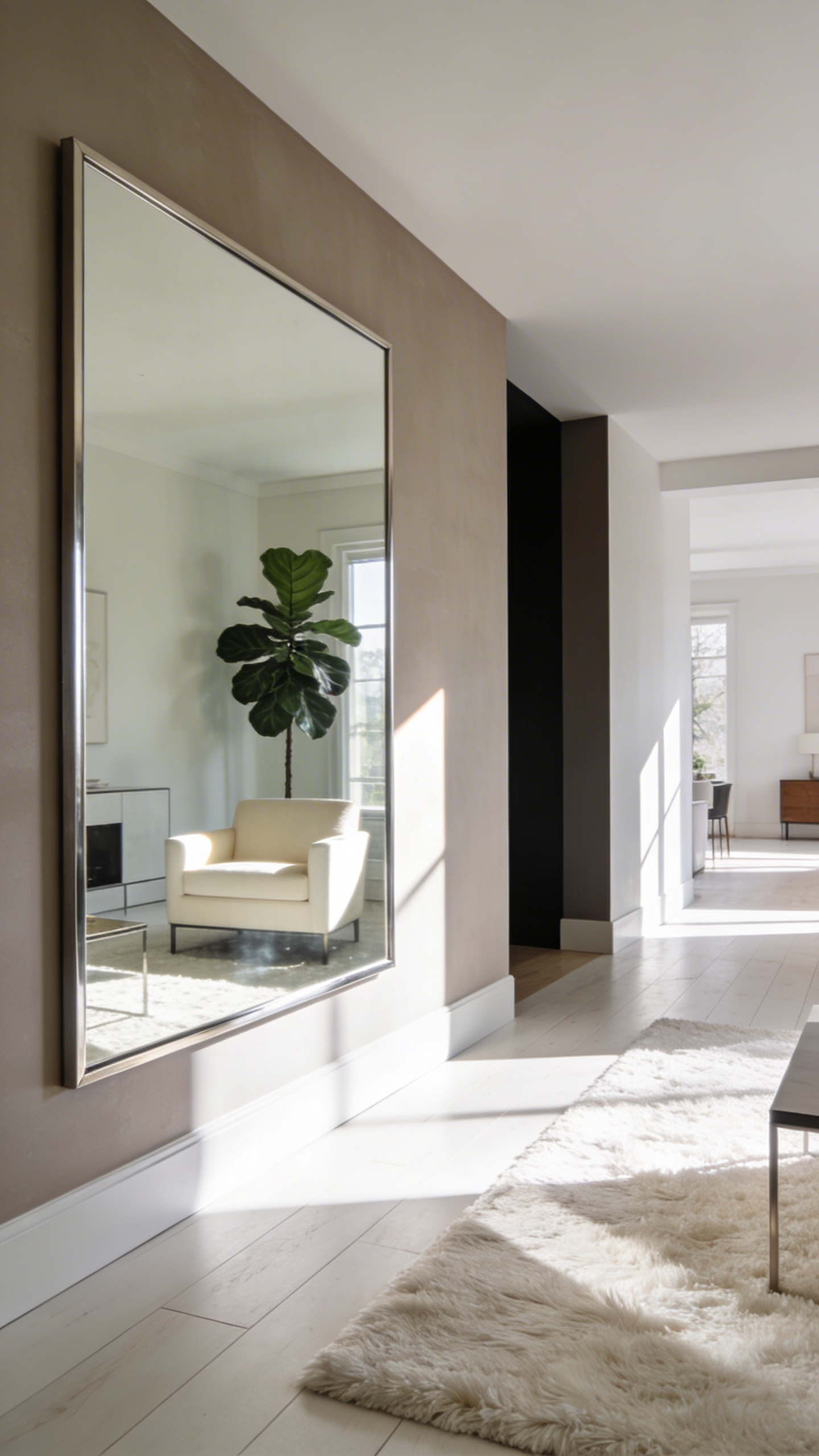
Strategic placement is vital. Mounting a large mirror opposite a window acts as a “force multiplier.” It projects daylight deep into the room. Alternatively, for dark corners, place mirrors perpendicular to the source. Ideally, position the reflection between four and six feet from the floor. In doing so, you capture side-spill light.
However, careful curation is required. A mirror creates a continuation of space. Therefore, ensure it reflects art, not clutter. Furthermore, avoid angles that catch blinding sunlight. The goal is diffuse illumination.
13. Texture Contrast Theory: Pairing velvet with rattan (and other opposites) for visual depth
Effective design hinges on the “visual rub.” Essentially, juxtapose two opposite materials to eliminate monotony. Specifically, “Texture Contrast Theory” creates dimensionality. Pair a dense, soft texture with a hard, open one. A perfect example is combining velvet and rattan.
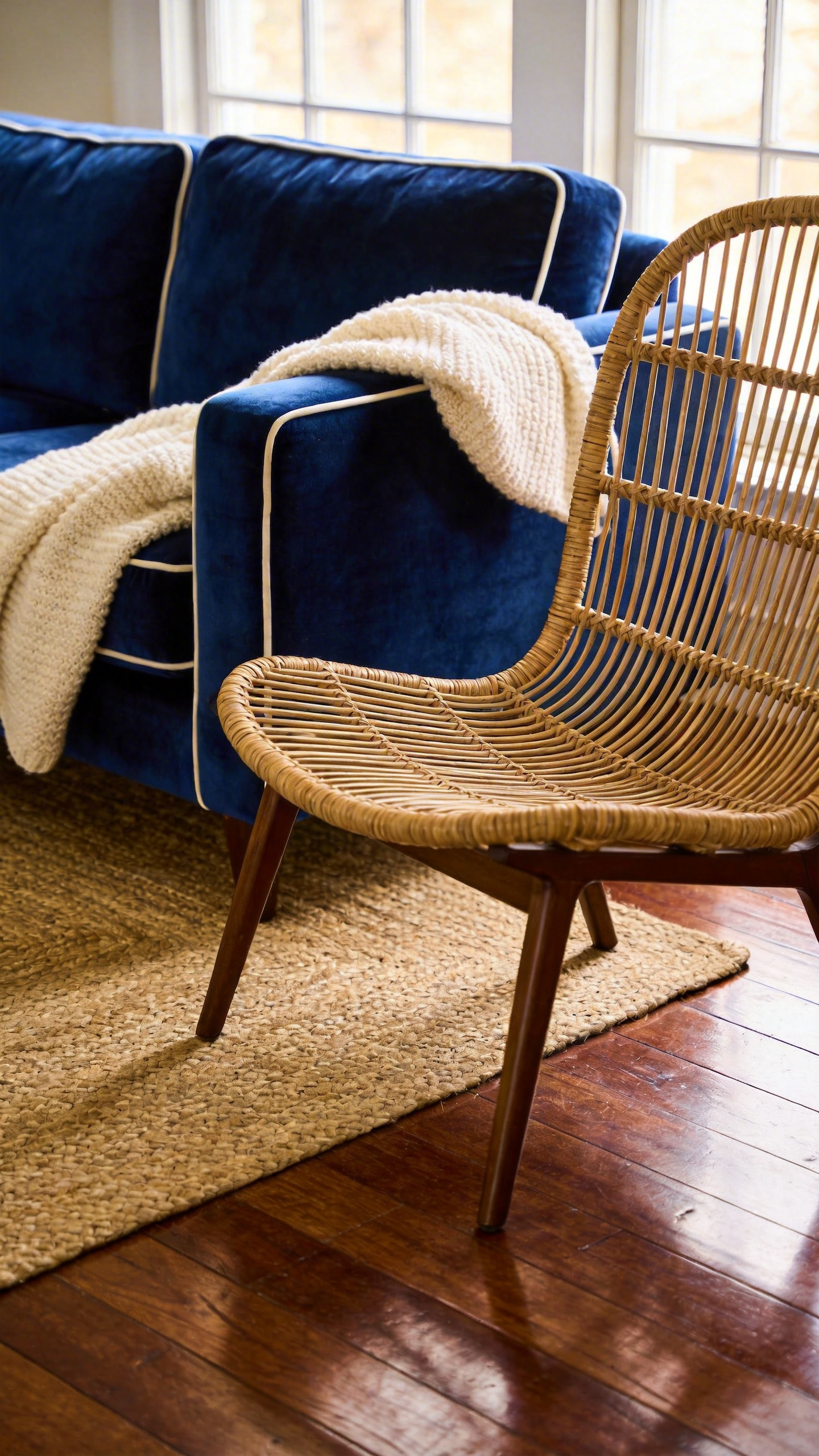
Velvet creates a heavy, warm presence. Conversely, rattan represents airiness. Therefore, placing them together bridges the gap between luxury and the lived-in. In fact, this synthesis creates “Grounded Glamour.” The velvet anchors the room. The rattan prevents stiffness.
To apply this, balance the “volume.” Establish one texture as dominant. For instance, center the room around a velvet sofa. Subsequently, introduce rattan accents. By doing so, you ensure harmony. Ultimately, this pairing allows a space to feel cozy yet breathable.
14. Scentscaping the Visuals: styling candle groupings to suggest warmth or freshness
Visual scentscaping treats candles as art installations. Specifically, the vessel acts as a proxy for the scent’s temperature. Therefore, align the material with the desired mood. To suggest warmth, prioritize opacity. Materials like matte black ceramic absorb light softy. These choices prepare the brain for comforting notes.
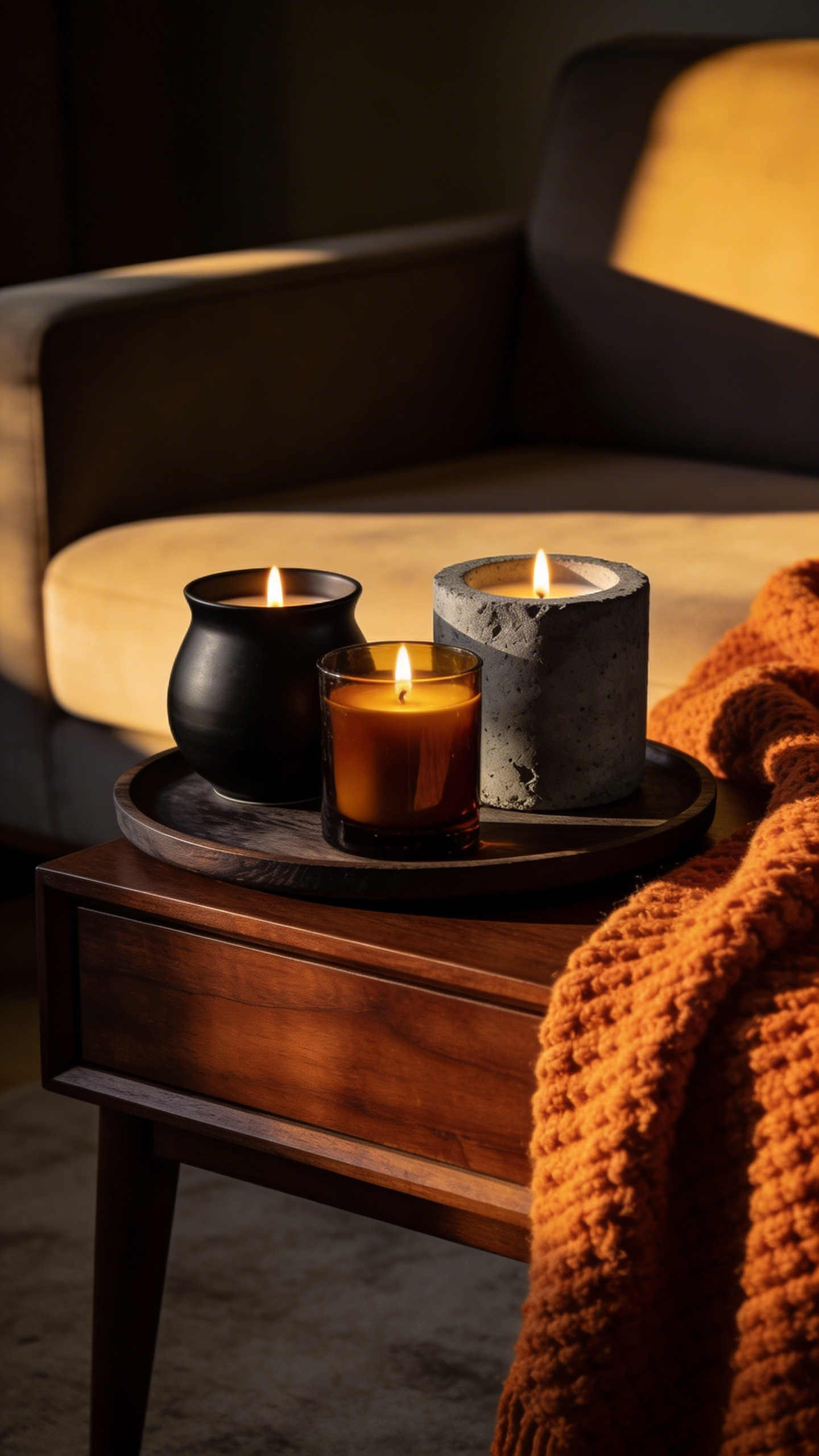
To create coziness, focus on depth. Group pillar candles with votives. Ideally, arrange them on textured surfaces like wood. Historically, this aesthetic echoes the hearth. Furthermore, adding tactile accessories like books grounds the vignette.
Conversely, styling for freshness requires transparency. Leverage reflection to signal clean air. Use clear glass to bounce light. Moreover, incorporate vertical elements like taper candles. This aligns with lifting scents like citrus. Ultimately, keep the arrangement airy.
15. The ‘Life Moment’ Corner: Styling a dedicated nook for seasonal rituals (reading, tea, music)
Designing a ‘Life Moment’ corner requires more than a chair. Fundamentally, this space functions as a “micro-sanctuary.” Effective styling relies on adaptive lighting. Specifically, layered warm lamps provide a gentle glow. Furthermore, this nook serves as a psychological boundary. It is a visual cue to slow down.
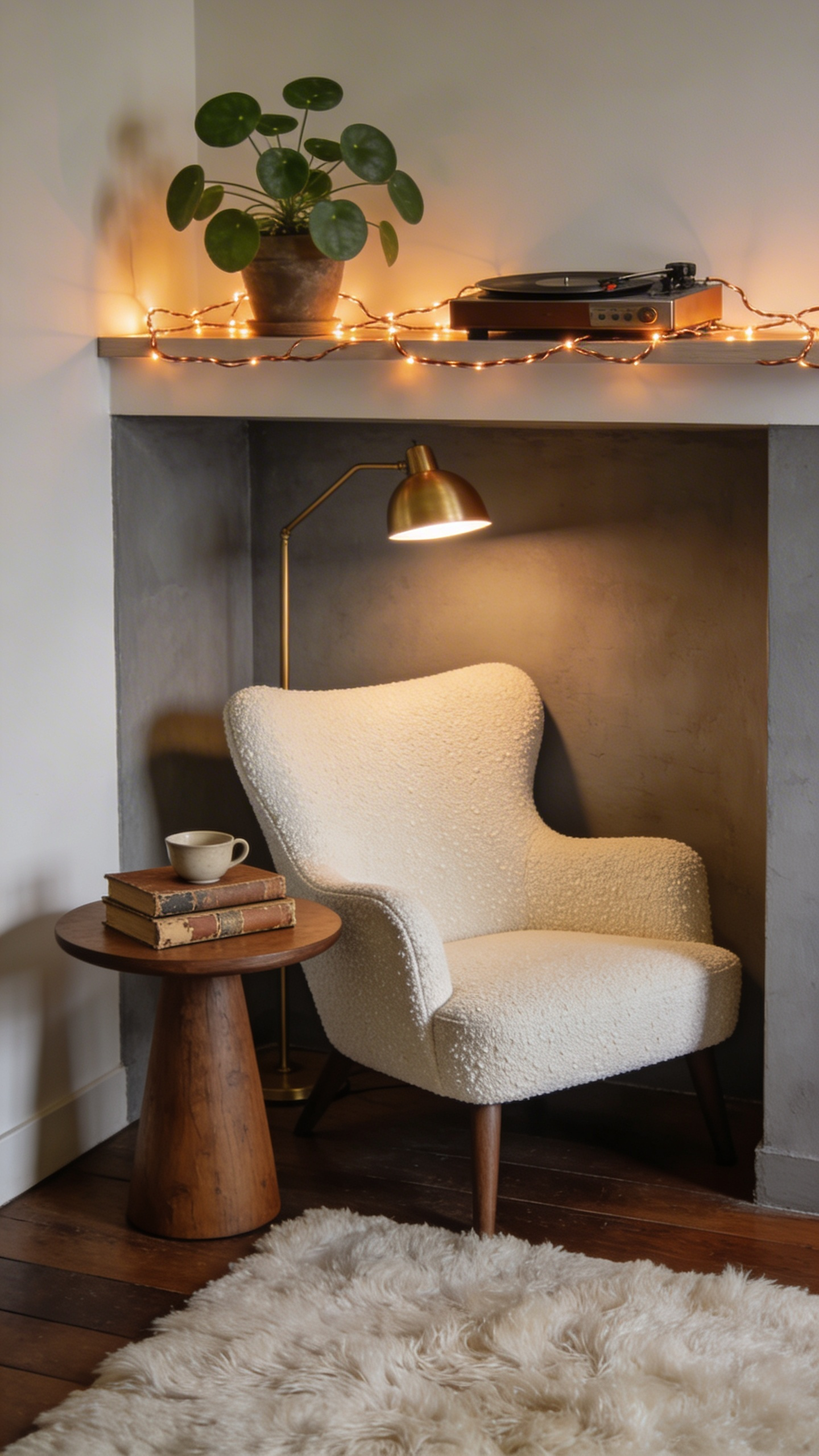
Physically, the space must feel supportive. Use “cocooning” textures like wool. However, adaptability is key. For cold months, incorporate heavy stoneware and rich scents. Conversely, spring calls for lighter porcelain and linen. Additionally, consider the auditory experience. Integrate a turntable as a focal point. Ultimately, these adjustments create a charging station for well-being.
16. Metallic Accents: subtle hardware updates that catch the changing angle of the sun
Metallic hardware acts as dynamic light sculpture. Throughout the day, the sun’s angle shifts. This alters how light interacts with your room. Consequently, warm tones like brass deepen during the evening. Conversely, polished nickel captures the crispness of midday sun. Therefore, your finish choice dictates the atmosphere.
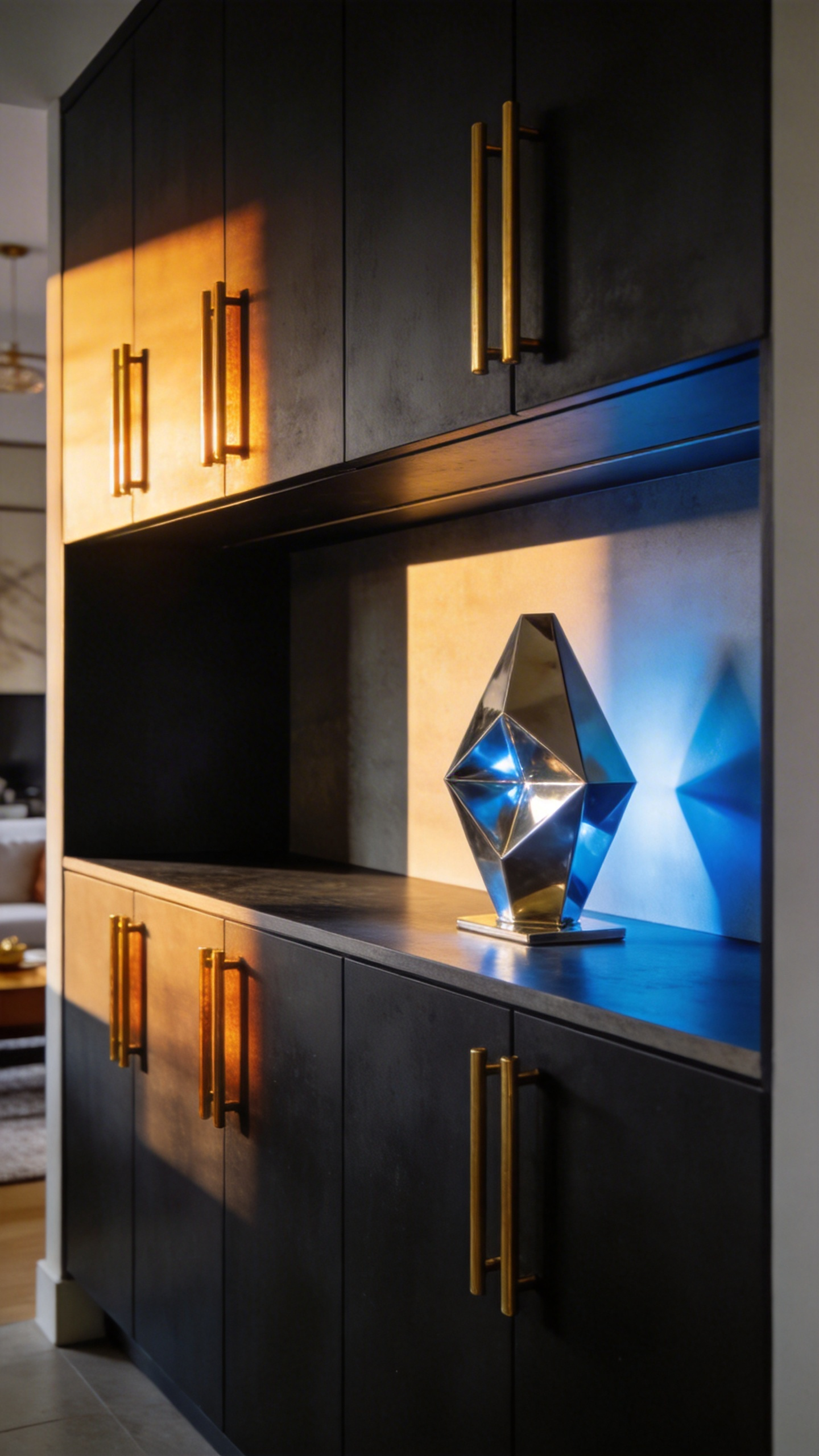
True sophistication lies in texture. Polished surfaces can create blinding reflections. Instead, opt for brushed or satin finishes. This aligns with “Quiet Luxury.” In fact, designers often limit these accents to 10% of the room. Thus, they serve as refined jewelry.
Finally, consider “living finishes.” Unlacquered brass develops a unique patina. Specifically, high-touch areas polish while recessed spots darken. This evolution adds narrative. Ultimately, these updates blend seasonal light with character.
17. The Edit: The crucial step of removing one item for every new item added
The “One-In, One-Out” rule is a principle of visual composition. Specifically, it mirrors the concept of *Ma*. Rather than fearing empty space, view gaps as potential. Consequently, absence becomes intentional.
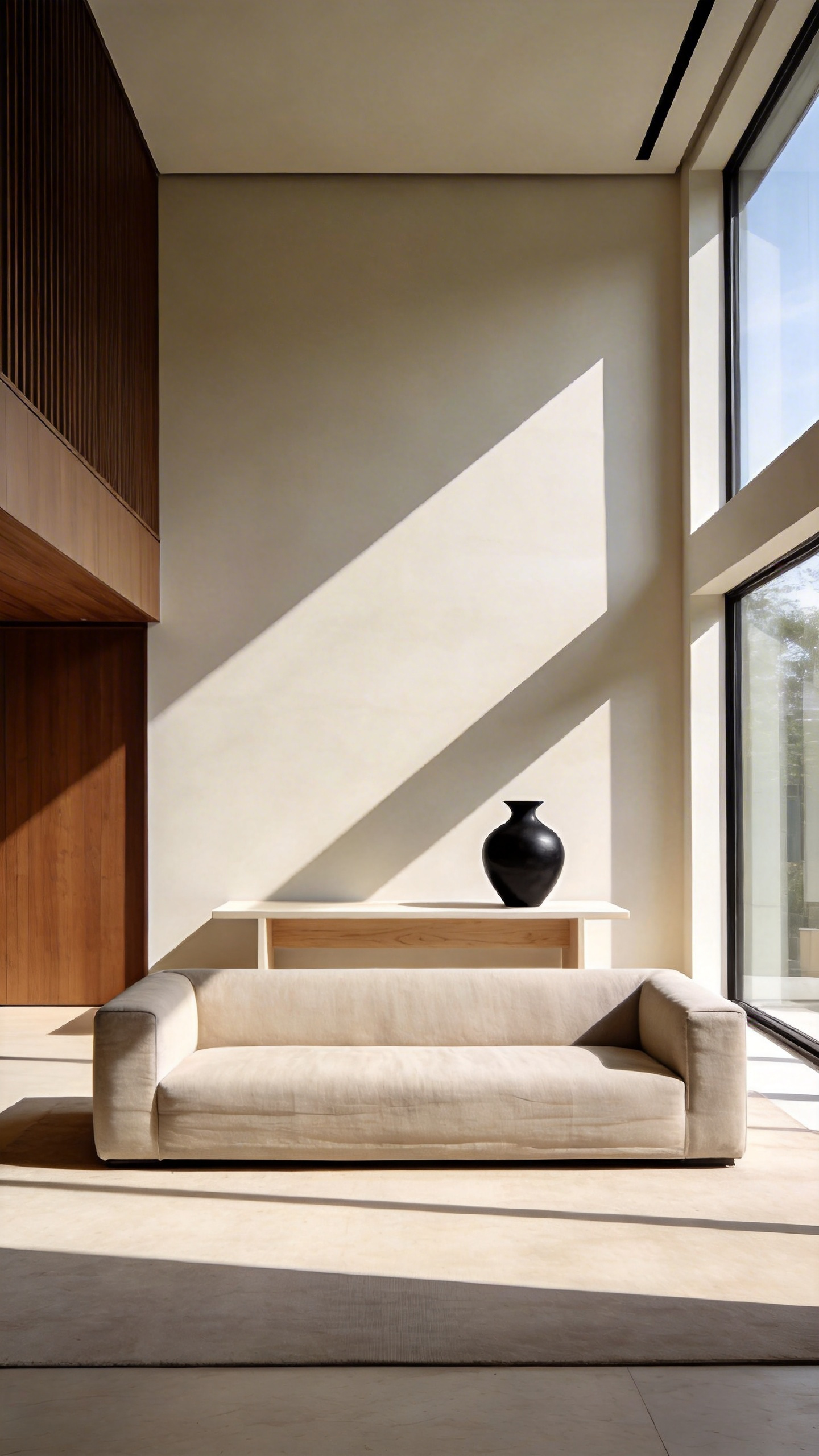
This process combats visual chaos. Historically, cluttered spaces suffered from *horror vacui*, or fear of emptiness. However, a well-styled room requires breathing room. Removing an item reduces cognitive load. It promotes mental clarity.
Additionally, restraint signals luxury. When you add a “hero” piece, remove a competitor. As a result, the new object captures attention. Indeed, elegance is defined by intention. Thus, this discipline transforms a room from full to curated.
Embracing the Cycle – Your home as a living, breathing canvas
Ultimately, your home is not a static museum display. Instead, view it as a living entity. It evolves alongside you. By aligning your space with natural rhythms, you support well-being. Shifting light and texture regulates mood. Consequently, embracing imperfection becomes a strength. This approach rejects the pressure of a “finished” room. In fact, true beauty lies in the honest nature of the space.
Moving forward, rely on “ephemeral design.” A neutral base allows for dramatic shifts. Therefore, use scent and textiles to mirror the seasons. Additionally, bring nature indoors. This cycle turns you into a curator. To begin, audit your current decor. Specifically, if you are looking for more living room decorating ideas, identify items that can rotate. This approach revitalizes your decor. It provides fresh living room styling ideas that reflect your evolving story.
Frequently Asked Questions
What is the secret to making a living room feel luxurious but not sterile or like a showroom?
The key to achieving luxury without sterility is incorporating “rhythm” and visual tension. Designers avoid matching furniture sets. Instead, introduce contrast through texture (e.g., pairing smooth velvet with rough linen or raw wood). Also, display objects with personal history. This creates depth. It signals that the space is intentionally curated, not just staged.
How often should I change my living room styling to keep it feeling fresh?
Aim for seasonal adjustments rather than total overhauls. Focus on “ephemeral design” elements—textiles, scents, and light. Swapping pillow covers, throws, and curtains twice a year (spring/summer and fall/winter) offers maximum impact. This keeps the atmosphere aligned with natural cycles.
How do designers master the art of arranging throw pillows on a sofa?
Professional stylists use the “Pillow Equation.” This relies on an odd-numbered hierarchy (groups of three or five). Start with a dominant large-scale pattern to set the tone. Layer in a medium-sized solid or secondary pattern. Finally, complete the arrangement with a small, textured cushion. This adds visual depth.