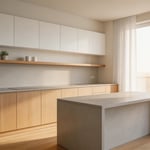
Your kitchen is the heartbeat of your home. Yet for most of us, it’s also a source of daily stress. The visual noise—cluttered counters, visible appliances, cabinet hardware everywhere—creates constant low-grade agitation. Indeed, a UCLA study tracking cortisol levels found that homes with high visual clutter trigger measurable stress responses. Yet the good news is clear: Minimalist kitchen design isn’t about sacrifice. It’s about calm. It’s about removing everything that doesn’t serve you, so the things that matter—cooking, gathering, breathing—feel effortless.
This guide walks you through 15 concrete strategies to build a minimalist kitchen design that actually works for real life. Rather than aspirational ideals, these are practical choices you can implement immediately. You’ll learn how to hide what you don’t see, reveal what you love, and create a space that feels as good as it looks. Furthermore, each strategy connects to the neuroscience of calm—the research behind why minimal spaces reduce stress and improve wellbeing. Wellness begins in your kitchen.
1. Handle-Free Cabinetry for a Seamless Wall of Storage
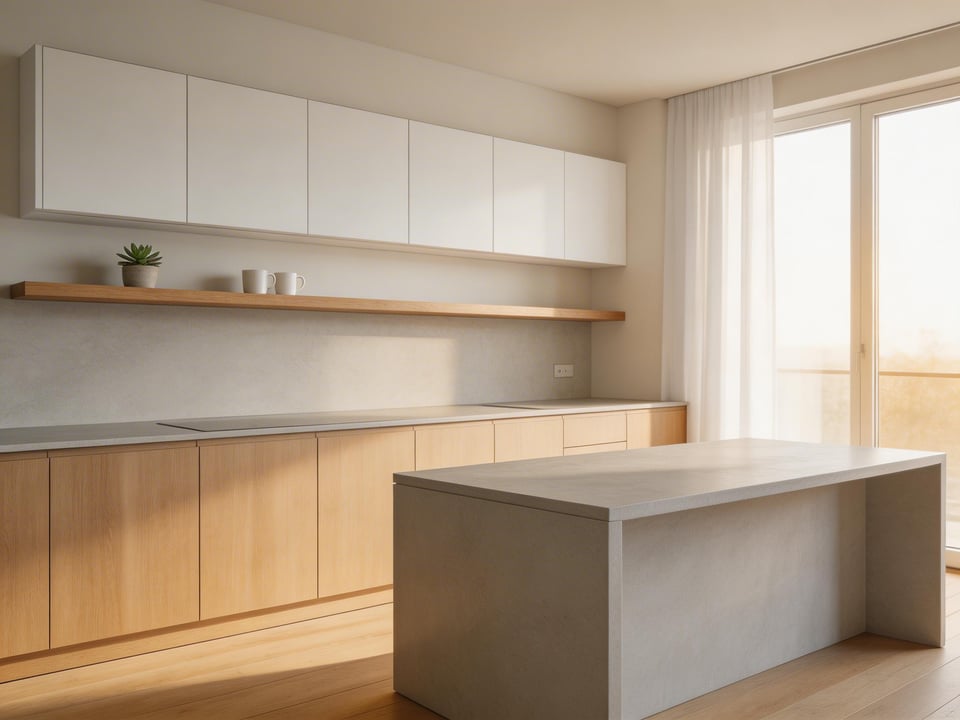
The single most powerful shift in minimalist kitchen design is removing cabinet handles. When doors and drawers disappear into the cabinetry plane, the entire room exhales. Simply put, you’re replacing visual fractures with a continuous, calm surface.
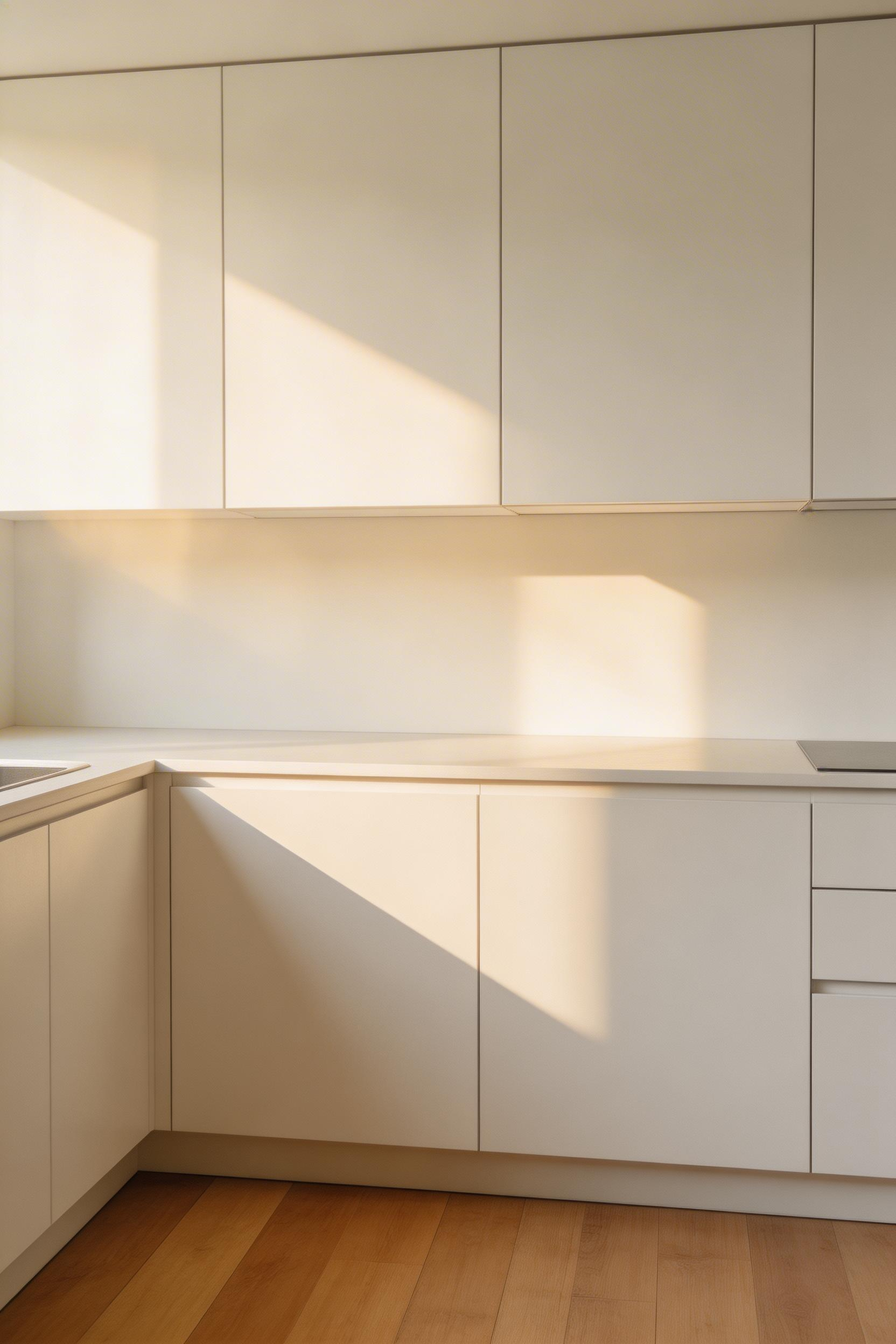
Three technologies make this work. Push-to-open (also called tip-on) uses a mechanical latch: you push the door or drawer and it springs open. Rated for 50,000+ cycles, it works on both doors and drawers. The mechanism is hidden inside the cabinet, costing roughly $30-50 per unit. Alternatively, touch-latch systems use magnetic proximity sensors—cheaper at $15-25 per door, but doors only. They’re reliable, yet less sturdy than push-to-open systems.
J-pull designs take a different approach: they integrate a subtle vertical recess into the frame. No pushing needed. Instead, you simply hook your fingers and pull. In fact, it’s the most ergonomic option and the most expensive at $40-70 per opening. Meanwhile, for cabinetry finish, matte lacquer is the standard in minimalist kitchens. It absorbs light rather than reflecting it, creating depth and sophistication. Satin is easier to maintain (less fingerprint-visible), yet matte delivers the intentional calm that defines this design philosophy. Additionally, lacquer finishes are durable and age beautifully when properly maintained.
Why It Works
A handle-free kitchen removes approximately 30-40 visual interruptions. Your brain registers each hardware piece as a separate object. Remove them, and the room feels 40% calmer. That’s not metaphorical—it’s neurological.
2. Minimalist Kitchen Design Starts With a Controlled Neutral Palette
Colour is psychology. In minimalist kitchen design, your palette becomes your foundation for calm. Not all neutrals are equal. The wrong white can feel sterile and cold. The right white feels like a quiet breath.
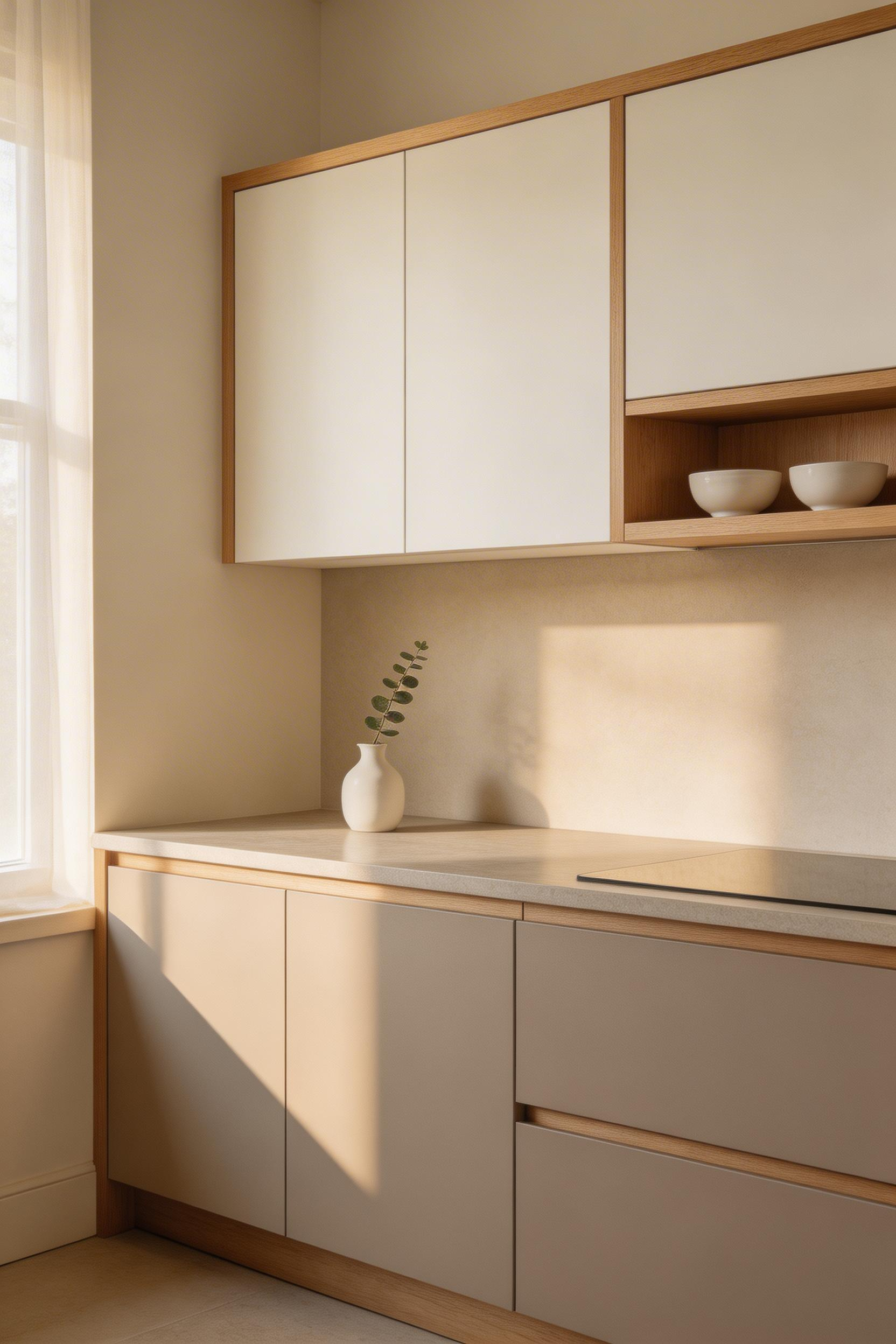
Follow the three-tone rule: light (walls/ceiling), mid-tone (cabinetry), and natural wood accent. For warm whites, Benjamin Moore White Dove (OC-17) is the professional standard—it carries a subtle yellow undertone that prevents the hospital-white effect. In 2026, the trend shifts away from cool whites toward mineral taupes, earthy off-whites, and warm greiges. So these colours work because they mimic natural materials: sand, linen, weathered stone. Furthermore, warm undertones signal comfort to your nervous system in ways cool whites cannot.
Pair these with white oak timber accents. Indeed, oak carries warmth; it softens neutral schemes beautifully. For stone, Calacatta marble (honed, not polished) or Pietra Serena slate (a soft grey-blue) grounds the palette without adding visual weight. The key is saturation: every colour in your palette should feel like it occurs naturally. Nothing should feel chosen or forced. Similarly, avoid pure white walls in favour of off-whites with undertone warmth—this single choice prevents the clinical sterility that undermines minimalist design. For a deeper look at how cabinet colour, finish, and material choices interact, the kitchen design cabinets and colour choices guide offers practical frameworks worth working through before you commit.
The Psychology of Restraint
A restrained palette reduces decision fatigue significantly. Every time your eye lands on a colour, your brain performs a micro-calculation: “Does this belong?” In a minimal palette, everything belongs. Therefore, your nervous system learns this. The kitchen becomes a space of rest, not registration.
3. Open Shelving Done Right: One or Two Shelves, Maximum
Open shelving is the most misunderstood element in minimalist kitchen design. Everyone sees Instagram photos of beautiful shelves and thinks, “I want that.” But then they install four shelves, crowd them with objects, and create the opposite of calm.
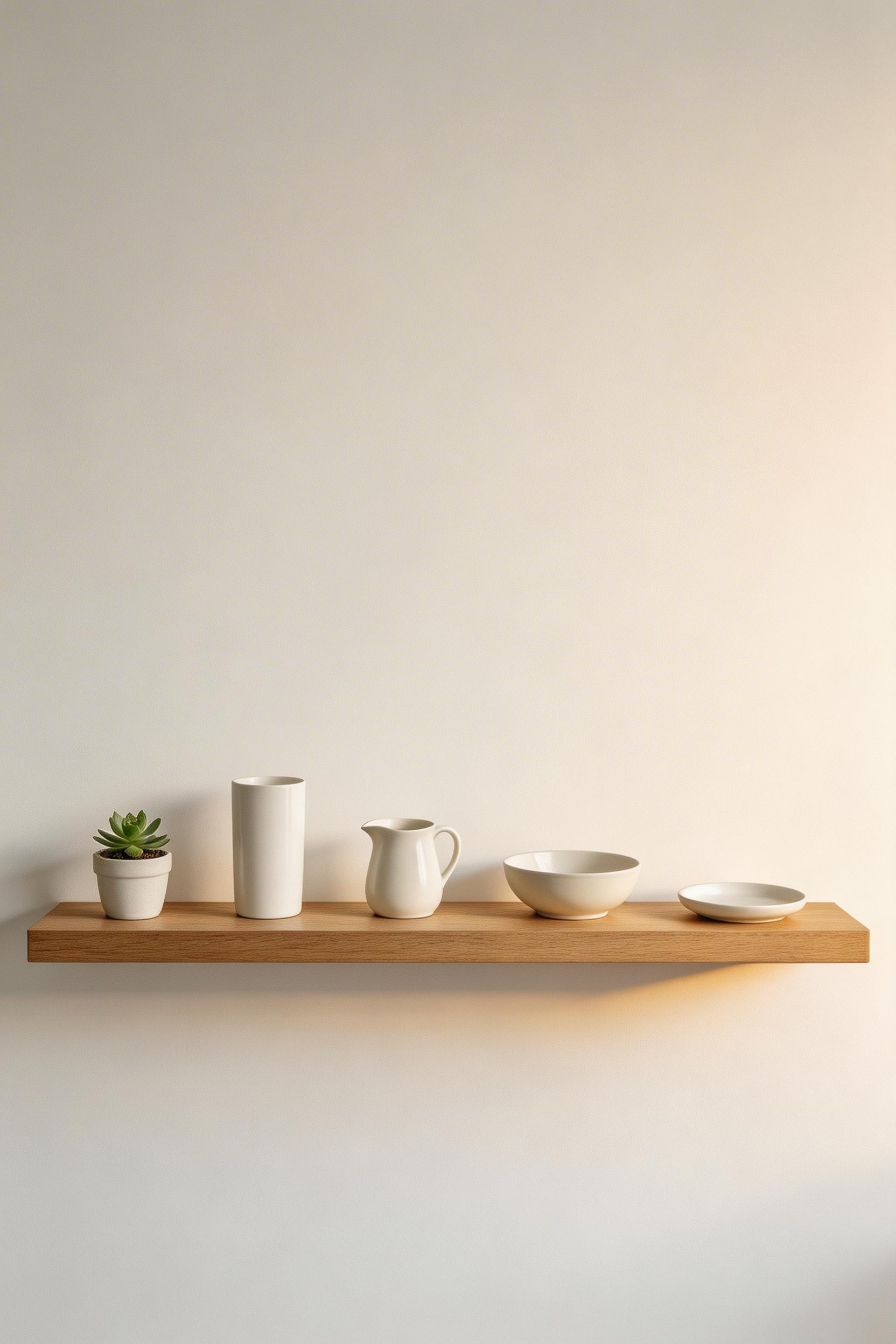
Real minimalist kitchens display one, maybe two open shelves. A single 44mm solid oak shelf with concealed floating hardware (a steel rod anchored into the wall stud) creates the illusion of weightlessness. Maximum three to five objects per shelf. Empty 30% of the length. If your shelf is 120cm long, occupy only 80cm. This empty space is not wasted—rather, it’s necessary. Basically, it’s what makes the objects visible rather than cluttered.
What belongs on these shelves? Not everyday items. Instead, rarely-used serving pieces. A handmade ceramic vessel. A single plant in a neutral pot. Objects you’ve chosen to be visible. The psychology here matters significantly: open shelving forces intention. If you’re displaying it, you must love it. And if you don’t love it, it doesn’t belong in your minimalist kitchen design. This constraint is actually liberating—it makes the decision-making process simple and guilt-free.
4. An Integrated Appliance Strategy That Makes the Kitchen Feel Whole
Visible appliances fracture a minimalist kitchen. A stainless steel fridge, a black microwave, a silver kettle—each one is a different object demanding visual attention. Integration is the solution. Yet many homeowners avoid this step because of cost. The investment does matter, but the visual return is immense.
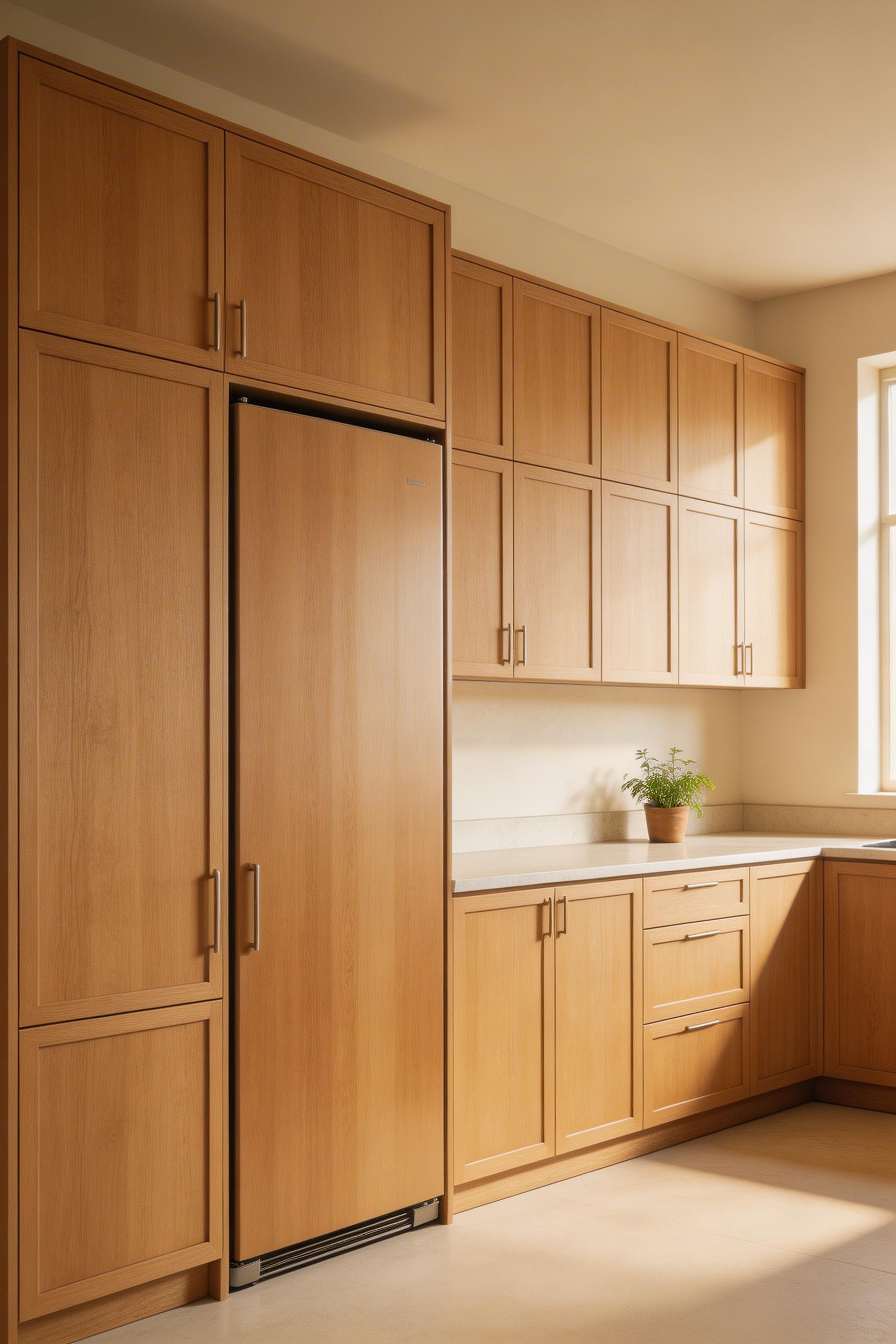
Panel-ready refrigerators must be counter-depth (24 inches) to sit completely flush with your cabinet line. Brands like Sub-Zero, Fisher & Paykel, and Bosch offer reliable options at $4,000-8,000. You commission a custom panel from your cabinetry supplier and attach it to the fridge door. Then the fridge vanishes completely. Your kitchen feels whole. Additionally, integrated fridges maintain better temperature consistency because the panel creates additional insulation.
For dishwashers, specify top-mounted controls (buttons on top of the door, invisible when closed). Otherwise, front-mounted panels scream “appliance.” For microwaves and other countertop items, install an appliance garage—a tambour door (roll-up shutter) that conceals everything behind a panel. Push the door closed and your counter becomes a continuous, empty surface. This single decision transforms how minimalist your kitchen feels. Furthermore, appliance garages protect your equipment from dust and splattering.
5. The Minimalist Kitchen Idea of One Hero Material, Used Everywhere
In minimalist kitchen design, repetition creates calm. This principle works because your brain stops processing repeated elements as separate objects. Introduce one hero material—perhaps a specific stone or concrete finish—and use it across multiple zones: worktops, backsplash, and even an accent wall or niche. The visual coherence this creates is remarkable.
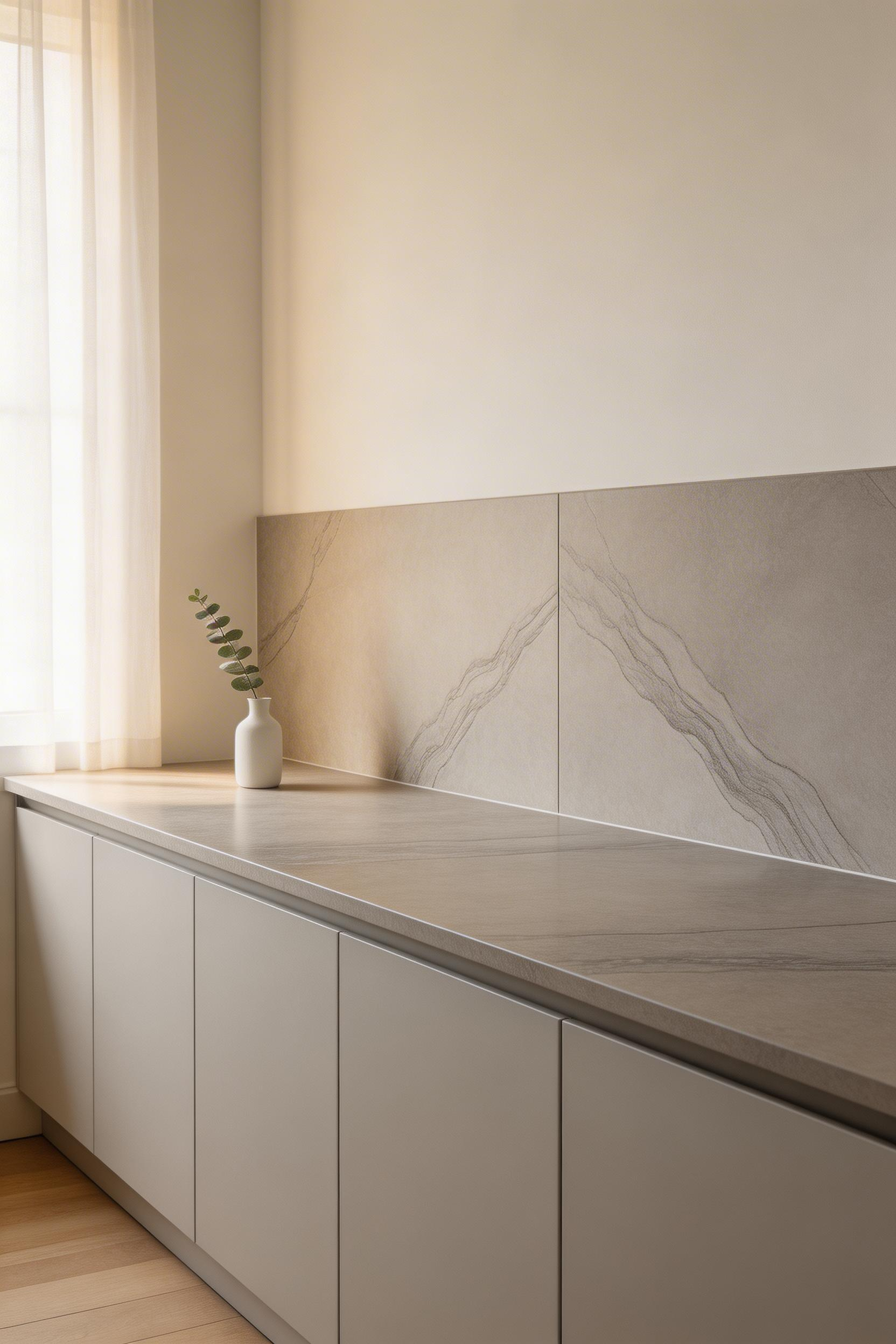
Porcelain slabs cost $70-150 per square foot and are increasingly popular. Alternatively, concrete (sealed, industrial-finish) runs $100-180/sqft. Yet terrazzo (recycled materials in resin or cement) ranges from $150-250/sqft. Specify minimum 12mm thickness for porcelain worktops—anything thinner feels fragile and cheap. The technique that elevates this is bookmatching: the fabricator cuts a single slab in half and opens it like a book, so the grain mirrors perfectly across your worktop and backsplash seam.
The cost impact is significant—bookmatching adds $500-2,000 to your project—but the visual payoff is immense. Your kitchen no longer reads as “worktop + backsplash.” Rather, it reads as one continuous material, one continuous intention. This is where minimalist kitchen design becomes art. For a comprehensive look at how different surface materials work together across worktop and backsplash, the kitchen backsplash and countertop combinations guide covers the full range of stone, porcelain, and concrete pairings. Additionally, bookmatched surfaces create a sophisticated, custom aesthetic that standard materials cannot achieve.
6. Concealed Outlets, Switches, and Tech Infrastructure
Every visible outlet is a visual anchor. Every light switch interrupts the wall plane. In minimalist kitchen design, you remove these entirely—or hide them strategically. This requires planning, but the calm payoff is worth the effort.
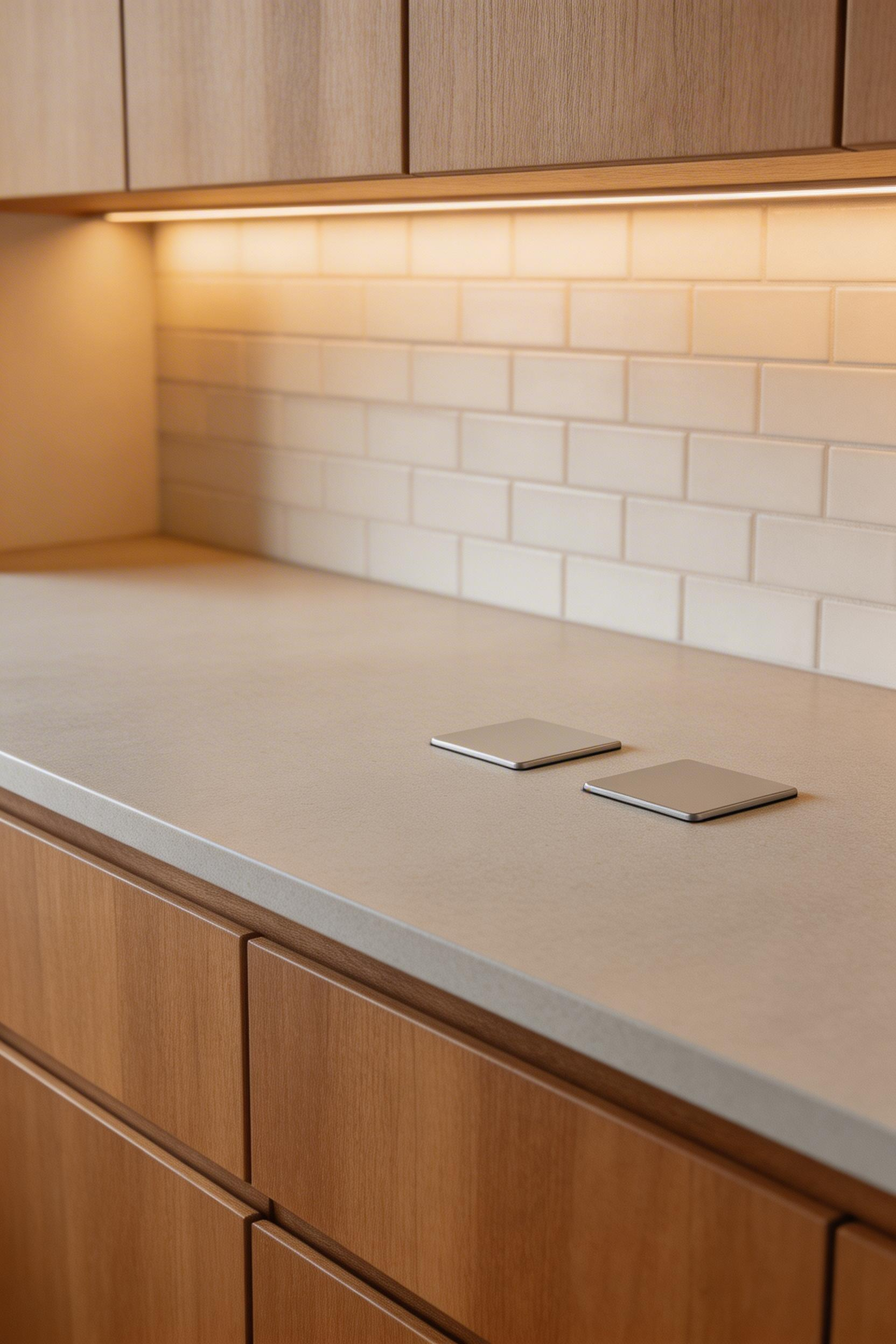
Docking Drawer Point Pod pop-up outlets (rated 10,000+ cycles, 65W USB-C) mount flush in your worktop. Press down, they pop up. Press again, they retract. Cost: roughly $80-120 per unit. Meanwhile, in-drawer charging solutions like Blade Series mount inside deep drawers, so cables live hidden until you need them. For light switches and outlets on walls, specify screwless flat-plate sockets (MK Grid Plus or similar). No visible screw holes. The plate is seamless, almost invisible. Also, consider placing additional pop-ups near frequent work zones (prep area, coffee station) for maximum convenience.
Plan Before Cabinetry Arrives
This is critical: electricity and tech placement must happen before your cabinetry is built. Once cabinets arrive, moving an outlet becomes a major, costly retrofit. Sit down with your electrician and cabinetry supplier simultaneously. Mark every location where you’ll need power. Be generous with planning—it’s cheaper now than later.
7. Waterfall Countertops That Anchor the Room Without Adding Clutter
A waterfall countertop cascades from the worktop surface down the side of an island or peninsula, creating a dramatic, intentional detail that feels like architecture, not decoration. In minimalist kitchen design, it serves both function and philosophy. Moreover, the waterfall becomes a focal point that justifies simplicity everywhere else.
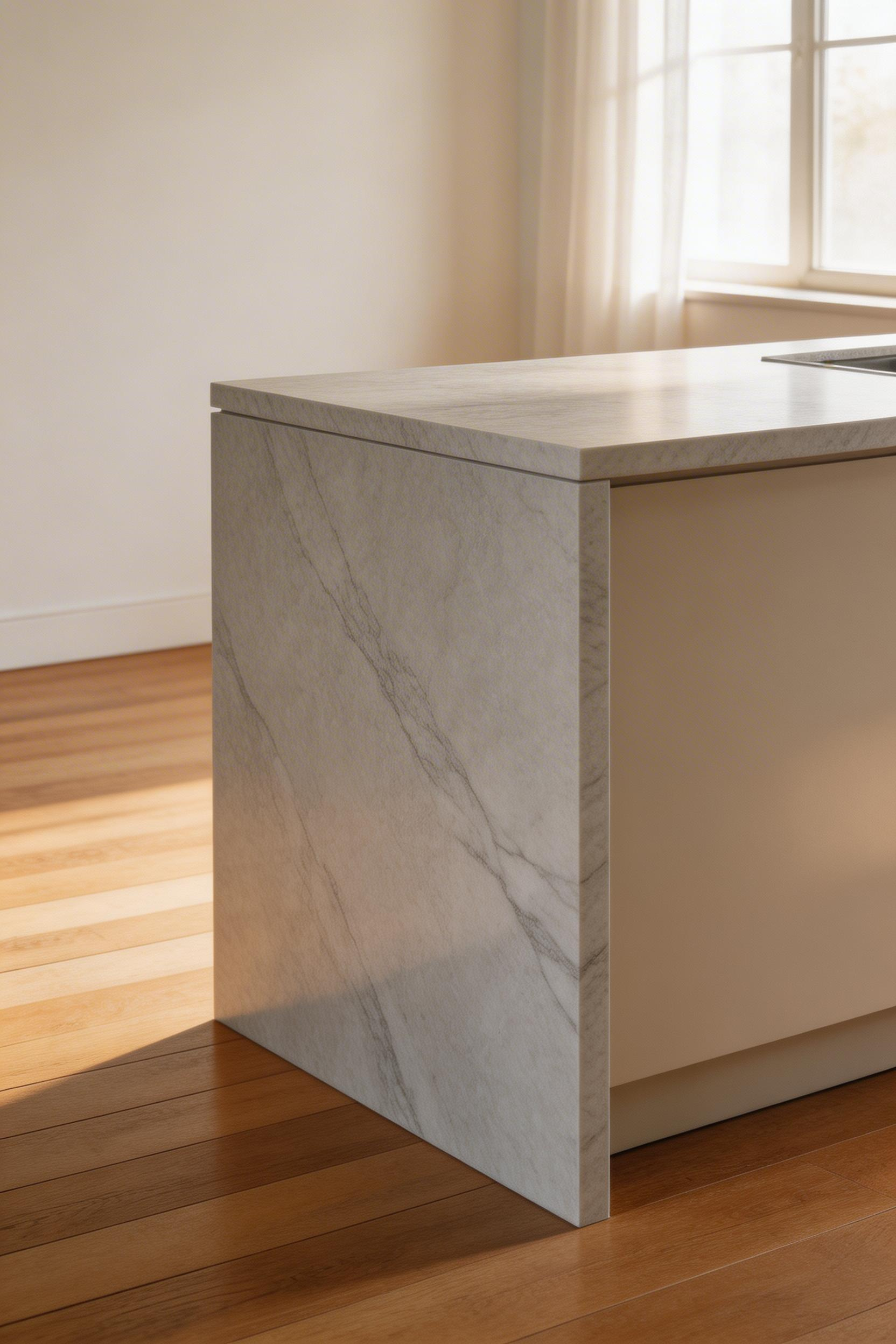
The magic is in the seam. At the corner where horizontal meets vertical, specify a mitered seam at 45 degrees. This eliminates the visual line that would otherwise interrupt the continuous grain. Thickness matters significantly: 20mm stone reads as refined and furniture-like. 30mm reads as architectural and weighty. Bookmatching the grain across this seam (so the pattern flows continuously from top to side) adds $500-2,000 but transforms the feature from nice-to-have into a signature statement.
A peninsula waterfall is the cleanest application—you see the beautiful cascade from the main living space, and it becomes a focal point without clutter. Conversely, a waterfall island can feel visually heavy if the island itself is too large. Still, keep your island lean and open-legged (see Item 8), and the waterfall becomes a beautiful punctuation mark in your minimalist kitchen design. If you’re exploring the broader design language of pared-back kitchens, minimalist kitchen ideas for a calm, modern aesthetic offers additional design frameworks worth considering. Furthermore, peninsula waterfalls create a natural visual boundary between kitchen and living spaces.
8. Minimalist Kitchen Design Built Around a Negative-Space Island
Your island doesn’t have to be big to be beautiful. In fact, minimalist kitchen design often depends on islands that are smaller, simpler, and more intentional. This approach prioritizes negative space over function-stacking.
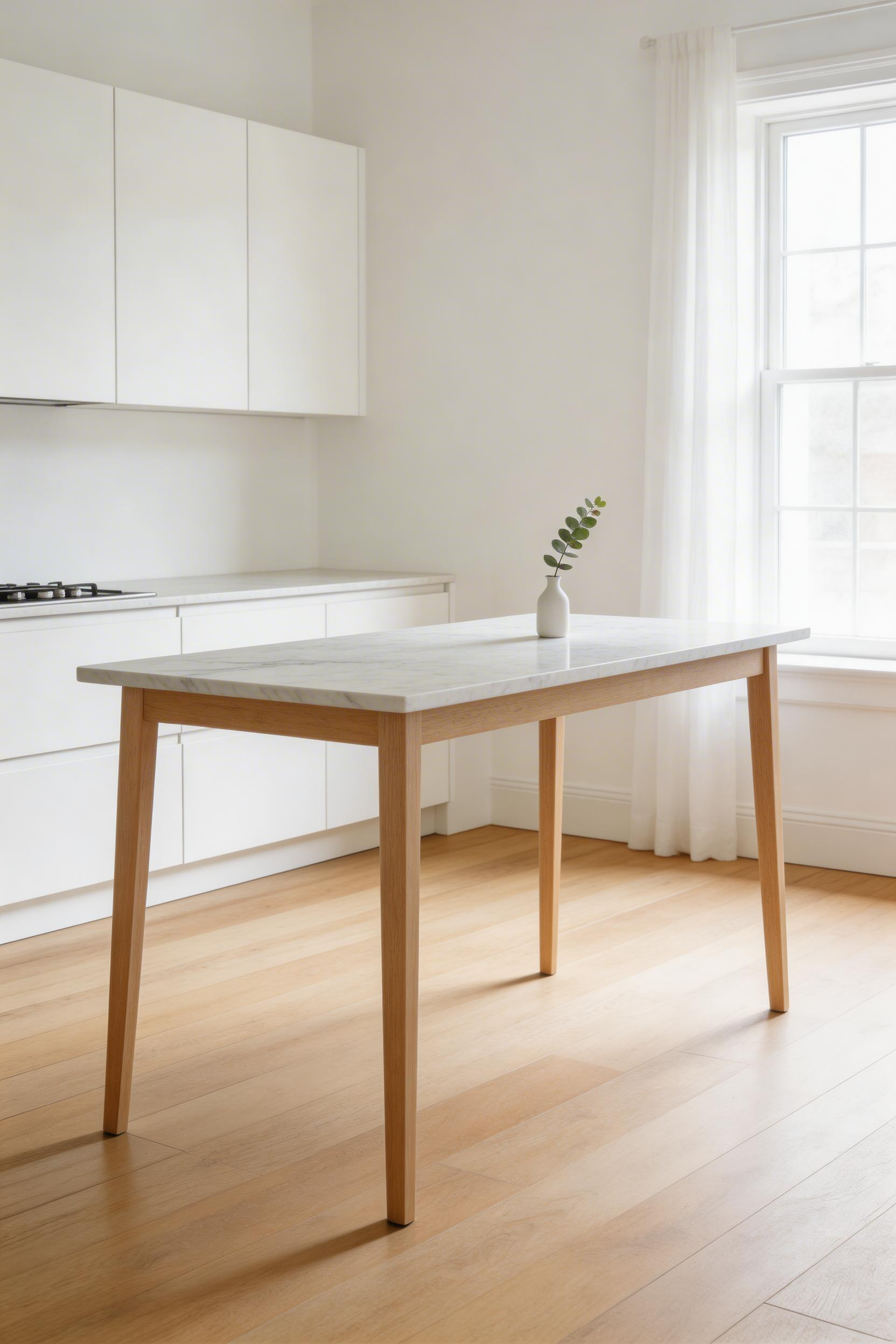
Standard kitchen clearance around an island is 42-48 inches. Rather than fill this space with cabinets, create a furniture-leg island with 6-8 inches of floor clearance. The open space underneath makes the island feel weightless. Psychologically, you can see the floor beyond it, which reduces visual mass. Also, this approach makes cleaning underneath straightforward—no tight corners to navigate around.
Make your island single-function: prep-only, with two or three deep drawers for knives, cutting boards, and storage. But no built-in cooktop or sink competing for attention. A slimline option of 18-24 inches depth (instead of standard 36 inches) takes up less visual real estate without sacrificing prep space. This restraint is what defines modern minimalist kitchen design. For a wider look at island configurations, proportions, and single-function layouts, kitchen island ideas for a functional layout covers the full range of island types worth reviewing before you specify. Finally, single-function islands are easier to clean and maintain than multi-use ones.
9. Deep Drawers Instead of Lower Cabinets for Better Organisation
Open a traditional lower cabinet and you’re faced with a dark cave. Items hide in the back. You pull out a whole stack to find one thing. Deep drawers—drawers that extend fully to the outer edge of your island or run of cabinetry—solve this problem elegantly. This shift improves both functionality and the visual calm of minimalist kitchen design.
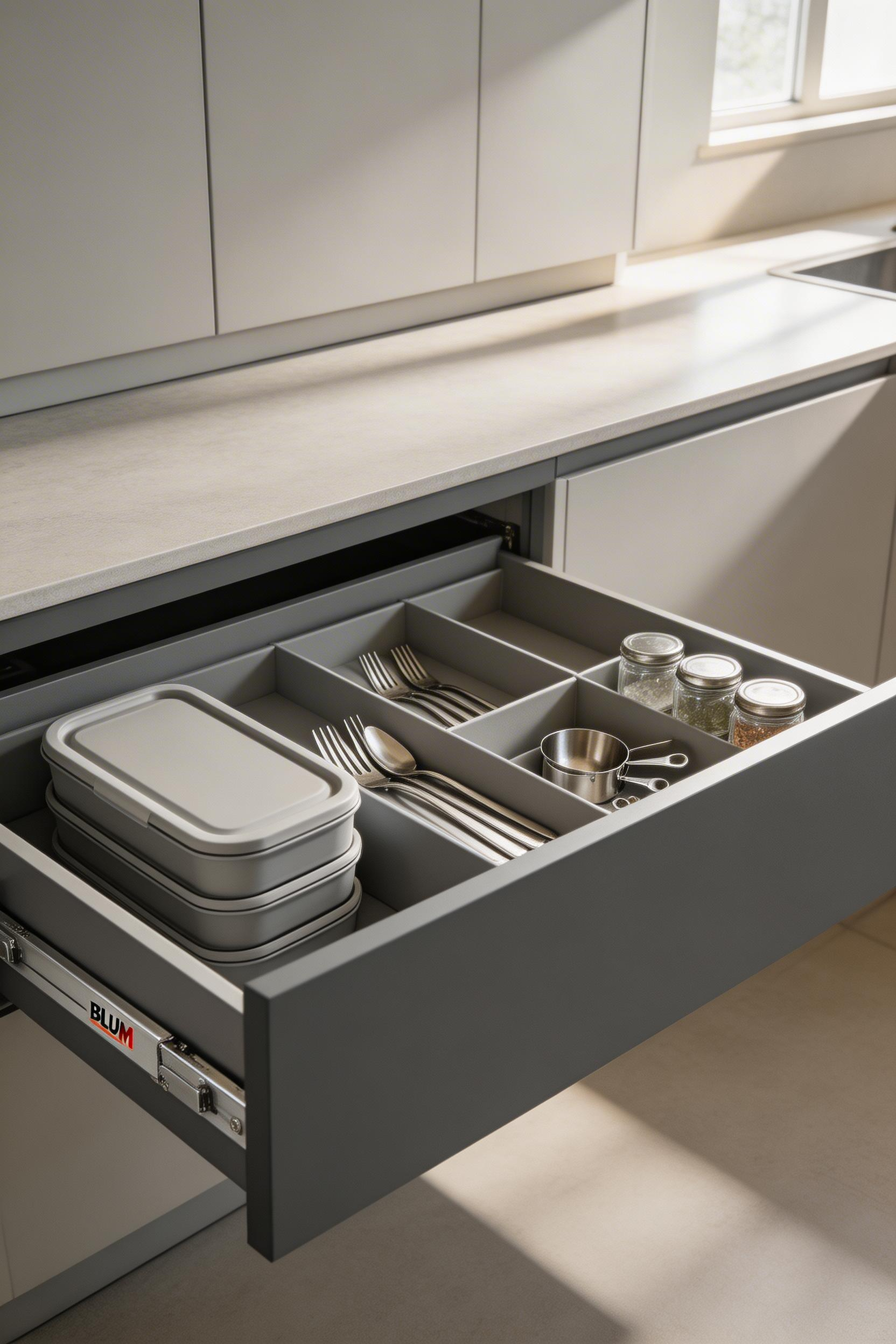
Specify Blum Legrabox with AMBIA-LINE organiser (in Orion grey). This is the professional standard for premium kitchens. Soft-close is non-negotiable—it eliminates the bang and slam that creates auditory clutter. Use depth zones strategically: 100-120mm for cutlery and small items, 200-250mm for dry goods and pantry, 300-350mm+ for pots and larger cookware. Similarly, Hettich InnoTech systems offer a slightly less-expensive alternative with similar results.
The psychology of deep drawers is powerful. Everything is visible. Everything is accessible. Yet there’s no hidden chaos. Your nervous system registers this order and relaxes. Additionally, soft-close mechanisms add years to drawer longevity by reducing wear and strain. Deep drawers are core infrastructure in functional minimalist kitchen design.
10. One Carefully Chosen Colour Accent That Does All the Work
A neutral palette doesn’t have to be colourless. A single, strategic colour accent—appearing in one location only—can add personality without adding noise. This approach maintains the calm logic of minimalist kitchen design while allowing for personal expression.
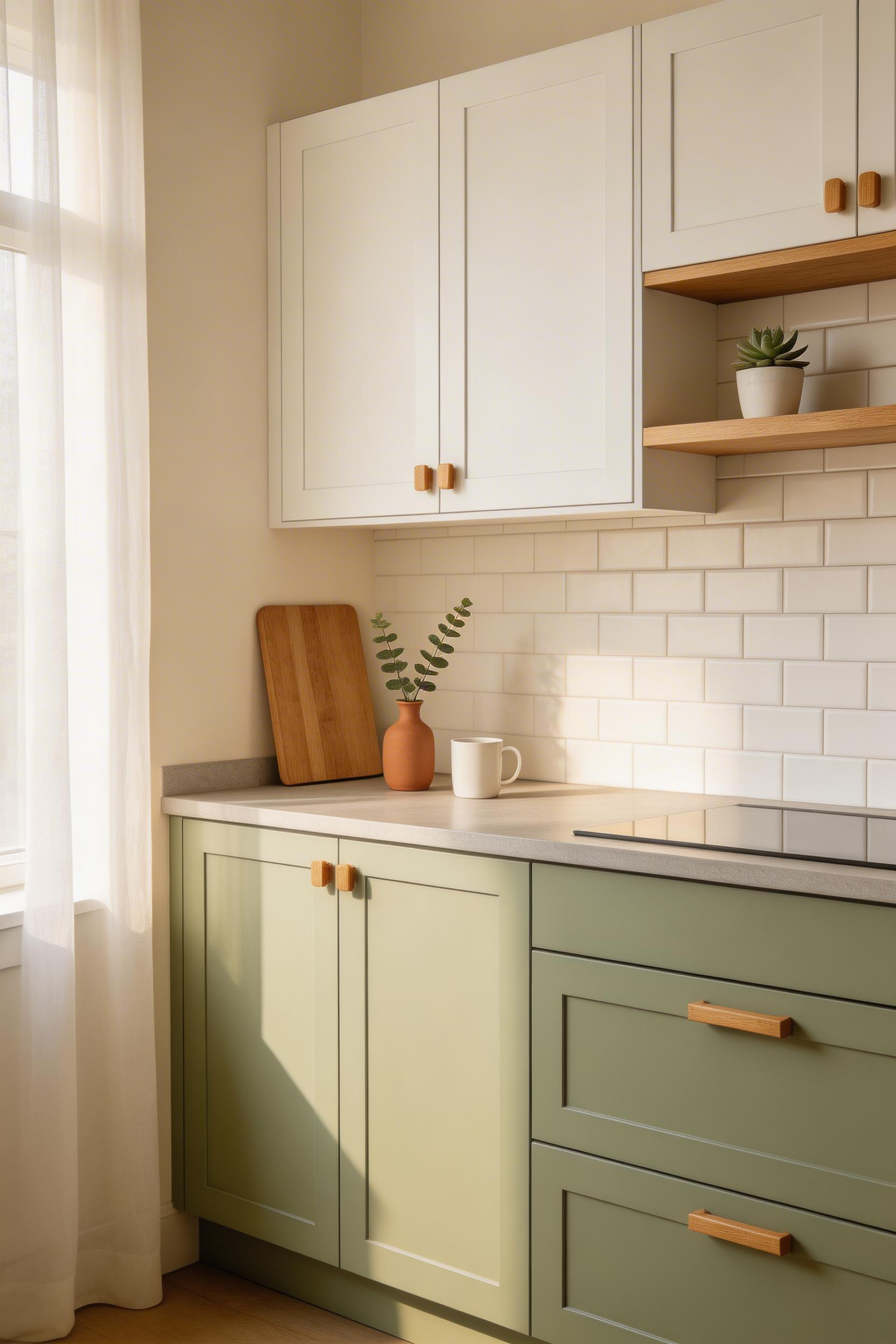
Choose your accent colour and commit to using it in one zone only. Options that work beautifully: deep sage (Farrow & Ball Mizzle), warm terracotta, or charcoal grey. Alternatively, use a two-tone approach: darker colour on lower cabinetry, lighter on uppers. This creates grounding without visual chaos. Furthermore, darker lowers provide better concealment of everyday wear and spills.
Before committing to paint, order a 60×90cm board from your supplier and live with it in your kitchen for 48 hours. Indeed, different light at different times will shift how it reads. A colour that looks perfect in the showroom can feel wrong in morning light. This simple test prevents costly regret. When your accent is right, it becomes part of your home’s identity without disrupting the calm logic of your minimalist kitchen design. Additionally, north-facing kitchens need warmer colour undertones, while south-facing ones can handle cooler accents.
11. Simple Kitchen Design Perfected With Under-Cabinet Lighting
Lighting is invisible architecture. The right lighting transforms a minimal kitchen from cool to warm, from institutional to inviting. Under-cabinet lighting is the difference between a space that feels like a showroom and one that feels like home. This single detail creates more wellbeing impact than most homeowners expect.
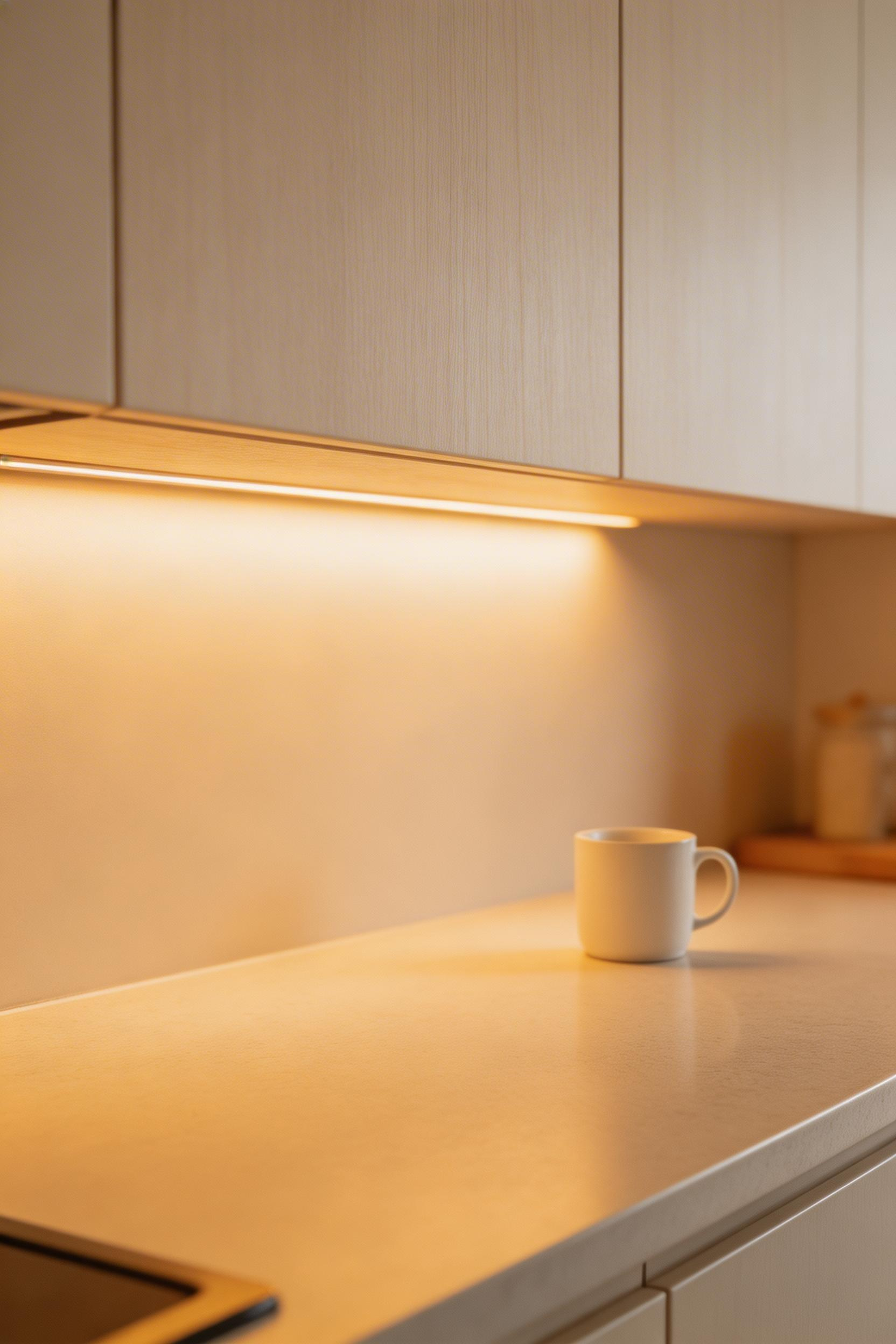
The professional standard is 3000K colour temperature. Below 3000K reads as too yellow for food prep and makes colours look muddy. Above 3000K feels too clinical—like office lighting. So 3000K is the Goldilocks zone. Specify LED strip lighting, not pucks or spots. A continuous strip creates even, shadow-free illumination across your countertop. Use a dimmer-compatible driver so you can lower intensity for evening ambiance. Additionally, dimmers allow you to shift the kitchen from functional morning light to intimate evening mood with one simple control.
Installation is critical: recess the strip into a routed channel in the cabinet bottom, so the light source itself is hidden. You see the glow on your countertop, not the strip. This small detail is what separates carefully designed kitchens from ones where lighting feels like an afterthought. In fact, it’s the invisible difference in living with your minimalist kitchen design every day. For a full breakdown of how island pendants, ambient sources, and under-cabinet strips work together as a lighting hierarchy, the kitchen lighting over island design principles guide is a useful companion to this. Furthermore, properly hidden lighting eliminates glare that can strain eyes during detailed prep work.
The Impact on Mood
Warm, well-placed light signals safety to your brain. It reduces visual strain. It makes food look delicious. In a minimal kitchen, where restraint can sometimes feel austere, warm light is what adds soul.
12. Textural Contrast Without Visual Clutter
A kitchen of pure smooth surfaces feels sterile. A kitchen of many textures feels chaotic. In minimalist kitchen design, you introduce texture strategically—maximum three textures across the entire space. This constraint might feel limiting, yet it actually allows each texture to shine rather than compete.
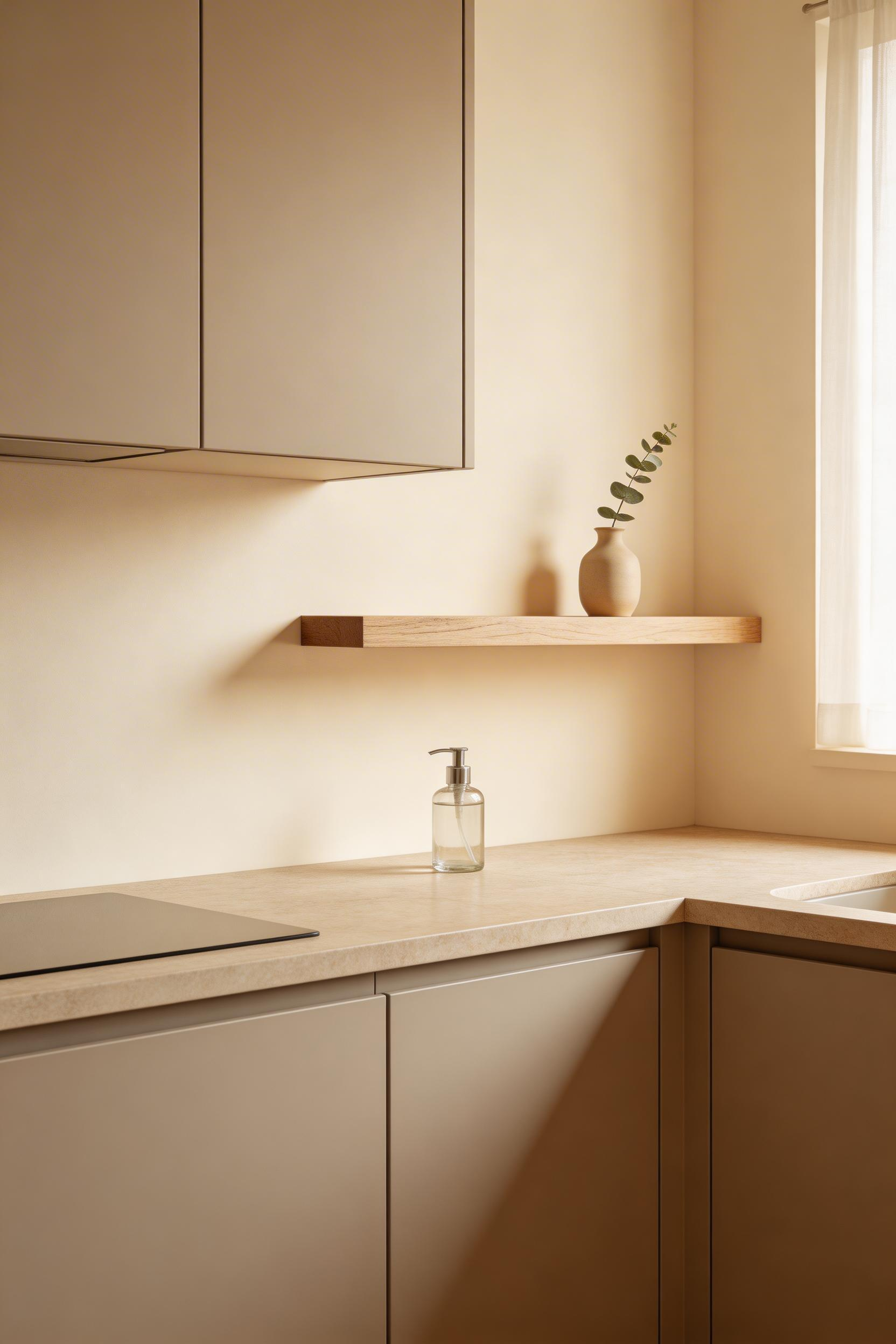
Matte cabinetry (60-70% of the visual field) provides your base. Satin is easier to clean than pure matte, so consider this trade-off carefully. Add your hero stone (worktops and backsplash). Moreover, layer in timber accents—floating shelves, toe-kick trim, or an island base. That’s your three textures. Avoid patterned tile or fluted surfaces that fragment visual space. A fluted glass insert on one upper cabinet door can work (adding visual interest without adding visual mass), but patterns anywhere else break the logic of minimalist kitchen design. Finally, this restraint prevents the overwhelming visual fatigue that overly textured kitchens often create.
13. An Integrated Range Hood That Disappears Into the Architecture
A hood is functional necessity. In minimalist kitchen design, you make it invisible. This is one area where restraint and practicality must coexist.
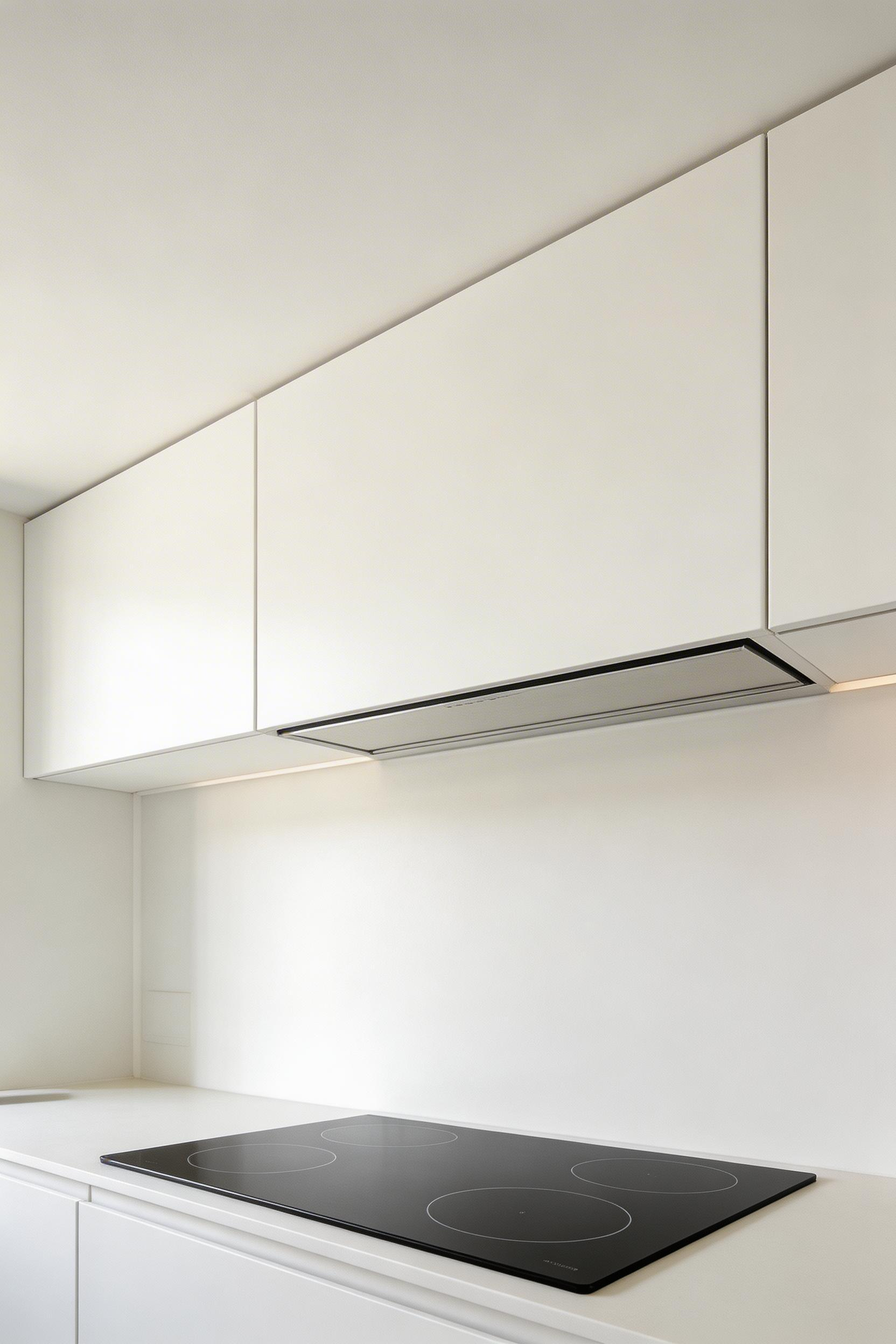
Three options exist. Ceiling cassette hoods (like Elica Cielo or Bora Pure) mount flush in a dropped ceiling soffit. The unit itself is nearly invisible. Alternatively, venting hobs and downdraft systems (Bora Pure, Nikolatesla) replace traditional hobs with built-in extraction—the fume capture happens at the cooking surface. For induction hobs, specify 250-400 CFM. For gas, 600-800 CFM. These are minimum capture rates for effective ventilation.
If you choose recirculating (no duct to exterior), replace the charcoal filter every 3-6 months. Indeed, a clogged filter defeats the purpose and forces the system to work harder. In minimalist kitchen design, the hood serves you invisibly. You cook. The air gets clean. You never think about it. Furthermore, proper ventilation reduces cooking odours that linger on cabinetry and textiles.
14. Minimalist Kitchen Ideas for the Sink Zone: Single Basin, Single Tap
Your sink is a focal point. Two basins split your attention. Fussy taps add visual weight. A single, well-proportioned basin with one elegant tap embodies the restraint that defines minimalist kitchen design. This choice matters both functionally and psychologically.
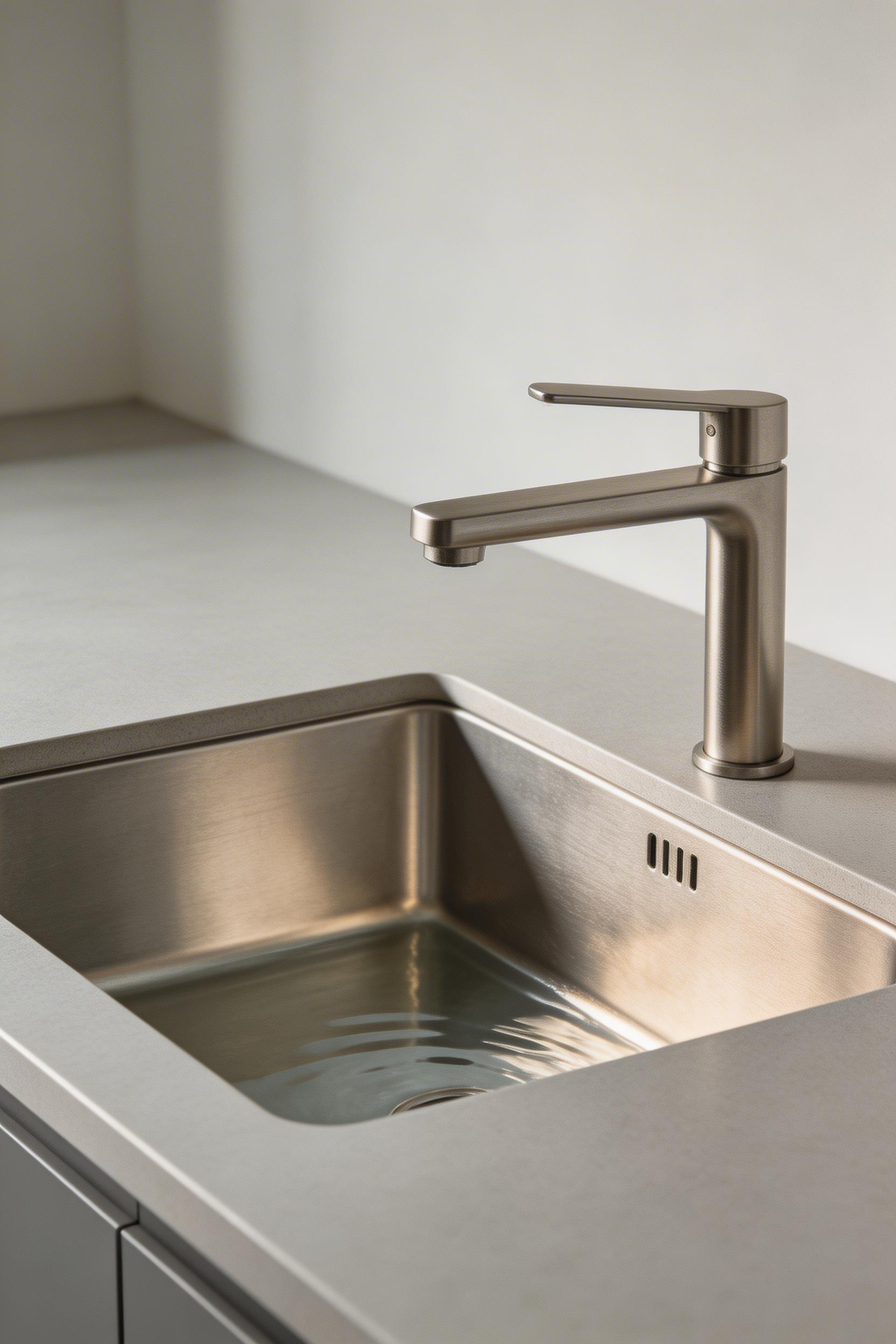
Specify a deep single basin—30×18 inches at 10-12 inches depth. Use undermount installation (sink secured to cabinetry underside, no visible rim). Finish: 16-gauge brushed stainless steel in satin (not mirror polish, which shows every fingerprint). Brands like Grohe Essence or Hansgrohe Talis offer minimalist-perfect single-lever taps—one smooth lever for hot/cold and flow adjustment. Additionally, single-lever designs reduce visual complexity compared to traditional two-knob models.
For a more premium touch, consider sensor taps like Grohe Sensia or Hansgrohe Metris. They eliminate the visual interrupt of a lever and respond to hand proximity. So cold water flows from proximity sensor, warm water from the spray wand. This is refinement in the service of calm—core to minimalist kitchen design. Furthermore, sensor taps are more hygienic for multiple users and operate hands-free.
15. A Dedicated Decant and Display Zone for the Things You Actually Use
You have favourites. Your morning coffee beans. A particular oil. Your most-loved wooden spoon. These deserve a home where they’re visible and ready. In minimalist kitchen design, a small curated display zone gives these objects purpose without creating clutter. This approach transforms everyday items into intentional design statements.
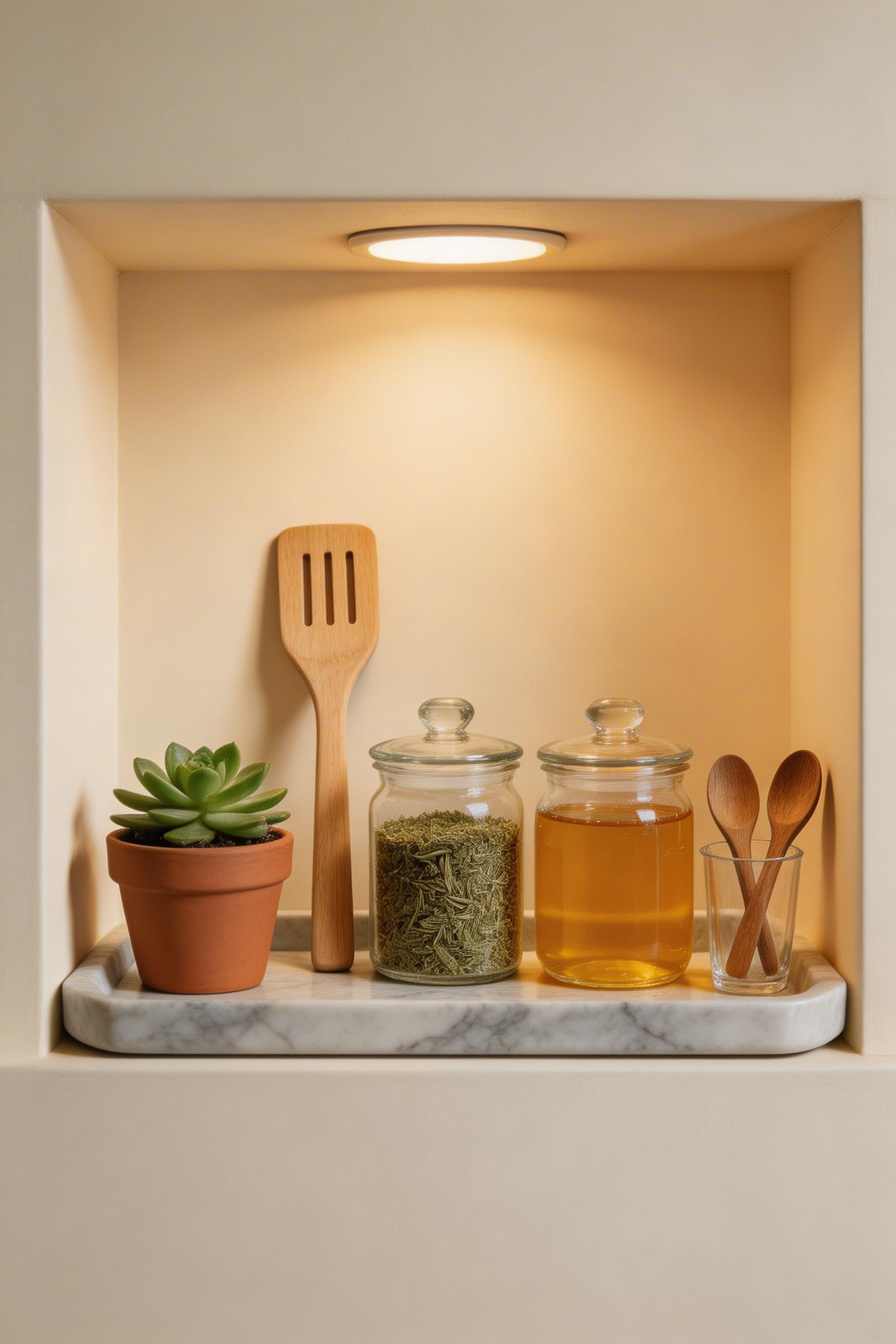
Limit yourself to 3-5 objects maximum. Container system: OXO POP containers (airtight, clear, modular) work beautifully for dry goods. Alternatively, Weck jars offer a warmer, more beautiful aesthetic. Define the boundary with a marble, timber, or concrete tray. The tray says: “This zone is intentional. These objects belong together.” A niche option of 150-200mm deep carved into a wall can house this zone, or simply use a single open shelf. The key is constraint. Five objects are beautiful. But fifteen are clutter. For practical ideas on building the drawer and pantry systems that support this kind of discipline, kitchen storage and organizer solutions covers the full range of organisation tools worth considering alongside your decant zone. Furthermore, this small zone becomes a meditation point—a place where you pause and notice beauty during your day.
Finding Your Version of Minimalist Kitchen Design
Minimalist kitchen design isn’t one rigid formula. Rather, it’s a philosophy: remove what doesn’t serve, keep what does. For some people, that means an absolutely clear countertop. For others, it means a modest coffee station or a single plant. For you, it might mean one open shelf with your grandmother’s serving dishes. The point is intention, not perfection.
The science is clear. A calm kitchen reduces stress measurably. It makes cooking pleasurable rather than stressful. It signals to your nervous system that you’re in control. And it works because it’s honest—you’re not hiding things behind closed doors and pretending they don’t exist. Instead, you’re deciding consciously what stays visible and what needs to be hidden. That decision-making is what creates calm. Additionally, this intentionality carries over to how you live in the space daily.
Start with one change. Remove the cabinet handles. Repaint the walls in a warm white. Install deep drawers. One shift will reveal how much mental space clutter was occupying. Then add another. The beauty of minimalist kitchen design is that it works incrementally. You don’t need to renovate your entire kitchen to feel its effects. You just need to begin. Moreover, incremental changes allow you to adjust and refine your preferences over time.
Your kitchen is where you feed your family. Where you have conversations at the counter. Where morning light makes everything feel possible. It deserves to be calm. It deserves to be minimal. It deserves to be yours. Make that choice today.