Most people assume small bathrooms have to be painted white. Designers use this standard rule to make cramped spaces feel larger. However, the most impactful small bathroom ideas often challenge this sterile convention entirely. Indeed, our cultural obsession with white surfaces is actually a medical relic. Early sanitary movements demanded bright surfaces simply to expose germs. Today, modern wellness architecture rejects that clinical edge. Specifically, we can explore how sophisticated bathroom designs for small bathrooms prioritize sensory richness over hospital-like sterility. Ultimately, this transforms pure utility into a holistic sanctuary.
I actually prefer a small bathroom over a massive one. Enclosed dimensions satisfy a deep nesting instinct. Next, they lower cortisol by aggressively reducing visual noise. In fact, implementing space-saving small bathroom ideas turns physical boundaries into a cognitive firewall. Outside stress simply cannot get in. Therefore, the physical efficiency of a compact room becomes a massive advantage. Therapeutic elements concentrate much faster within a small volume of air. For example, a single steam head achieves deep saturation in just a few minutes.
Sensory richness matters much more than raw square footage. Deep colors and bespoke finishes easily transform tight boundaries into an infinite, luxurious void. Indeed, tactile materials like hand-cut tiles actively reduce mental stress. I want to show you exactly why tiny bathrooms function as perfect wellness incubators. Specifically, we will look at how neuroaesthetics amplify these intense sensory experiences.
1. Cognitive Color Drenching: Erasing Visual Boundaries to Reduce Spatial Anxiety
Traditional small bathroom ideas usually rely on stark white walls. Yet, this creates sharp contrasts against wooden trim or colored tiles. Your brain constantly processes these harsh visual boundaries, increasing your cognitive load. Ultimately, this manifests as spatial anxiety. Therefore, cognitive color drenching offers a brilliant psychological remedy. By painting walls, ceilings, and doors a single hue, you remove visual noise entirely. This visual quiet immediately replaces claustrophobia with a cocoon of safety.
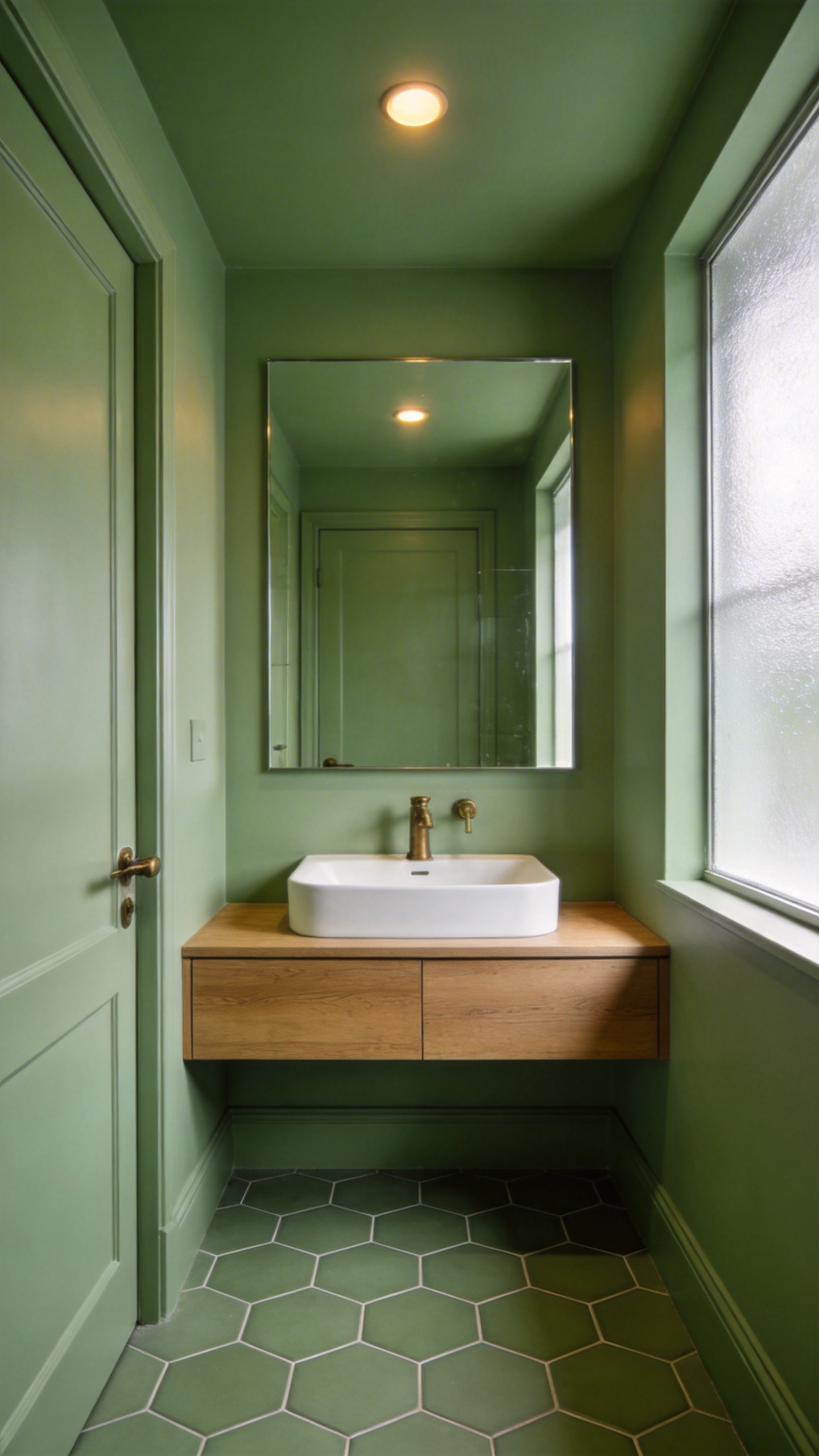
Naturally, true boundary erasure requires matched materiality throughout the room. For example, grout must perfectly match large-format floor tiles. Similarly, cool receding colors like sage or dusty teal easily trick the eye. Indeed, these shorter wavelengths make walls appear physically distant. To solve potential flatness, designers often use a layered matte-gloss paradox. Specifically, they pair a velvety matte ceiling with high-gloss lacquered walls. Thus, you create architectural depth through reflection. The room shifts from a cramped box into a luxury jewel box.
Finally, consider biophilic color palettes for maximum daily stress reduction. Earth tones like warm clay connect us directly to nature. As a result, this mitigates acute spatial anxiety. In fact, it turns your standard bathroom into a highly restorative sanctuary.
2. The Feng Shui of Flow: Installing Floating Vanities for Uninterrupted Floor Energy
Heavy cabinetry often creates physical and energetic dead zones in traditional bathroom design. Stagnant energy, or Sha Chi, loves to accumulate in dark corners. However, lifting the vanity raises the vibration of the entire room. Specifically, this design choice pushes the visual horizon line all the way back to the wall. Therefore, the unbroken floor creates a powerful illusion of infinite spatial flow. Even better, this simple shift eliminates the clamped feeling that triggers small-space claustrophobia.
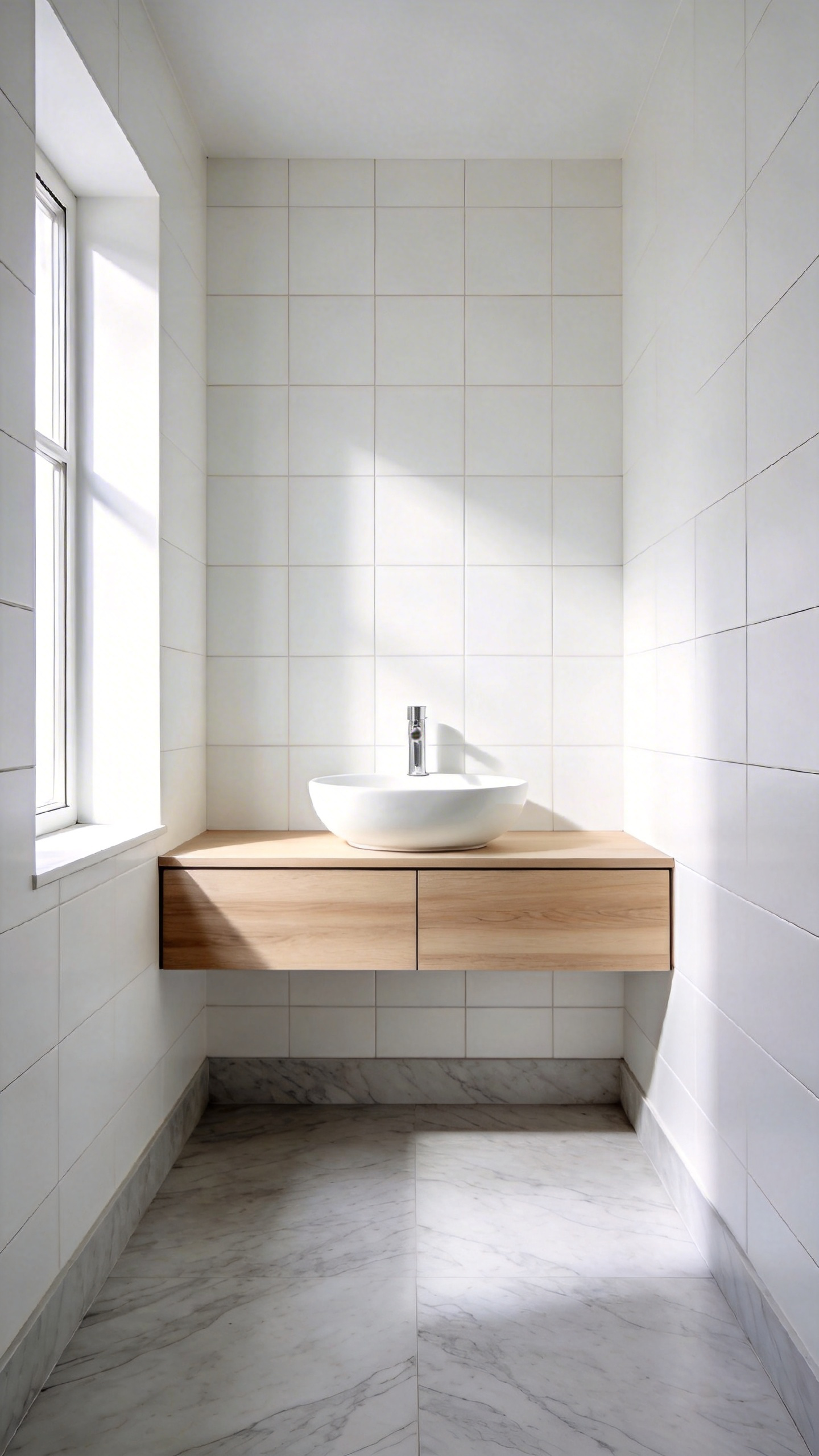
Beyond aesthetics, the negative space beneath the sink serves a vital sensory purpose. Namely, it allows for critical air circulation. Therefore, the damp scent associated with poorly ventilated bathrooms disappears completely. Next, adding sensor-activated LED strips underneath enhances this buoyant atmosphere. Naturally, this soft glow erases harsh shadows while safely guiding your nighttime routine.
However, achieving this ethereal lightness requires significant structural integrity hidden behind the drywall. Most importantly, rock-solid anchoring prevents creaking and ensures absolute peace of mind. Similarly, exposed plumbing requires a sleek, decorative bottle trap to maintain visual harmony.
A floating vanity acts as a functional wellness cure for modern clutter. By reducing storage volume, you are gently forced into a mindful decluttering ritual. In fact, the seamless clearance beneath the sink creates an effortless daily mop-path. This direct cleanliness fosters pure clarity of mind.
3. Vertical Sightline Manipulation: Utilizing Ceiling-Height Tile for Architectural Lift
To understand vertical sightline manipulation, we must view the room as a three-dimensional volume. Specifically, ceiling-height tiling provides visual lift. This obscures boundaries and creates a sense of psychological grandeur. Historically, traditional half-wall wainscoting creates a harsh horizontal datum line. That visual cut literally slices the room’s perceived volume in half. Instead, running tile from floor to ceiling forms a continuous skin. The eye can then travel upward in one uninterrupted, soothing motion.
Precise technical execution dictates the success of this architectural lift. For instance, a vertical stack bond aligns tiles perfectly. These lines act like upward speed lines for your gaze. Additionally, using monochromatic grout prevents a busy grid effect. Therefore, the wall becomes a singular stone sanctuary. Similarly, choosing a glossy finish bounces vital light toward the ceiling. This pulls the whole space upward.
However, fully tiled spaces drastically alter the room’s acoustic signature. This often creates high, unpleasant reverberation. Therefore, we must introduce soft interruptions to preserve mental wellbeing. For example, plush towels or moisture-loving plants beautifully dampen harsh sounds. Indeed, they restore acoustic warmth without breaking those important vertical sightlines.
4. Breathable Envelopes: Sourcing Tadelakt and Mineral Plasters for Natural Humidity Control
Small bathrooms often suffer from the dreaded steam-room effect. However, authentic Tadelakt provides a beautiful, breathable alternative to conventional finishes. Specifically, this Moroccan lime plaster relies on saponification. This chemical reaction forms a water-repellent calcium soap layer. Ultimately, the surface becomes hydrophobic but remains highly vapor-permeable. In fact, this means your bathroom walls can literally exhale trapped moisture.
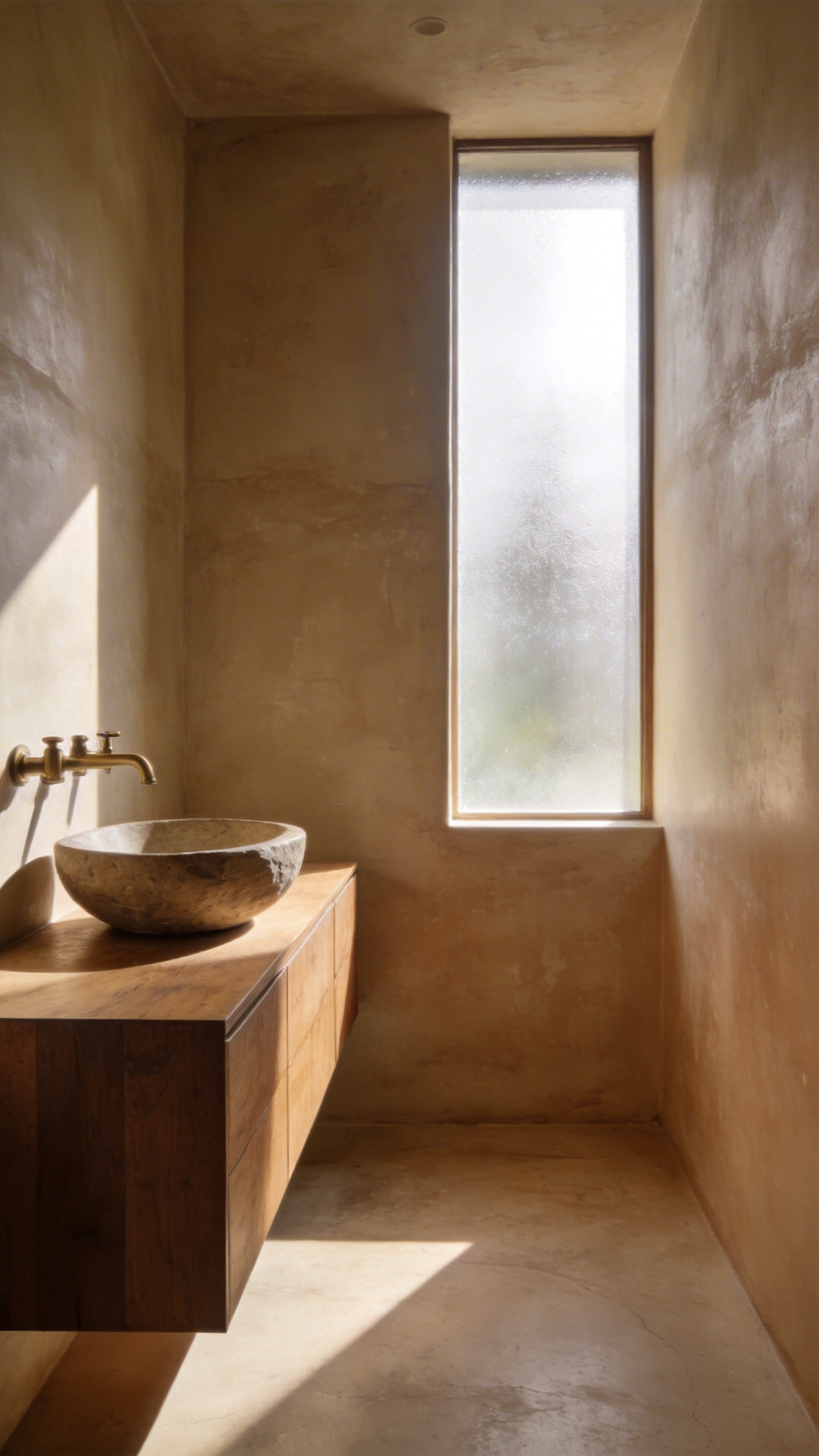
Mineral plasters act as a passive humidity regulator. Many architects actually call this the room’s “third lung.” Importantly, this reduces the need for aggressive, noisy extractor fans. Visually, this continuous surface creates a beautifully expansive envelope. Additionally, lime plasters boast naturally high pH levels. Therefore, they create a hostile environment for mold.
When sourcing materials, always seek authentic lime-based mineral plaster. Specifically, opt for high-end European brands. This ensures your built environment promotes lasting wellness through superior breathability.
5. Grounding Textures: Incorporating Slat Wood Accents for Acoustic and Visual Calm
Small bathrooms typically suffer from overwhelming visual noise and harsh acoustics. Therefore, slat wood accents offer a highly restorative design solution. Their repetitive lines create organized complexity. This is proven to lower cortisol levels effectively. Specifically, vertical slats act as a ladder to draw the eye upward. Meanwhile, horizontal placements visually expand narrow zones.
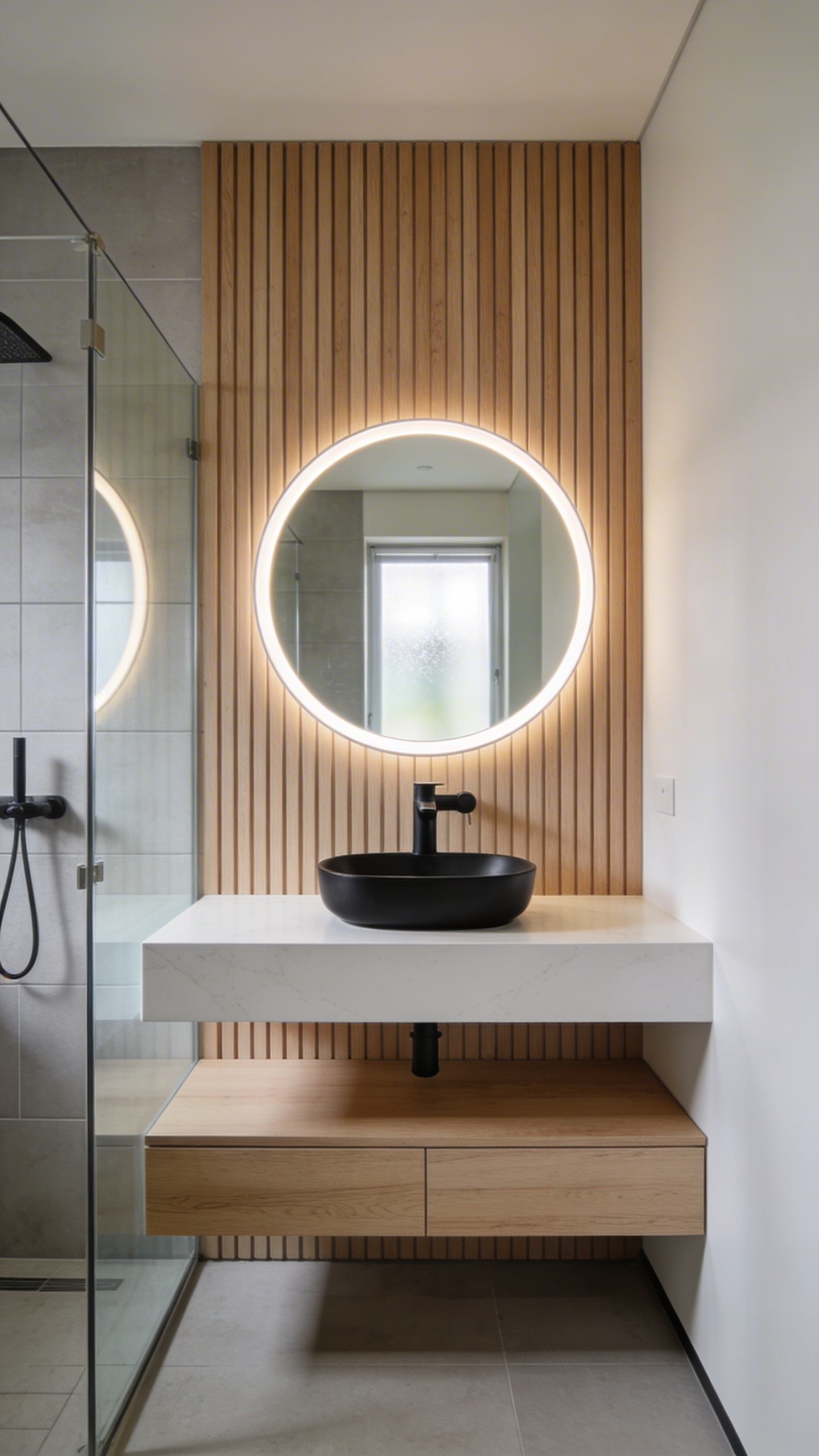
Naturally, material selection drives the sensory story here. For instance, cedar releases soothing, anxiety-reducing aromas when exposed to steam. Next, recessed LED strips can elevate this peaceful atmosphere. They cast a soft, mysterious glow directly between the wooden gaps. Finally, remember to protect authentic timber. You must seal the vulnerable end-grain to ensure longevity in steamy microclimates.
6. Micro-Biophilic Zones: Integrating Low-Light, Air-Purifying Plants directly into Shower Spaces
Modern wet-room plant zones act as unboxed terrariums. They brilliantly reclaim the vertical plane in cramped spaces. To build these zones properly, designers carve recessed niches directly into the shower wall. Most importantly, a true biophilic niche requires a subtle outward slope. Otherwise, standing water will quickly rot delicate plant roots.
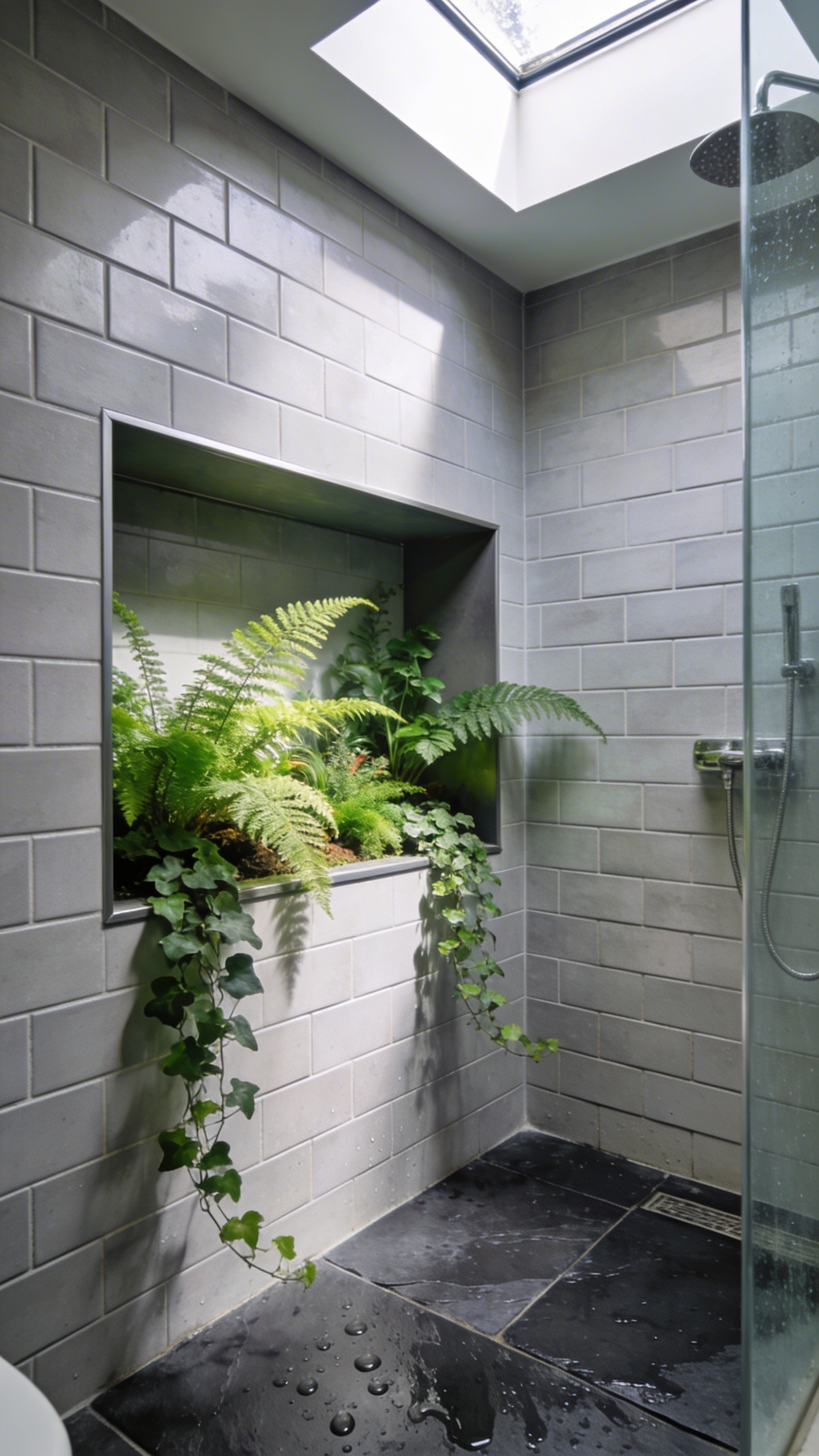
Beyond mere visuals, these humid microclimates drastically alter the acoustic environment. Water hitting broad-leafed plants creates a soft, randomized white noise. Indeed, this triggers deep psychological recovery. Additionally, rising steam activates natural botanicals like bundled eucalyptus. This literally transforms the wet zone into a natural nebulizer. Ultimately, this layered vegetation provides a profound sense of cozy sanctuary.
7. Chemical-Free Surfaces: Selecting Non-Toxic Terrazzo and Natural Stone for Confined Areas
Small bathrooms function as unique indoor micro-climates. Here, trapped humidity accelerates chemical off-gassing at alarming rates. Therefore, selecting chemical-free materials becomes a strict biological necessity.
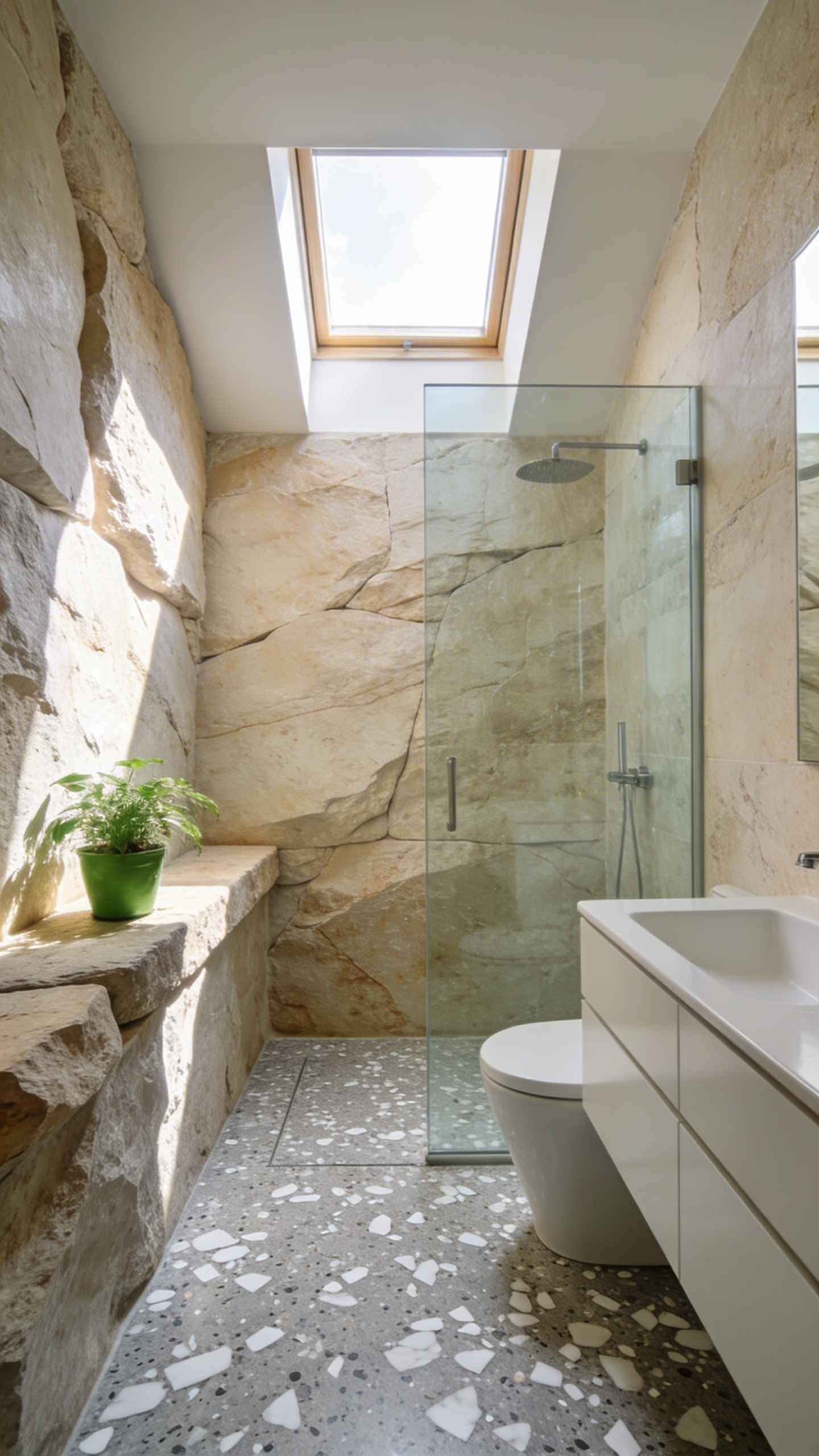
Historically, authentic Venetian terrazzo utilized marble scraps set in breathable cement. Today, modern cementitious terrazzo offers a much safer, non-toxic mineral alternative to epoxy resins. Similarly, natural soapstone is an excellent design choice. It is completely non-porous and requires zero chemical sealants. To maintain this wellness-focused environment, specifically request water-based bioceramic sealers. These protect your natural stone without introducing harmful PFAS.
8. Circadian Rhythm Optimization: Layered, Face-Level Sconce Placement to Eliminate Overhead Glare
Standard bathroom lighting typically relies on harsh overhead fixtures. Unfortunately, these aggressive lights disrupt our natural sleep cycles. Shifting light to eye-level sconces is absolutely essential to remove this sharp circadian punch. In fact, you can consult our guide to small bathroom lighting to further refine your biological environment.
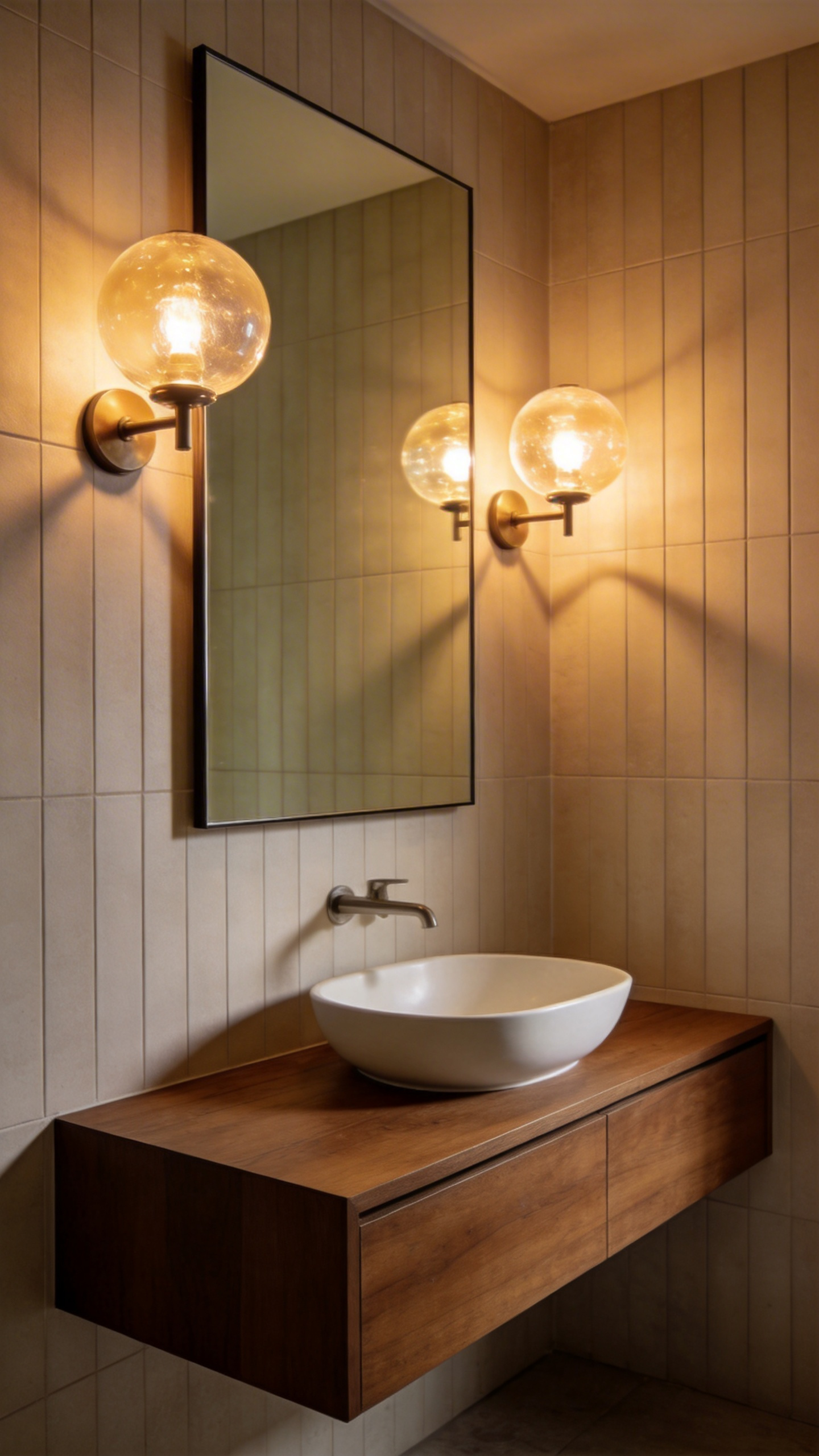
Ideally, you should mount frosted sconces 60 to 65 inches from the floor. Space them about 36 to 40 inches apart. This gentle cross-illumination erases harsh shadows completely. It also prevents aggressive glare from bouncing off mirrors. In the morning, bright sconces suppress sleep hormones efficiently. Later, dimmed evening sconces perfectly mimic a warm sunset to promote deep rest.
9. Amber Night-Lighting: Protecting Your Natural Sleep Cycle in En-Suite Small Bathrooms
Modern sleep science reveals something fascinating about en-suite bathrooms. Recreating a 1700K glow is biologically essential to prevent melatonin delay. Specifically, native amber LEDs emit a pure 590-nanometer wavelength. This means they contain absolutely zero sleep-disrupting blue light.
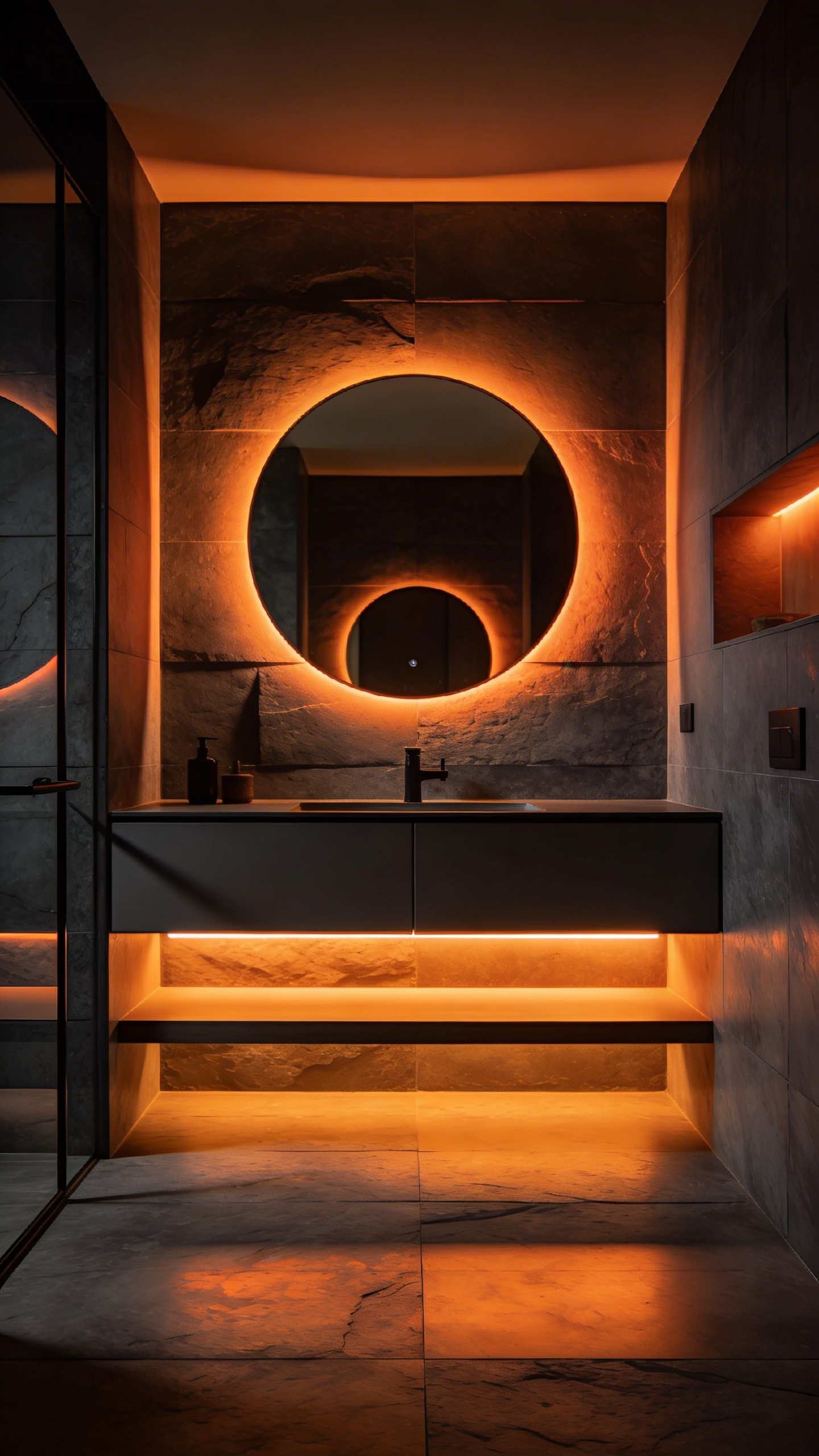
Professional wellness designers rely heavily on toe-kick lighting. They hide amber LED strips directly under the vanity base. This placement creates a beautiful floating effect. Crucially, it keeps the light safely below the bedroom horizon line. Softening this light with a milk diffuser prevents pixelated dots on glossy tiles. Ultimately, the resulting glow feels as warm and organic as a candle flame.
10. Reflective Multiplication: Strategic Placement of Antiqued Mirrors to Bounce Natural Morning Light
Morning light is essential for wakefulness. However, sharp specular reflections from standard mirrors can cause intense sensory overload. Antiqued mirrors solve this dilemma beautifully. Through a process called foxing, degraded silver backings create a clouded texture. This scatters intense sunlight and fills the vanity space with a diffused, cinematic glow.
Try angling side panels of a mirror inward. This specific bounce directs light deeply into the darkest corners of the room. It is a micro-Versailles technique that introduces real soul into sterile porcelain spaces. Today, modern reproduction pieces offer a moisture-resistant solution. They replicate aged textures without the toxic lead found in genuine antiques.
11. The Curbless Wet Room Conversion: Expanding the Usable Footprint Fluidly and Safely
A curbless wet room transforms your bathroom into a healing sanctuary. It achieves this simply by removing physical barriers. Finding shower design ideas for small bathrooms that eliminate visual clutter is key to a unified space.
Removing the traditional shower curb changes everything. It allows the eye to perceive the entire floor as usable space. Technically, bonded thin-bed membranes replace bulky mortar beds. Therefore, bathroom floors can meet adjacent hallway elevations perfectly. Most importantly, this fluid shift establishes a universal design. It safely and elegantly accommodates everyone in the home.
12. Respiratory Wellness: Upgrading to High-CFM, Whisper-Quiet Ventilation for Ultimate Mold Prevention
In tight quarters, lingering moisture rapidly turns the space into an incubator for mold. However, high-CFM exhaust fans pull moisture away from porous grout instantly. This prevents humid fog from settling into cold corners.
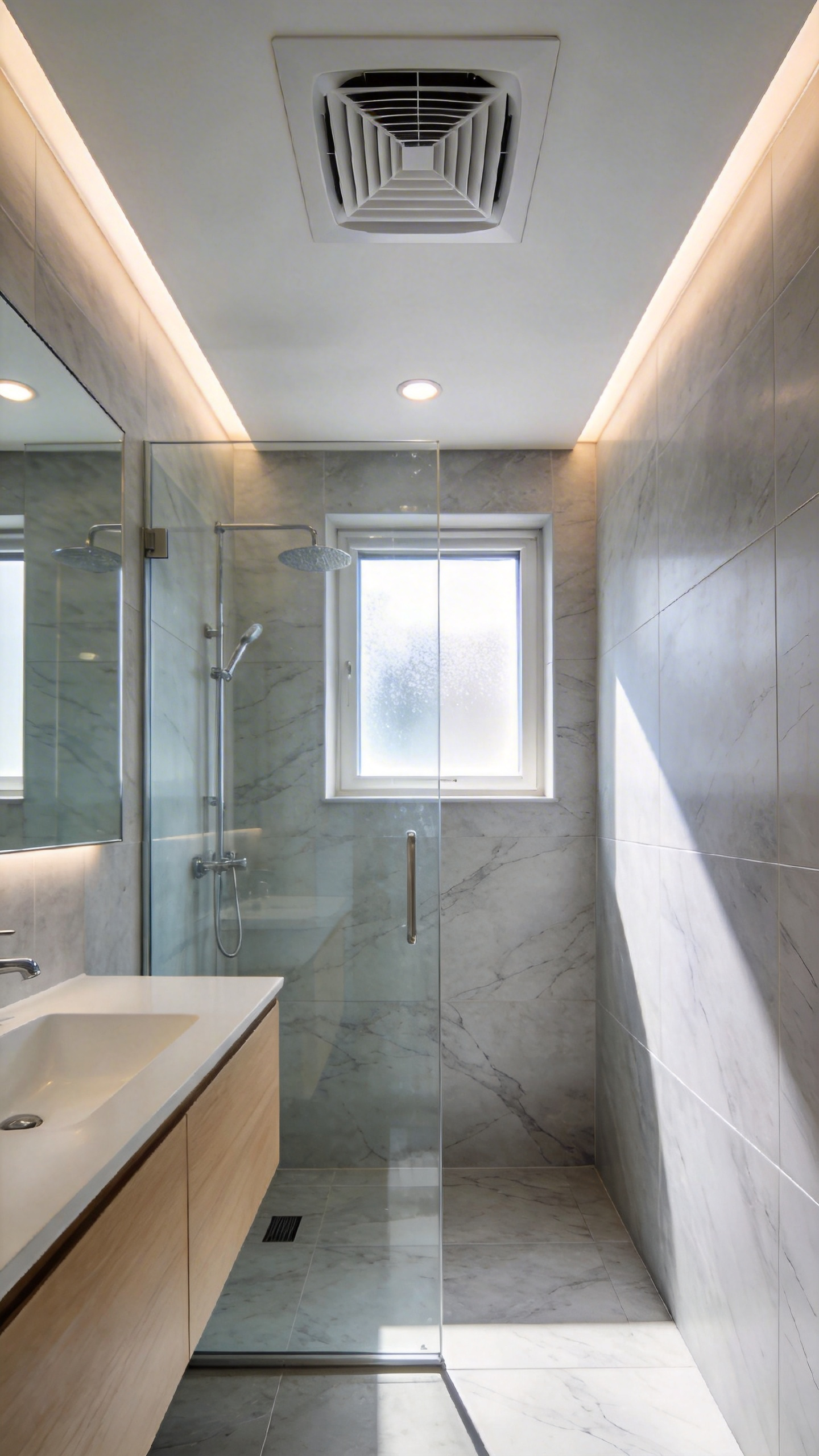
You should upgrade to a whisper-quiet unit operating below one sone. This removes the behavioral barrier of noise entirely. People actually use fans when they cannot hear them. Modern DC motors with humidity sensors provide invisible protection. Indeed, they starve mold of water while keeping your sanctuary breathing easily.
13. Sensory Aromatherapy Integration: Designing for Essential Oil Diffusion in Steam Environments
Designing aromatherapy in a steam environment requires precise atmospheric engineering. High-end builds utilize an injector pump located completely outside the shower. This atomizes essential oil directly into the steam line. Therefore, you get a dense, aromatic scent cloud every time.
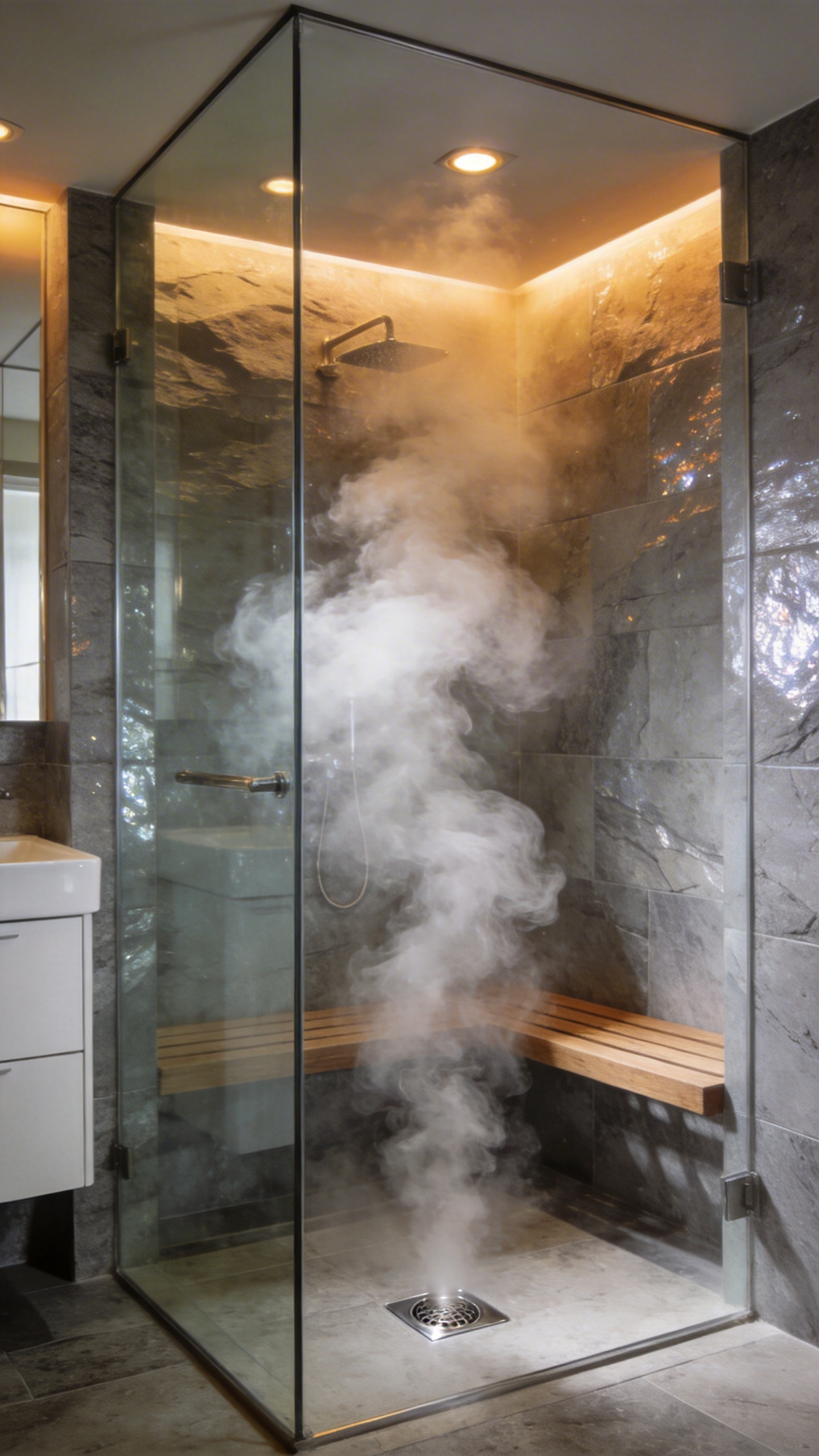
Large-format porcelain slabs offer ideal zero-absorption surfaces for these environments. Next, try pairing scent with chromotherapy. For example, matching eucalyptus oil with blue lighting maximizes psychological wellbeing. This transforms ordinary small bathrooms into restorative micro-hammams.
14. Visual Cortisol Reduction: Concealed Organization Systems for Clutter-Free, Stress-Free Countertops
A landmark UCLA study directly links household object density to elevated cortisol. In a small bathroom, exposed skincare bottles act as open cognitive tasks. Every single bottle demands a tiny bit of mental energy. Therefore, concealed organization systems are a physiological necessity, not just a design choice.
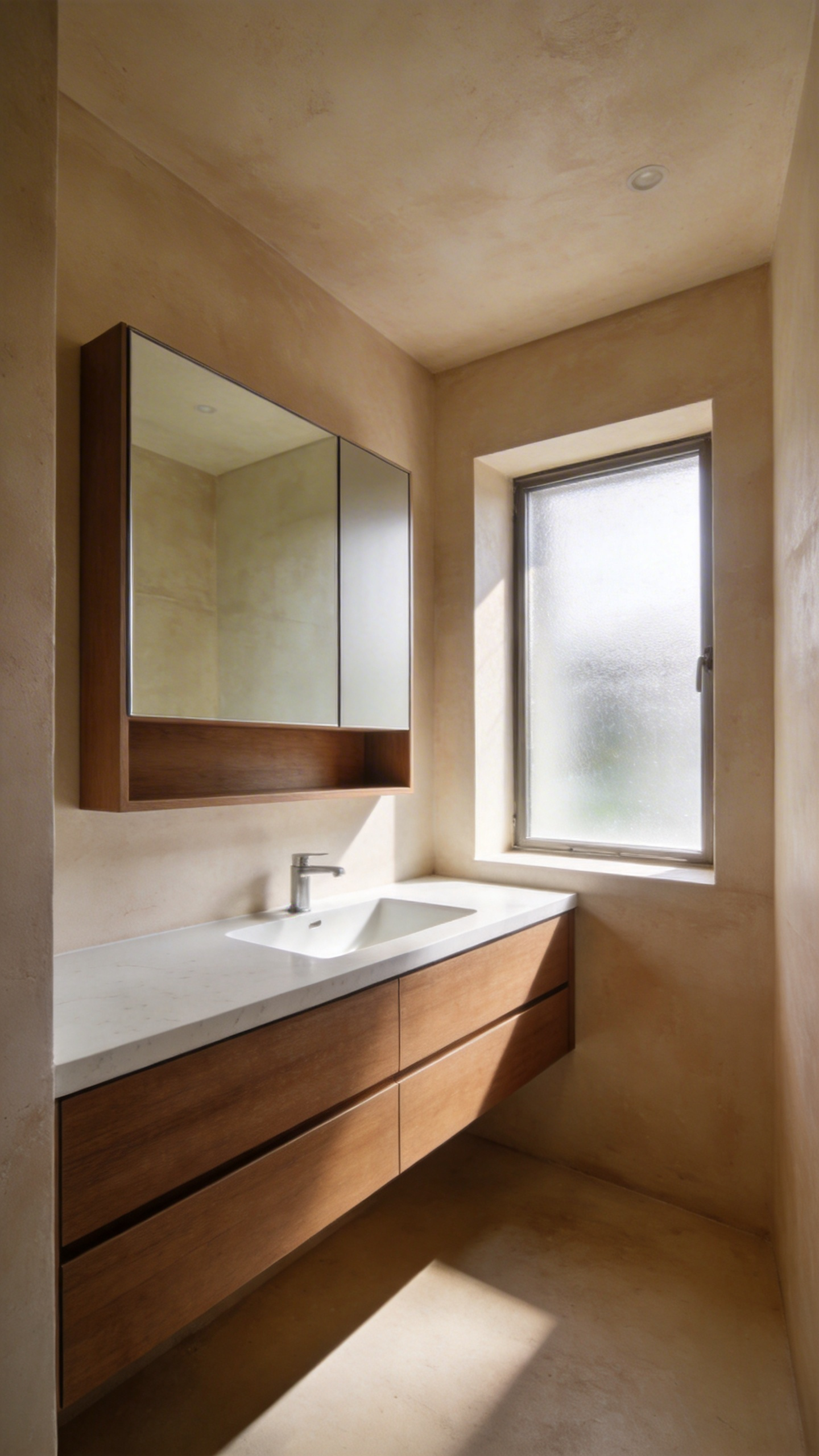
Internal power docks hide electric toothbrush cords effortlessly. This removes chaotic visual scribbles from your environment. Next, soft-close hydraulic dampeners prevent jarring noises during your morning routine. Finally, matte finishes create a grounded visual plane that actively promotes deep mental wellbeing.
15. Recessed Architectural Niches: Reclaiming Wall Cavity Space for Minimalist, Flush Storage
Recessed architectural niches reclaim the dead space hiding between wall studs. This eliminates bulky wall cabinets completely. Those heavy boxes subconsciously increase stress levels in confined areas, so getting rid of them is liberating.
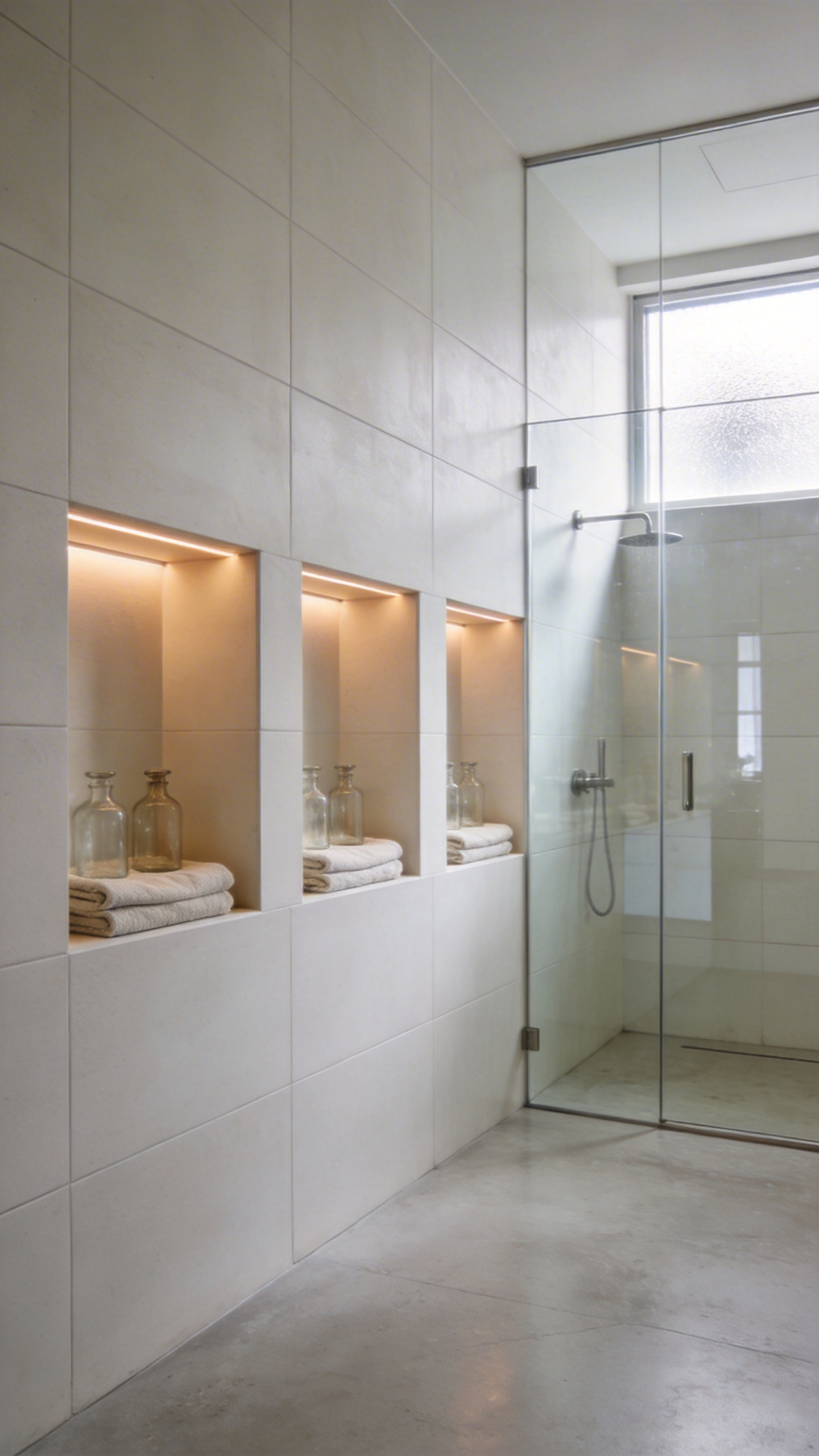
Flush-front storage maintains a continuous visual plane. This creates essential spatial hygiene. However, technical precision is vital during installation. Shower niches require a slight downward slope to ensure proper drainage. Otherwise, standing water will quickly cause mold erosion.
16. The Mindful Apothecary Approach: Curating Only Everyday Essentials for Mental Clarity
Your small bathroom should function as a highly curated war chest for wellness. Adopting the Japanese philosophy of Ma—leaving intentional empty space—relieves massive psychological weight. I always recommend stripping the room down to absolute basics.
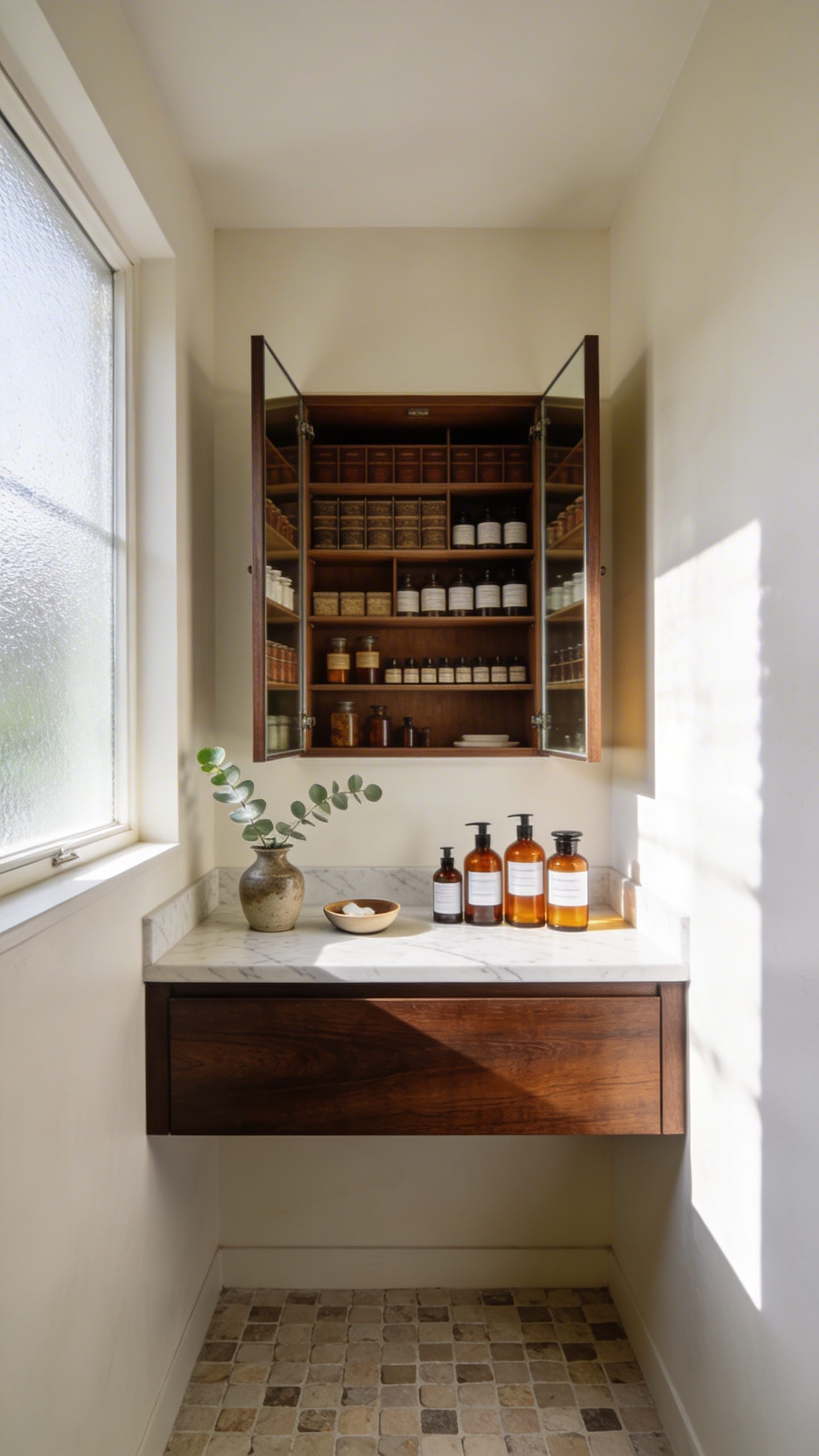
Reducing choice overload actively preserves your cognitive energy. Try decanting daily essentials into uniform amber glass bottles. This protects sensitive oils from UV degradation while creating a harmonious visual experience. Finally, introduce Hinoki wood mats. This subtle touch completes your sensory sanctuary beautifully.
Frequently Asked Questions
How do you make a small bathroom look high-end?
Achieving a high-end look requires a strict focus on material continuity and lighting. First, utilize cognitive color drenching to unify the space. Next, install a floating vanity to keep the floor plan wide open. Finally, incorporate natural, chemical-free materials like stone or cement-based terrazzo. This adds a bespoke quality that cheap synthetic materials simply cannot match.
Can dark colors work in small bathrooms?
Yes, dark colors absolutely work. They can transform a basic small bathroom into a sophisticated, jewel-box sanctuary. Apply them through color drenching, which means painting the walls, ceiling, and trim in the exact same hue. Therefore, these dark colors erase boundaries and create a brilliant sense of infinite depth. Ultimately, this technique reduces visual noise and fosters a highly protective atmosphere.
What is the best lighting for a small master bathroom?
The best lighting prioritizes circadian health. You should use layered, face-level sconces rather than harsh overhead fixtures. Specifically, sconces mounted at eye level provide soft cross-illumination that eliminates ugly shadows. For en-suite setups, integrating amber 1700K night-lighting is vital. Indeed, this prevents melatonin suppression and supports natural, deep sleep cycles.
The Micro-Sanctuary: Embracing the Intimacy of Your Home’s Most Restorative Room
Small bathrooms are not just cramped utility closets. They are actually vital spaces for profound emotional restoration. By embracing these innovative small bathroom ideas, we shift our focus. We stop worrying about square footage and start valuing spatial intelligence. The resulting jewel box effect calms an overactive nervous system. In fact, the deliberate intimacy of a well-designed micro-space provides a protective cocoon against external stress.
True luxury thrives within perfectly tailored environments. These spaces must prioritize your health and daily tranquility. Therefore, you should begin your journey toward a more restorative lifestyle today. Audit your current layout for harsh sensory triggers. Next, introduce soft textures and calming, unified tones. Ultimately, you will successfully reclaim your space as a holistic wellness sanctuary.