Many homeowners view the traditional kitchens backsplash as a simple necessity. Yet, for those curating a luxury space, it represents a core heritage aesthetic. It balances utility with bespoke craftsmanship. Often, people see it merely as a modest barrier against grease. Consequently, its design potential gets overlooked in favor of pure utility. However, this architectural element has transformed radically. It is now one of the defining elements of traditional kitchen design.
Historically, the backsplash evolved from a hidden patch of clay. Later, it became a “luminous” sanitary statement. Indeed, the “Sanitary Movement” turned white subway tiles into a global symbol of health. Furthermore, technical shifts liberated the splashback from the sink. This turned it into a vast vertical canvas. Today’s designs often mimic the working kitchens of grand estates. Thus, its evolution reflects deep-seated shifts in hygiene, technology, and status.
This guide explores the splashback’s journey. First, we uncover how early innovations established the “White Kitchen” standard. Next, we examine the sensory return to “authentic imperfection.” Finally, we analyze how modern sculleries utilize these surfaces. This approach signals sophisticated, stealth wealth.
Theme I: The Foundation of Authenticity (Material Selection)
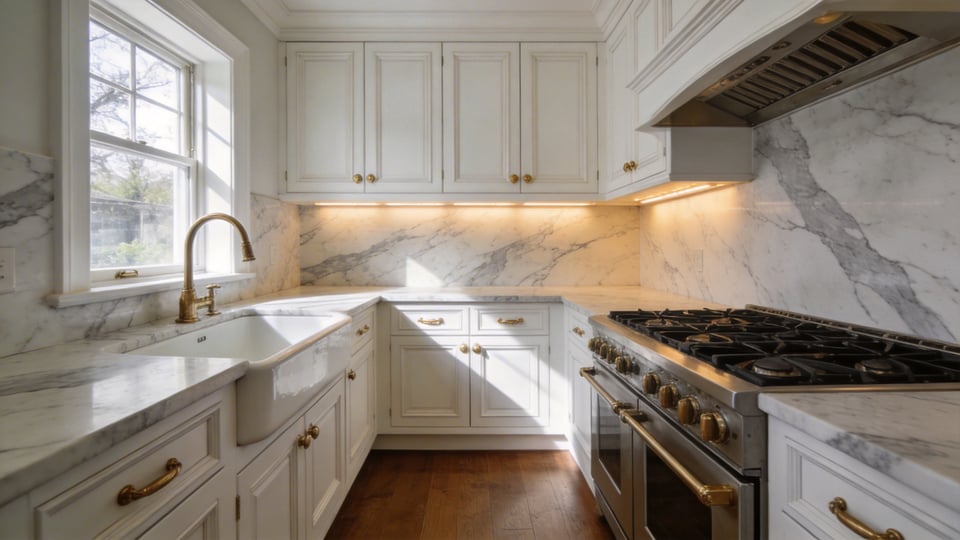
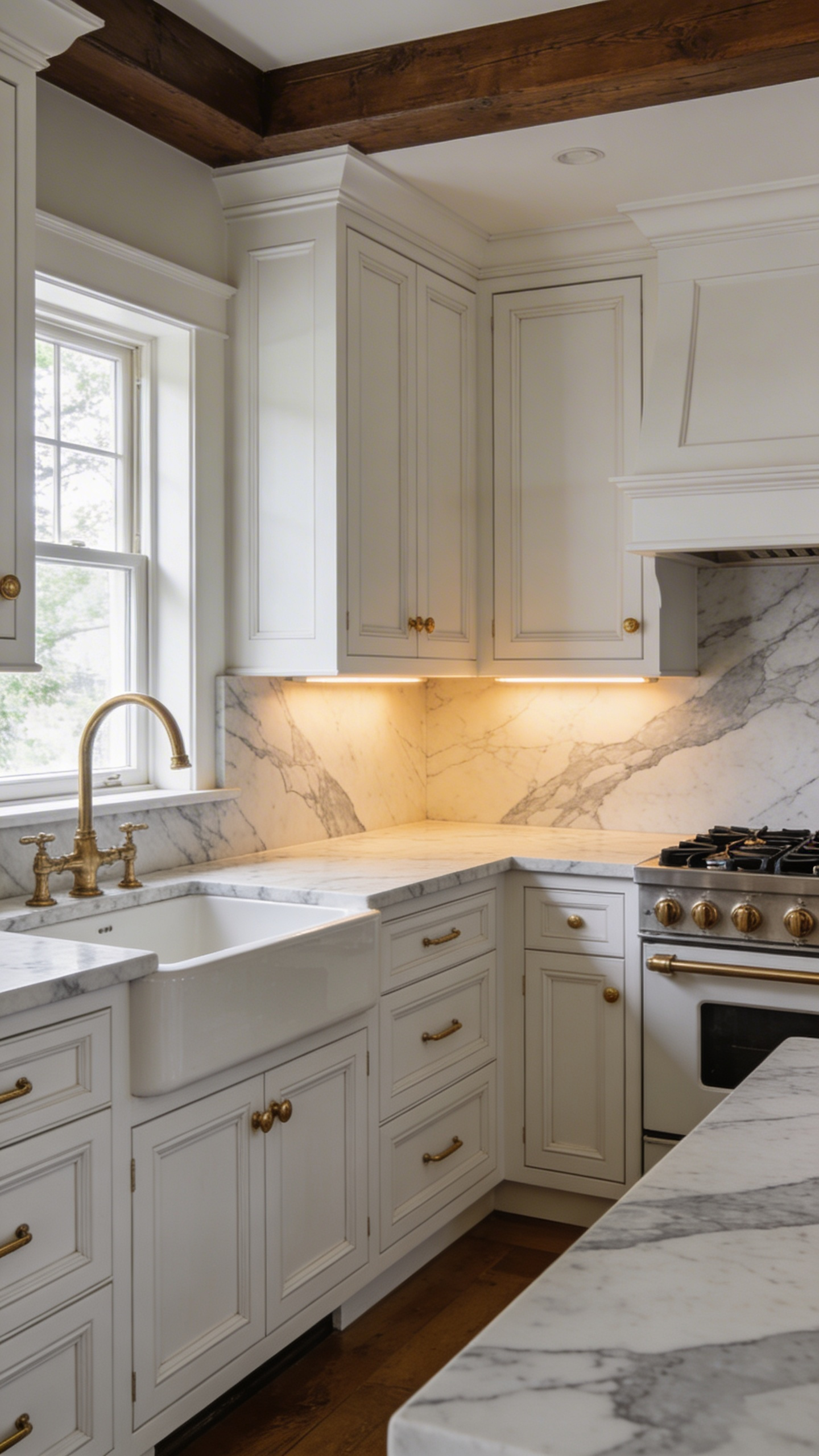
Authenticity in traditional kitchens begins with a commitment to “honesty of material.” Historically, the backsplash acted as a utilitarian “spatter guard.” Specifically, early builders used off-cuts of stone countertops. This created a modest four-inch barrier. Consequently, this choice reflected material economy rather than decoration. Today, selecting high-end kitchen backsplash and countertop combinations remains the gold standard. Unlike static quartz, materials like Carrara marble possess “metamorphic memory.” In fact, they develop a patina of etches. This aging process serves as the kitchen’s autobiography.
Furthermore, true character stems from the “geometry of imperfection.” For instance, Moroccan Zellige features chiseled edges. Ideally, this creates a glimmering surface unbroken by thick grout lines. Similarly, authentic terracotta undergoes a “slow-cure” process. Because the clay is air-dried, the surface often retains thumbprints. Therefore, running a hand over the backsplash connects the homeowner to the artisan.
Finally, materials should function as narrative storytellers. Dutch Delft tiles offer more than simple patterns. Traditionally, they serve as “miniature windows” depicting history. Even the “cobalt bleed” in the glaze adds softness. Thus, selecting authentic materials is about preserving the soul of the home.
1. Hand-Molded Ceramics: Why Imperfection Defines Traditional Luxury
True luxury in traditional kitchens often rejects machine-pressed uniformity. Instead, it embraces the alchemy of wet-clay methods. Specifically, hand-molded tiles endure roughly 12 distinct phases. Consequently, this process creates “kiln-kisses.” These are subtle shade variations within a single batch. Furthermore, the glaze frequently pools in the center. This creates a jewel-like translucency. Mass-produced tiles simply cannot replicate this depth.
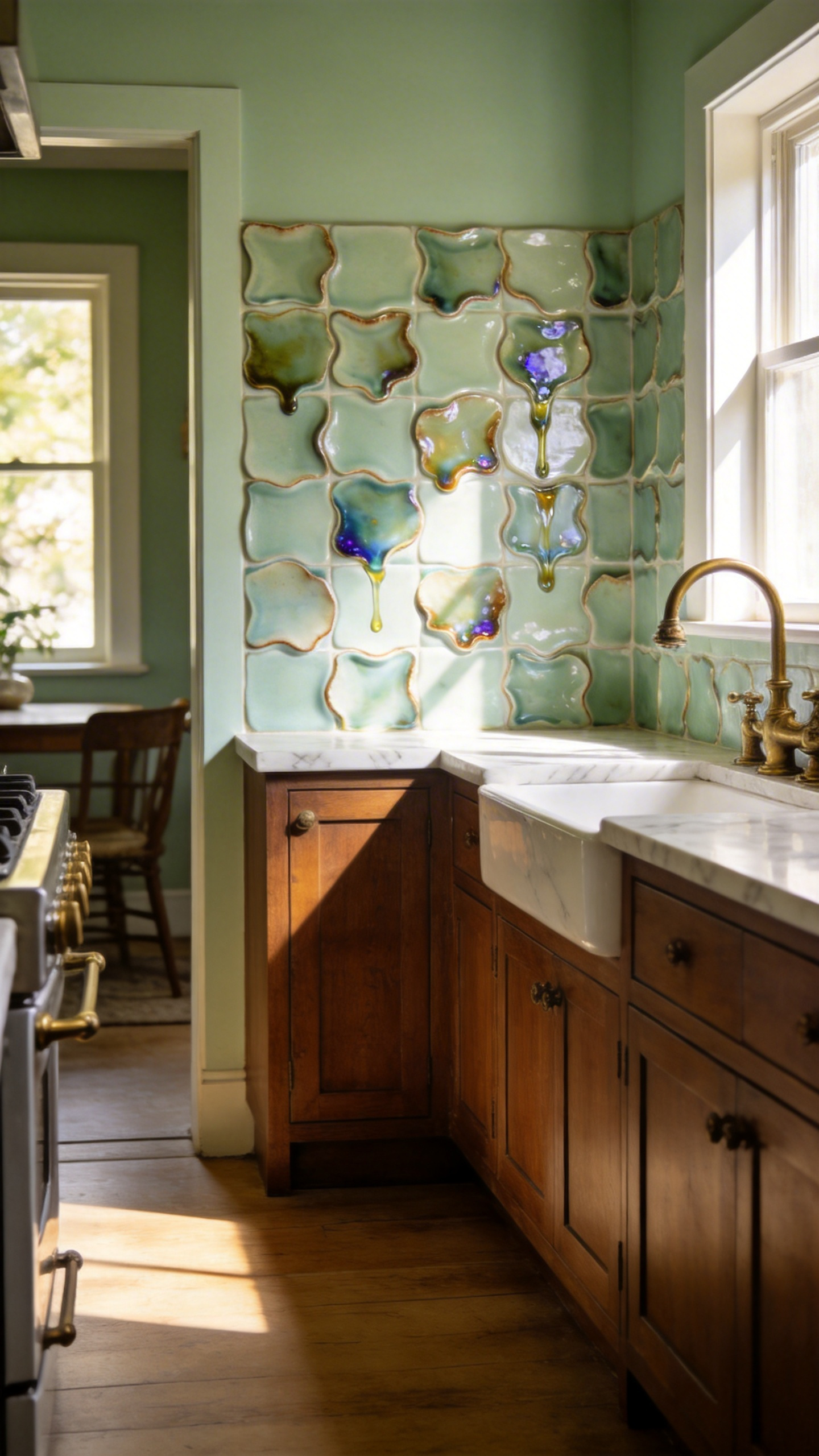
Also, the physical texture tells a story of authenticity. For instance, high-end studios prize “perfect” defects like crazing. Technically, crazing forms a network of fine cracks. In a heritage context, this “crackle” implies graceful aging. Similarly, pinholes provide a tactile, earth-born contrast. Therefore, these flaws are technically hallmarks of a genuine artisan product.
Finally, the installation adds architectural depth through irregularity. Because hand-molded slabs are non-rectified, they possess undulating surfaces. Thus, under-cabinet lighting catches these ripples. This creates a liquid effect across the backsplash. Moreover, subtle “lippage” enhances this shadow play. Ultimately, these markers offer a quiet rebellion against modern sterility.
2. Honed Carrara Marble Slabs: The Eternal Standard of the Victorian Era
The Victorian era shifted toward strict sanitation. Consequently, the marble backsplash became a hygienic barrier. Unlike porous wood, dense Carrara marble repelled dampness. Specifically, this stone offered a “raised edge” behind the sink. This feature protected plastered walls from scrubbing.
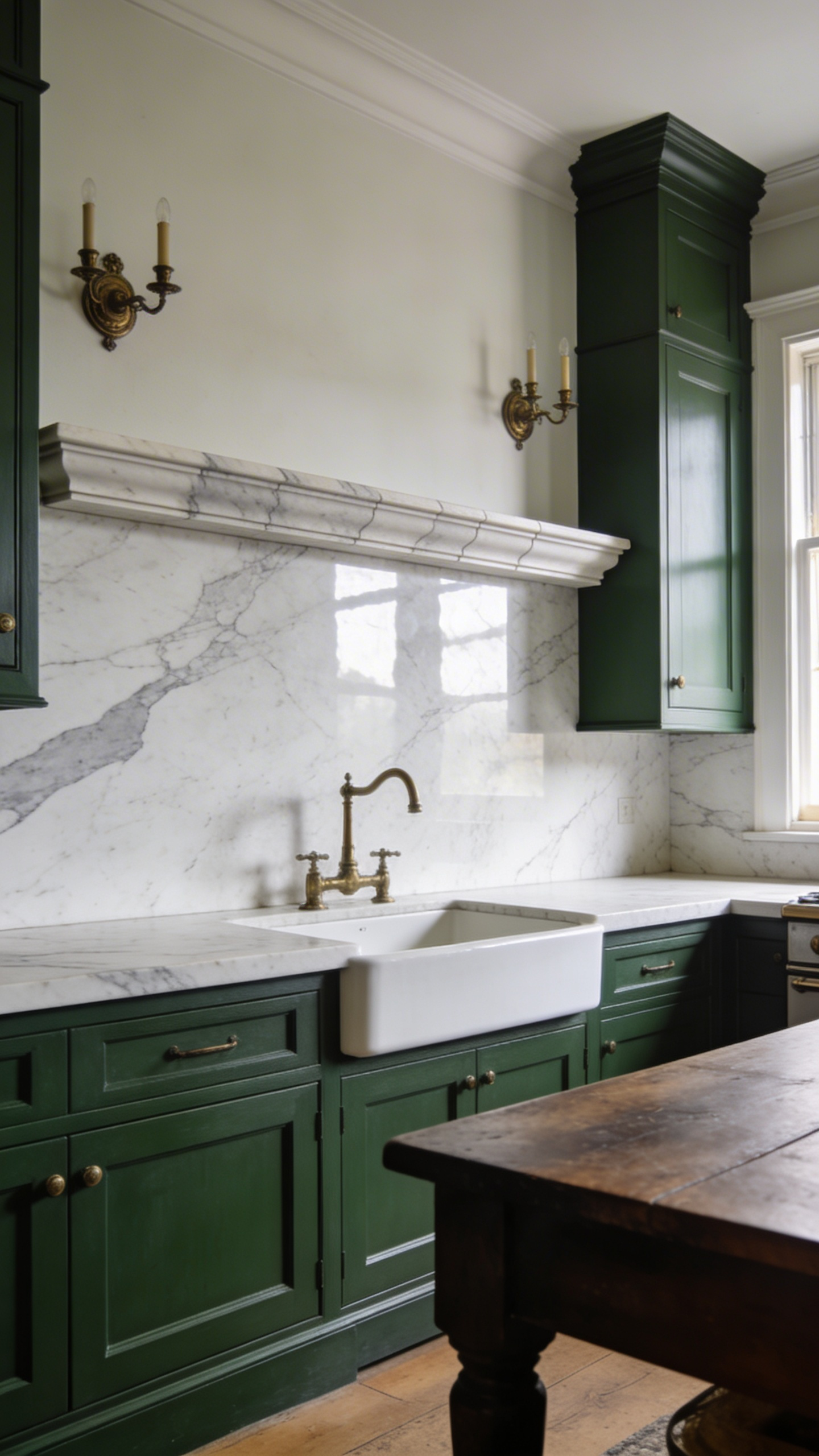
However, the finish mattered as much as the material. A honed, matte surface was the honest choice. In contrast to the parlor’s high gloss, the kitchen required utility. Therefore, a honed finish masked acid etches. Over time, it developed a graceful “patina of use.” Furthermore, this texture provided a soft feel under the hand.
Beyond durability, the stone served a thermal purpose. In fact, marble acts as a natural “thermal sink.” Because the stone stayed cold, butter remained solid during kneading. Ultimately, the stark white marble symbolized purity. In a coal-burning city, a clean slab was a visual mark of excellence.
3. Soapstone: The Colonial Workhorse Returns to the Hearth
Soapstone was known as the “Colonial Workhorse.” Unlike imported marble, this local stone was essential for the hearth. Specifically, its dense mass absorbed heat. Today, designers return this material to the kitchen. Consequently, soapstone backsplashes protect walls from intense heat. In fact, the stone handles 50,000-BTU burners better than sensitive quartz.
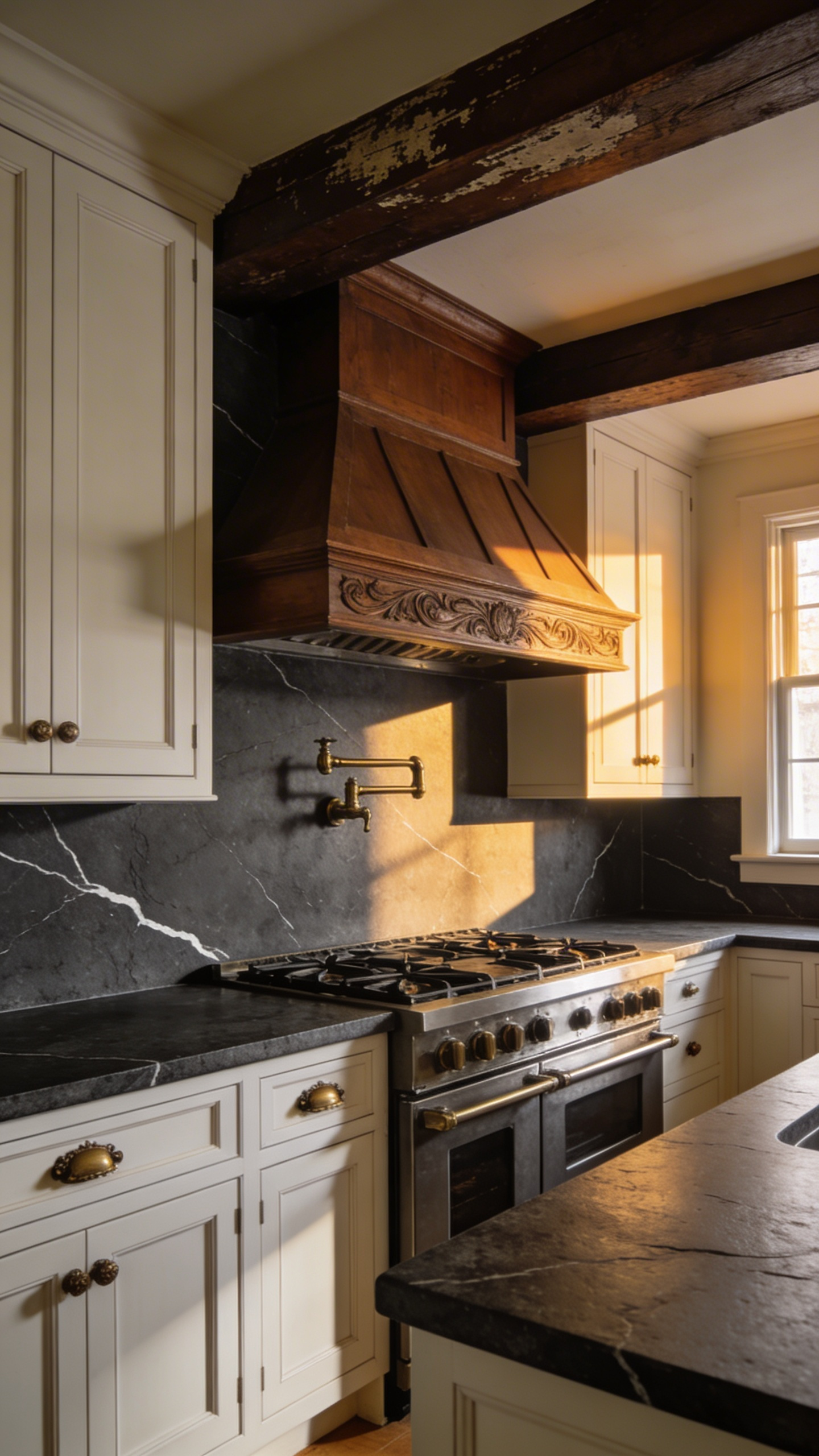
Beyond utility, soapstone offers a moody sensory experience. In contrast to polished granite, soapstone is quiet. Geologically, its high talc content creates a velvety texture. Therefore, it absorbs light rather than reflecting it. Notably, these domestic varieties offer a unique grey-to-black gradient. This effectively anchors a kitchen design.
Maintenance involves an ongoing relationship with the stone. Because the surface is chemically reactive, it naturally darkens. Many homeowners embrace this “living” quality by applying mineral oil. This ritual deepens the color to a rich charcoal. However, critics often point out that soapstone is soft. Yet, this softness is a hidden strength. A scratch can simply be sanded out. Thus, soapstone remains a durable heirloom.
4. Tumbled Travertine: Evoking the Rustic European Villa
For homeowners desiring a rustic European villa, tumbled travertine is the premier choice. Specifically, this material transcends decoration. In fact, the “tumbled” finish is a deliberate mechanical process. Tiles are rotated in drums with abrasives. Consequently, the stone loses its factory newness. It gains an authentic, salvaged appearance.
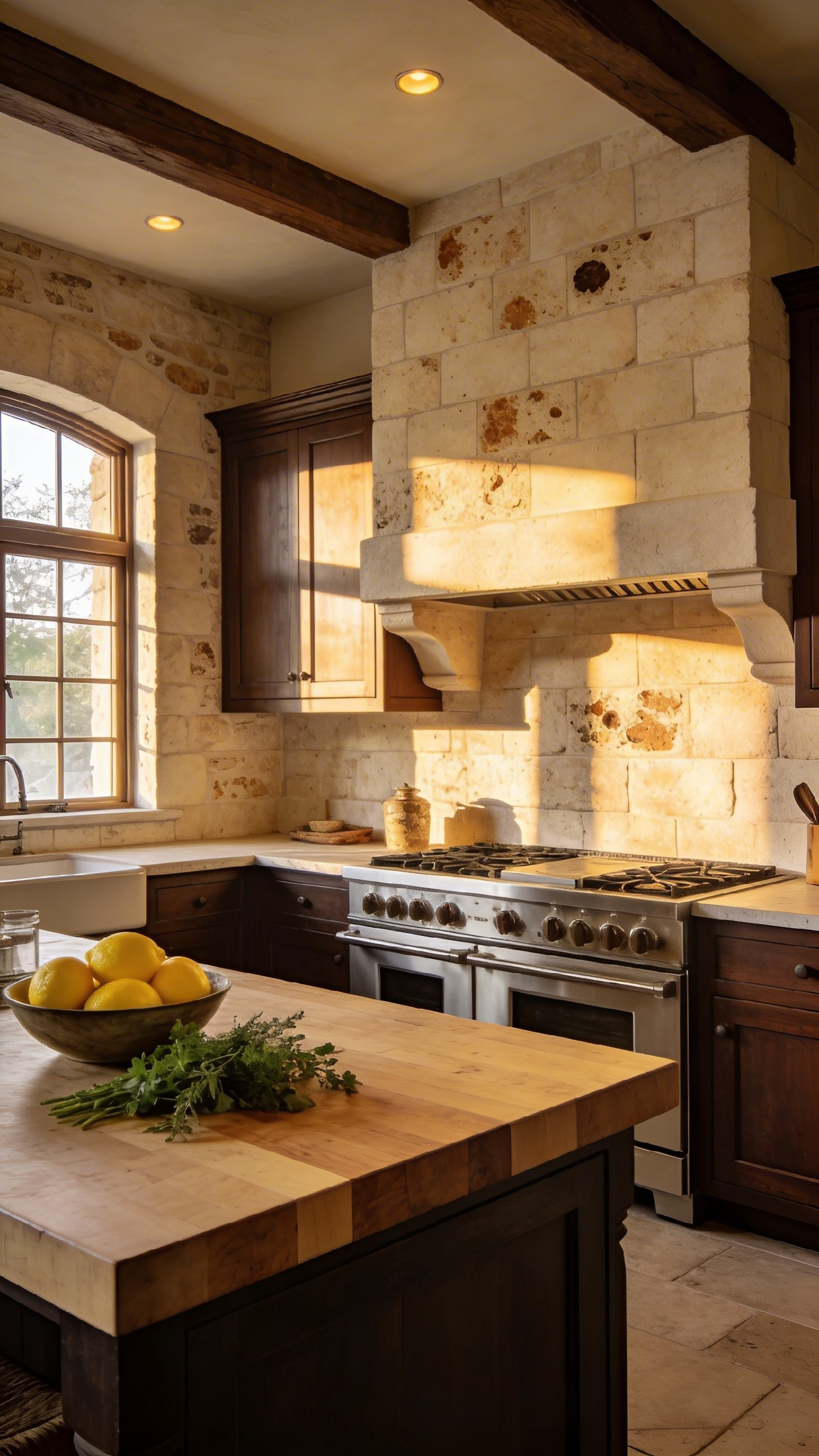
Beyond the edges, the texture requires careful consideration. However, leaving pockmarks open can trap grease. Therefore, architects often recommend a “groutover” technique. This method stabilizes the stone while preserving visual depth. Under cabinet lighting, these filled pits create a tactile quality.
Additionally, the installation pattern dictates the narrative. A “Mini-Versailles” layout evokes a Provençal farmhouse. Furthermore, selecting “Commercial” grades ensures a rich palette. Ultimately, this material connects your kitchen to Roman history. It accepts the “patina” of daily use gracefully.
5. Glazed Thin Brick: Elevating Industrial Heritage
Glazed thin brick bridges gritty industrial history and refined living. Historically, this material was rare in formal spaces. Instead, it dominated Victorian sculleries. Specifically, the impervious surface allowed staff to wipe away soot. Consequently, using glazed brick evokes a “working pantry.” However, modern versions eliminate heavy structural requirements.
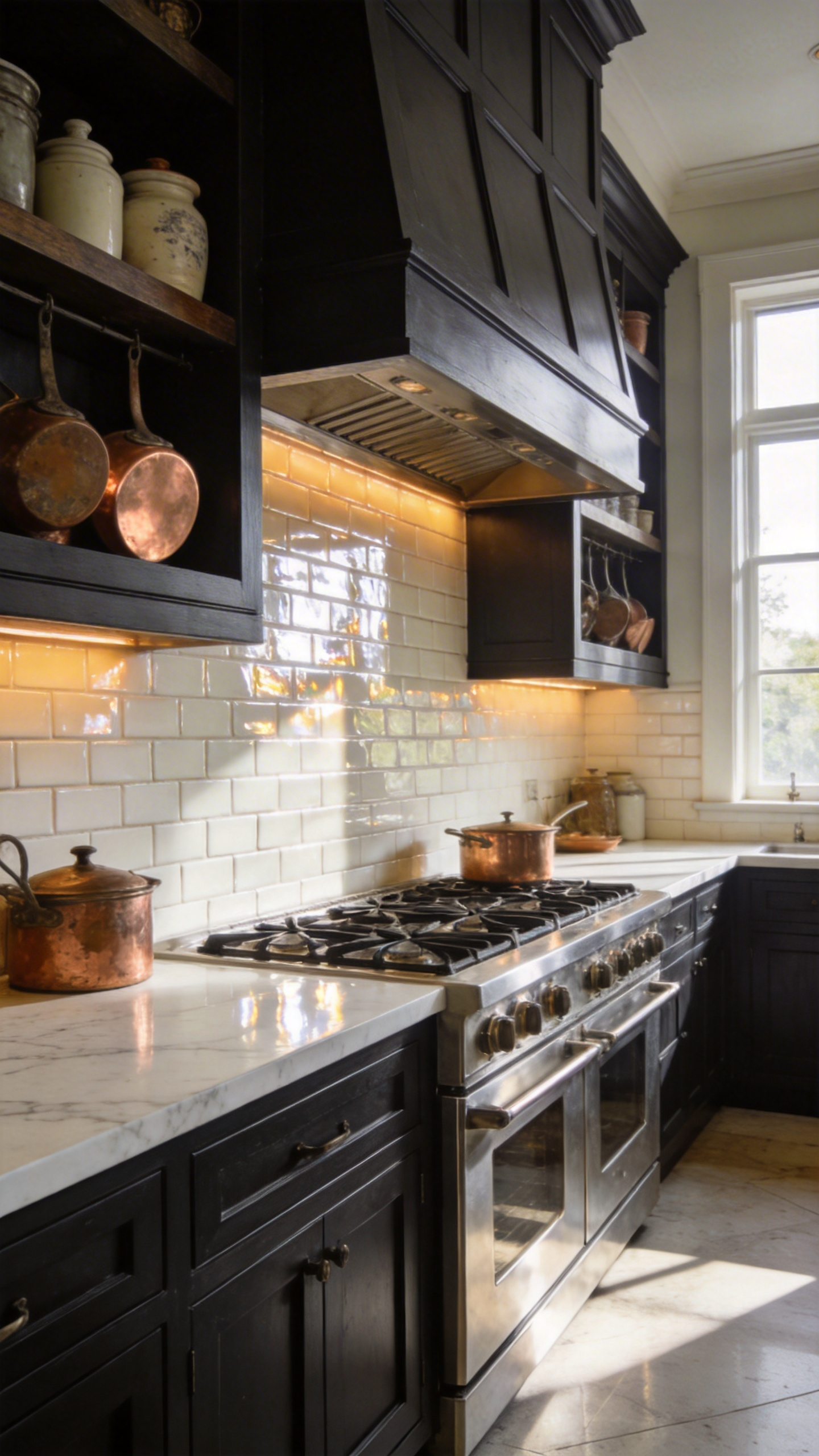
Beyond utility, the appeal lies in unique texture. Unlike uniform subway tiles, glazed bricks retain natural undulations. Therefore, they create a “watery” reflection. In fact, historical spaces utilized these finishes to reflect light. This results in a surface that feels artisanal.
Technically, this durability stems from rigorous manufacturing. Most premium options are twice-fired. As a result, the surface meets strict standards for acid resistance. Furthermore, this process prevents efflorescence. Finally, the installation style elevates the narrative. Using an “over-grout” technique softens sharp edges. Ultimately, this detail makes a new backsplash resemble a structural wall.
Theme II: Historical Patterns & Architectural Form
Traditional backsplashes reveal a tension between reform and art. Initially, 17th-century Delft tiles introduced narrative. Specifically, these hand-painted squares offered visual escapes. Consequently, the wall became a storytelling medium. Furthermore, their crackled finish created a soft glow.
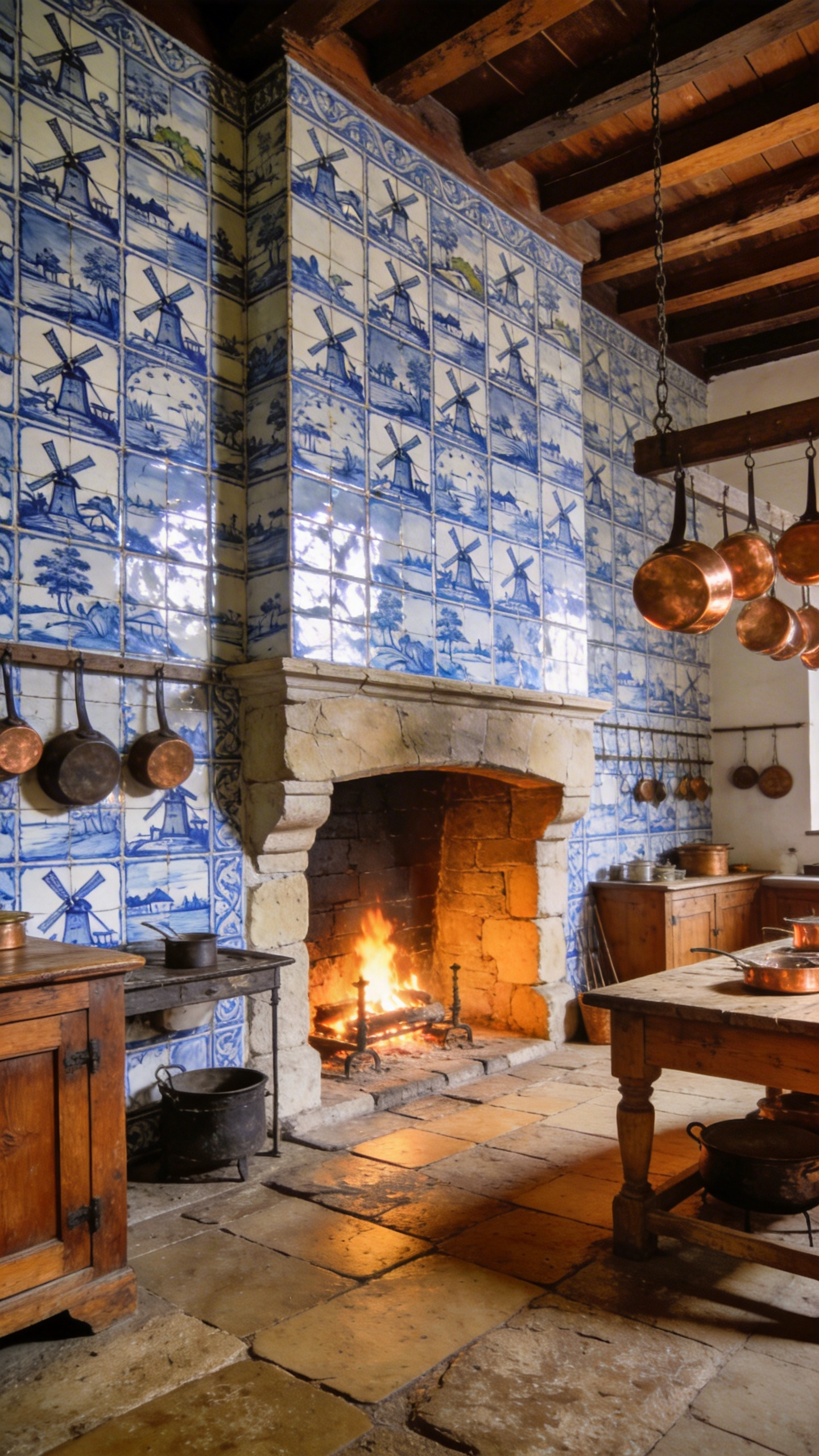
However, the 20th century brought a radical shift. Indeed, emerging fears of germs demanded clinical spaces. Therefore, the “Sanitary Tile” replaced pottery. Moreover, tight grout lines created a continuous skin. This prevented bacteria from hiding.
Eventually, the Arts & Crafts movement rebelled. Designers argued that flat tiles lacked soul. Thus, they reintroduced thick, relief-patterned tiles. Additionally, architectural trims allowed homeowners to frame the backsplash. Simultaneously, the physical scale evolved. Ultimately, these shifts turned the wall into a washable architectural feature.
6. The Authentic Running Bond: Correct Proportions for Subway Tile
Authenticity relies heavily on specific proportions. Specifically, the classic 3-inch by 6-inch subway tile creates a 2:1 ratio. This “golden proportion” isn’t accidental. In fact, it mimics the scale of masonry bricks. Consequently, this geometry grounds the room. While longer tiles appear sleek, they often feel too contemporary. Therefore, maintaining that balance is essential.
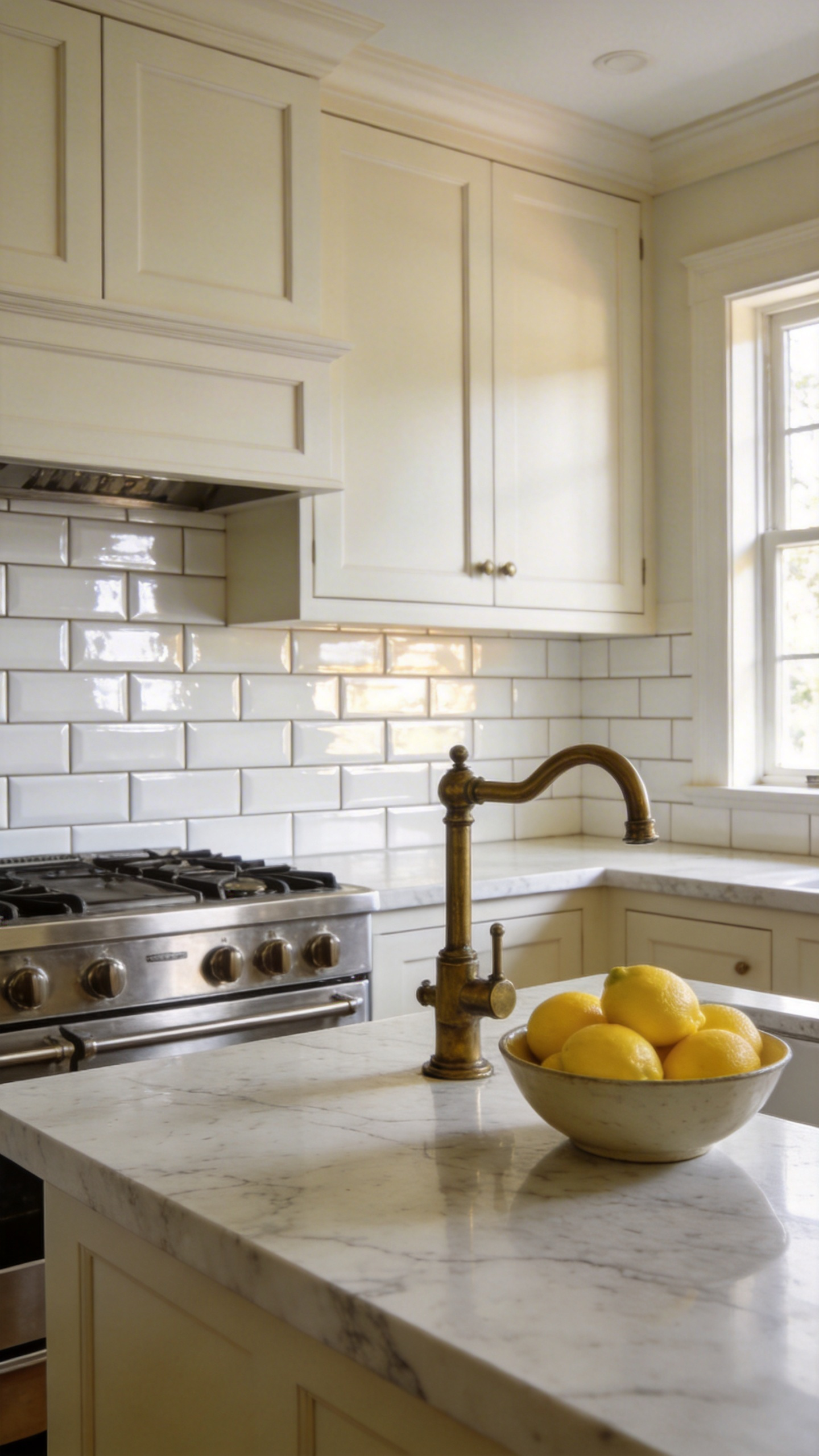
Furthermore, the installation pattern defines the aesthetic. Technically, a true “running bond” requires a 50% offset. As a result, this alignment produces rhythmic harmony. However, many modern installers prefer a one-third offset. Yet, for a traditional look, the 50% stagger is non-negotiable.
Finally, the space between tiles determines finish quality. Thus, the grout lines should be incredibly tight. Builders often call this a “credit card joint.” When matched with white grout, these lines disappear. Conversely, wide joints fracture the visual flow. Ultimately, these details distinguish a timeless renovation.
7. Herringbone Formations: An Elizabethan Approach to Texture
The herringbone pattern is more than a trend. Historically, it serves as a nod to Elizabethan masonry. Specifically, 16th-century builders used this technique as “nogging.” Consequently, a herringbone backsplash functions as interior nogging. It adds architectural depth to the home’s skeleton.
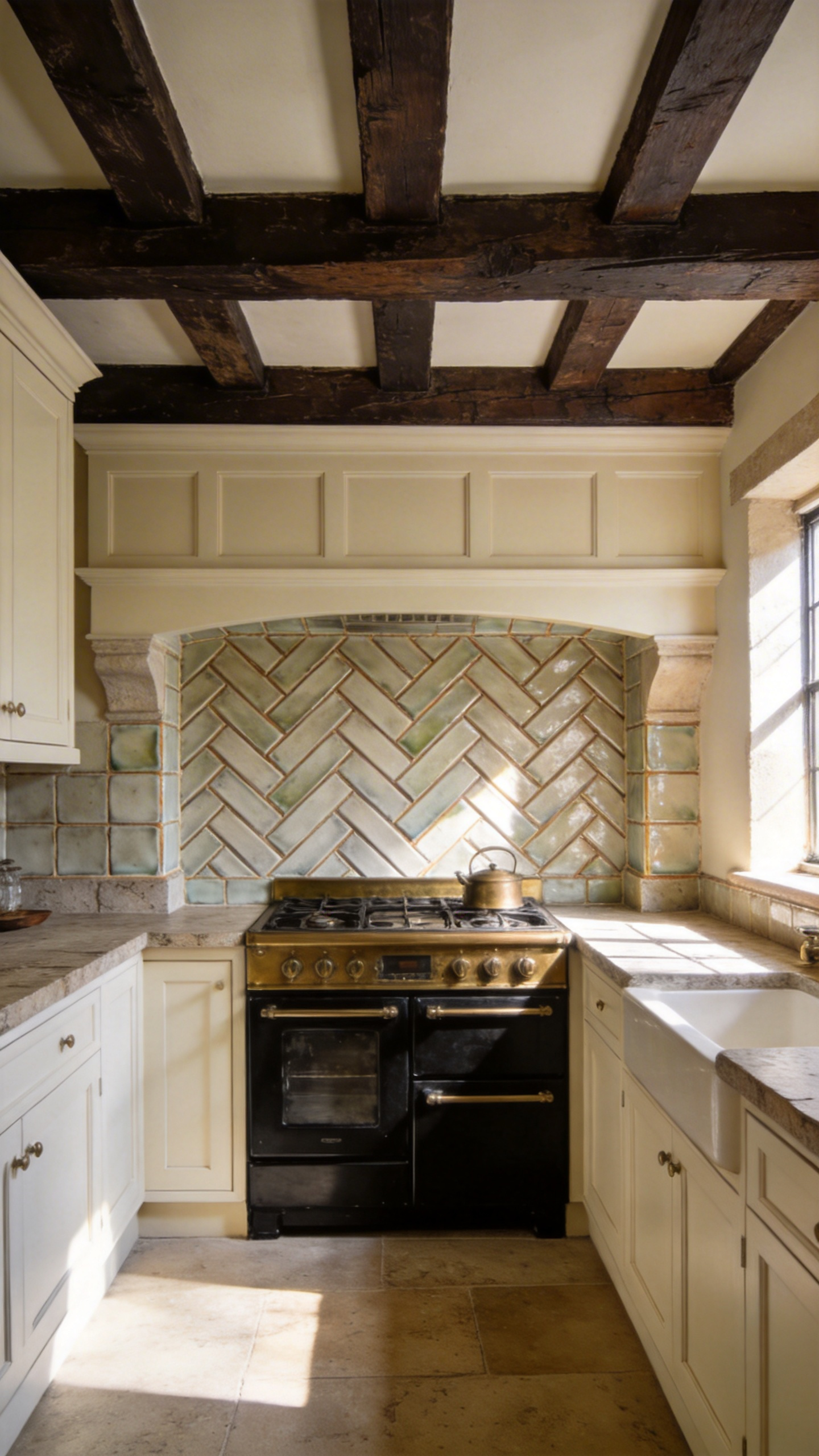
However, authentic Elizabethan texture requires material weight. Therefore, avoid thin, sleek subway tiles. Instead, opt for “chunky” handmade brick slips. These imperfect surfaces capture light like manor fireplaces.
Furthermore, the formation creates a sense of calm. The ninety-degree broken zigzag offers structural permanence. Thus, this visual rhythm guides the eye. Additionally, the grout lines act as vital architectural mortar. For true authenticity, designers recommend a wider quarter-inch joint. Ultimately, this technique transforms the stove area. In fact, it establishes the cooking zone as a hearth.
8. Basketweave Layouts: The Arts & Crafts Textural Solution
Basketweave layouts represent more than a geometric choice. Historically, this arrangement emerged during the Arts & Crafts movement. Specifically, it answered the era’s cold “sanitary” aesthetic. Designers utilized this layout to mimic hand-woven textiles.
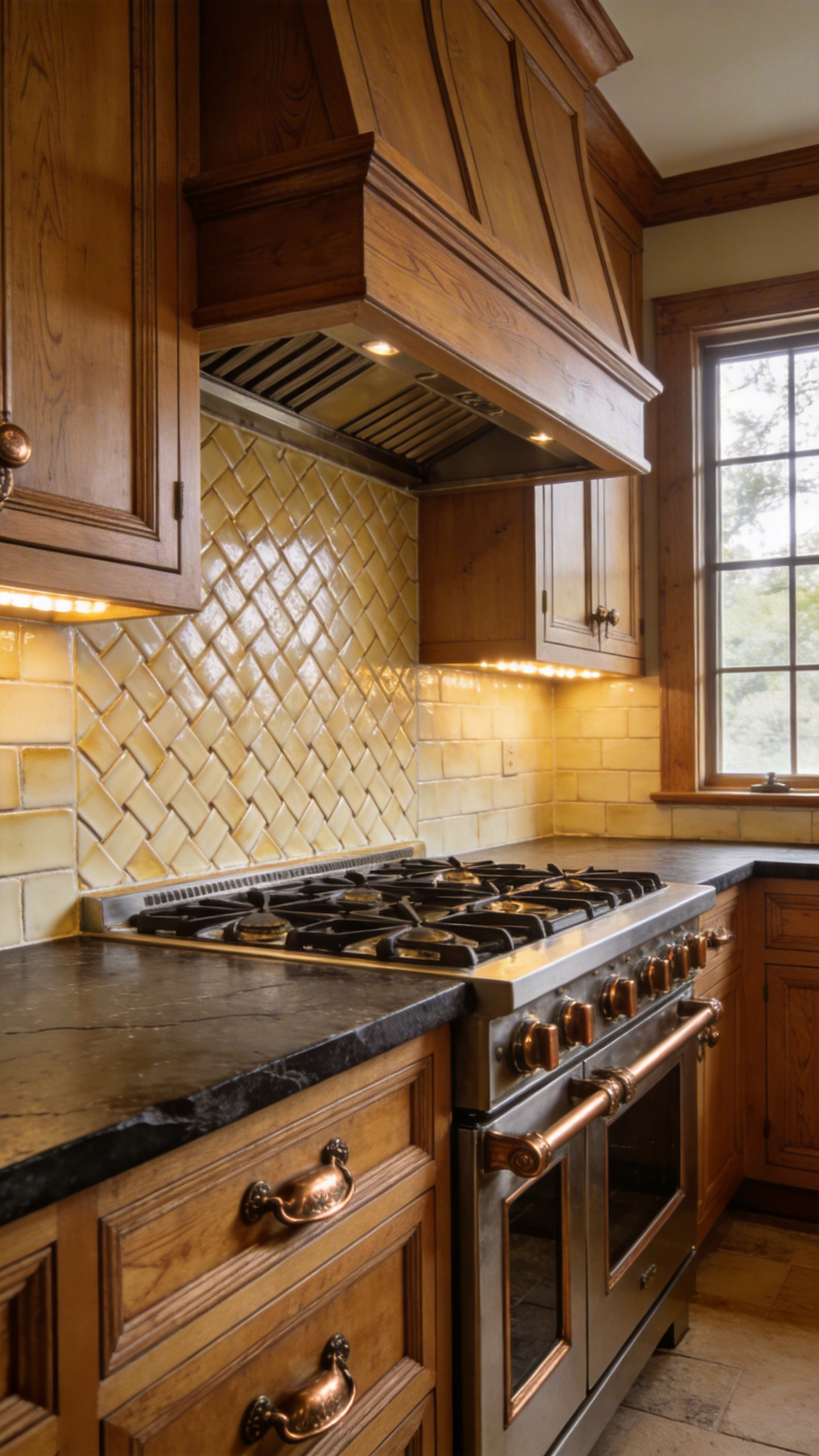
Unlike the standard running bond, the basketweave focuses on individual units. Consequently, the perpendicular arrangement breaks the flat plane. It replaces industrial uniformity with a rhythmic surface. Furthermore, this layout relies heavily on light.
For instance, traditional matte glazes absorb sunlight differently. Therefore, the backsplash creates a rippled effect. This technique allows homeowners to reclaim richness. However, material selection is critical. The true Arts & Crafts solution calls for hand-pressed ceramic. Indeed, the slight irregularities prevent a digital grid look. Ultimately, this layout bridges the gap between workspace and home.
9. The 4-Inch Rise: Returning to the Minimalist Roots of Early American Kitchens
The “standard splash” is undergoing a sophisticated rebranding. Formerly dismissed as a budget shortcut, the 4-inch rise defines the “Unkitchen.” This movement prioritizes spaces that feel like lived-in rooms. Historically, this design isn’t new. In fact, it descends from 18th-century washstands. Consequently, returning to a low rise breaks the monolith of modern design.
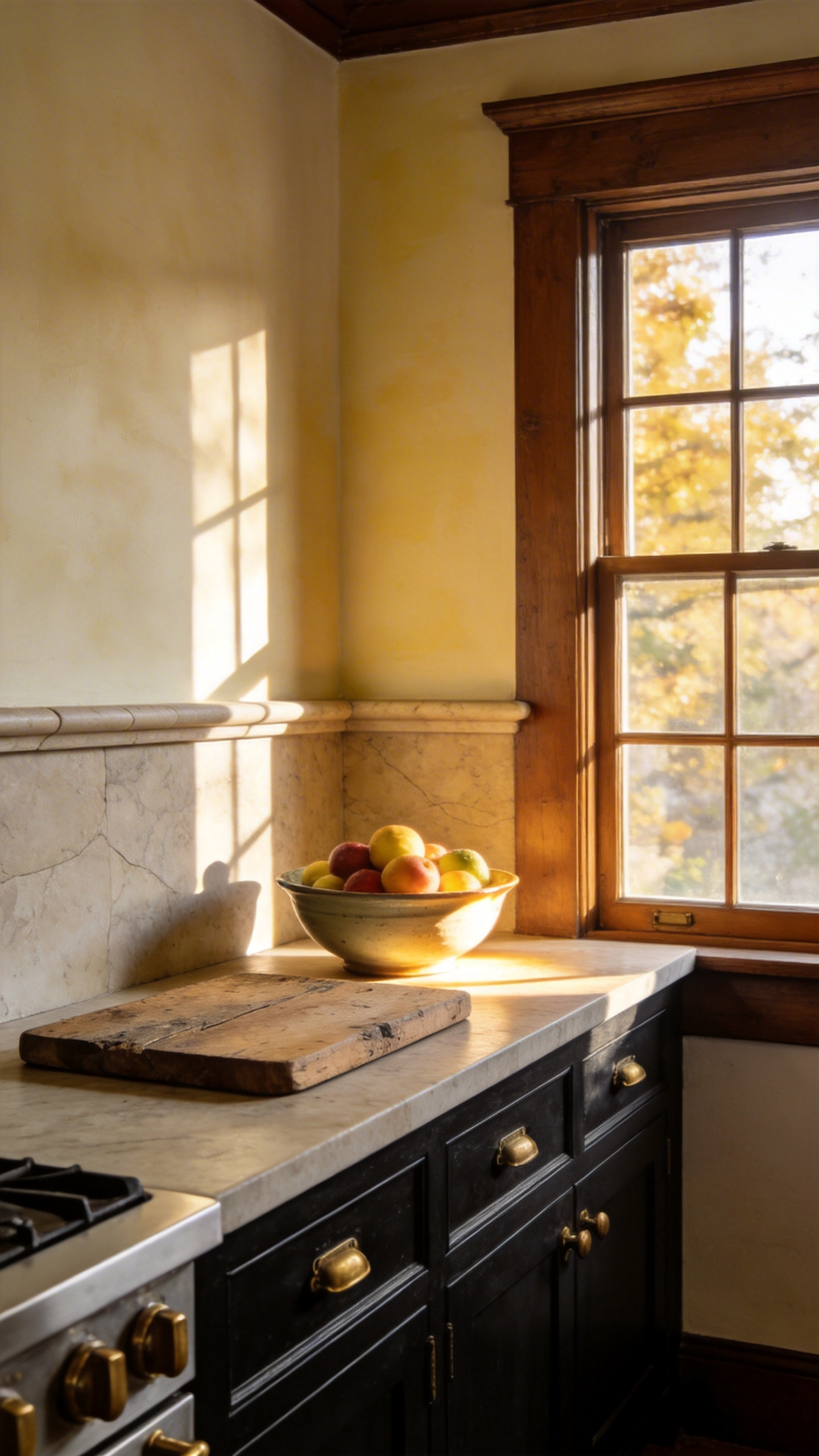
Material choice is critical here. Specifically, designers favor soapstone or honed marble. Unlike cold surfaces, a soapstone rise offers softness. Furthermore, it often features a “coved” edge. Eventually, these materials develop a patina.
Beyond aesthetics, there is a technical reason. Typically, the space between counters and cabinets is 18 inches. Therefore, a 4-inch rise occupies exactly one-fourth of that span. This provides a visual base that “anchors” the cabinets. Conversely, full-height splashes can feel suffocating. By limiting the stone height, you preserve a “datum line.” Ultimately, this choice favors “atmospheric design.”
10. Beadboard Paneling: The quintessential English Cottage texture
Beadboard paneling offers a texture that tile cannot replicate. Historically, this material was not for formal spaces. Instead, it served as utilitarian sheathing. Specifically, the distinctive “bead” acted as an engineering solution. It disguised gaps caused by expanding wood. Consequently, choosing this material signals a “working kitchen” aesthetic.
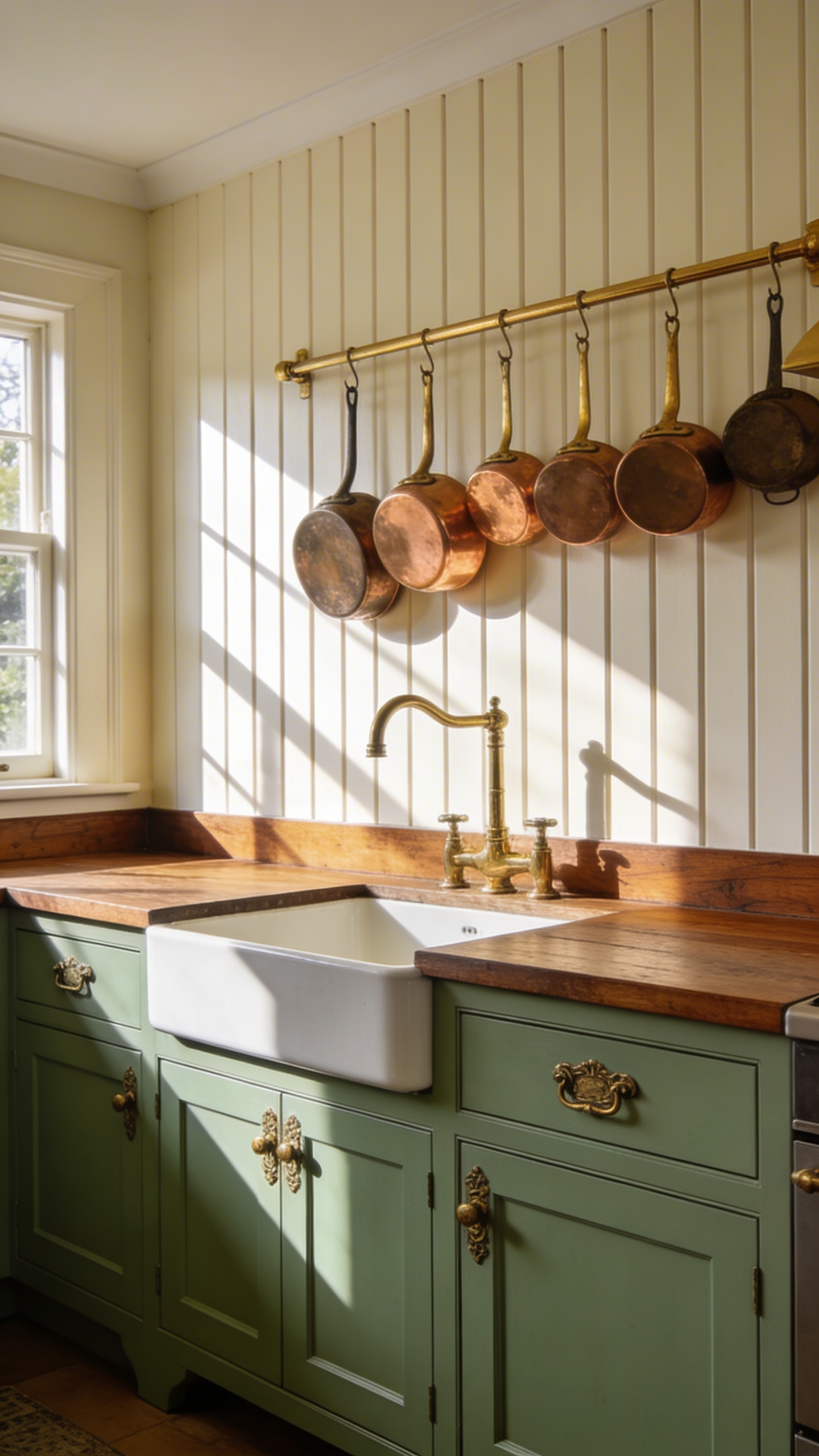
The visual success relies on the milling profile. Authentic English styling requires a complex bead pattern. In contrast, wide modern spacing feels like rustic shiplap. Additionally, lighting plays a key role. The beads create vertical micro-shadows. Therefore, even standard ceilings feel taller.
Functionally, the finish dictates the atmosphere. Designers often prefer flat paints. This creates a velvety surface. Furthermore, “color drenching” the backsplash prevents visual clutter. However, solid wood often warps. Thus, moisture-resistant MDF provides stability. Ultimately, beadboard acts as a visual acoustic.
11. Architectural Cap Moldings: Framing the Backsplash as Fine Joinery
Architectural cap moldings transform a simple tiled surface. Specifically, they elevate a backsplash to furniture-grade millwork. By treating this space as an extension of cabinetry, designers achieve permanence.
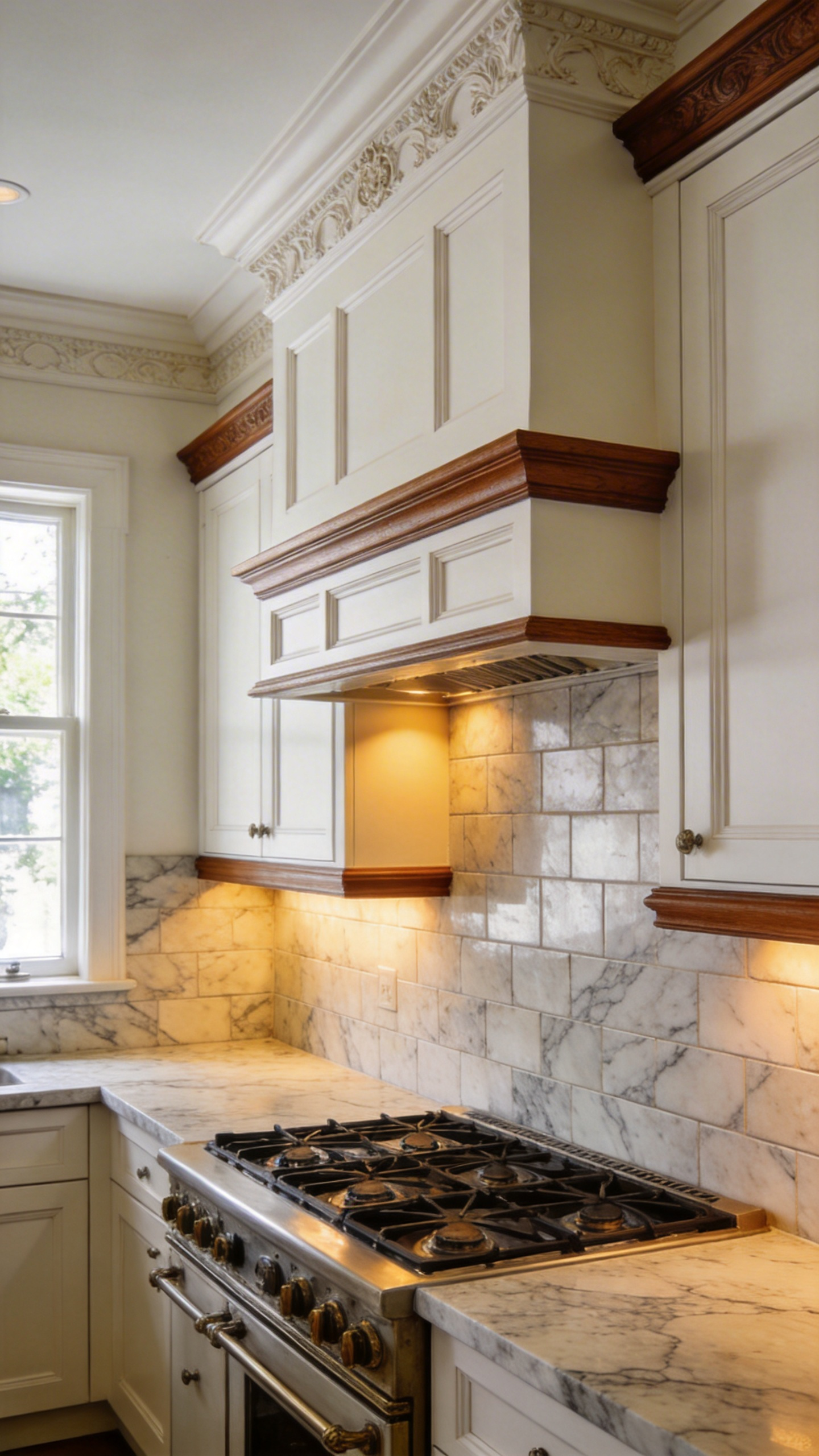
Crucially, the technical secret lies in joinery. Unlike standard trim, true caps utilize a rabbeted edge. In fact, this notch overlaps masonry to conceal raw sides. Consequently, this lock prevents gaps. Historically, this technique mirrors 19th-century paneling.
Beyond mechanics, these moldings introduce sophisticated aesthetics. For instance, craftsmen often frame the range area. Additionally, layering a backband creates shadow gaps. Therefore, the backsplash appears to float. Moreover, matching these profiles unifies the kitchen. Ultimately, this blend of elegance and defense defines true craftsmanship.
Theme III: The Narrative Arts (Decorative & Hand-Painted)
A narrative backsplash functions as more than a barrier. Rather, it serves as a domestic stage. Specifically, ceramic tiles evolve into artisanal canvases. For instance, Dutch Delftware tiles act as miniature stages. Historically, these motifs held coded meanings. Ships signaled prosperity. Consequently, scattered tiles create a non-linear story.
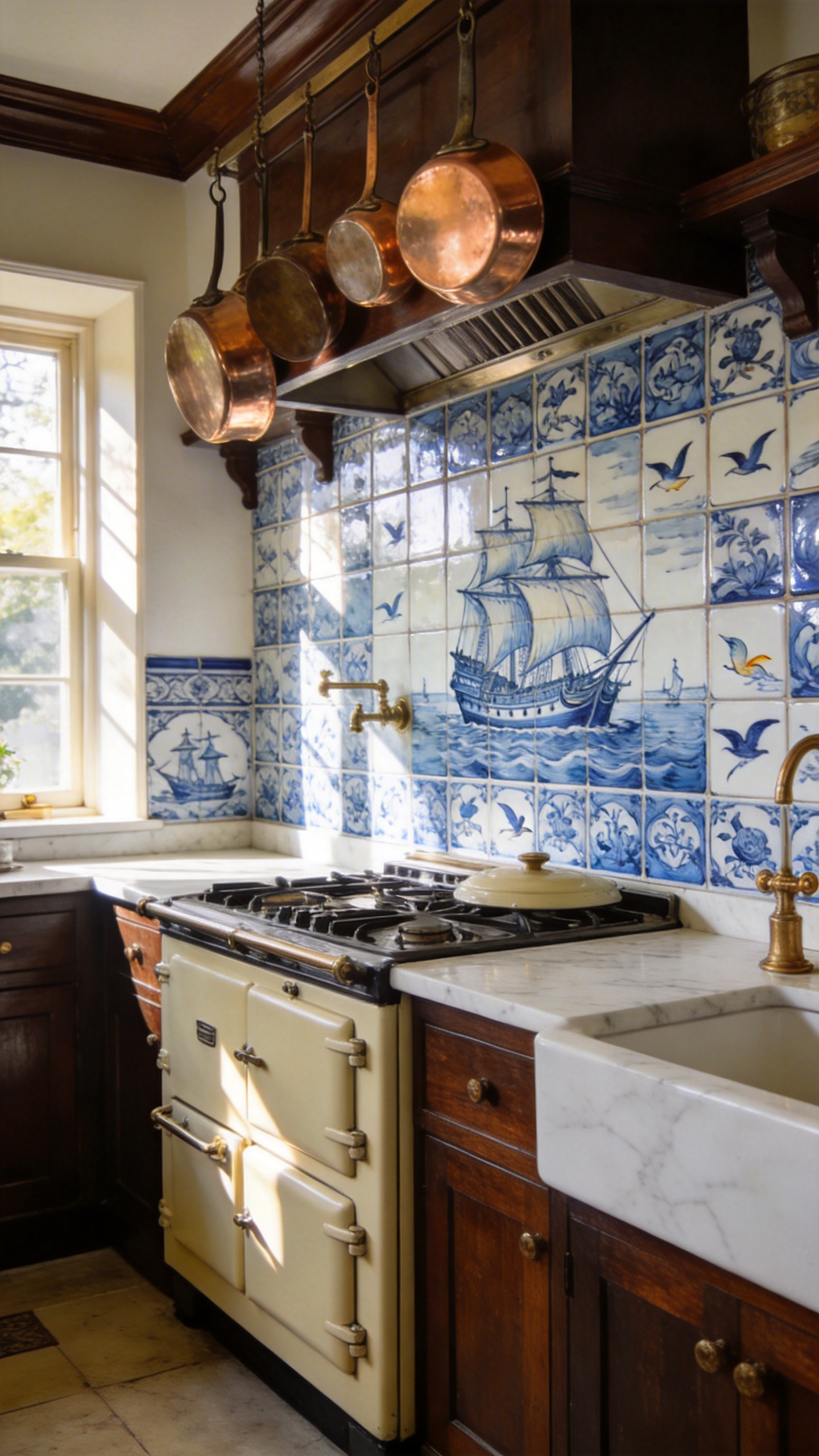
Conversely, the *Istoriato* tradition transforms the space. Here, artisans painted complex allegories directly onto dry glaze. Because the glaze absorbed pigment immediately, errors were impossible to erase. Therefore, every brushstroke represents a commitment. Furthermore, a final clear glaze adds depth.
Finally, the texture adds essential sensory depth. Unlike smooth options, traditional tiles possess an undulating surface. In fact, slight variations are not flaws. Instead, they act as the artist’s signature. Ultimately, these imperfections connect homeowners to heritage.
12. Delft and Chinoiserie: Integrating Narrative Tiles without Kitsch
Integrating narrative tiles requires balancing reverence with restraint. Unfortunately, these styles are frequently dismissed as “dated.” However, true sophistication lies in visual depth. Specifically, authentic tiles utilize a tin-glaze technique. Consequently, the pigment sinks in during firing. This creates a milky, “softened” edge.
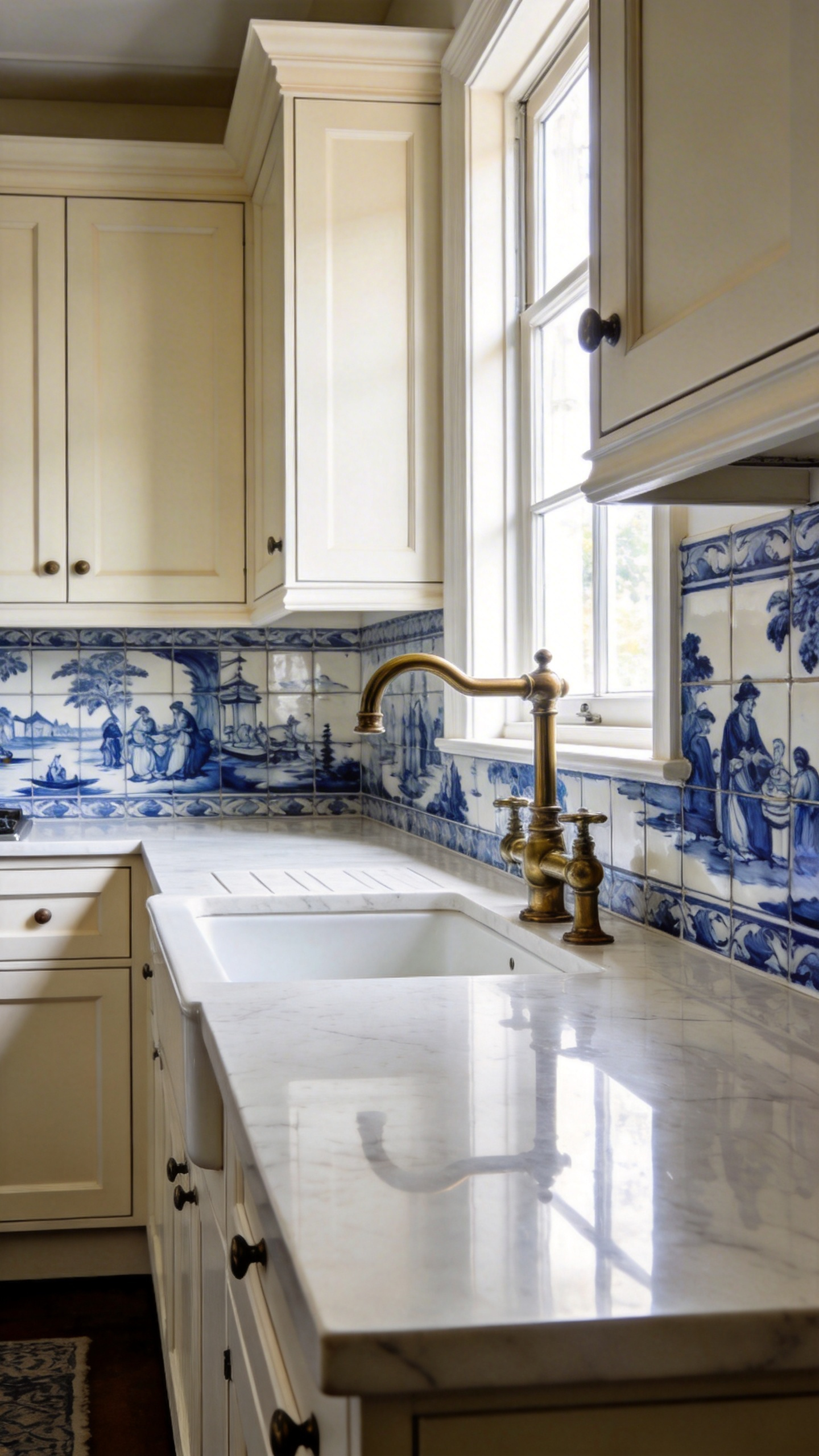
To avoid a chaotic appearance, rely on corner motifs. Historically, these designs align to form secondary patterns. Therefore, prioritize “blank” tiles in your layout. Place narrative scenes only at intersections. Furthermore, treat these stories as vignettes. For instance, frame a specific “chapter” behind the range.
Crucially, maintain a strict monochromatic palette. Finally, embrace “crazing,” the fine fractures that develop. This natural patina adds necessary age. Ultimately, contrasting this “shattered” beauty against modern stone ensures the kitchen feels lived-in.
13. Encaustic Cement: Geometric Boldness from the Victorian Hall
Historically, Victorian kitchens were utilitarian spaces. Consequently, they featured simple white earthenware. In contrast, bold encaustic patterns were for the grand entry. Therefore, installing them as a backsplash performs a transposition of grandeur. Effectively, you bring the home’s formal “welcome” into its heart.
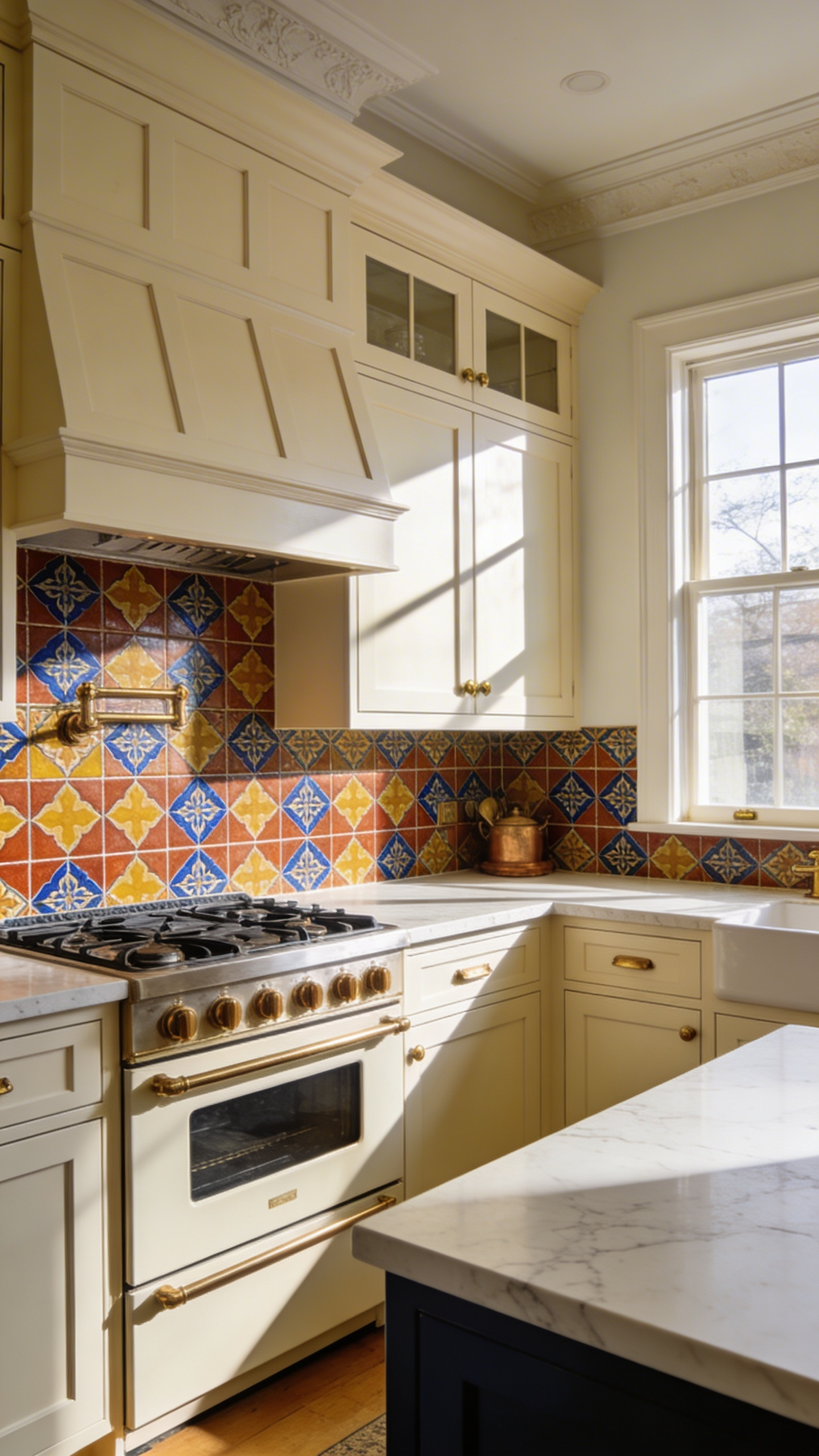
Unlike modern ceramics, true encaustic tiles feature inlaid designs. Specifically, the pigmented cement creates a deep pattern. Moreover, the surface possesses a silky, matte finish. In a room filled with polished stone, this texture acts as an anchor. It prevents the space from feeling too clinical.
Because these materials are porous, they develop a patina. Designers view this softening as the room’s “soul.” However, maintaining this beauty requires dedication. Notably, a penetrating sealer is crucial. Thus, the backsplash remains a durable narrative.
14. Relief Borders: Using texture to define the cooking alcove
Relief borders serve as sophisticated architectural tools. Historically, these raised trim pieces recall masonry hearths. Therefore, they transform a stovetop into a centerpiece. Without this anchor, decorative inserts seem to float. Instead, the border acts as a structural frame.
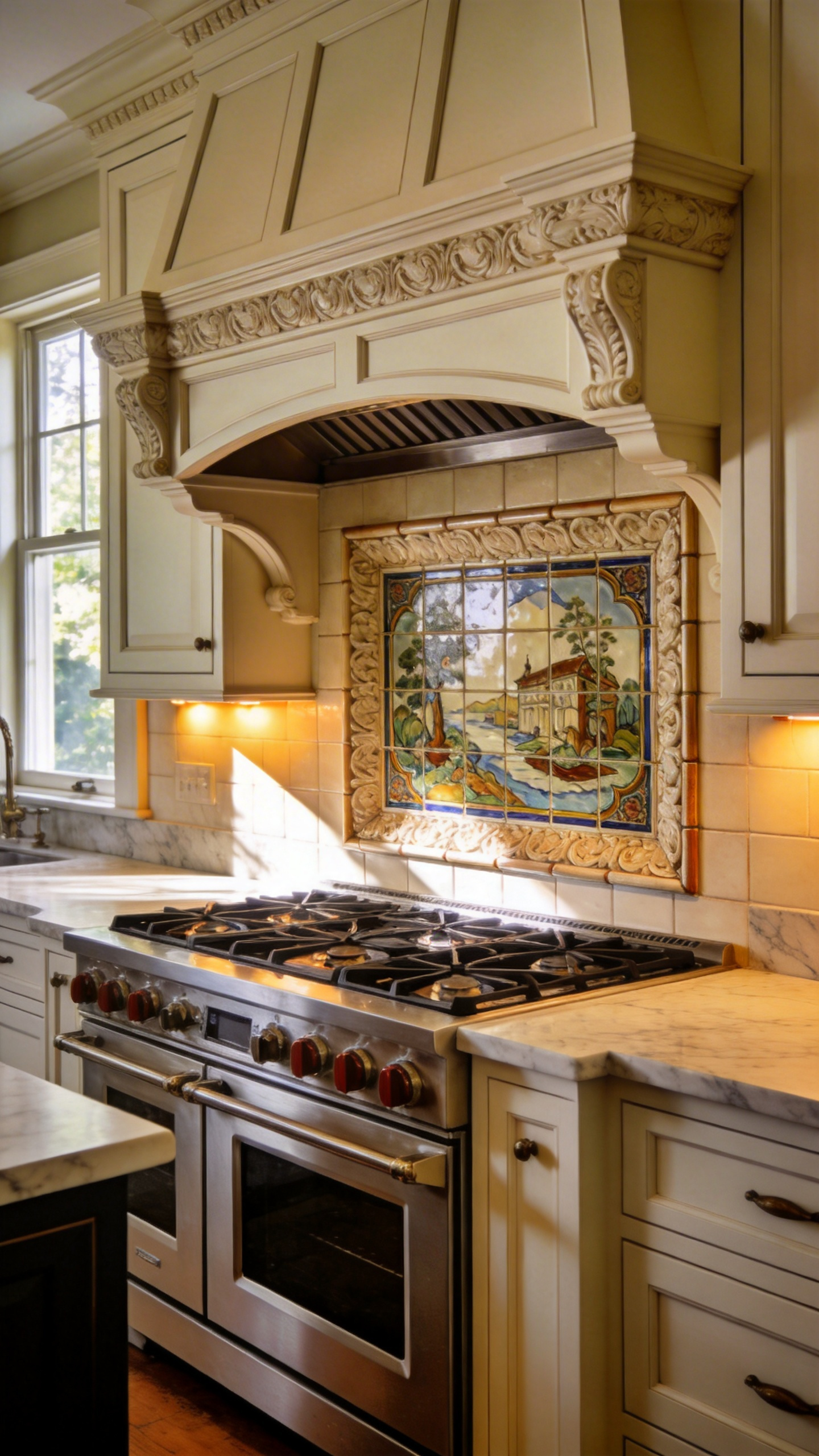
Additionally, these borders introduce texture. Specifically, under-cabinet LEDs cast shadows along raised edges. Consequently, this “grazing light” defines the zone through depth. This allows for a subtle, tonal approach.
Furthermore, relief borders solve transition issues. Intricate patterns require a clean stopping point. Thus, the border effectively hides cut edges. Moreover, selecting materials like carved stone adds weight. Ultimately, aligning these borders integrates the alcove into the cabinetry.
Theme IV: Modern Traditionalism (Bridging Eras)
Modern Traditionalism represents a dialogue known as “emotional durability.” Consequently, designers are rejecting clinical perfection. Instead, they favor materials that age gracefully. Specifically, the backsplash acts as the primary storyteller. For instance, pairing an induction cooktop with handmade tiles creates tension. This contrast bridges the gap between future and past, especially when you update your traditional kitchen.
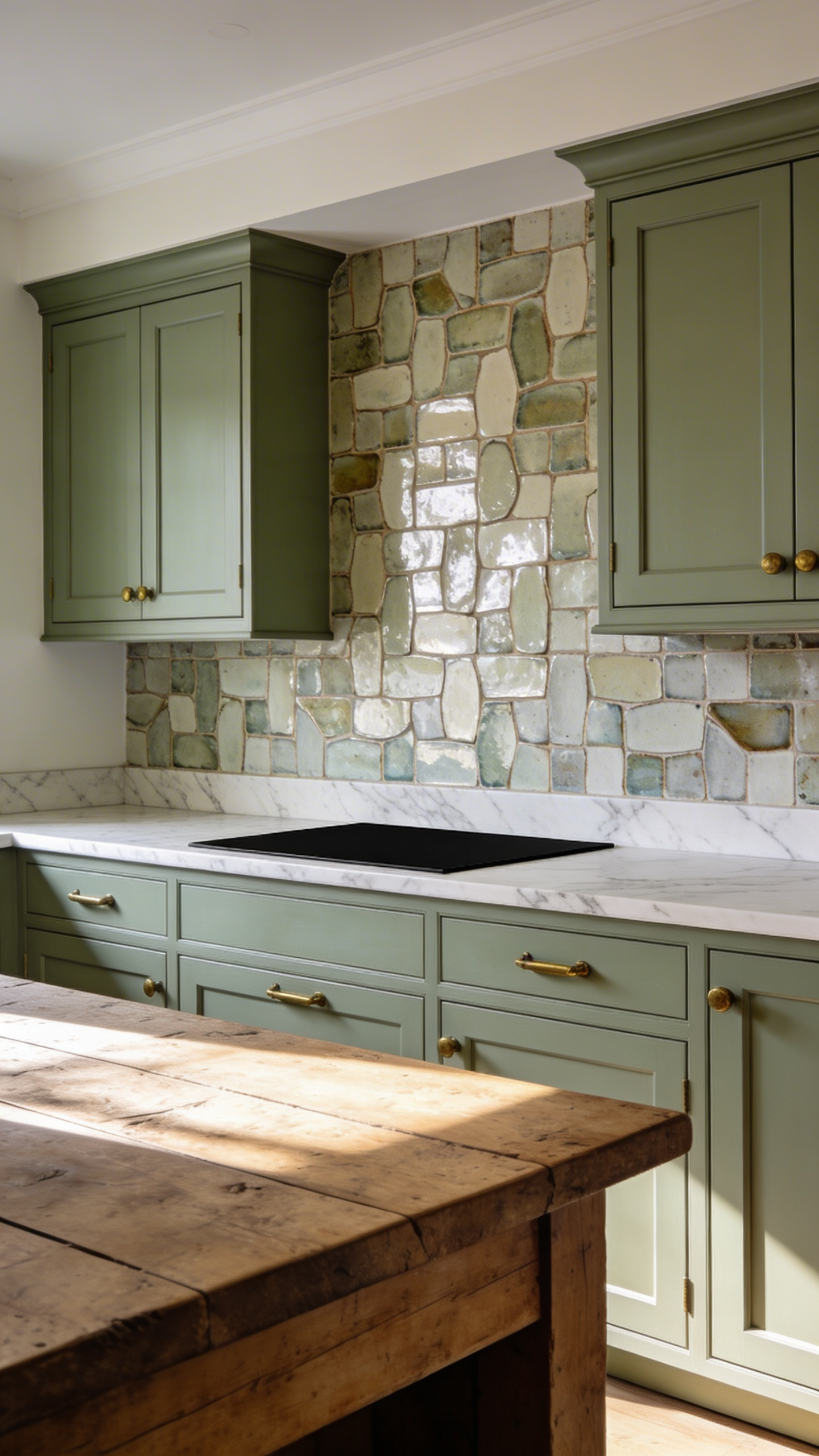
Furthermore, Zellige tiles serve as a masterclass in this technique. Technically, this Moroccan terracotta is semi-vitreous. However, its true value lies in the surface. Details like pitting provide texture. Additionally, the light refraction differs from machine-made options.
Similarly, stone selection plays a pivotal role. For example, bold Calacatta marble offers a graphic punch. Conversely, Carrara marble provides a subtle foundation. Ultimately, many experts follow the “80/20 rule” to achieve balance. This ensures the kitchen serves as a machine and an heirloom.
15. The Crackle Glaze Technique: Artificial Aging for Instant Heritage
The crackle glaze technique bridges modern manufacturing and historical charm. Technically, this effect is known as “crazing.” In standard ceramics, crazing is often considered a defect. However, artisans create it deliberately. Specifically, high levels of alkali oxides cause shrinking. Consequently, the surface shatters. Remarkably, artisans call this “the singing of the tiles.”
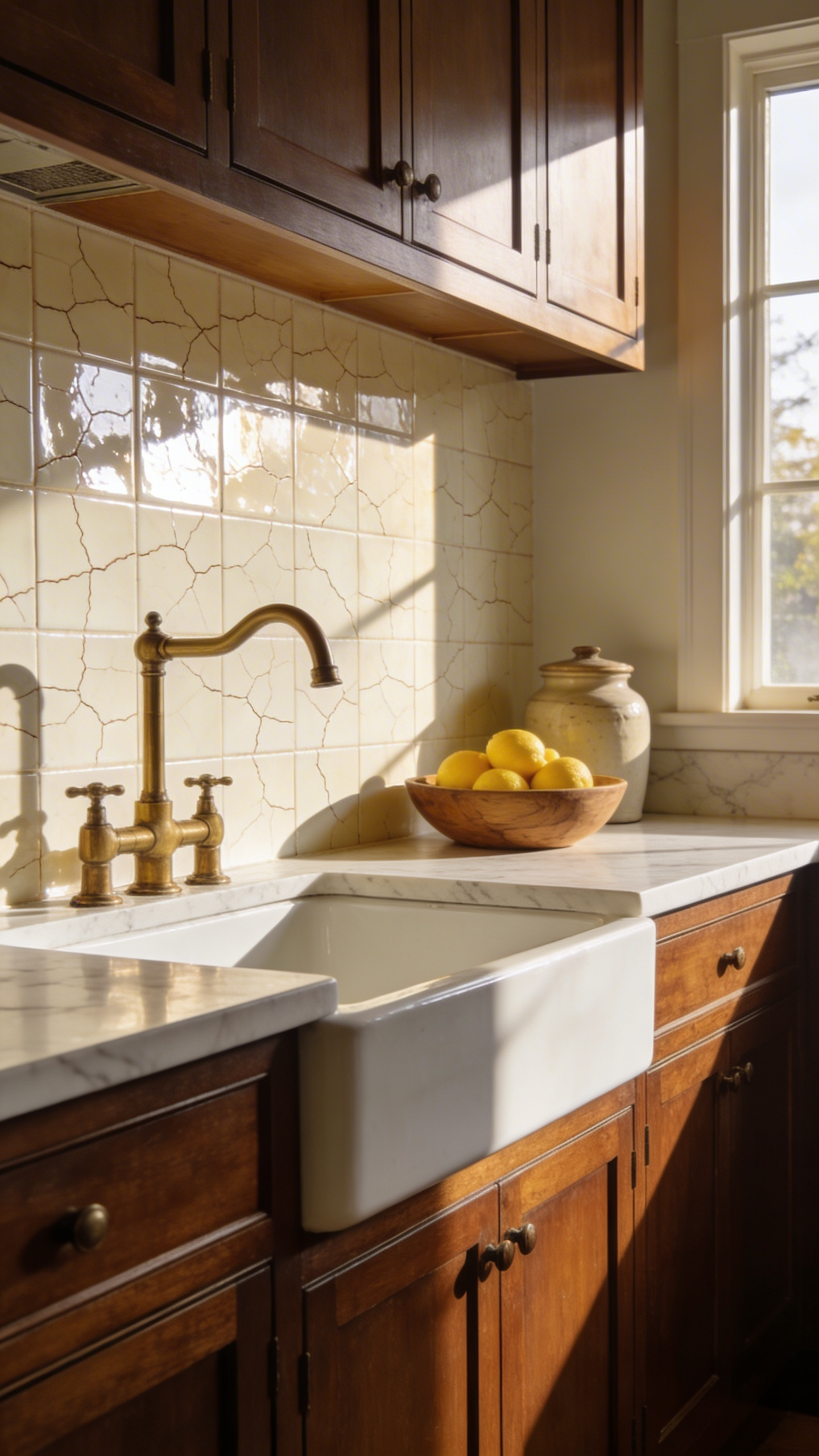
This method traces back to the Song Dynasty. Today, this “instant heritage” adds depth. Unlike flat glossy tiles, crackle tiles diffuse light. Thus, the surface creates a soft glow. Visually, this texture suggests a “crunchy” depth.
Despite its beauty, some worry about durability. Fortunately, modern design consensus offers a solution. You must use a double-sealing process. First, apply a sealer before grouting. Then, seal again after installation. Ultimately, this allows the tile to withstand heat.
16. Zellige: The North African Tradition that Complements Western Classicism
Zellige tiles offer much more than color. Originating in Morocco, this material brings ancient craftsmanship. Specifically, local artisans mold iron-rich clay. Then, a master craftsman hand-cuts each piece. Consequently, no two tiles are identical. These subtle irregularities provide soulful texture. Therefore, they soften the clinical atmosphere.
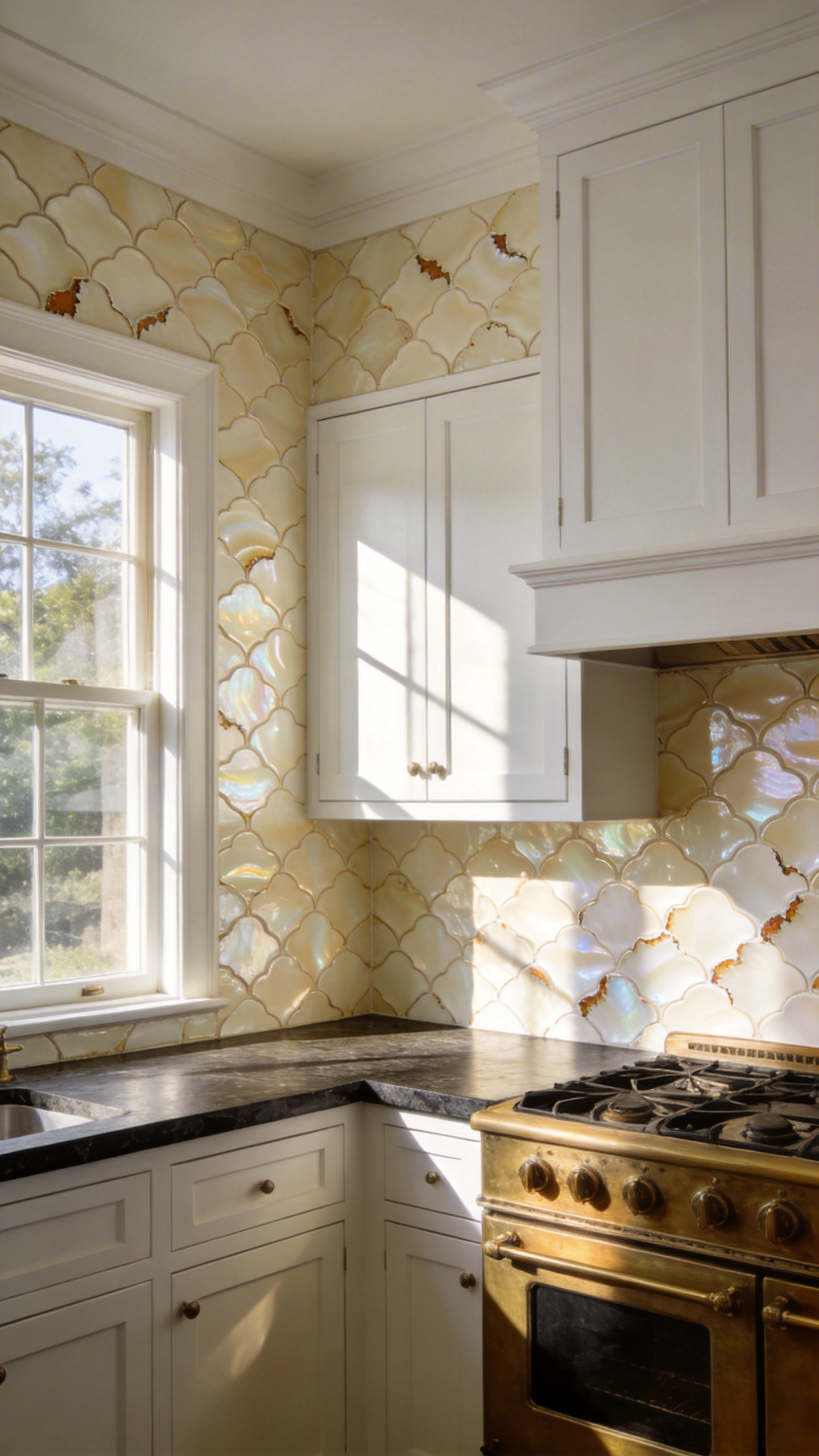
In Western Classical interiors, symmetry rules. However, Zellige introduces an organic counterpoint. For instance, the “wild” movement contrasts against precise cabinetry. Furthermore, the undulating surface interacts dynamically with sunlight. To maximize this, installers use a “butt-joint” technique.
Sometimes, a project requires a heavier appearance. In these cases, the Bejmat tile serves as a sturdy alternative. Unlike the delicate squares, Bejmat features a thicker form. Ultimately, whether using standard Zellige or Bejmat, these traditions ground the traditional kitchen.
17. Period-Appropriate Grout: Why Color and Spacing Make or Break the Renovation
Grout serves as essential connective tissue. However, it is often treated as an afterthought. For period-accurate renovations, spacing and color distinguish true restoration.
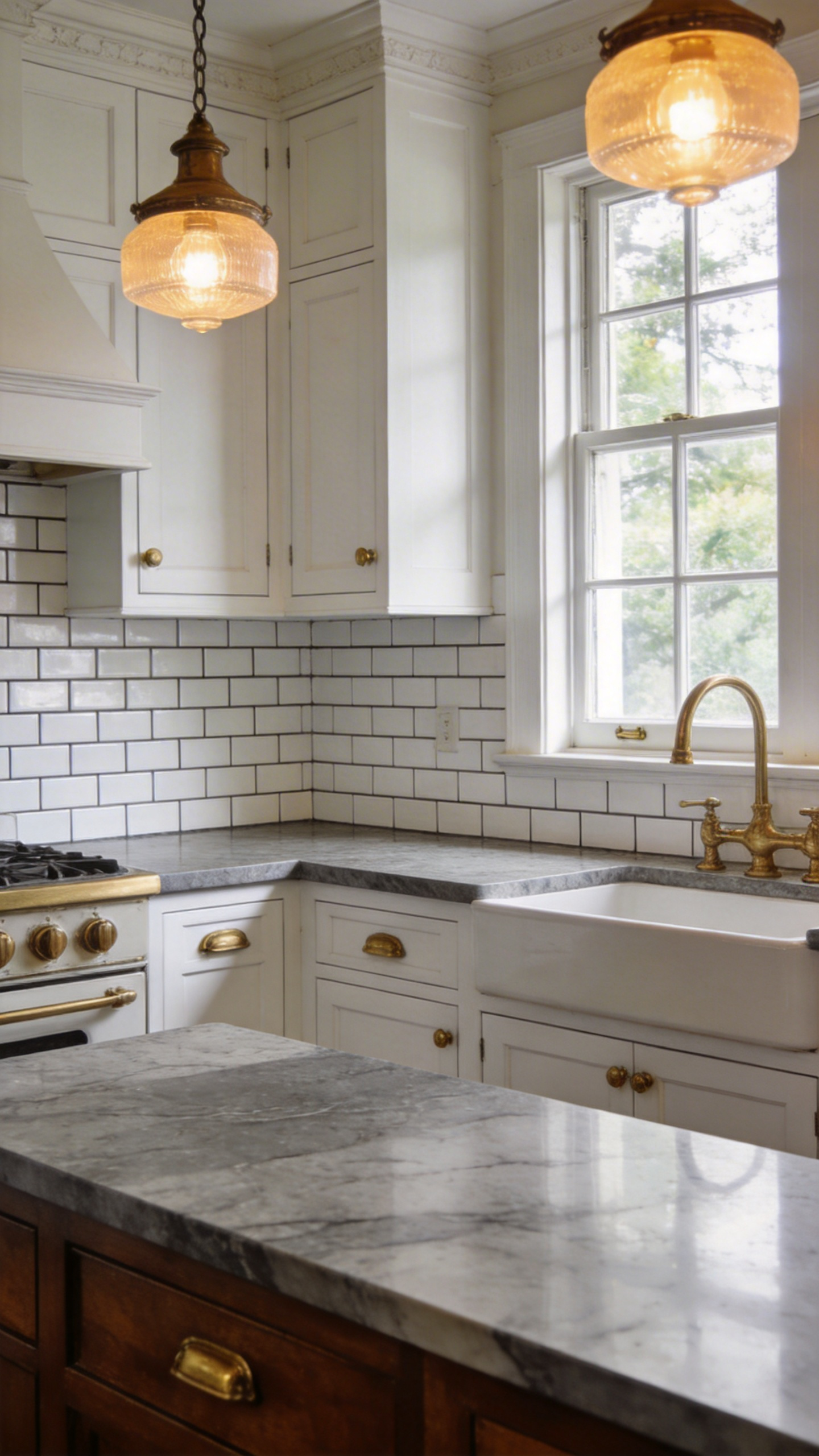
Historically, sanitation drove design. Consequently, builders utilized “butt-joints” to minimize dirt. Therefore, wide spacing signals a modern DIY installation. Furthermore, the color choice is critical. Although bright white seems “clean,” it is an anachronism. Instead, original mortar was Portland cement. Thus, designers should select “Warm Grey.”
Conversely, rustic traditions require a different philosophy. Specifically, a wider 3/8-inch joint absorbs imperfections. Additionally, texture provides historical weight. For instance, coarse sanded grout mimics lime mortar. Ultimately, a matte cementitious grout preserves character.
Frequently Asked Questions
What is the most timeless backsplash for a traditional kitchen?
The most timeless option remains the classic 3×6-inch white subway tile in a running bond pattern. Honed Carrara marble slabs also work perfectly. These materials have a century-long track record of style and durability.
Is it okay to use modern materials like quartz for a traditional backsplash?
Quartz is highly durable. However, it can lack the “soul” of natural materials. To maintain a traditional feel, choose quartz with subtle veining. Ensure it has a matte or honed finish rather than high-gloss polish.
How high should a traditional backsplash go?
Traditionally, backsplashes were a minimalist 4-inch rise or stopped at the bottom of upper cabinets. However, modern designs often extend to the ceiling. This creates a dramatic focal point, especially behind the range.
Conclusion: Curating a Backdrop that Honors the Past While Serving the Future
Designing a traditional kitchens backsplash is more than selecting a barrier. In fact, it is about curating a living gallery. We move away from sterile perfection. Instead, we embrace the soulful irregularity of handmade tiles. Furthermore, full-height stone slabs replace visual noise. Consequently, hidden technology allows historic textures to shine. Ultimately, this approach honors craftsmanship while meeting high-performance demands.
Embracing heirloom colors ensures your kitchen remains relevant. Therefore, these stable palettes act as a visual anchor. Your kitchen becomes a comforting backdrop. To start, observe how natural light interacts with your walls. Then, select materials that tell your home’s unique story.