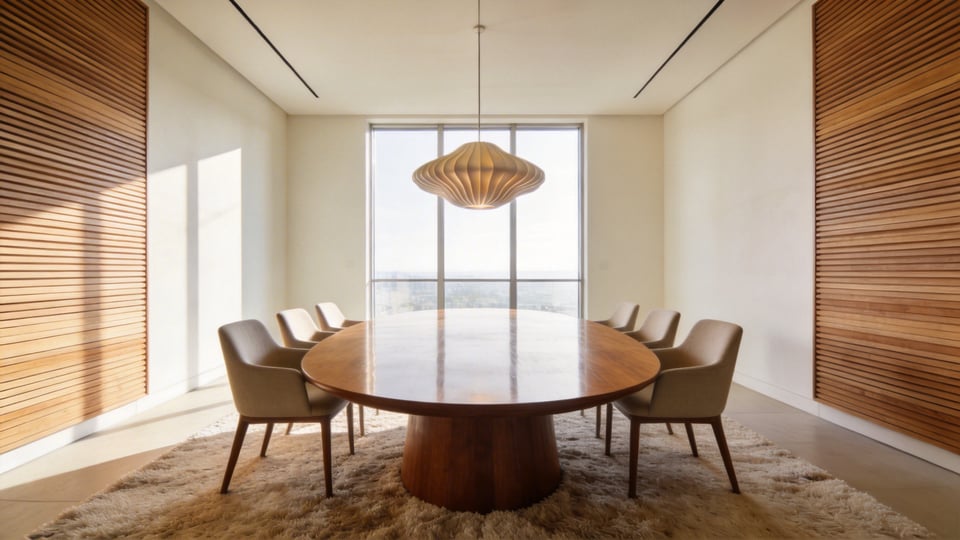
I hear it all the time: the formal dining room is dead. Families today grab quick meals around a busy kitchen island. However, this open-concept habit keeps our brains on high alert. We lose the psychological benefits of mindful, intentional eating. Historically, dining spaces were rigid theaters meant for social status. Today, I’m seeing a much healthier shift in the interior design industry. Wellness designers are reviving the dining room as a true sanctuary. Indeed, these updated spaces act as vital transitional portals. Here, thoughtful modern dining room decoration bridges the gap between high-performance living and restorative nourishment.
Neuro-gastronomy actually shows that our physical environment alters how food tastes. Warm lighting and acoustic fabrics trigger parasympathetic relaxation. Next, heavy linen curtains dampen the harsh clatter of cutlery. Round tables replace rigid rectangular layouts for better connection. In fact, this shift ensures every participant feels equal and engaged during meals.
Tactile authenticity plays a massive role in this movement. Organic materials like reclaimed wood firmly ground our senses. Specifically, heavily textured surfaces combat daily digital screen fatigue. Designers are also building sacred boundaries against modern mobile technology. Simple ritual markers, like artisanal candles, signal that the workday is finally over. Let’s explore how to curate this unplugged sanctuary. Indeed, there is a specific choreography behind a mindful modern meal.
Phase I: The Architecture of Gathering (Mindful Space Planning)
Modern dining spaces are shifting from formal displays to mindful environments. Specifically, this architecture of gathering rejects rigid hierarchies. We now prioritize democratic geometries. Circular or oval tables are prominent features in many modern dining room ideas that prioritize flow and conversation. This layout eliminates power dynamics and fosters genuine connection. In fact, regular eye contact acts as a powerful psychological safety trigger.
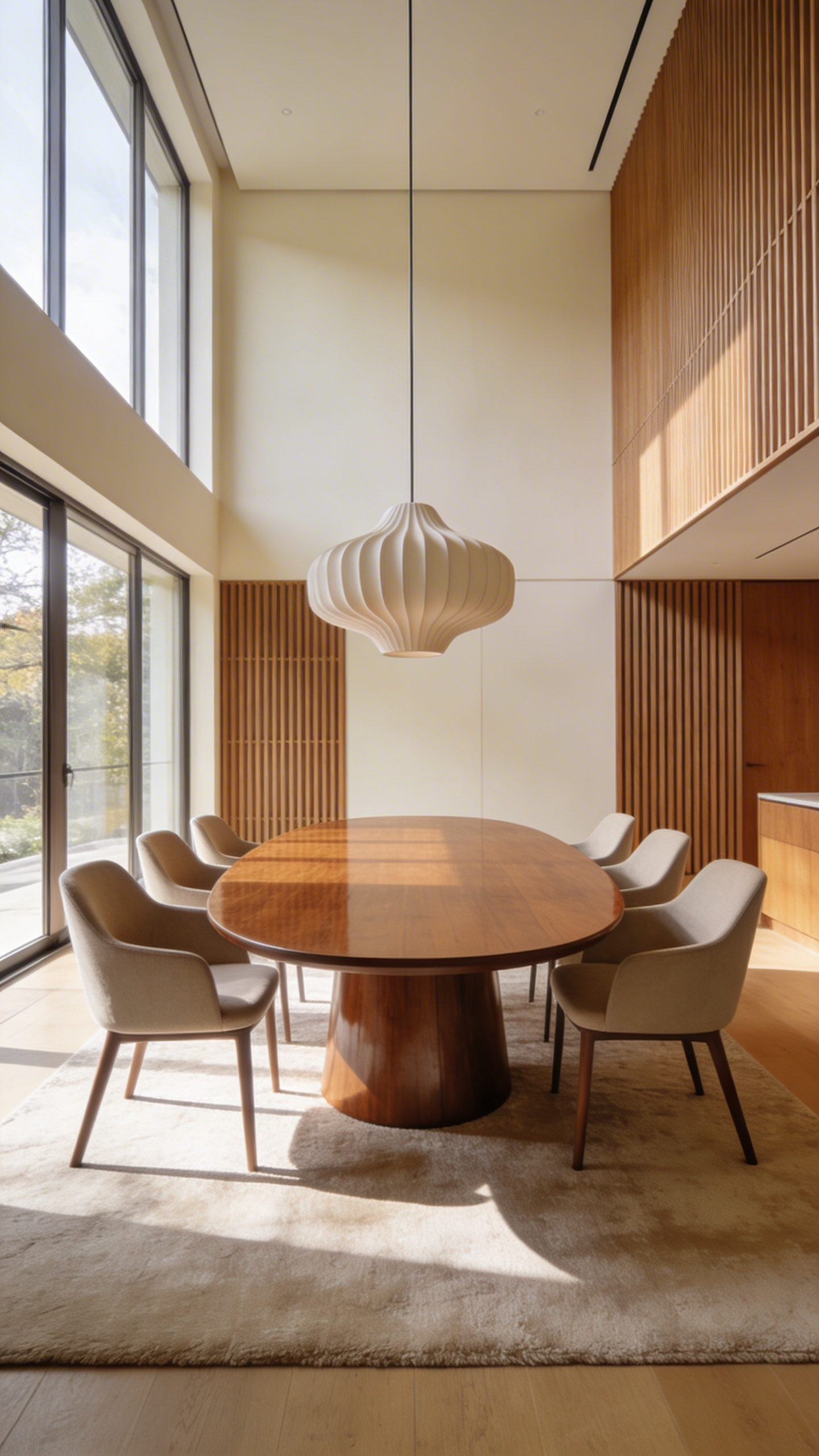
Sound management is another invisible yet crucial design element. Noisy rooms trigger the stressful Lombard Effect. Therefore, designers aim for a sonic sweet spot below 73 dBA. To achieve this, soft architecture targets initial sound reflection points. Suspending acoustic clouds, for instance, creates a calming canopy of intimacy.
Room lighting also acts as a vital biological signal. Specifically, warm 2700K lighting mimics a restorative golden sunset. Hanging pendants 24 to 34 inches above the table is generally ideal. This placement avoids harsh, glare-induced eye fatigue. Indeed, this warm glow smoothly shifts the nervous system into rest mode.
Biophilic elements further enhance this soothing atmosphere. Humans naturally crave environments offering both clear prospect and refuge. For example, placing seating against solid walls provides comforting security. Meanwhile, facing open windows satisfies our need for spatial awareness. Integrating natural wood grains actively lowers cortisol levels as well.
Proper spatial metrics prevent the anxiety of crowding stress. As a rule, allocate 15 square feet per seat. Next, providing 36 inches of clearance ensures comfortable room flow. These purposeful dimensions help the entire space feel safely held.
1. The Psychology of Table Geometry: Navigating the Energy of Round vs. Rectangular Profiles
The geometry of your dining table directly impacts your emotional wellbeing. Specifically, neuro-aesthetic research reveals that our brains naturally react to sharp contours. A rectangular table with defined ninety-degree angles subtly activates the amygdala. This formal shape can trigger feelings of vigilance or high alertness. Historically, sharp objects often represented danger to early humans. Conversely, round profiles engage brain regions associated with emotional processing and safety. Therefore, a curved table helps turn a dining room into a true sanctuary.
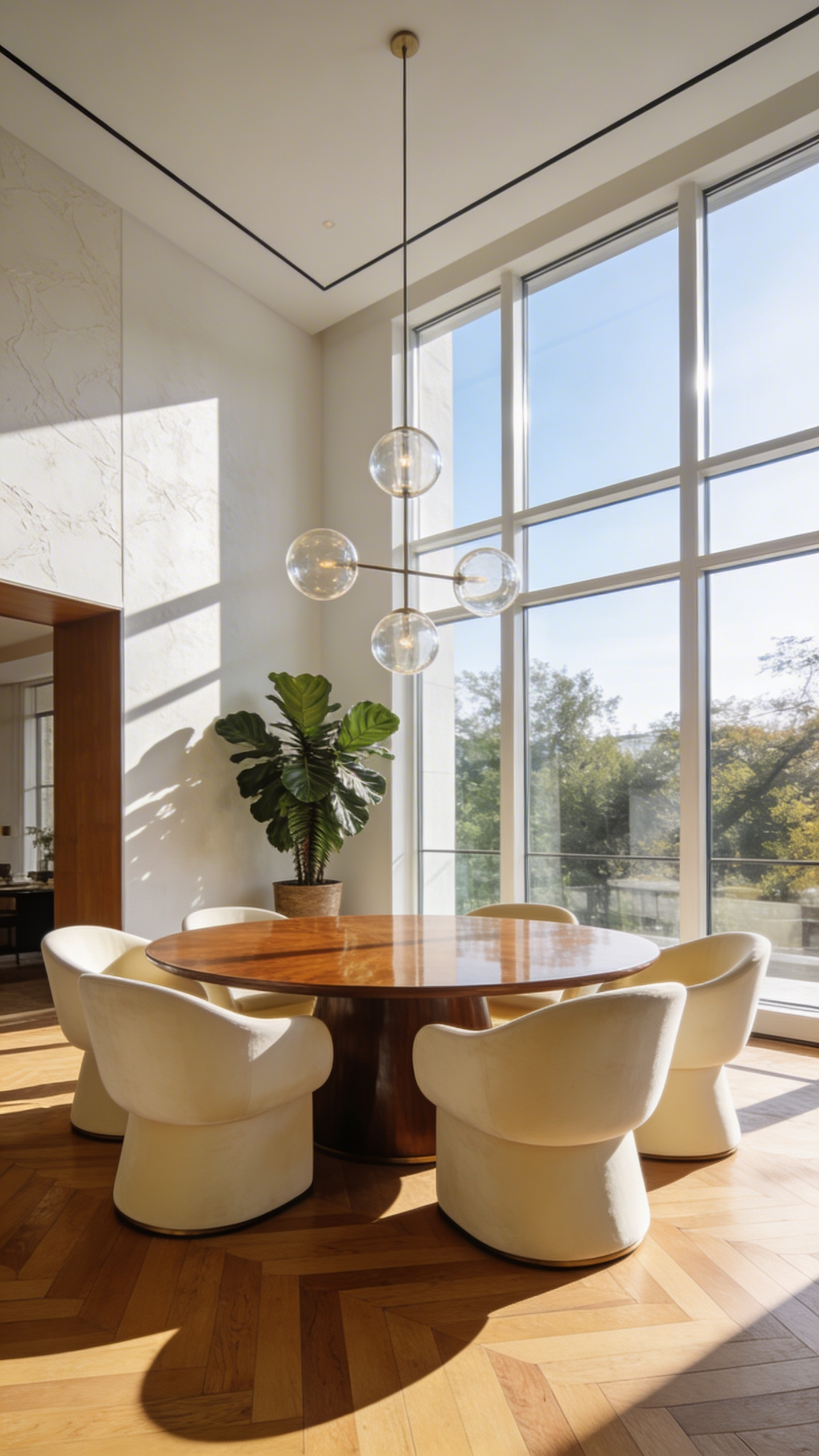
Table shape also dictates the social hierarchy of your meal. Rectangular designs inherently create a traditional power seat at the short ends. Alternatively, round tables foster a democratic circle of equal influence. Everyone remains equidistant from the center of the gathering. In fact, eye contact becomes much more fluid at a circular table.
Spatially, these geometric choices direct the physical flow of your home. Rectangular tables act as strong visual anchors. Meanwhile, round tables generate a centripetal force that draws people inward. Pedestal-style round tables eliminate a restrictive slum of furniture legs. Guests sit comfortably without feeling physically trapped. Indeed, selecting the right shape creates a healthier, more adaptable environment.
2. Frictionless Flow: Mapping Breathable, Energetic Pathways Around the Dining Space
Spatial planning in the dining room goes beyond simply moving chairs around. Instead, it requires mapping dynamic envelopes for frictionless human movement. Specifically, providing 42 to 48 inches of clearance around a table prevents micro-stressors. Guests can walk behind seated diners without initiating an awkward sideways shuffle.
A wellness-focused layout utilizes negative space to act as sensory lungs. Visually floating furniture effectively opens up these pathways. This physical openness allows vital energy to circulate freely. Therefore, designers often prioritize the psychological comfort of the command position. Seating is arranged so no guest faces away from the main entrance. In fact, a hidden doorway can trigger a subtle fight-or-flight response in the nervous system.
Modern dining spaces must also address literal atmospheric breathability. In practice, integrating indoor plants softens energetic pathways while naturally filtering the air. Prioritizing low-VOC finishes and natural materials prevents chemical friction from off-gassing. These intentional spatial choices create a dining environment that actively nourishes holistic wellbeing.
3. Negative Space as a Decorative Element for Mental Clarity and Digestive Rest
Negative space is often undervalued as mere emptiness. However, it serves as a deliberate tool for wellness. Specifically, treating the void actively bridges minimalism and biological health. This approach embraces the Japanese concept of Ma, which honors the space between objects. Therefore, leaving clear floor space around a table provides a vital visual buffer. This mindful pause separates outside chaos from your meal.
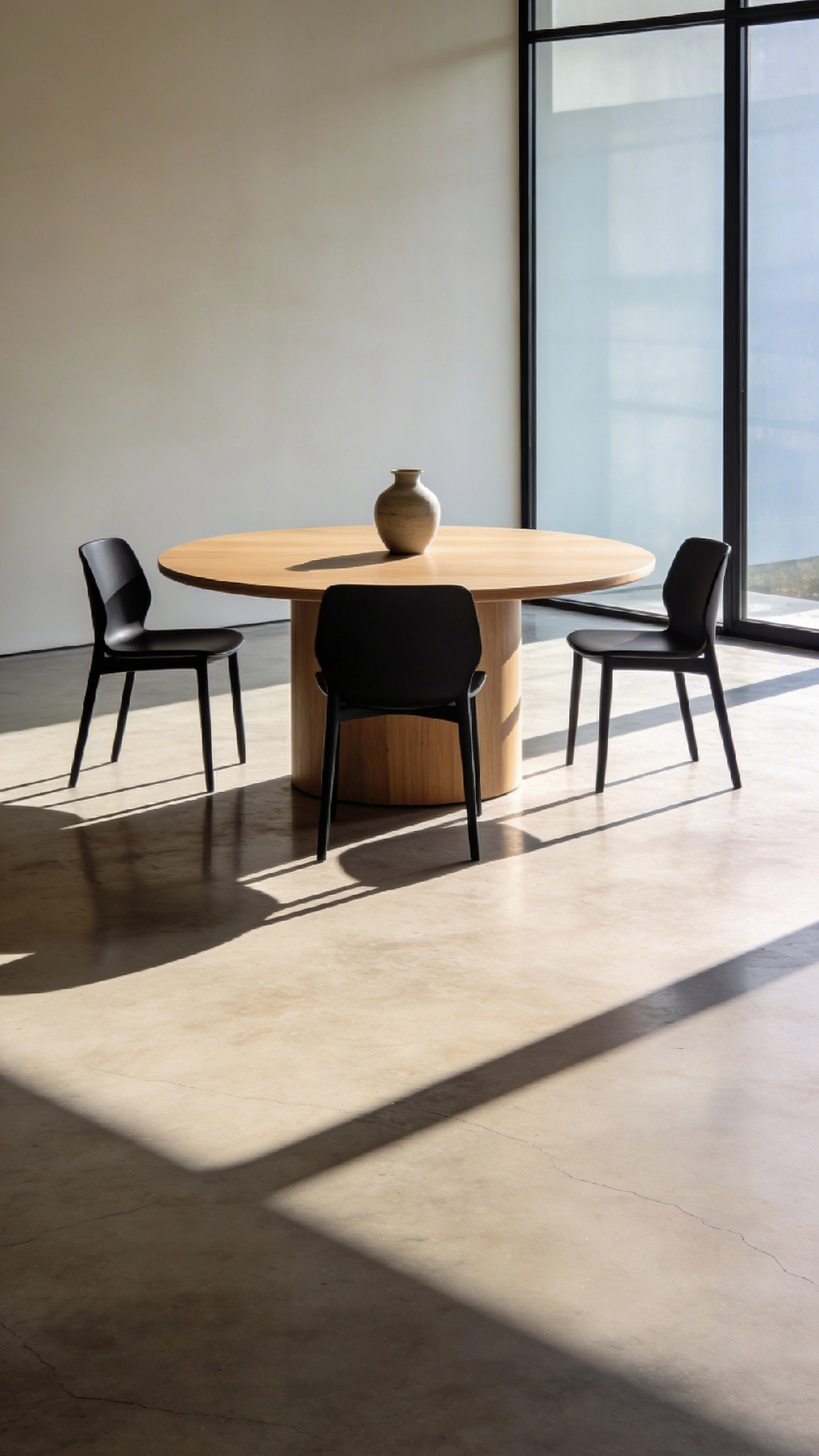
This intentional emptiness triggers the body’s parasympathetic nervous system. Biologically, visual clutter acts as a micro-stressor. Crowded sideboards and dense gallery walls cause visual crowding. This visual noise elevates cortisol and actively inhibits digestion. Instead, maintaining a clean horizon lowers your daily cognitive load. Your body easily shifts into a restful digestive state. In fact, optimal gastrointestinal function requires this exact biological shift.
Shaker design historically mastered this spatial concept for mental clarity. For example, their wooden peg rails kept chairs completely off the floor. Today, we translate this using transparent acrylic or leggy furniture. This creates a feeling of boundless, breathable space. A visually quiet room acts as a sensory palate cleanser. Indeed, dining at a bare white oak table heightens your focus on food textures.
This visual calm dramatically improves your body’s natural satiety signals. Chaotic, noisy environments can actually double a diner’s daily caloric intake. Therefore, negative space becomes a powerful tool for metabolic health. I recommend applying the 60-30-10 rule of modern space. Specifically, surround heavy stone tables with vast, empty painted walls. Limit your table décor to a single, textured ceramic vase. Soft acoustic plaster finishes ensure the room remains deeply, comfortably quiet.
4. Ergonomic Seating Profiles That Subconsciously Encourage Prolonged Connection
Modern dining chairs have evolved far beyond basic lumbar support. They act as sophisticated tools for social engineering. For example, the “cradle” archetype uses a continuous wrap-around backrest. This curved geometry triggers the parasympathetic nervous system. Physical ease lowers cortisol and reduces stress responses. Therefore, guests subconsciously feel secure enough to linger longer.
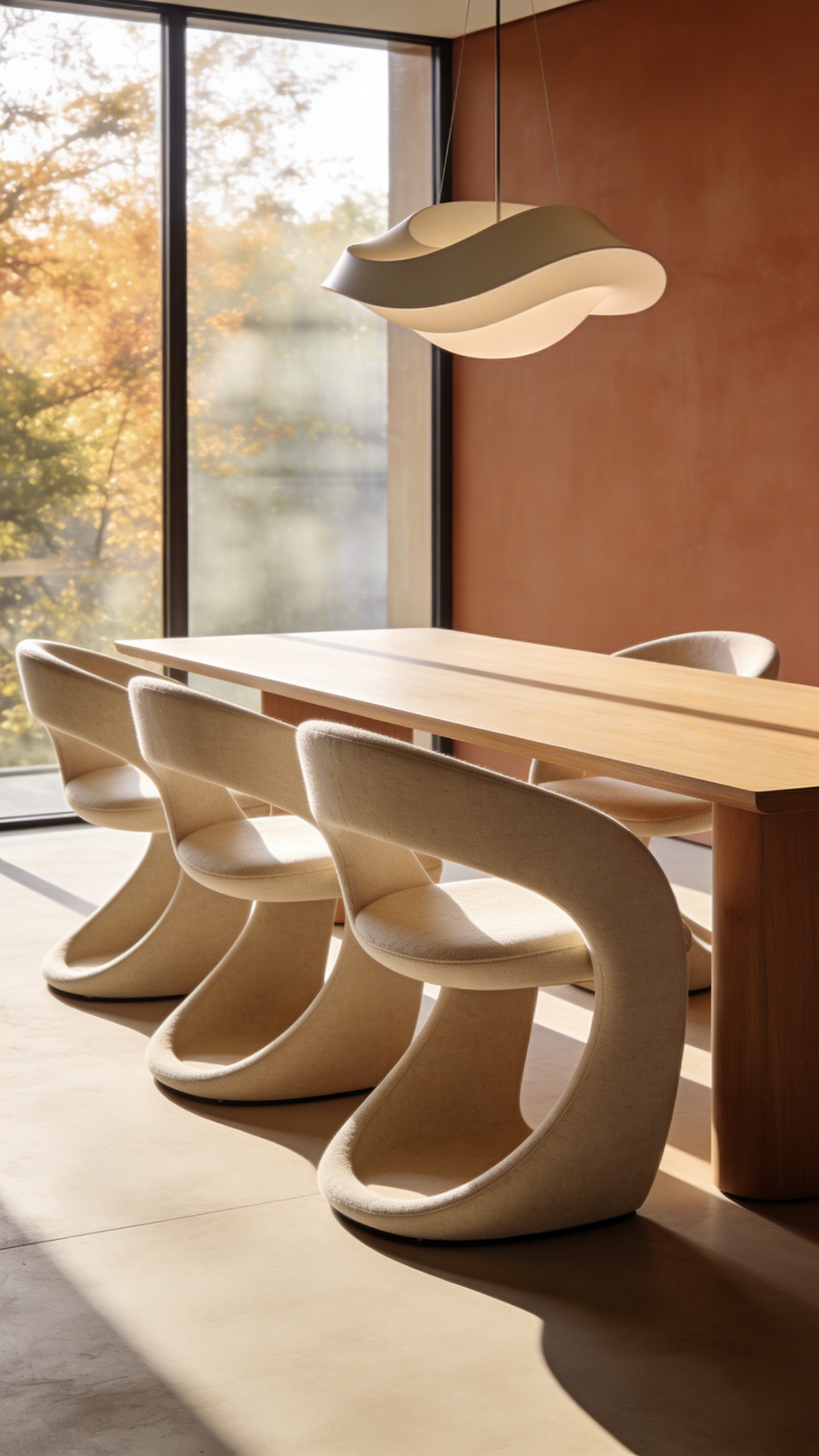
The angle of the chair dictates our conversational stamina. Traditional dining seats enforce a rigid ninety-degree upright posture. However, this verticality causes physical fatigue after forty-five minutes. Modern profiles engineer an active relaxation angle instead. A subtle 105-degree recline opens the chest cavity for deeper breaths. Physiologically, increased oxygen sustains the energy needed for complex conversations.
A sloping waterfall edge at the seat front also helps. It eliminates harsh pressure on the arteries behind the knees. Maintaining optimal blood flow prevents subconscious fidgeting and restlessness. When the body rests comfortably, the mind remains entirely present. Tactile ergonomics play a vital role in environmental trust as well. Reactive materials like woven paper cord adapt to body heat. Indeed, this subtle physical responsiveness creates a deeply welcoming atmosphere.
Visual “floating” seat designs separate the frame and backrest. This structural lightness flattens the social hierarchy of the room. Guests feel encouraged to connect and share freely.
Phase II: Organic Modernism (Healthy Home Materials & Textures)
Historically, Organic Modernism focused entirely on visual silhouettes. Today, I’m noticing a shift toward true biological integrity. Modern dining rooms now prioritize your physical health. Therefore, materials must be chemically inert. Designers actively seek CARB Phase 2 and Greenguard Gold certifications. This ensures your dining table will not off-gas toxic formaldehyde during meals.
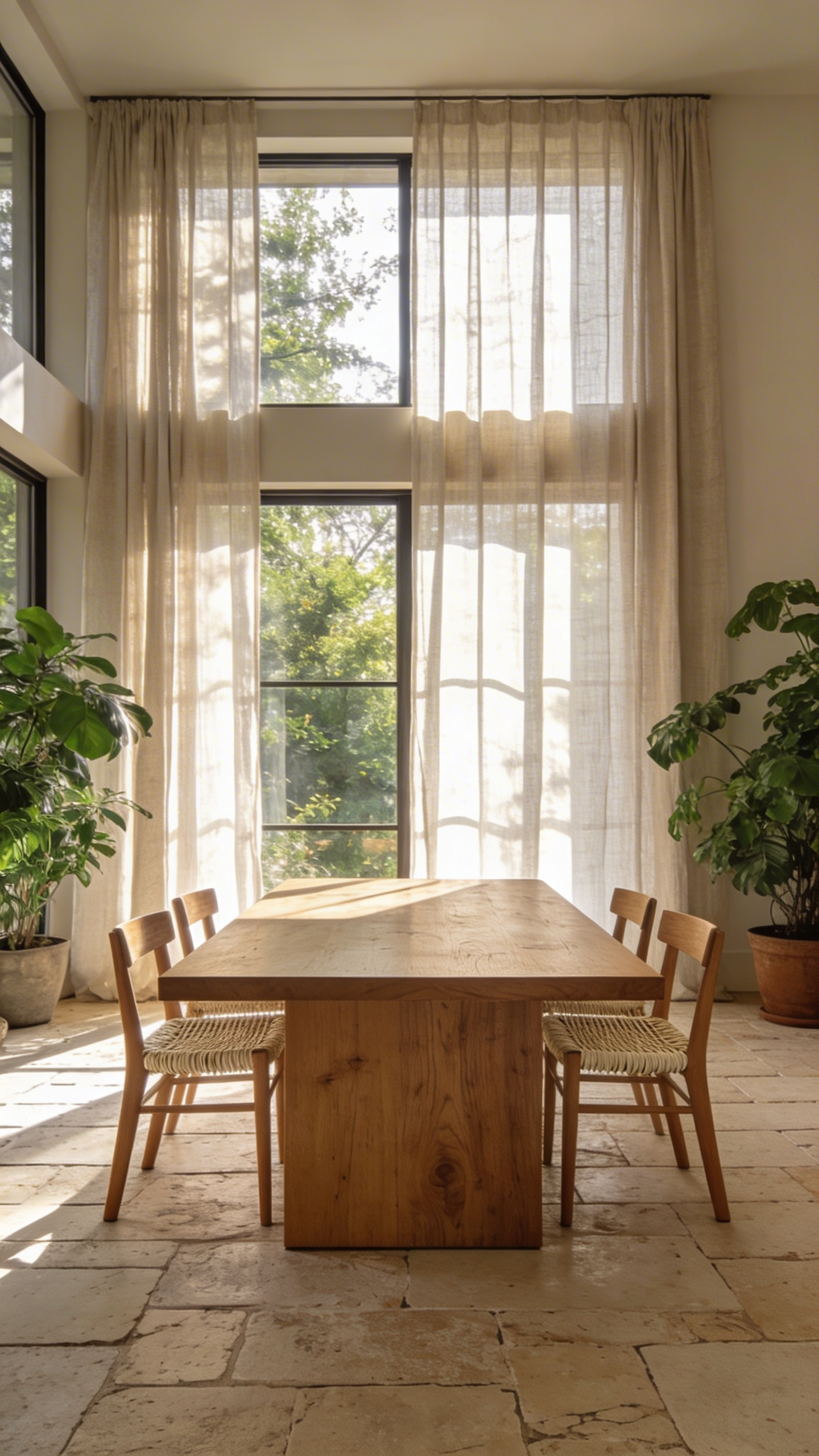
The tactile experience directly affects mental wellbeing. Thick polyurethane lacquers once created a suffocating plastic feel. Now, breathable microporous finishes are taking over. Hardwax oils made from linseed and beeswax allow wood to breathe. This creates a warm, textured surface under your arms. Minor scratches are easily buffed out with simple oil. Indeed, the space embraces the calming Japanese concept of wabi-sabi.
Textiles play a vital role in indoor air quality. Petroleum-based fabrics are being replaced with regenerative bio-composites. Incorporating dining room decor ideas like carbon-negative hemp or organic wool bouclé acts as a living natural filter. Specifically, wool safely traps dust and volatile organic compounds. Meanwhile, emerging mycelium wall panels soften harsh acoustic clatter.
Psychologically, these raw materials offer profound mental restoration. The fractal patterns in natural wood grain trigger soft fascination. Your brain quickly recovers from digital screen fatigue. A honed stone centerpiece visibly reduces stress hormones like cortisol. Luxury is no longer defined by rare designer labels. Instead, true luxury means every texture is safe to touch.
5. VOC-Free Mineral and Lime Wash Finishes for Toxin-Free, Breathable Walls
Standard paints create a plastic-like film over your walls. Conversely, lime wash and mineral paints undergo a process called carbonatization. They absorb carbon dioxide from the air and convert back into microscopic limestone. Therefore, you are essentially cladding your dining room in authentic stone.
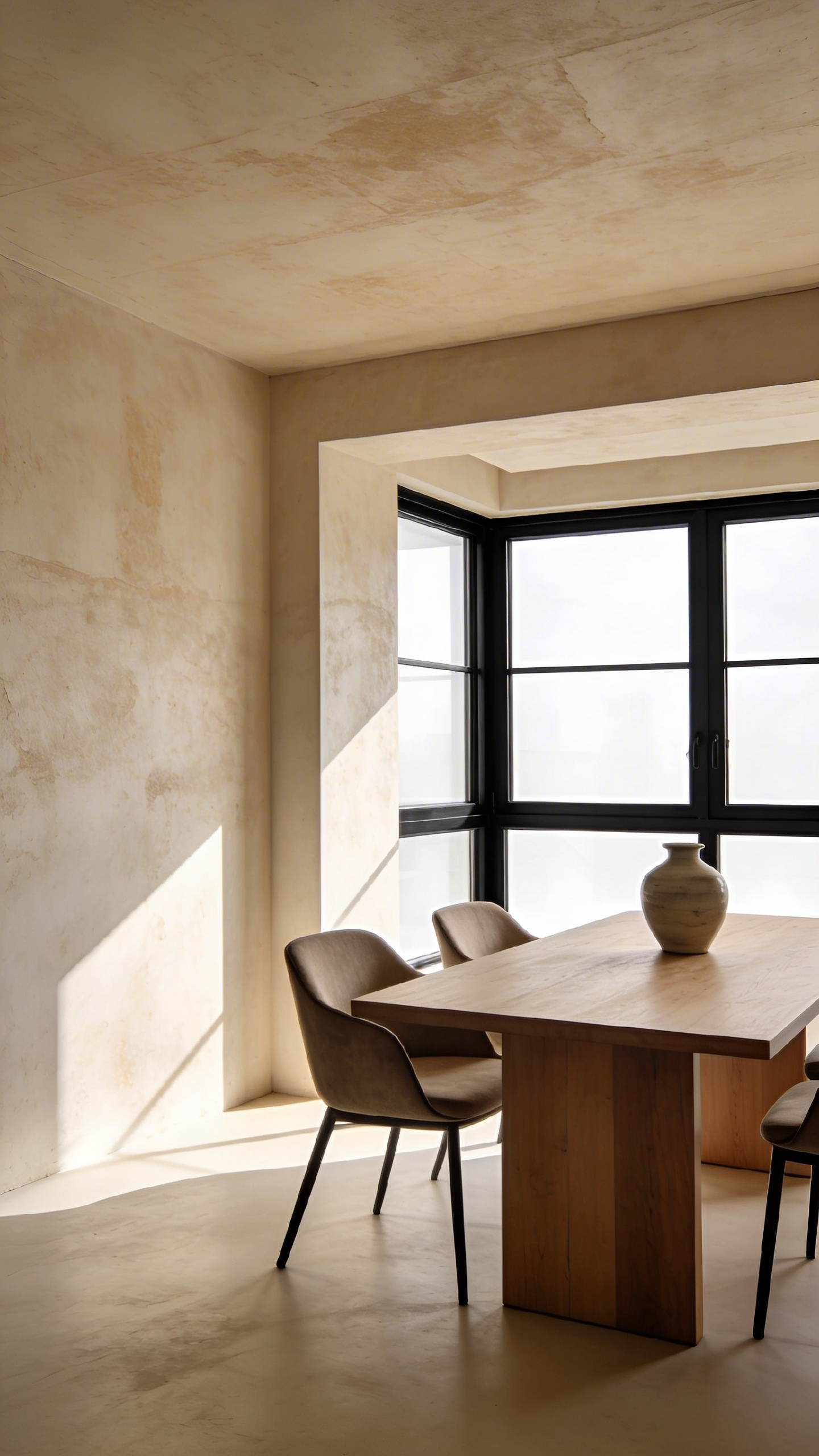
These finishes act as a breathable third lung for the home. When selecting your dining room paint, opting for mineral-based options allows trapped moisture to move freely through the walls. Lime possesses a high pH that naturally resists toxic mold and bacteria. These odorless materials never off-gas harmful volatile organic compounds. In fact, the scent of your meal dominates the room rather than chemical fumes.
Visually, mineral finishes transform how light behaves in your space. Embedded calcite crystals scatter artificial light to create a luminous, soft focus. This eliminates the harsh glare found in typical satin finishes. Traditional lime wash yields a mottled, fresco-like texture rooted in wabi-sabi principles. Alternatively, silicate paints offer a more uniform opacity while retaining the health benefits. Choosing earth-based materials shifts your dining room toward true structural wellness.
6. Sustainably Sourced, Tactile Wood Surfaces as Grounding Earth-Element Anchors
Heavy wood tables act as crucial sensory reset buttons. These tactile surfaces mediate the fast-paced, high-tech nature of our daily lives. The grounding effect of wood is a physiological response rooted in haptic perception. Unlike glass or metal, wood possesses low thermal conductivity. It does not steal body heat when touched. This creates a profound sensory perception of warmth and safety. Artisanal craftsmanship in solid timber ensures that every meal feels grounded.
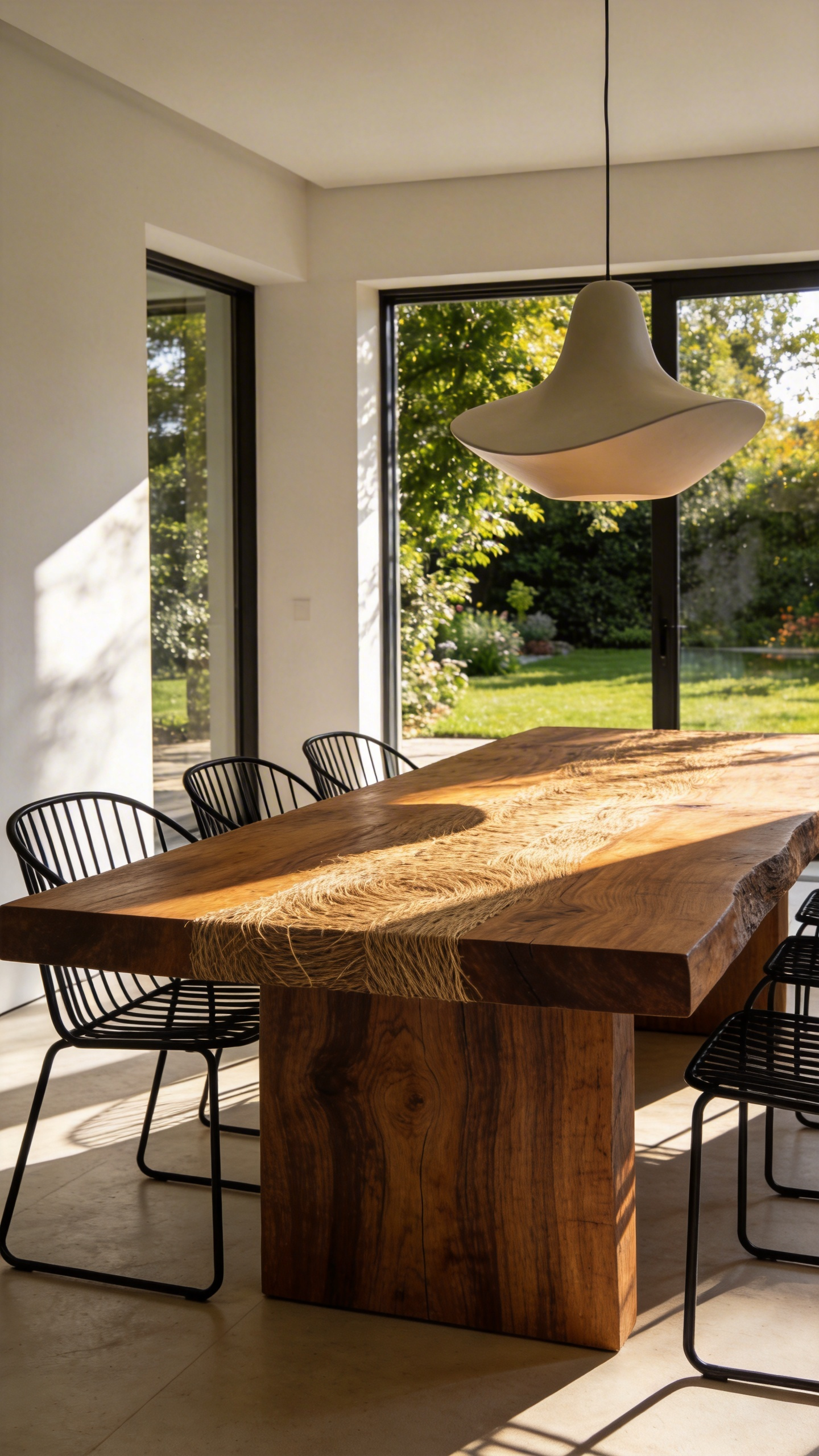
Wellness-focused designers now reject thick polyurethane plastics in favor of breathable hard-wax oils. Wire-brushing techniques leave the harder wood grain beautifully exposed. This creates a topographical landscape that invites our fingers to explore. The ethical provenance of these pieces deeply enhances their overall wellness benefits. For example, utilizing urban-salvaged wood acts as an excellent carbon-sink strategy. It locks carbon into the furniture rather than releasing it through decomposition.
A live-edge slab table provides an organic counterpoint to rigid modern architecture. By keeping the natural periphery, we honor the unique life of the tree. Choosing matte finishes helps the wood absorb excess ambient light. Therefore, the dining table becomes an earthly sanctuary that beautifully grounds the room’s energy.
7. Acoustic Dampening Through Natural Linen and Bouclé Upholstery
Open-plan homes often suffer from a stressful “ping-pong” effect of echoing sound. Hard surfaces like marble and glass amplify clinking silverware and overlapping voices. Managing this noise is vital for your mental wellbeing during meals. Fortunately, tactile fabrics like bouclé and natural linen act as beautiful acoustic dampeners.
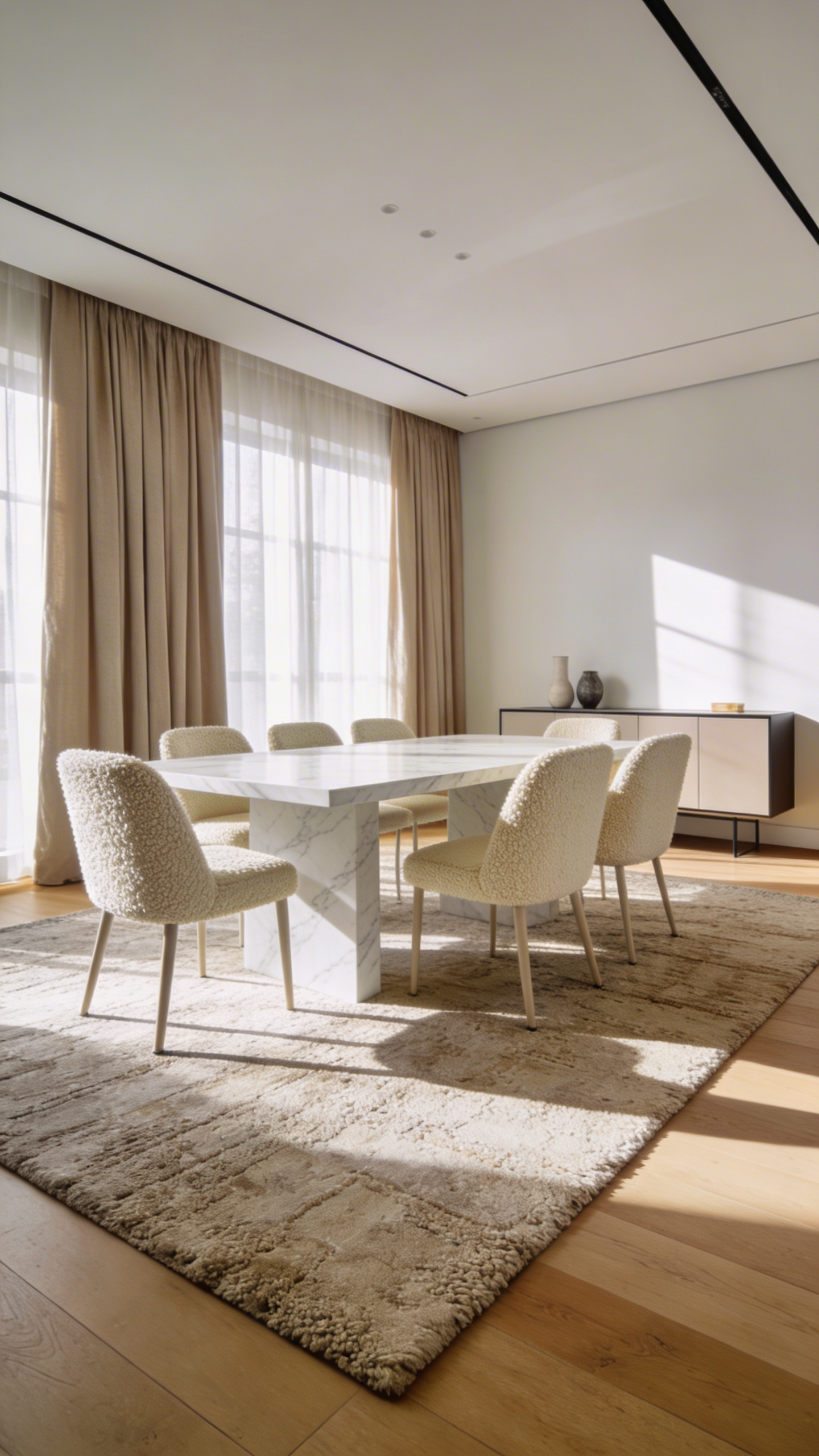
Bouclé features a unique three-dimensional yarn structure. Its irregular loops contain millions of microscopic air pockets. These pockets trap high-frequency sounds before they bounce back into the room. In fact, replacing hard seating with bouclé chairs can significantly lower immediate noise levels.
Natural linen utilizes an internal cellular porosity to manage sound. As a hollow-core fiber, linen naturally absorbs mid-range frequencies. Importantly, this is the exact frequency range of human speech. Linen upholstery acts as a subtle acoustic sponge. It creates a cozy “speech bubble” that enhances conversational clarity.
However, you must carefully select your fabric stain treatments. Traditional heavy stain guards seal fabric pores and ruin this acoustic transparency. Instead, choose breathable nanotechnology treatments that coat individual fibers.
Pairing these enveloping fabrics with a smooth stone table creates essential sensory balance. Visually, the contrast brings warmth to minimalist dining spaces. Auditorily, it fosters a quiet, intimate ritual of psychological safety.
8. Anchoring the Room with Undyed, Allergen-Reducing Natural Fiber Rugs
Modern dining spaces often feel sterile without a grounded foundation. Undyed natural fiber rugs provide structural and health-conscious benefits. Materials like pure wool act as a biomechanical filter. These natural proteins actually capture and neutralize harmful indoor pollutants. Choosing undyed fibers eliminates synthetic chemicals from your home entirely. Wool naturally regulates micro-climates by absorbing excess air moisture. This prevents that stale feeling common in closed rooms.
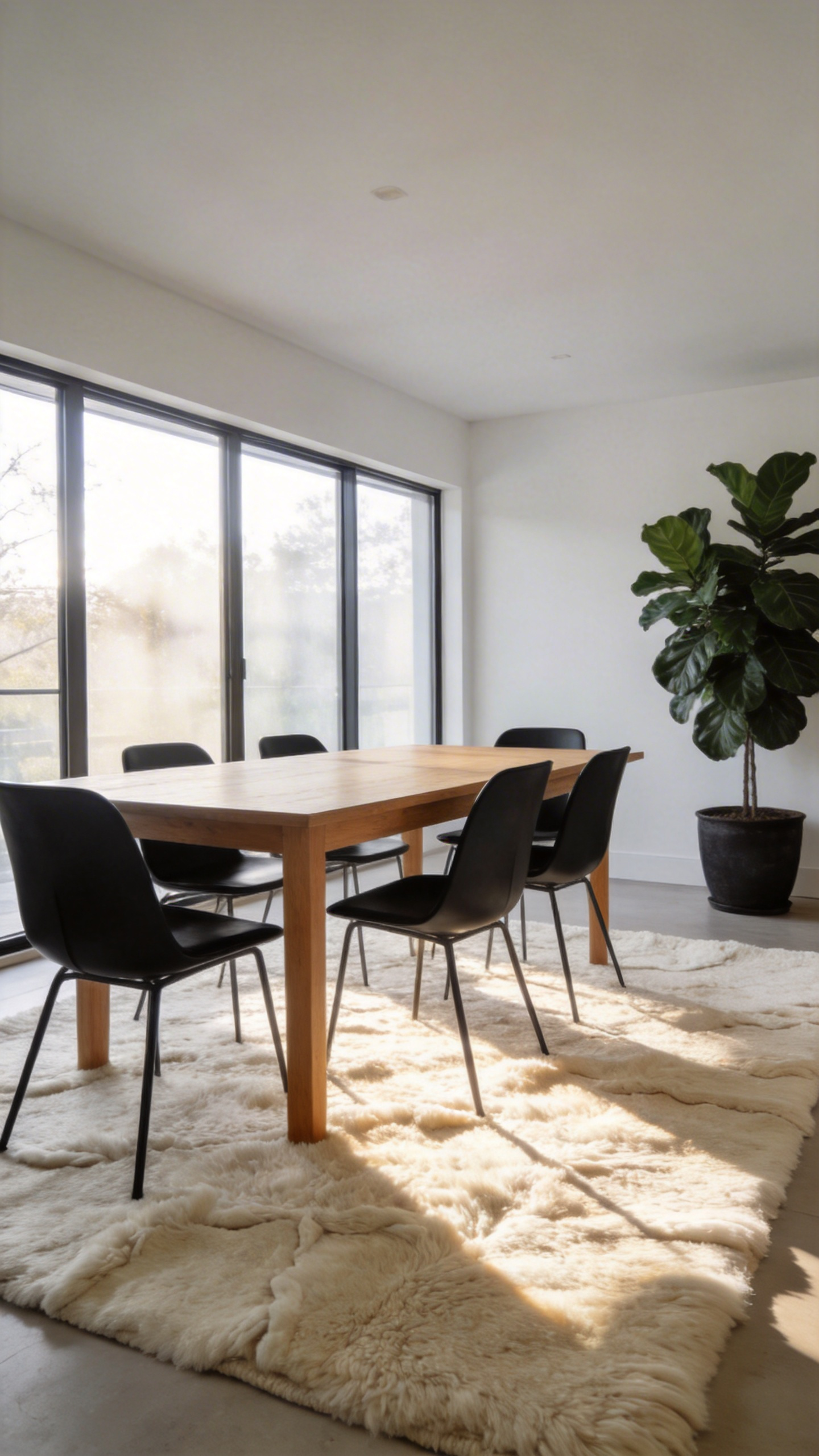
Visually, thick natural weaves create a clear island of purpose. The raw texture softens acoustics and dampens clinking dinnerware sounds. Flat-weave constructions allow dining chairs to slide effortlessly. Ideally, the rug extends exactly 24 inches beyond the table.
Many designers prefer seagrass for high-traffic modern dining areas. Interestingly, seagrass possesses a natural waxy coating from saltwater paddies. Spills simply bead up rather than soaking into fibers. It also introduces a faint, earthy scent that feels incredibly grounding. Eventually, the sage-green hues naturally fade into a golden beige.
Aesthetically, natural fibers offer a matte finish with subtle abrash. This raw color variation perfectly diffuses harsh overhead lighting glare. Expert maintenance requires a simple, dry baking soda approach. Steam cleaning should always be avoided to prevent fiber swelling. These biodegradable pieces support a truly sustainable, circular home.
9. Chemical-Free, Solid-Wood Credenzas Over Formaldehyde-Heavy MDF Storage
Choosing a dining room credenza directly impacts your daily indoor health. Mass-produced MDF furniture relies heavily on toxic urea-formaldehyde resins. These hidden glues off-gas volatile organic compounds into your home. In fact, temperature fluctuations prolong this invisible chemical off-gassing for years. Your confined dining room can quickly accumulate harmful respiratory irritants. Alternatively, a solid-wood credenza eliminates this lingering chemical ghost entirely. Bespoke interiors often feature these weighty heirloom pieces. They utilize traditional mechanical joinery like dovetails and mortise-and-tenon.
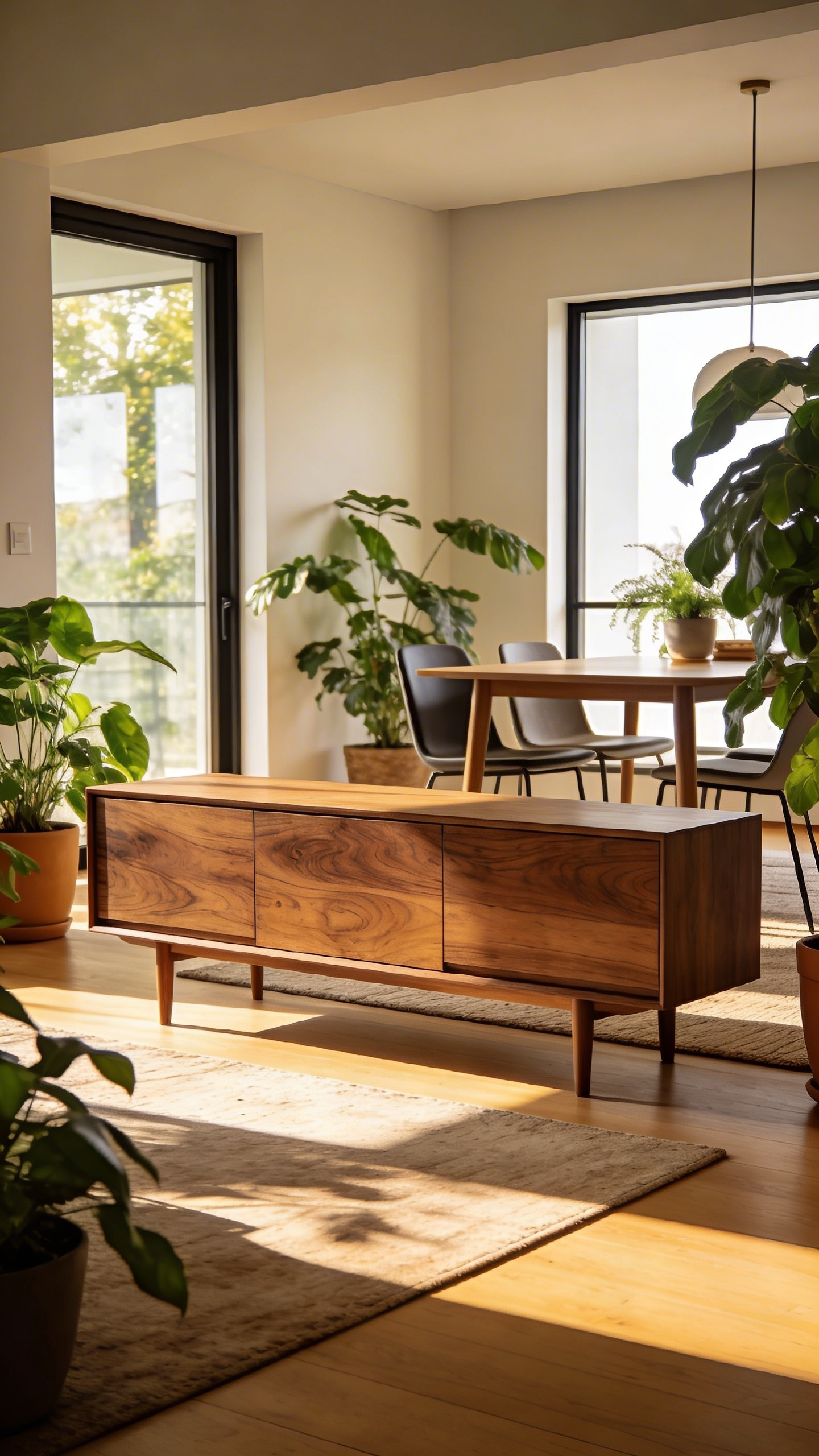
Wellness-focused builders treat solid wood with penetrating natural linseed oil. Instead of a cold plastic seal, these natural oils harden deep inside the wood fibers. The wood remains hygroscopic and naturally regulates your room’s humidity. This breathable organic surface yields a delightfully warm, matte-satiny touch. Psychologically, feeling this authentic wood grain actively lowers your resting heart rate. The non-repeating fractal beauty of timber deeply relaxes the human brain.
A solid-wood surface gracefully ages into your home over decades. For example, raw black walnut slowly develops a rich, honeyed silver patina. Conversely, chipped MDF veneers suffer permanent structural decay from minor water spills. Therefore, solid-wood furniture anchors your social space with safe, biophilic permanence.
Phase III: Sensorial Alignment (Biophilia, Light, & Atmosphere)
Decorating a dining room is no longer just a visual pursuit. It is a neuro-aesthetic science. Sensorial alignment calibrates the environment to support your nervous system. This approach creates a biological state conducive to healthy digestion. Modern biophilic design relies heavily on fractal fluency. This theory suggests our eyes naturally process mid-range natural patterns easily. For instance, the branching veins in marble require minimal cognitive effort. Wellness architects often apply high-end finishes like natural wood or stone. This ensures that blood pressure noticeably decreases through environmental harmony.
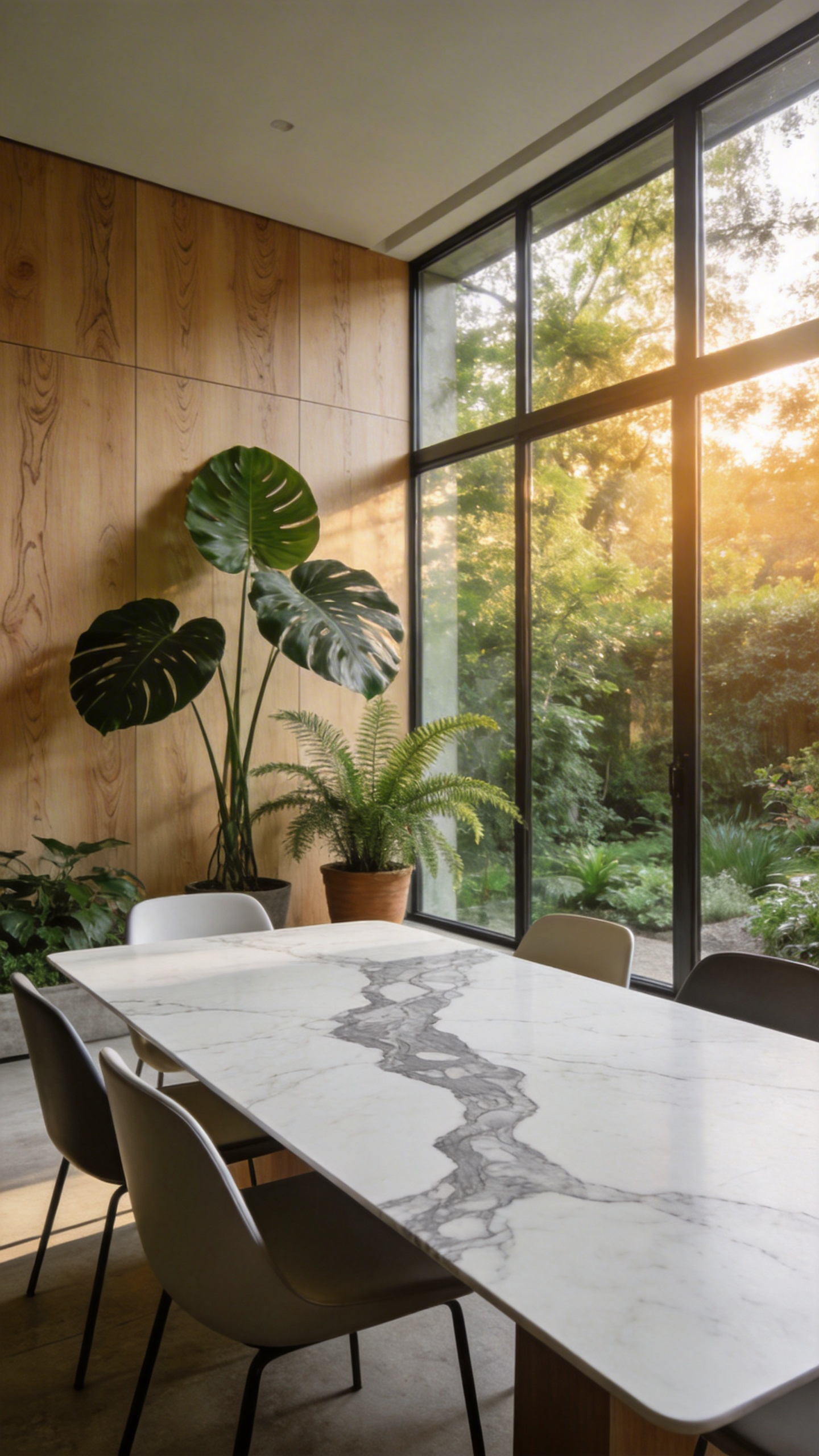
Modern lighting respects your body’s natural circadian rhythms. Warm light between 2700K and 3000K physically enhances the warmth of food. Rich sauces and roasted items look much more appetizing. In contrast, cool light turns proteins grey and makes guests feel self-conscious. We must consider the room as a third skin. Acoustics and air quality play invisible yet vital roles. Clean modern lines often create a harsh, echoing cafeteria effect. To counter this, designers hide acoustic plaster ceilings or use felt-lined chairs. Subtle scents like cucumber can even make small spaces feel physically larger.
Historically, dining spaces were rigid theaters of status. Today, smart atmosphere controls smoothly automate lighting and temperature shifts. However, many experts warn against multi-sensory digital overload. Deep sensorial alignment proves that subtraction is often more powerful than addition. We prioritize single large windows that frame calming natural views instead. In essence, the best design whispers softly to your nervous system. It tells your body that it is completely safe to relax, eat, and connect.
10. Circadian-Synced Chandelier Placements to Support Evening Digestion
In modern wellness design, a dining room chandelier acts as a powerful biological regulator. Its placement directly impacts your evening digestion. Traditionally, lighting is hung high to illuminate an entire room. However, this overhead glare mimics the midday sun. It suppresses melatonin and keeps cortisol levels elevated. This stress response constricts the digestive tract. Instead, wellness architects now utilize the “campfire effect” for evening meals. The chandelier is lowered precisely to the diners’ horizon line. Biologically, this lower placement signals the brain to reduce heart rates. It activates the parasympathetic nervous system for optimal resting and digesting.
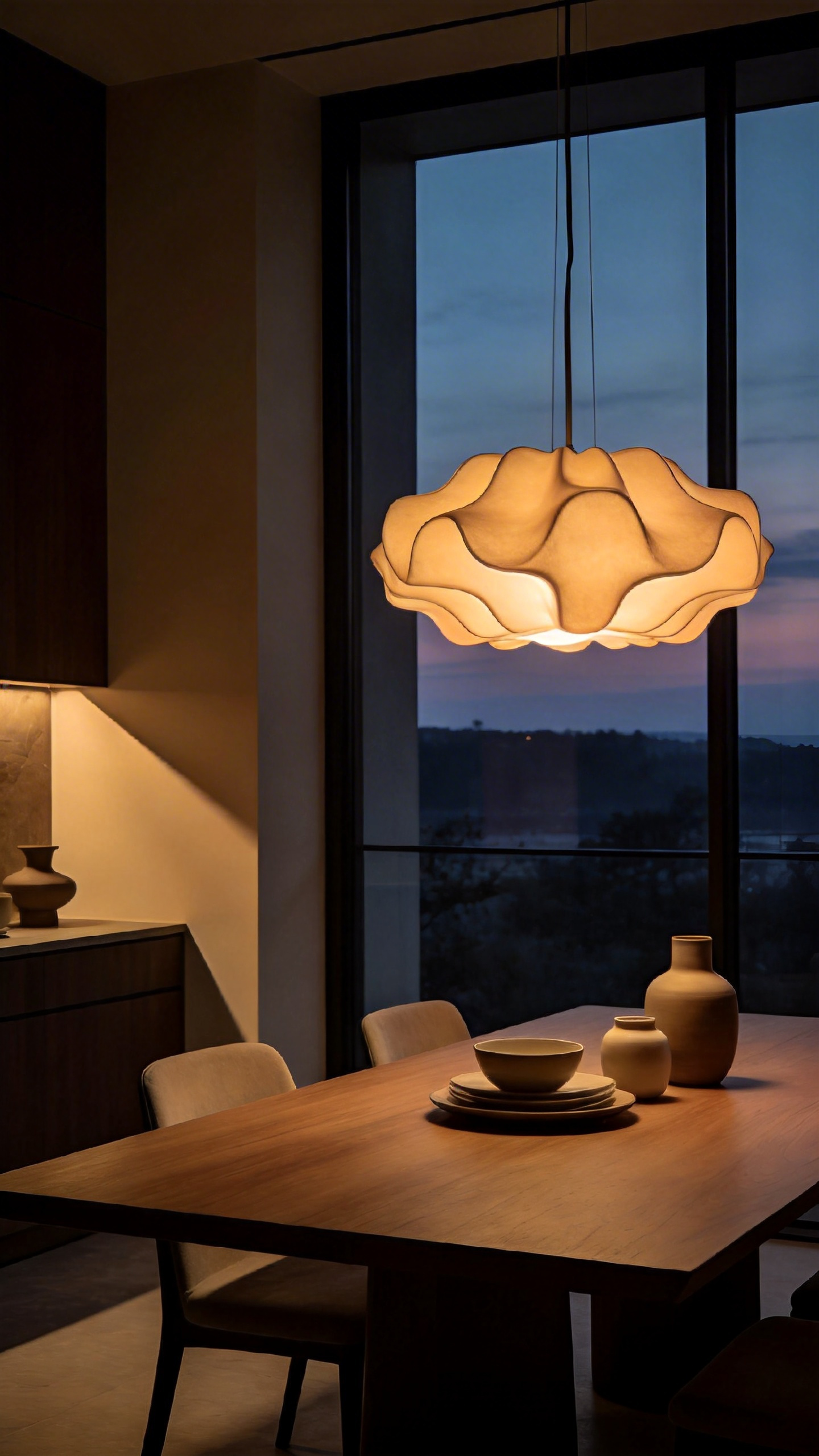
The type of light matters just as much as placement. For instance, sharp LED glare can cause visual micro-stressors. Materials like opaline glass or alabaster create a soft, diffused glow. Dimming the fixture to a warm 2000K mimics a setting sun. This amber warmth supports natural hunger and satiety hormones.
A lowered chandelier leaves the room’s upper corners in shadow. Indeed, this deliberate “visual quiet” hides background clutter effectively. Your evening cognitive load decreases significantly. Your vagus nerve can better manage the physical peristalsis process. This intimate cocoon of light naturally slows down meal times. Diners experience better nutrient absorption and earlier feelings of fullness.
11. Air-Purifying Architectural Flora to Elevate Both Oxygen Levels and Aesthetics
Integrating air-purifying flora transcends mere styling in modern dining rooms. It serves as a powerful architectural strategy to beautifully manipulate the atmosphere. Certain plants like the Snake Plant utilize a nighttime metabolism. They release fresh oxygen during your evening dinner parties. This living ventilation actively combats late-night lethargy. Guests remain alert and conversation flows effortlessly.
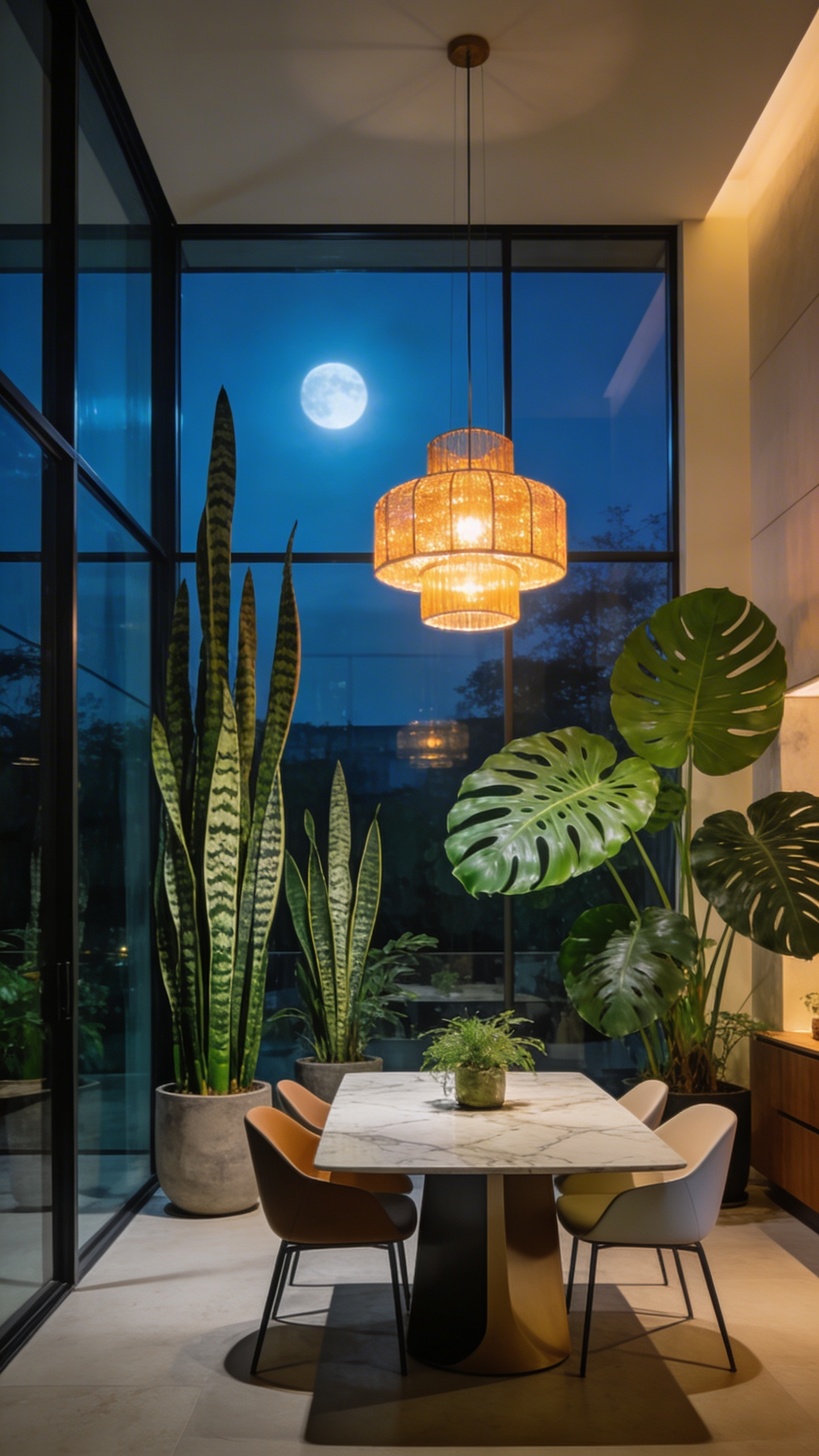
Large-leafed flora provides psychological comfort through prospect and refuge. A towering Fiddle-Leaf Fig instantly creates a safe, intimate enclosure for diners. These deep green hues actively lower human cortisol levels. This calming effect promotes a healthy parasympathetic digestive state. Organic greenery effectively softens the harsh lines of modern furniture. Broad leaves serve wonderfully as natural acoustic baffles indoors. For example, a Rubber Plant scatters high-frequency noise bouncing off glass tables. These plants also release gentle moisture through natural leaf transpiration. This subtle action perceptually cools the room by two degrees. It creates a tactile freshness resembling a lush forest floor.
Architectural flora also functions as a targeted biological filter. Designers integrate living dividers directly into the dining area. Focused phytoremediation scrubs formaldehyde from new wood table surfaces. The air immediately surrounding your guests becomes exceptionally pure. Historically, this practice mirrors grand European orangeries of the past. Today, modern indoor jungles beautifully display physical wellness rather than raw wealth. Fenestrated leaves cast dynamic, dancing shadows across your entire table.
12. Stress-Reducing, Monochromatic Earth-Tone Palettes for the Modern Eye
Our modern eyes face constant digital overstimulation daily. Dining spaces must serve as an essential neurological reset. Monochromatic earth-tone palettes offer crucial cognitive efficiency. By removing contrasting colors, the human brain easily relaxes. Visual competition disappears completely from the environment. Muted greens and soft clays trigger Stress Recovery Theory. These tones subconsciously represent vital natural resources like fertile soil. They actively lower blood pressure and cortisol levels. Modern designers often prefer complex, desaturated shades over stark whites. Indeed, these muddy colors provide a deep sense of stability.
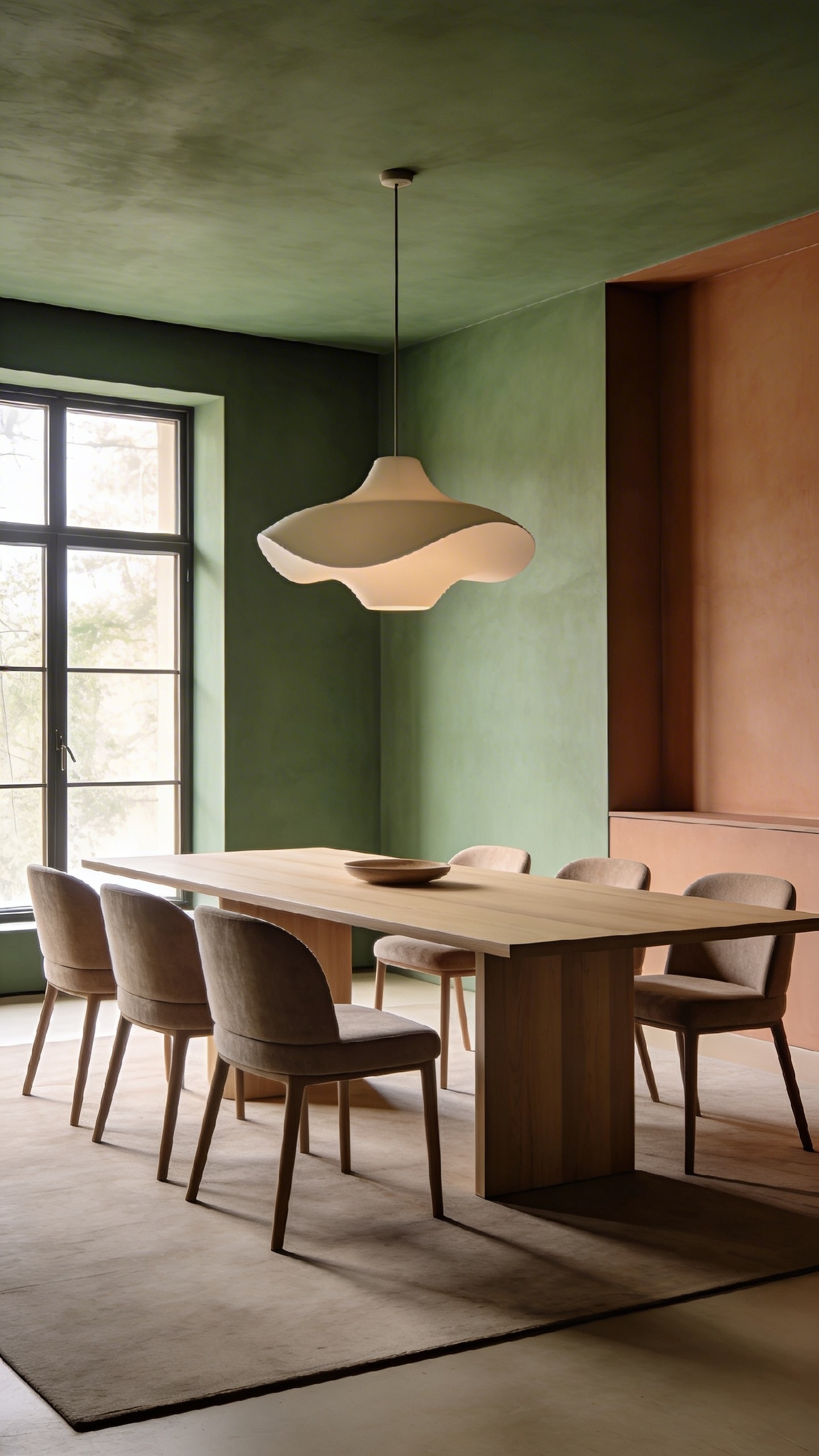
This modern refinement heavily influences calming styles like Japandi. Similarly, the Wabi-Sabi philosophy embraces layered, unbleached natural materials. However, a single-hue room requires technical mastery to prevent flatness. Interior professionals rely on Light Reflectance Value, or LRV. Dropping a dining room’s LRV to 30 creates an intimacy anchor. Varying luminance establishes a stress-free visual hierarchy. Crucially, you must pair these palettes with 2700K warm lighting. Cooler lights make beautiful organic tones look sickly and unappealing.
Sensory layering completes this truly restorative dining environment. For example, matte clay walls beautifully absorb ambient light. Conversely, polished travertine tables reflect it back into the space. Biophilic textiles like jute provide essential acoustic dampening. Softening ambient sound is a critical component of stress reduction. Anchoring the darkest wood shades at floor level mimics nature. This grounding technique makes diners feel perfectly safe and secure.
13. Layered, Warm-Amber Sconces to Replicate the Calming Glow of a Hearth
For millennia, the hearth was the social epicenter of the human home. Today, modern dining spaces often lack this traditional architectural focal point. However, we can recreate this ancestral comfort using layered wall sconces. Placing amber-toned fixtures at eye level creates a psychological surrogate hearth. This low-angle lighting instantly signals safety and community to the brain. The nervous system transitions into a restorative, relaxed state.
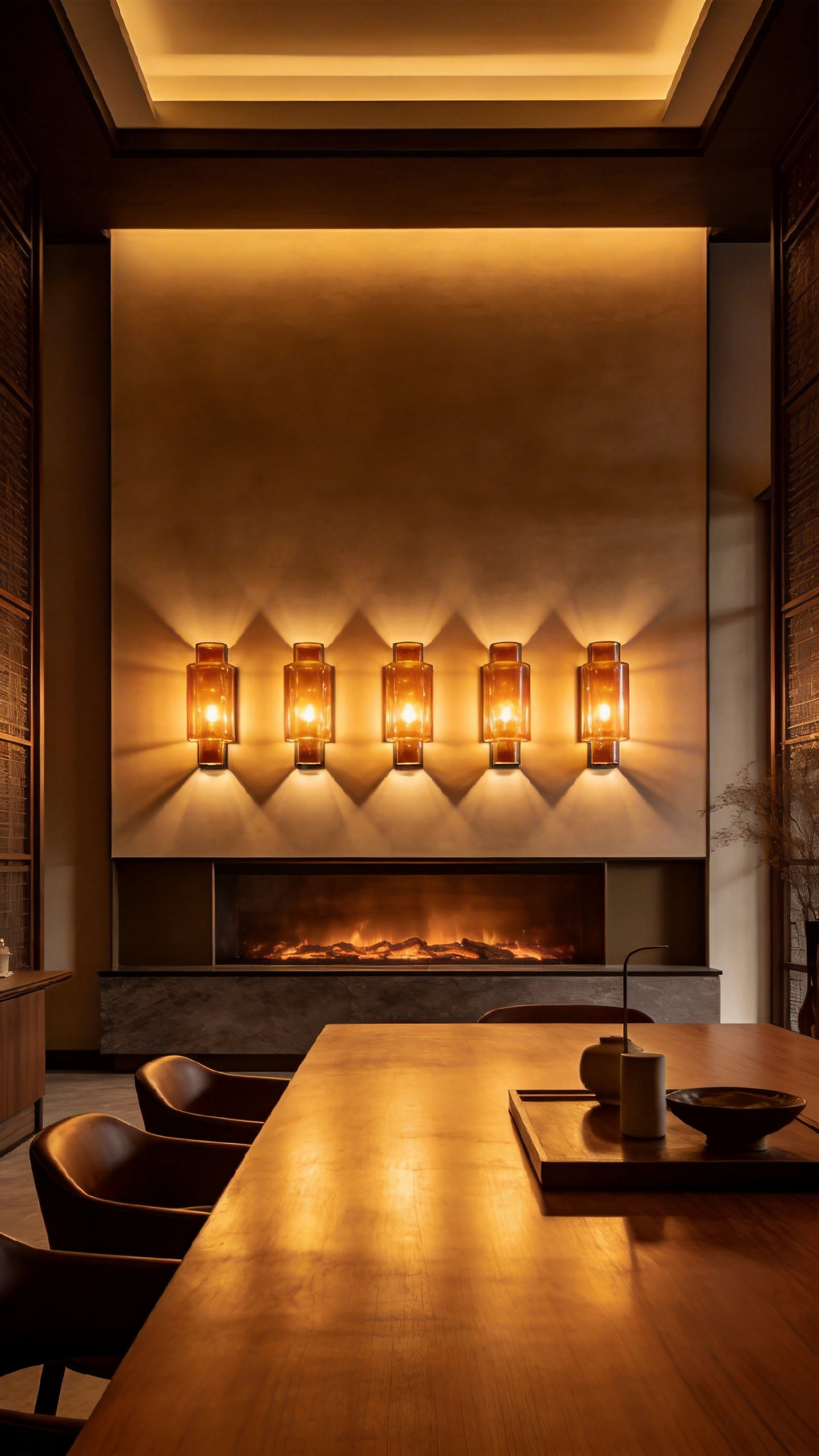
Achieving this cozy atmosphere requires careful attention to color temperature. Standard residential lighting typically stops around a bright 2700 Kelvin. Instead, wellness experts recommend the ultra-warm 2200K to 2400K spectrum. High-end fixtures often utilize dim-to-warm LED technology. This innovative technology physically shifts the light to a deep amber. Crucially, this specific light range minimizes disruptive blue light exposure. It actively aids melatonin production and reduces visual fatigue.
Physical materiality plays a vital role in diffusing this light. Layered materials like alabaster or nested glass create visual depth. In fact, fluted glass adds refractive sparkle that mimics flickering flames. These organic layers break the light into soft, inviting pools. This gentle amber glow enhances both the food and mood. It softens skin tones while reducing harsh visual noise. Diners feel enveloped in an intimate, secure cocoon. This thoughtful biophilic design turns meals into a restorative ritual.
14. Living Biophilic Centerpieces: Embracing Rooted Botanicals Over Ephemeral Cut Flowers
Historically, modern dining rooms relied on ephemeral cut flowers. However, this global floral industry carries a massive carbon footprint. Thoughtful designers now embrace living biophilic centerpieces instead. These rooted botanicals represent a healthy shift toward slow design. They transform temporary luxury into enduring living heirlooms.
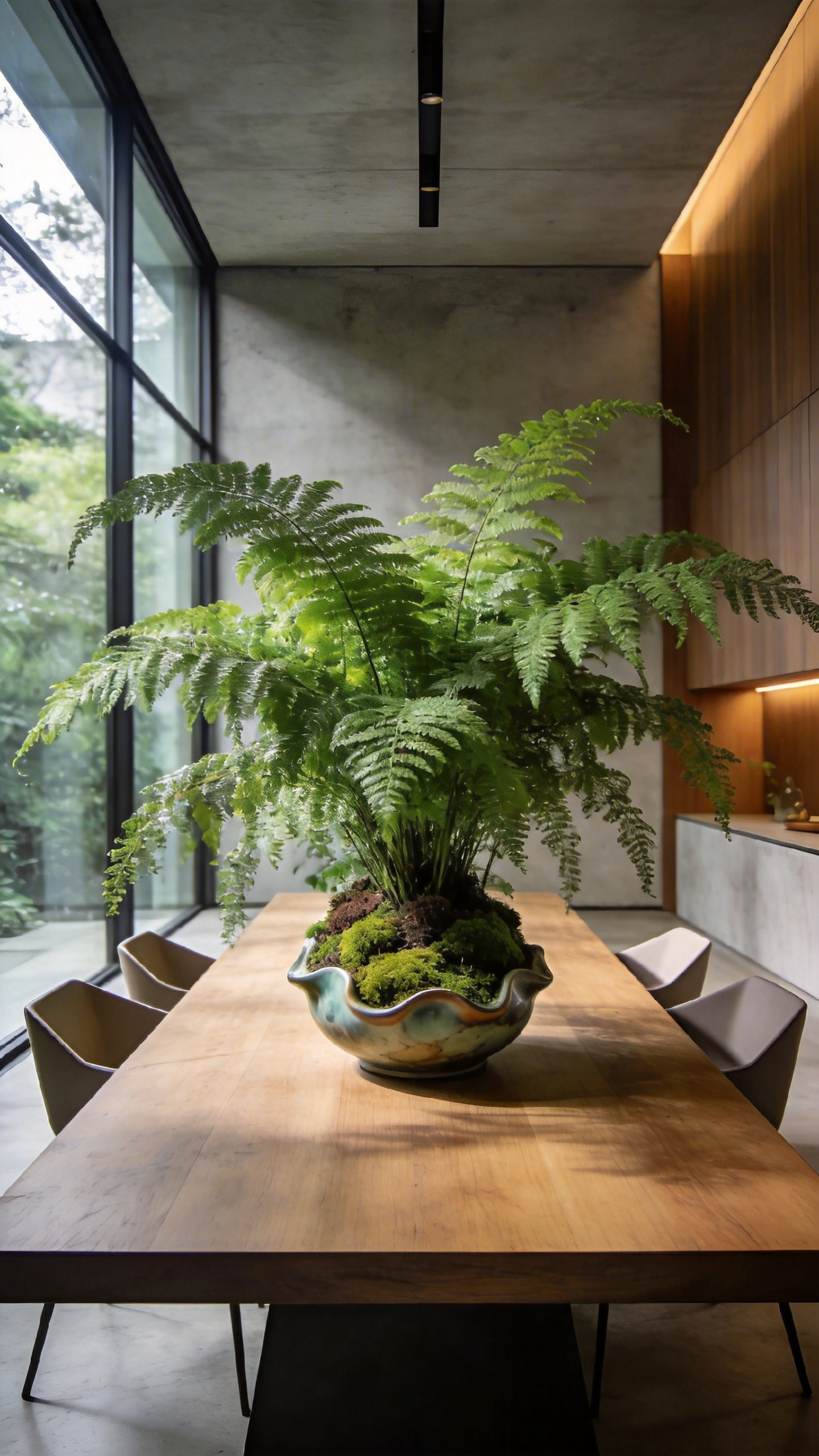
Live plants fundamentally alter your sensory dining environment. Dense foliage like ferns naturally absorbs sound against hard surfaces. These botanical baffles create an intimate acoustic atmosphere. Living greens induce a vital parasympathetic response. In fact, this deep visual stimulation actively lowers cortisol levels. A rooted centerpiece triggers a relaxing “rest and digest” state. Happy guests will naturally linger much longer at the table.
Modern botany also serves as a sophisticated sculptural medium. Japanese Kokedama moss balls offer beautiful earthy textures, for instance. These delicate, moss-wrapped roots rest gracefully on minimalist slate trays. Alternatively, mounted epiphytic plants provide a lighter, aerial feel. Staghorn ferns on reclaimed driftwood drink moisture directly from the air.
Integrating these ecosystems requires careful luxury surface protection. Clean hydro-culture setups eliminate messy soil entirely. This smart technique safely prevents pests near your delicious food. Low-light snake plants continuously freshen the room’s air overnight. These centerpieces echo ancient Roman wellness philosophies beautifully. You simply place a thriving ecosystem directly at your table.
Phase IV: Lifestyle Integration & Mindful Hosting
Phase IV transforms your space from a mere visual showroom into a lived-in wellness sanctuary. This lifestyle integration relies on seamless multimodality. During the day, integrated millwork hides office clutter to minimize visual stress. The environment shifts effortlessly into an intimate hosting venue by evening. Mindful hosting prioritizes human connection over formal performance. Sensory choreography plays a vital role in grounding your guests. Many owners choose to modernize dining room layouts to prioritize this human-centric flow.
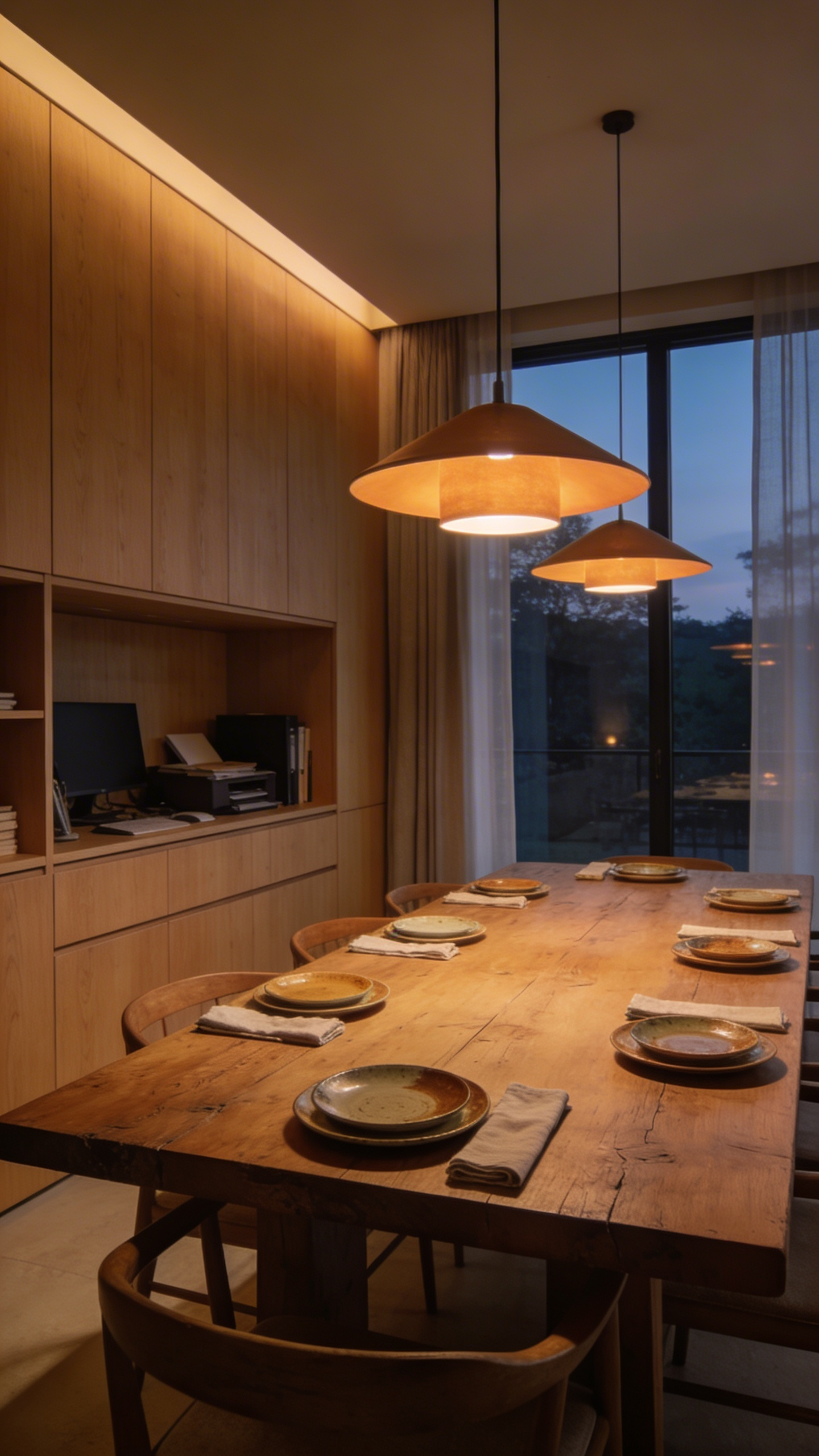
Adding acoustic-dampening wool rugs reduces harsh echo fatigue. Guests can enjoy deep conversations without raising their voices. Strategic biophilic design enhances this calming cocoon effect. Indeed, placing lush greenery at eye level significantly lowers social anxiety. Circadian lighting acts as the ultimate atmospheric anchor. During work hours, cool white lighting supports sharp mental focus. Conversely, tuning smart lights to a warm candlelight glow signals evening relaxation.
Psychological flow dictates how people feel within an open room. Designers use large rugs to anchor the dining zone, providing a comforting sense of security. Mindful modern hosting also requires a dedicated staging sideboard. The host remains present at the table instead of retreating to the kitchen. In essence, this approach creates resilient luxury that nourishes both body and mind daily.
15. ‘Invisible’ Storage Buffers: Designing Clutter-Free Sanctuaries for Entertaining
In modern design, invisible storage acts as a structural buffer. This approach protects your dining sanctuary from preparation chaos. Visual clutter bombards our brains with millions of sensory details. Concealing tools drastically reduces this exhausting cognitive load. Massive storage walls seamlessly mimic surrounding room panels. Matching wood veneer creates a soothing visual landscape, for example. A slight shadow gap makes these heavy cabinets appear to float.
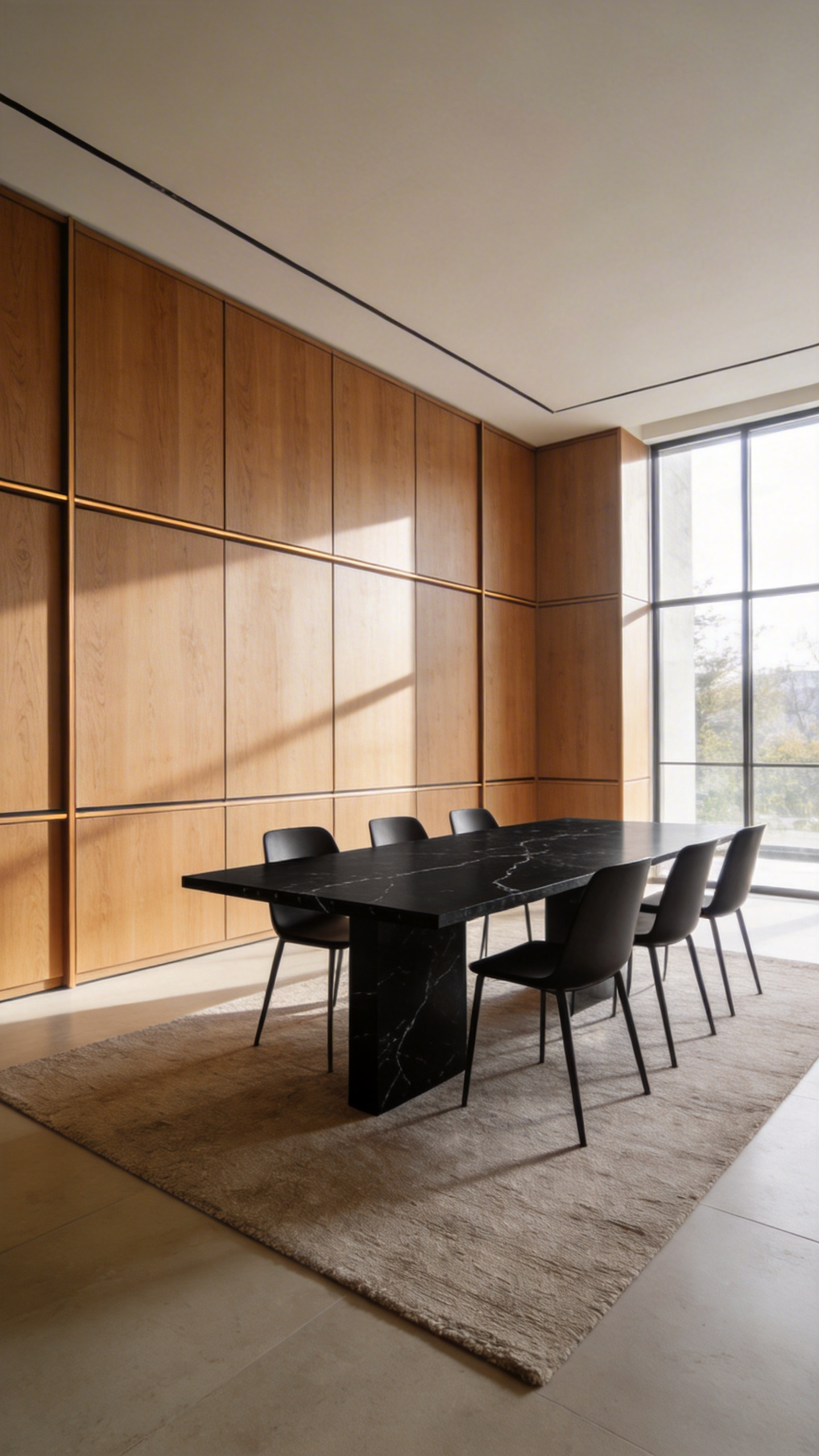
This architectural disappearance transforms bulky utility features into sculptural elements. The invisibility relies heavily on sound and touch. High-end hardware replaces visual noise with haptic and acoustic luxury. Push-to-open systems offer a satisfying, nudge-activated mechanical click. Linear damping hardware ensures doors glide shut in silence.
This auditory purity prevents rattling cabinets from interrupting guest conversations. Behind these walls, pocket doors can reveal entire prep zones. Hosts can hide plating messes with a single motion. This pristine sanctuary creates a psychological halo effect. Guests subconsciously perceive the host as calm and highly organized. Indeed, this effortless atmosphere allows human connection to take priority.
16. Tech-Concealing Sideboards to Foster EMF-Conscious, Present Gatherings
Modern dining rooms require spaces that actively support our nervous systems. The traditional sideboard has evolved into a wellness-focused architectural anchor. Tech-concealing sideboards transform dining areas into true bio-sanctuaries. In fact, constant digital exposure elevates ambient stress and disrupts sleep. Designers now integrate Faraday cage principles into dining furniture. Inside these cabinets, conductive textiles block harmful radio frequency radiation. Nickel-copper fabrics quietly eliminate up to 99% of digital signals. Passive ventilation and silent fans prevent concealed devices from overheating.
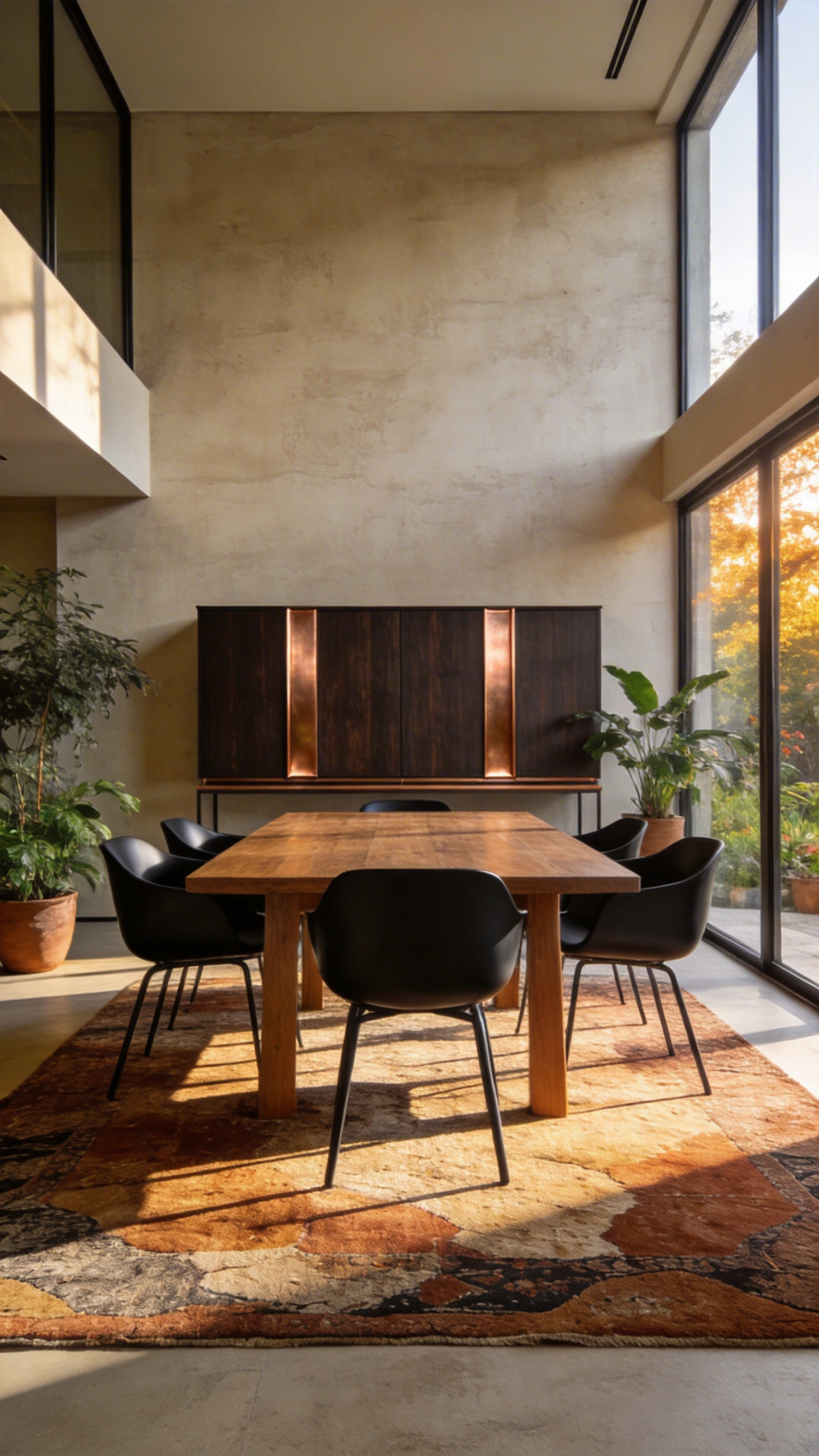
Beyond physical health, these smart cabinets elegantly address our psychological wellbeing. They combat the social anxiety of digital absent presence. Placing phones inside a dedicated drawer creates a clear spatial boundary. The tactile act of closing a soft wooden door reduces cortisol. This simple friction ritual signals the brain to fully disconnect.
Organic aesthetics play a crucial role in this calming environment. Visually, warm mango wood tones beautifully hide these high-tech interiors. Heavy grounding materials physically absorb the room’s chaotic energy. Cool marble tops offer a soothing, tactile sensory counterpoint. This invisible integration actively protects our physical and mental health. Hosts and guests can enjoy truly present, mindful gatherings.
17. Integrating Subtle, Chemical-Free Ambiance via Raw Beeswax Tapers
Modern dining spaces often favor sleek materials that feel clinically cold. Lighting plays a crucial role in warming the atmosphere. Raw beeswax tapers offer a profound wellness design advantage. These natural candles emit a remarkably bright, warm light. This golden glow closely mimics the natural solar spectrum. This illumination counteracts the daily fatigue of artificial blue screens. The warm flame makes human skin tones appear visibly healthier.
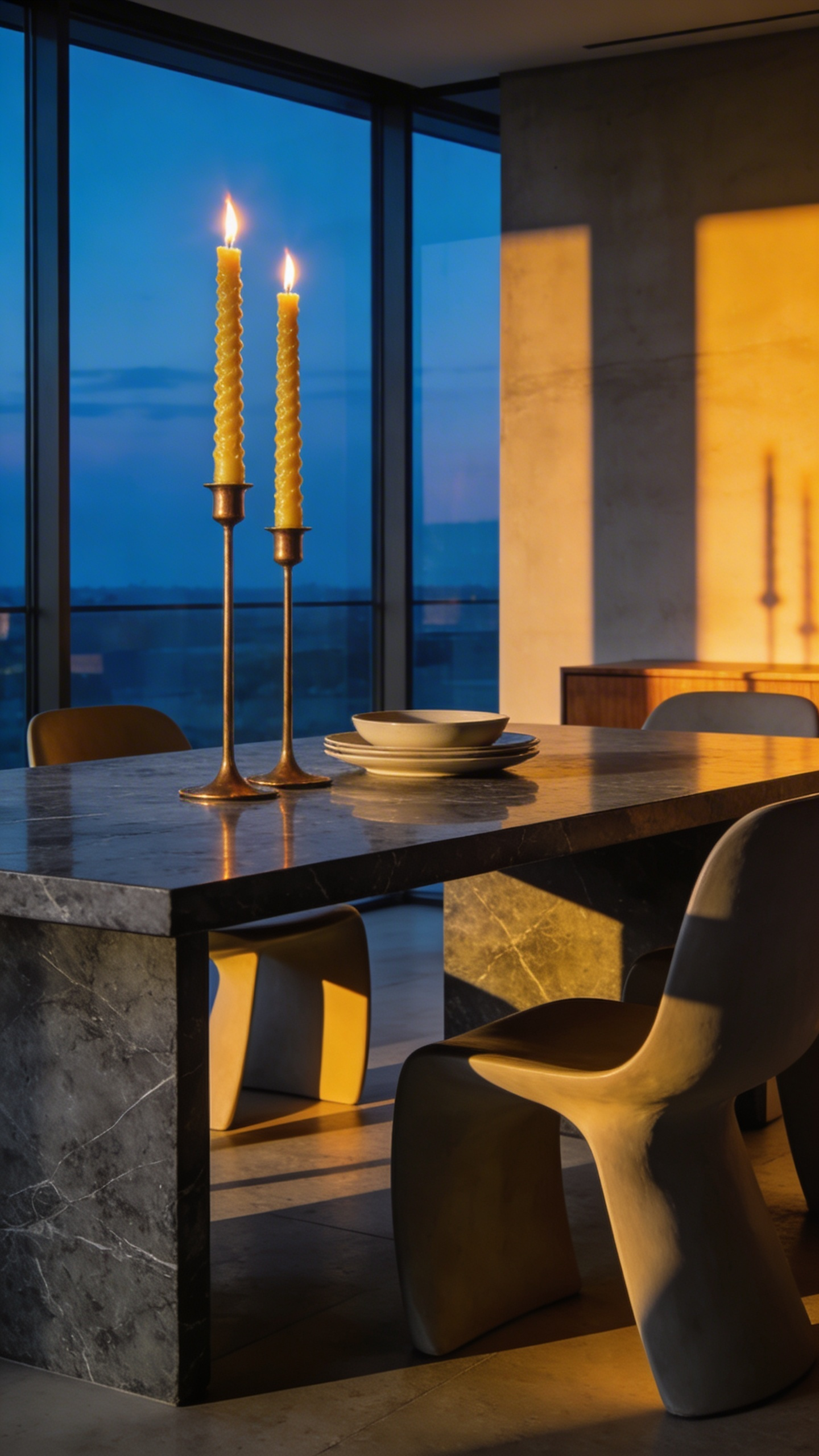
Scented candles frequently compete with the delicate aromas of prepared food. Conversely, raw beeswax provides a sophisticated, chemical-free dining alternative. Indeed, these elegant tapers act as powerful natural indoor air purifiers. They release beneficial negative ions into your dining room. These invisible ions bind with and neutralize airborne toxins. Your guests can enjoy a wonderfully pure, unpolluted culinary experience.
Over time, pure beeswax develops a soft, white powdery surface film. Interestingly, this natural bloom signals biological authenticity and environmental purity. This living patina beautifully complements raw wood dining tables. A dense molecular structure makes these tapers incredibly drip-resistant. They provide a sustainable, clean focal point for holistic wellbeing.
18. Transitional, Minimalist Tablescapes That Honor the Shift in Seasons
Seasonal decorating traditionally relies on stressful, heavy clutter. Transitional minimalism honors the subtle space between seasons instead. This approach turns your table into a grounding altar. It draws from the Japanese concept of Sekki. We can celebrate micro-seasons like the first autumn frost. Haptic minimalism uses texture to signal environmental shifts. For instance, swap airy summer linens for heavy stone-washed cotton. These tactile changes help our bodies physically adjust.
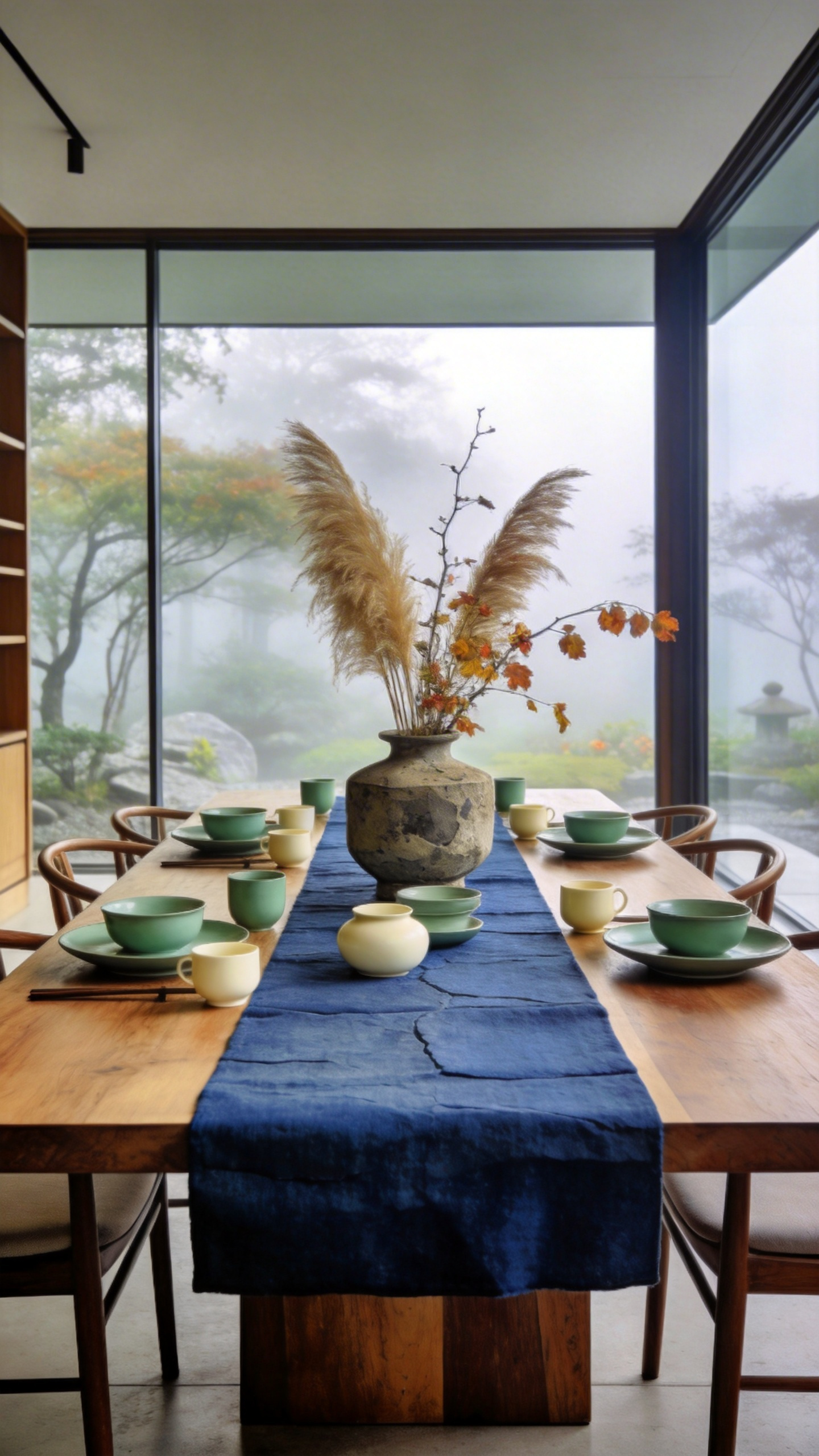
Simple biophilic sculptures replace overwhelming store-bought bouquets. Indeed, a single bare branch brings the outdoors inside beautifully. Observing a plant’s organic decay naturally lowers our daily stress. Adjusting a room’s visual temperature profoundly impacts our mental state. Transition from cool silver to warm, unlacquered brass. Swapping tall tapers for beeswax pillars alters the glow as well.
This method champions sustainable impermanence over plastic holiday decor. For example, sculptural pumpkins act as art before becoming dinner. Your dining space remains a clean, clutter-free wellness sanctuary.
Frequently Asked Questions
What are the best colors for a modern dining room?
The best colors for modern dining room decoration are monochromatic earth tones such as muted moss greens, soft clays, and warm beiges. These desaturated hues provide a neurological reset, reducing visual stress and creating a stable environment for digestion.
How do I make my dining room look more modern?
To modernize a dining room, focus on democratic geometries like round or oval tables, integrate natural materials with matte finishes, and utilize “invisible” storage to eliminate clutter. Incorporating biophilic elements like architectural flora and warm, low-angled lighting also helps achieve a contemporary wellness aesthetic.
What is the best rug size for a dining room table?
Ideally, a dining room rug should extend exactly 24 inches beyond the edges of the table on all sides. This ensures that dining chairs remain on the rug even when pulled out, providing a stable foundation and protecting the floor.
Conclusion: Cultivating Authentic Spaces
The modern dining room is no longer a rigid museum. We must view this space as an active hub for connection and nourishment. A perfect room ironically creates social anxiety for your guests. True authenticity relies on tactile warmth and low-stakes design. Your focus shifts from visual performance to human connection. By focusing on intentionality and curated aesthetics, your approach to modern dining room decoration transforms the space from a mere showroom into a sanctuary.
Your dining space will develop a beautiful patina over time. Natural wear records the living history of your gatherings. This analog frontier remains essential in our highly digital world. You can reclaim meaningful physical experiences for your family. Begin this shift by auditing your current room layout. Remove precious barriers, and introduce natural materials that invite touch. Your home will foster a healthier, happier lifestyle.