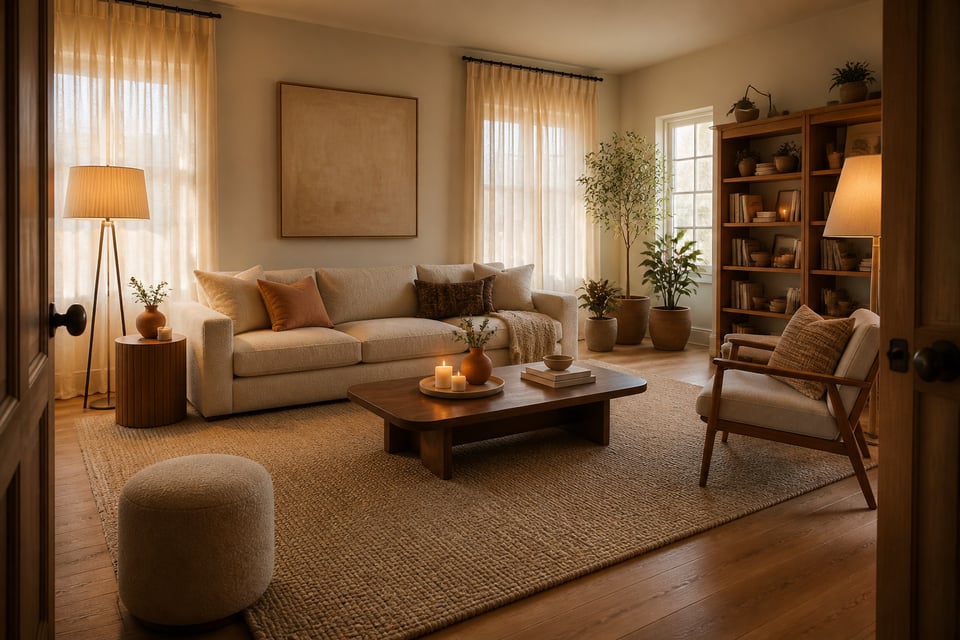
Think about the last time you walked into a room and felt immediately, viscerally at ease. Not impressed — at ease. The air felt soft. The light was low and amber. Something smelled faintly of cedar. You sank into the sofa and your shoulders dropped two inches without conscious thought.
That quality — the kind that settles you before you’ve decided to settle — is what cozy living room decor is actually building. It’s not about candles arranged in a grid or a throw folded at a precise angle. It’s about creating an environment that communicates safety, warmth, and belonging to every sense at once.
As a wellness design consultant, I work with the relationship between physical space and how people feel in it. The environments we inhabit shape our cortisol levels, our sleep quality, our capacity to rest and connect. A cozy living room is not a superficial aesthetic goal. These 18 ideas layer together to build that atmosphere — some cost very little, some require more investment, but all are grounded in the same principle: a well-composed room is one of the most powerful wellness tools available.
1. Soft Textural Layering for a Cozy Living Room Feel
The fastest way to understand why texture matters is to sit on two different sofas: a firm cotton canvas one in a brightly lit room, and a boucle sofa draped with a chunky knit throw under a floor lamp. The difference in how your body responds is almost immediate. The second room feels warmer before you’ve touched the fabric.
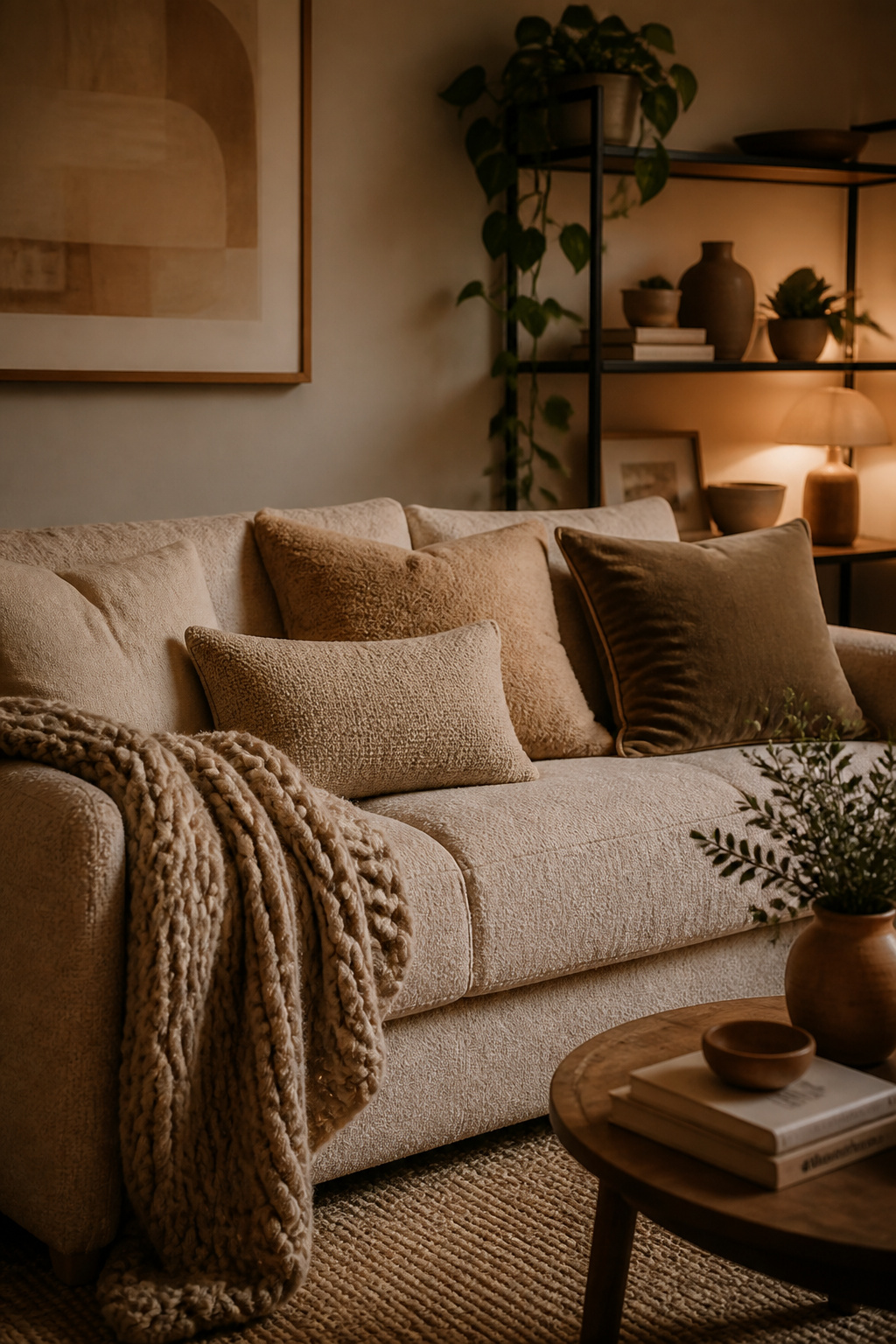
Sensory interior design research confirms that soft, looped textures like boucle and knitted wool signal rest to a nervous system that spends most of its day on alert. The visual warmth and the physical warmth work together, and layering amplifies both. Start with the sofa’s base fabric as texture one, a cushion grouping in a contrasting weave as texture two, then a draped throw as texture three. Linen and boucle is a particularly effective pairing — linen provides a matte, calm ground while boucle adds cloud-like dimension above it.
Five cushions in two fabric types beat three matching cushions every time. Mix a patterned cover with two solid-fabric cushions in slightly different tones, and the arrangement reads as accumulated over time rather than installed in an afternoon. That quality — of a space that’s been added to rather than assembled — is the foundation of every warm room. You’ll find much more to work with in this guide to creating a cozy living room texture scheme.
Avoid the most common mistake here: buying a pre-packaged cushion set. Uniform texture reads as staged and formal, even when the individual pieces are attractive.
2. Warm-Toned Lighting That Shifts the Mood After Dark
If you do only one thing from this list, change your bulbs. The colour temperature of light — measured in Kelvin — directly affects how relaxed or alert your body feels. Warm amber light at 2700K mimics the glow of sunset and candlelight, which the brain reads as evening rest time. Cool white at 4000K is what offices and hospitals use. These are not neutral choices.
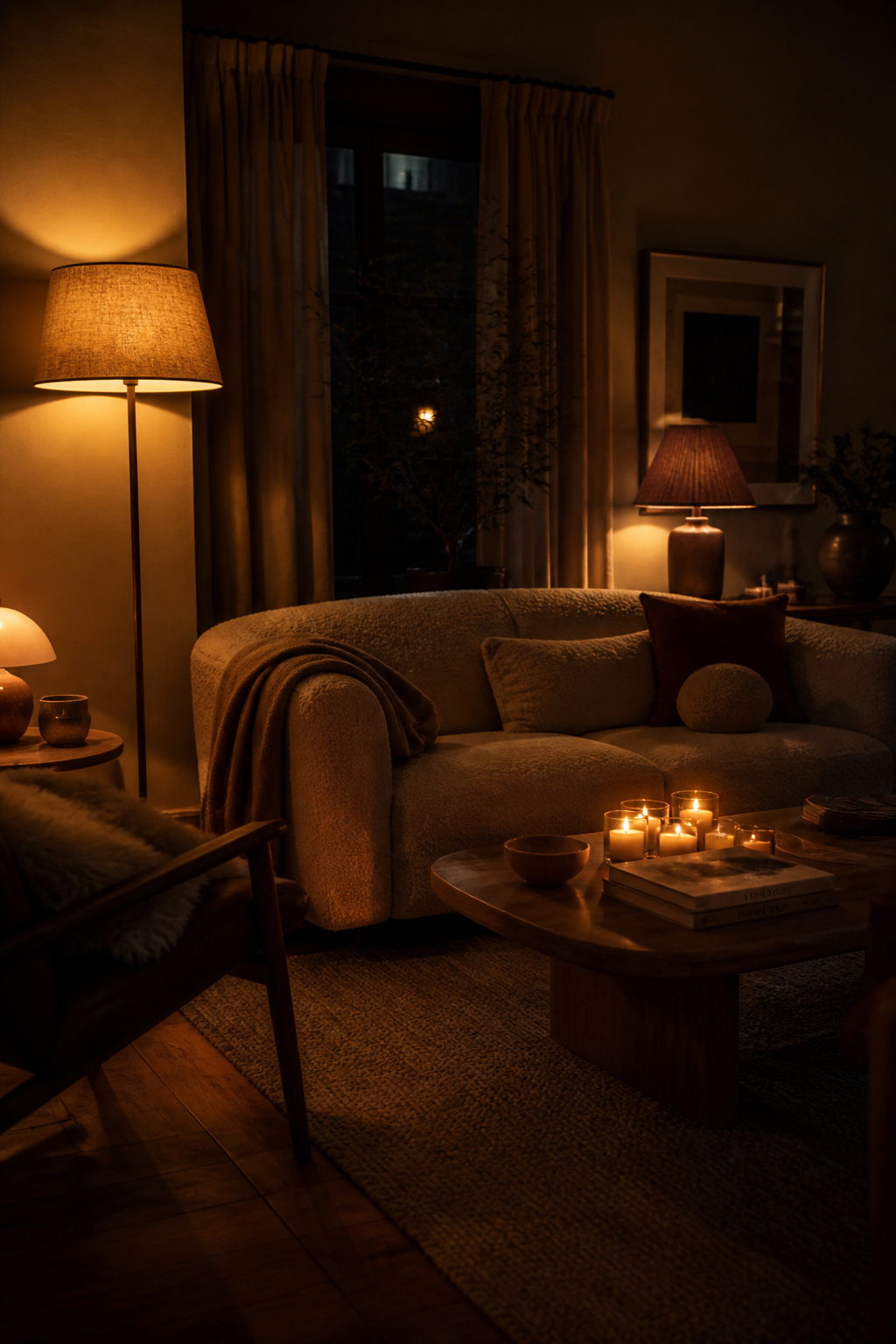
Most living rooms have a single central light source, flat and even, the visual equivalent of a hospital corridor. The shift to layered living room lighting ideas at warm colour temperatures is where real atmospheric change happens. A floor lamp at sofa arm height, a table lamp at eye level when seated, and something decorative — candles, an LED strip along a bookshelf — builds depth that overhead light physically cannot.
A Harvard study found that cool blue-spectrum light in the evening suppresses melatonin production. Swapping to 2700K Edison or globe filament LEDs costs under £30 and takes fifteen minutes. The impact is that night. Smart bulb systems like Philips Hue White Ambiance (adjustable from 2200K to 6500K via app) let you programme the room to shift automatically from bright morning light to warm evening amber, so the room accommodates your biology without requiring a single conscious decision.
Why Dimmers Matter
A 2700K bulb run at 30% output is as warm as candlelight. A dimmer switch compatible with your LED bulbs — check for ‘dimmable LED’ on the packaging — is the second quickest upgrade after the bulb swap itself, and the combination of warm colour temperature with low intensity is the single most effective atmospheric change available in a living room.
3. A Statement Rug to Anchor Inviting Living Room Decor
An undersized rug is the single most consistently cited mistake in living room design. I see it often — a beautiful rug sitting only under the coffee table, with every sofa and chair leg floating off it. The seating group looks disconnected, like furniture that doesn’t know it belongs together. The room reads as cold.
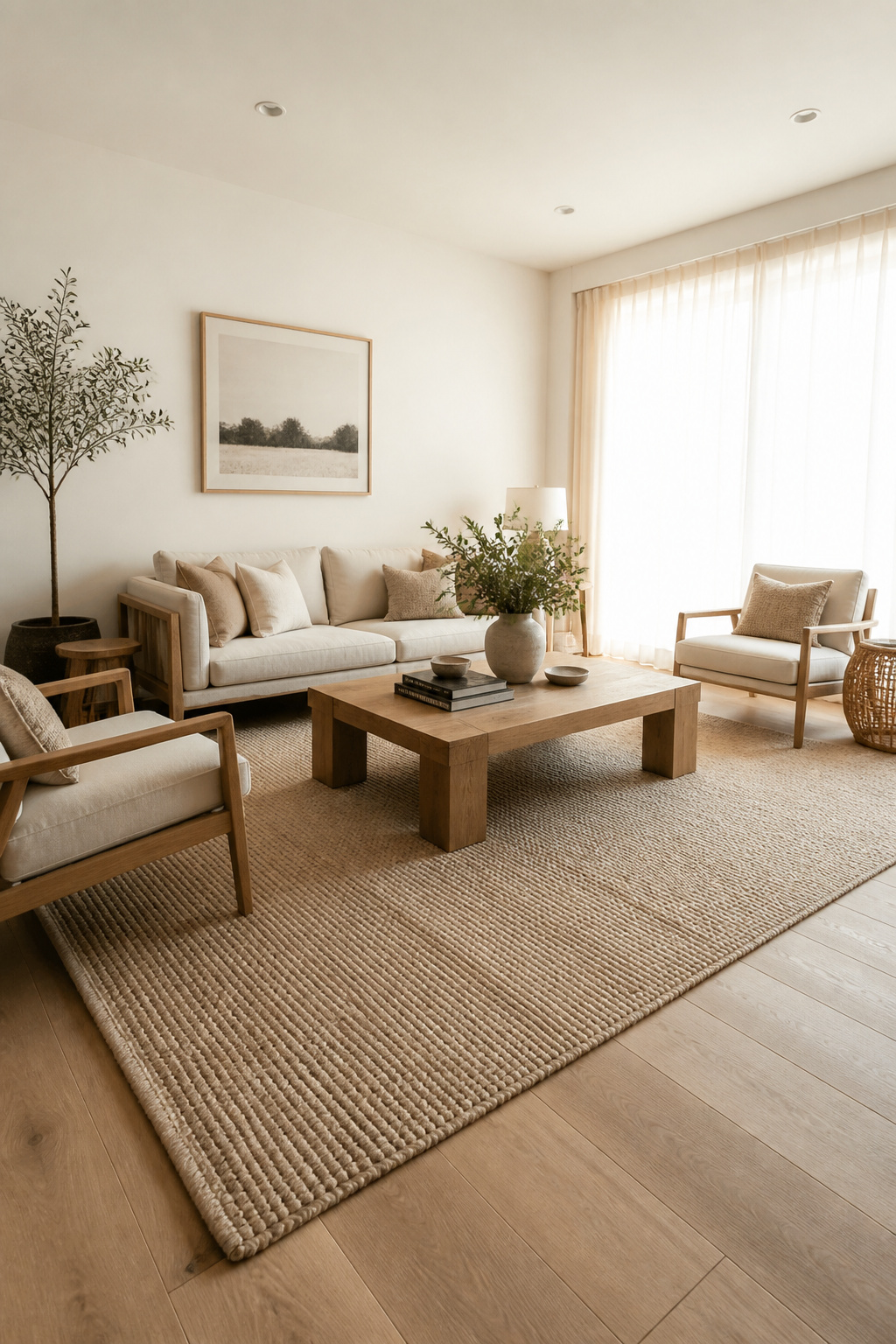
The correct principle: the rug should be large enough that at least the front two legs of every seating piece rest on it. All-legs-on creates the most unified arrangement; front-legs-on is the acceptable minimum. No-legs-on, regardless of how beautiful the rug is, undermines the whole arrangement.
Standard sizing: 8×10 is the minimum for a two-seat sofa with one armchair, 9×12 suits a three-seat sofa with two chairs, and 10×14 serves larger sectional configurations. The rug should sit 10–18 inches from the walls. Nearly everyone underestimates rug size by one step when shopping in a showroom — if you think you need an 8×10, the room probably needs a 9×12.
Pile Depth and Material
High-pile natural wool rugs (pile height above 0.5 inches) are the warmest option — wool holds heat, softens sound, and looks more dimensional than synthetics. Jute and sisal flatweaves add texture at a lower price point but are firmer underfoot. The layered rug technique — a smaller soft high-pile rug over a larger jute flatweave — gives you the right room scale and natural fibre warmth together. As the room’s foundation, getting the rug right makes every element above it work harder.
4. Natural Materials That Bring the Outside In
Research from the Environmental Design Research Association found that spaces incorporating natural materials — wood, rattan, linen, clay — reduce cortisol levels by up to 15% and improve concentration by 8–15%. The body recognises organic patterns and tactile textures as safety signals, the same signals it receives in a natural environment. This is physiological, not metaphorical.
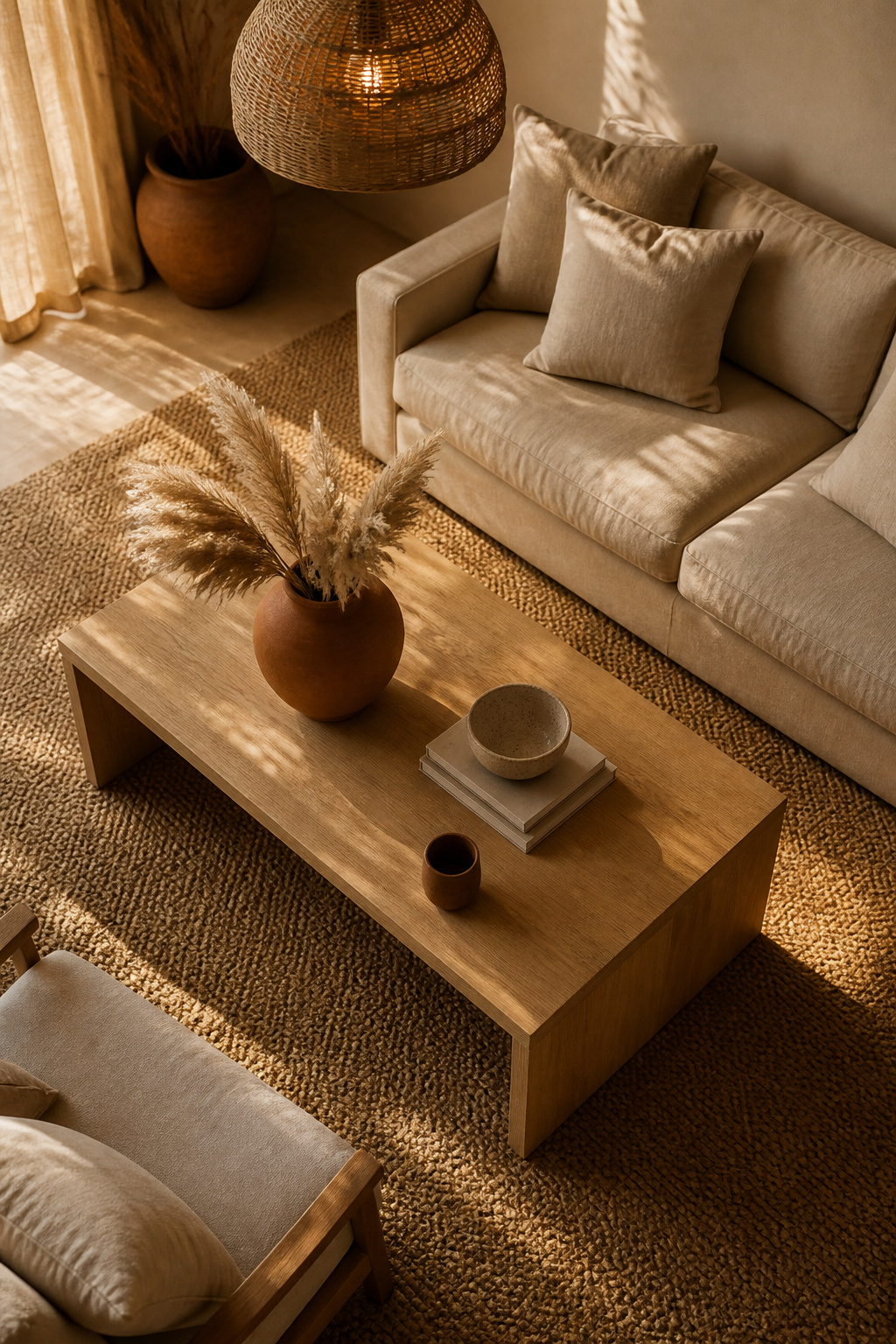
In a living room, biophilic material choices are mostly practical. A solid-wood coffee table in white oak or walnut, a rattan pendant shade, linen curtains, terracotta ceramic planters — none of these are radical design decisions, but together they shift the room’s material signature from synthetic to organic. The difference registers in the body, not just the eye.
The most important word here is solid. A wood-look laminate provides some visual warmth at distance, but synthetic surfaces feel cold at close range in a way that cancels the sensory benefit. Invest in one genuinely natural piece — the coffee table, a shelving unit — and build the rest of the room around it.
For sourcing: FSC certification (Forest Stewardship Council) verifies responsible wood sourcing. OEKO-TEX STANDARD 100 on textiles confirms that every component, including thread and dyes, has been tested for harmful substances. Both certifications are widely available and worth the small research effort they require.
5. Throws and Pillows That Layer Colour, Texture, and Weight
Of all the cozy elements in a living room, throws and pillows offer the most flexibility and the fastest visual payoff per pound spent. They can be changed seasonally, adjusted without any commitment, and experimented with at relatively low cost. They’re also the element most consistently bought wrong.
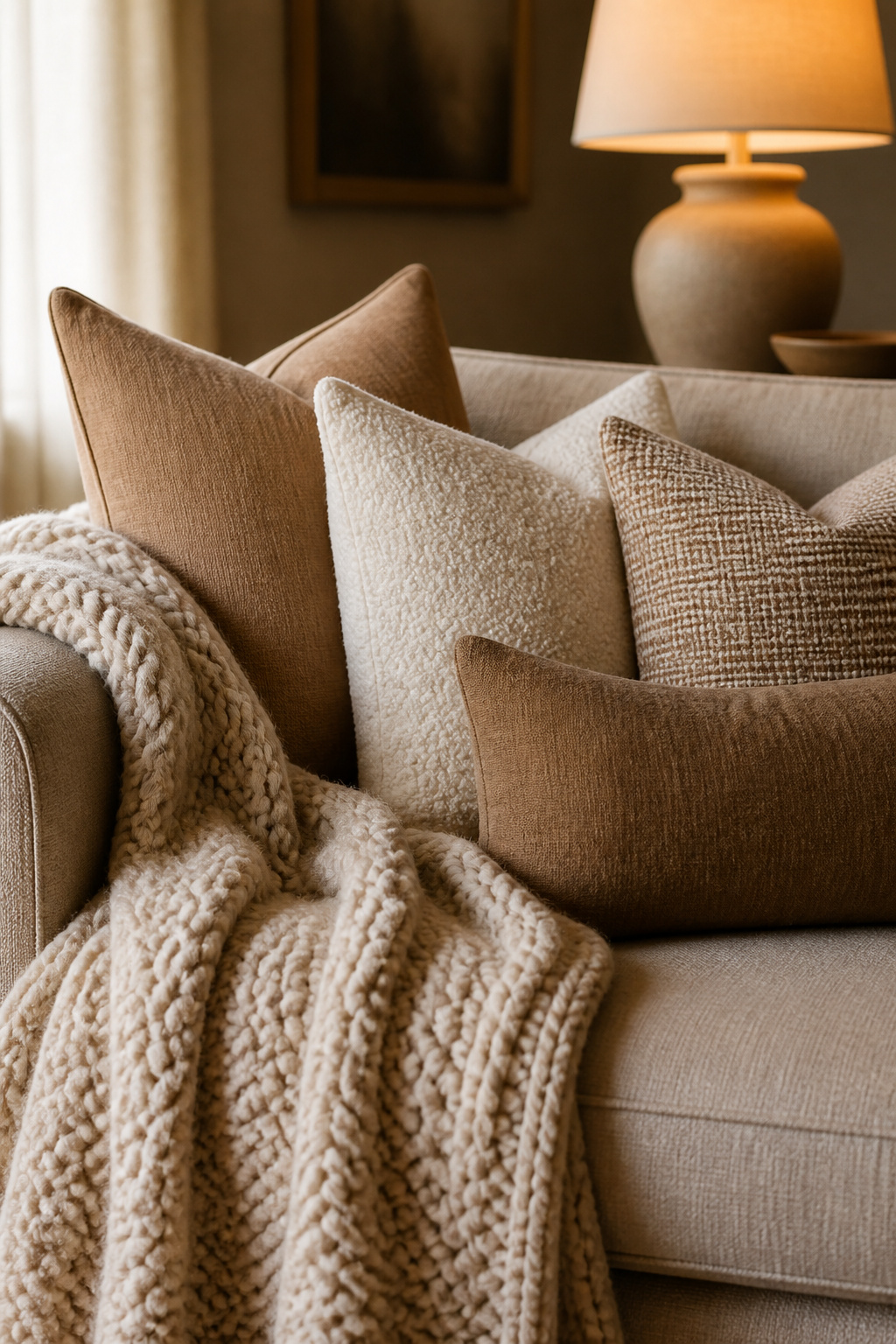
The odd-number rule exists for a good reason: three, five, or seven cushions create an asymmetry that reads as organic and gathered. Two or four reads formal and symmetrical — which is the precise opposite of a cozy arrangement. For a standard three-seat sofa, two 22-inch cushions at each end and one 18-inch in the centre works well.
Throw blanket weight matters more than most people consider. Cotton muslin throws are 200–300 gsm (decorative, minimal warmth), woven cotton is 350–500 gsm (functional), and chunky wool knits are 600–900 gsm (maximum warmth and visual weight). A weighted knit throw draped over one arm of the sofa — not folded, just resting — signals real warmth rather than decoration.
For colour, pick one anchor from the existing room and build around two additional tones: one lighter, one darker. Warm neutrals (oat, sand, caramel) work with almost anything. Keep the total colour count within the cushion arrangement to three — four or more reads as chaotic rather than layered.
6. Earthy Colour Palettes for Cozy Living Room Decor
Paint is the highest-ROI upgrade available to a living room. The difference between a warm earth tone and a cool neutral on the same four walls is the difference between a room that enfolds you and one that merely contains you. And it doesn’t require the room to be dark.
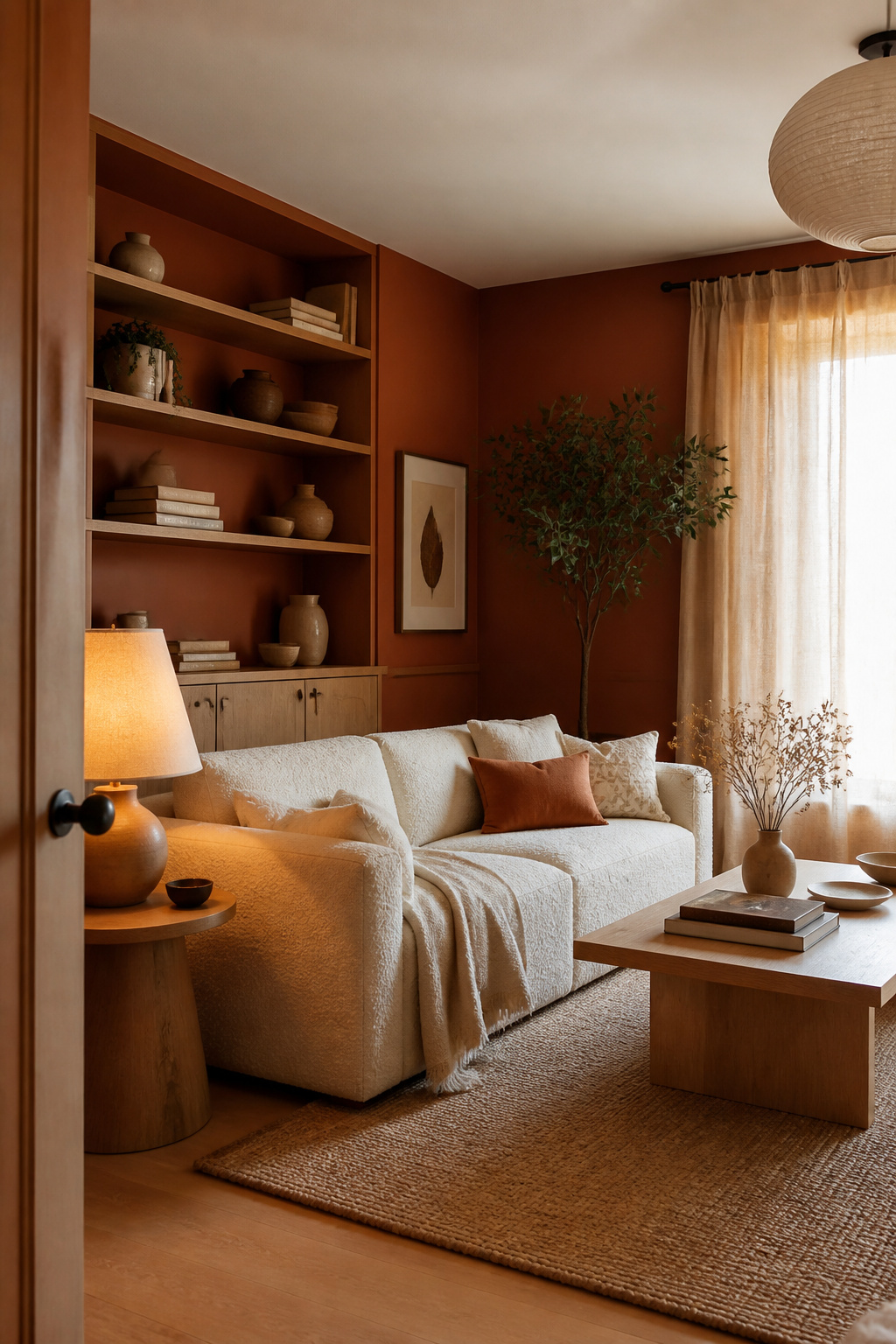
Terracotta, warm greige, forest green, and deep ochre are the palette anchors that consistently read as cozy. Benjamin Moore Terra Bella reads as a muted terracotta between weathered clay and aged brick — warm and uplifting without being loud, particularly effective in north-facing rooms. Farrow & Ball Elephant’s Breath and Benjamin Moore Edgecomb Gray are the most consistently recommended warm greiges from designers focused on restorative spaces. For green, Farrow & Ball Bancha — a muddy, earthy shade — is the current designer choice for spaces that want warmth without the terracotta palette. A thorough guide to warm paint colours for living room walls is worth exploring before committing to samples.
Testing properly means painting a minimum 12×16 inch swatch directly on the wall — not a small chip under store lighting. Check it in morning light, afternoon light, and under the room’s evening artificial light. The same colour can shift two full notches warmer or cooler between these conditions.
Accent Wall Versus All Four Walls
All-four-walls in a warm deep tone creates maximum cocooning effect and works best in well-lit rooms. A single warm accent wall behind the sofa is the lower-risk starting point — it delivers the warmth without the commitment of a full repaint, and the wall behind the sofa (opposite the main windows) naturally reads deepest under daylight anyway.
7. Styled Bookshelves as Atmosphere, Not Just Storage
Books register as cozy in a way that few other objects manage. The irregular rhythm of spines, the variation in height and colour, the layered depth of a well-filled shelf — all of it creates visual warmth. Beyond the visual component, books signal something biographical. They tell visitors something real about the occupant, activating a warmth and trust response that generic decorative objects don’t.
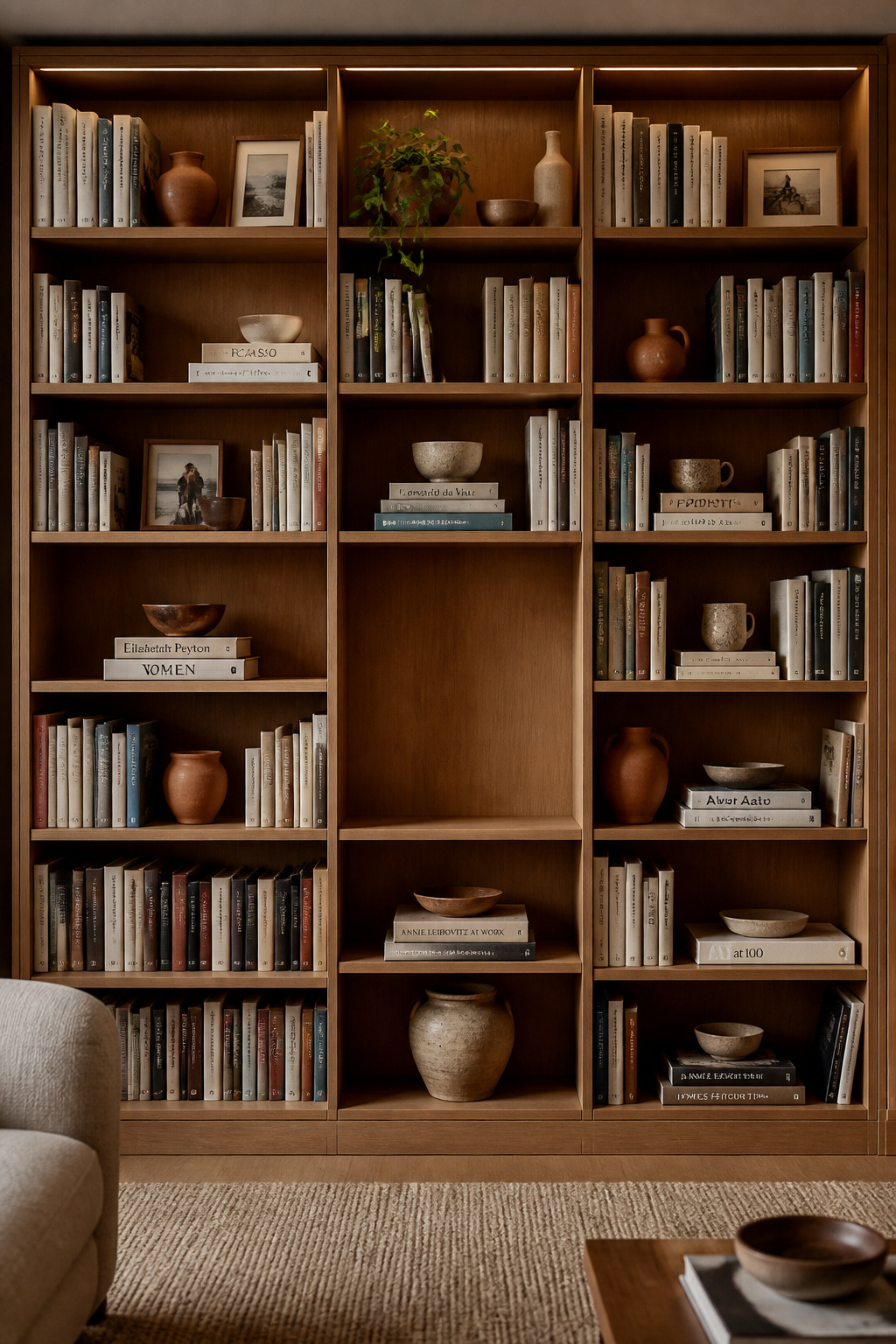
The alternating method is the most effective technique: vary shelf sections between vertical rows of books, horizontal stacks of three to five laid flat (these become platforms for objects), and a single open section with one deliberate piece. The open section is important — it’s the visual pause that prevents the shelf from feeling compressed. Negative space on a bookshelf is not wasted space. It’s the breath that allows the rest to be noticed.
Terracotta ceramics, woven baskets on lower shelves, small trailing plants at the ends, and warm wood-framed personal photographs in a mix with art prints all add warmth. The most effective and most common mistake: colour-coding all book spines. It looks organised in photographs and almost universally cold in person. A shelf that looks like it developed over years of reading will always feel warmer than one styled in an afternoon.
8. A Reading Nook That Becomes Your Cozy Living Room Anchor
A reading nook has the best ratio of spatial investment to cozy return of any element in this list. It occupies the footprint of one armchair plus a side table — perhaps four square feet — and creates the most retreated-to spot in the room. The psychology is well-documented: humans feel safest in spaces with a clear view and some sense of enclosure on at least two sides. A corner provides this naturally.
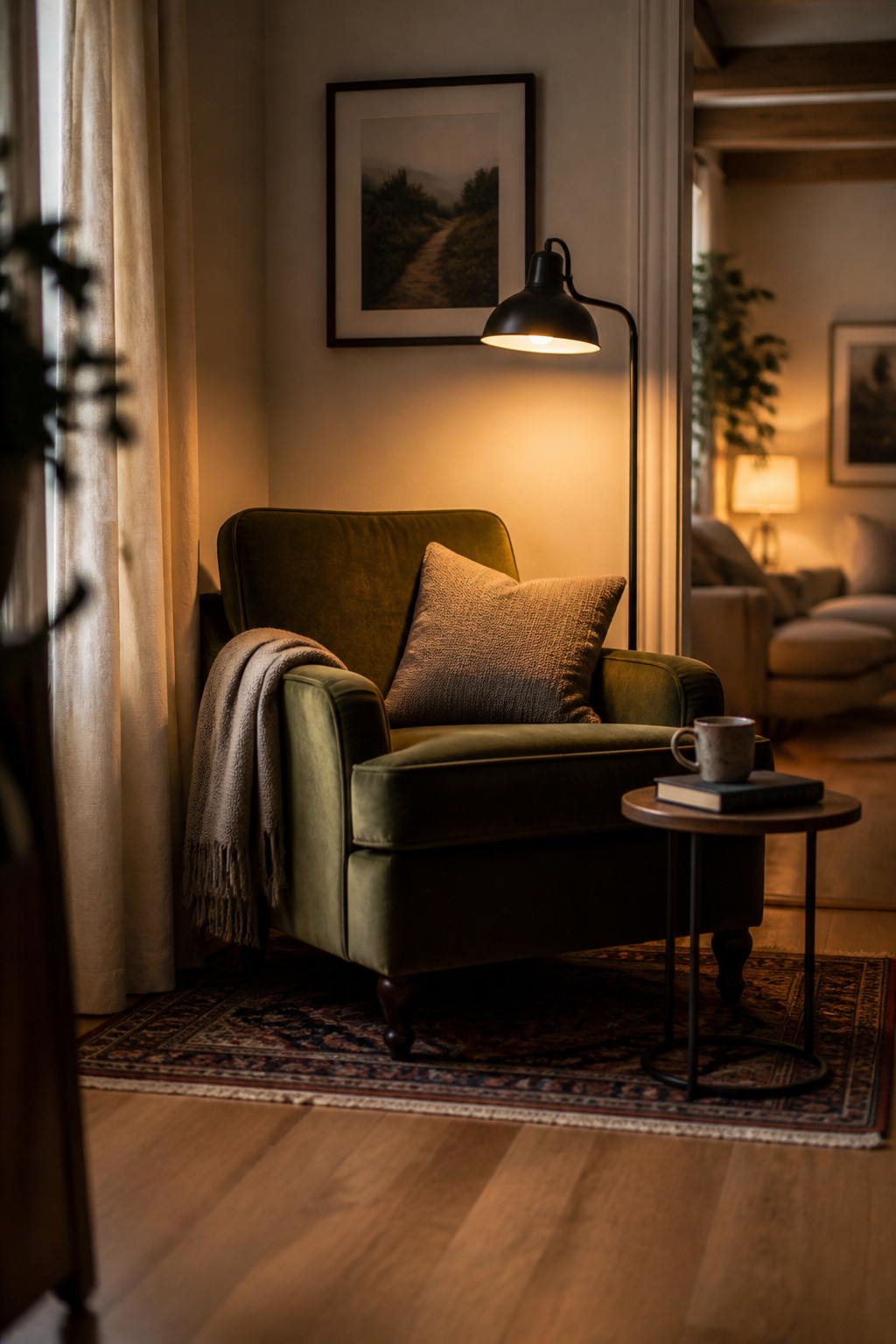
The chair is the critical purchase. It needs a seat depth of at least 22–24 inches to allow the sitter to curl their legs up — standard armchairs are often only 20 inches, too shallow for extended reading. Test this before buying. The reading-nook chair needs to pass a one-hour sitting test, not just a two-minute showroom test. For more on the design principles behind dedicated reading corners, this collection of bedroom reading nook design ideas applies equally to living room spaces.
Lamp positioning: the light source should stand behind and slightly to one side of your reading shoulder, at 48–52 inches from the floor, casting light over the shoulder rather than into the eyes. A side table at 24–26 inches (elbow height when seated) completes the functional triad.
Making It Feel Separate Without Construction
For rooms without bay windows, place the armchair diagonally into a corner at 45 degrees and put a small accent rug beneath it that’s distinct from the main living room rug. That single distinction — a different rug, a different zone — creates the psychological sense of a separate space without a single structural change.
9. Indoor Plants and Living Green Elements
Living plants add something to a room that no static object replicates: actual life. The gentle movement of a leaf, the irregular organic silhouette, the evidence of something growing — all of it registers as warmth and vitality. In a biophilic design context, plants are the closest thing a living room has to a direct connection with the natural world.
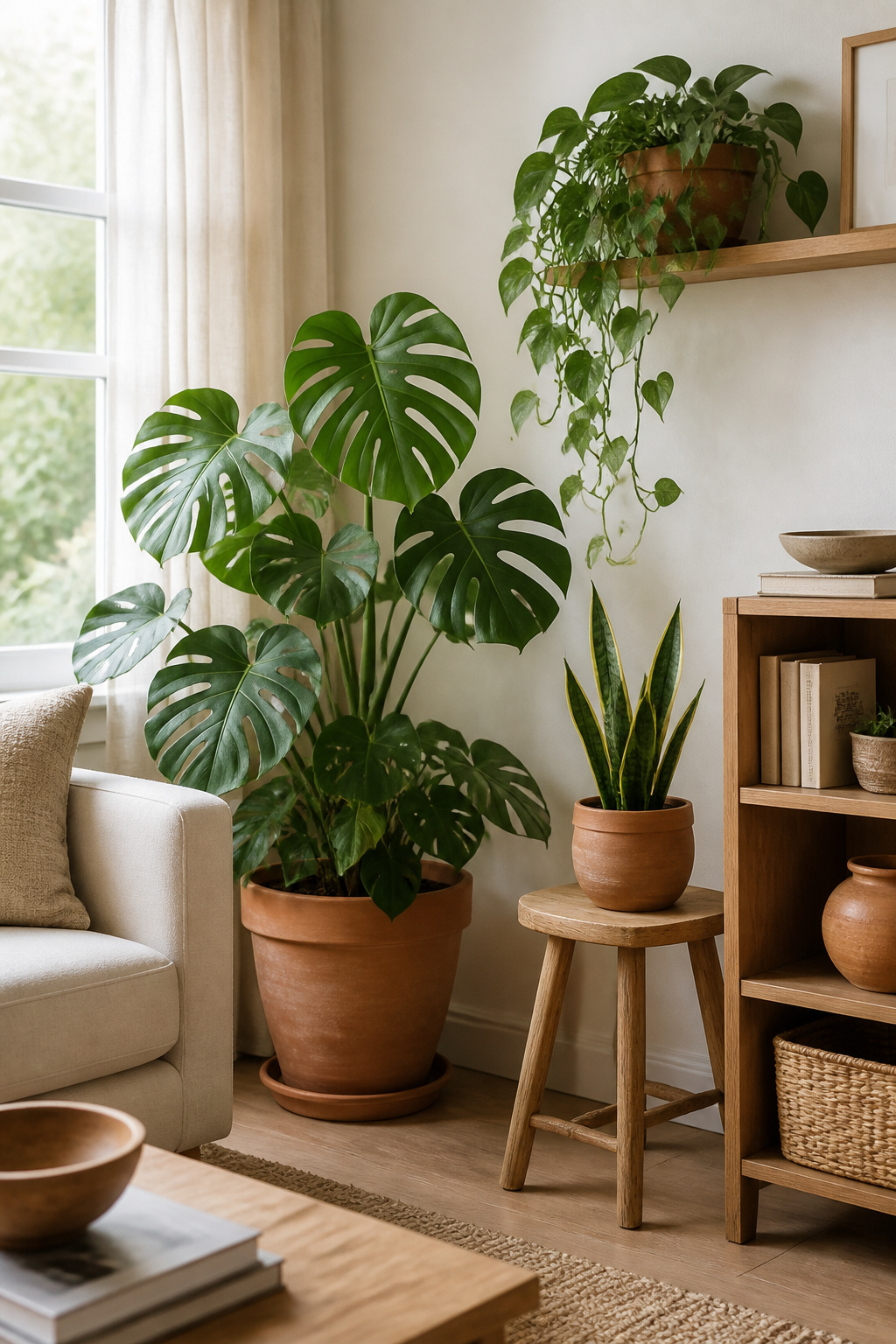
The 1989 NASA Clean Air Study identified pothos, peace lily, and snake plant as effective at absorbing VOCs in controlled conditions — though real-world benefits require far higher plant density than most homes maintain. The wellness value is less about air chemistry and more about presence: the visual and tactile quality of organic, living matter in a room primarily composed of inorganic surfaces.
For low-light corners, snake plant is the most forgiving choice. It tolerates near-neglect, grows vertically, and suits contemporary wellness aesthetics. Pothos is the most atmospheric trailing option — trained along a shelf or hanging from a bracket, it introduces organic movement that complements books and ceramics. ZZ plants are nearly indestructible in low to medium indirect light and contribute a glossy, deep-green quality to dark corners.
Style in odd-number groupings at different heights: floor planter, console table height, shelf. A single large fiddle-leaf fig in a terracotta planter can anchor a corner with real architectural impact — just ensure it has access to bright indirect light. That’s the one condition it will punish you for getting wrong.
10. Scent as an Underrated Cozy Decor Tool
Scent reaches the brain faster than any visual or tactile stimulus. Fragrance signals travel directly to the amygdala and hippocampus — the centres for emotional memory and response — before reaching the rational cortex. A room can shift its emotional atmosphere through scent before a visitor has consciously processed anything else about it.

Warm resinous scents — amber, cedarwood, vanilla, benzoin — consistently activate comfort associations. Cedarwood is specifically grounding and calming, linked to forest environments and the sensation of shelter. Vanilla activates associations with warmth and domestic gathering. These are the fragrance families to work with in a room meant for rest and connection.
Material matters from a wellness perspective. Paraffin candles release toluene and benzene when burned. Beeswax burns cleanest of all natural waxes, emits negative ions, and produces a natural honey undertone even when unscented. Soy wax is the most accessible clean-burning alternative. Look for candles that name their scent components — ‘fragrance’ on a label can legally include dozens of undisclosed chemicals, including phthalates. P.F. Candle Co. (amber and moss, cedar and smoke), Diptyque Feu de Bois, and Boy Smells are worth investigating.
The layering technique: a room diffuser with cedarwood essential oil provides constant background warmth, supplemented by a beeswax candle in an amber or vanilla profile when people are present. Combined, they create the fragrance depth — base note plus top note — that single-source scenting doesn’t achieve.
11. Tactile Upholstery for Cozy Living Room Seating
The sofa is the room’s largest tactile surface, and its fabric communicates temperature before anyone sits on it. Boucle, velvet, and chenille all register as warmer than leather, cotton canvas, or plain linen — both visually, in how they absorb and reflect light, and physically, in how they feel and hold heat.
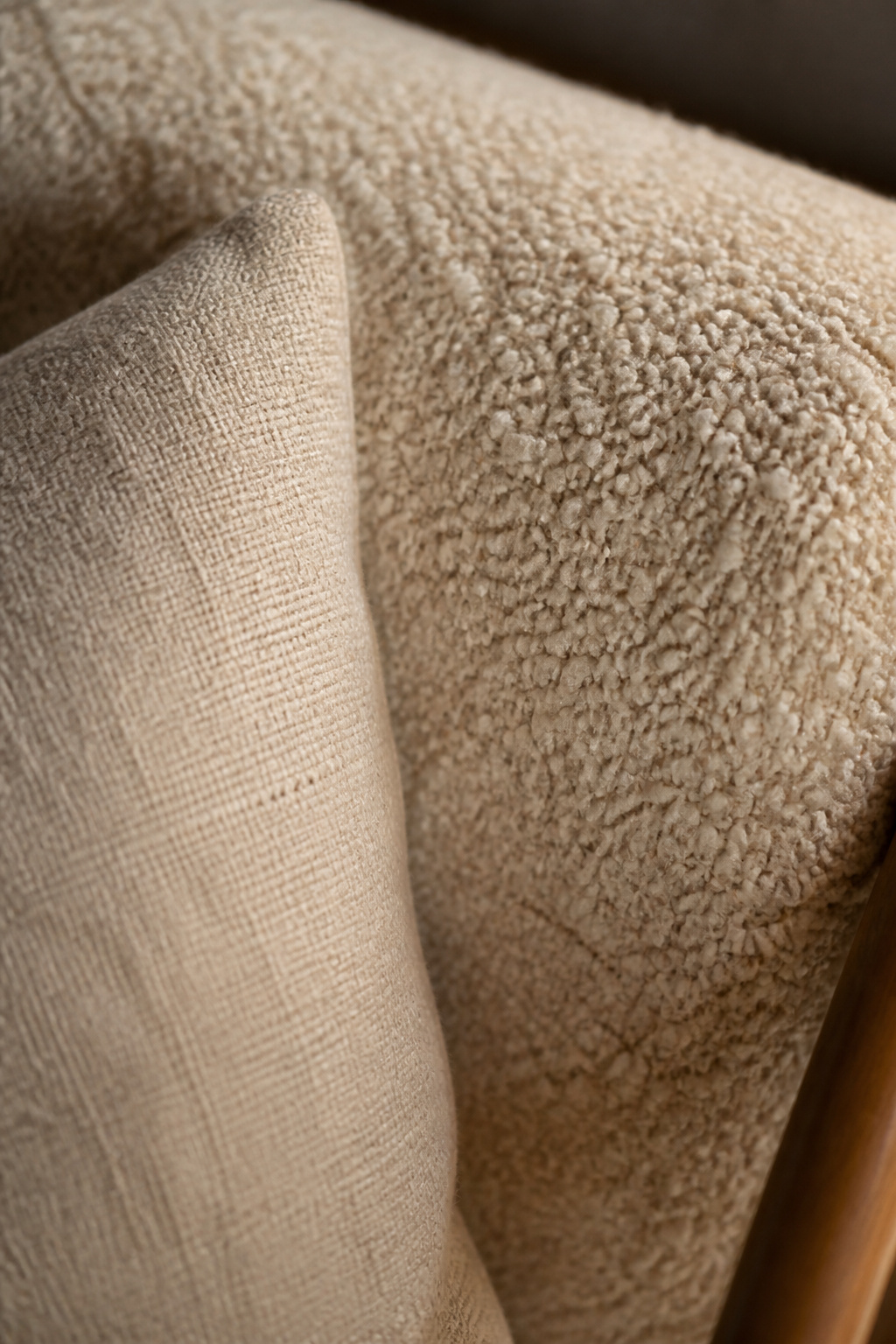
Boucle’s looped yarn traps air within its structure, creating genuine thermal properties alongside its distinctive visual warmth. Well-made boucle sofas test at 50,000+ rub count, significantly above the 30,000 industry standard for heavy residential use. The care caveat: never rub boucle when wet. Push liquid into a paper towel and leave it to dry. Also not ideal for households with cats — the loops are vulnerable to claw snagging.
Velvet’s dense pile reflects light differently at different angles, creating a depth that smooth fabrics can’t replicate. Performance velvet (with a synthetic backing) reaches 60,000+ rub count while keeping the aesthetic quality of cotton velvet — it’s the better choice for living rooms that see daily use. Chenille is the most practical of the three for family rooms: exceptionally soft and heat-retaining, with lower ongoing maintenance demands than boucle and better structural durability over time.
Understanding Fabric Grades
Fabric grade (typically A–G or 1–10 depending on manufacturer) reflects both material cost and durability testing. The rub count test measures friction cycles before visible wear: 15,000 is residential minimum, 30,000 is residential heavy-duty, 50,000+ is commercial-grade. Ask for the specific rub count before purchasing a boucle sofa — entry-level versions can test at 15,000–20,000, which shows wear within two to three years.
12. Window Treatments That Diffuse Light and Add Softness
Curtains contribute more to a room’s cozy atmosphere than most people notice until they get them wrong. Hung too low, too narrow, or in the wrong fabric, they make an otherwise warm room feel smaller and harder. Hung correctly, they envelop the space, soften the light, and add a significant column of texture to walls that might otherwise feel bare.
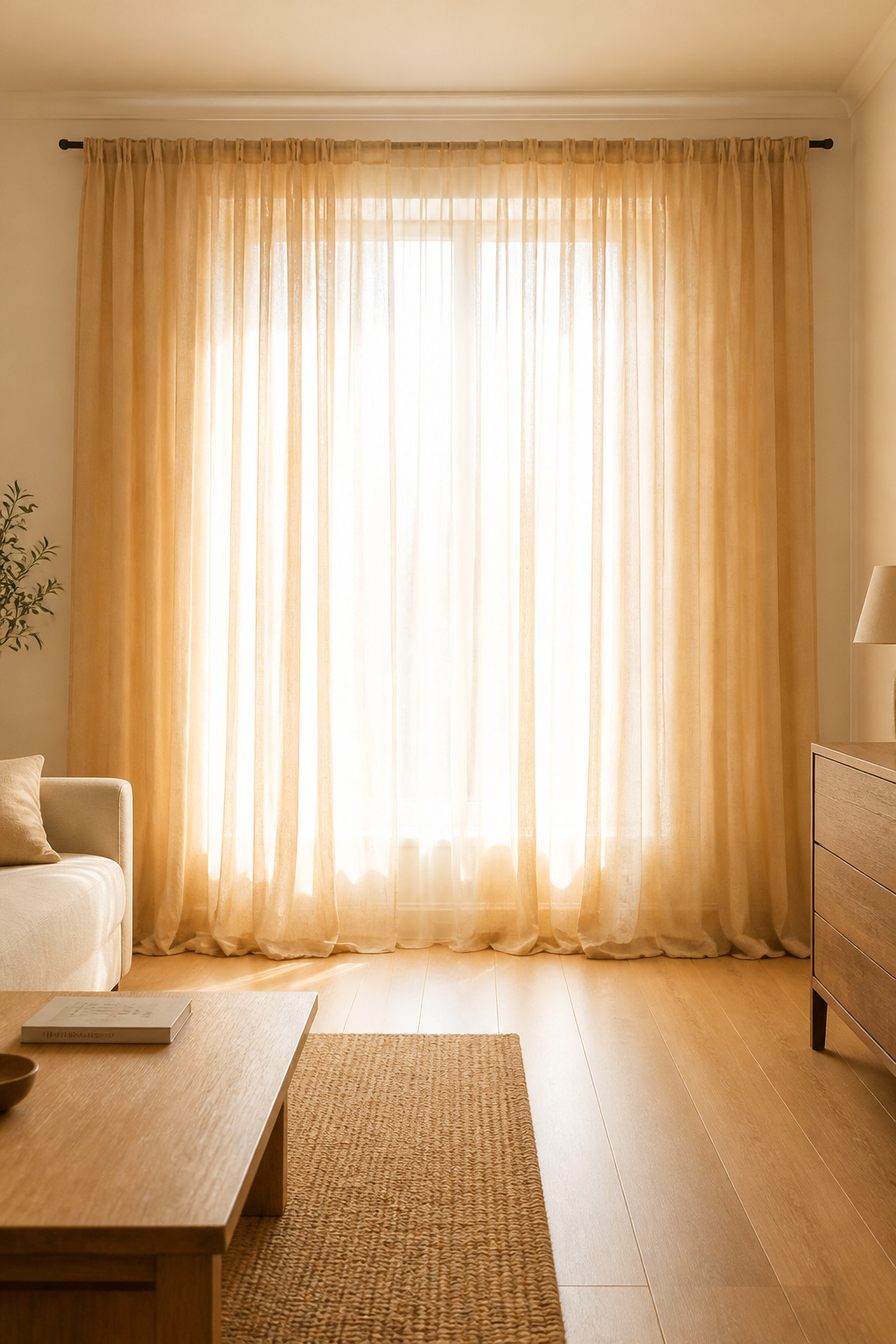
The most impactful change most living rooms can make with curtains is simple: mount the rod higher and wider. The rod should sit 4–6 inches below the ceiling and extend 6–12 inches beyond the window frame on each side. The eye reads curtain height as ceiling height. A rod at ceiling level makes a 2.5-metre ceiling feel taller. A rod at window-frame height makes it feel lower. This is one of the first things I address in any living room consultation. The full range of techniques and fabric options is covered in this guide to living room curtain styles and sizing.
Sheer linen at 30–40% light transmission is the best daytime cozy fabric — it softens direct sunlight into a warm diffused glow that flatters natural materials and warm paint colours. Velvet at 80–90% light-blocking provides thermal insulation and sound absorption when drawn in the evening. The two-layer system — sheer linen on an inner rod, velvet or heavy linen on an outer rod — allows the room to shift from bright morning warmth to enclosed evening atmosphere.
Curtain length: panels should just kiss the floor (a 1–2 inch puddle) or sit half an inch above. Natural fabric drapes more elegantly at floor length than any synthetic alternative.
13. Art That Feels Personal and Warm on the Wall
Generic art is a specific problem. Mass-produced abstract prints from fast-furniture chains, motivational phrases in clean sans-serif, landscape photographs duplicated across a thousand identical living rooms — these are not neutral choices. They signal that a space was assembled rather than inhabited, and that signal registers as cold.
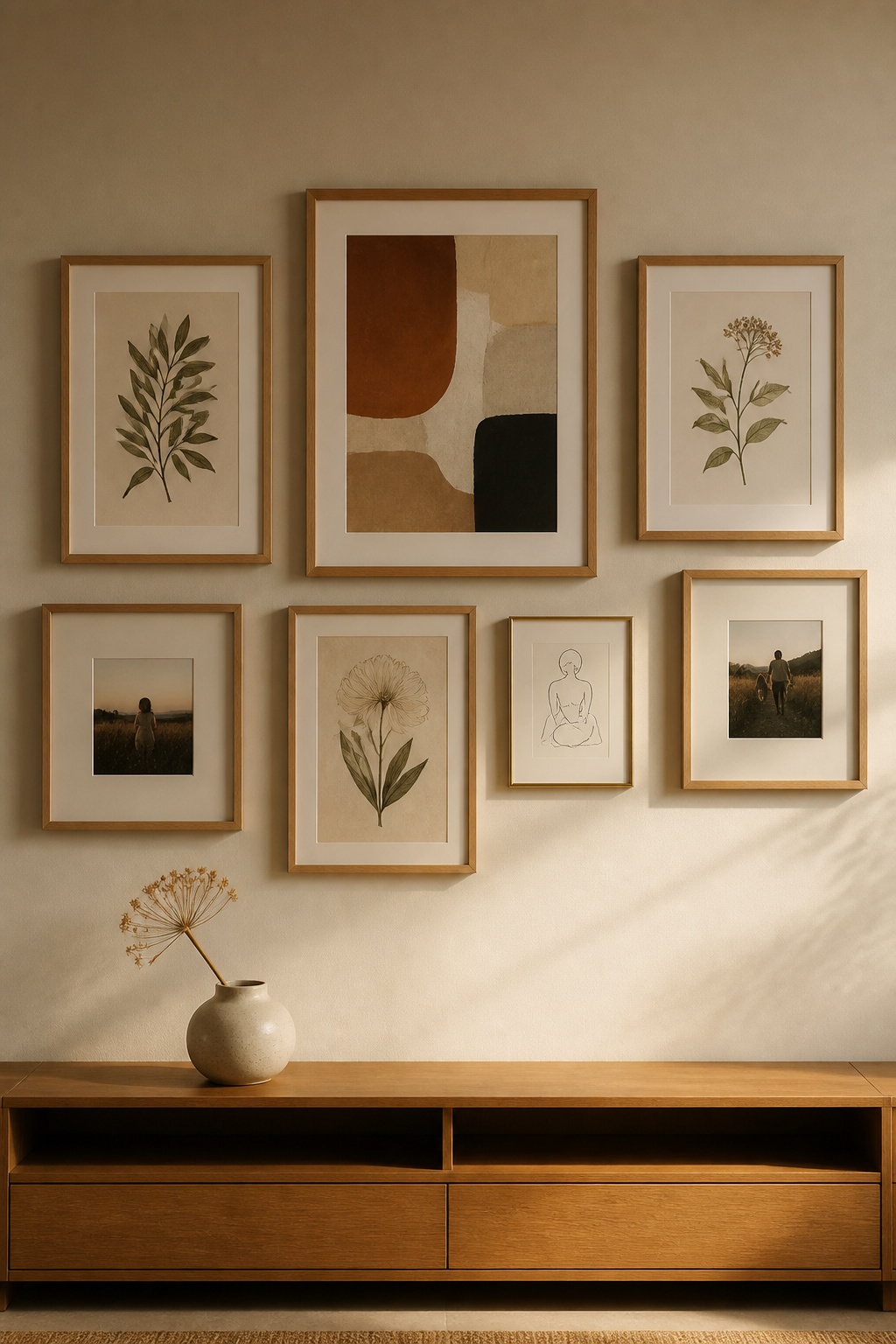
Art with genuine personal significance activates a different quality of response. A painting bought at a local market, a print by an artist whose work you’ve followed for years — these pieces connect to memory and preference in a way that generic decorative art cannot. Environmental psychology research finds that spaces with personally meaningful art are consistently rated as warmer and more trustworthy by visitors.
Framing amplifies or undermines warmth. Natural wood frames in unstained oak, walnut, or pine complement natural-material living rooms. Linen mounts — replacing standard white mat board with undyed linen — add biophilic, tactile quality, particularly effective with botanical prints and watercolours. Warm metal frames in unlacquered brass work in earthy-toned rooms where cool metallics would jar.
For gallery walls: maintain consistent 2–3 inch spacing between all frames regardless of size. This single discipline separates an arrangement that reads as curated from one that reads as random. Position the visual centre of the composition at 57–60 inches, and hold one constant across all frames — the material, the colour palette, or the mounting style.
14. Warm Wood Tones as Cozy Living Room Decor Anchors
Wood is the biophilic anchor of any cozy living room. It provides visual warmth, tactile contrast against soft furnishings, and a material connection to the natural world that no synthetic surface replicates. The question is not whether to use it, but which tone and how to combine it when multiple pieces are present.
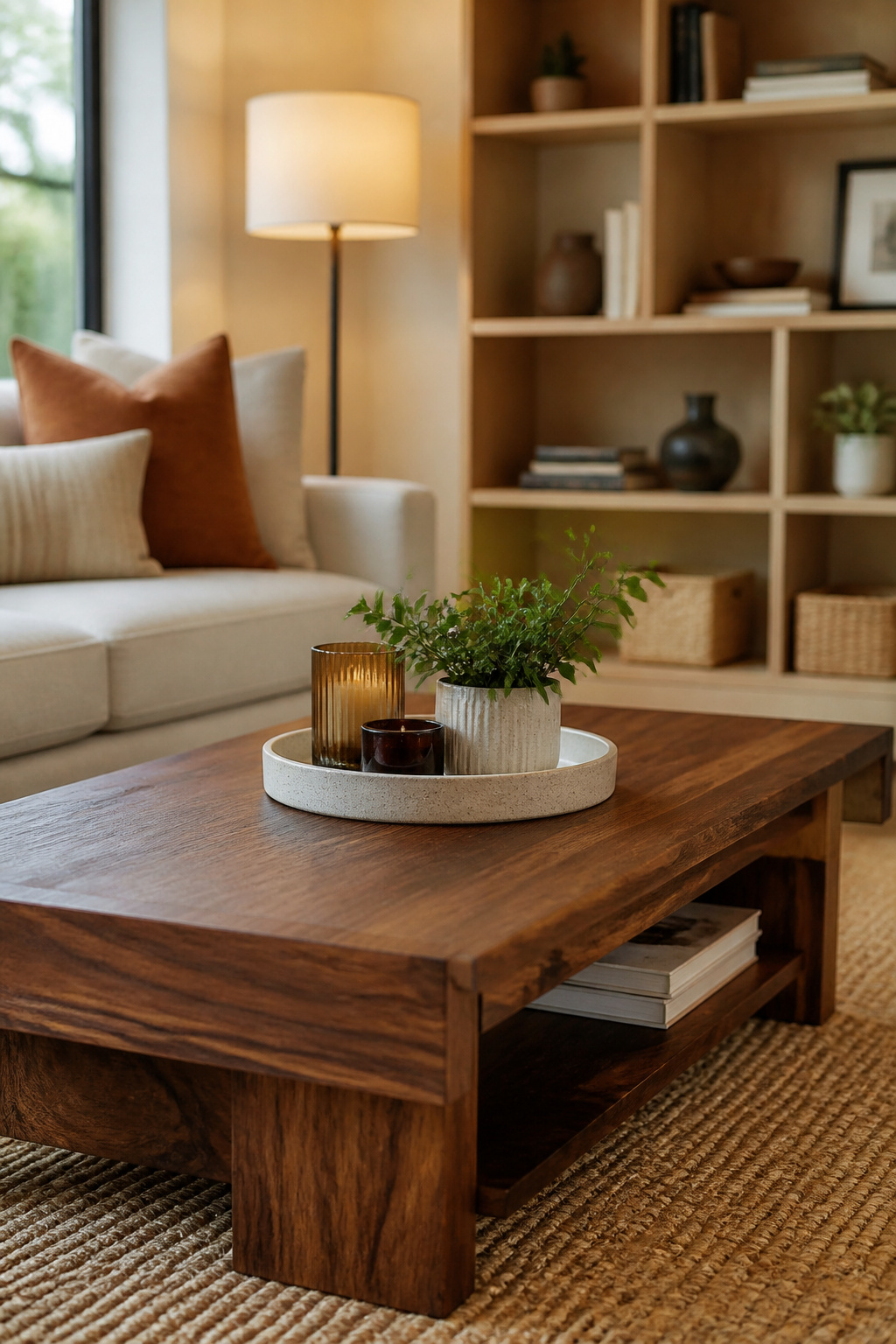
Walnut is the warmest and richest option — its chocolate-brown with warm red undertones makes it the natural choice for anchor pieces like coffee tables. White oak, with its golden-tan and amber undertones, is the most versatile choice and the dominant wood selection in contemporary wellness-oriented design. It ages gracefully and pairs with almost every cozy palette.
Mixing successfully requires one principle above technical guidelines: consistent undertones. Warm undertones mix with warm undertones. Oak and walnut work together precisely because both are warm-toned even though they differ in depth — oak’s lighter quality makes walnut’s richness pop, and walnut gives oak the sophistication it can lack alone.
The 60-30-10 hierarchy helps: 60% dominant tone (typically the floor), 30% secondary (the main furniture piece), 10% accent (small accessories). Use each tone at least twice. One walnut coffee table in an oak room reads as a mismatch. A walnut coffee table plus a walnut shelf reads as a deliberate palette decision.
15. Low-Profile Furniture for a Grounded, Restful Living Room
The height of a room’s primary seating has a measurable effect on how calm the space feels. Rooms where furniture sits low — seat heights of 14–17 inches rather than the standard 18–20 — activate a sense of groundedness that taller arrangements don’t deliver. This is documented, not aesthetic preference.
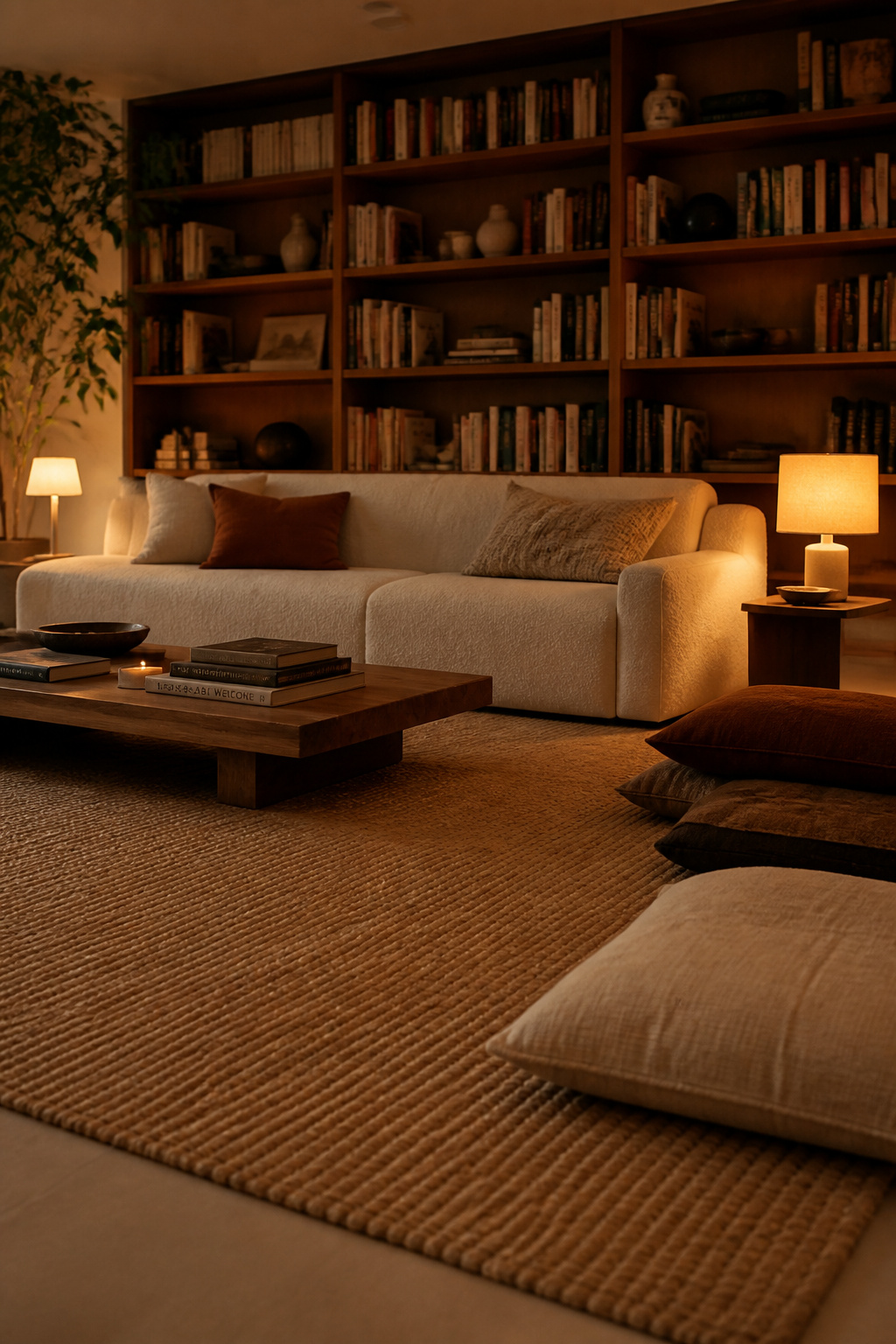
The effect works through sight lines. Lower furniture lets the eye travel across the room at or below waist height — the same visual mechanics that make a low horizon feel expansive and calming. Japanese and Scandinavian design traditions independently developed preference for low-profile furniture not as a stylistic choice but as a functional one rooted in the philosophy that spaces for rest should communicate rest through their proportions.
Standard sofa seat height is 18–20 inches, designed for ease of sitting down and standing — optimised for older occupants and formal settings. A low-profile sofa at 15–17 inches offers the grounded aesthetic without the accessibility limitation of very-low 13–14 inch seating. When shopping, ask specifically for seat height measured floor to top of seat cushion.
Pairing low seating with a coffee table at approximately the same height completes the low-horizon effect. Counter-balance with vertical elements positioned away from the seating zone — a tall floor lamp, ceiling-height curtains, a bookshelf — so the low furniture reads as intentionally grounded rather than simply small.
16. Fireplace Surrounds and Seasonal Focal Points
The fireplace is the cozy focal point in its most complete form. Every other element on this list creates warmth through association and sensory accumulation. A lit fireplace delivers it multi-sensorially — visual, thermal, auditory, and olfactory simultaneously. Rooms with working fireplaces consistently outscore those without in occupant wellbeing surveys.
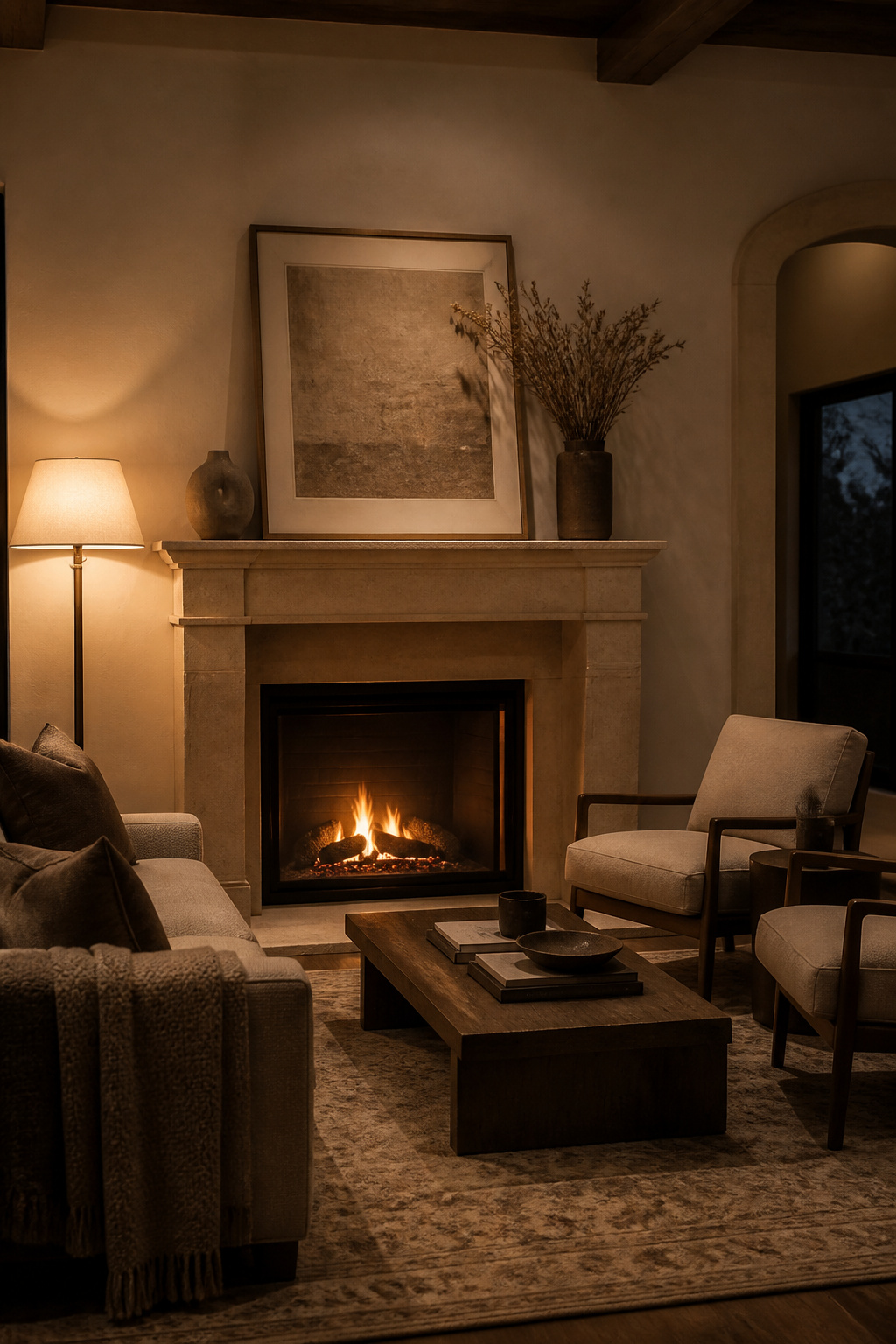
Real wood-burning fireplaces remain the gold standard for sensory experience but require a chimney, annual sweeping, and wood storage. Gas fireplaces offer cleaner and more controllable warmth — modern linear gas models with realistic flame patterns are the preferred choice in contemporary interior design. Electric options have improved dramatically in flame realism over the past decade. For a detailed comparison of how different fireplace types function as living room anchors, this guide to fireplace focal points for living rooms covers the subject thoroughly.
The mantle is where the daily work happens. Resist crowding it — one or two significant pieces go further than many smaller objects competing for the eye. One large artwork or mirror leaned above establishes the vertical axis. One significant ceramic to one side provides weight. One plant or dried stem introduces the living element that prevents the arrangement from reading static.
When There’s No Fireplace
For rooms without one: a console table as the horizontal surface, a large artwork above it, and a grouping of five to seven candles at floor level in front. The fire association is activated by the candle glow, not the presence of an actual firebox.
17. Curated Collections That Add Story Without Clutter
There is a precise line between cozy curated and cluttered, and it comes down to one thing: intentionality. Every displayed object should answer two questions — do you genuinely like it, and would you notice if it disappeared? Objects that fail either question are not contributing to warmth. They’re diluting it.
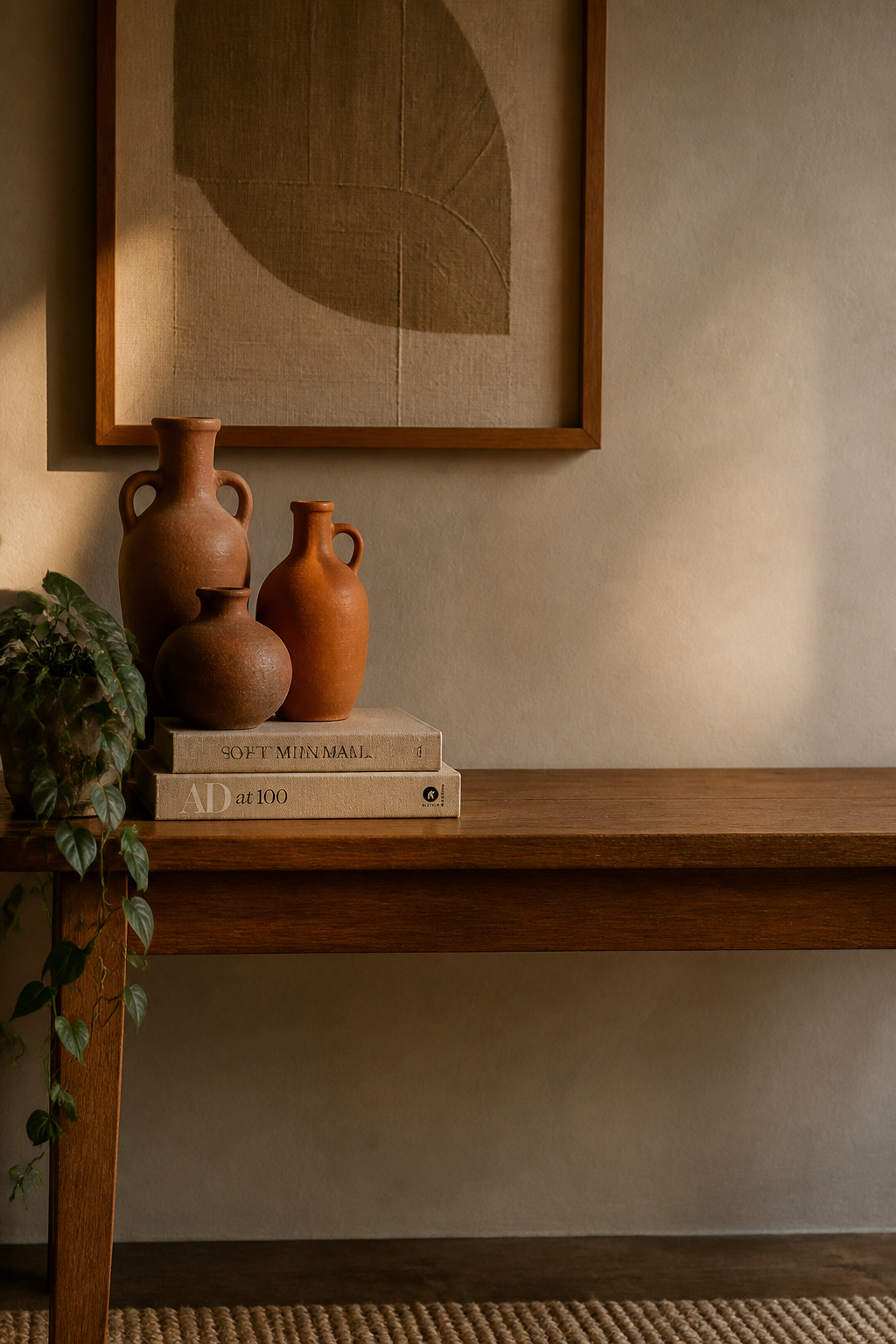
Visual noise occurs when more than five objects compete for attention simultaneously within a single field of view. The eye cannot settle, and unsettled attention produces low-level anxiety — a direct contradiction of the cozy design goal. Collections grouped by material, colour, or theme resolve this. A grouping of ceramics in varied shapes, all earth-toned, on a single surface reads as deliberately curated. A corner with only brass accessories — a candlestick, a small frame, a sculptural piece — creates a warm accent zone rather than scattered decoration.
The edit test: remove everything from a display surface, then return only objects you actively enjoy seeing daily. The first two or three items returned are almost always the right foundation. Keep 30–40% of your decorative objects in dedicated storage and rotate them seasonally — familiar pieces feel genuinely fresh again after three months away. The room never reads as stale, and every object on display earns its place.
18. Cozy Living Room Decor Through Mindful Lighting Layers
Return, finally, to lighting — because it is both the first thing worth changing and the last layer to refine when everything else is in place. The four-layer model (ambient, task, accent, and decorative) is the professional framework for building cozy living room decor through light. Most rooms have only one layer: the ceiling.
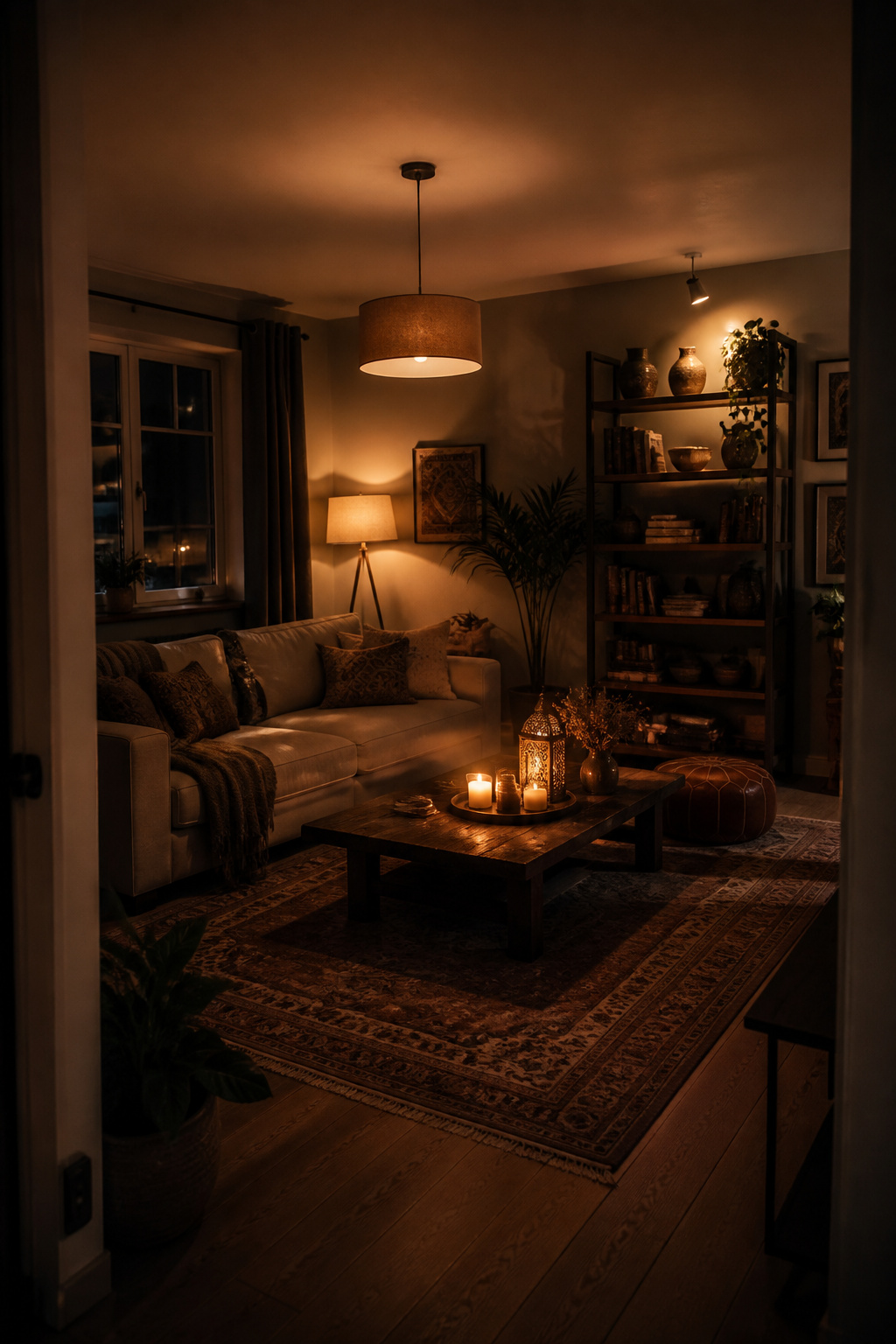
Ambient light is the room’s base: on a dimmer, at 2700K, used at 30–50% output in the evenings. Task lighting is focused and localisable — a floor lamp behind the reading chair, a directed spot for specific activities, not washing the whole room in general brightness. Accent lighting draws attention to specific elements: a directed spot above a bookshelf, a picture light over a painting, LED strips inside shelving that create a warm glow behind objects. Decorative sources — candles, a sculptural table lamp, a Moroccan lantern — are themselves visually interesting, adding sparkle and warmth without functional output.
Side table lamp placement: the top of the shade should sit at approximately eye level when seated, 40–42 inches from the floor for most people. A lamp on a 24-inch table needs a combined base-and-shade height of 16–18 inches. Two table lamps at the same height at either end of a sofa transform a room’s evening atmosphere compared to a single central pendant.
Smart bulb systems like Philips Hue White Ambiance (2200K–6500K, app-controlled) or LIFX A60 (no bridge required) make the circadian shift automatic. Set the room to drift from bright morning light to warm evening amber without a single deliberate decision. That’s the practical goal of cozy design — not a space you have to manage, but one that manages its atmosphere for you.
How to Build Your Own Cozy Living Room Decor Layer by Layer
Not every room needs eighteen simultaneous changes. The most effective approach to cozy living room decor is sequential — starting with the highest-impact elements per pound and per hour of effort, then building outward as time and budget allow.
Start with light. Swap all bulbs to 2700K, add one floor lamp or table lamp to the seating area, and install a dimmer on any overhead light that will accept one. Cost: under £50. Impact: immediate. The room you come home to in the evening changes the first night.
Follow with the rug. If the current rug is undersized — if any furniture legs float off it — this is the second priority. A correctly-sized natural-fibre rug anchors the entire seating arrangement and makes every other element above it read better. Then: a throw and three or four cushions in different textures, plants in terracotta pots, a warm paint colour on the accent wall behind the sofa.
The larger investments — a boucle sofa, quality curtains at ceiling height, a solid-wood coffee table, one piece of personally meaningful art — are best made once the foundational layers are in place. You’ll be able to see exactly what the room needs rather than making expensive decisions in a space that hasn’t yet found its character. Cozy living room decor is not a single purchase. It’s the result of deliberate, layered choices — and almost always better than it looked at any earlier stage.