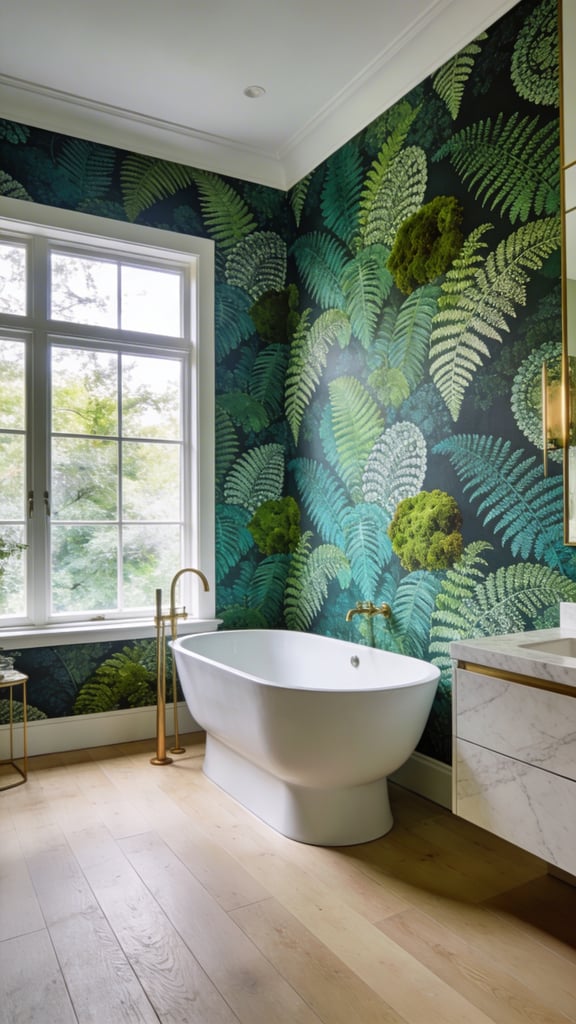
I. Philosophical anchor: The bathroom as a restorative sanctuary
The modern bathroom has completely shifted over the last decade. It used to be a strictly utilitarian, communal space. Now, it has become a hyper-private refuge. When exploring effective bathroom wallpaper ideas, it helps to look back at the origins of domestic comfort. Victorians actually used decorative designs to soften the coldness of early indoor plumbing. You can still discover similar secrets for your bathroom wallpaper vintage sanctuary to reclaim that character today. This design approach turns passive walls into active tools for mental restoration.
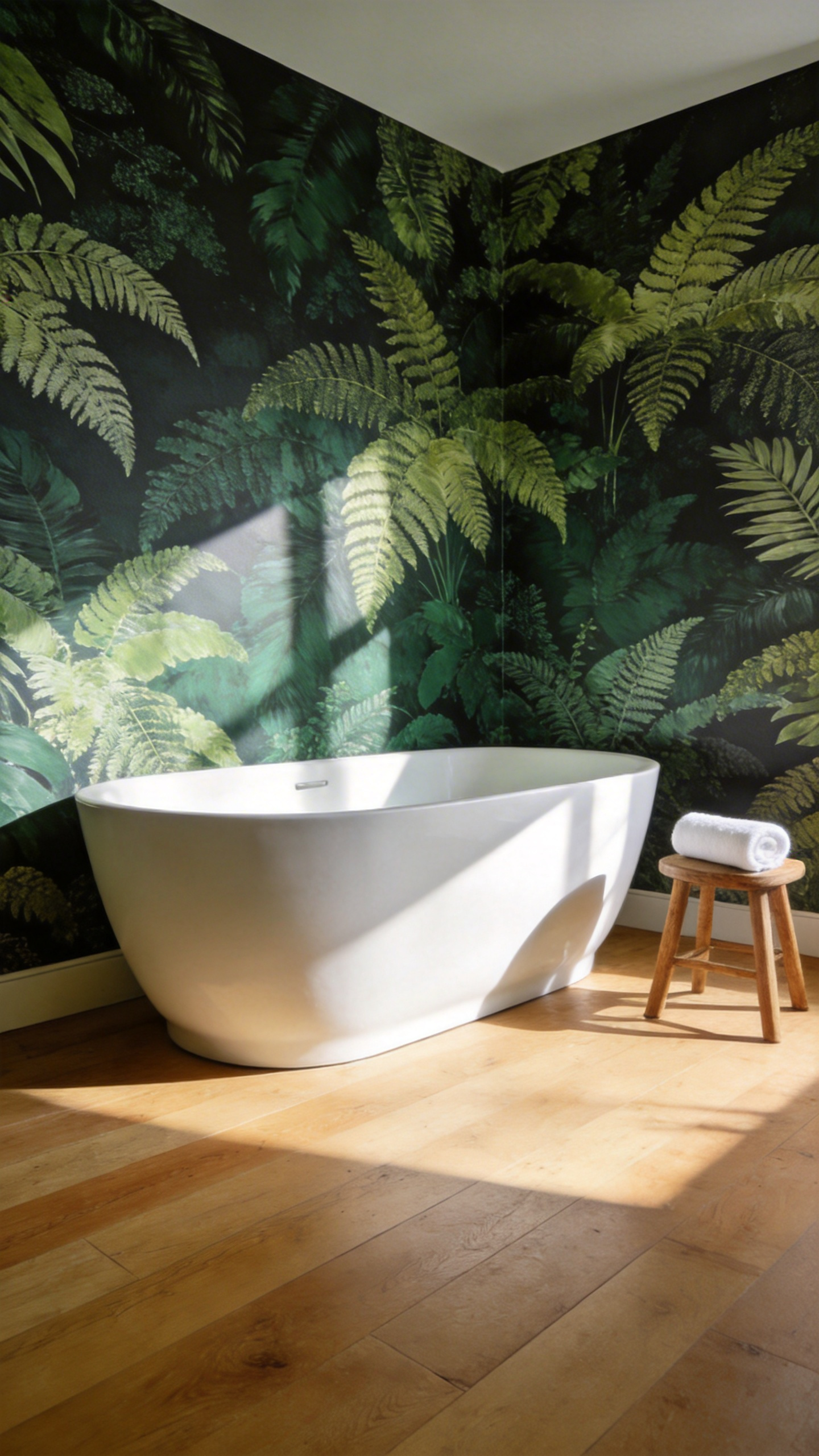
Our visual systems are hard-wired to process natural elements effortlessly. Environmental psychologists call this biological trait “fractal fluency.” Viewing repeating botanical shapes drastically lowers physiological tension. In fact, neuro-aesthetic research shows these organic designs reduce stress by up to sixty percent. Therefore, botanical wallpaper easily induces a meditative state known as soft fascination.
Repetitive geometric or damask patterns offer profound cognitive ease. A highly predictable room layout simply allows the brain to rest. This visual stability triggers a calming release of dopamine. However, Chinoiserie murals provide a completely different type of psychological comfort. These dream-like landscapes offer visual generosity through whimsical storytelling. Stepping into these fantasy scenes allows for genuine mental escapism.
A restorative sanctuary also needs to engage multiple senses. Bathrooms generally feel loud and cold due to hard porcelain and tile. Therefore, textured wallcoverings act as crucial acoustic dampeners. Materials like heavy vinyl or grasscloth absorb the harsh sounds of running water. Touching these matte surfaces provides a deeply grounding connection. Wrapping the room in texture removes visual and auditory noise. Next, your mind can focus entirely on the soothing ritual of the bath.
1. Redefining the washroom: Transitioning from utilitarian space to a mindful wellness sanctuary
For decades, bathrooms functioned strictly as hygiene zones. Sterile white tiles dominated these spaces to prioritize sanitation. However, modern wellness architecture is shifting this focus. Today, this private room acts as a mindful wellness sanctuary. Technology catalyzed this change. Advanced waterproof fiberglass wallcoverings survive heavy daily moisture easily. Indeed, immersive wallpaper can thrive directly inside a shower stall.
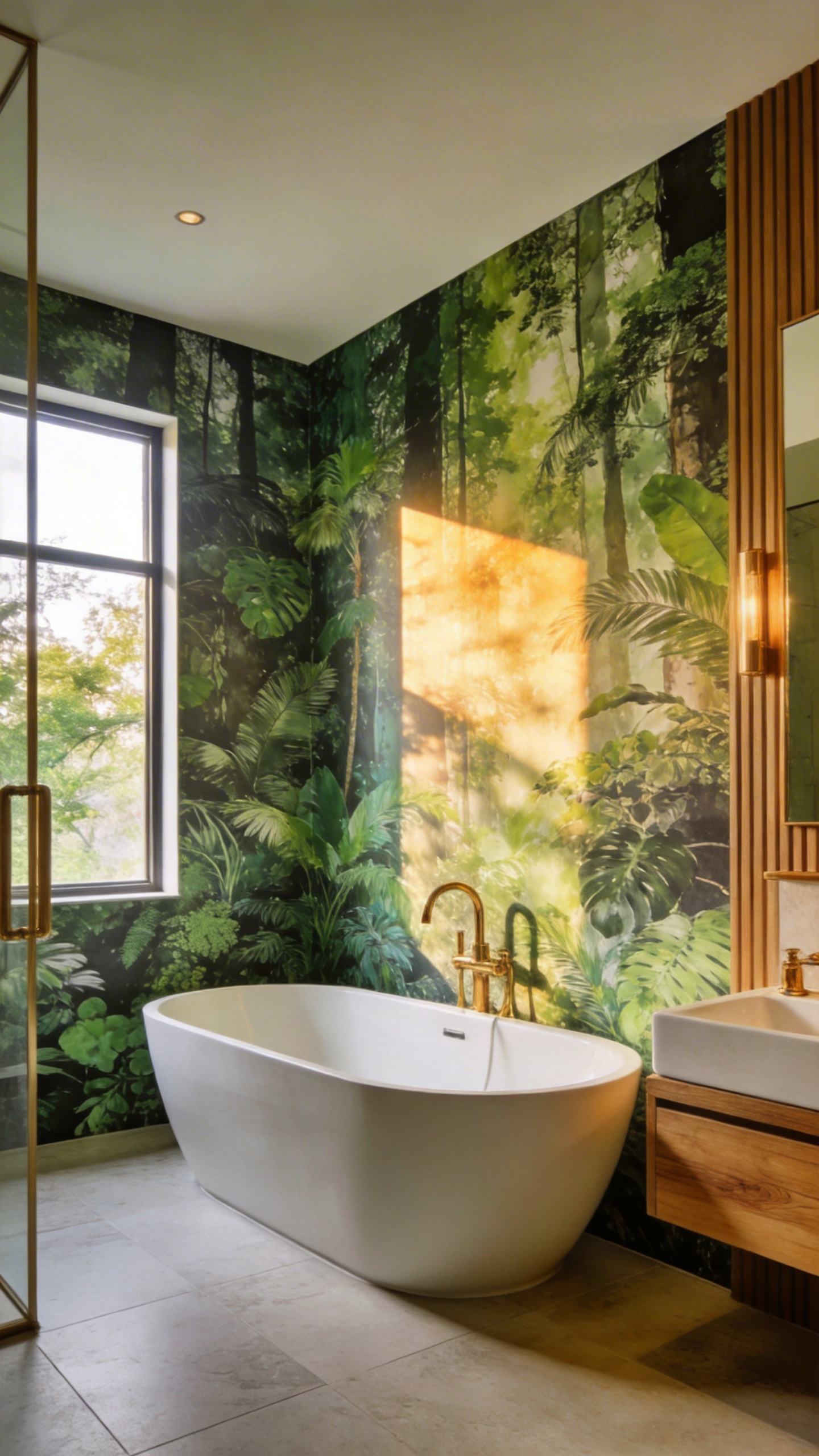
This evolution directly supports our psychological wellbeing. Neuroaesthetics reveals how these spaces actively alter brain chemistry. Many current bathroom wallpaper trends emphasize this shift toward healing environments. Viewing botanical fractal patterns reduces cortisol significantly. Layered leaf motifs naturally lower your resting heart rate. Meanwhile, abstract mountain murals provide soft fascination for wandering minds. A basic shower transforms into a meditation.
Biophilic design bridges indoor spaces and the natural world. Embossed papers mimic tactile textures like raw grasscloth. This visual warmth softens cold porcelain and chrome surfaces. Designers also employ chromotherapy to regulate our circadian rhythms. Muted sage greens inspire gentle feelings of renewal. Inkwell blues prompt the brain to release relaxing melatonin. Carrying these immersive patterns onto the ceiling creates a protective cocoon effect. This approach turns a basic service room into a personalized haven.
2. The psychology of pattern: How strategic wallcoverings subconsciously regulate the nervous system
The bathroom is one of our most vulnerable spaces. Therefore, patterned wallcoverings act as vital regulators for the nervous system. Our brains are hardwired to process natural patterns. Designs featuring repeating botanical prints or marble veining trigger “fractal fluency.” Viewing these organic repetitions induces a state of soft fascination. This visual processing can actually reduce your stress levels by 60 percent.
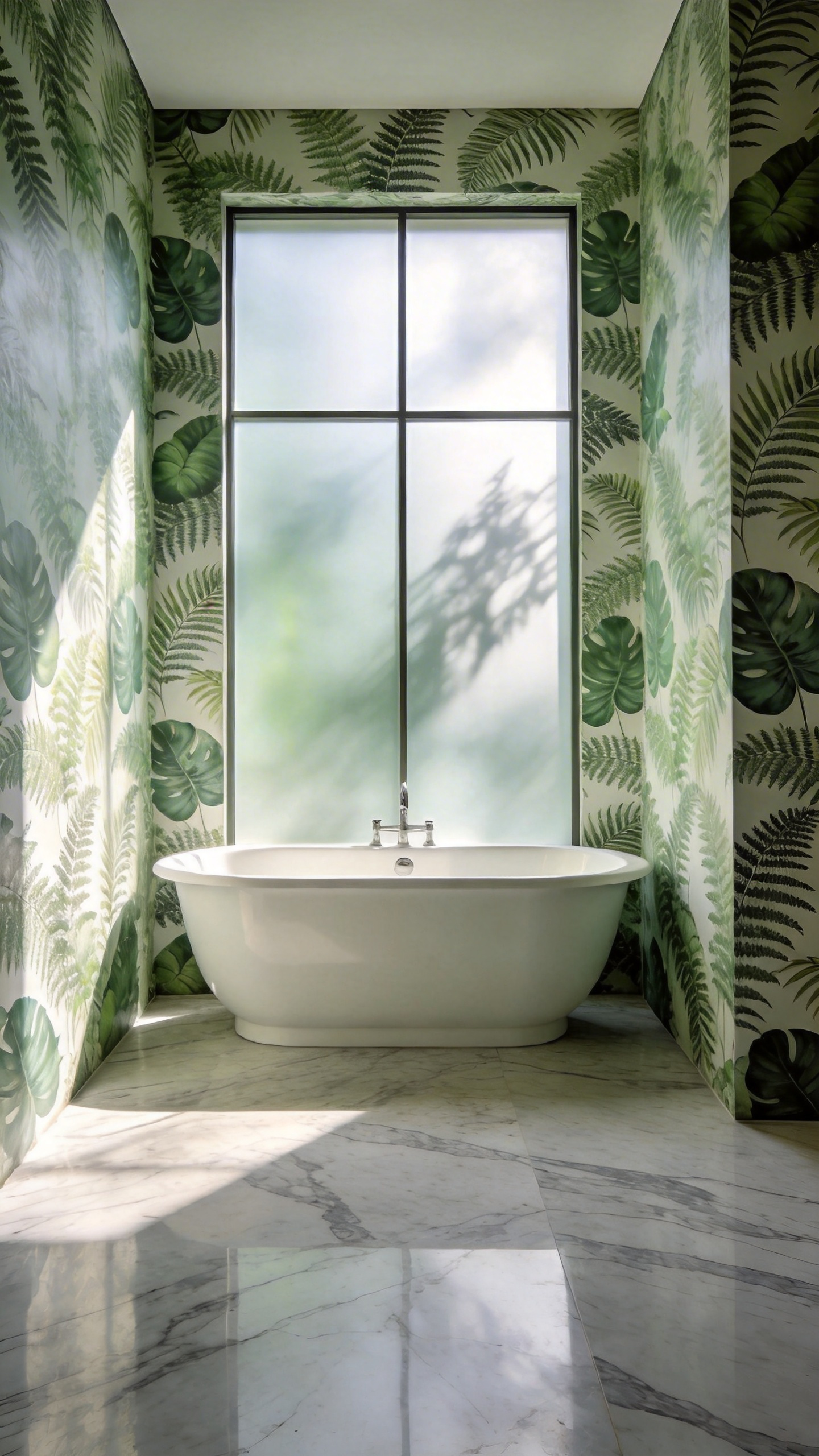
The shapes within these patterns matter deeply. Human brains instinctively interpret sharp, rigid tile lines as potential threats. Biomorphic wallcoverings instead mimic the fluid curves of water and foliage. These sweeping lines allow the eye to rest without scanning for danger. This creates an enveloping sense of security while we are unclothed.
Pattern scale also alters our spatial perception. Small, high-density prints often create overwhelming visual noise in confined areas. Instead, oversized botanical murals serve as a cognitive decompressor. They provide a visual horizon that prevents feelings of claustrophobia. Strategic wallpapering transforms the bathroom into a healing haven. Textured grasscloth absorbs harsh acoustic echoes, keeping your body calm.
3. Visual feng shui: Balancing the bathroom’s dominant water elements with earth-inspired imagery
Bathrooms present a unique energetic challenge. Constant downward water flow naturally drains a home’s vitality. Therefore, Feng Shui uses the Earth element for balance. Earth controls Water like a protective riverbank levee. You can use wallpaper to create this vital boundary. Sandy or stone-textured visuals provide grounding containment. Without this barrier, emotional energy symbolically flushes away.
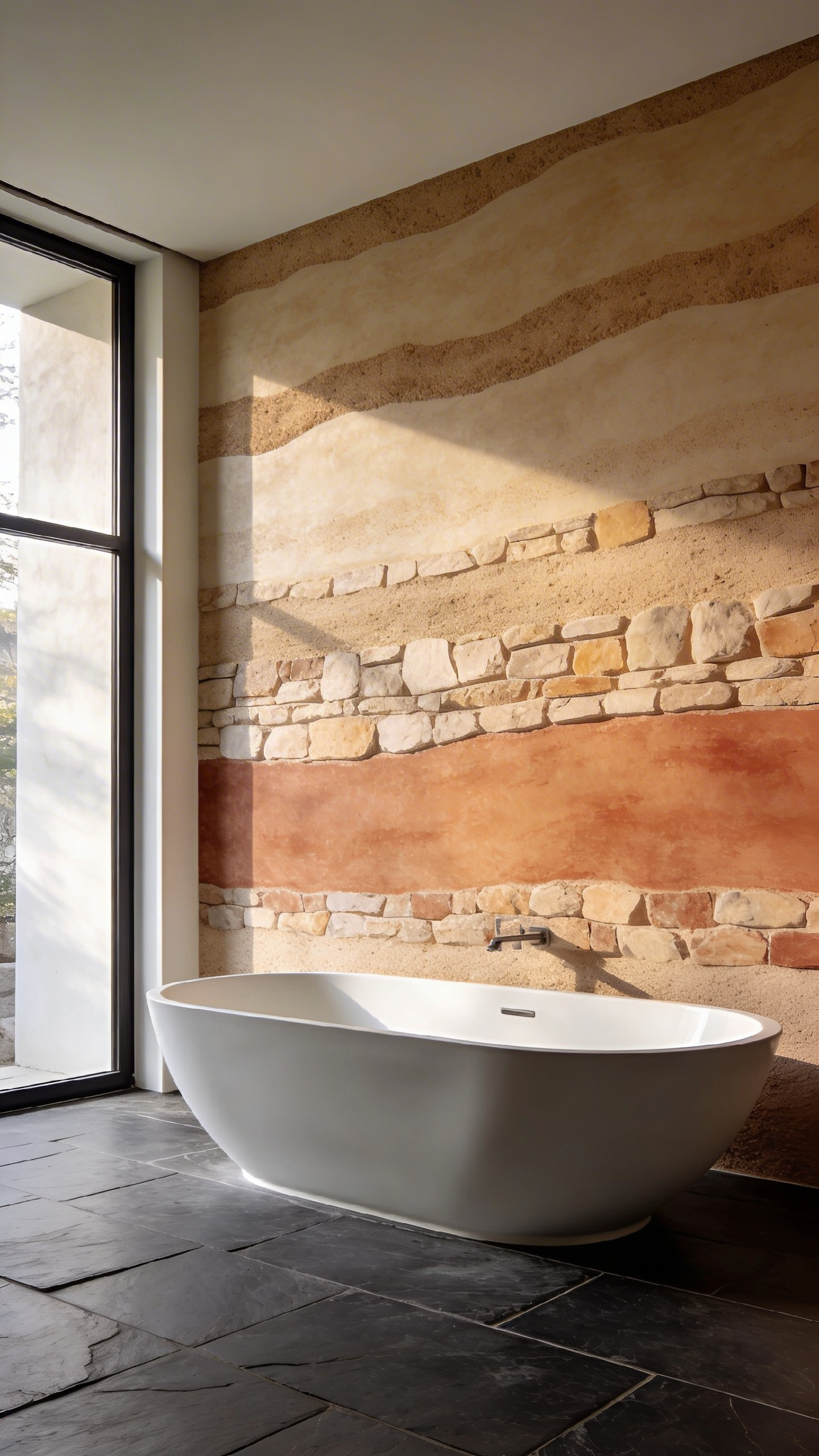
Introducing mountain imagery offers psychological stability. This concept mirrors the protective Black Tortoise in Feng Shui. Ideally, select flat-topped mesas over rounded, water-like hills. Place this mural behind the vanity for a commanding position. Geometric squares effectively represent the structured Earth element. Tactile wallpapers mimicking terracotta tiles add necessary heaviness. This physical depth directly counteracts water’s leaky nature.
Bathrooms are naturally cold, damp, Yin spaces. We must introduce warm Yang qualities through color. Shades like ochre and terracotta visually dry the dampness. Consider incorporating verticality to lift sinking energy upward. Wallpaper featuring vertical rock strata acts bilaterally. First, the visual stone dams the excess water energy. Meanwhile, the vertical lines redirect vitality back into your home.
4. Chromatherapy foundations: Selecting color frequencies that support morning vigor and evening calm
Blue is the standard for calm in traditional interior design. However, chromatherapy reveals a surprising biological conflict. Blue light frequencies actively inhibit melatonin production. A blue bathroom might inadvertently disrupt your sleep cycle. Instead, prioritize low-melanopic palettes for evening serenity. Soft amber or muted terracotta wallpapers are ideal. These earthy hues preserve your natural sleep-wake rhythm seamlessly.
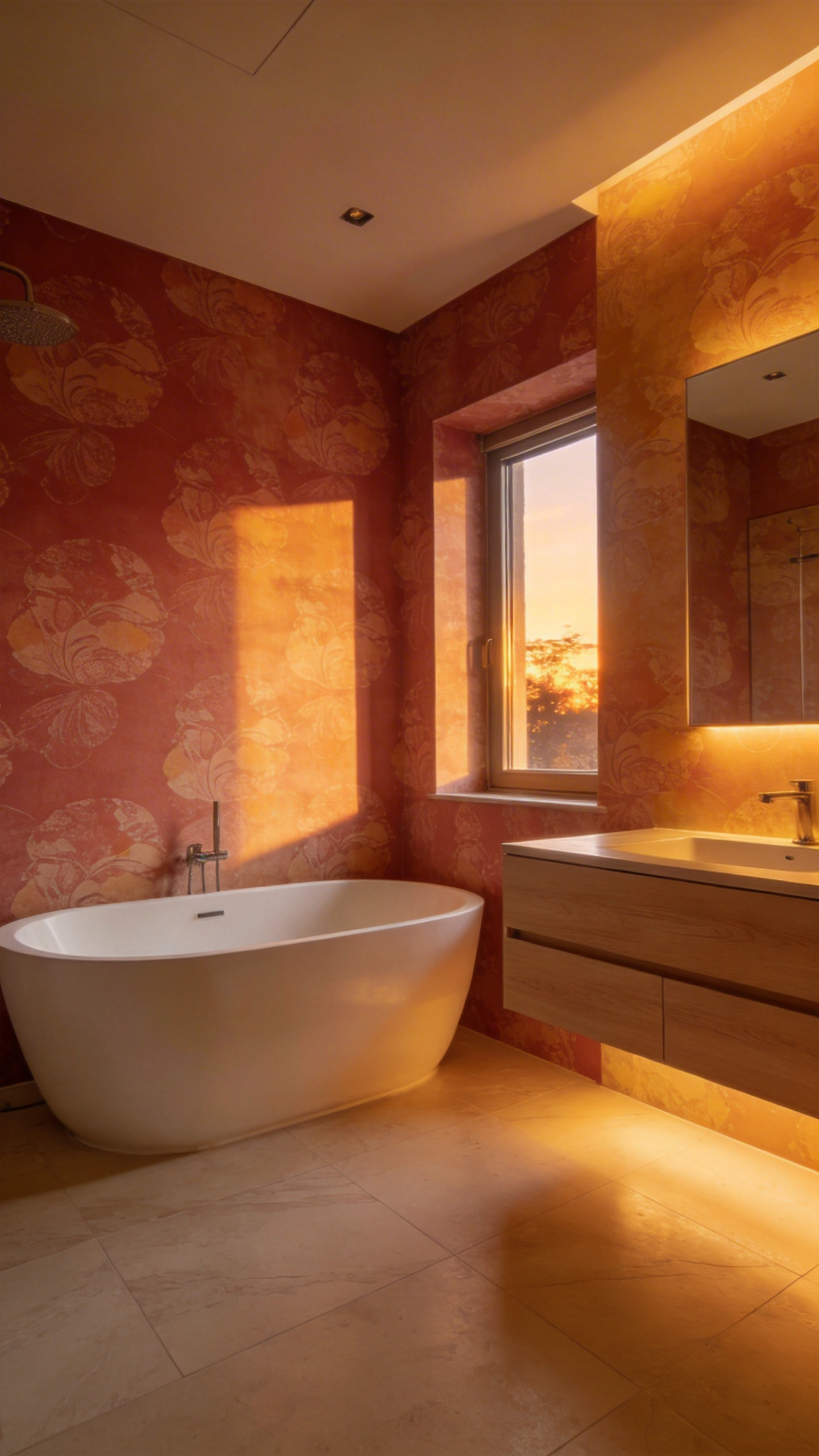
Morning routines require highly stimulating color frequencies. Yellow and red wavelengths act as a biological solar engine. They naturally increase heart rate and cellular energy. Pure red can feel overwhelming in small enclosed spaces. Thus, we use chromatic drenching with diluted bright hues. Pale lemon-zest or blush-coral botanicals work beautifully here. High light reflectance bounces this stimulating energy around efficiently.
Green serves as the ultimate resting frequency. The human eye requires minimal muscular adjustment to perceive it. Biophilic fractal patterns like repeating ferns actively reduce stress. Physical texture plays a vital role in modulating color. Smooth, glossy finishes often create harsh glare that irritates eyes. Textured wallpapers like natural bamboo provide gentle diffuse reflection. This micro-shadowing effect physically softens the space. Choosing the correct hue and texture curates deep wellness.
II. Material exploration: Healthy, moisture-conscious science
Bathrooms are no longer just functional utility spaces. They are true sanctuaries of wellness. Selecting wallpaper for steamy environments involves careful material science. Impermeable solid sheet vinyl was historically the primary choice. However, this plastic shield traps condensation behind the wall. Hidden mold can grow in poorly ventilated areas. Modern healthy design favors breathable, non-woven substrates. These natural cellulose webs allow moisture to evaporate safely. High-end materials integrate silver nanoparticles into their molecular structure. These silver ions disrupt mold spores to prevent colonization. Some surfaces even feature light-activated photocatalytic coatings. Your walls passively purify the enclosed bathroom air.
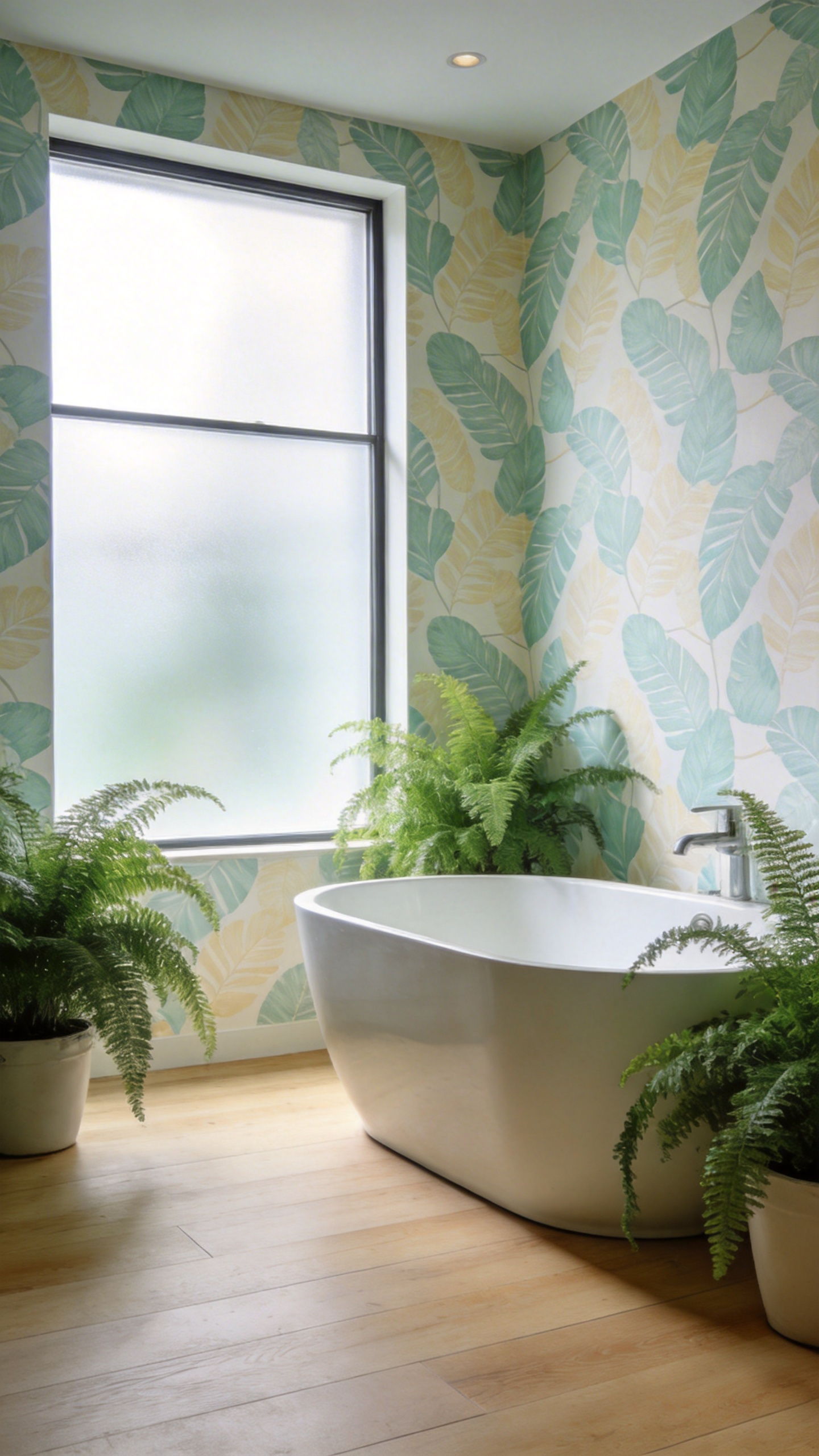
True wellness requires thermal and acoustic comfort. Thick fabric-backed papers act as soft acoustic dampeners. This reduces the harsh echo of cold porcelain tiles. Wallpaper engineered with low thermal mass feels noticeably warmer. Less steam condenses into dripping water droplets. The healthy home movement demands modern phthalate-free alternatives. Hot steam accelerates the leaching of toxic plasticizers. Choosing certified PVC-free materials directly protects your daily respiratory health.
5. The myth of the damp room: Specifying truly breathable, mold-resistant substrates
A common bathroom design myth suggests we must strictly seal out moisture. This approach actually traps humidity. Wrapping a room in plastic paints creates a suffocating environment. Trapped steam condenses behind walls to fuel hidden mold growth. Wellness architecture looks to historical precedents like traditional lime plaster. Lime acted as a breathable lung for interior spaces. Its high pH made it incredibly toxic to mold. Modern construction sadly replaced lime with paper-faced gypsum drywall. This modern drywall acts like a giant moisture sponge. Builders began aggressively sealing walls to protect vulnerable drywall. True wellness requires specifying breathable substrates that manage vapor naturally.
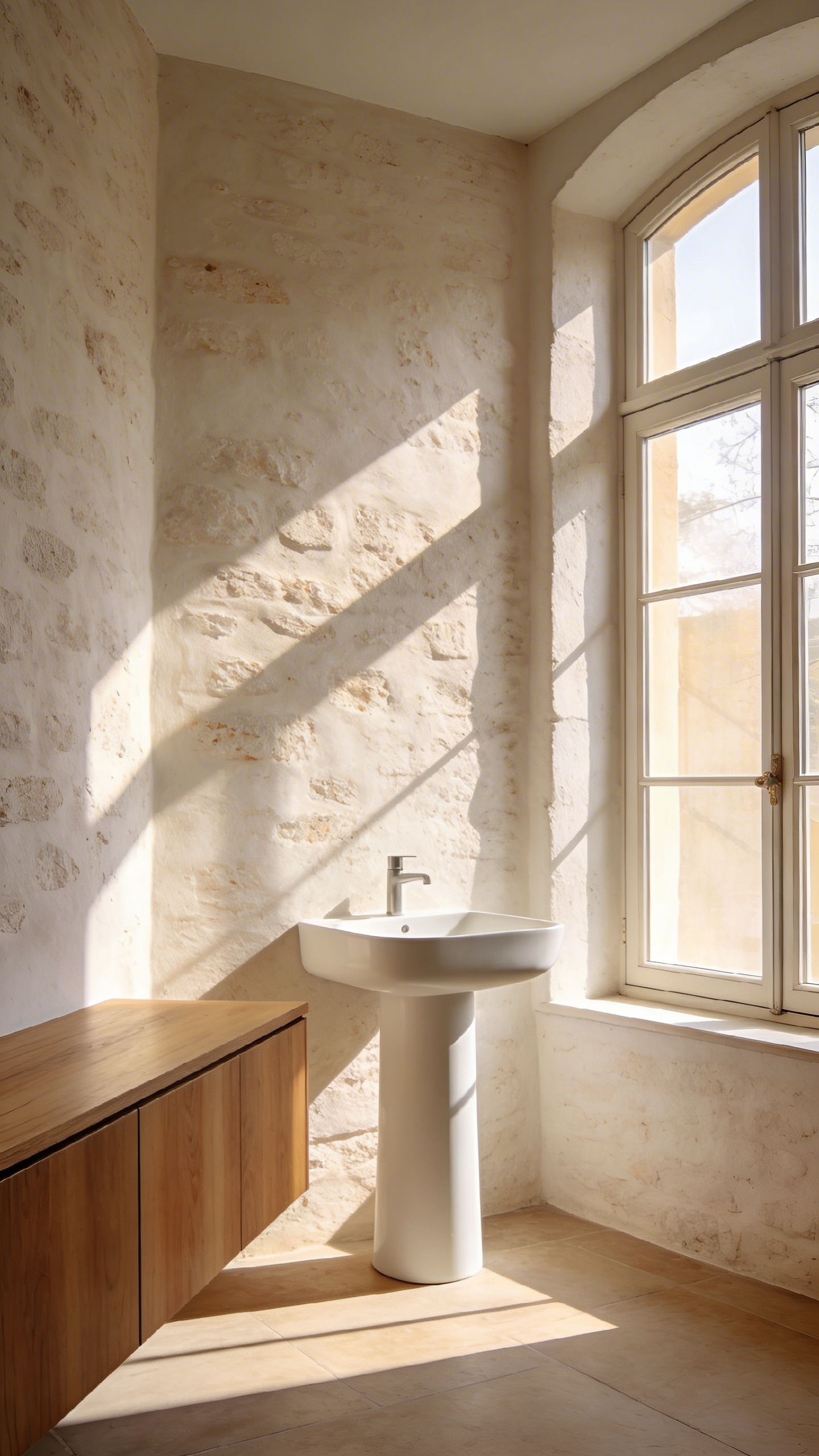
Builders measure breathability using Permeability or perm ratings. A healthy bathroom wall utilizes a Class III vapor retarder. This specific rating allows steam to pass through and dry naturally. Applying breathable non-woven wallpaper over an oil-based primer traps moisture. This mismatched assembly creates a dangerous vapor throttle. Magnesium Oxide board offers the ultimate high-end substrate solution. This solid material absorbs almost zero moisture. These boards provide a stony, permanent texture beneath your wallpaper. These breathable assemblies offer a softer interaction with interior light. Hygroscopic walls help regulate temperature for greater physical comfort. Your bathroom feels like a grounded, breathable sanctuary. These dynamic environments promote both structural health and daily happiness.
6. Vinyl-free innovations: High-performance, non-toxic wallcoverings engineered for humid zones
Traditional vinyl wallcoverings acted like plastic raincoats in our bathrooms for decades. Building scientists recently identified a critical flaw with this approach. These impermeable barriers trap moisture behind the walls. This creates an unseen haven for hidden mold and mildew. Therefore, the wellness architecture movement warmly welcomes high-performance, vinyl-free innovations. Modern non-woven materials are engineered to be actively breathable. Their open-cell structure allows damp bathroom walls to dry naturally.
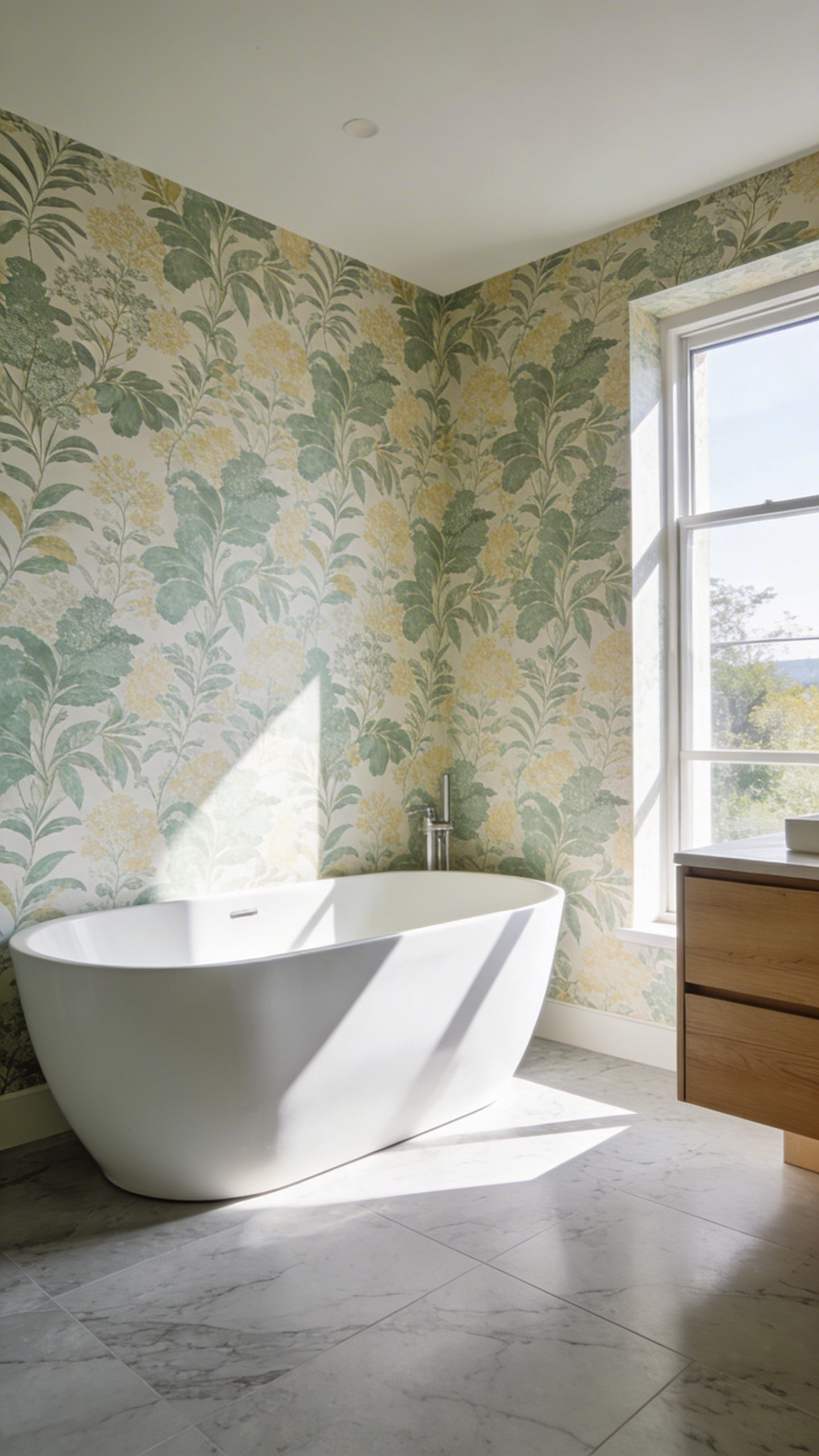
These non-toxic alternatives prioritize your sensory and physical wellbeing. Traditional vinyl released harmful volatile organic compounds and phthalates. Steamy bathrooms often smelled like cheap shower curtains. Modern vinyl-free options utilize bio-based polymers like PLA or durable PET. You can breathe deeply without inhaling a chemical cocktail. Many of these healthy materials proudly carry rigorous Greenguard Gold certifications.
The shift from synthetic shine to tactile serenity is profound. Plastic wallcoverings previously reflected artificial light with a cold, clinical glare. Modern woven materials beautifully diffuse light to create a matte finish. This gentle texture mimics the calming ambiance of a luxury spa. These high-performance materials are engineered to be dimensionally stable. They will not expand when wet or peel at the seams. They easily withstand rigorous scrubbing while maintaining their beautiful pigment. Choosing vinyl-free wallcoverings protects both your physical health and your sanctuary.
7. Clean adhesives: Demanding zero-VOC pastes to protect indoor air quality in enclosed spaces
Selecting the right adhesive is vital for your health. Bathroom micro-climates act as powerful chemical accelerants. Heavy steam dramatically multiplies toxic VOC emission rates. Typical humidity increases formaldehyde off-gassing by 32 times. Poorly ventilated spaces quickly fill with a toxic fog. Zero-VOC paste becomes a crucial biological defensive strategy. Decorators historically hung wallpaper using simple wheat or flour pastes. Modern clean adhesives elevate these safe, edible mixtures. They combine modified starches with smart, mold-preventing biocides. Synthetic glues smell harsh and create plastic films. Professional installers typically favor natural, clay-based paste formulations instead. These thick mixtures offer a faint, earthy starch scent.
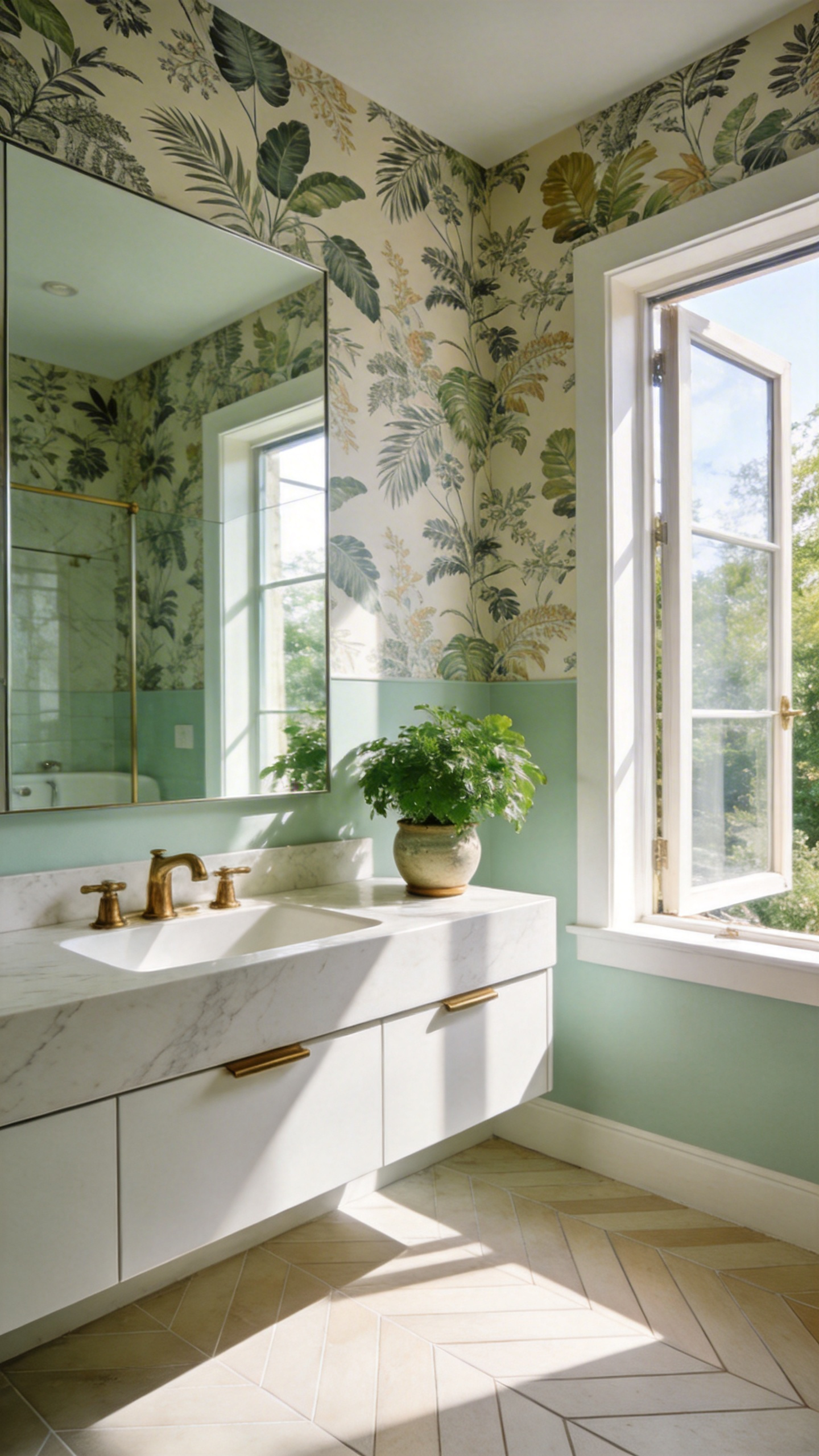
This permeable clay allows trapped moisture to safely escape. It actively prevents insidious mold growth behind your walls. Many homeowners choose peel-and-stick products for easy renovations. Petroleum-based backings often hide harmful phthalates and flexible plastics. Traditional unpasted paper paired with clean glue remains superior. It gives you absolute control over your room’s chemistry. Always demand rigorous third-party certifications for your chosen pastes. EMICODE EC1 Plus ensures chemical emissions are barely measurable. GREENGUARD Gold diligently tests for over 360 individual compounds. These strict standards protect your respiratory health and wellbeing.
8. Antimicrobial finishes: Exploring the new science of self-cleaning and allergen-reducing papers
The bathroom has long been a battleground for dampness and unseen microbes. Victorian designers championed antiseptic wallpapers to combat this issue. Modern wellness architecture offers a far more sophisticated solution today. New antimicrobial finishes transform passive decoration into active environmental management. Many modern wallpapers integrate silver-ion technology directly into their layers. These ions puncture bacterial cell walls to prevent harmful biofilms from multiplying. This creates a constant immune system for your walls.
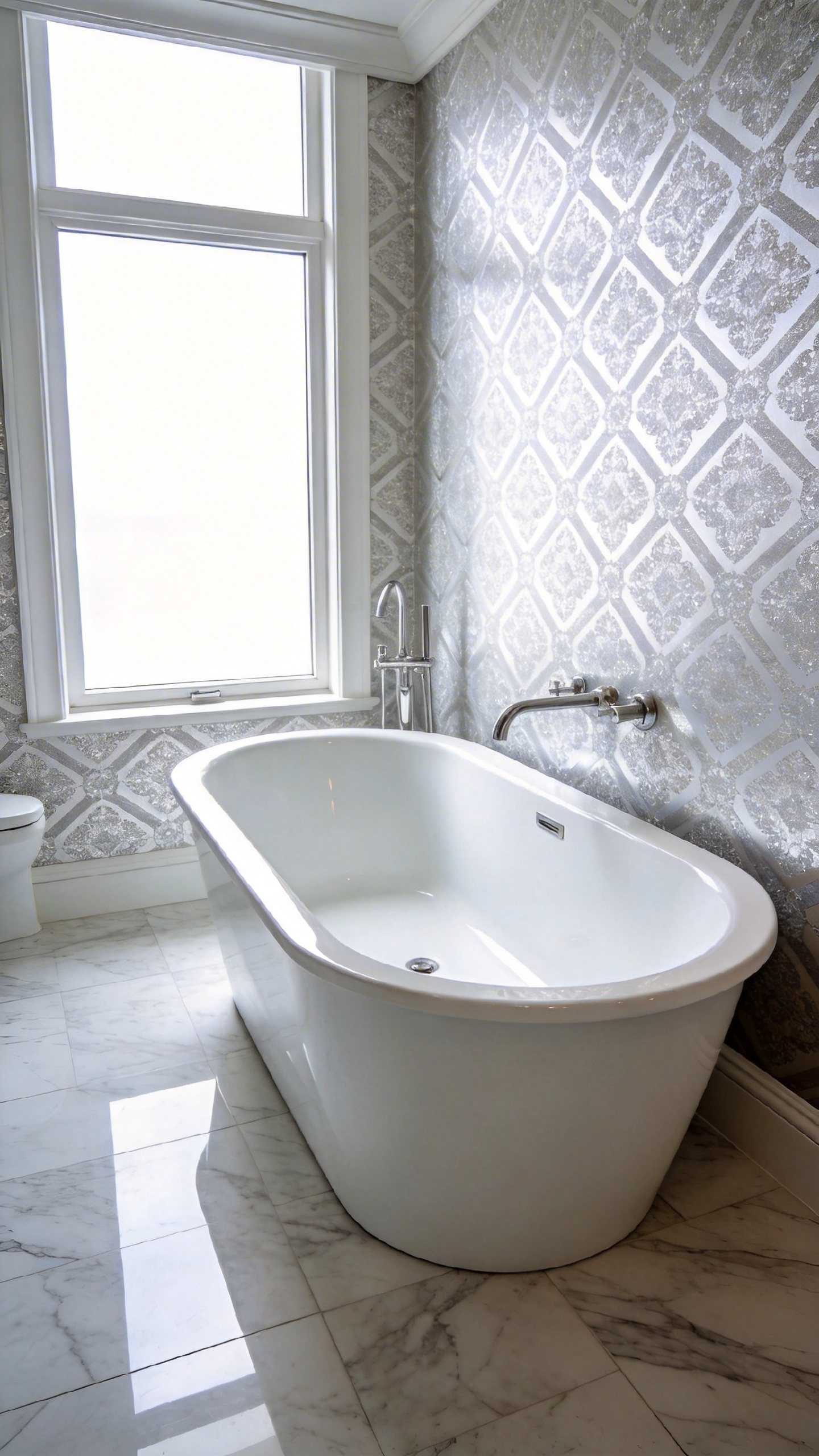
Some papers utilize titanium dioxide to trigger a self-cleaning chemical reaction. This microscopic layer actually digests organic matter when exposed to bathroom light. It eliminates musty odors and hairspray residue without harsh chemical scrubbing. These advanced papers avoid the slick, plastic sheen of traditional vinyl. They offer a cool, matte finish that breathes naturally.
Allergy sufferers can find immense relief in new allergen-reducing papers. Japanese innovators use mineral structures acting like microscopic Velcro. These walls actively trap and neutralize airborne triggers like dust mites. Some papers even embed dormant probiotics into the fibers. These good bacteria awaken to consume organic allergens like mold spores. Invisible liquid glass coatings allow you to use luxurious grasscloth safely. These molecular finishes repel water while keeping your sanctuary flawlessly healthy.
III. Spatial application: Designing with biophilia and light
Designing with biophilia transforms your bathroom into a wellness tool. Nature-inspired wallpaper leverages an evolutionary concept called fractal fluency. Human eyes easily process self-repeating natural patterns like fern leaves. Viewing these patterns drops stress levels by up to sixty percent. This visual ease triggers relaxing alpha brain wave activity. Choosing botanicals with statistical complexity provides soothing soft fascination.
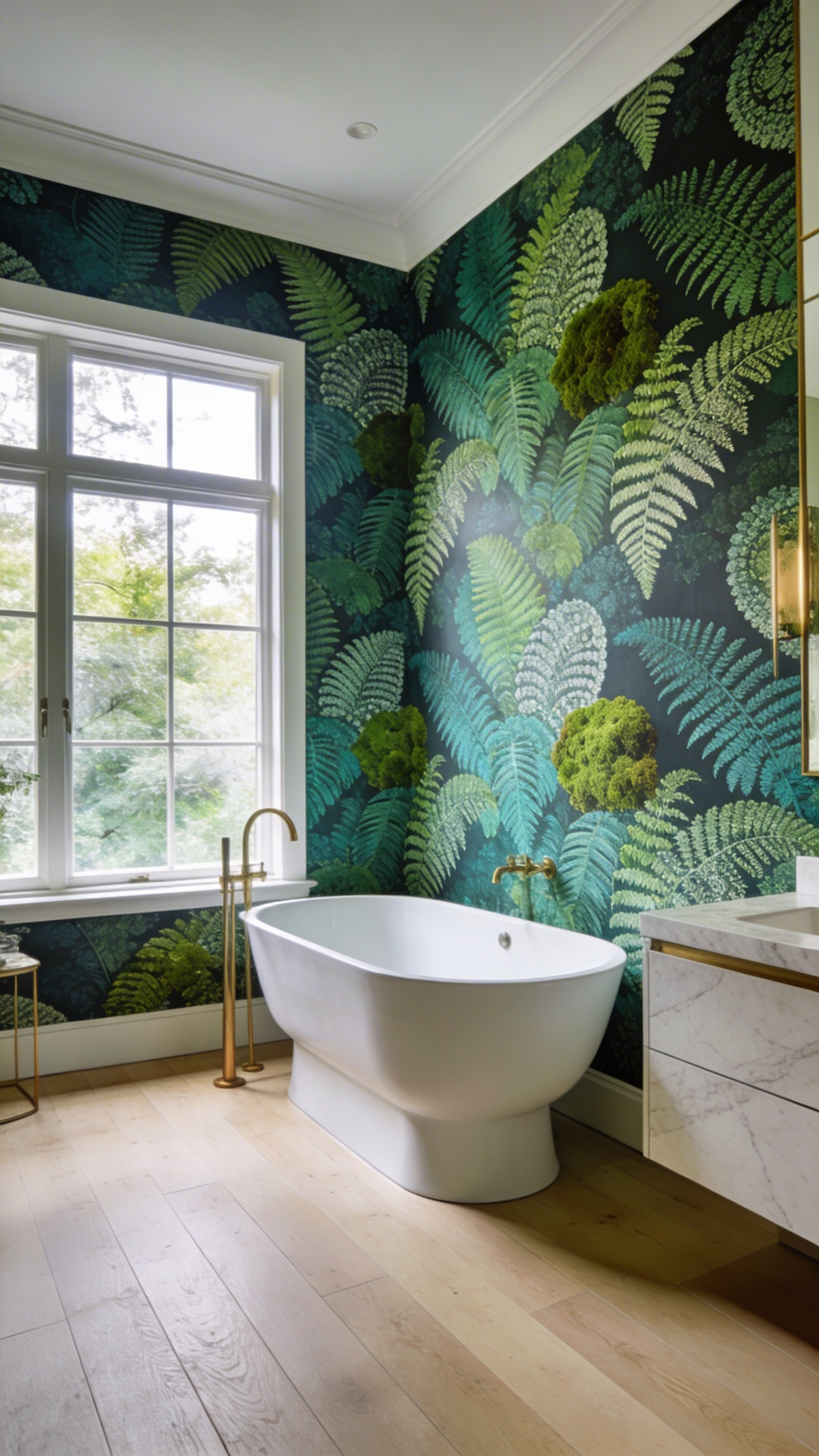
Lighting plays a crucial role in spatial wellness application. Modern wallpapers often feature metallic or pearlescent sugar-finish textures. These active surfaces breathe when paired with circadian lighting. Different pigments catch the changing ambient illumination as daylight shifts. This interaction creates non-rhythmic sensory stimuli resembling dappled sunlight.
Human psychology profoundly craves the balance of prospect and refuge. A dark forest mural creates a comforting, protective cave. A deep-perspective ocean scene opposite a mirror adds vast depth. Many homeowners find that using these large-scale bathroom wall art pieces provides a superior sense of scale. This strategic illusion prevents small bathroom spaces from feeling claustrophobic.
Ancient Roman baths used oculi to illuminate geometric tiles historically. We combine dynamic light and biophilic murals quite similarly today. The modern bathroom functions as a biological reset chamber. This powerful spatial strategy actively regulates cortisol and promotes holistic wellbeing.
9. Biophilic canopies: Applying ceiling wallpaper to mimic the grounding effect of a forest canopy
Applying ceiling wallpaper to mimic a forest canopy goes beyond simple decoration. It leverages evolutionary psychology to transform your bathroom into a restorative sanctuary. An overhead canopy triggers a primal safety response in the human brain. This psychological shield lowers cortisol levels while you bathe. The overhead enclosure also provides visual grounding for the nervous system. You view organic leaf fractals rather than a sterile white ceiling. Research shows viewing these repeating natural patterns can reduce stress by sixty percent.
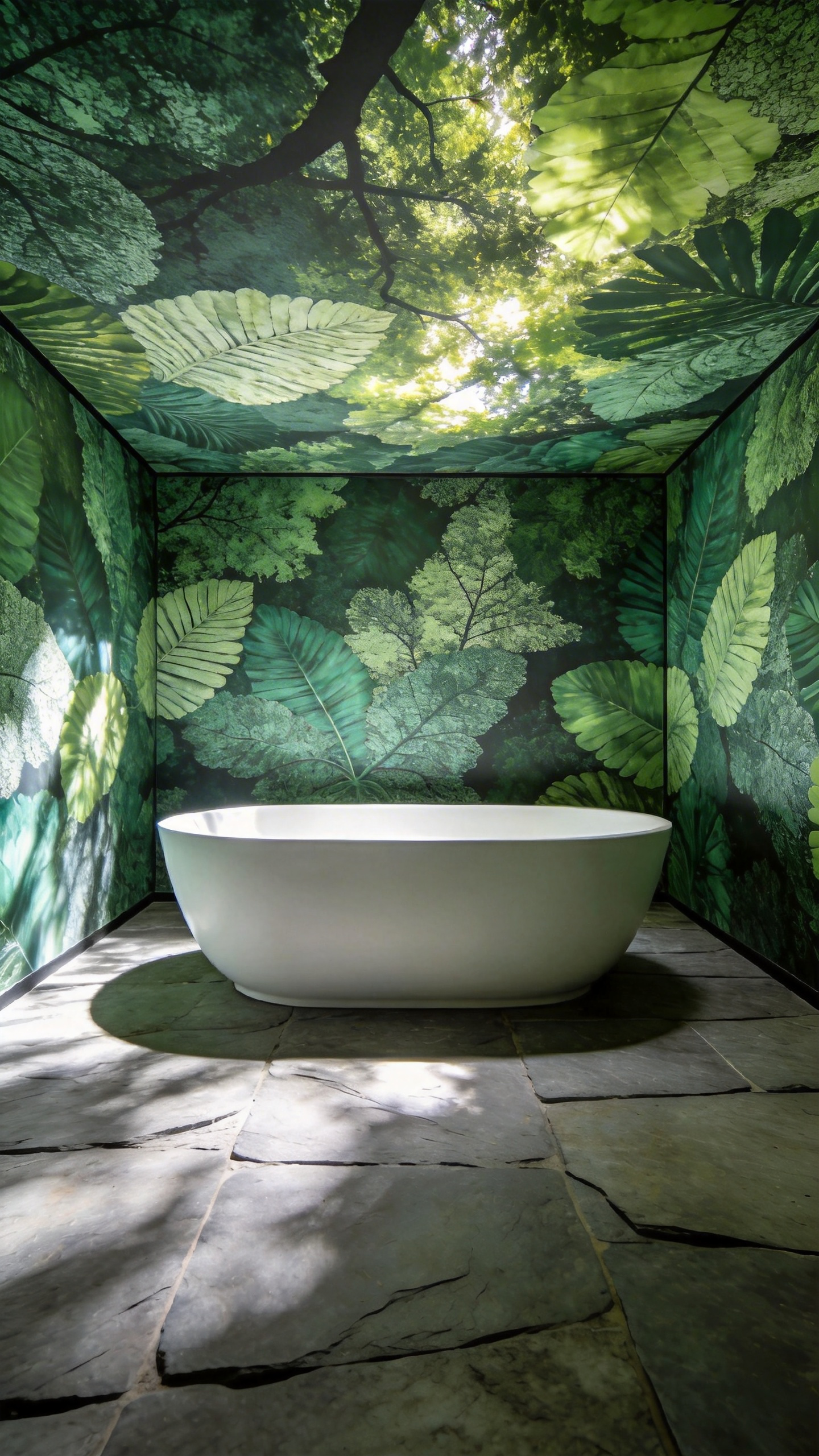
Authoritative biophilic design mimics the actual behavior of light in nature. High-definition murals beautifully capture dappled sunlight filtering through green trees. Pairing this paper with recessed lighting creates a sun-drenched forest glow. The space achieves a vertical depth making small bathrooms feel taller. This immersive approach echoes classical Renaissance ceiling painting techniques. Modern wellness architecture replaces painted celestial heavens with the soothing wild.
You might worry about humidity ruining traditional cellulose paper. Breathable fiberglass wallpaper has completely revolutionized this fifth wall. These waterproof substrates can now be applied directly inside shower stalls. This durable installation turns daily routines into a meditative forest bath.
10. The powder room immersion: Utilizing dark, cocooning botanicals for deep sensory grounding
Powder rooms have evolved from mere utilitarian spaces into immersive wellness portals. These windowless rooms leverage the cocoon effect to promote deep sensory grounding. Dark enclosed environments easily lower visual noise and signal deep neurological safety. Dark botanical wallpapers mimic the biological feeling of being securely sheltered. This aesthetic draws heavily from vivid 17th-century Dutch still-life paintings. These maximalist designs use striking contrast to emphasize lush natural beauty. Viewing organic shapes like vines triggers a calming parasympathetic nervous response.
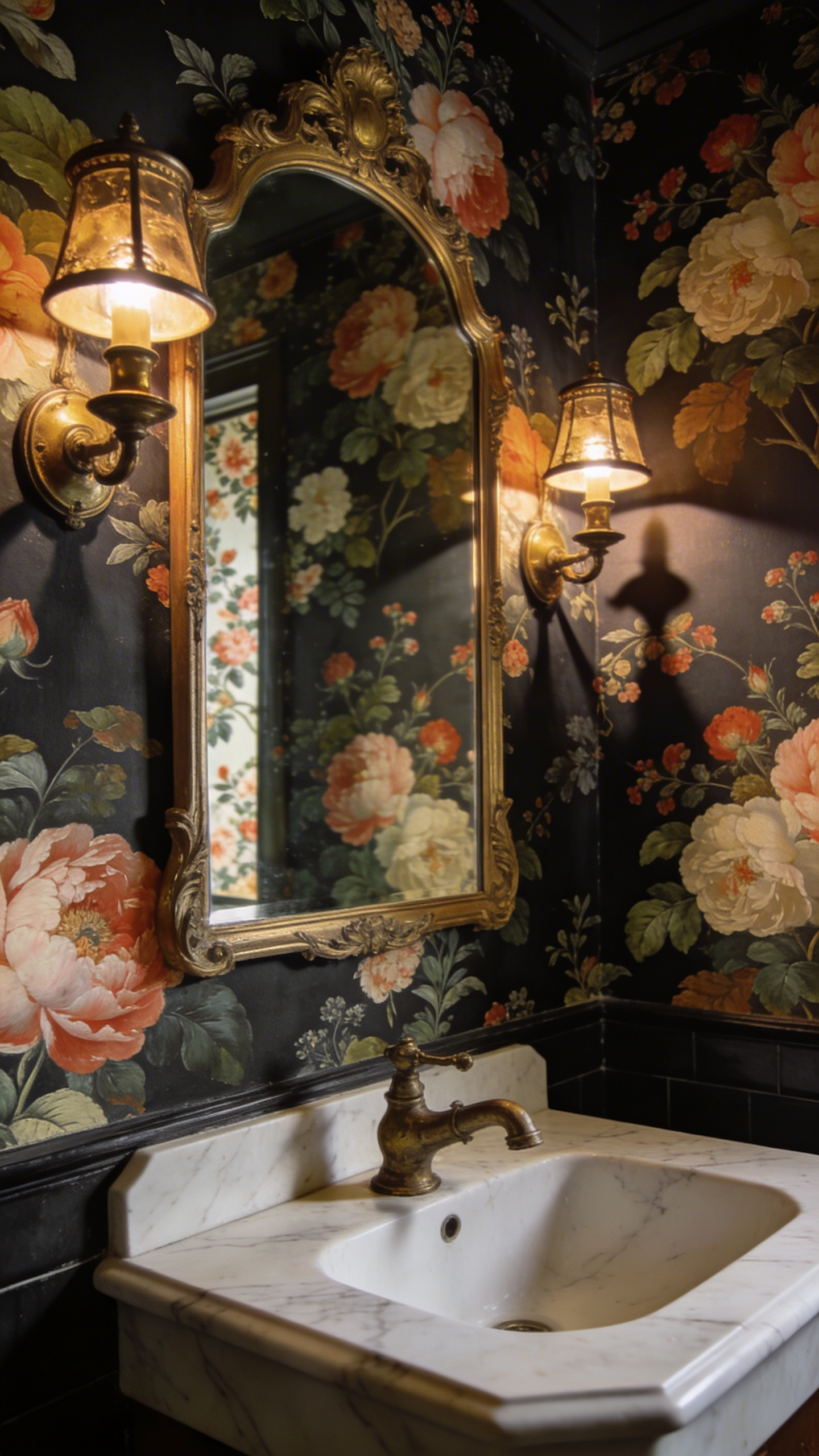
Deep botanical backgrounds absorb light rather than reflecting it harshly. This matte quality eliminates glare and helps your overstimulated mind relax. Modern non-woven wallpapers feature velvety tactile depths for physical grounding. Pairing these tactile visuals with earthy scents like sandalwood completes the sensory immersion. Utilizing an oversized floral scale is crucial for this spatial illusion. A single massive bloom can make a tiny room feel incredibly expansive. This muralistic scale blurs sharp corners into an endless, restorative horizon. Botanical maximalism turns a basic half-bath into a stealth wellness retreat.
11. Strategic zoning: Harmonizing waterproof tadelakt plaster with statement feature-wall coverings
Designing a bathroom that feels like a sanctuary requires careful spatial zoning. Pairing waterproof Tadelakt plaster with statement wallpaper creates profound sensory balance. This technique unbundles the traditional Moroccan hammam experience. You can create a seamless wet-pod for showering while keeping the room warm. The monolithic, silky-waxy texture of the plaster beautifully grounds graphic, maximalist wall coverings. Pulling a minor accent color from the wallpaper into the plaster unifies the space.
This pairing fundamentally supports a healthy, breathable indoor environment. Tadelakt relies on a natural chemical reaction called saponification instead of synthetic paints. Artisans rub the lime plaster with black olive oil soap during application. This forms calcium stearate, an insoluble membrane that naturally repels water. This surface remains vapor-permeable, meaning the wet-zone walls can still breathe. It regulates room humidity and prevents mold growth to protect your wellbeing. This regulated humidity protects your delicate feature wallpaper from peeling or bubbling.
The physical transition between these materials requires precise architectural detailing. Moisture must not wick from damp plaster into the wallpaper edges. Expert designers incorporate a small shadow gap using aluminum reveal beads. This intentional ten-millimeter recess creates a crisp, architectural floating effect. Maintaining this harmonized space is incredibly simple and chemical-free. Both materials require gentle, non-abrasive care without harsh acids or bleach. Occasional cleaning with diluted olive soap keeps your sanctuary pristine and restorative.
12. Circadian illumination: Pairing reflective, mica-infused papers with tunable wellness lighting
Mica is far more than a decorative element. This silicate mineral acts as a biological mirror. It features thin, translucent sheets that refract light. It creates a diffuse-specular pattern across the wall. This unique refraction amplifies the effects of tunable wellness lighting. It ensures blue-rich wavelengths reach your eyes evenly. These specific wavelengths stimulate the brain for morning alertness.
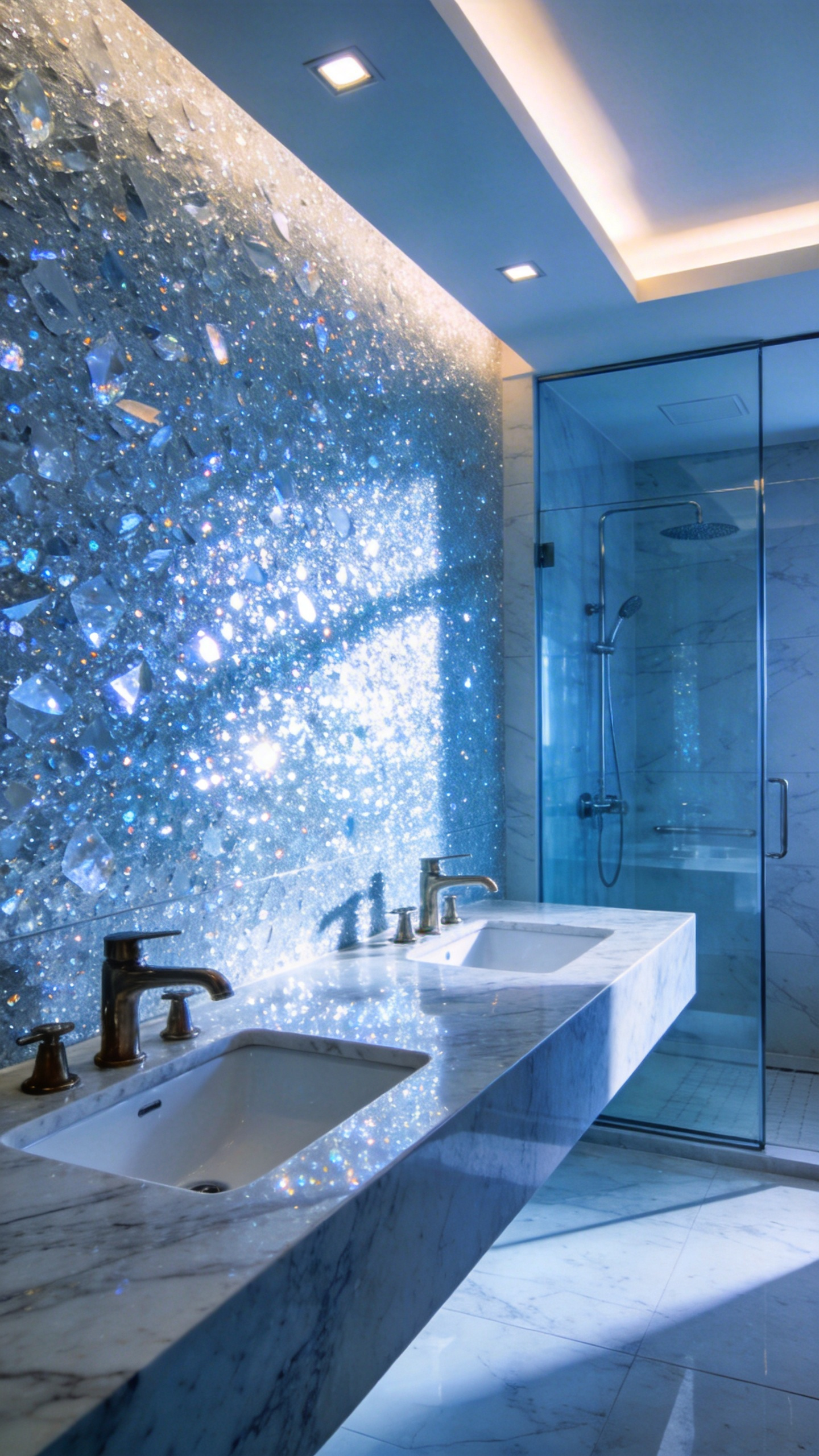
This bio-interactive surface constantly morphs throughout the day. Cool-white lighting hits the mica during the morning surge. The walls emit a silvery-blue shimmer as a result. This crisp reflection suppresses melatonin to wake you up. Evening lighting shifts to warm, soothing amber tones. The mica absorbs these warmer tones differently. The room transforms into a candlelit sanctuary. This mimics ancestral firelight and actively prepares your body for sleep.
Designers recommend wall-grazing lighting techniques to maximize this effect. Placing LED strips in a recessed ceiling cove works best. The light skims down the mineral chips perfectly. This adds incredible visual depth without causing harsh glare. Modern bathroom-grade mica uses breathable backings and varnishes. Steam will not degrade this crystalline, health-boosting landscape.
13. Spatial expansion: Using expansive landscape murals to alleviate claustrophobia in windowless baths
Windowless bathrooms completely lack exterior views. This total absence of natural light often triggers a subconscious stress response in enclosed spaces. Introducing an expansive landscape mural effectively alleviates this severe enclosure stress. These vast nature scenes allow the brain to experience soft fascination. This psychological shift naturally lowers your resting heart rate. You must avoid dense forest designs that inadvertently make small spaces feel restrictive. Choose expansive vistas featuring a broad aerial perspective instead. Looking down into a misty valley offers a genuine visual escape.
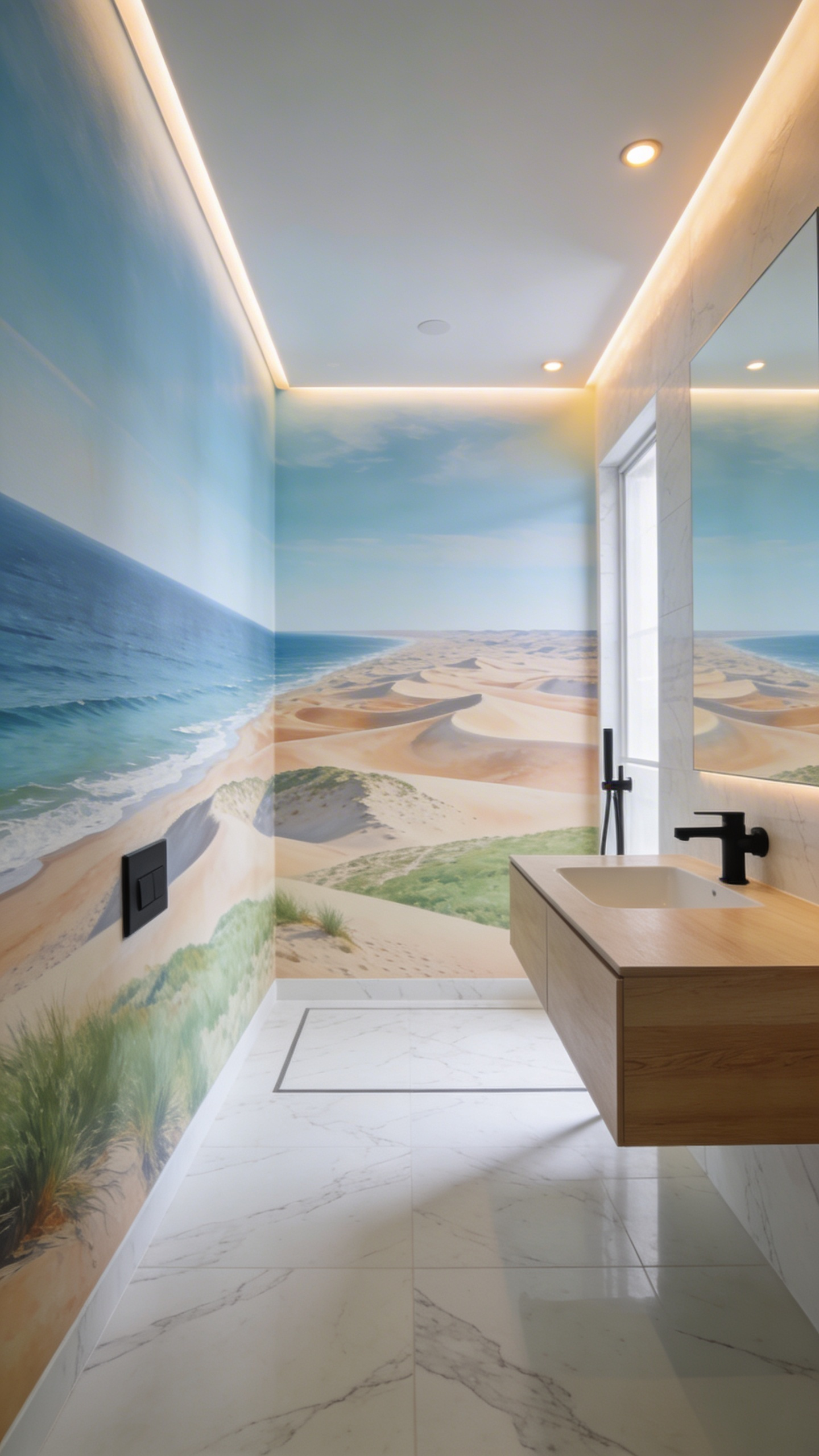
Placement ultimately determines the success of this optical illusion. You should set the mural’s horizon perfectly at standing eye level. This ideal placement typically measures exactly 57 to 60 inches from the floor. Designs featuring a single vanishing point powerfully pull your gaze through the wall. The physical boundary is completely broken. Cool receding tones use color physics to visually push boundaries backward. Soft misty blues create a highly convincing atmospheric perspective. Contrasting crisp foreground details against softly blurred backgrounds perfectly mimics human vision.
Damp environments always demand highly durable material science. Standard peel-and-stick papers inevitably fail without proper room airflow. Experts highly recommend installing Type II Commercial Grade Vinyl. This non-porous material resists lingering steam and mildew effortlessly. You should seal the entire installation using a clear matte liquid laminate. This crucial step removes any unrealistic plastic sheen under harsh artificial lights. Strategic lighting choices must validate this entire sensory illusion. Deploy daylight LEDs with a high CRI rating to simulate natural sunshine. Position a directional spotlight directly above the mural’s depicted light source. This cleverly aligns real physical shadows with the painted perspective beautifully.
IV. Lifestyle integration: Curating the daily spa ritual
Bathing was historically a public activity. The modern bathroom serves as a strictly private sanctuary today. Wellness designers are abandoning cold, clinical white spaces. These stark rooms often trigger a stressful, high-pressure response. Immersive wallpaper reclaims the historical “Jewel Box” legacy instead. It establishes an emotional architecture for your daily ritual. Warm narratives like vintage sketches soften the environment. The space becomes a true continuation of your home.
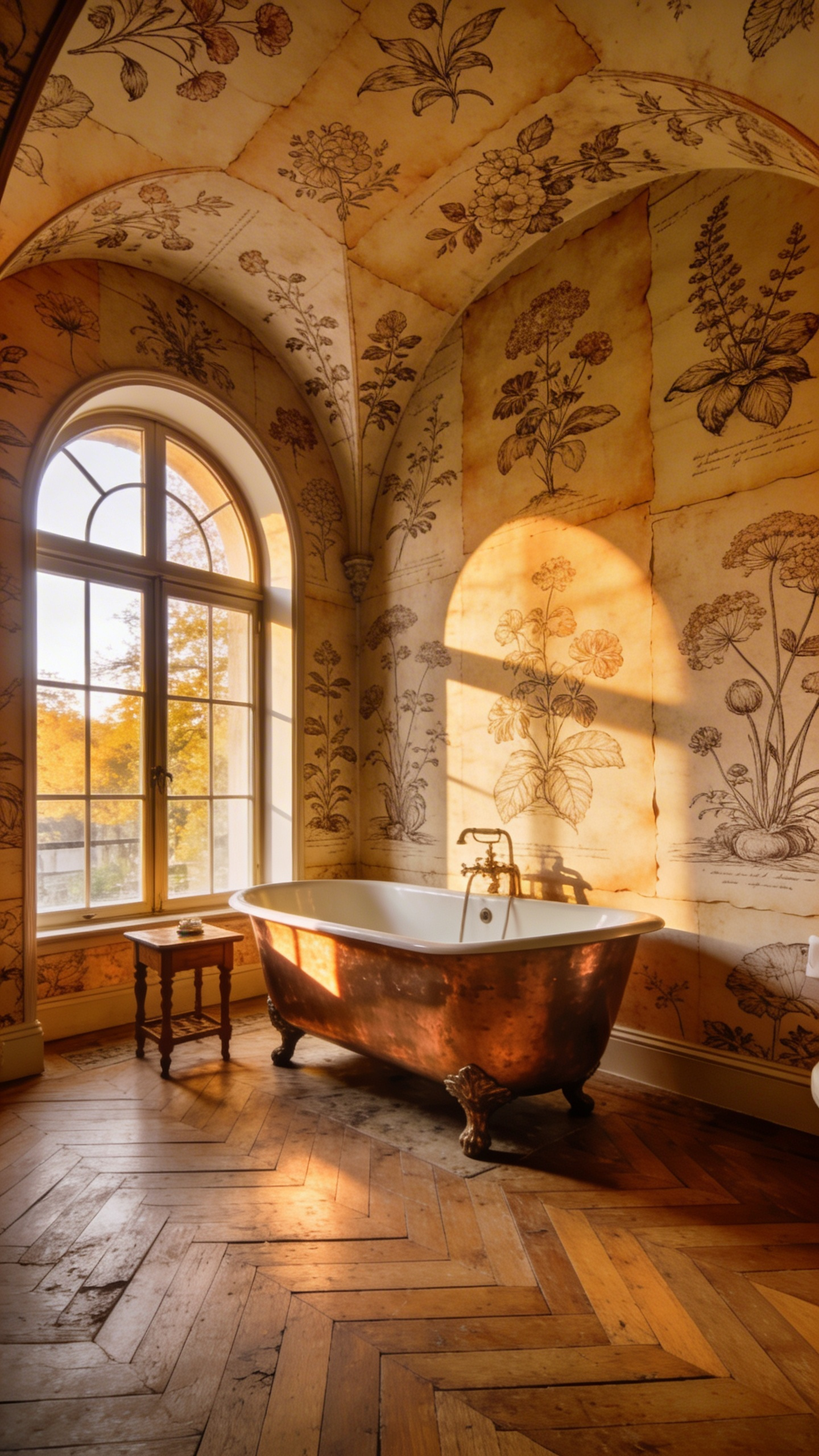
Biophilic wall coverings act as a powerful wellness tool. Botanical motifs bring indoor forest bathing to life. Viewing natural fractals actively lowers your cortisol levels. This exposure activates the parasympathetic nervous system. This biological shift promotes a vital “rest and digest” state. A misty woodland scene serves as a visual anchor. The wallpaper acts as a calming mantra during shower meditation. Your brain transitions smoothly into deep relaxation.
Sensory depth matters just as much as visual appeal. Flat bathroom tiles create a harsh acoustic bounce traditionally. Textured reliefs like Anaglypta provide essential tactile resilience. These deeply embossed surfaces form a quiet, soothing acoustic cocoon. Specific wallpaper patterns act as cues for habit stacking. Dark floral murals signal your brain to unwind. This simple visual transforms basic grooming into a curated spa performance. Intentional design bridges the gap between utility and mindful meditation.
14. Acoustic dampening: Integrating textured grasscloth alternatives to soften harsh echoes for mindful bathing
Modern bathrooms often feature hard marble and glass surfaces. These sleek materials bounce sound aggressively. This creates a harsh flutter echo. This amplified noise disrupts your meditative bathing experience. Prolonged reverberation scientifically increases your cortisol levels. Interior designers are embracing principles of silent architecture. Textured grasscloth alternatives serve as ideal acoustic interventions.
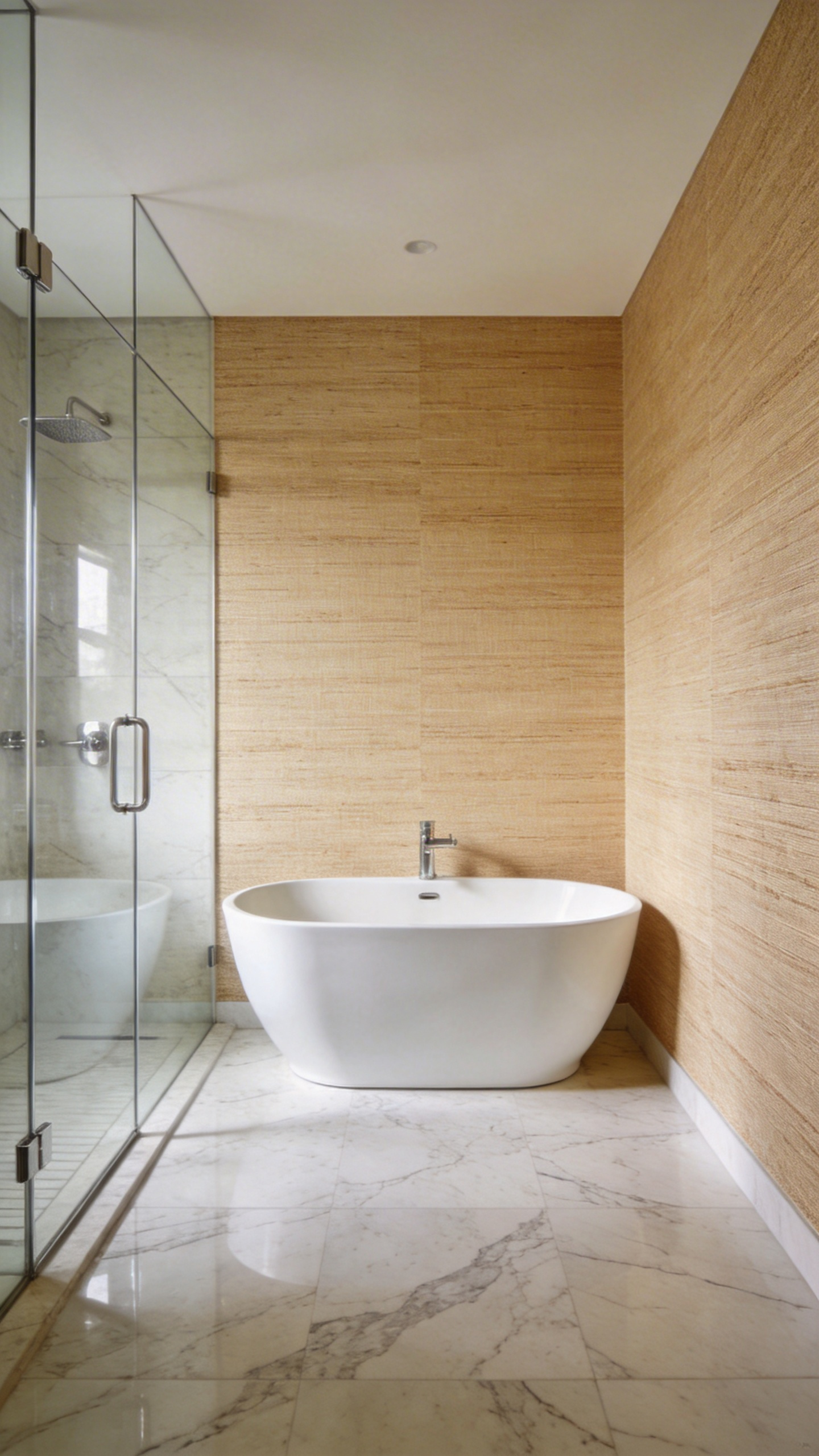
Authentic woven grasses absorb moisture and quickly promote mold. High-performance faux grasscloths are engineered for humid spaces. These modern materials feature a deeply embossed vinyl face. They utilize a breathable core and felted backing. This three-layer structure traps sound energy quite effectively. These wallpapers achieve impressive noise reduction coefficients. Standard tile simply cannot compete with this acoustic softening.
These textured walls provide crucial visual noise reduction. They replace harsh glares with a matte, hand-loomed aesthetic. This tactile warmth mentally prepares you for relaxation. Applying this material to just one wall captures reflections. Integrated silver-ion technology keeps the surface medically hygienic. Your bathroom transforms into a true auditory sanctuary.
15. Olfactory synergies: Aligning visual botanical prints with your aromatherapy and steam rituals
True wellness architecture engages multiple senses simultaneously. Pairing botanical wallpaper with aromatherapy creates powerful olfactory synergies. Neuroscience reveals a biological phenomenon called crossmodal association. Visual stimuli actually prime your brain to receive scent. Viewing soft watercolor flowers lowers your scent detection threshold. Inhaling lavender oil feels exactly like an immersive garden stroll. Roman bathhouses historically painted lush murals to simulate outdoor natural pools. You can find even more inspiring bathroom decor ideas for a spa-like experience that blend these sensory elements perfectly.
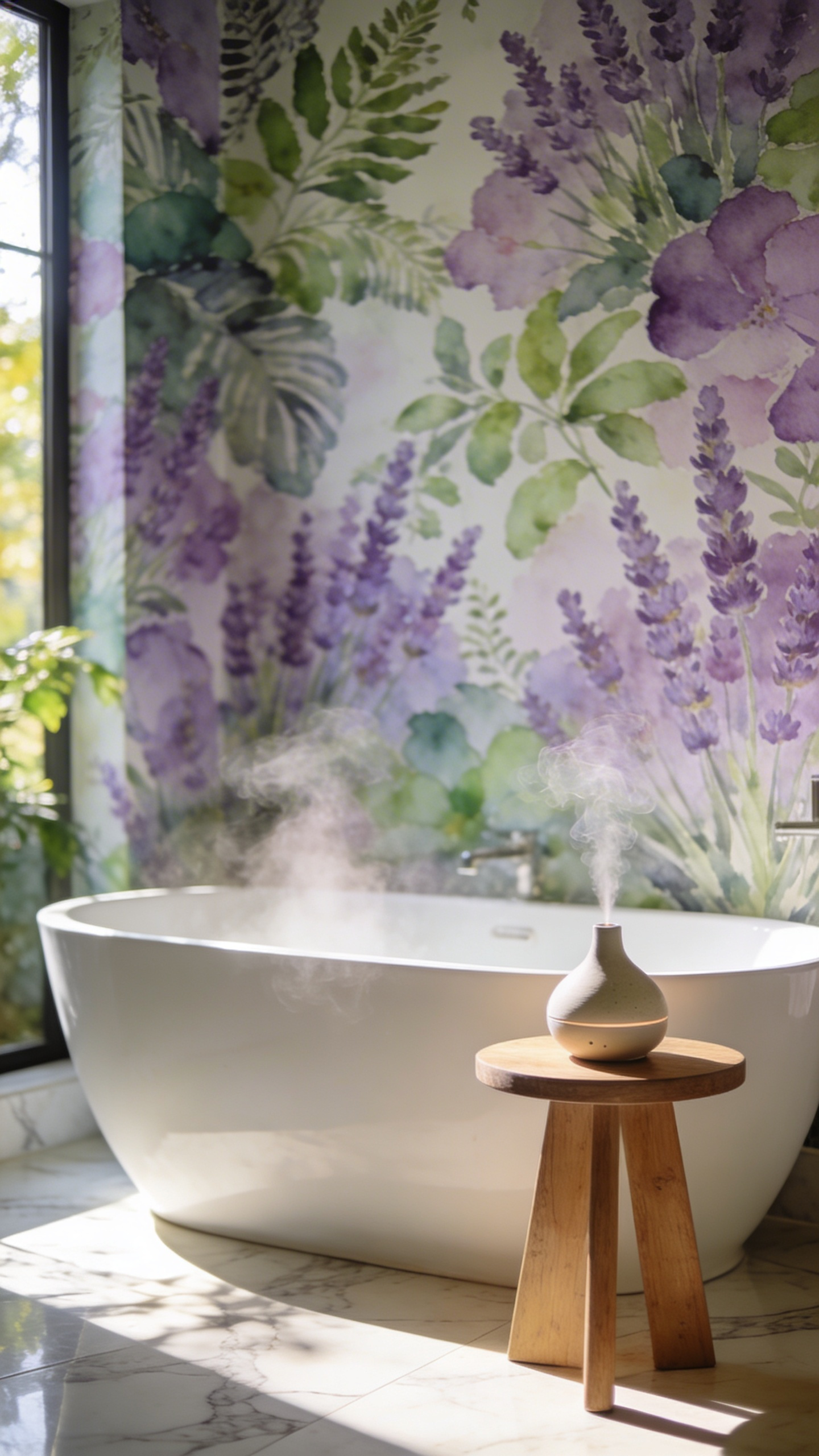
Steam rituals physically alter how we experience these intricate designs. Airborne moisture softens detailed patterns into a moving, dream-like mist. High humidity significantly increases the evaporation rate of essential oils. Pairing green fern prints with eucalyptus effectively lowers cortisol levels. Moody woodland murals paired with cedarwood provide deep psychological grounding. The heavy resinous wood oils reinforce this dark cocooning effect.
Proper material selection is vital for these humid sensory sanctuaries. Always choose heavy-duty vinyl or coated non-woven wallpaper papers. These specific substrates resist moisture and safely prevent mold growth. Matte surface finishes are crucial to prevent harsh light glare. This intentional softness prevents sensory spikes and protects your relaxation response.
16. Aging-in-place elegance: Employing high-contrast, sophisticated prints to aid visual clarity
The bathroom is a critical space for aging-in-place design. Generic hardware like grab bars is simply not enough. Sophisticated wallpaper solves physiological visual challenges beautifully. Our aging eyes receive significantly less light naturally. Edge detection becomes very difficult in monochromatic rooms. Wellness designers use Light Reflectance Value for clarity. There must ideally be a minimum 30-point contrast difference. Dark navy wallpaper contrasts sharply against white sinks. This creates passive wayfinding without looking overtly clinical. High-contrast patterns should remain strictly on vertical walls.
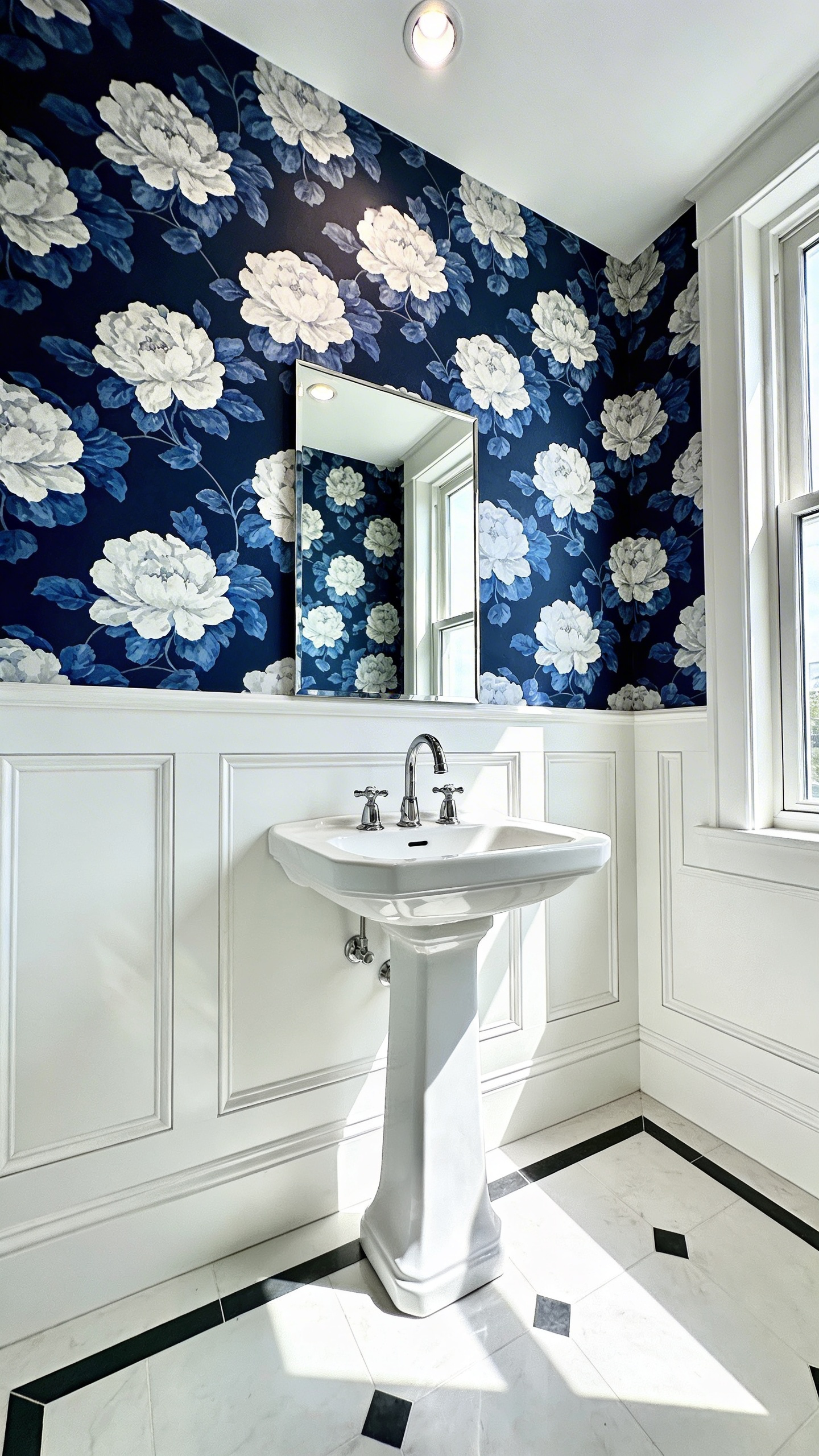
Dark floor patterns can dangerously look like structural holes. Bold wall botanicals provide a reliable spatial anchor instead. Physiological eye changes act like a permanent amber filter. Warm spectrum prints like terracotta remain easily readable. Cool spa blues can look muddy and confusing. Aging eyes are highly sensitive to veiling glare. Polished tiles create blinding hot spots for cataracts. Matte vinyl wallpaper absorbs this harsh reflected light. Subtle textured paper provides a helpful tactile grip cue. Modern universal design strives for truly invisible safety. Utilizing bold prints keeps the room a dignified sanctuary.
17. The digital detox zone: Creating distraction-free, nature-inspired murals to replace screen time
The bathroom was merely a utilitarian space for hygiene historically. It represents our ultimate personal sanctuary today. It offers a rare escape from intrusive digital screens. Nature-inspired murals are transforming these rooms into vital detox zones. By utilizing “soft fascination,” these designs gently capture our attention. Elements like drifting clouds allow our tired minds to rest easily. Nature relies on repeating structural patterns known as fractals. Viewing these fractal designs significantly reduces physiological stress. It actively triggers calming alpha waves in the brain.
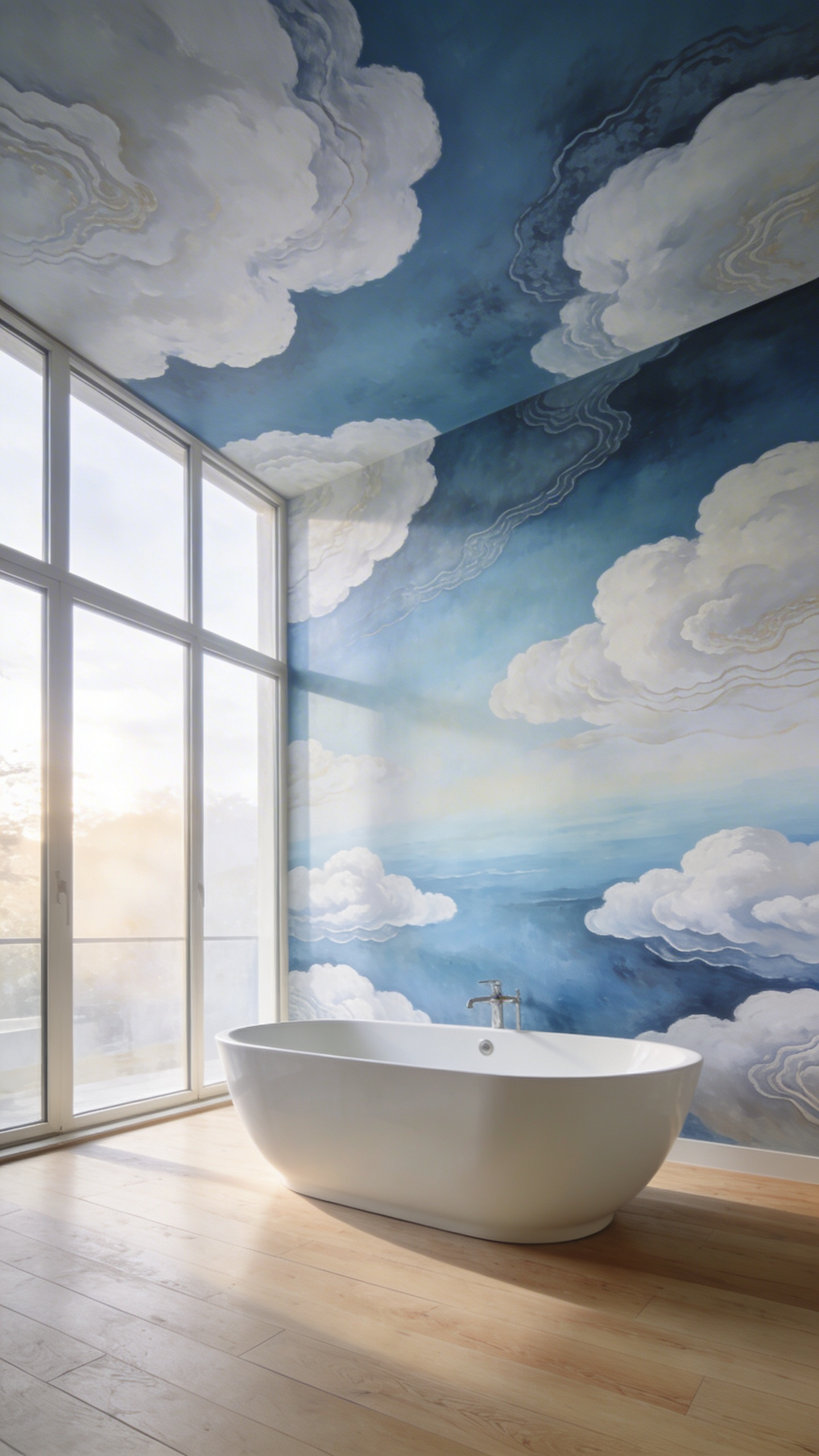
Digital screens are flat and cause significant eye strain. Immersive wall murals offer a healing visual antidote. Designs featuring deep forest paths create an illusion of extent. They visually push the walls outward in small spaces. Modern printing introduces micro-textures mimicking real stone or wood. Engaging our sense of touch beautifully grounds us in reality.
These humid environments demand highly resilient architectural materials naturally. Breathable fiberglass or Type II vinyl completely prevents moisture bubbling. VOC-free latex inks ensure a pure, scent-free indoor atmosphere. A carefully chosen botanical mural encourages healthy mind-wandering. This analog visual ritual replaces mindless scrolling with genuine mental restoration.
18. Mindful maintenance: Adopting chemical-free cleaning regimens to preserve your premium wallcoverings
Premium bathroom wallcoverings require a shift from industrial scrubbing to mindful, curatorial care. Harsh cleaners containing ammonia or bleach spell disaster for luxury papers. These aggressive solutions easily etch microscopic protective top-coats. Strong chemicals re-emulsify eco-friendly inks, causing beautiful patterns to subtly blur. Chemical sprays strip essential plasticizers from vinyl, leaving the surface brittle. Adopting a chemical-free regimen preserves both your wallpaper and your respiratory wellbeing.
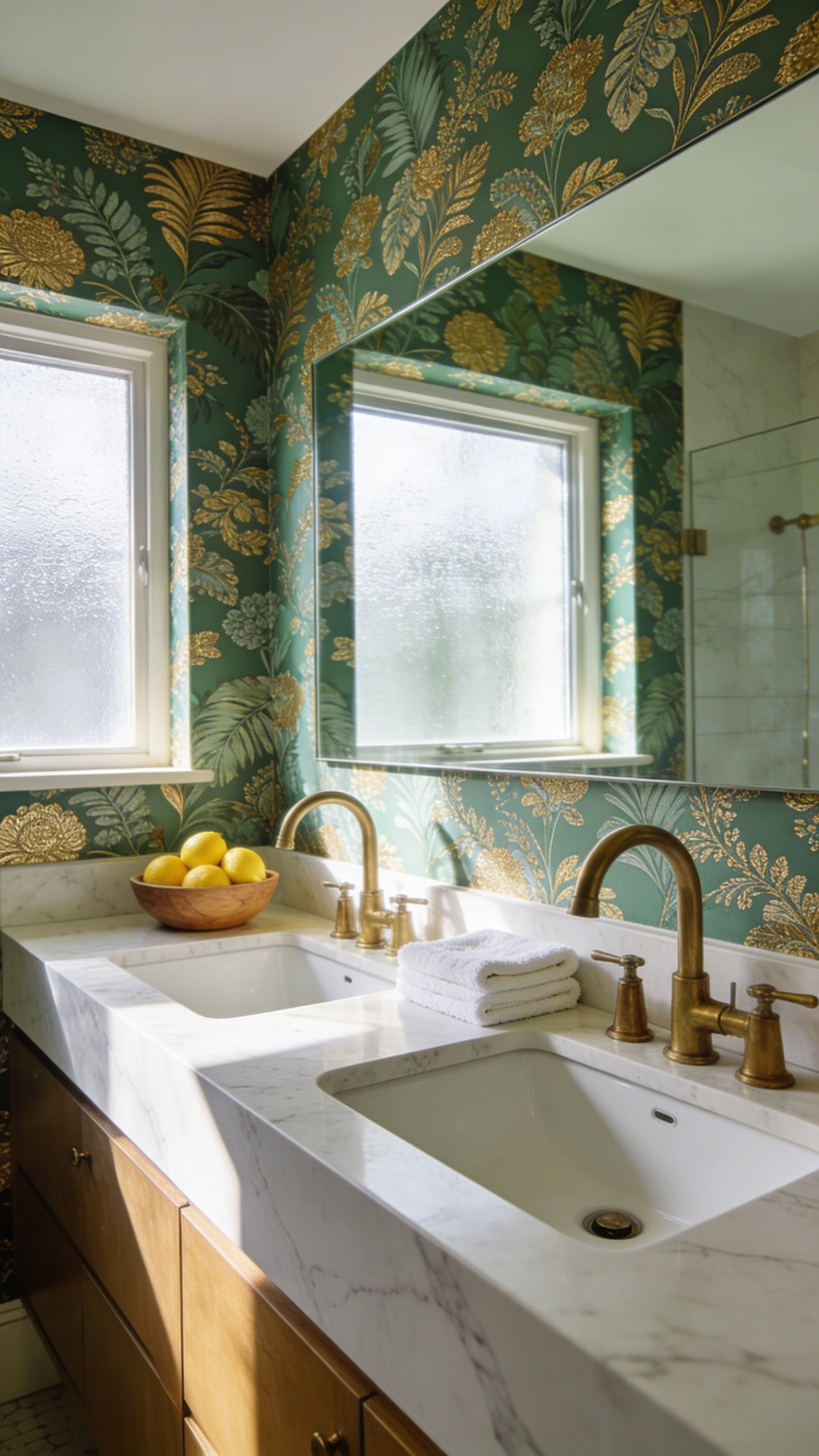
Restoration experts historically used plain white bread to gently absorb oily surface smudges. Natural vulcanized rubber sponges effortlessly erase dirt without smearing delicate designs today. Dry microfiber cloths use positive electrostatic charges to pull away harmful dust allergens. Strict pH-neutrality is essential for longevity if damp cleaning is absolutely necessary. Even natural vinegar can permanently oxidize delicate metallic foils over time. A few drops of castile soap in distilled water maintains a safe balance.
Dry steam provides a brilliant option for safely killing bathroom mold spores. This vapor works without introducing toxic fungicides into your daily breathing space. Mindful maintenance must always protect the delicate structural bond at the paper seams. Liquid cleaners can easily wick into these seams, causing edges to curl. You should always dust seams upward and never spray liquids directly. Selecting high-quality materials and following these preservation tips ensures your bathroom wallpaper ideas continue to provide a healthy backdrop for years to come.
Frequently asked questions
Is wallpaper in a bathroom a good idea?
Yes, wallpaper is an excellent way to add personality and color to a bathroom. It is vital to select moisture-resistant materials like non-woven substrates or vinyl. Ensure the room has proper ventilation to prevent moisture from being trapped behind the paper.
How do I choose wallpaper for a bathroom?
Prioritize breathable materials for standard walls and waterproof fiberglass for wet areas. Consider biophilic patterns like botanical leaves to reduce stress. Ensure the scale of the pattern matches the room’s size. Large murals often work best to expand small, windowless spaces.
Does bathroom wallpaper cause mold?
Wallpaper itself does not cause mold. Impermeable materials like traditional solid vinyl can trap condensation against the drywall. Use breathable non-woven wallpapers and zero-VOC adhesives that allow moisture to evaporate naturally to prevent this issue.