The bathroom is the first space you inhabit each morning and the last you visit at night — yet in most apartments, it’s the room that gets the least design attention. We accept the builder-grade fixtures, the flat overhead lighting, the bare walls, the mismatched products sitting on a countertop that was never designed with intention. Good apartment bathroom decor isn’t about ignoring those constraints. It’s about working within them, thoughtfully, until the space begins to serve you in a different way.
What follows is a collection of 16 ideas that I’ve tested, recommended, and returned to again and again in my work with clients in rental homes. None of them require drilling, landlord approval, or a renovation budget. All the apartment bathroom decor changes described here cost under $50 individually — several cost under $20. From renter-friendly surface treatments to biophilic touches that genuinely clean the air, these are the ideas that make the most difference in how you begin and end each day.
1. Floating Shelves That Double as Apartment Bathroom Decor
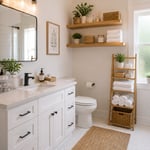
Open shelving in a bathroom has a particular visual intelligence that closed cabinetry lacks — it makes the room feel bigger, forces you to edit what you display, and turns everyday objects into part of the design. A pair of adhesive floating shelves above the toilet or beside the mirror gives you a home for a small plant, a rolled hand towel, and a candle, without the visual weight of a cabinet.
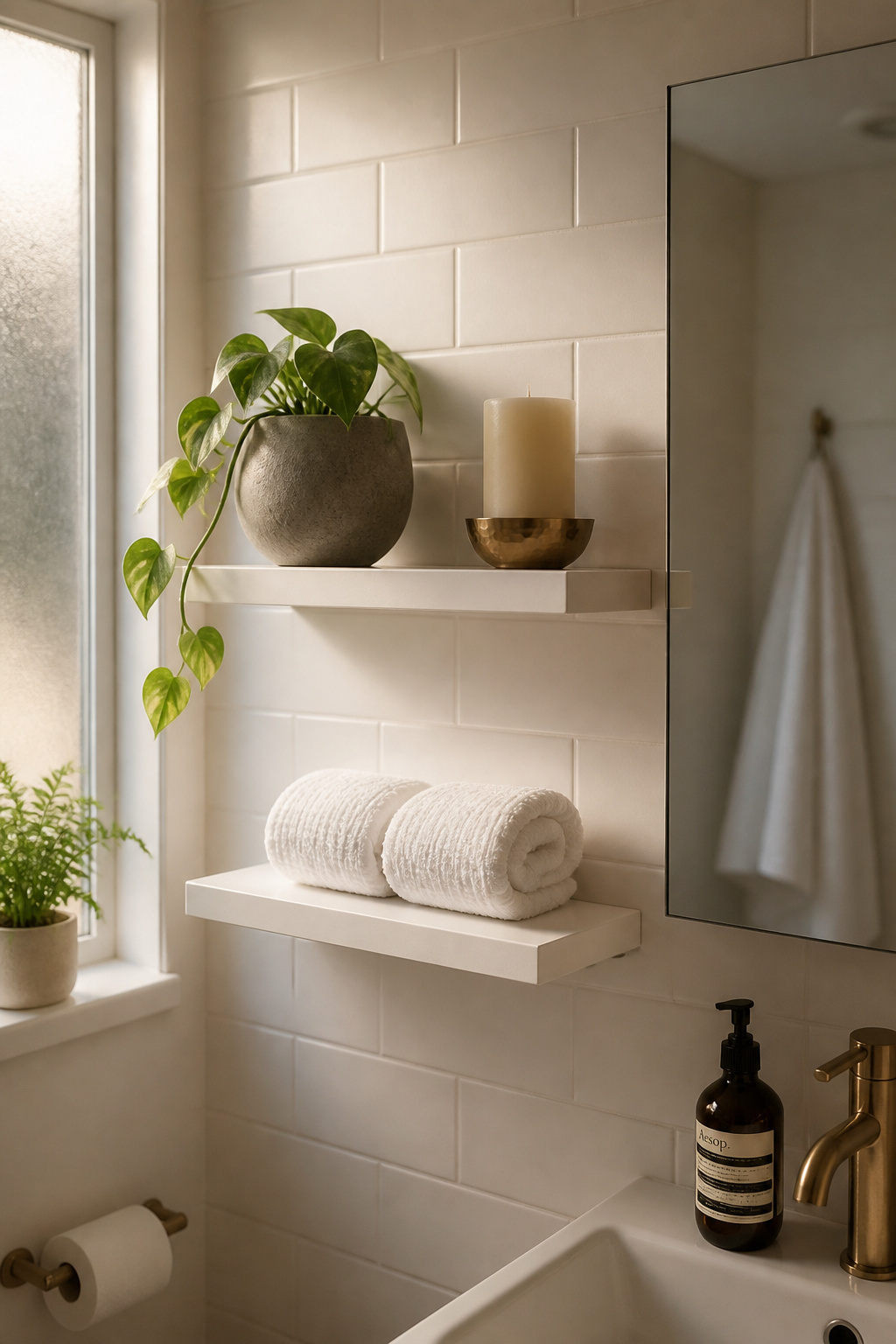
For renters, the good news is that no-drill technology has genuinely matured. Heavy-duty adhesive strips — 3M Command strips rated for tiles, or full acrylic shelves with suction-plus-adhesive systems — now hold meaningful weight on smooth surfaces. Allow 24 hours for the adhesive to cure before loading the shelf, and be precise about the surface: these bonds work on clean, smooth tile and glass, and fail quickly on textured walls or residue.
The real skill is in the styling. Limit each shelf to three items maximum: the arrangement I return to most consistently is a small plant, a candle or diffuser, and one functional item in a container that earns its place visually. Rolled linen towels work particularly well — functional, warm in tone, and easy to refresh. Anything that comes in plastic packaging belongs behind a door. If it can be seen, it should be chosen.
2. Low-Light Plants That Improve Air Quality in Small Bathrooms
There’s a practical reason to add plants to a bathroom beyond the obvious: they work. NASA’s 1989 Clean Air Study — conducted to understand how to purify air in sealed space stations — found that certain houseplants reduce airborne VOCs including formaldehyde, benzene, and ammonia. English Ivy, one of the most bathroom-appropriate species, has been shown to reduce airborne mould by up to 78% within 12 hours. In a room where mould is a persistent concern, that’s a meaningful return from a $6 plant.
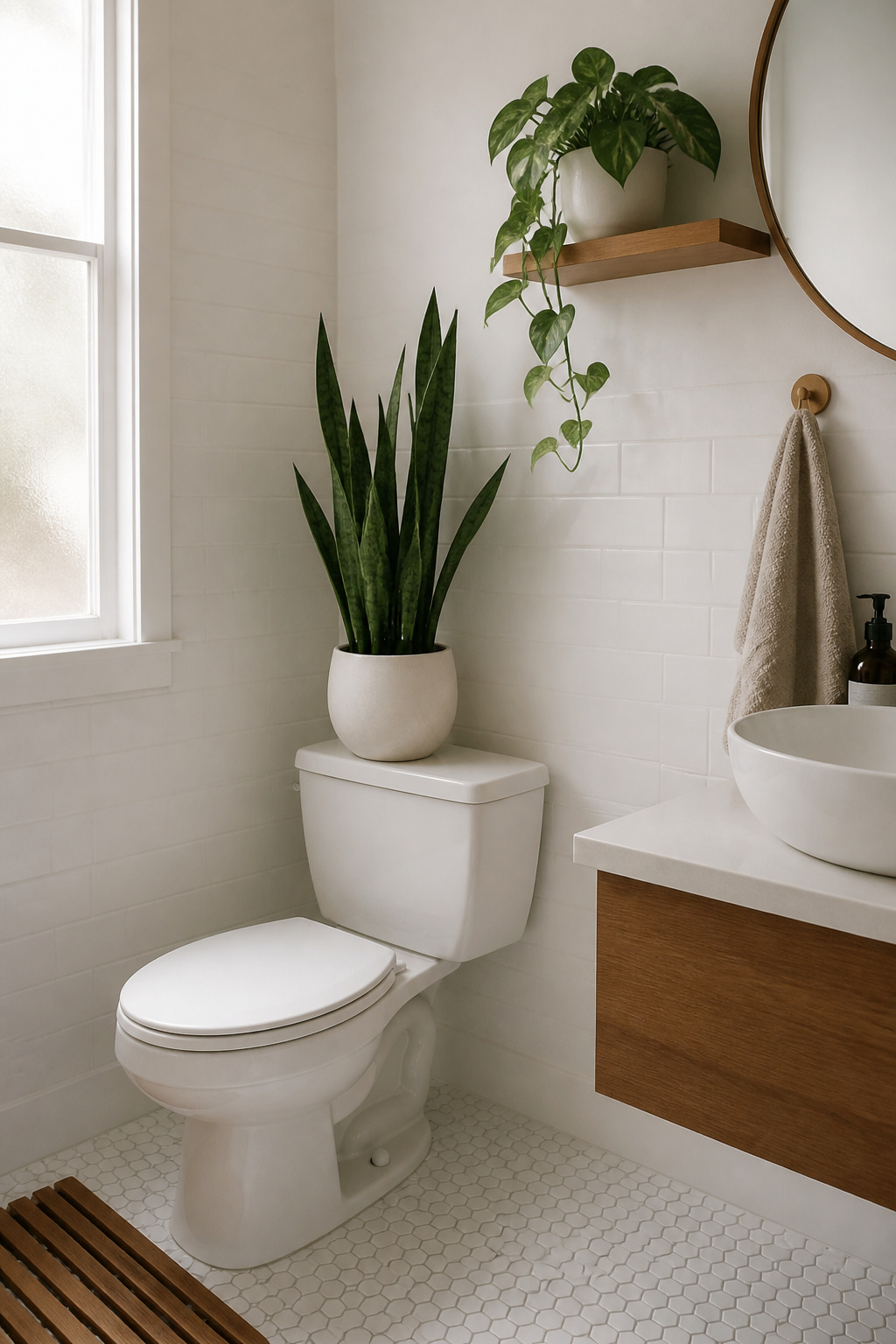
Peace lily (Spathiphyllum) and snake plant (Sansevieria) are the two I recommend most for apartment bathrooms. Both tolerate low light, handle irregular watering, and thrive in the humidity that would kill most houseplants. The peace lily also flowers intermittently — white spathes that add an unexpected elegance to a bathroom shelf. Pothos is the third option worth knowing: it grows fast, trails beautifully from a high shelf, and is genuinely difficult to kill.
Placement is everything in a small bathroom. A snake plant on the toilet tank adds life without consuming counter space. Pothos at eye level on a floating shelf frames the mirror view. For pot materials, glazed ceramic or concrete behave better on bathroom surfaces than terracotta, which wicks moisture and can stain pale tile. The goal is for each plant to feel like a considered choice — not like something migrated from another room. If you’re working through wellness-focused bathroom design principles, starting with one well-placed plant is often the most direct path.
3. Peel-and-Stick Wallpaper as Bathroom Decor for Apartments
The wall behind the toilet is one of the most underworked surfaces in an apartment bathroom. It’s large enough to register visually but rarely touched by steam or water — which makes it the ideal location for removable wallpaper. A botanical print, a subtle geometric, or a soft watercolour pattern on that single wall transforms a bathroom more dramatically than almost any other change at the same price point.
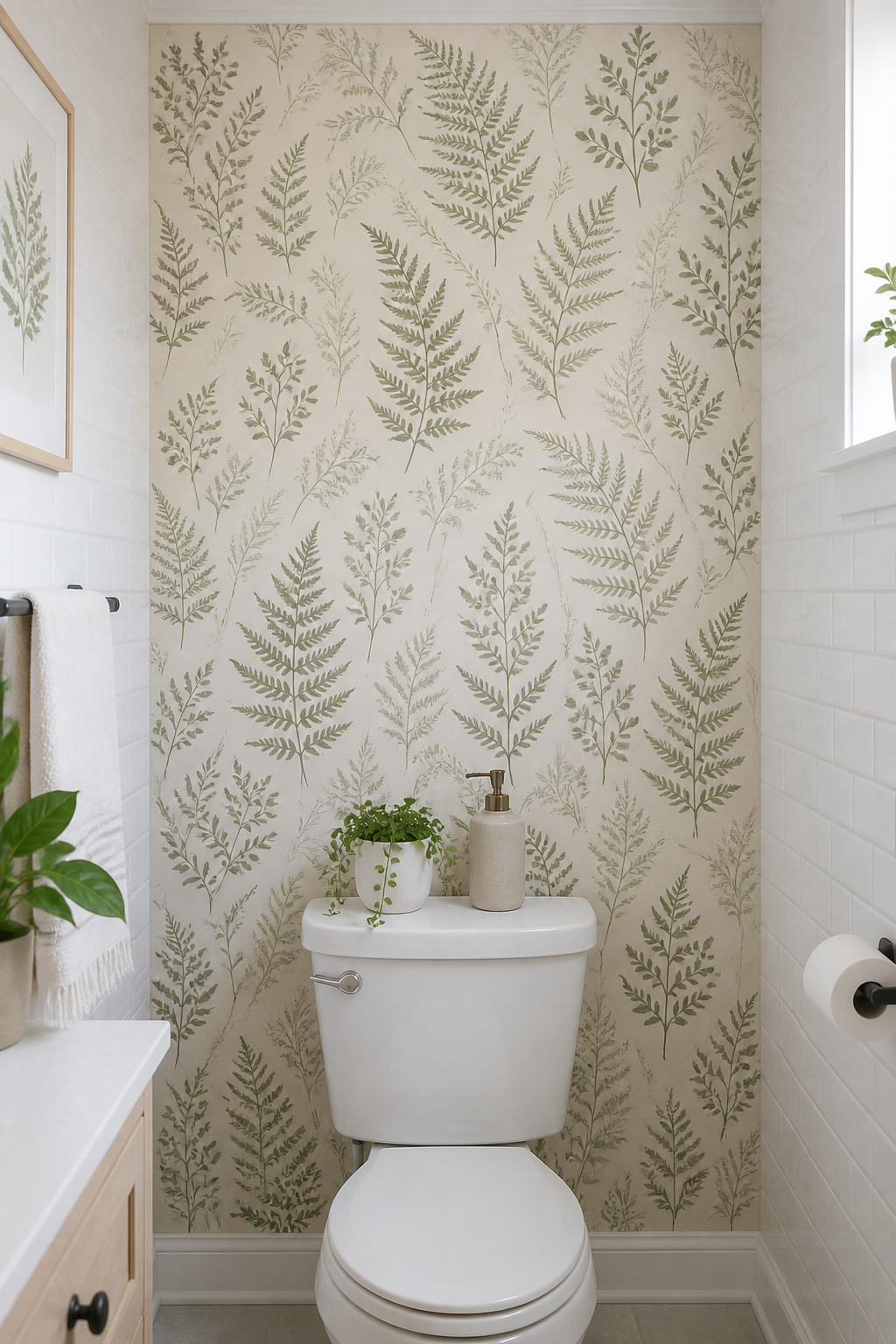
For bathroom use, material selection matters. Look for polyester-backed or vinyl-coated options specifically rated for bathroom environments — Tempaper, Chasing Paper, and NuWallpaper are the most reviewed and consistently reliable. Paper-backed varieties buckle in humid rooms; avoid them. The application zone should stay away from direct steam contact: the accent wall behind the toilet or the wall opposite the shower are both safe; the wall beside the shower is not.
Prep is the part people skip, and it’s why the wallpaper fails. Wipe the wall with a damp cloth 24 hours before application — not the day of. Walls need to be fully dry, at room temperature, and free of paint residue or cleaning product. When it’s time to remove (whether at move-out or simply when you’re ready for a change), a hairdryer warming the adhesive for 30 seconds before peeling keeps the wall exactly as you found it. For small bathroom inspiration aimed at renters, this is one of the most impactful and reversible changes available.
4. Nontoxic Candles and Diffusers for Spa Ambiance
Scent is the fastest route to changing how a room feels — but not all fragrance products belong in a space as small and enclosed as a bathroom. Paraffin candles, by far the most common type sold, emit benzene and toluene when burned; both are classified as VOCs. In a bathroom with limited ventilation, these compounds accumulate more quickly than in a larger space. Synthetic fragrance oils, present in the majority of mass-market candles, also release phthalates — endocrine-disrupting compounds that enter the body through inhalation and through skin exposed to steam.
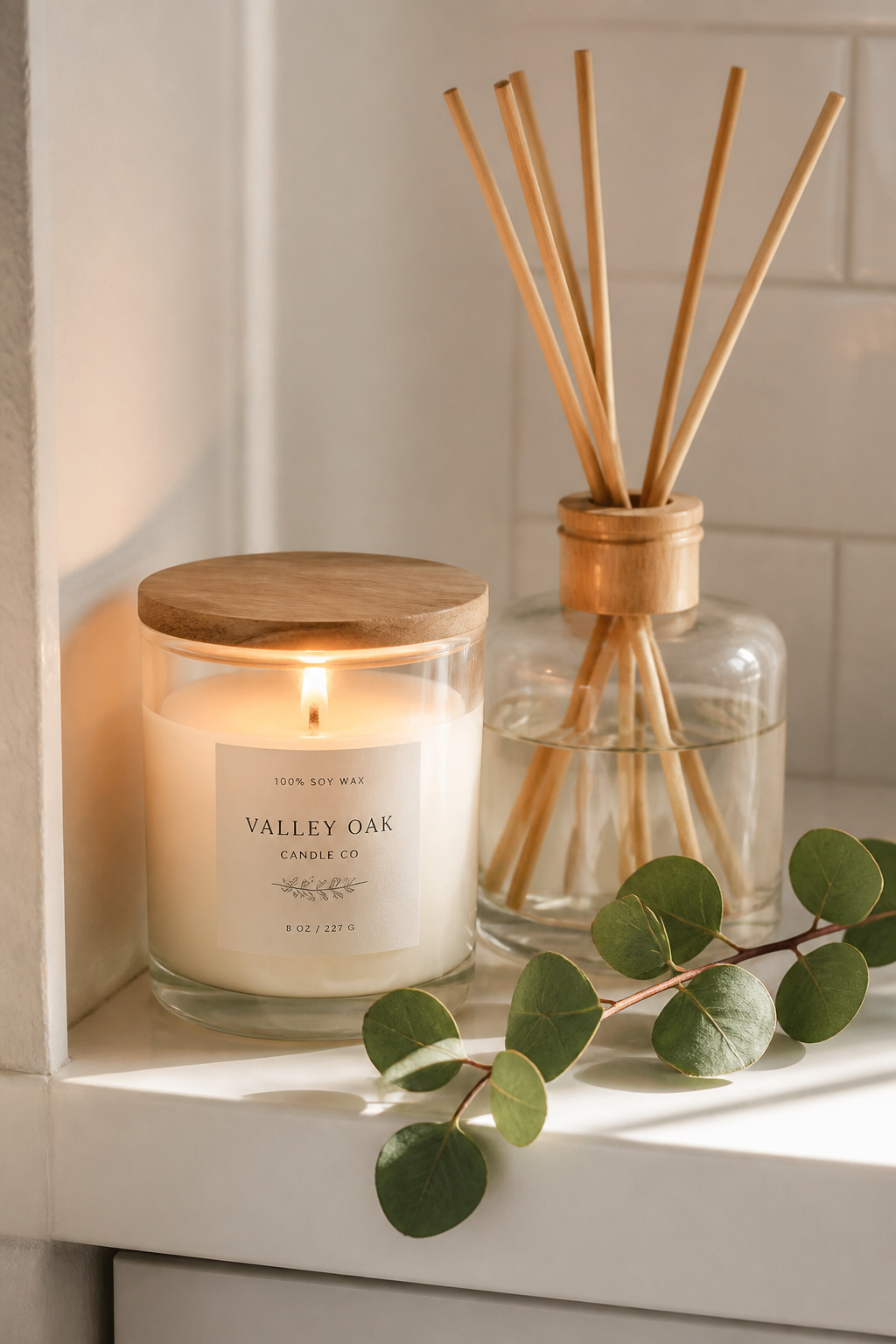
The alternative is straightforward. Beeswax burns cleanest among common wax types — it produces negative ions that can neutralise airborne allergens, and its combustion chemistry doesn’t involve petroleum derivatives. 100% soy wax with phthalate-free fragrance or pure essential oils is a close second. Look for cotton or wood wicks, avoid anything labelled simply ‘fragrance’ in the ingredient list, and check that the wax is undyed. Brands like P.F. Candle Co. and Keap hit these standards consistently.
Choosing Safe Products
For diffusers, an ultrasonic model with 5-8 drops of eucalyptus or lavender essential oil in 100ml of water suits bathroom dimensions well. Run it for the duration of your bath or shower rather than continuously — occasional, intentional use serves both the body and the room better than constant background scent. A passive reed diffuser is an equally good choice for bathrooms with natural ventilation: no power required, gentler intensity, and a sculptural quality that earns it a place on any shelf. Choosing nontoxic fragrance is also one of the most overlooked apartment bathroom decor improvements available — it’s experienced daily, and worth getting right.
5. Textured Towels and Bath Linens That Transform the Look
No single purchase improves your apartment bathroom decor as immediately as a set of good towels. They cover more surface area than any other soft textile in the room, they’re touched every day, and yet most of us are working with whatever we’ve accumulated over the years — a mismatched collection of different weights, colours, and degrees of wear. Replacing them with a coordinated set is not indulgence; it’s a foundational design decision.
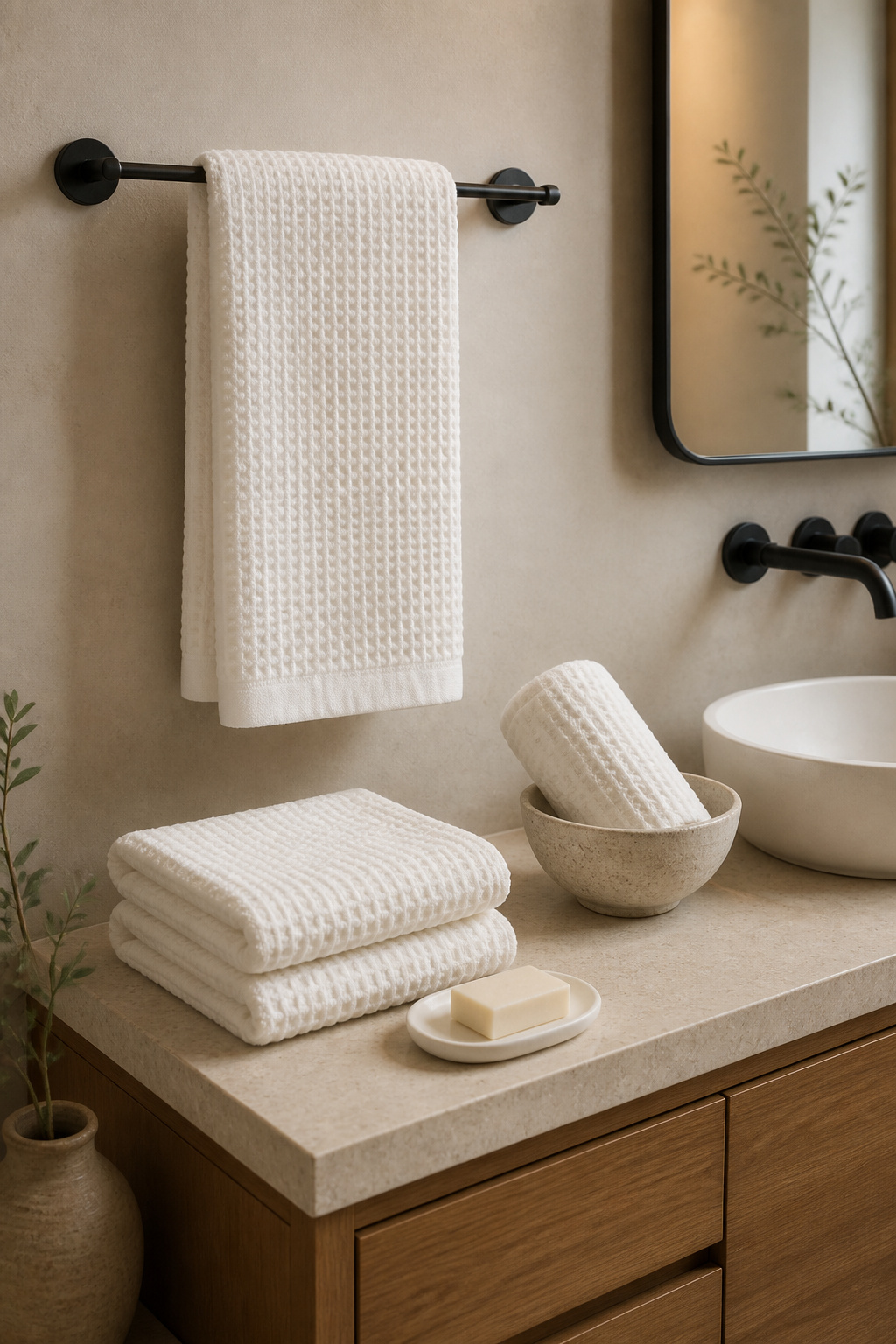
Waffle weave Turkish cotton is the format I return to most in client projects. The honeycomb structure runs at 240-290 GSM — considerably lighter than plush terry (typically 500-600 GSM) — and the open weave allows airflow that helps towels dry fully between uses, which matters in apartments where bathroom ventilation is often inadequate. Turkish cotton’s long-fibre construction means the towel softens and strengthens with each wash, rather than pilling. Parachute and Brooklinen both make waffle towels in this range at accessible price points; Coyuchi makes an organic linen version for those prioritising natural certification.
Towel Weight and Material
Colour matters as much as material. Warm whites and natural oatmeal tones work as a neutral that suits virtually any tile colour. Sage green and soft terracotta both work beautifully in bathrooms with white or neutral tile. Whatever you choose, keep the towel and rug palette unified — they’ll form the colour foundation that everything else in the room responds to. Display towels with the hotel fold (thirds lengthwise, thirds widthwise), folded edge facing out. Two stacked and one rolled beside them is the classic spa presentation.
6. A Statement Mirror as the Focal Point of Small Bathroom Decor
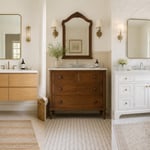
In terms of impact per square inch, a well-chosen mirror is the most efficient design element in a bathroom. It multiplies light, expands perceived space, and — when framed intentionally — defines the visual character of the entire room. Most apartment bathrooms come with a flat, frameless builder mirror: functional but characterless. The most renter-friendly upgrade is not replacing it but framing it.
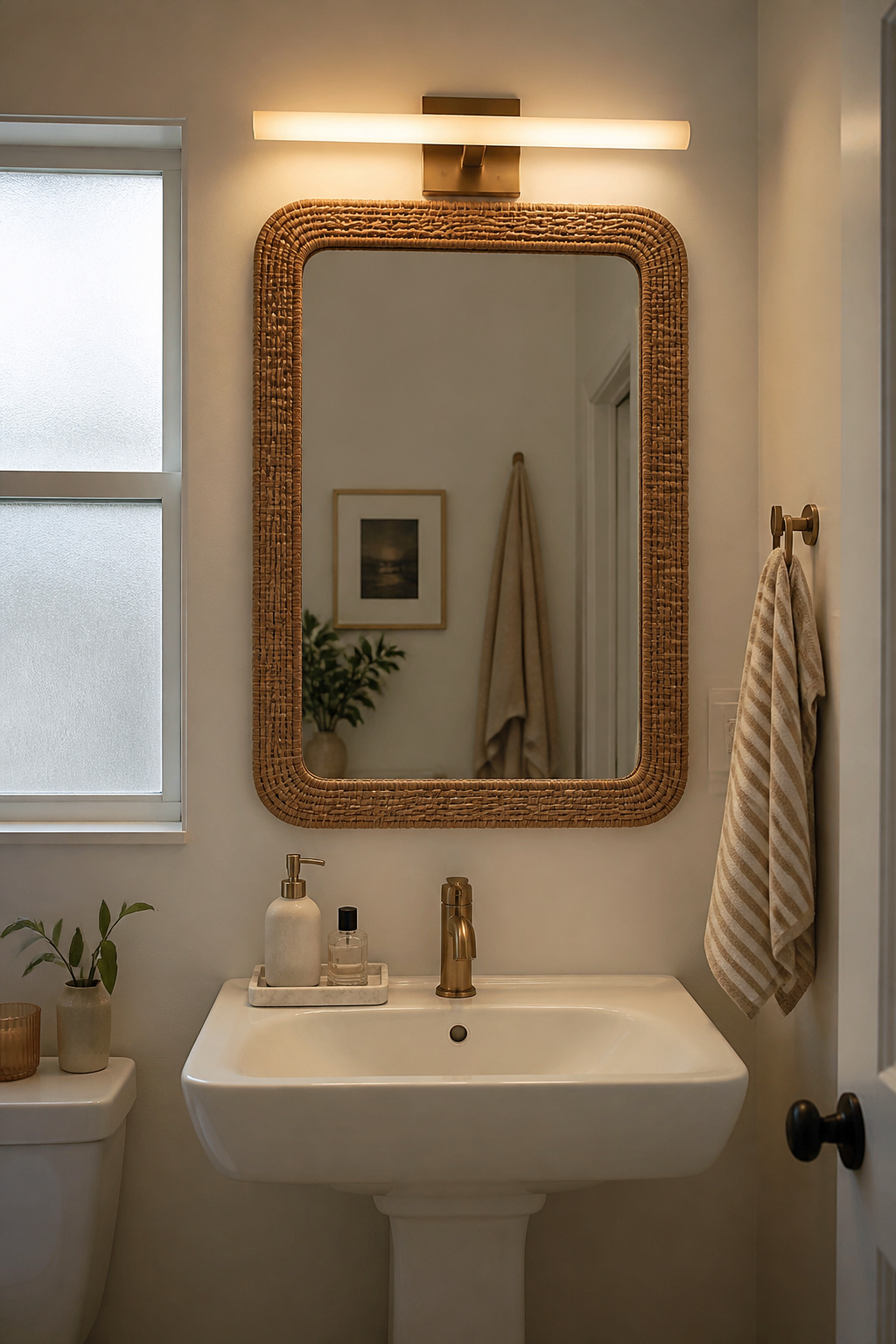
Adhesive mirror frame kits from brands like MirrorChic and MirrorMate attach to existing mirrors using double-sided 3M tape — professional grade, rated for bathroom humidity, and fully reversible. They come in rattan, matte black, brushed brass, and antiqued wood finishes, and transform a generic rectangle into something that looks chosen. The 24-hour cure time is important; don’t rush it. For vanity ideas for tiny bathrooms, this is consistently one of the first changes I recommend because it addresses the most prominent vertical surface in the room.
If you’re replacing rather than framing the mirror, sizing is the critical variable. The mirror should be 70-90% of the vanity width — no more than 2-4 inches narrower on each side. The bottom edge should sit 5-10 inches above the vanity top; the upper edge, 72-78 inches from the floor, accommodates most heights comfortably. Full-length mirrors that lean against the wall are another strong option in narrow bathrooms — the vertical line they create draws the eye upward and makes low-ceiling rooms feel taller.
7. Woven Baskets and Natural Fibre Storage That Looks Like Decor
There’s a design hierarchy to apartment bathroom decor storage that most people don’t consciously apply: plastic reads as utility, wire reads as improvised, and natural fibre reads as considered. A seagrass basket holding toilet rolls communicates a different intention than a white plastic bin doing the same job. The contents are identical; the room feels different.
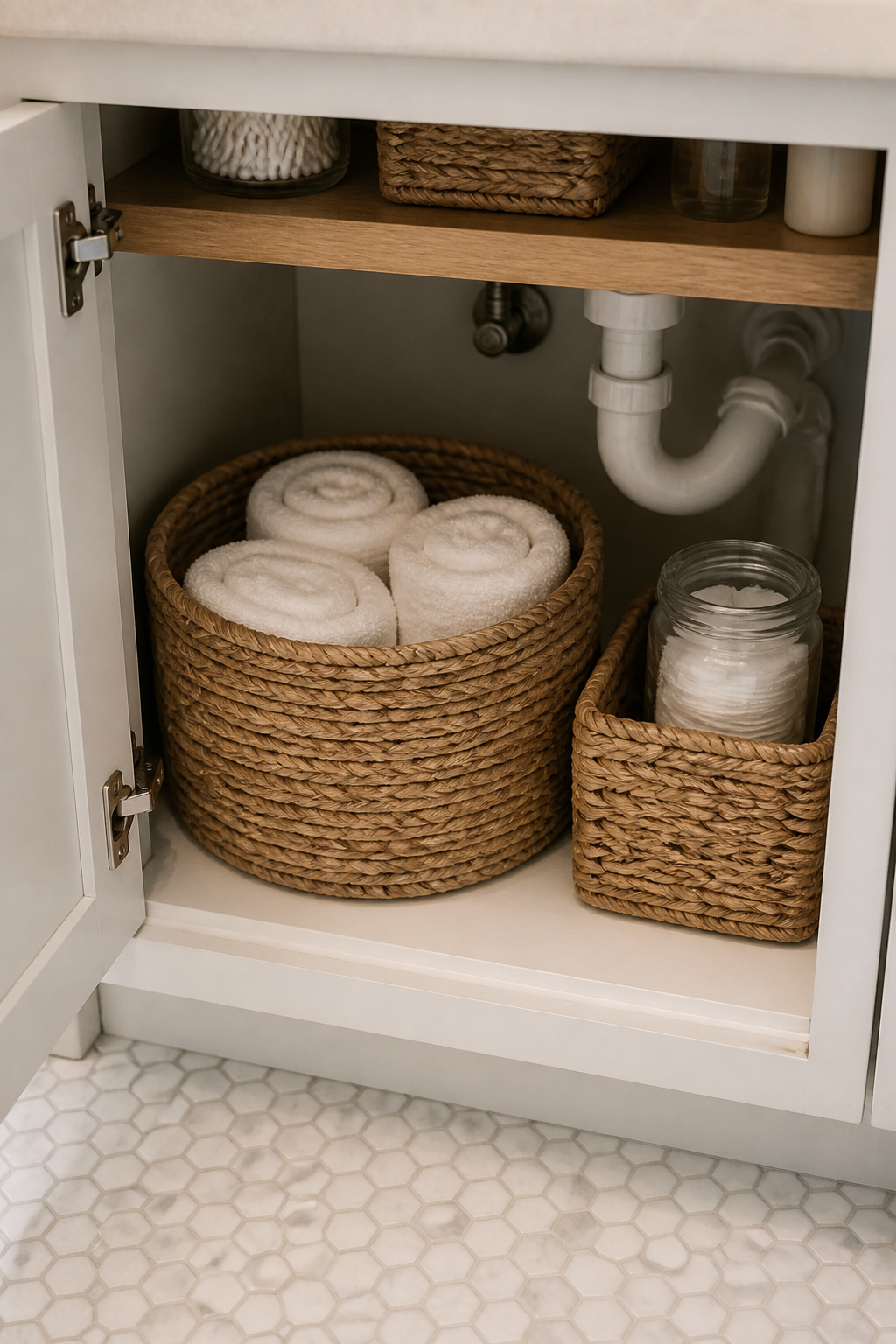
Seagrass is the most suitable natural fibre for bathroom use. Its slight waxy coating makes it more moisture-tolerant than jute (which absorbs water and weakens quickly) or sisal (which behaves similarly). Water hyacinth is even denser and performs well in bathrooms with adequate ventilation. The key placement principle: keep natural fibre baskets away from the shower’s steam zone and off wet bathroom floors. Under the sink is the best location in most apartments — contained, away from direct humidity, and ideal for storing extra toiletries, cleaning cloths, and backup toilet rolls.
Sizing matters more than most people account for. A 6-8 inch diameter seagrass basket on a shelf makes a beautiful container for cotton pads or a small plant. A wider, shallower basket under the sink holds everything that doesn’t need to be visible. If you use baskets on an over-toilet shelving unit, choose one consistent basket style throughout the bathroom — the same weave, the same tone. Mixing basket types fragments the visual consistency that makes a well-designed bathroom feel calm. That consistency is the difference between storage and decor.
8. Warm-Toned Bulbs for Better Bathroom Lighting and Wellbeing
Most apartment bathrooms have one overhead fixture with a single bulb and no dimming capability. It’s the most unchanged element in most rentals — and one of the most impactful things to address. The bulb you use changes how the room looks, how your skin looks, and how your body responds to the space at different times of day.
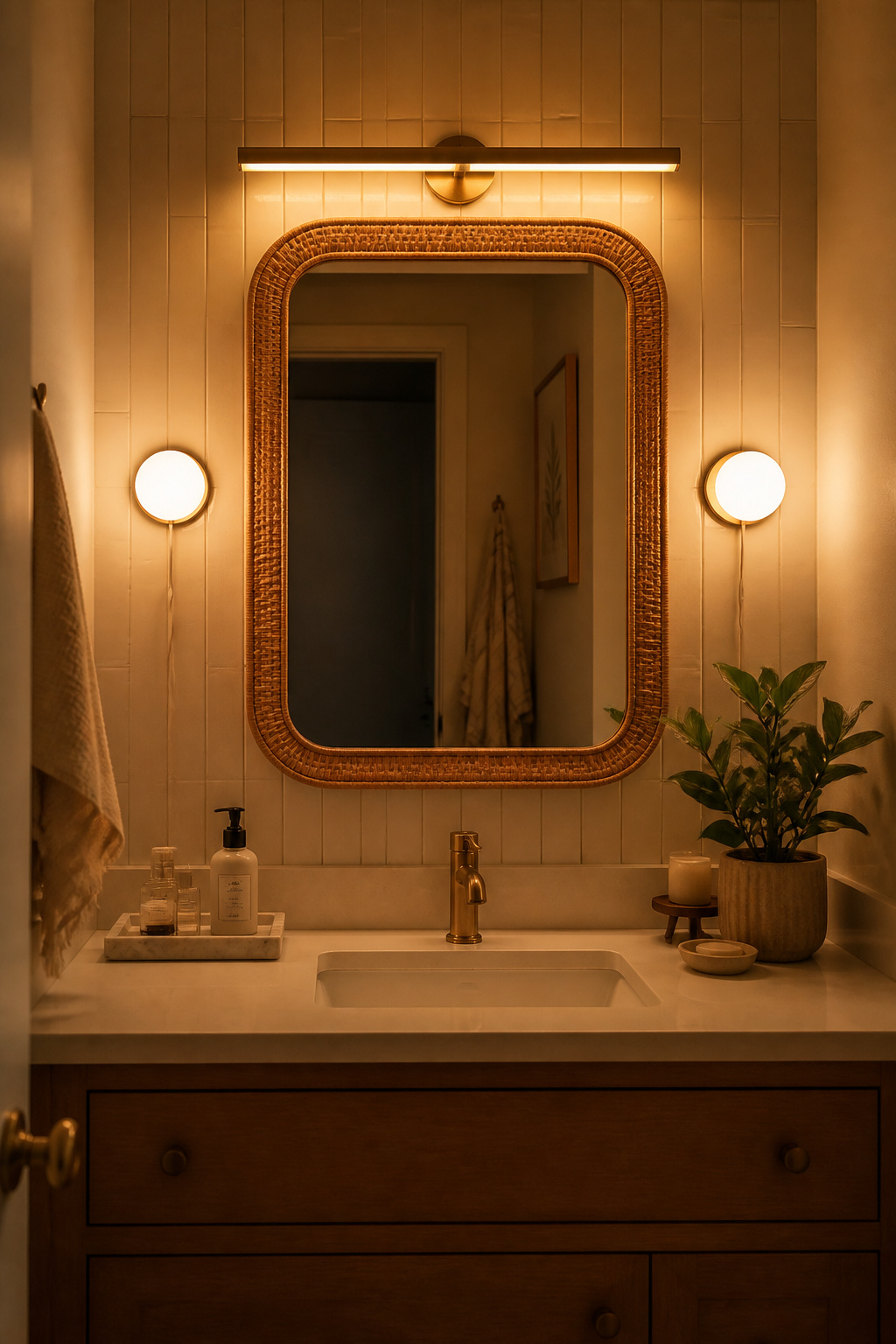
The research on colour temperature and circadian rhythm is consistent: blue-spectrum light above 4000K suppresses melatonin production when encountered in the evening. A bathroom visited at night with a cool-white or daylight bulb is actively signalling your body to stay awake. The swap is inexpensive and immediate: a 3000K LED bulb with a CRI (colour rendering index) of 90 or above is the best single-bulb compromise — warm enough to be genuinely relaxing, accurate enough for morning grooming. Skin tones look most natural under 2700-3500K light with 90+ CRI; below 2700K adds a yellow cast, above 4000K adds grey.
Colour Temperature for Bathroom Lighting
The next lighting upgrade doesn’t require any electrical work. Plug-in vanity sconces — Globe Electric and Kichler both make bathroom-appropriate models — sit beside the mirror on a standard outlet, adding the side lighting that overhead fixtures inherently miss. LED strip lights placed along the underside of a floating shelf or behind a mirror add ambient warmth without replacing any fixture, and cost under $30. Together, these changes layer the bathroom’s light in a way that a single overhead fixture cannot. For detailed guidance on bathroom vanity lighting placement and colour temperature, these same principles apply directly to apartment bathrooms.
9. Vintage Trays and Apothecary Jars for Apartment Bathroom Styling
The countertop is the most viewed horizontal surface in any apartment bathroom decor scheme — and in most apartments, it’s also the most visually chaotic. A hair dryer beside a bar of soap beside a bottle of face wash beside a travel-size shampoo that never got put away. The solution isn’t more storage; it’s a framework.
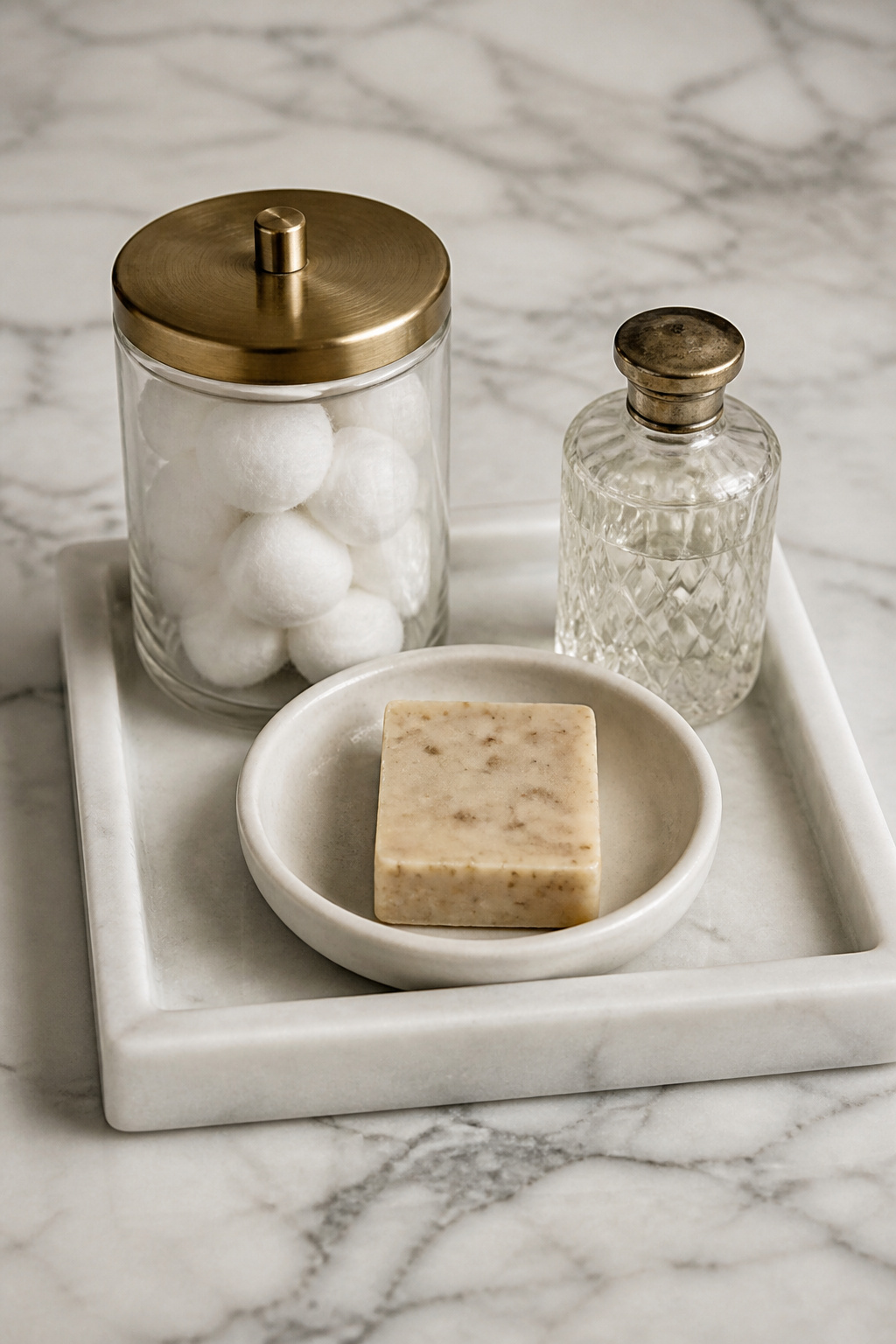
A tray — marble, travertine, brass-edged mirror, or raw wood — creates a visual boundary on the countertop that changes the rules. Everything inside the tray looks like a design decision. Everything outside it gets relocated. The tray should take up no more than 30-40% of your countertop width; within it, the rule of three applies: one tall element, one medium, one low. A perfume bottle or diffuser, an apothecary jar, and a small soap dish is the most reliable combination.
Apothecary jars — clear glass with ground glass or metal lids — are one of the simplest upgrades available. They transfer cotton balls, q-tips, and bath salts from plastic packaging into containers that earn their place on a countertop. At $8-20 each from IKEA or Amazon, they’re among the most affordable changes in this list. The soap dispenser deserves the same thinking: replacing a plastic pump bottle with a ceramic or glass version costs $15-25 and removes the most visually disruptive element on most bathroom counters. Material mixing — marble tray, glass jar, brass lid — works particularly well because it layers textures without introducing competing colours.
10. Bamboo and Teak Accessories for a Natural Bathroom Aesthetic
Biophilic design research is consistent on one point: environments containing natural materials reduce cortisol and support a physiological sense of calm. In a bathroom that is otherwise all porcelain, chrome, and synthetic grout, introducing even one teak or bamboo element changes the material register of the entire room. Not as decoration — as a tactile and sensory signal that this space was designed with the human experience in mind.
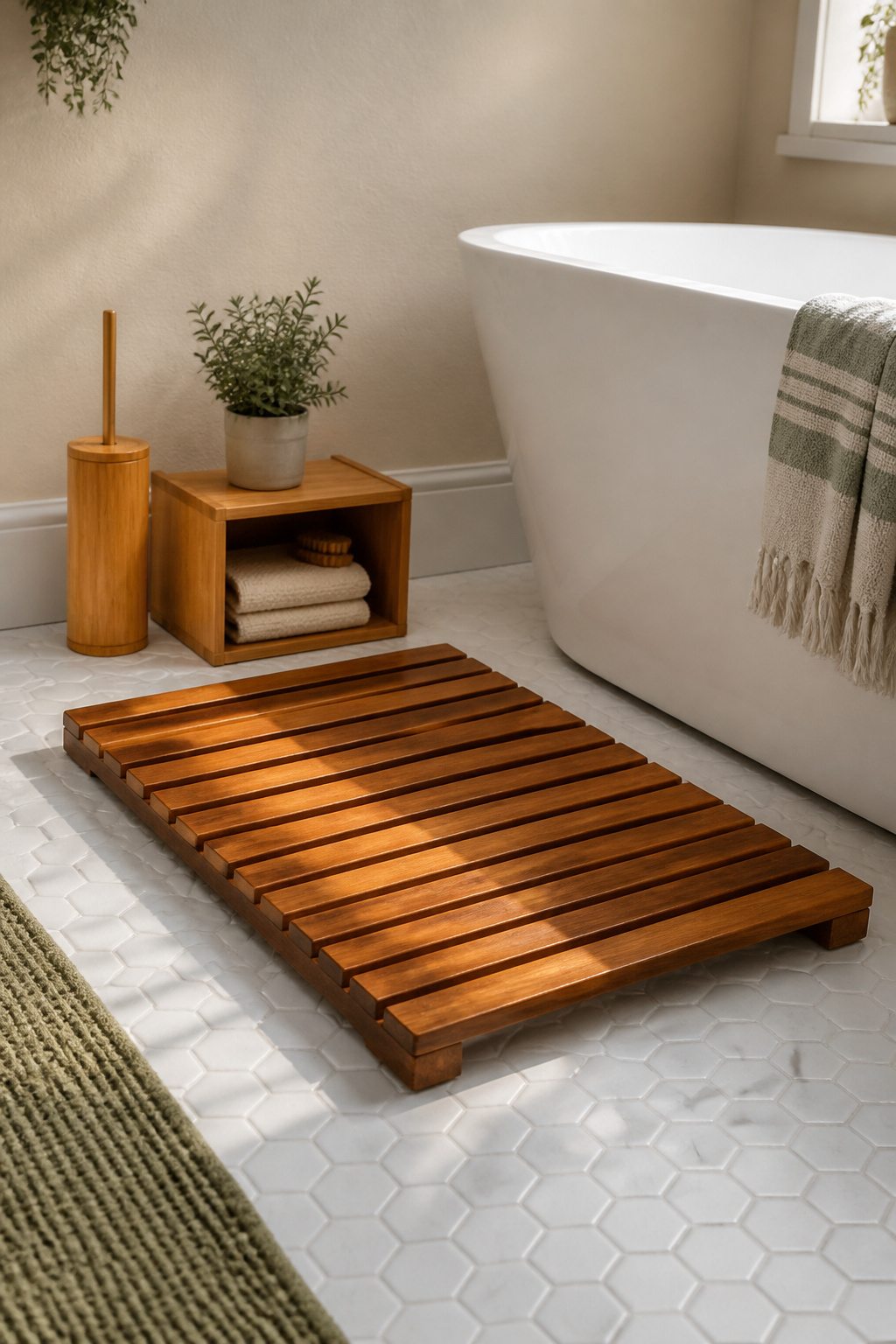
Teak is the superior choice for items in direct contact with water. Its internal oils — primarily tectoquinone — inhibit mould, repel water, and prevent warping without any chemical treatment. A teak bath mat, specifically the slatted kind, replaces a fabric mat that stays damp between uses with a self-draining surface that dries on its own. Most people who own one describe it as one of the best bathroom purchases they’ve made. Maintenance is light: 2-3 drops of teak oil every 6 months prevents the grey oxidation that develops on untreated teak. Bamboo works well for items away from the shower zone — toilet brush holders, shelf storage boxes, cotton bud containers — but should not be placed directly on a wet shower floor, where its grass-fibre structure will crack and splinter.
For minimalist bathroom design with natural materials, teak and bamboo accessories are often the first practical recommendation: available at accessible price points ($15-80 depending on item), entirely renter-friendly, and producing a visual and sensory return that far exceeds their cost.
11. Minimal Framed Prints That Add Character to Bathroom Walls
The average apartment bathroom has at least one bare wall, and most have two or three. A single well-chosen framed print in the right location — beside the toilet, above the toilet tank, or on the wall across from the vanity — makes the room feel finished in a way that few other apartment bathroom decor additions quite do. Art signals that the occupant sees this space as worth caring for.
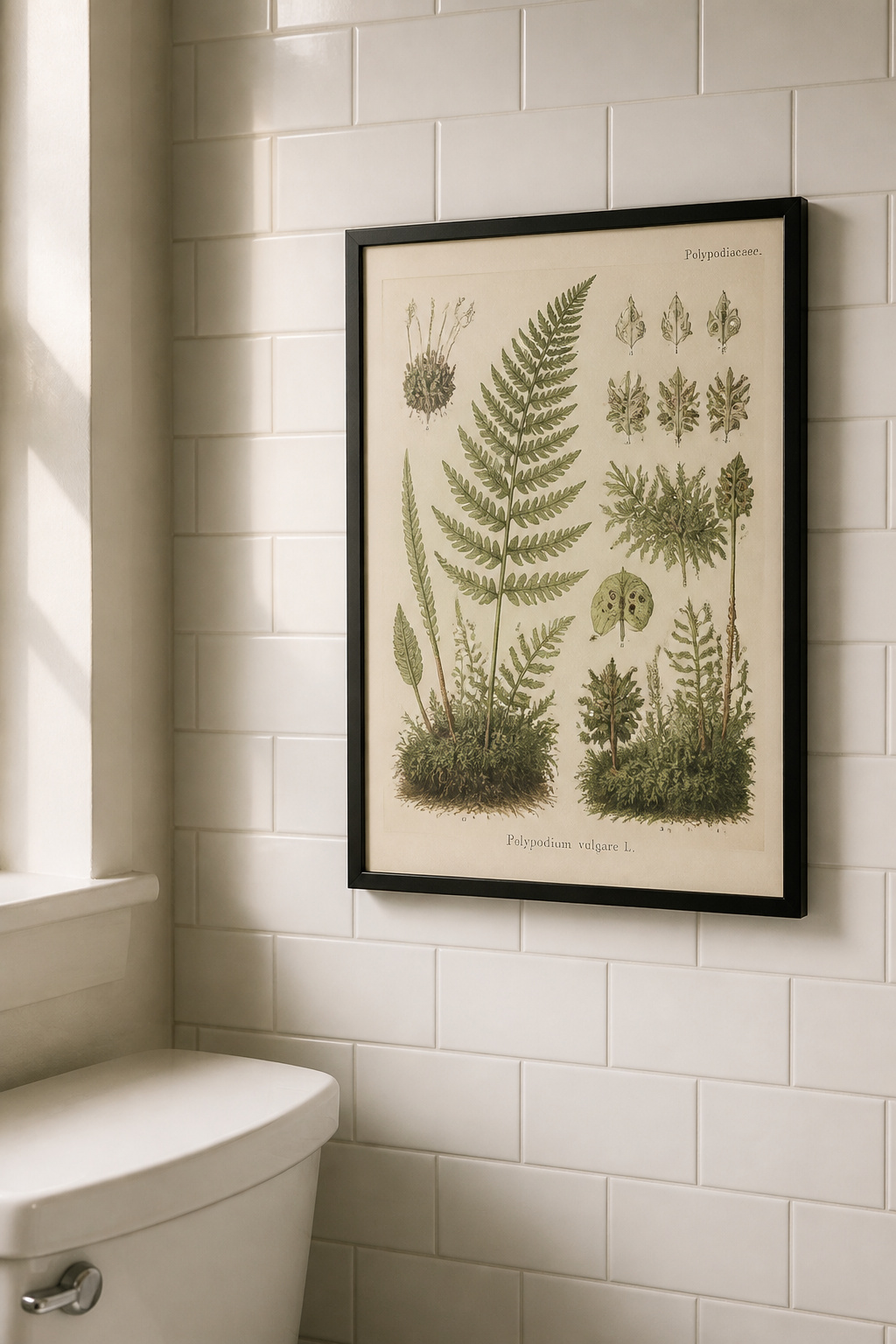
Material choice is the practical consideration. Unprotected paper prints in standard wood frames will buckle and stain in bathroom humidity within a few months. The alternatives that hold up: metal prints (dye-sublimation on aluminium — fully moisture-proof, vivid colour), acrylic face-mounted prints (non-porous, glossy, bold), and sealed canvas with a protective varnish coating. For frames, aluminium, powder-coated steel, and acrylic all handle moisture reliably. Avoid unsealed wood frames near the shower.
Placement matters as much as choice. The wall beside or across from the toilet is ideal — it’s not in the steam path, and it’s the wall most often viewed at eye level during quiet moments. Size up: a 5×7 print on a large bathroom wall reads as an afterthought; 11×14 or A3 is the minimum for a single-print statement. For subject matter, botanical illustration in the Haeckel or Thornton tradition is the most versatile choice — it suits spa aesthetics, Scandinavian interiors, and organic-modern spaces equally well. Abstract watercolours with organic shapes are a strong second.
12. A Plush Rug That Grounds Your Apartment Bathroom Decor
The rug is the most tactile element in the bathroom — the first thing bare feet experience after a shower. It’s also one of the most visible: a flat expanse of colour at the intersection of the room’s dominant visual elements. In terms of grounding the overall apartment bathroom decor, nothing works faster than replacing a worn or mismatched bath mat with a quality rug in a colour that belongs to the room’s intended palette.
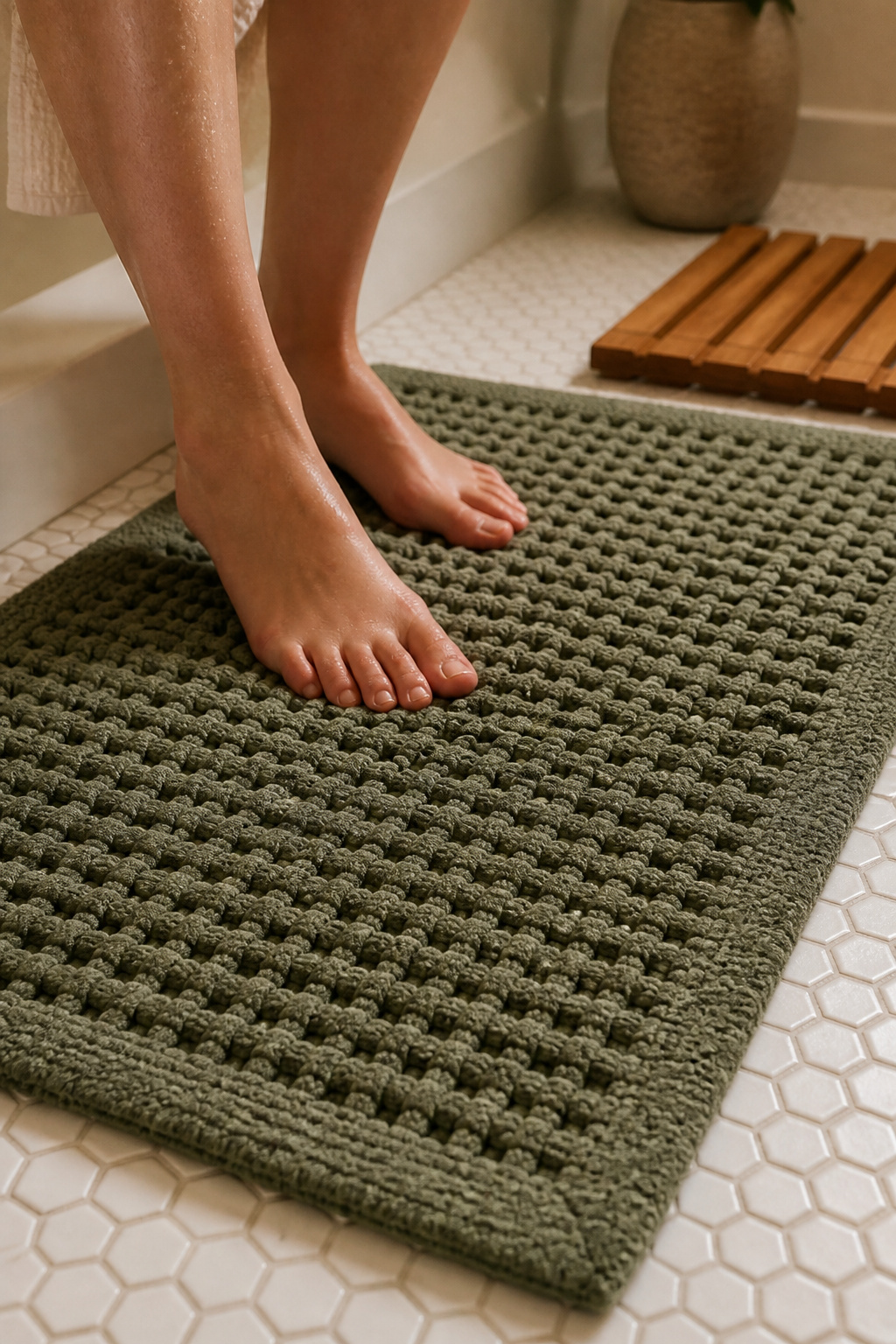
Material determines performance. 100% cotton is the most breathable and allergy-friendly option — genuine Turkish cotton bath rugs have the same fibre quality as good towels. The trade-off is drying speed: cotton holds moisture longer than synthetic fibres, which matters in a bathroom with limited ventilation. Microfibre dries fastest and resists mildew best — it’s the right choice if your bathroom stays humid for extended periods. Memory foam with a removable, machine-washable cover gives the most comfortable underfoot experience, though the foam core should be aired regularly. Whatever the material, a non-slip backing is non-negotiable on tile.
For bathroom flooring ideas that build a natural-feeling sanctuary, the rug is a design element in its own right. Sizing: 20×32 inches suits a standard single vanity; 24×36 suits a wider vanity or a shower exit. Colour should coordinate with the towels — one to two shades apart, in the same tonal family. The pattern, if any, should respond to the wallpaper or tile rather than compete with it.
13. Removable Tile Stickers for a Backsplash Effect in Rental Bathrooms
The area behind a toilet or simple vanity in a rental bathroom is often a large expanse of plain tile or painted wall — technically fine, but visually inert. Adhesive tile stickers solve this. Smart Tiles, the category leader, makes dimensional PVC panels that photograph indistinguishably from real tile at normal viewing distances. A 12-tile application costs $25-50 and takes under an hour to install.
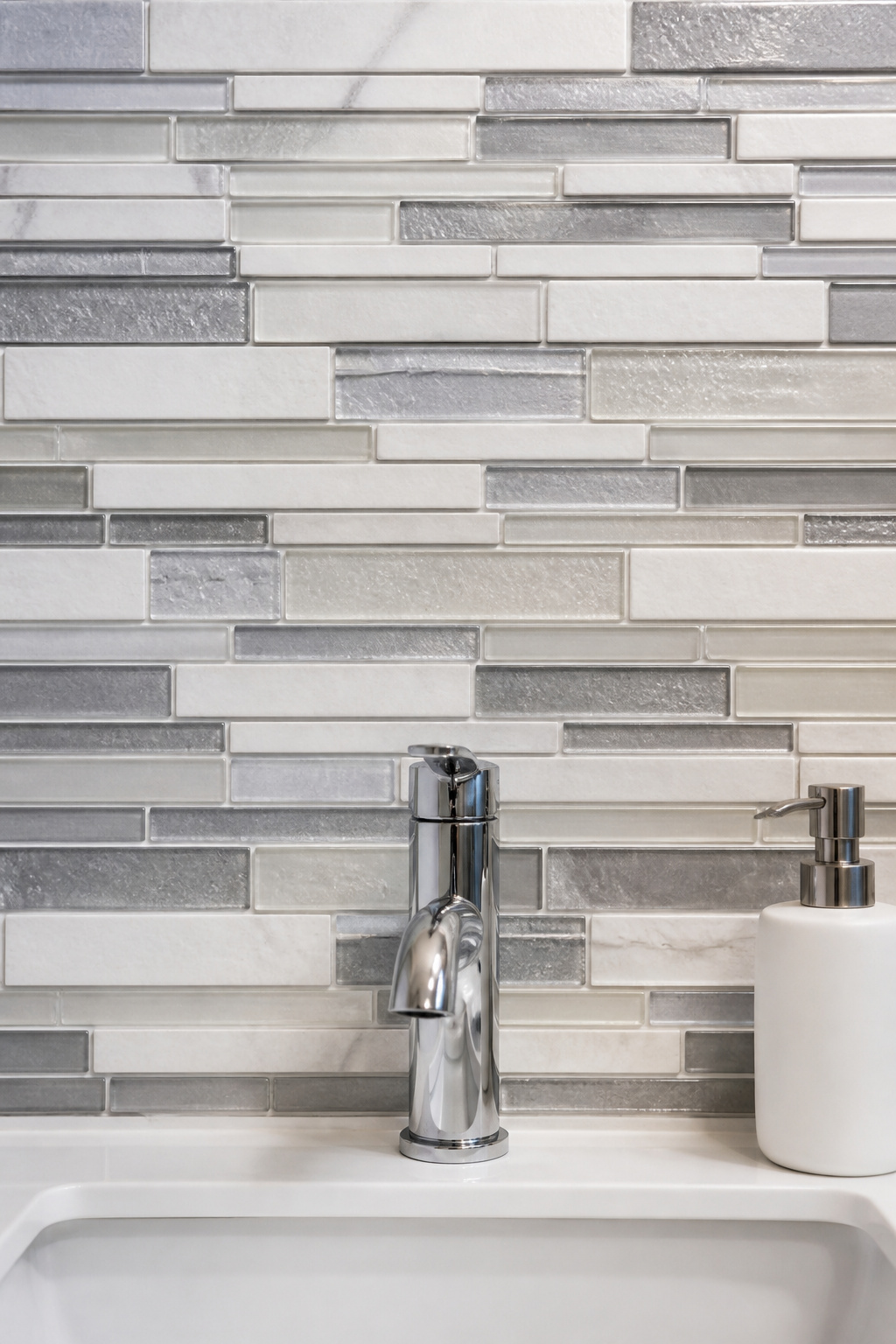
The quality variable in tile stickers is thickness. Cheap vinyl stickers at 0.1-0.2mm look flat and peel at corners within weeks. Smart Tiles’ panels are 1mm+ with a textured, three-dimensional surface — the difference is visible and tangible. Talavera-style individual ceramic decals (4×4 inch) are an alternative approach: applied individually rather than in panels, they’re more forgiving on slightly uneven walls and lend themselves to accent patterns rather than full coverage.
Surface preparation is the critical variable, as with all adhesive products: isopropyl alcohol wipe-down, fully dried, at room temperature above 60°F. The bond holds well on smooth, clean, flat surfaces. On textured tile, grout lines, or flaking paint, no adhesive product performs reliably. For budget bathroom remodel ideas that make real impact, tile stickers represent one of the strongest value propositions available to renters — dramatic visual change, no permanent alteration, and clean removal with a hairdryer when needed.
14. Eucalyptus and Natural Aromatherapy as Functional Bathroom Decor
Hanging eucalyptus in a shower has become one of the most-recognised pieces of apartment bathroom decor in wellness-oriented homes, and the chemistry behind it is genuine. Eucalyptus leaves contain 1,8-cineole (eucalyptol), a compound that becomes volatile at shower steam temperatures. Inhaled, it has documented mucolytic properties — it thins mucus, supports respiratory clearance, and carries a mild analgesic effect. Beyond the biochemistry, there’s the visual: deep green foliage tied to a showerhead, against white tile, with steam rising.
A bundle of 3-5 stems hangs behind the showerhead — not in the direct water stream, which accelerates rot — and lasts 3-4 weeks before the volatile compounds diminish. Source from florists, Trader Joe’s, or The Bouqs for $8-15 per bundle. Before each shower, crush a few leaves gently between your fingers to release fresh oil. When spent, it composts completely.
Lavender is the alternative for evening shower routines — the linalool content has mild anxiolytic properties that suit a wind-down ritual better than eucalyptus, which carries a more invigorating, mentholated quality. Rosemary activates strongly in steam and suits morning showers well, with some research suggesting modest effects on alertness and focus. A small ceramic bowl of dried citrus slices near the sink adds light aromatherapy passively, without steam — a year-round element that changes with the seasons.
15. Over-the-Door and Behind-Toilet Storage for Small Apartment Bathrooms
In a bathroom of 35-50 square feet — the typical apartment single bathroom — the 6 feet of vertical wall above the toilet represents more usable storage volume than most under-sink cabinets. Most renters leave it empty. The reasons are typically inertia and a vague sense that wall-mounted solutions require drilling. They don’t.
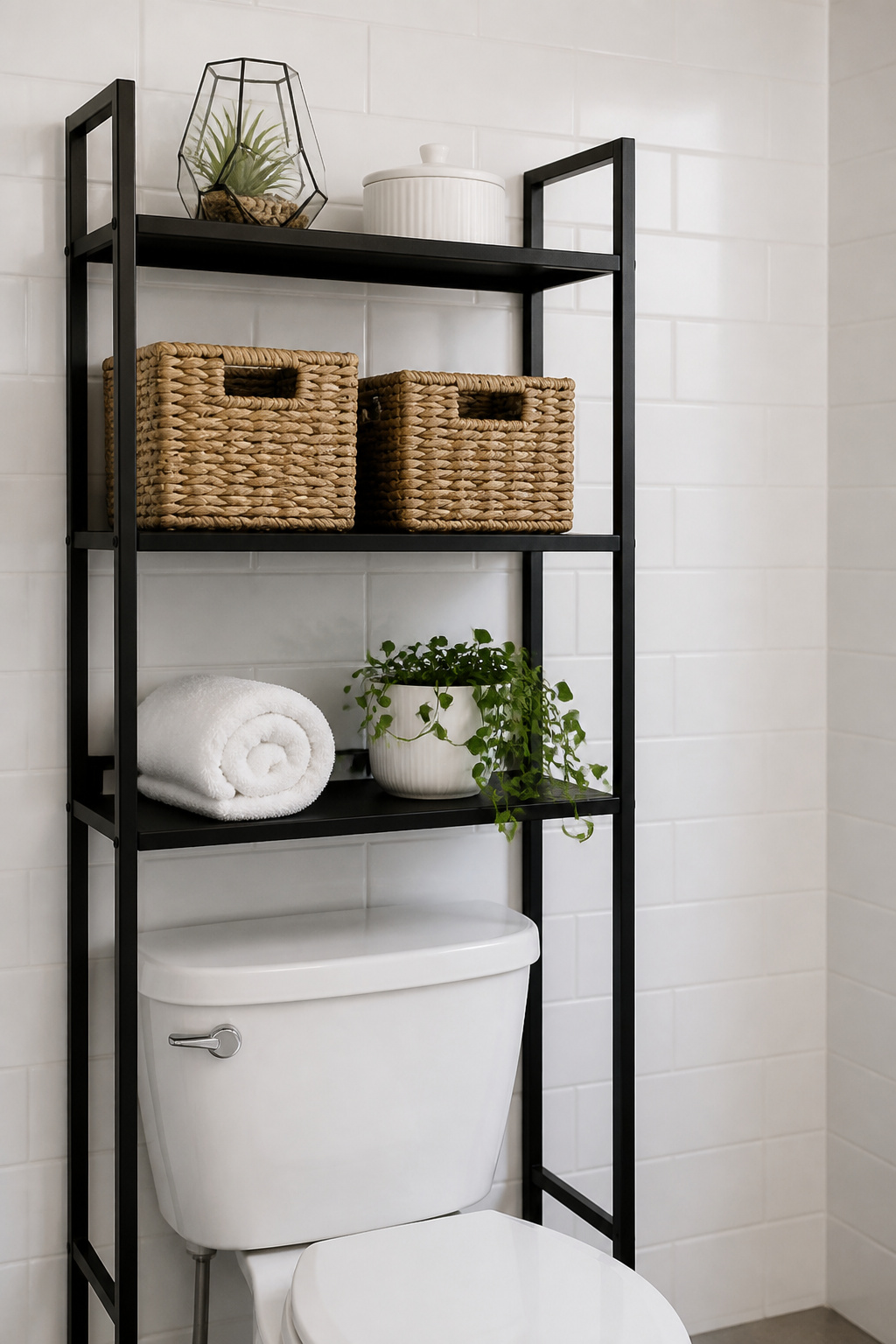
Freestanding over-toilet units sit around the toilet without attachment to walls: a standard model runs approximately 24.8 inches wide by 9.8 inches deep by 67.3 inches tall, fits standard toilet configurations, and holds several seasons of supplies. The design variable that most affects the aesthetic is finish: bamboo and powder-coated matte black are the two options that read as designed rather than improvised. Wire chrome racks — regardless of how well they store — look like a college dorm, not a spa. If you use an over-toilet unit, put baskets on the shelves to contain items. The baskets hide the stored objects and transform a utilitarian structure into something that belongs in the room.
Over-door organisers handle a different category: hair tools, smaller product bottles, medications, cotton rounds. iDesign and SONGMICS both make over-door racks with adjustable hooks that fit standard door thicknesses (1.5-2 inches) without any drilling. The combination of over-door organisation and a well-finished over-toilet unit often doubles effective storage without adding any floor footprint — and without a single hole in the wall.
16. A Cohesive Colour Palette to Unify Your Apartment Bathroom Decor
Colour is the connective tissue of a well-designed bathroom. It can’t fix individual elements, but it makes all the elements — however modest — feel like they were chosen together. The most common problem in rented bathrooms isn’t the quality of the fixtures; it’s incoherence. Towels from one era, a rug from another, accessories in three unrelated tones. A unified colour palette resolves this more directly than any individual upgrade.
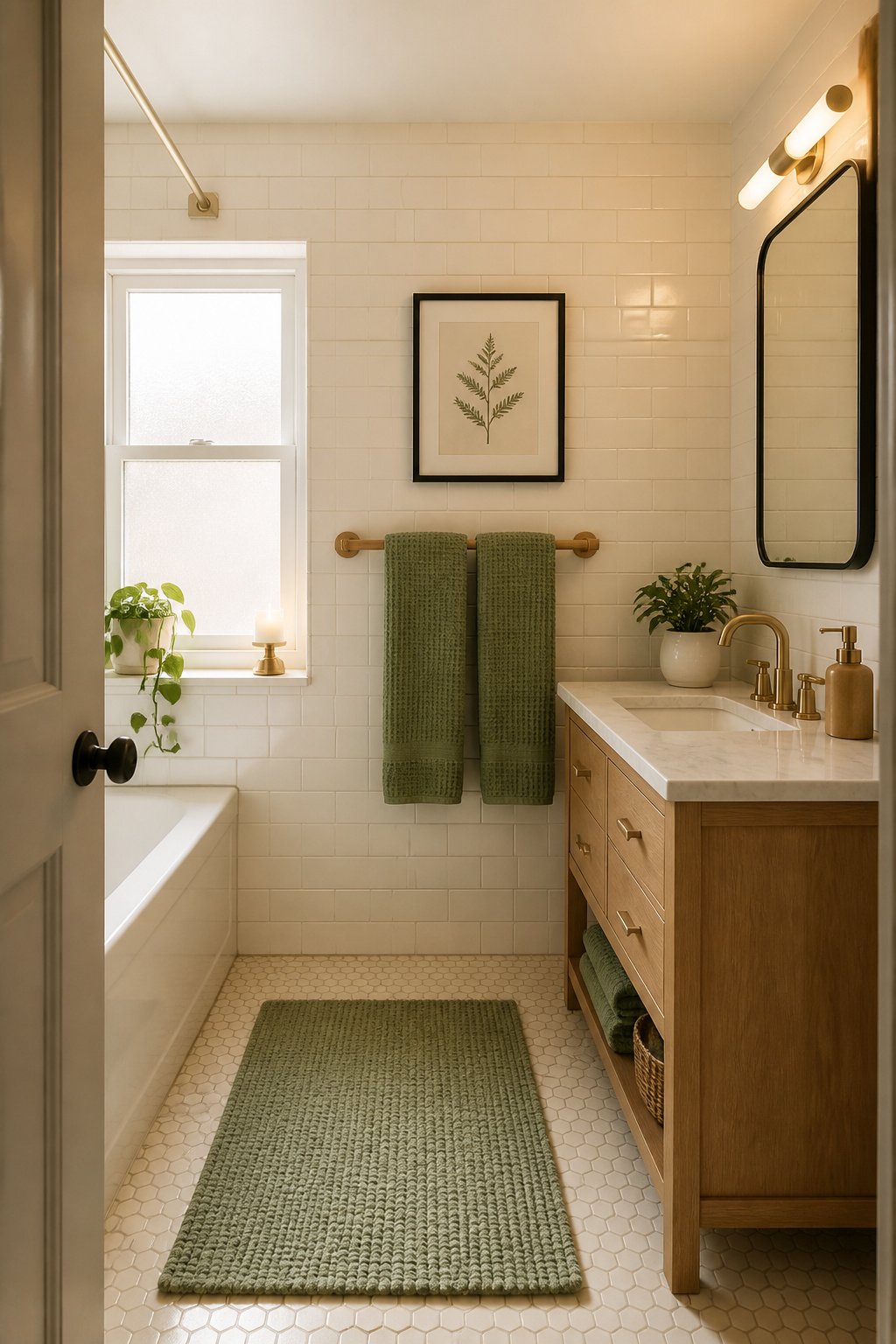
The 70/20/10 rule provides the most reliable structure. In a bathroom, the 70% dominant colour is almost always the tile and walls — fixed, unchangeable, your starting point rather than your obstacle. The 20% is the soft textiles: towels, rug, shower curtain. The 10% is the accent layer: plant pots, candle holders, apothecary jar lids, art frame colour. For a white-tiled apartment bathroom, soft sage green (20%) with warm brass accents (10%) is both current and genuinely calming. For beige or almond tile — the colour renters struggle most against — lean into the warmth: terracotta, rust, and natural linen work with it in a way that cool blue-greys never will.
Start with the towels and the rug. Together, they form the colour statement that everything else will respond to. Once those are in place, the plant pot, candle colour, and art print tones should follow naturally — not as separate decisions, but as completion of the palette already established. For broader inspiration on apartment decor ideas that cultivate serenity and style, the same colour principles that work in living rooms and bedrooms apply in bathrooms, just scaled to a smaller canvas.
Putting Your Apartment Bathroom Transformation Together
The temptation with a list like this is to want to do everything at once. Resist it. The most coherent apartment bathroom decor transformations I’ve worked on happened one decision at a time, each new element responding to what came before.
Start with the light: change the bulb to 3000K with a CRI of 90 before anything else. Everything in the room will look different — better — under the right light, and you’ll make cleaner decisions about colour and texture as a result. Then fix the towels and rug: choose a colour palette and commit to it. These two elements form the foundation; every other choice should respond to them.
From there, the order matters less than the intention. A floating shelf with three good objects, a teak bath mat, a eucalyptus bundle, a framed botanical print — these aren’t decorating items. They’re signals, to yourself, that this room is worth inhabiting with care. What they ask for is attention: a willingness to look at a room you’ve been passing through and ask what it could become. A bathroom that begins your day with warmth, natural light, a scent you chose, and surfaces that meet your hands with quality: that’s not luxury. That’s the baseline worth working toward.